WOLOCH, IsserABAA

2001Best.-Nr. 36673NY:: Norton. Near Fine in Near Fine dust jacket. 2001. Hardcover. 0393050092 . First printing. Near fine in a near fine dust jacket. . Norton, hardcover books
2001Best.-Nr. 34649NY: Viking. Fine in Fine dust jacket. 2001. Hardcover. 0670892785 . First printing. Fine in a fine dust jacket. . Viking hardcover books
2004Best.-Nr. 32790Urbana: University of Illinois Press. Near Fine. 2004. Paperback. 025207128X . First paperback printing. Small stamp on verso of front cover else fine in illustrated wraps. . University of Illinois Press paperback books
2005Best.-Nr. 30738London: Greenhill Books. Fine in Fine dust jacket. 2005. Hardcover. 1853676446 . Book club edition. Fine in a fine dust jacket. . Greenhill Books hardcover books
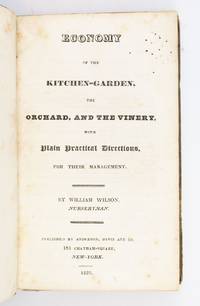
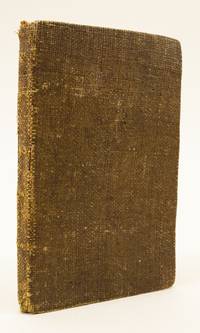
1828Best.-Nr. ST19567-013New-York: Anderson Davis and Co 1828. FIRST EDITION. 182 x 112 mm. 7 1/8 x 4 1/2". xii 13-206 pp. Publisher's gray boards backed with black roan flat spine divided into panels by double gilt rules gilt lettering. With an engraved plate depicting the recommended pruning and training of a grape vine. Front flyleaf with pencilled signature of Addie Gratacap and blue crayon signature of John Fields. Occasional neatly pencilled underlinings or marginalia in a 19th century hand. ◆Joints rubbed and cracked rear board with the tiniest bit of give spine with general wear including small losses at top and bottom boards somewhat soiled text with persistent foxing as usual in American imprints of this period; with obvious defects but what one would expect for an American book on this subject at this date. This practical guide to gardening in the United States was written in part as a rebuff to English agricultural writer William Cobbett who had cast aspersions on the type and quality of vegetables that could be grown in American kitchen gardens. After defending the honor of such American crops as lima beans Indian corn and winter squash Wilson offers advice arranged by planting season for growing asparagus peas root vegetables tender and hardy greens and varieties of squash. He doesn't quite see a central place for tomatoes in the vegetable garden finding it "the most forbidding-looking plant" and does admit that eggplant cultivation is impossible without a hothouse. Vegetables are followed by herbs for culinary and medicinal use and then by orchard fruits with apples for eating and cider leading the way. Wilson finishes with detailed instructions for grape cultivation illustrated by a plate depicting proper pruning and trellising practices. In addition to underlining key information on planting times and spacing distances in rows of vegetables a previous owner perhaps Addie Gratacap judging by her use of pencil found it amusing to count Wilson's digs at Cobbett which total 32. This work is rare in institutions and in the marketplace and is always found in unpleasant condition. RBH records just three copies at auction. Anderson, Davis and Co unknown books
1797Best.-Nr. ST15599London: Printed for T. Longman B. Law F. & C. Rivington R. Baldwin G. & T. Wilkie and J. Walker 1797. 21st Edition. 150 x 93 mm. 5 7/8 x 3 5/8". viii 123 1 ads pp. Contemporary brown burlap flat spine. With allegorical vignette on title page and 25 half-page woodcuts illustrating items from the vocabulary lists. Pastedowns with traces of book label removal. ◆Spine slightly cocked short split to cloth on rear joint a little fraying at ends of spine but the insubstantial binding surprisingly solid. Two small stains to each pastedown where labels removed title page lightly browned leaves a shade less than bright due to paper quality other minor imperfections but an excellent copy internally clean and fresh with comfortable margins. All in all remarkably well preserved. First issued around 1711 this is the best-selling work of James Greenwood 1683-1737 an influential grammarian and a proponent of women's education. Arranged into 33 chapters the book divides vocabulary lists by topic beginning with "things" and proceeding through minerals plants animals humans and diseases to everyday items affairs of church and state the law the military and finally to the various parts of speech from verbs to conjunctions. Widely used the work was revised and reprinted until at least 1828. At about the time this work was originally issued Greenwood had founded a school in Essex where he accepted girls as well as boys as pupils; he was later recruited to serve as assistant headmaster at St. Paul's School in London. This volume is of particular interest because of its rarely seen utilitarian period binding. We would have expected it to have been worn to shreds long ago but against the odds it has withstood hard use by young pupils remarkably well and it gives us a glimpse of an important element of the English schoolroom at the turn of the 19th century. Printed for T. Longman, B. Law, F. & C. Rivington, R. Baldwin, G. & T. Wilkie, and J. Walker unknown books
2004Best.-Nr. 28145NY: Seven Stories Press. Fine in Fine dust jacket. 2004. Hardcover. 1583226605 . First printing. Fine in a fine dust jacket. . Seven Stories Press hardcover books
2004Best.-Nr. 28283Oakland: Independent Institute. Fine in Fine dust jacket. 2004. Hardcover. 0945999984 . First printing. Fine in a fine dust jacket. . Independent Institute hardcover books
2002Best.-Nr. 24639Boston: Little Brown. Fine in Fine dust jacket. 2002. Hardcover. 0316299235 . Illustrated by Erik Ronnberg and Gary Tonkin. A book club edition. Fine in a fine dust jacket. . Little, Brown hardcover books
2003Best.-Nr. 24114Santa Barbara: East Beach Press. Near Fine in Fine dust jacket. 2003. Hardcover. 0970270534 . First printing. Review copy with slip laid in. Stamped "Review Copy" on top edge else fine in a fine dust jacket. . East Beach Press hardcover books
2003Best.-Nr. 24113NY: Seven Stories Press. Fine in Fine dust jacket. 2003. Hardcover. 1583226214 . First printing. Fine in a fine dust jacket. . Seven Stories Press hardcover books
2001Best.-Nr. 19773NY: Norton. Fine in Fine dust jacket. 2001. Hardcover. 0393019667 . Black and white photographs throughout. First printing. Fine in a fine dust jacket. . Norton hardcover books
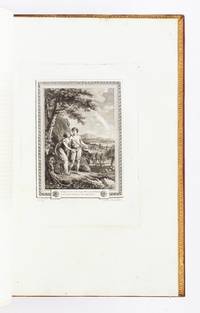
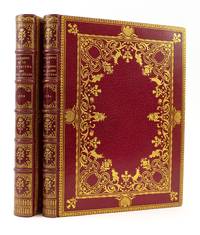
1786Best.-Nr. ST19671Paris: Chez l'Auteur Veuve Hérissant et Barrois l'aîne 1786-93. First Edition with these Illustrations. 485 x 340 mm. 19 x 13 1/2". Three volumes. ELEGANT RED STRAIGHT-GRAIN MOROCCO BY BOZERIAN signed in gilt on front free endpaper covers framed by gilt fillets double raised bands separated by a strip of black morocco tooled with gilt chain spine gilt in compartments with a rose or a musical instrument at center turn-ins with gilt arches roll Culot 18 green endpapers all edges gilt. 147 FINE ILLUSTRATIONS AFTER DESIGNS BY JEAN-JACQUES-FRANÇOIS LE BARBIER: three engraved title pages four vignettes 66 tailpieces and 74 leaves of plates including frontispiece portrait of Gessner engraved by Alix Baquoy Dambrun de Longueil et al. ALL IN FIRST STATE those in volumes I and III with original tissue guards. A Large Paper Copy. Cohen-de Ricci 433; Ray 39. For the binding: Culot "Jean Claude Bozerian" roulette #18. ◆Just a hint of rubbing to upper joint of first volume small indent to front cover of volume II occasional mostly marginal mild foxing more frequent in volume II but QUITE A FINE SET clean and fresh internally with beautiful impressions of the engravings and enormous margins in lustrous bindings with few signs of wear. This is a sumptuous set approaching 20 inches tall that epitomizes the best in 18th century French book arts: a Large Paper Copy of a book that in Ray's opinion "represents one of the happiest of all collaborations between artist and writer"--all of this in a graceful binding by the preeminent Paris atelier of the day. Gessner 1730-88 was a painter and poet from Zurich who hoped to renew the ancient genre of the eclogue. In his imagined neoclassical world all the shepherdesses are beautiful virtuous and sensitive and the shepherds are always honest and respectful. This struck a chord with illustrator Jean-Jacques-François Le Barbier 1738-1826 who wrote in the dedication "the charm of Gessner's poems filled my imagination and transported it to the happy centuries of the world's innocence." It also inspired him to collaborate with Gessner on this present work. Le Barbier 1738-1826 was one of the first great French neoclassical illustrators and this work is both an important early success in that style and in Ray's words the "most sustained and accomplished series of illustrations" by the artist. Most of Le Barbier's designs for this work are set in the classical world--the exception being "Le Mort d'Abel" based on the story of Cain and Abel in the Bible. There are nymphs fauns and other fantastical creatures mingling with humans in bucolic settings. While Le Barbier illustrates many love scenes they are romantic and wistful rather than passionate; he was a master of nudes but those depicted here seem innocent rather than erotic. As Ray says "Le Barbier's emphasis is on simplicity and naturalness. We are in a different world from the witty gallantry and sophisticated sentiment of the rococo pastoral illustrations." The engravings are characterized by the clarifying use of softly radiant light and by a restrained animation and the book as a whole is "a work of harmonious distinction which admirably realizes the ideals of its author and illustrator." Ray The elegant binding by Bozerian is notable for its refinement and it continues the motif of noble simplicity set by author and illustrator. Jean-Claude Bozerian 1762-1840 was the elder of the Bozerian brothers François is referred to as "le jeune" and was active in Paris from 1795 to about 1810. He began his career in Lyon as an apprentice bookseller printer and bookbinder eventually deciding to focus on the latter craft. Marriage to the widow of binder Pierre Boulier allowed him to establish a binding workshop in Paris where he was joined by his brother. His bindings were soon much in demand by French bibliophiles who appreciated their superior materials tasteful design and flawless execution. A rich man by age 50 he decided to retire and enjoy his leisure turning his business over to his nephew Lefebvre. Gessner's "Oeuvres" typically appears in quarto; Large Paper Copies like this one are very rare especially with all of the plates in first state which according to Cohen-de Ricci is recognizable by the lack of numbering to the plates and their appearance on bluish paper. It would seem next to impossible to imagine a book with margins as wide as are seen here. Chez l'Auteur, V[eu]ve Hérissant et Barrois, l'aîne unknown books
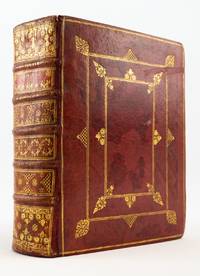
1710Best.-Nr. ST19567-052Cantabrigiae Cambridge: Cornelius Crownfield 1710. THE DEDICATION COPY ONE OF 150 ON LARGE PAPER per Mackenzie. 248 x 192 mm. 9 3/4 x 7 1/2". 4 p.l. xxiv 532 2 318 283-304 pp. 84 leaves.Edited by Rev. Joseph Wasse. FINE CONTEMPORARY RED MOROCCO GILT covers panelled with gilt fillets accented with fleuron acorn and scallop tools raised bands spine compartments densely gilt with similar tools red morocco label marbled endpapers all edges gilt probably with some very facile repairs to top and bottom of joints and spine. Front pastedown with the armorial bookplate of the dedicatee Henry Grey Duke of Kent dated 1713 and with the armorial ex-libris of Robert Offley Ashburton Crewe-Milnes Marquess of Crewe; front free endpaper with engraved armorial bookplate of Thomas Philip Earl de Grey see below for all. Dibdin II 385; Mackenzie "The Cambridge University Press 1696-1712" I 273-76. ◆Front joint with thin crack at head and tail covers with darkish splotches obvious but somehow not overly offending with antique morocco like this other very minor signs of use but the binding still extremely pleasing as a grand specimen for an important dedicatee. A MOST ATTRACTIVE COPY INTERNALLY especially clean and fresh with only negligible imperfections. This is the stately dedication copy of Wasse's monumental edition of Sallust in its original handsome unrestored binding. Described by Dibdin as "an excellent edition . . . the merits of which have long been acknowledged by the literary world" our version was prepared by Wasse after consulting nearly 80 manuscripts including "some very ancient editions." A huge undertaking it spent five years in the press. Oxford Antiquary Thomas Hearne mentioned it in his "Remarks" amazed that "Mr. Wasse . . . has so swell'd his Salust sic . . . with Notes" that "his Index will be upwards of 20 sheets"; in fact the Index consumes 84 leaves 21 quires. The text of the present volume contains the only two extant historical works of Sallust 86-34 B.C. which are his history of the conspiracy of Catiline against the senate in the year Cicero was consul and his history of the Roman war against the Numidian Algerian chieftain Jugurtha brought to its conclusion by the great soldier and populist politician Marius. As a stylist Sallust has enjoyed great fame for his artistic and epigrammatic speeches with their vividly delineated characters. A fellow of Queen's College Cambridge Joseph Wasse 1672-1738 served as chaplain to the Marquess later Duke of Kent Henry Grey 1671-1740 to whom he dedicated this work. The handsome binding is of very high quality and is decorated in the Cambridge style by an unknown binder of that city. Grey was a courtier who held a number of prominent positions: under Queen Anne he served as Lord Chamberlain of the Household and Knight of the Garter and as one of the Lords Justices Regents of the Realm upon her death; under George I he was Lord of the Bedchamber Lord Steward of the Household and Lord Keeper of the Privy Seal. Our volume was passed down in his family through the line of his granddaughter Jemima Campbell Marchioness Grey to Thomas Philip de Grey 2nd Earl de Grey 1781-1859 an amateur architect who rebuilt the family seat Wrest Park in Bedfordshire. He became the first president of the Royal Institute of British Architects. It was later in the 24000-volume library of the politician Robert Crewe-Milnes 1858-1945 Marquess of Crewe. Cornelius Crownfield unknown books
1919Best.-Nr. 3461New York: George H. Doran Company 1919. Hardcover. Illustrated cream boards. Good in decent dust wrapper. Johnson Herbert. 64 pages. 19 x 13 cm. A journalist's humorous account of dining during wartime rationing in France and England. Illustrations by Cartoonist Herbert Johnson of the Saturday Evening Post. Entertaining illustration of lady liberty on end papers. Interior lightly toned dust wrapper heavily chipped and rubbed. George H. Doran Company hardcover books
1979Best.-Nr. 2222123First edition. 10" x 7". Text printed in red and black. Frontispiece seven illustrations endpaper maps. Maroon cloth over grey boards. Plain white dust jacket. Fine. 74 pages. No signatures or bookplates. Prospectus and order form laid in loose. One of 500 copies. BCC 162. The Book Club of California hardcover books
1953Best.-Nr. WALTER-FILM006769Twentieth Century Fox. No binding. Near Fine. Los Angeles: Twentieth Century Fox 1953. Vintage original 8 x 10" 20 x 25 cm. black-and-white glossy silver gelatin photo. Photo curls. Minor crease at top right corner. Near fine. Full-length costume portrait of Marilyn wearing the bathing suit that she models in the fashion show sequence from How to Marry a Millionaire. As a myopic character Monroe played both physical and psychological comedy as she tripped her way around the runway stage attempting to see the wealthy and handsome patron asking her and pals Betty Grable and Lauren Bacall to model the latest fashions. Photo is coded F999/S/431. Twentieth Century Fox books
Best.-Nr. B29720-3New York 1953. 31 1pp. Tall 8vo. Wraps. New York, 1953. paperback books
Best.-Nr. B55022-2New York 1897. 62pp. 8 plates. 4to. Cloth. Printed on fine laid paper; uncut. New York, 1897. hardcover books
Best.-Nr. B29720-4New York 1953. 31 1pp. Tall 8vo. Wraps. New York, 1953. paperback books
1962Best.-Nr. 3974Japan: Kokusai Boeki Kaisha Ltd. 1962. Staplebound wraps. Illustrated color wraps. Very good. 30 pages. 3 1/2 x 2 1/2 in. GROOVY Color illustrated Barbie Ken and Midge catalog from Mattel Inc. Toymakers. Catalog includes prices for all dolls outfits games and sewing patterns. Kokusai Boeki Kaisha, Ltd. paperback books
1780Best.-Nr. ST17950Caprées i.e. Nancy: Chez Sabellus 1780 1784. FIRST EDITIONS FIRST PRINTINGS 11 lines on title page and long "s" in text with these Illustrations. 256 x 190 mm. 10 x 7 1/2". Two volumes. BEAUTIFUL 19TH CENTURY RED MOROCCO GILT IN THE ROCOCO STYLE BY CUZIN stamp-signed in gilt on front turn-ins covers with a gilt-ruled border featuring rocaille motifs at the sides and a floral spray at each corner elaborate inner frame of strapwork interwoven with scrolling acanthus drawer-handle tools flower garlands and several special tools including satyrs mountain goats insects and large vases of flowers raised bands compartments with gilt lettering or a central floral sprig surrounded by a frame of leaves and flowers turn-ins with intricate gilt lace roll-tooling all edges gilt. WITH A TOTAL OF 102 EROTIC PLATES by Denon each volume with a frontispiece and 50 plates plus an engraved title in volume II. Front pastedowns with ex-libris of Léon Gambetta. Cohen-de Ricci 474-75. ◆Light offsetting from illustrations paper in both volumes perhaps lightly pressed but not washed FIRST VOLUME with the faint stain from a ribbon marker now gone one plate slightly toned and with two very small repairs to margin otherwise IN FINE CONDITION; paper in volume II slightly toned and with occasional small spots and light stains but still excellent. None of this significant because THE GLORIOUS BINDINGS LUSTROUS AND UNWORN. Despite their scholarly titles which promise scenes from the private lives of the 12 Caesars and secrets from an ancient Roman cult these are among the most famous erotic books of the 18th century. In the first volume the 12 Roman emperors from Julius Caesar to Domitian are depicted engaged in a panoply of intimate acts beginning with Julius Caesar's liaison with King Nicomedes IV of Bithynia which led his enemies to dub him "Queen of Bithynia." We see what Caesar's heir Augustus was willing to do in order to succeed his great-uncle and his later sexual excesses as emperor including incest. Antony and Cleopatra are relatively demure compared to the orgies of Caligula Nero and Claudius' wife Messalina. The "Secret Cult of Roman Women" examined in the companion work is devoted to the fertility god Priapus and his phallic symbols with guest appearances by assorted satyrs nymphs and Bacchantes. The images are white-on-black to resemble sculptured wall medallions and claim to be based on ancient carvings; however Cohen-de Ricci informs us that while the text is evidence of d'Hancarville's erudition the illustrations are entirely the result of his libertine imagination. Art historian Pierre-François Hugues Baron d'Hancarville 1719-1805 established himself in the world of antiquarians when he helped William Hamilton acquire the impressive Porcinari collection of Etruscan Greek and Roman antiquities that would subsequently be purchased by the British Museum. He then supervised the production of four sumptuous volumes of engravings documenting the collection. He seems to have undertaken the present work for his own amusement. A later issue of the second title facetiously attributed publication to the Imprimerie de Vatican the Church had of course put it on the Index of Prohibited Books. According to Cohen-de Ricci this is the first and most desirable printing identifiable by 11 rather than 10 lines of text on the title page of the first work and by the use of the f-like "long s" in both volumes. The especially splendid bindings by Francisque Cuzin 1836-90 nod to the Rococo bindings of the 18th century and to the risqué subject matter with satyrs cavorting about the elegant frame. Cuzin opened his Paris workshop in 1855 and soon made his name among bibliophiles of that city with his exquisite bindings establishing what was called the "Cuzin style." Devauchelle says that this style was copied by Cuzin's colleagues but was never equalled. Cuzin was not a gilder but employed some of the best in the trade to execute his graceful designs among them Marius Michel père Wampflug Maillard and Cuzin's eventual successor Émile Mercier. Our copy was once in the library of the distinguished French statesman Léon Gambetta 1838-82 one of the founders of the Third Republic who served as president of the Chamber of Deputies. Chez Sabellus unknown books
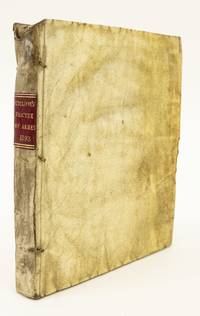
1593Best.-Nr. ST15853London: Deputies of Christopher Barker 1593. FIRST EDITION. 185 x 140 mm. 7 1/4 x 5 1/2". 12 p.l. 328 327-342 pp. Contemporary limp vellum yapp edges flat spine with later red morocco label. Inside front cover with ink owner's inscription of George Wilson dated November 1 1854; front flyleaf with engraved armorial bookplate of Thomas Francis Fremantle; early pen trials to title page old mathematical calculations on rear endpaper. Cockle 57; STC 23468; ESTC S117986; Heuser Beatrice "Strategy Before Clausewitz: Linking Warfare and Statecraft 1400-1830" 2017 chapter 5: "A National Security Strategy for England: Matthew Sutcliffe the Earl of Essex and the Cadiz Expedition of 1596." ◆Vellum a bit soiled half-inch chip to head of spine two-inch crack to fore edge of front cover title page with small ink stain and light soiling other trivial imperfections in the text but still an excellent copy clean and fresh internally and in a sound binding. This rare treatise addressing all aspects of war has been cited by military historian Beatrice Heuser as perhaps a unique example of a case "in which a civilian an 'armchair strategist' published a book containing a comprehensive concept for how to conduct a war with a specific enemy that was applied in practice." According to Heuser Sutcliffe penned "a national security strategy for England" and one that Robert Devereux Earl of Essex to whom the work is dedicated put into practice in the country's ongoing conflicts with Spain leading to the operation that resulted in the successful capture of Cadiz in 1596. Sutcliffe had met Essex at Trinity College Cambridge where he had likely served as one of the young earl's tutors. DNB observes that Sutcliffe who studied law before becoming a doctor of divinity applied his legal training to this work in which he examines not only fortifications aggressive and defensive tactics and the practical considerations of recruiting paying feeding and housing armed forces but also discusses laws and regulations governing the military. Cockle notes that the work "was well known both at home and abroad" and that it "urged the importance of military studies." Following this consequential work Sutcliffe restricted his writings to theological subjects and enjoyed a 40-year career as dean of Exeter Cathedral. This work is rare in the marketplace: ABPC and RBH find just three other copies at auction in the past 40 years. Deputies of Christopher Barker unknown books
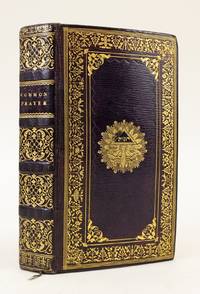
1820Best.-Nr. ST15600London: Printed by George Eyre and Andrew Strahan 1820. 142 x 80 mm. 5 5/8 x 3 1/8". 510 pp.; 80 2 pp. VERY FINE CONTEMPORARY STRAIGHT-GRAIN PURPLE MOROCCO ELABORATELY GILT covers with frame of gilt rules and anthemion-and-flower roll central panel with arabesque corners central sunburst medallion containing the Tetragrammaton within a triangle from which the dove of the Holy Spirit descends raised bands spine panels gilt in a floral and arabesque design gilt titling turn-ins with zig-zag gilt roll orange endpapers all edges gilt. Front pastedown with large morocco bookplate of Louisa Smyth dated 25th Dec. 1821 and signed with the initials E. P. Front flyleaf inscribed: "Harriet E. Thorpe / From her affectionate / Brother-- / As a remembrance of / her dear Aunt L. Dickens. / Nov. 1841." Griffiths p. 246. ◆A breath of rubbing to corners but A BEAUTIFUL COPY with no signs of use--clean fresh and bright internally and in a sparkling ORNATE binding. Bound in somber purple but with religious imagery in bright gilt this pretty little prayer book is very typical of an era in which such luxurious volumes were popular gifts among the moneyed classes as was the case here. Miss Louisa Smyth must have treasured this Christmas gift from "E. P." as its condition clearly indicates it was seldom if ever used for daily devotions. It likely served as a perfect accessory for Louisa's Sunday finery and perhaps she carried it at her 1831 wedding to Lt. Col. Thomas Mark Dickens of the Royal Engineers. After Louisa's 1841 death the book passed to Harriet E. Thorpe wife of Louisa's nephew Rev. William Smyth Thorpe. Both families are well documented in the county of Norfolk where their eminent lineage goes back generations. Whoever inherited our prayer book from Harriet continued to care for it assiduously as it appears little changed from the days when Louisa first held it in her hands. Printed by George Eyre and Andrew Strahan unknown books
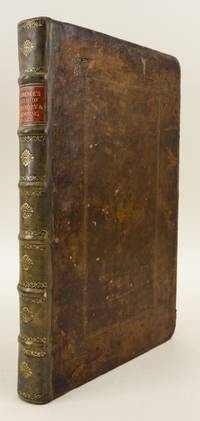
1726Best.-Nr. ST15736cLondon: Printed for Tho. Woodward by William Bowyer 1726. FIRST EDITION. One of 1000 copies according to Bowyer's ledgers per ESTC. 360 x 222 mm. 14 x 8 3/4". 12 p.l. 456 i.e. 452 pp. 4L2v is numbered 316-320. Contemporary calf covers with gilt roll frame oblique floral cornerpieces rebacked in olive-brown calf raised bands flanked by scrolling gilt rolls panels with decorative gilt centerpiece red morocco label marbled endpapers and edges neat repairs to head edge and to corners. With engraved frontispiece five small engravings in the text and two engraved plates of plants. Front pastedown with armorial bookplate of Charles Gresley; pp. 286 288-290 with contemporary ink annotations to folded fore margins. Henrey 945; ESTC T146573. ◆Boards with a number of small abrasions but the restored binding sound and perfectly agreeable; isolated faint dust-soiling to head margins other trivial imperfections but the text in very fine condition especially clean crisp and bright and with ample margins. Very fresh and bright internally especially for a book expected to incur use in an unprotected context this practical and comprehensive work would have been an indispensable resource for any 18th century husbandman interested in raising livestock and cultivating trees vegetables and fruit. Although the frontispiece depicts the stately Richmond home of the Prince of Wales with its manicured grounds and rows of neatly spaced trees the contents are just as useful to the everyman including "Husbandman Grazier Planter Gardener and Florist." John Laurence 1668-1752 was a fellow at Cambridge before becoming rector of Yelvertoft Northamptonshire where he developed a passion for horticulture while renewing a dilapidated garden there DNB tells us he was especially skilled at growing pears. Laurence wrote three books on the pleasures of gardening while living in Yelvertoft; he later moved to Bishopwearmouth Durham where he wrote the present work--his last and according to Henrey "most ambitious literary project." The author explains how to improve and maintain the land in book I with advice on planting crops and raising different kinds of livestock from cattle to silkworms. He even devotes a few chapters to using land for mines and quarries revealing the "hidden Treasures which lie couched in Nature's Bowels." Book II is devoted to forest and timber trees and books III-V offer a catalogue of fruit trees vegetables and decorative plants to grow in the Fruit Garden Kitchen Garden and Flower-Garden respectively. This is a pleasurable book to leaf through being wonderfully clean throughout and accessible to the modern reader with familiar plants that might be growing in one's backyard today. Printed for Tho. Woodward [by William Bowyer] unknown books