53 651 résultats
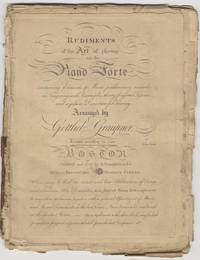
1806réf. 41673Boston: Printed and Sold by G. Graupner at his Musical Repository No. 6 Franklin Street 1806. Folio. Disbound. 1f. recto title verso blank 40 pp. Engraved throughout. With "Where may be had the latest and best Publications of Europe and America Also Clementi's new patent Piano Forte's superiour! to any others yet known together with a general Assortment of Music and Musical Instruments on the best Terms. Piano Fortes to let and tuned at the shortest Notice. As a Suplement! to the above Work may be had progressive fingered Lessons selected from the best Composers" to foot of title. Worn; some foxing; uniform light browning heavier to some leaves; most leaves/signatures detached; chips and tears to many blank margins; tears to numerous leaves; small embossed decorative circular stamp of the Essex Institute to upper outer corner of title. First Edition. Rare. Wolfe 3202 one complete copy only. OCLC 20911441. Graupner was an important early American musician teacher publisher and music seller of German origin. He began his career as oboist in a military regiment in Hanover travelling to London in ca. 1788 where he was first oboist in the orchestra for Haydn's 1791-1792 concerts. His first known musical activity in America was as a member of the City Theatre Orchestra in Charleston South Carolina where he performed an oboe concerto on 9 November 1795; he then moved to Boston where he was associated with the Federal Street Theatre as of January 1797. "During the early decades of the 19th century he became Boston's leading music publisher and dealer selling music and instruments on consignment from other dealers and engraving and printing much music and instructional material himself. He was leader of the Philharmonic Society throughout its existence 1809-24 and was a charter member of the Handel and Haydn Society in 1815. Graupner's influence on the musical life of Boston was considerable because of the variety and scope of his activities through a long career." Douglas A. Lee in Grove Music Online. Printed and Sold by G. Graupner, at his Musical Repository, No. 6 Franklin Street unknown books
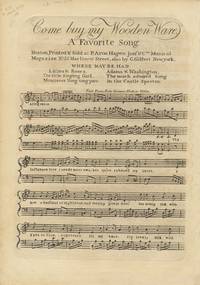
réf. 41678The collection is arranged in two parts as follows: Part I 18th century imprints Many listed in Sonneck: Bibliography of Early Secular American Music Revised and Enlarged by William Treat Upton 39 pieces published in Baltimore Carr; Boston von Hagen; New York Carr Gilfert Mollers Paffs; and Philadelphia Carr Willig. Part II 1801-1825 imprints Many listed in Wolfe: Secular Music in America 1801-1825 Approximately 211 pieces published in Albany Goldberg; Baltimore Carr Cole; Boston Graupner Hewitt Jackson Parker; Brooklyn Jhousbery; New York Christman Dubois & Stodart Geib Gilfert Goodrich Hewitt Riley Paff Sage and Wilson; and Philadelphia Aitken Bacon Blake Carr & Schetky Chalk Jackson Shaw and Willig. All pieces folio disbound with signs of wear consistent with age and use including browning soiling foxing dampstaining and small tears; inner margins slightly ragged and with small sewing holes; occasional repairs and other minor defects. The present collection is of particular interest to early American music history in its reflection of prevailing local musical activities and developing taste. The influence of contemporary musical activities on the London and Paris stages and in private salons is also evident. A full inventory is available upon request. unknown books
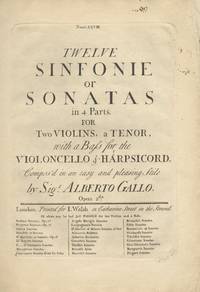
1754réf. 40749London: Printed for I. Walsh in Catharine Street in the Strand 1754. Folio. Contemporary light blue wrappers. Engraved throughout. Uncut. Violino primo: 1f. recto title verso blank 12 pp. Violino secondo: 1f. recto title i blank 2-11 i blank pp. Alto viola: 1f. recto title i blank 2-9 i blank pp. Cembalo e violoncello: 1f. recto title verso blank i blank 2-10 pp. "Numb. XXVIII." printed at head of titles. With brief publisher's catalogue to foot of titles listing works "Just Publish'd for two Violins and a Bass" by Nussen Porpora Solniz Handel St. Martini Boyce St. Germain Humphries Geminiani Morigi Lampugnani Albinoni Alberti Ceruetto Torelli Purcell Mascitti Brioschi Fritz Bononcini Schickard Tibaldi Valentine Valentini Bomporti and Finger. Wrappers somewhat worn and creased with small stains spines and edges frayed and chipped with minor loss. Occasional minor soiling and small stains mainly to blank lower margins; some creasing to blank margins; lower wrapper of cembalo part detached. First Edition. Smith & Humphries 666 p. 149. BUC p. 359. RISM G260 no copies in the U.S. Little seems to be known about Alberto Gallo other than that he was a Venetian composer active in the mid-18th century. Printed for I. Walsh in Catharine Street in the Strand unknown books
1850réf. 412931850. Folio 246 x 293 mm. Contemporary plain brown wrappers with octagonal paper label to upper titled "Music Miscellaneous Piece." Notated on 12-stave rastrum-ruled paper. 26 pp. 2ff. blank. Contains operatic and dance numbers by composers including Auber Bellini Cimarosa Donizetti Handel Mozart Verdi et al. scored for solo violin and duo violins in score: Polka Militaire Canthel La Fugitive Valsa Jullien Air in Don Giovanni Mozart Round about the Maypole Arne The Patriots Welcome Russell Dead March in Saul Handel Grand March in Alfred the Great Cimarosa Fragments de Lutzow Weber On yonder rock reclining Auber Waltz Strauss Der Scottisch Pupeski The Nuptial Serenade Mancinelli and selections from operas by Bellini Donizetti and Verdi. Wrappers worn. Minor wear soiling and staining. unknown books
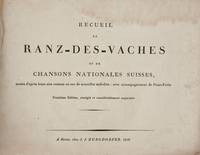
1818réf. 41243Berne: J. J. Burgdorfer 1818. Oblong quarto. Original publisher's mid-green printed wrappers. 1f. recto title verso blank 1f. "Inhalt" v-x "Préface de la seconde édition" xi-xxiv "Avant-propos de la troisième édition" 126 music 127-131 "Worterklärungen" 132-133 "Traduction Interlinèaire du Ranz des Vaches d'Appenzell p. 24" 134-135 "Verbesserungen in der Musik." 136 "Verbesserungen." pp. 55 songs in German/Swiss dialects with the exception of those to pp. 107-122 in French. Preface by Johann Rudolf Wyss noted Swiss editor writer and scholar. Typeset throughout. With illustration of Alphorn player to upper and Swiss female figure to lower wrapper. "Articles de Fonds en livres et objects d'arts concernant la Suisse qu'on trouve aussi chez les principaux libraires de la Suisse" to verso of upper and recto of lower wrapper. Scored mainly for voice and piano with instrumental selections for piano and unspecified treble instrument. Wrappers worn with several small stains and tears to edges; upper nearly detached with lower margin of verso repaired with ivory tape. Light uniform browning; occasional minor foxing and small stains; signatures loose. Third edition. OCLC 20912723. A compilation of traditional Swiss folk songs and occasional instrumental selections including music for the Alphorn and solo piano compositions many arranged by Ferdinand Fürchtegott Huber. The alphorn was a "wooden trumpet of pastoral communities in the Alps. . The commonest length of the alphorn is about 185 cm in which case its range extends to the 5th or 6th harmonic as quoted by Beethoven at the end of the Pastoral Symphony. . Alphorns were known best as herdsmen's calling instruments serving also in some areas to summon to church and formerly to war. They may also be numinous: among the Mari of Russia the long wooden trumpet is made for the spring festival and afterwards sacrificially burnt or hidden in a sacred place. Overall likeness in making and using alphorns and their distribution suggest that they possibly may have originated among post-Celtic peoples of the Migration Era. There is no firm evidence of prior existence; 'cornu alpinus' in Tacitus is less than proof of a wooden trumpet of which the earliest specimen from the 9th-century Oseberg ship Oslo Vikingskiphuset supports iconographic suggestions that wooden trumpets of moderate size were used as summoning and military instruments in early medieval northern Europe in addition to their pastoral functions." Anthony C. Baines revised by Max Peter Baumann in Grove Music Online. Rossini evoked the Alphorn in his iconic 1829 William Tell Overture. Of great importance to the preservation of the oral heritage of Swiss alpine herders. J. J. Burgdorfer unknown books
1740réf. 41145Paris: De l'Imprimerie de Jean-Baptiste Coignard Imprimeur du Roi 1740. Octavo. Full contemporary dark brown mottled calf spine in decorative compartments gilt with titling gilt marbled endpapers. 1f. recto title with woodcut armorial device verso blank 3-18 2ff. contemporary manuscript chant in black ink on 10-four-line-stave rastrum-ruled paper 21-112 pp. Typeset throughout with music in neumatic notation on 4-line staves to most pages scored for solo voice. Annotation in contemporary manuscript to blank verso of title "On vous prie de remettre ce livre a la Sacristie and in another hand "Mr. Millet." Manuscript text to head of p. 3 canceled. Binding quite worn rubbed and bumped; lower portion of spine lacking; hinges cracked; endpapers worn and faded. Occasional wear and minor staining; several tears and holes particularly to lower inner margins with more substantial loss to lower portion of pp. 63-64. Lacking pp. 19-20 supplied in contemporary manuscript. OCLC 919167683 467696334 918609709. [De l'Imprimerie de Jean-Baptiste Coignard, Imprimeur du Roi] unknown books
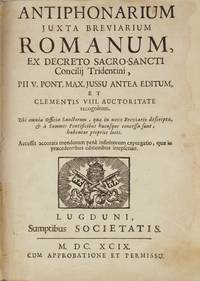
1699réf. 41146Lugduni Sumptibus Societatis: Ex Typographia Petri Valfray in vico Mercatorio sub signo Coronæ Aureæ . Cum Approbation et Permissu 1699. Small quarto. Full contemporary dark brown mottled calf with raised bands on spine in decorative compartments gilt dark red leather label gilt marbled edges. 1f. recto title with woodcut armorial device incorporating crown and keys verso blank 1f. Index "Approbatio" "Permissio" 304 lxxxviii 19 i blank pp. Typeset with neumatic notation on 4-line staves scored for solo voice. With engraved armorial bookplate by T. Dupont of French writer and book collector A. Kuhnholtz-Lordat 1820-1893 to front pastedown. Binding slightly worn and bumped. Browned; occasional very minor staining foxing dampstaining and soiling. OCLC 805034285 956360819. A collection of antiphons and other sung parts of the Divine Office. [Ex Typographia Petri Valfray, in vico Mercatorio, sub signo Coronæ Aureæ] ... Cum Approbation et Permissu unknown books
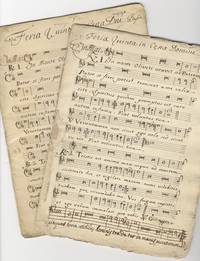
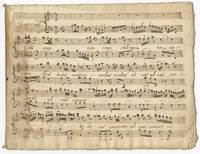
1780réf. 40349Italy 1780. Folio 226 x 312 mm. Sewn. Notated on 10-stave rastrum-ruled paper with lowermost stave of first page of the Tenore part hand-drawn with music and text added in another hand. Watermark letters within a circle above a star. Music for Holy Thursday Good Friday and Holy Saturday of Holy Week in the Christian calendar: - "Feria Quinta in Cena Domini." Tenore. 4 pp. Bound with "Feria Sexta in Parasceve" Basso 6 pp. and an additional bass part headed "Sabbato Sancto" 6 pp. - "Feria Quinta in Cena Domini." Basso 6 pp. Bound with "Feria Sexta in Parasceve" 6 pp. "Sabbato Sancto" 6 pp. 1f. blank. With short semi-chanted homophonic liturgical pieces: "In Monte Oliveti" "Tristis est anima mea" "Ecce appropinquat" "Ecce vidimus" "Vere languores" "Amicus meus" "Flius quidem hominis" "Unus ex vobis" "Eram quasi agnus innocens" "Seniores populi" "Revelabunt celi iniquitatem" "Omnes amici" "Velum Templi" "Vinca mea" "Tamquam ad latronem" "Tenebre facte sunt" "Barabbas latro dimittitur" "Tradiderunt me" "Jesum tradidit" "Sicut ovis" "Sepultro Domino" "Jerusalem Iuge" "Plange quasi virgo" "Recessit Pastor" "O Vos omnes" "Caligaverunt oculi mei" "Ecce quomodo" "Æstimatus sum" "Agnus Dei" and "Lustris sex qui." Occasional moderate soiling and small stains; first leaf of Tenore part partially detached. unknown books
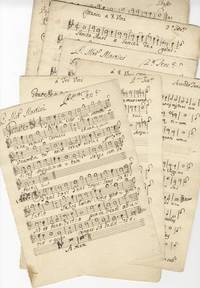
1750réf. 40348Italy 1750. 5 parts. Quarto and two bifolia. Notated on 10-stave rastrum-ruled paper. Watermark letters within a circle. Contains: 1 P.rimo Ten.ore: 1 p. Text commencing "Tantum ergo sacramentum" and Genitori Genitoque" "P Mro Martini" to head. 2 P.rimo Ten.ore music different from above: 1 p. Text commencing "Tantum ergo sacramentum" and Genitori Genitoque." 3 Basso: 1 p. Text commenting "Tantum ergo sacramentum" and "Genitori Genitoque" with "Tantum &c. a 3 Voci Ripieno" to head. 4 Secondo Tenore: 2 pp. Text commencing "Pange lingua" "Nobis datus" "Verbum caro" and "Genitori Genitoque." With "à 3. Voci TT. e B." to head of first page. 5 2o. Ten.ore: 1 p. Text commencing "Tantum ergo" and "Genitori Genitoque." With "P Mro Martini" to head. 6 2o. Ten.ore: 3 i blank pp. Text commencing "Sancta Maria" "Sedes sapienti" "Regina Martyrum" and "Agnus Dei." With "Littanie a 3. Voci" to head. 7 Basso: 3 i blank pp. Text commencing "Kyrie" "Virgo potens" "Regina Angelorum" and "Agnus Dei." With "Littanie a 3. Voci" to head. A few small stains. unknown books
réf. 40330Oblong folio 227 x 293 mm. Disbound. i manuscript index tipped-in 233 pp. including three blanks. Notated on 10-stave rastrum-ruled paper with watermark of a shield with "GR" below. Contains the following works: 1. Clari Giovanni Carlo Maria 1677-1754 adapted by Charles Avison 1709-1770. "Unto the Lord." Duet. 16 pp. 2. Clari/Avison. "O all ye Nations." Duet. 10 pp. 3. Carissimi Giacomo 1605-1674. "Hodie Simon Petrus." Duet. 5 pp. 4. Carissimi. "O nomen Jesu." Duet. 4 pp. Attributed to Giovanni Battista Bassani in RISM ID: 800226688. 5. Steffani Agostino 1654-1728. "Saldi marmi." Duet. 19 pp. 6. Steffani. "Dolce è per voi." Duet. 9 pp. 7. Clari. "L'Amante disperato" "O femina mendace". Duet. 16 pp. 8. Steffani. "M'hai da piangere." Duet. 11 pp. 9. Steffani. "Dolce labbro." Duet. 9 pp. 10. Purcell Henry 1659-1695. "In guilty Night." Trio. 9 pp. 11. Anon. "O sanctissima." Duet. 1 p. Not in index. 12. Handel George Frederic 1685-1659. "T'amo sì." Duet. Full score. 12 pp. 13. Kent James. 1700-1776. "Hear my prayer." Anthem for two solo voices and four-part choir. 10 pp. 14. Marcello Benedetto 1686-1739. "My God my God." Solo. Full score. 16 pp. 15. Marcello. "Da voi parto." Solo cantata. 10 pp. 16. Astorga Emanuele. "Ruscelletto che vai." Solo cantata. 10 pp. 17. Clari. "Ecco Amor ecco Amore." Trio. 21 pp. 18. Astorga. "Oh che voi direste bene." Duet. 14 pp. 19. Caldara Antonio 1671-1736. "Voi vene pentirete." Duet. 4 pp 20. Kent. "When the son of Man shall come." Anthem for three voices. 15 pp. Incomplete. All pieces in a single hand with the exception of items 11 and 20 in two different hands. With "Lady Cornewall" in contemporary manuscript to upper margin of index; "1792" to upper outer corner and "554" to upper inner corner of first page. Occasional pencil annotations including figured bass; half a measure canceled on p. 185. Disbound; first signature detached. Occasional small tears to edges; several minor inkstains to pp. 56-57; pp. 124-125 excised likely due to a scribal error with no loss of music; contemporary repairs to upper outer margin of p. 7; final leaf detached; remnants of red sealing wax to corners of index. It is notable that the all of the music in the present manuscript is drawn from repertoire significantly older than the manuscript's date of 1792 in some cases over 100 years earlier performance of music of the past being a relatively novel concept at the time. The Academy of Ancient Music was "founded as the Academy of Vocal Music in 1726 to revive the glories of 16th- and 17th-century sacred music and madrigals. Again though it was the music itself rather than profit that provided the inspiration the founders a mix of leading professionals and aristocratic enthusiasts; and again the society was formalized and admitted larger audiences as the century progressed - although these changes brought their own problems with an increasing partiality for later Baroque music including Handel's oratorios and a gradual decline in missionary zeal for the older repertory." Simon McVeigh in Oxford Music Online "Lady Cornewall" was most likely Catherine Cornewall 1752-1835 wife of Sir George Amyand Cornewall 1748-1819 a portrait of whom by Sir Joshua Reynolds 1723-1792 is held at the National Gallery of Art in Washington D.C. The manuscript index is possibly in her hand. "Rather different in character was the collection made by the Cornewall family of Moccas Court Herefordshire which has almost entirely vanished. Fortunately a detailed and most interesting manuscript catalogue dated 1796 and now owned by Albi Rosenthal has survived. This was predominantly a vocal collection amounting to about 2000 items with some Italian bias but besides Alessandro Scarlatti and Jomelli it extended to Gluck. A special section of the catalogue dated 1795 contained music belonging to a Miss Cornewall who also owned R.C.M. MSS. 2061-4." A. Hyatt King: Some British Collectors of Music p. 17. unknown books
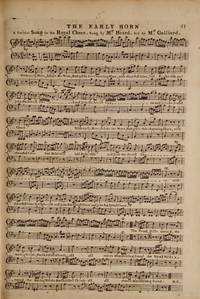
réf. 41155Folio. 19th half black leather with marbled boards spine in compartments gilt with titling gilt. Engraved throughout with the exception of the ninth songsheet which is typeset. Provenance Evan Charles Sutherland-Walker 1835-1914 with his armorial bookplate to front pastedown. Contains 25 songs including works by Arne Bride Dibdin Clarke Galliard Handel Harington Hook Jackson Leveridge Selby Smith and others. With occasional ornamentation filling out of chords and corrections in contemporary manuscript. 1. Clark. "The Broom on Cowdenknows" "When Summer comes the Swains on Tweed". London ca. 1780. 1f. recto music verso blank pp. BUC p. 1075. Jeremiah Clarke ca. 1743-1809 English composer violinist and organist; his published works all printed in London consist of songs and keyboard sonatas with instrumental accompaniment. 2. Dibdin. "While the Lads of the Village . Sung by Mr. Bannister." "J.W." printed to foot of music. London: John Welcker ca. 1775. 1f. recto music verso blank pp. BUC p. 1078. Charles Dibdin 1745-1814 English composer dramatist poet actor singer and entertainer wrote many songs. 3. Arne. "Water Parted from the Sea . Sung by Mr. Tenducci in Artaxerxes." London ca. 1765. 1f. recto music verso blank pp. BUC p. 57. Alfred Thomas Augustine Arne 1710-1778 an English composer violinist and keyboard player was "the most significant figure in 18th-century English theatre music." Peter Holman and Todd Gilman in Grove Music Online 4. Jackson. "Delia . Sung by Mr. Squibb at Marybone! Gardens. Set to Music by Mr. Wm. Jackson of Exeter." London ca. 1770. 1f. recto music verso blank pp. BUC p. 552. William Jackson 1730-1803 an English composer and organist wrote a number of songs canzonets etc. "His best music is to be found in his secular vocal works where he demonstrates an ability to blend a natural melodic style with a sensitivity to text." Richard McGrady in Grove Music Online 5. Galliard. "The Early Horn . A Fav'rite Song in the Royal Chace. Sung by Mr. Beard. Set by Mr. Galliard." London ca. 1737. 1f. recto music verso blank pp. Paginated 31 at upper outer corner. BUC p. 358. John Ernest Galliard ca. 1687-1749 German composer and oboist "certainly played a significant role in London's musical life in the first half of the 18th century." Roger Fiske revised by Richard G. King in Grove Music Online 6. Smith. "Zoreb and Zaida . Sung by Mr. Morgan." London ca. 1770. 1f. recto music verso blank pp. JISC one copy only at Oxford University. 7. Handel. "Let me Wander . L'Allegro Il Penseroso." London: Printed for J. Bland No. 45 Holborn ca. 1790. 1f. recto blank verso music pp. HWV 55. BUC p. 433. George Frideric Handel 1685-1759 English composer of German birth was "one of the greatest composers of his age." Anthony Hicks in Grove Music Online 8. Handel. "L'Allegro il Penseroso ed il Moderato Or Let the Merry Bells." London: Bland ca. 1790. 1f. recto music verso blank pp. HWV 55. BUC p. 433. 9. Bride. "The Joy-Inspiring Horn . A Favorite Hunting-Song. Set by Mr. Bride." London: R. Falkener ca. 1775. i blank 2 i blank pp. BUC p. 135. Typeset with an arrangement for two German flutes in score on the second page. Tear extending from lower margin into three systems of music; small loss to lower outer corner of first page of music; imprint trimmed but possibly the Falkener edition where the imprint appears at the foot of the second page of music. OCLC 43123680. 10. Handel. "Sung by Mr. Beard in Alexander's Feast" "Happy happy pair". London ca. 1740. i blank 2 i blank pp. HWV 75. Not in BUC. 11. Leveridge. "The Roast Beef Cantata." London ca. 1770. 4 pp. BUC p. 1026. Richard Leveridge 1670-1758 English bass and composer was "a leading singer on the London stage and a popular composer of songs." Olive Baldwin revised by Thelma Wilson in Grove Music Online 12. "The Camp Medley" "The Lark was up the Morn was grey". London: Longman & Broderip ca. 1780. BUC p. 595. 4 pp. With trill markings in contemporary manuscript. 13. "The Banks of the Dee A favorite Song" "It was summer". London: Bland ca. 1780. 1f. recto music verso blank pp. BUC p. 549 other editions. 14. "He Stole my Tender Heart Away . A Favorite Song" "The Fields were green". London ca. 1780. 1f. recto music verso blank pp. BUC p. 334. 15. Hook. "The Favorite Song Sung by Miss Brown in the Scheming Lieutenant" "Beneath a green shade". London: CST handstamp Charles and Samuel Thompson ca. 1775. 1f. recto music verso blank pp. JISC two copies at the British Library and the National Library of Scotland. James Hook 1746-1827 was a noted English composer whose songs were "regularly performed at the main London pleasure gardens." Pamela Gairl in Grove Music Online 16. "Social Pow'rs . A Favourite Song" "Come now all ye Social Pow'rs". London: Printed for J. Bland No. 45 Holborn ca. 1785. 1f. recto music verso blank pp. BUC p. 208. 17. "The Invitation Sung at Marybone Gardens by Mrs. Vincent. Mr Lowe. Miss Davis. Mr Raworth. and Mr Taylor" "Come ye party Jangling Swains". London ca. 1766. 1f. recto music verso blank pp. BUC p. 209. 18. Selby. "The Chace of the Hare . A New Hunting Song." 1f. recto music verso blank pp. BUC p. 940. Minor loss to flute line. 19. "Fair Hebe. Sung by Mr. Beard at Ranelagh Gardens" "Hebe I left with a cautious Design". London ca. 1750. 1f. recto music verso blank pp. BUC p. 324. With "Fair Hebe" in contemporary manuscript to blank verso. 20. Harington. "Air. by Mr. Harington of Bath" Gentle Airs sweet Joys impart". London ca. 1780. 1f. recto music verso blank pp. BUC p. 446. Henry Harington 1727-1816 English composer physician and author was a leading contemporary composer of glees catches and duets. 21. Arne. "The favourite Hymn of Eve. In the Oratorio of Abel" "How Chearful along the gay Mead". London ca. 1755. 1f. recto music verso blank pp. JISC one copy only at Oxford University. 22. "The Cotillon" "Hail Politeness pow'r divine". London: Rd. B__e ca. 1770. 1f. recto music verso blank pp. BUC p. 416. 23. Arne. "The Echoing Horn in Thomas & Sally." London: Printed and sold by S. Phillips in St. Martins Court ca. 1765. 1f. recto music verso blank pp. BUC p. 45. 24. Arne. "Hebe . Set by Dr. Arne" "When forc'd from dear Hebe". London: Walsh 1752. 1f. recto music verso blank pp. BUC p. 47 25. "Anna A Particular Favourite Irish Song. Sung by Miss Catley - and - Mr. Leoni." "Shepherds I have lost my Love". London: I. F.entum ca. 1775. 1f. recto music verso blank pp. BUC p. 943. Bound with: Clark. Eight Songs with Instrumental Parts in Score Composed by Jeremiah Clark Organist in Birmingham Opera Seconda. London: Printed for the Author and Sold by Messrs. Straight & Skillern Music Engravers and Printers in St. Martins Lane near Charing Cross ca. 1775. 1f. recto title verso blank 34 pp. Engraved throughout. BUC p. 94. RISM C2618 and CC2618 two copies in the U.S. at Cornell University and the Library of Congress. Index in pencil to front free endpaper. Binding worn rubbed and bumped. Slightly worn; occasional minor imperfections including small tears soiling and stains. unknown books
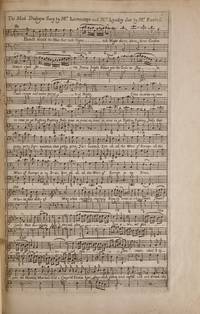
réf. 41185Folio. Contemporary dark brown leather-backed blue/gray boards. Titled "A collection of Songs by several eminent Masters" in contemporary manuscript on recto of first page of music. Engraved throughout. Provenance With "Lucy Gregory July the 6th 1756" and "Prince Gregory" in contemporary manuscript to front pastedown. Manuscript titling and annotation "Ex dono Revd. Dr. Dawson For use of Musical Society Windsor Castle to be returned to Dr. Dawson When ye club ceases viz when it is reduced to three persons" to blank recto of first song along with title and index to blank verso of final song. Contains 33 songs including works by Barrett Blow Eccles Galliard Handel 8 Leveridge Orlandini Pepusch Daniel Purcell Henry Purcell 2 Weldon and others. Scored mainly for voice most for one voice and few for two and figured basso continuo with single-line flute arrangements for some songs. 1. Handel. "A Favorite song in the Opera of Theseus" "See see your faithfull lover pineing". London ca. 1720. i blank 2 i blank pp. BUC p. 1001. 2. Purcell H. "Sing all ye muses. A song set by Mr. Henr. Purcell The Words by Mr Durfey." London ca. 1700. From Part I of The Comical History of Don Quixote. 4 pp. BUC p. 861 another edition. Scored for two voices and figured basso continuo. 3. Handel. "Mi brilla in English and Italian" "Be Kind and Love" / "Mi brilla nel seno". London ca. 1720. i blank 2 i blank pp. HWV 10 Silla.BUC p. 93. 4. Purcell H. "The Mad Dialogue Sung by Mr. Leveridge and Mrs. Lynsey" "Behold the man with gigantick might". From The Richmond Heiress. London ca. 1700. 3 i blank pp. BUC p. 862. 5. Handel. "Vieni torna in English & Italian" "Turn o turn thee dearest Creature / Vieni torna Idolo mio". London ca. 1715. i blank 2 i blank pp. HWV 9 Teseo. BUC p. 1041. 6. Handel. "A Favourite Song by an Eminent Master Within the Compass of the Flute" Recitativo: "Lo here my Love" / Aria: "Love in her eyes sits playing". London ca. 1725. i blank 2 i blank pp. BUC p. 624. 7. Handel. "A Song with a Symphony for an Octave Flute & Violins" Recitativo: "Ye verdant Plains" / Aria: "Hush ye pretty warbling Quire". London ca. 1722. i 3 paginated 4-6 i blank pp. HWV 49 Acis and Galatea. BUC p. 432 date incorrect; JISC two copies at Oxford and the British Library. In score for piccolo violin voice and unfigured basso continuo. 8. Handel. "A song by an Eminent Master" "Would you gain the tender Creature". London ca. 1750. HWV 49 Acis and Galatea. BUC pp. 432 1091. 9. Eccles. "Air in the Opera Semele. The words by Mr Congreve" "Come Zephrys". London ca. 1730. i blank 2 i blank pp. BUC p. 309. 10. Orlandini. "A favourite Song in the Opera of Arsaces Sung by Sigr. Senesino" "Se sol la mia morte" / "Cœlestial Corinna". London ca. 1721. i blank 2 i blank pp. BUC p. 56. "Lucy Gregory" in contemporary manuscript to upper outer corner of final blank page. 11. Anon. "The Ladys Repulse or Favourite Minuet in Hercules" a pasticcio. London ca. 1715. 2 pp. BUC p. 478. 12. Barrett. "A Song sett by Mr. Iohn Barrett Sung by Mrs. Lindsey" "Mistake not Nymph". London ca. 1705. 1f. recto music verso blank pp. BUC p. 86. 13. Barrett. "Liberia A Song Set to Musick" "Liberia's all my Thought". London ca. 1715. 1f. recto music verso blank pp. BUC p. 86. 14. Purcell D. "Lovely Charmer. A song in the Island Princess." London ca. 1700. 1f. recto music verso blank pp. BUC p. 856. 15. Leveridge. "A Favorite Song in the new Opera The words by Mr. Leveridge." London ca. 1720. 1f. recto music verso blank pp. BUC p. 339. 16. Anon. "Tom a Bedlam" "Forth from my dark and Dismall cell". London ca. 1720. 1f. recto music verso blank pp. BUC p. 345. 17. Leveridge. "A Scotch Song Sung by Mr. Leveridge the words by Mr Durfey" "Farewell my Bonny". London ca. 1710. 1f. recto music paginated "10" verso blank pp. BUC p. 325. 18. Blow. "Go Perjur'd Man. A Song for two Voices." London ca. 1710. 1f. recto music verso blank pp. BUC p. 115. 19. Anon. "A song by a Gentleman" "How charming". London ca. 1730. 1f. recto music verso blank pp. BUC p. 370. 20. Weldon. "Orpheus Song to the Waves Sett by Mr. Iohn Weldon Sung by Mrs. Linsey." "Stop O ye Waves". London ca. 1710. 1f. recto song verso version for flute pp. BUC p. 1065. 21. Anon. "A Song by a Great Master" "Beauteous Idol charming Creature". London ca. 1720. 1f. recto music verso blank pp. BUC p. 93. 22. Turner. "A Song On Mira's Singing and Beauty" "Singing charms The Bless'd above". London ca. 1710. 1f. recto music verso blank pp. BUC p. 1024. 23. M. F. "A song in the Italian style by F M" "Ah Crudel prenesto". London ca. 1720. 1f. recto music verso blank pp. BUC p. 638. A humorous song satirizing Italian opera with text in nonsense-Italian. 24. Galliard. "Sung by Mr. Pack in The Opera of Circe" "Fairest if thou can'st be King". London ca. 1720. 1f. recto music verso blank pp. BUC p. 358. 25. Vanbrughe. "Apollo to Daphne by Mr. Vanbrughe" "My Dearest Daphne". London ca. 1735. Not in BUC but may be from Vanbrughe's collection Mirth & Harmony; see BUC p. 1034. 26. Anon. "The Address with The Lady's Answer" "Ah lovely Nymph". London ca. 1725. 1f. recto music paginated "7" verso blank pp. BUC p. 11. 27. Handel. "A Song the words by Mr. Kirkland set to a Trumpet Minuet of Mr. Hendell's" "Phillis the Lovely". London ca. 1725. 1f. recto music verso blank pp. HWV 349 Watermusic. BUC p. 781. 28. Young and Leveridge. "The Reproach" "Send back my long stray'd Eyes" and "Mr. Leveridge's Tune." London ca. 1720. 1f. recto music verso blank. BUC p. 1098. The instrumental tune appears to be unrelated to the song; here may however be some association as the song incorporates imagery related to the eyes and the tune's name not given here is "Black-eyed Susan." 29. Anon. "A Song after the Italian Manner by an Eminent Master" "Lovely cruel charming fair". London ca. 1715. 1f. recto music verso blank pp. BUC p. 632 another edition. 30. Handel. "Di godere in English & Italian by Mr. Hendell" "Di godere" / "Oh my dearest". London ca. 1720. 1f. recto music verso blank. HWV 228. Not in BUC; possibly related to an edition in Foundling Museum. JISC "This song appeared in two editions in 1719: the first was in The Yearly Subscriptions a volume of twenty songs advertised on 5 December the second in the Monthly Mask of Vocal Music issued on 24 December". 31. Pepusch. "A Song in the Mask of Martillo" "Tender Hearts to ev'ry Passion". London ca. 1716. 1f. recto music verso blank pp. BUC p. 722. 32. Carey. "The Midsummer Wish Taken from the Journal" "Waft me some soft and cooling Breeze". London ca. 1725. 1f. recto music verso blank pp. BUC p. 165. 33. Leveridge. "A Song in the Beau Demolish'd Sung by Mr. Leveridge" "Whilst I'm carrouzing". London ca. 1730. 1f. recto music verso index in contemporary manuscript pp. BUC p. 615. Binding worn rubbed and bumped; spine partially lacking; lower board nearly detached. Minor dampstaining and worming; occasional small stains. John Barrett ca. 1674-ca. 1745 was an English composer and organist pupil of John Blow. "Like many of his contemporaries such as Jeremiah Clarke John Eccles and Daniel Purcell Barrett composed mainly for the theatre and his many songs mostly of the double-barrelled art song variety are both tuneful and attractive." Christopher Powell revised by H. Diack Johnstone in Grove Music Online John Blow 1649-1708 was an English composer organist and teacher. "By his mid-20s he had become the foremost musician in England and in later years he was the elder statesman of the Restoration school whose chief luminary was Henry Purcell." Bruce Wood in Grove Music Online John Eccles ca. 1668-1735 was an English composer. "Eccles's greatest talent is revealed in his many songs. Remarkable for their beautifully contoured melodies and impeccable prosody they quickly capture the mood and subtleties of the poetry and are eminently singable. His large works are notable for their dramatic pacing and their carefully planned tonal architecture. In the latter respect he surpassed even Purcell and was far in advance of his day. Eccles brought the Restoration tradition to its close. After Purcell's death in 1695 he was undoubtedly the greatest of the Restoration theatre composers." Stoddard Lincoln in Grove Music Online John Ernest Galliard ca. 1687-1749 German composer and oboist "certainly played a significant role in London's musical life in the first half of the 18th century." Roger Fiske revised by Richard G. King in Grove Music Online George Frideric Handel 1685-1759 English composer of German birth was "one of the greatest composers of his age." Anthony Hicks in Grove Music Online Richard Leveridge 1670-1758 English bass and composer was "a leading singer on the London stage and a popular composer of songs." Olive Baldwin revised by Thelma Wilson in Grove Music Online. Giuseppe Maria Orlandini 1676-1760 was an Italian composer. "The large number and wide spread of performances of his operas confirm the opinions of Burney La Borde Martini and Quadrio that Orlandini was highly celebrated as a composer of dramatic music. He was best known for his comic intermezzos in which genre his importance almost certainly outweighs that of Pergolesi. Indeed Orlandini's Bacocco e Serpilla under various titles and with added music by various composers appears to have been the most frequently performed piece of musical drama in the entire 18th century." John Walter Hill and Francesco Giuntini in Grove Music Online Johann Christoph Pepusch 1667-1752 a German-born composer and theorist active in England is best known for his arrangement of music for The Beggar's Opera to John Gay's libretto; he composed works in all genres including vocal music. Daniel Purcell ca. 1664-1717 brother or cousin of Henry Purcell was an English composer and organist. "Although he was a victim of invidious comparison with Henry Daniel was a talented composer whose style while perhaps too ornate is never dull or incompetent." Mark Humphreys revised by Robert Thompson in Grove Music Online Henry Purcell 1659-1695 composer and organist "was one of the most important 17th century composers and one of the greatest of all English composers." Peter Holman and Robert Thompson in Grove Music Online John Weldon 1676-1736 an English organist and composer "of considerable talent" was a pupil of Henry Purcell. Margaret Laurie revised by Stephen Bullamore in Grove Music Online. unknown books
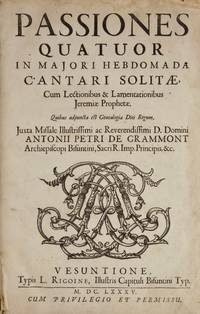
1685réf. 41147Vesuntione Besançon: Typis L. Rigoine Illustris Capituli Bisuntini Typ 1685. Folio. Full contemporary dark tan speckled calf. 1f. recto title with striking woodcut geometric-floral device verso blank 3-131 i blank pp. With neumatic notation typeset on 4-line staves throughout scored for solo voice. Binding worn rubbed bumped; upper board quite warped; upper approximately 1/2" of head of spine lacking. Occasional minor staining worming and dampstaining; minor loss to upper outer corners and gutter of first several leaves. OCLC 1119128101. "The story of the Crucifixion as recorded in the Gospels of Matthew xxvi-xxvii Mark xiv-xv Luke xxii-xxiii and John xviii-xix. In the Roman liturgy the Passion texts are recited as Gospel lessons during Mass on Palm Sunday Matthew Tuesday of Holy Week Mark Wednesday of Holy Week Luke and Good Friday John. At a very early date special lesson tones were developed for reciting the Passion and polyphonic settings of its texts have been made since the 15th century." Kurt von Fischer and Werner Braun in Grove Music Online "Along with the great responsories the Lamentations are musically the most important texts of Tenebrae ." Günther Massenkeil in Grove Music Online. Typis L. Rigoine, Illustris Capituli Bisuntini Typ unknown books
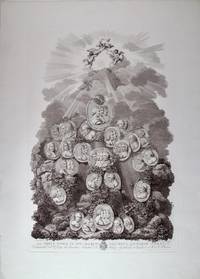
1807réf. 40691Firenze: La Societa Rainaldi 1807. Each print features small circular engraved portraits and includes mythological elements at the upper portion amongst clouds and rays of sunlight with a background of a rocky outcrop including elements including vegetation and a running stream. The scenes evoke the celestial qualities of music and a reverence for the musicians depicted. On good quality laid paper sheet size 695 x 505 mm; plate impression 650 x 365 mm. Plate 1 With printed dedication "Al Nobil uomo il Sig: March: Cav: Gius: Antonio Corsi Comandante del R. Corpo dei Cacciatori di Firenze e Gentlehome di Camera di S. M. il Re d'Etruria." Subjects include: Abel d'Arezzo Bach Bertoni Caffaro Campioni Cimarosa Clari Corelli Durante Fux Galilei Galuppi Gluck Handel Jomelli Ligneville Manna Leo Marcello Martini Miers Morales Palestrina Pena Perez Pergolesi Piccinni Poli Porpora Rameau Redi Rousseau Sacchini Sala San Martino Scarlatti Schuster Stefani Traetta Valotti and Zarlino. Plate 2 With printed dedication "Al Nobil Uomo il Sig: Giovanni di Poggio Baldovinetti Patrizo Fiorentino. La Societa Rainaldi D.D.D." Subjects include: Albinoni Anfossi Arrighi Asoli Basili Bianchi Borghi Bornei Brunetti Buonvicini Caruso Cherubini Cicchi Colla ERgizio Domenico Gizzi Gazzaniga Gretry Guglielmi Hasse Haydn Lully Manfredini Mariani Mayer Méhul Mozart Paër Paisiello Paolucci Pleyel Porta Prati Puccini Righini Sabbatini Salieri Saratelli Sarti Schüster Tarchi Tozzi Trillo Vinci and Zingarelli. Plate 3 With printed dedication "Al nobil uomo il sig: Conte Priore Ant: Colombani Verzeri Amatore delle Belle Arti e Professore dilettante della Musica." Subjects include: Capuzzi Cervetto Chabrand Clememnti Cramer Sr. Cramer Jr. Creuzer Kreutzer Dragonetti Dussek Ferrari Galeotti Geminiani Giardini Janevitz Janovich Krunpholtz Krumpholtz Mad. Krumpholtz La Motte Locatelli Lully Manfredi Mastrino Nardini Piantanida Pugnani Rodhe Roda Rolla Salomon Somis Steibelt Tartini Veracini and Viotti Several small marginal tears professionally repaired. Light horizontal crease to each plate hardly visible. A highly attractive set of important figures in the musical pantheon. Arrigoni & Bertarelli 2053 2097 and 3264. Rare. La Societa Rainaldi unknown books
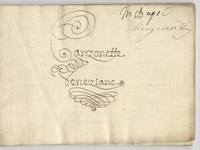
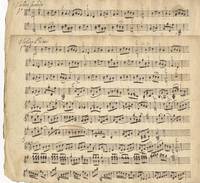
1790réf. 40900Italy 1790. Oblong octavo 158 x 227 mm. Disbound. Notated in black ink on 10-stave rastrum-ruled paper. i title 102 i blank pp. Two ownership inscriptions in early black ink in different hands to upper outer corner of title "M Bagot" and later "Margaret Hay." Musical fragment in pencil to free front endpaper. Corrections to bass line of "Nina mia" no. 46 in smaller notes. Contains the following songs: 1 Bell'insalata fresca. 2 pp. 2 Belle Putte Veneziane. 2 pp. 3 Se miro quel volto. 2 pp. 4 Mi esser Tedesca. 2 pp. In a humorous pidgin-Italian. 5 Mia garbata Pastorella. 2 pp. 6 Speranze del mio cuore. 2 pp. 7 Senti cara Ninetta. 2 pp 8 Adesso si son desperada. 2 pp. 9 Or ti conosco Filide ingrata. 2 pp. 10 Lasciatemi un momento. 2 pp. With melodic accompanimental material in treble clef. 11 Cara bell'Idol mio. 2 pp. 12 Mala cosa esser donna. 2 pp. 13 Duettino . O bella Nice. 2 pp. Duet; one verse. 14 Amanti sbandite. 2 pp. 15 Per pieta se in sen. 2 pp. 16 La mia cara passarina. 2 pp. 17 Se volè che vè la diga. 2 pp. 18 Or vien dalla Lorena. 2 pp. 19 Nina se vu provessi. 2 pp. 20 Solo m'importa. 2 pp. 21 Da quel primier momento. 2 pp. 22 Parlami pur sincera. 2 pp. 23 Cara mia fillida. 2 pp. 24 Cara Nina mio Tesor. 2 pp. The melody is identical to Ah! vous dirai-je mama Twinkle Twinkle in the English-speaking world. 25 Non sò come la sia. 2 pp. 26 Alfin de contenti. 2 pp. 27 Son innamorà. 2 pp. 28 Si Tirsi a Ciglio asciutto. 2 pp. 29 Nel primo istante. 2 pp. 30 Giancora nò sè stuffa. 2 pp. 31 Cara Nina son pentio. 2 pp. 32 Un certo Spiritello. 2 pp. 33 Clori vezzosa amabile. 2 pp. 34 Son Pastorella amante. 2 pp. 35 Lusinghiera m'ingannasti. 2 pp. 36 Donne cortesi. 2 pp. 37 Quanto è mai semplice. 2 pp. 38 Esce dal Gange fora. 2 pp. Duet one verse. 39 L'amor che sento. 2 pp. 40 Gran destin. 2 pp. 41 Giovinotti con le Donne. 2 pp. 42 Cara Nina vò portà. 2 pp. 43 Poi chè con te non vale. 2 pp. 44 Clori se più non torno. 2 pp. 45 Quell'aria brillante. 2 pp. 46 Nina mia. 2 pp. 47 Una cara Tombolina. 2 pp. 48 Se mai volta un occhiada. 2 pp. 49 L'è un gran intrigo. 2 pp. Small tears to lower edge of front free endpaper; very occasional minor stains and soiling mainly to edges and blank lower margins; one leaf detached. "In the first half of the 18th century the expression 'da battello' - associated with the term 'canzone' 'aria' 'arietta' or 'canzonetta veneziana' - referred to strophic songs for solo voice and basso continuo songs in Venetian dialect in AABB musical form. Initially this repertoire was used for 'freschi' nocturnal gondola rides which explains the origin of the term. Lyrical texts written by amateurs often belonging to the aristocracy and Venetian nobility were mostly lover's serenades but also humorous or satirical songs related to Carnevale. Musical borrowings were quite common and heterogeneous since they came from oral tradition or opera arias as Benedetto Marcello satirized in Il Teatro alla moda 1720 and as has been recently confirmed. From the 1710s to the 1760s hundreds of anonymous songs 'da battello' were collected in manuscript anthologies with most of them later published by John Walsh in his three volumes of Venetian Ballads London 1742 1746 and 1748 attributed to Johann Adolf Hasse and 'All the Celebrated Italian Masters.' In the second half of the 18th century the European circulation of the sources of the manuscripts the success of Walsh's editions and the prestige of this vocal repertoire attest that the 'canzoni da battello' were enjoying international success in salon performances too as musical product sought by 'good taste collectors.' Such wide appeal was witnessed by Rousseau Dictionnaire de Musique 1768 Quantz Essai d'un méthode pour apprendre à jouer de la flûte traversière 1752 and Burney The Present State of Music in France and Italy 1772. The term 'barcarola' - often associated with the 'canzone da battello' named after Rousseau's definition in his Dictionnaire . had never been used in the Italian sources of the first half of the century. Instead it indicated different repertoires belonging to the Romantic era which shared the same origin as the early 18th-century songs." Sergio Barcellona in Grove Music Online An attractive collection of light-hearted Italian strophic songs marking a moment in time in the development of the 'canzona da battello' genre between its baroque and romantic incarnations. unknown books
1780réf. 40865Italy 1780. Oblong folio 240 x 304 mm. Notated in black ink on 10-stave rastrum-ruled paper. Watermark of a bunch of grapes. Violino primo: i blank 2 i blank pp. Violino secondo: i blank 2 i blank pp. With three measures cancelled. Slightly worn; some small losses tears and soiling to edges and blank margins; a few minor stains; occasional showthrough. Possibly unrecorded. Not located in the RISM manuscripts database. The composition is in four numbered parts. The first in 2/4 presents a theme; the second is a variation on that theme; the third is in 6/8 in the style of an English jig with some scalar ornamentation and two tiratas; the fourth and fifth parts return to 2/4 and are further variations on the original theme this time with sixteenth-note variations incorporating trills scales leaps and bariolage. A charming and vigorous late-18th century variation set and Giga for two violins cleverly composed to exploit the varied registers timbres and figurations possible with the given instrumentation. unknown books
1750réf. 40847Naples 1750. Quarto 214 x 277 mm. Notated in black ink on 10-stave rastrum-ruled paper. 7 i blank pp. Watermark of a fleur-de-lis within a circle with indecipherable letters below. A sacred work for alto voice and figured basso continuo in three movements with text drawn from the Salve Regina: 1 Eia ergo Advocata . Un poco and.ante. In B flat major 3/8 pp. 1-3 2 Et Jesum benedictum . Comodo. In D minor 2/4 !4/4 pp. 3-5 3 ò clemens ò pia . Largo. In F minor 3/8 !6/8 pp. 6-7 Dampstaining to inner margins extending into clefs and approximately one quarter to one half measures of some music with all music remaining legible. Not located in the RISM manuscripts database. An attractive sacred vocal work by a professional composer of a high artistic quality. unknown books
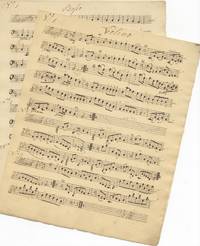
1765réf. 40894England 1765. Folio 242 x 299 mm. Contemporary wrappers with titling and first four bars of first minuet treble and bass to upper. Copyist manuscript in black ink on 12-stave rastrum-ruled paper. Watermark "IV." Contains ten minuets in various keys. Bass part unfigured. Violino: 4 pp. Baſso: 4 pp. Wrappers worn and soiled with dampstaining to outer margins. Minor internal soiling; a few small stains; tear to inner margin of first leaf of violin part repaired with archival tape to verso. Apparently unrecorded. Not located in RISM manuscripts database. An elegant set of high baroque minuets. unknown books
réf. 395521 leaf. Narrow oblong folio 287 x 48 mm. With music and text in Latin "verum DEUM" indicating that this fragment may have been part of a liturgical manuscript. Very slightly worn and soiled; light vertical crease. In very good condition overall. Early manuscript organ tablature is quite rare to the market. unknown books
réf. 39572Vidit suum dulcem natum" 11ff. of various sizes the solo part being 237 x 185 mm. Notated in brown ink on 5-7 stave rastrum-ruled paper including one "Solo" part; four "Dessus" parts; three "2e. Dessu ou hatue contre pour l'Enfant" parts; two "Haute contre pour l'Enfant" parts; and one bass part with text "In tribulatione mea" in the same meter and key as the other parts. "Quid tibi feci" 4ff. of various sizes. Notated in black ink on 8-9 stave rastrum-ruled paper being several copies of the bass part of a choral piece for larger forces. Some small stains and soiling to a few leaves but otherwise in very good condition. Unlocated in RISM. Two unrecorded early 19th century choral pieces. The carol-like composition "Vidit suum dulcem natum" contains a full solo part and enough of its inner parts to lend itself to a satisfactory reconstruction and performance. unknown books
réf. 39441Folio ca. 335 x 235 mm. 8 pp. in total with each of the four parts notated in ink on both sides of a single leaf. Text in Latin. Includes settings of "In lumen tu splendor" "Ibant Maji quam indesant" "Hic nempe mundi gaudia" and "Qui pius puidens." With several corrections; a short passage added to the end of the first page of the Canto part in another hand. Somewhat worn; slightly browned; creased at central folds with several small holes; frayed at edges with small chips; some show-through; portions of both upper and lower blank margins lacking affecting titling but not notation. We have not located any other sources of the present works either manuscript or printed. unknown books
réf. 39522Large oblong octavo ca. 186 x 257 mm. Notated on six 5-line rastrum-ruled staves in black ink on both sides of a single leaf. Some light foxing and staining; edges worn with tears resulting in minor loss of music. The music on the recto "Et in terra pax hominibus" and "Qui tollis peccata mundi" is composed in a somewhat chant-like style mostly syllabic with only occasional miniature melismas. The music on the verso two settings of "Kyrie eleison" and one of "Christe eleison" is more flowing with more frequent scales contrasts in vocal range and shifts in melodic contour. The initial letters of each movement are executed in an ornamental calligraphic script. An attractive 17th century document revealing a variety of text-setting strategies and styles. unknown books
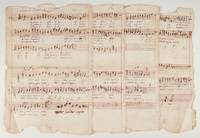
réf. 39479Large oblong octavo ca. 163 x 225 mm. 2 pp. Notated in ink on 4 six-line staves per page of a bifolium. With early ownership signature to foot of first page of music. Minor spotting and browning. Crux fidelis is a hymn sung on Good Friday. This setting presents a small portion of what may be a larger composition five phrases of music for soprano alto tenor and bass voices. The first two phrases of music are composed in a homophonic style where the voices move together. The following three phrases incorporate imitation between the voices. Where the music cuts off the start of the next phrase is visible: a return to the homophonic style from the beginning. Vocalists singing multi-voice works in the 16th and 17th centuries most often used individual parts. As the music in this piece is in score and includes several cancellations and corrections it may have been the composer's working manuscript. The bottom line of each six-line staff includes numerous vertical dashes the meaning of which is not indicated by the author of the manuscript but they may shed light on the composition or performance practice of the hymn. We have not located any other sources of this setting. unknown books
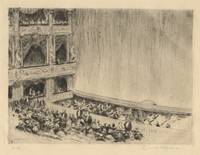
réf. 390891915. Signed in full in pencil just outside platemark at lower right. Also signed and dated in the plate "E. Oppler 15" at lower left inscribed in pencil "9-50" just outside platemark at lower left and "VII.II" at lower left corner with titling in pencil to lower margin. On ivory laid Bosquet watermarked paper. Impression size 180 x 270 mm. 7 x 9-1/2" with wide margins. A pre-performance or intermission scene depicting three tiers of an elaborate performance space with people both sitting and standing some in animated conversation with players in the orchestra pit before a closed curtain. Number 9 of an edition limited to 50 copies this impression an apparent second state of seven. Oppler is considered the premiere chronicler of ballet in Germany. "He spent his student years in Munich London and Holland before settling in Berlin in 1905. As a member of the Berliner Secession he developed into a sought-after portraitist and from 1912 through his drawings and graphic works to one of the perhaps to the most significant German artistic chroniclers of ballet history. Especially the Ballets Russes and their soloists owe to Oppler's enthusiasm an appreciation known until today only among ballet afficionados. Oppler is recognized as the inventor of an illuminated drawing pencil which enabled him to sketch from the audience during rehearsals and performances." Deutsches Tanzarchiv Köln. unknown books
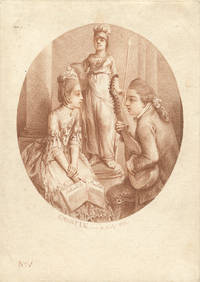
1772réf. 37112London 1772. 235 x 168 mm. On laid paper with "No. V" printed at lower left. A female singer holds an open music book on her lap entitled "Pastorale by Musolini." A Signor Mussolini is recorded as a singer and mandolin player making his first public appearance at Covent Garden on 27 April 1773 "playing a concerto on the double mandolin and royal guitar and accompanying a young gentlewoman in song." Highfill et al. Vol. 10 p. 407. unknown books