1 724 résultats
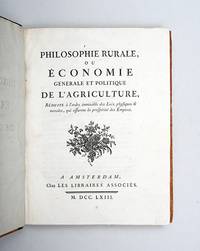
1763réf. 153616Amsterdam: Chez les Libraires Associés 1763. The new science of economics Rare first edition presenting "perhaps the most complete and magisterial account of the views of the Physiocratic school" Higgs. "Quesnay collaborated very substantially in preparing this last major work contributing the final chapter with further explanations and manipulations of his Tableau Économique analysis" The New Palgrave. Schumpeter calls the work "the first of the four textbooks of physiocrat orthodoxy" p. 225. It contains for the first time Quesnay's masterful explanation of his Tableau Économique "one of those works in the history of economics which have often been regarded as an anticipation of modern theories" Schumpeter p. 242. Originally printed as a pamphlet of 16 pages in 1758 in a minute number of copies Quesnay's Tableau Économique was first revealed to the public as the final part of Mirabeau's L'Ami des Hommes in 1760. In the Philosophie rurale Quesnay for the first time gives a full explanation of his system. The Tableau économique is credited as the "first precise formulation" of interdependent systems in economics and the origin of the theory of the multiplier in economics. An analogous table is used in the theory of money creation under fractional-reserve banking by relending of deposits leading to the money multiplier. In a letter to Mirabeau written late in 1758 Quesnay remarks "J'ai taché de faire un tableau fondamental de l'ordre économique pour y représenter les dépenses et les produits sous un aspect facile à saisir et pour juger clairment des arrangemens et des dérangemens que le gouvernement peut y causer" translated: "I have tried to make a fundamental table of the economic order in order to represent the expenses and the products in an aspect easy to grasp and to judge clearly of the arrangements and disturbances that the government can cause there". "A most remarkable analysis of the economic condition of his country" Palgrave the Tableau économique "is the most important and famous work of Physiocracy and has often been regarded as a summary of the entire corpus of Physiocratic economics. The Tableau has also been regarded as the analytical synthesis of the logical structure of Quesnay's economics or at least as its most relevant aspect. The Tableau économique is one of those works in the history of economics which have often been regarded as an anticipation of modern theories. The Tableau has been considered a first rough presentation of Keynes's multiplier and as a sort of general equilibrium system of a Walrasian type. For others the Tableau is an input-output table. Because of the Tableau Quesnay has been regarded as an early econometrician. The Tableau has also been interpreted as the first classical system of price determination thus anticipating Marx's reproduction schemes and Sraffa's price system" Giovanni Vaggi in The New Palgrave. Quarto 260 x 192 mm. With 3 engraved plates including the Tableau économique. Contemporary quarter marbled sheep orange paste paper sides light blue endpapers. Housed in a black cloth flat-back box by the Chelsea Bindery. Neatly restored at extremities insect abrasion to spine slight cockling to paste paper sides contents clean and fresh. A very good copy. Goldsmiths' 9836; Higgs 2881; INED 3204; Kress 6120; Mattioli 2435. hardcover
réf. B9781017697056Hardback. New. hardcover
réf. 2558Paris Nilsson 1897 245p orné de cent tills obtenues par la photographie d'après nature dont dix planches sur texte demi-toile Photos: Paul Sescau - unknown
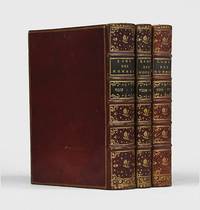
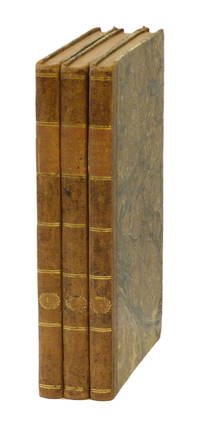
1758réf. 153197Avignon: no publisher 1758-60. The first public appearance of Quesnay's Tableau Économique First complete edition of all six parts containing the first public appearance of Quesnay's Tableau Économique; a superb copy in contemporary French red morocco very uncommon thus. The first to follow Quesnay in the foundation of the Physiocratic circle Mirabeau was familiar with and influenced by Cantillon's theories. As well as fully articulating the principles that were to mark the school of physiocrats and expounding their implications regarding population agriculture and commerce the Ami de l'Homme contained a reproduction of Quesnay's Tableau Économique vol. 6 previously published separately in very small numbers in 1758 and 1759. Mirabeau's reproduction made the essay obtainable thus bringing the founding document of the school of physiocrats to the attention of a wide public. "This remarkable treatise created the greatest sensation throughout the whole of Europe. It is said to have gone through forty editions and was translated into several languages. Its anonymous author soon discovered became the idol of the day and was generally referred to by the soubriquet which he had chosen for the title of his book" Palgrave II p. 775. Following the publication of the first three parts Mirabeau made the acquaintance of Quesnay who had been greatly impressed by his book. "Mirabeau now became the fervent admirer of Quesnay and between them they founded the school of the Physiocrats" ibid. With this new edition of the first three parts a fourth part was published in 1758 in which Quesnay's influence is clearly visible. The remaining two parts were published in 1760. The final part is of particular importance as it contains the first obtainable appearance of Quesnay's Tableau Économique which was previously published separately in tiny numbers in 1758 and 1759. An English translation was first published in 1766. 6 parts in 3 vols quarto 252 x 195 mm. Engraved frontispiece in part I engraved head- and tailpieces initials. Contemporary French red morocco spines elaborately decorated gilt in compartments twin green morocco labels raised bands triple gilt rule border to sides gilt inner dentelles marbled endpapers gilt edges green silk ribbon bookmarkers. Authorship attribution to first title in ink in an early hand. Bar a few trivial marks to sides the binding in beautiful condition corners a touch rubbed; vast majority of contents bright crisp and clean with very occasional spotting third volume with some light browning and foxing; loss to lower corners of leaves vol. 1 Hh2 and vol. 3 Aa3 not affecting text; patch of dampstain to last two leaves and final blank of vol. 2. A near-fine set. Einaudi 3941; Goldsmiths' 9317; Higgs 1628 1631; INED 3194; Kress 5735 & 5736; Mattioli 2427 2428 2429 & 2430. hardcover
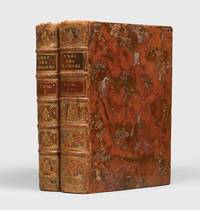
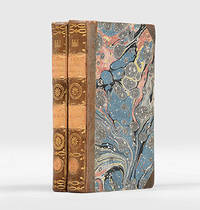
1756réf. 131625Avignon: n.p. 1756-60. The first public appearance of Quesnay's Tableau économique First edition of all six parts containing the first public appearance of Quesnay's Tableau économique. The first to follow Quesnay in the foundation of the Physiocratic circle Mirabeau was familiar with and influenced by Cantillon's theories. As well as fully articulating the principles that were to mark the school of physiocrats and expounding their implications regarding population agriculture and commerce the Ami des Hommes contained a reproduction of Quesnay's Tableau économique vol. VI previously published separately in very small numbers in 1758 and 1759. Mirabeau's reproduction made the essay obtainable thus bringing the founding document of the school of physiocrats to the attention of a wide public. "This remarkable treatise created the greatest sensation throughout the whole of Europe. It is said to have gone through forty editions and was translated into several languages. Its anonymous author soon discovered became the idol of the day and was generally referred to by the soubriquet which he had chosen for the title of his book" Palgrave II p. 775. Following the publication of the first three parts Mirabeau made the acquaintance of Quesnay who had been greatly impressed by his book. "Mirabeau now became the fervent admirer of Quesnay and between them they founded the school of the Physiocrats" ibid. In 1758 a fourth part was published in which Quesnay's influence is clearly visible. The remaining two parts were published in 1760. The final part is of particular importance as it contains the first obtainable appearance of Quesnay's Tableau économique which was previously published separately in tiny numbers in 1758 and 1759. An English translation was first published in 1766. 6 parts in 2 vols quarto 246 x 188 mm. Contemporary French mottled calf spines ruled and decorated gilt in compartments all edges red. Joints and extremities expertly restored scattered foxing to contents; a handsome copy. Einaudi 3941; Goldsmiths' 9092; Higgs 1143 1631 & 2160; INED 3194; Kress 5543 & 5736; Mattioli 2426 2428 & 2429. unknown
réf. 2625Paris/Lyon Buisson/Bruyset 1792 392p en XI livres broché non-coupé plats carton taches de mouillures sur les 7 premières pp autrement bon état - publication posthume par Jean-Louis Giraud Soulavie unknown
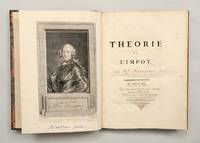
1760réf. 83935No place: no printer 1760. First edition of a spirited and able attack upon the financial administration of France and especially upon the "fermiers généraux" whom Mirabeau regarded as parasites preying upon the vitals of the nation. The work highlights the problems and injustices of the French system of taxation and added fuel to the fire of the coming revolution. The king disapproved of the work; Mirabeau was imprisoned on 16 December 1760 but through the efforts of Madame de Pompadour and others was released on Christmas Eve under orders to leave Paris for his estate at Bignon. The work proposes a reorganization of financial administrative machinery the abolition of the "Fermes" a reduction in the taxation upon salt with the object of increasing the total yield and a special tax upon tobacco farms. The domaine the post and the mint were to be further sources of revenue. The author ranks as one of the earliest important writers on taxation. Higgs notes that the book is "of real importance in the history of financial theory" The Physiocrats p. 57. Quarto 257 x 192 mm. Additional engraved frontispiece portrait of the author. Contemporary sprinkled calf spine ruled and decorated gilt in compartments red morocco label sprinkled edges. Spine ends and corners skilfully repaired. Manuscript note to title-page "par Mr Mirabeau père" with a short verse "helas dans le Siècle ou nous sommes / pour avoir dit la vérité / Mirabeau cet ami des hommes vient de perdre la liberté" in a neat calligraphic hand. Occasional light foxing. A very good copy. Goldsmiths' 9836; Higgs 2881; INED 3204; Kress 6120. unknown
1785réf. 751L23London: W Faden 1785. First edition. Leather. Very Good. 9" by 5.5". Not Stated. A very scarce English language edition of this political writing regarding the free navigation of the Scheld. Written by one of the leaders of the early stages of the French revolution Honore Gabriel Riqueti. ESTC reference no: T83504. A very scarce work This translation is of Mirabeau's 'Doutes sur la liberte de l'Escaut reclamee par l'empereur'. Engraved vignette to the title page. With the folding map which has been rebacked with linen. Bookplate of the City of Westminster to the front pastedown. The Scheldt river flows through northern France Western Belgium and southwestern part of the Netherlands with its mouth at the North Sea. Access to this river was the subject of the brief Kettle War of 1784 and during the French Revolution. This book looks at this issue of access to the river. In a half morocco binding. Externally generally smart. Patches of rubbing to the spine and extremities. Small loss to the head and tail of spine. Bookplate to the front pastedown. Internally firmly bound. Pages are bright. A few chips to the title page and to a2 and A1. Pages are clean. Very Good W Faden hardcover
1901réf. B4152New York & Ohio : St. Dunstan Society c. 1901. A fine and handsome set. Top edges gilt front and bottom edges uncut. . Binding: Rebacked tastefully to match the orginial boards tooled gilt rules and elaborate design on front covers blind tooled elaborate design on back matching pasted and free end papers. Notes: Honoré Gabriel Riqueti comte de Mirabeau 9 March 1749 – 2 April 1791 was a French revolutionary as well as a writer diplomat freemason journalist and French politician at the same time. He was a popular orator and statesman. During the French Revolution he was a moderate favoring a constitutional monarchy built on the model of Great Britain. He unsuccessfully conducted secret negotiations with the French monarchy in an effort to reconcile it with the Revolution. In the years leading up to the Revolution he communicated with Benjamin Franklin and Thomas Jefferson—who served successively as United States Ministers to France in that period—and used materials provided directly by each of them in several of his pre-Revolution publications. After a preliminary trip to Berlin in early 1786 he was dispatched that July on a mission to the royal court of Prussia; returning in January Mirabeau published a full account in his Secret History of the Court of Berlin 1787.10 This account denounced the Prussian court as scandalous and corrupt described the King of Prussia as weak and overly emotional and labeled Prince Henry of Prussia brother of Frederick the Great and a guest of the French court as narrow-minded and incompetent. The resulting uproar was an extreme embarrassment for the French government which quickly censored the book but could not prevent its widespread notoriety. Mirabeau's episode provided inspiration to many more radical publishers who came to regard Mirabeau as a leader of the coming revolution.11 Size: 4to: 160mm x 230mm Illustration: Illustrated with a color frontispiece. Category: Book Europe Germany;Book History St. Dunstan Society hardcover
réf. 1405-20Bln. Hyperion 1919. 8°. 171 1 S. Mit Titelportr. OHLdr. Mit Goldpräg. Kopfgoldschn.Tit. stockfleckig. vgl. Hayn-Got. IV 548f. - Eines von 1200 numerierten Exemplaren. (Bln.), Hyperion [1919]. unknown
réf. 98096Rotterdam/ Paris 1789. 8vo. Engr. portrait 4 139; engr. portrait 4 viii 148;4 xv blank 127 pp. Stain in upper margins in part one and two paper repair p. 116 in part one. Contemporary half calf gilt spines with red labels and marbled paper boards red marbled edges. The two portrait are of Fredric II and Catharine the Great. Behind the first part is a new titelpage with ”Letters d’un voyageur anglois” behind the third part is ”Essai sur la secte des illuminés” by Jean Pierre Louis de Luchet or La Roche du Maine Marquis de Luchet with a separate extra title leaf. Several editions of both works were published in 1789 at least five of ”Essai”. Mirabeau’s ”Histoire secrete” was first printed in Alençon and made a scandal and was banned immediately after its publication. In the present edition the half-title and the title pages to part one and two are printed on different paper than the rest probably a titel-auflage. Luchet 1740-92 was a French officer journalist and librarian. In ’Essai sur la Secte des Illumines’ ”he denounces the leaders of the Bavarian Illuminati whom he accused of controlling Freemasonry”. hardcover
1769réf. 126597Amsterdam et se trouve à Paris: Lacombe 1769. Scarce complete thus attractively bound First duodecimo edition of Mirabeau's Les économiques also printed in a single quarto volume format the same year. A further volume was published in 1771 also in both quarto and 2-volume duodecimo formats. Complete sets are very scarce. Mirabeau who seems to have taken the title of this work from the Économiques of Xenophon here gives various methods of economic instruction for the various levels of society; he also suggests the method of approach in the instruction of heads of government. 2 vols duodecimo 162 x 95 mm. Engraved head- and tailpieces. Near-contemporary half calf twin morocco labels spine elaborately tooled in gilt red morocco onlay roundels with vol. numbers to foot of spine marbled paper boards. Ownership signature to title pages of both vols of one H. Wrangel possibly a descendant of the Swedish Governor General Hermann Wrangel 1584-1653 whose crest incorporates a turret as stamped at the head of each spine. Extremities lightly rubbed two neat paper repairs to title leaf of volume 1 else a very good set attractively bound. Einaudi 3943; Higgs 4568; INED 3196; Mattioli 2432 hardcover
réf. #[37142]Brussel 1830 248 pages original paper binding considerable damage block not sound and in one part broken Honoré Gabriel Riqueti Count of Mirabeau 9 March 1749 - 2 April 1791 was a leader of the early stages of the French Revolution. A noble he had been involved in numerous scandals before the start of the Revolution in 1789 that had left his reputation in ruins. Nonetheless he rose to the top of the French political hierarchy in the years 1789-1791 and acquired the reputation of a voice of the people. A successful orator he was the leader of the moderate position among revolutionaries by favoring a constitutional monarchy built on the model of Great Britain. When he died of natural causes he was a great national hero even though support for his moderate position was slipping away. The later discovery that he was in the pay of King Louis XVI and the Austrian enemies of France beginning in 1790 brought him into posthumous disgrace. Historians are deeply split on whether he was a great leader who almost saved the nation from the Terror a venal demagogue lacking political or moral values or a traitor in the pay of the enemy. The frisian patriot Coert Lambertus van Beyma went to Paris to speak to Mirabeau. This book is a well documented product of several journalists amongst others Jacques Pierre Brissot. Most attention is drawn to the declaration of human rights. unknown
réf. #[31348]Honoré Gabriel Riqueti Count of Mirabeau 9 March 1749 - 2 April 1791 was a leader of the early stages of the French Revolution. A noble he had been involved in numerous scandals before the start of the Revolution in 1789 that had left his reputation in ruins. Nonetheless he rose to the top of the French political hierarchy in the years 1789-1791 and acquired the reputation of a voice of the people. A successful orator he was the leader of the moderate position among revolutionaries by favoring a constitutional monarchy built on the model of Great Britain. When he died of natural causes he was a great national hero even though support for his moderate position was slipping away. The later discovery that he was in the pay of King Louis XVI and the Austrian enemies of France beginning in 1790 brought him into posthumous disgrace. Historians are deeply split on whether he was a great leader who almost saved the nation from the Terror a venal demagogue lacking political or moral values or a traitor in the pay of the enemy. The frisian patriot Coert Lambertus van Beyma went to Paris to speak to Mirabeau. This book is a well documented product of several journalists amongst others Jacques Pierre Brissot. Most attention is drawn to the declaration of human rights. unknown
1969réf. 215155Charles bertrand 1969. Bon Etat. in12. 1969. Cartonné. Charles bertrand unknown
1785réf. 60199Paris: np 1785. 22.5 cm. xvi 124 2 125-226 1. Ends with "Post-scriptum" on p. 207-225 "Omission" on p. 226 table of contents on the page following. The "Post-scriptum" was a last-minute addition to the work which as originally printed ended with the "Omission" on p. 207 and table of contents on the verso of that leaf. Text in the post-script ends mid-word on p. 210 with one half of page 211 blank apparently a printer's error. The digital copy available through the University of California library system has the same printer's fault and calls this version "a rare variant of the quarto edition published in the same year without place of publication." Mirabeau's essay on this monopolistic financial institution and its harmful effects on the French economy just before the French Revolution; contributions to the work were also made by Etienne Claviere Brissot de Warville and du Pont de Nemours. Kress B908. Goldsmith's Kress 13059. Plain drab wrappers loss to head of spine some other chipping and wear; a very good untrimmed copy. np unknown
1760réf. 84111No place: no printer 1760 & 1761. OF REAL IMPORTANCE IN THE HISTORY OF FINANCIAL THEORY" - a BEAUTIFUL COPY First edition of both works pairing Mirabeau's Théorie de l'Impôt his spirited and able attack upon the financial administration of France especially the "fermiers généraux" whom Mirabeau regarded as parasites preying upon the vitals of the nation with Pesselier's counterattack notable for its terse affirmation of the characteristically Physiocratic doctrine that agriculture holds a privileged place in the economic system. Mirabeau's work highlights the problems and injustices of the French system of taxation and added fuel to the coming fire of the revolution. The king disapproved of the work; Mirabeau was imprisoned on 16 December 1760 but was released on Christmas Eve through the efforts of Madame de Pompadour and others under orders to leave Paris for his estate at Bignon. The work proposes a reorganization of financial administrative machinery the abolition of the "fermes" a reduction in the taxation upon salt with the object of increasing the total yield and a special tax upon tobacco farms. The domaine the post and the mint were to be further sources of revenue. Mirabeau ranks as one of the earliest important writers on taxation. Higgs notes that the book is "of real importance in the history of financial theory" The Physiocrats p. 57. Pesselier was one of the most forceful critics of the physiocrats. Of the products of the soil Pesselier here writes "Elles procurent un profit net et durable puisqu'elles sont à l'abri de l'imitation" "They provide a net and lasting profit since they are safe from imitation". Two works bound in a single vol. quarto 255 x 193 mm. Contemporary French mottled calf spine decorated gilt in compartments red morocco label marbled endpapers. Housed in a brown morocco-backed book-form case. Engraved armorial bookplate to front pastedown. Lower edge a little rubbed with corners worn very occasional spotting; very good copies. Mirabeau: Einaudi 3946; Goldsmiths' 9602; Higgs 2297; INED 3209; Kress 5883. Pesselier: Brunet I 1118; Einaudi 4409; Goldsmiths' 9695; Higgs 2534; INED 3524; Kress 5964. unknown
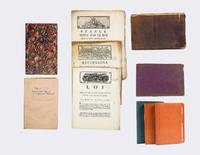
1789réf. 1418068Paris Limoges Rouen 1789-1791. 20 items. In Good or better condition. These items printed from 1789-1791 include publications concerning the Estates General of 1789 and the newly-created National Assembly which was formed by the Third Estate. These documents trace the rapid evolution of the French Revolution between 1789 and 1791 recording the Third Estate's rise to power the birth and legislative actions of the National Assembly and the immediate political and societal collapse of the absolute monarchy. Shelved in Room F Box 2. CONTENTS: Séance Tenue par le Roi aux Etats-generaux. Du 23 Juin 1789. Discours du Roi. Quarto 13 pages. In Very Good condition. Moderately age toned and worn and faintly creased with smudging on the first and last pages. Nine items housed in the same paper folder and secured by wire. In Very Good minus condition. All items are moderately age toned and worn with sparse foxing and some creasing/folding in the corners. Including: --Dénonciation Faite au Tribunal du Public par M. Marat L'Ami du Peuple Contre M. Necker Premier Ministre des Finances. Vitam Impendere Vero. Octavo 69 pages. Side-sewn pamphlet. --Réflexions d'Un Patriote Sur la Prochaine Tenue des États-Généraux. Octavo 24 pages. Side-sewn pamphlet. --L'Orateur des États-Généraux pour 1789. Octavo 46 pages. Side-sewn pamphlet --Appel de L'Arrêt du Conseil d'Etat du Roi du Vingt Juin M. DCC. LXXXVIII au Tribunal de la Raison. Octavo 89 pages 2. Side-sewn pamphlet. Last two pages are misnumbered "60" and "71" respectively. --L'Ami du Peuple ou le Publiciste Parisien Journal Politique et Impartial: No. 232. Small Quarto 8 pages. Side-sewn pamphlet --Décret Rendu les 25 26 & 29 Juin 1790 Sanctionné par le Roi le 7 Juillet Suivant Sur la Vente des Domaines Nationaux aux Particuliers; Précédé du Rapport Fait a l'Assemblée Nationale Par M. de la Rochefoucauld Député de Paris. Octavo 8 25-30 pages. Fore and top edges of p. 25-30 are uncut. --Adresse à Messieurs les Électeurs du Département de la Haute Vienne; Par Monsieur de Nantiat Maire de Nantiat. Octavo 4 26 pages. Disbound pamphlet. Some faint tidemarks present. Creasing to first two pages. Some faint pencil writing on the back of the wrap. --Écoles Nationales Propres a Former des Hommes des Citoyens et des François. Octavo 2 26 pages. In blue marbled paper wraps. Some sparse contemporary ink marginalia present. Light penciling in the bottom margin of the title page. --L'Assemblée Nationale aux François: 11 Fevrier 1790. 6mo 11 pages. Sidesewn pamphlet. Reflexions D'un Gentilhomme du Haut-Limousin Présentées à l'Assemblée de l'Ordre de la Noblesse de Cette Province Tenue le 17 Mars 1789 & Remises aux Commissaires Rédacteurs des Cahiers Sous la Cotte N°. 25. Quarto 16 pages. Side-sewn pamphlet. Moderately age toned and lightly worn with some mild stains and soiling on the first page and faint tidemarks near the rear of the book. Lettre de L'Abbé Raynal a l'Assemblée Nationale. Octavo 94 pages. In Good plus condition. Disbound with marbled edges in 20th-century paper wraps. Moderately worn and lightly age toned with some small stains on the first page. Pencil year "89" written below title. Ostensibly written by Raynal in late 1790 as he became disillusioned by the prospect of increasing revolutionary violence this letter was read before the Assembly in May of 1791. It was nearly universally regarded as being imprudently timed and Raynal spent the next five years "in retirement". It has been determined that the letter is largely the work of the Comte de Guibert. Procès-Verbal des Séances de l'Assemblée Générale des Députés du Tiers-État . Octavo 43 pages 3 pages. In Very Good condition. Hardcover in 19th-century marbled paper boards. Includes a 3-page chart at the end with a list of all participating commissaires. Boards show very light wear. Text block is moderately worn along edges with dust soiling to top edge. Moderate age toning throughout. Recherches Historiques sur les Municipalités pour Server à Éclairer sur Leurs Droits Leur Jurisdiction et Leur Organization . Octavo 156 pages. In Very Good minus condition. In original dark brown paper wraps. Wraps show moderate sunning wear soiling and wrinkling. Some loss of material to wraps at tail of spine. Text block is age toned and worn along edges with light dust soiling to top edge. Light age toning and sparse foxing throughout. Four items housed in the same paper folder and secured by wire. In Very Good condition. All items are age toned and lightly worn with some creasing/folding in the corners. Including: --Adresse des Pêcheurs et des Habitans de la Cote Maritime de la Ci-Devant Province de Languedoc . 12mo 14 pages 2. Pamphlet in 19th century marbled paper wraps. --Le Point du Jour ou Résultat de ce qui s'est Passé la Veille à l'Assemblée Nationale. N° 544. Du Vendredi 7 Janvier 1791; Séance d'Hier. Octavo 49-64 pages. Excerpt from a larger periodical. --Pieces Rélatives à l'Emprisonnement Aristocratique de M. Carion Curé et Maire d'Issy-l'Evêque . Octavo 8 pages. Pamphlet. --Discours de M. de Mirabeau sur les Successions Prononcé Après sa Mort Dans l'Assemblée Nationa . Octavo 16 pages. Pamphlet. Opinion de M. Barrère Député du Département des Hautes- Pyrénées Prononcée dans la séance du 19 Mai 1791 Sur la Réélection Illimitée des Membres des Législatures. Octavo 16 pages. In Very Good minus condition. Disbound pamphlet in 20th century paper wraps. Moderately age toned with some rubbing wear along edges and at the corners. Loi Relative aux Mesures à Prendre pour que la Sûreté des Personnes & des Propriétés Soit Respectée. Small Quarto 6 pages. In Very Good condition. Folded pamphlet. Lightly age toned with some rubbing wear along the edges and at the corners. Some smudging on the first page. Small line of ink numbering on the back cover. Appel au Tribunal de l'Opinion Publique du Rapport de M. Chabroud et du Décret rendu par l'Assemblée Nationale le 2 Octobre 17 . Octavo iv 3-351 pages. In Good condition. Lacking original wraps. Apparently complete in modern folder and secured by wire. Text block is moderately worn and toned along the edges. Lighter toning and scattered foxing throughout. Moderate soiling to p. i. Large stain affects bottom margins through p. ~15. . 1418068. Special Collections - Upstairs. unknown
1784réf. 1418419Bruxelles Brussels: n.p. 1785; 1784. Softcover. Octavo xii 104 pages and Octavo xx 180 pages. Bound in contemporary paper wraps with a 20th century orange plastic case attached to the text blocks with metal rods. Case has paper label to spine binder's green and white label inside front cover and scuffing throughout. Wraps have chipping to edges and heavy scuffing and dust soiling throughout. Text blocks have light penciling light foxing splitting to gutters and age-toning throughout; last two leaves of Mémoire have their top edges folded forward. Shelved in Room F Box 1. 1418419. Special Collections - Upstairs. [n.p.] unknown
réf. 1418440Softcover. Quarto 4 8 24 24 22 30 16 19 1 23 3 23 3 22 2 24 2 67 3 27 3 24 30 27 1 37 1 30 26 61 pages. In Good minus condition. Bound in contemporary blue paper wraps with a 20th century blue outer case secured by metal bars. Spine has a paper label; has age-toning scuffing and chipping to paper throughout with vertical tears at head/tail from metal bars. Covers have shelfwear to edges and scuffing and creasing throughout. Text block has deckled edges; has age-toning and light scuffing to edges and light dust soiling to top edge; has an open tear to lower fore corner of pp. 21-22 of huitième letter text unimpacted a closed tear to fore edge of pp. 7-8 treizième letter which has been repaired with tissue that caused it to be partially stuck to the preceding leaf and age-toning light penciling to margins creasing to leaves and heavy splitting to gutters throughout. Text in French. Shelved in box 2 in room F. This volume contains the complete issues 1 and 2 of Mirabeau's famous revolutionary newspaper Journal des États-Généraux published right at the start of the Estates-General in early May 1789 along with all nineteen Lettres de comte de Mirabeau à ses commettans. Originally published as a direct commentary by the Count of Mirabeau on the happenings of the Estates-General the Royal Council officially banned his Journal on May 7 1789. To circumvent the ban Mirabeau rebranded his publication as direct "letters" to the constituents in Provence who elected him to the Third Estate. Since deputies had a legal right to report back to their electors the royal censors could not easily stop him. 1418440. Special Collections - Upstairs. unknown
1910réf. 183640New York: P. F. Collier 1910. First Edition Thus; First Printing. Hardcover. Very Good in boards. Light stain on top text block edge. P. F. Collier hardcover
1900réf. 63439ca. 1900. Le Monde Intellectuel. - La France Contemporaine. - Berlin-Charlottenburg Adolf Eckstein Editeur o.J. ca.1900 300 x 460 mm; beigelegt 1 pp. Biographie von Albert de Ricaudy. Sibylle Aimée Marie-Antoinette Gabrielle de Riquetti de Mirabeau Gräfin de Martel de Janville 1849-1932 war eine französische Schriftstellerin die ihre Werke unter dem Pseudonym "Gyp" veröffentlichte. Ihren Salon in Neuilly-sur-Seine besuchten u. a. Robert de Montesquiou Marcel Proust Edgar Degas Maurice Barrès Anatole France Paul Valéry Alphonse Daudet und Jean-Louis Forain. unknown
réf. 849371366X.Gpaperback. Good. Access codes and supplements are not guaranteed with used items. May be an ex-library book. paperback
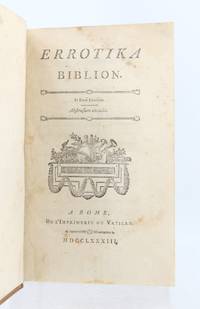
1783réf. 85830Rome Neuchâtel Neuchâtel: De l'imprimerie du Vatican 1783. Fine. De l'imprimerie du Vatican Rome Neuchâtel Neuchâtel 1783 13 x 20.70 cm relié First edition. Bound with Reymond La Bataille d'Austerlitz poème dramatique en cinq actes Riom 1806; Huvier des Fontenelles La Targétade comédie un peu burlesque parodie d'Athalie de Racine de Racine 1791; de Bonnay La Prise des Annonciades n.p. n.d.; Abbé de Vermond La Cour plénière Héroï-tragi-comédie Paris 1788; Aymé Déportation et naufrage de J.J. Aymé Paris n.d.; Jourgniac de Saint-Médard Mon agonie de trente-huit heures Paris 1806. Contemporary beige half calf binding ochre paper boards smooth spine deep green morocco title-piece gilt title gilt stamped motifs. Some chafing to the boards scattered foxing. A few brown spots on the title page of La Prise des annonciades. Illustrated with a vignette on the title page of Errotika. Collection written by Mirabeau imprisoned in Vincennes at the same time as the Marquis de Sade. Various curiosities are culled from ancient writings relating to sexual practices such as onanism tribalism sodomy nymphomania etc. : ""The author in addition to the talent of perfectly mastering ancient languages writes very well in his own joking lightly and often drawing on Voltaire's style: in the very dirty pictures he sometimes presents he always uses honest or technical expressions: besides he seems well versed in the art of voluptuousness"" contemporary 18th century review quoted in Gay-Lem. II 151. According to the legend the book was relentlessly censored by the authorities and only fourteen copies of the first edition had survived - an estimate which seems to be quite inaccurate. After a second edition in 1792 the book was prohibited and included in the papal index. Another edition was destroyed in 1826 by the Royal Court of Paris and two further prosecutions were brought in 1856 and 1868 for ""outrage à la morale publique et aux bonnes murs"". The text was notably published by Guillaume Apollinaire along with other writings by Mirabeau in his 1910 edition in the Bibliothèque des Curieux series. De l'imprimerie du Vatican hardcover
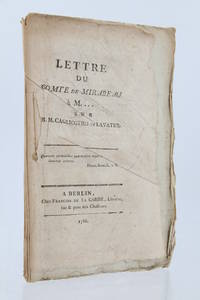
1786réf. 81145Paris: François de La Garde 1786. Fine. François de La Garde Paris 1786 14.50 x 22 cm broché First edition of this work addressed to the new King of Prussia Friedrich Wilhelm against the three great impostors of the time: Cagliostro Lavater and Mesmer. First page creased title page some light foxing. Rare work in original stitching. François de La Garde unknown