MIRABEAU (M. de, L'Aîné).Livre Rare Book

1791rif. 214201791 Paris, Imprimerie Nationale, 1791, in-8, broché, titre imprimé sur la couverture en noir.
rif. 221841Paris, Imprimerie Nationale, 1791 in-8, 23 pp., dérelié.
rif. 198430[Paris], Imprimerie Nationale, s.d. (1791) in-8, 24 pp., en feuilles.
rif. 214786[Paris], Imprimerie Nationale, s.d. (1791) in-8, 24 pp., en feuilles.
rif. 186079Paris, Lejay, 1790 in-8, 16 pp., en feuilles.
rif. 228843Aix, Gibelin-David & Émeric-David, 1789 in-8, 35 pp., cartonnage Bradel de papier marbré, pièce de titre cerise en long (reliure moderne).
rif. 238860Aix, Gibelin-David & Émeric-David, 1789 in-8, 35 pp., cartonnage Bradel de papier marbré (reliure moderne).
rif. 235717S.l., n. d. in-8, 26 pp. Marges extérieures abîmées par l'humidité.
1789rif. 100115Sur les bords du Gange, 21 octobre 1789. In-8, 26 pp., broché sans couverture. (défraichi, mouillure).
1785rif. 751L23London: W Faden 1785. First edition. Leather. Very Good. 9" by 5.5". Not Stated. A very scarce English language edition of this political writing regarding the free navigation of the Scheld. Written by one of the leaders of the early stages of the French revolution Honore Gabriel Riqueti. ESTC reference no: T83504. A very scarce work This translation is of Mirabeau's 'Doutes sur la liberte de l'Escaut reclamee par l'empereur'. Engraved vignette to the title page. With the folding map which has been rebacked with linen. Bookplate of the City of Westminster to the front pastedown. The Scheldt river flows through northern France Western Belgium and southwestern part of the Netherlands with its mouth at the North Sea. Access to this river was the subject of the brief Kettle War of 1784 and during the French Revolution. This book looks at this issue of access to the river. In a half morocco binding. Externally generally smart. Patches of rubbing to the spine and extremities. Small loss to the head and tail of spine. Bookplate to the front pastedown. Internally firmly bound. Pages are bright. A few chips to the title page and to a2 and A1. Pages are clean. Very Good W Faden hardcover
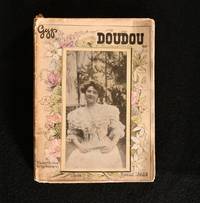
1906rif. 787L6Paris: Librairie Nilsson 1906. First edition. Paperback. Very Good Indeed. 7.5" by 5.5". None. The first edition of this novel by Sibylle Riquetti de Mirabeau. A very scarce work particularly in the original wraps.Illustrated by photographs throughout. 'GYP' was a pseudonym for Sibylle Riquetti de Mirabeau. She was noted for writing humorous sketches which denounced French high society and the French republic's political class. She hated republicanism and populist democracy. Her bibliography is extensive with over 120 works including the successful 'Petit Bob' and 'Autour de Mariage'. Publishers often competed to publish the works of GYP due to their controversial nature. In the publisher's original paper wraps. Externally generally smart. Loss to the spine. Joints are torn. Internally firmly bound. Pages are bright. Occasional light spots to pages. Very Good Indeed Librairie Nilsson paperback
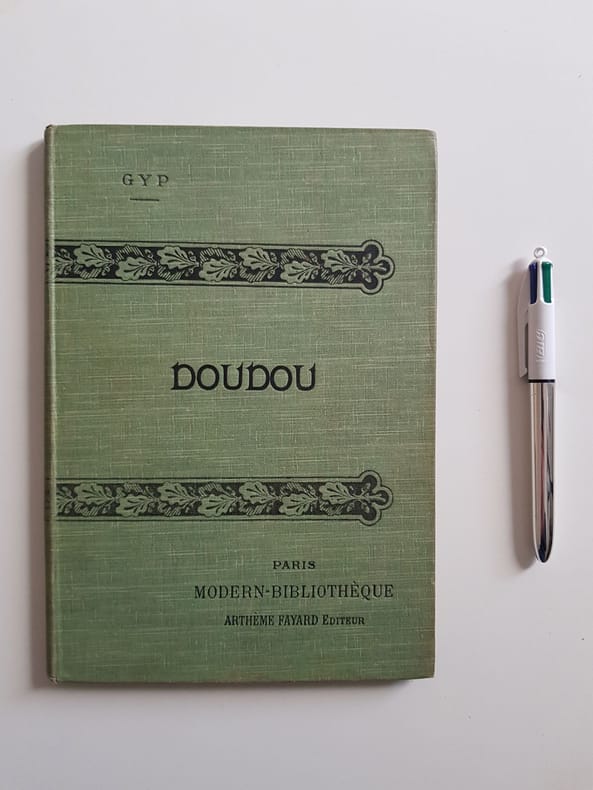
rif. LRB528Arthème Fayard - Modern-Bibliothèque Paris Illustrateur : Dutriac Georges — Collection : Modern-Bibliothèque — Édition : Édition illustrée — Format : in-8 (env. 27 x 18 cm) — Reliure : Cartonnage éditeur en toile verte, décor et titres imprimés en noir au dos et sur le premier plat — Langue : Français — Illustrations : Titre en couleurs, plusieurs planches en couleurs d'après les aquarelles de G. Dutriac, nombreuses illustrations en noir dans et hors texte — Imprimeur : Imprimeries Lahure (mention au colophon) — État du livre : Bon exemplaire ; cartonnage propre avec légers frottements aux coins et aux coiffes, dos très légèrement insolé ; papier uniformément jauni avec quelques rousseurs éparses ; intérieur solide et bien complet des planches
rif. 242163Londres, G. Faden, J. Robson, P. Elmsley, s.d. (1785) in-8, titre, vi-168-XL pp.,carte repliée, demi-basane rouge, dos à nerfs (reliure moderne).
1826rif. 95091826 broché (paperback) in-seize (minuscule), dos et couverture marrons imprimés (spine and cover printed), long papier (fore-edge - great paper), sans illustration (no illustration), cicatrices de mouillures (light waterstains), 86 pages, 1826 à Paris P. Mongie Aîné,
rif. 9645Aix-en-Pce, et P., Chez Madame Nhérat, 1789. In 8 dérelié de 43 pp.
rif. 238973Aix-en-Provence, et se trouve à Paris, Madame Nhérat, 1789 in-8, 43 pp., cartonnage Bradel de papier marbré, pièce de titre en long, tranches mouchetées de rouge (reliure moderne).
1929rif. 100144584Calmann-lévy éditeurs 1929 in12. 1929. Broché. Mémoires de l'auteure Gyp (Gabrielle Riquetti de Mirabeau) évoquant ses souvenirs personnels du Second Empire. L'ouvrage retrace également comment elle est devenue femme de lettres par nécessité après la séparation d'avec son mari pour subvenir aux besoins de ses trois enfants
1789rif. 57115Paris Chez Baudouin Imprimeur de l'Assamblée Nationale 1789. 8vo. Bound in an exquisite later red half morocco with gilt spine. Top edge gilt. 1 f. title-page 8 pp. "Déclaration des droits de l'Homme en société" 6 pp. "Articles de Constitution" 1 f. "Réponse du Roi" 1 f. blank. Woodcut head-pieces. Title-page slightly bowned otherwise in excellent condition. A truly excellent copy. The exceedingly scarce true first printing in an incredibly rare form of off-print/separate printing of one of the most important and influential documents in the history of mankind namely the French Human Rights Declaration containing also the articles for the first French Constitution. This groundbreaking publication constitutes a monumental change in the structure of the human world providing all citizens with individual rights that we now take for granted. This monument of humanist thought appeared in the "Procès verbal de l'Assemblée Nationale" copies of which are also very difficult to obtain. There however the two parts appeared without a title-page and without the final blank which together constitute a form of wrappers for this off-print/separate printing of which only five or six other copies are known and which is present in merely one or two libraries world-wide. As far as we now only one other copy has been on the private market and that did not have the blank back wrapper. This exceedingly rare separate printing of the Human Rights Declaration with the Constitution was intended for the inner circle of those participating in its creation and was limited to a very restricted number of copies - all of which will have been owned by the creators of the Declaration. This epochal document is just as important today as it was when it was formulated during the French Revolution in 1789 and since 2003 the Declaration has been listed in the UNESCO Memory of World Register - "This fundamental legacy of the French Revolution formed the basis of the United Nations Declaration of 1948 and is of universal value". Few other documents in the history of mankind has done as much to determine the way we live and think the way Western societies are structured and governed and few other documents have had such a direct impact upon our constitutional rights and the way we view ourselves and others in society. It is here that we find the formulation of liberty and equality upon which so much of Western political and moral thought is based - that all "men are born and remain free and equal in rights" Article 1 which were specified as the rights of liberty private property the inviolability of the person and resistance to oppression Article 2; that all citizens were equal before the law and were to have the right to participate in legislation directly or indirectly Article 6; no one was to be arrested without a judicial order Article 7; Freedom of religion Article 10 and freedom of speech Article 11 were safeguarded within the bounds of public "order" and "law" etc. etc.The content of the document that were to change the Western world for good emerged largely from the ideals of the Enlightenment. "The sources of the Declaration included the major thinkers of the French Enlightenment such as Montesquieu who had urged the separation of powers and Jean-Jacques Rousseau who wrote of general will-the concept that the state represents the general will of the citizens. The idea that the individual must be safeguarded against arbitrary police or judicial action was anticipated by the 18th-century parlements as well as by writers such as Voltaire. French jurists and economists such as the physiocrats had insisted on the inviolability of private property." Encycl. Britt.The key drafts were prepared by Lafayette working at times with Thomas Jefferson. In August 1789 Honoré Mirabeau played a central role in conceptualizing and drafting the Declaration. On August 26 1789 in the midst of The French Revolution the last article of the Declaration was adopted by the National Constituent Assembly as the first step towards a constitution for France. "In 1789 the people of France brought about the abolishment of the absolute monarchy and set the stage for the establishment of the first French Republic. Just six weeks after the storming of the Bastille and barely three weeks after the abolition of feudalism the Declaration of the Rights of Man and of the Citizen French: La Déclaration des Droits de l'Homme et du Citoyen was adopted by the National Constituent Assembly as the first step toward writing a constitution for the Republic of France.The Declaration proclaims that all citizens are to be guaranteed the rights of "liberty property security and resistance to oppression." It argues that the need for law derives from the fact that ".the exercise of the natural rights of each man has only those borders which assure other members of the society the enjoyment of these same rights." Thus the Declaration sees law as an "expression of the general will" intended to promote this equality of rights and to forbid "only actions harmful to the society." www.humanrights.com. This sensational document became the crowning achievement of the French Revolution; it came to accelerate the overthrow of the "Ancien Régime" and sowed the seed of an extremely radical re-ordering of society. The Declaration interchanged the pre-revolutionary division of society -in the clergy the aristocracy and the common people- with a general equality - "All the citizens being equal in the eyes of the law are equally admissible to all public dignities places and employments according to their capacity and without distinction other than that of their virtues and of their talents" From Article VI upon which today's society is still based. It is hard to imagine a work that is more important to the foundation of the society that we live in today. unknown
1789rif. 57115Paris, Chez Baudouin, Imprimeur de l'Assamblée Nationale, 1789. 8vo. Bound in an exquisite later red half morocco with gilt spine. Top edge gilt. (1) f. (title-page), 8 pp. (""Déclaration des droits de l'Homme en société""), 6 pp. (""Articles de Constitution""), (1) f. (""Réponse du Roi""), (1) f. (blank). Woodcut head-pieces. Title-page slightly bowned, otherwise in excellent condition. A truly excellent copy.
rif. 54211789, Poitiers, Michel-Vincent Chevrier, impr. du Roi – in-4, 8 pp – cahier.
rif. 13791Ouvrage propre à éclairer sur la circonstance actuelle où se trouve la France. Valence. P. Aurel. 1791. In-8 (21x13 cms). 100 pages. Brochure.
rif. 381341787. VIII 114 pages 13x20cm. Broché. Manques de papier au dos. Plats en partie déreliés. Exemplaire non rogné. Mouillures. Petits trous de vers dans la marge. Manques de papier dans la marge inférieure des premiers feuillets. Edition Originale. Economie. Politique. 1787. unknown
rif. 226631Paris, Chez Gattey, 1790 in-8, 23 pp., dérelié.
rif. 204922Paris, Chez Gattey, 1790 in-8, 23 pp., broché, sous couverture d'attente marbrée de couverture verte.
rif. 239428[Paris], Imprimerie patriotique, 1791 , 8 pp., broché sous couverture moderne de papier bleu imprimée.