1 709 résultats
réf. 163268A Paris, de l'Imprimerie Nationale, 1791 in-8, 35 pp., dérelié. Mouillures, petit travail de vers sur la partie supérieure.
réf. 179619S.l., 1789 17 (sur 19) livraisons en un vol. in-8, pagination multiple, demi-basane havane, dos lisse orné de filets et guirlandes dorés, tranches mouchetées (rel. du XIXe s.). Dos frotté.
réf. 208242S.l., 1789 16 (sur 19) livraisons en un vol. in-8, pagination multiple, cartonnage vélin (rel. de l'époque). Dos abîmé et restauré, coupes usées.
1887réf. 1787Paris, Calmann-Lévy, 1887, 12 X 18 cm., relié, 357 pp. Troisième édition. Solide demi-basane, dos à nerfs orné de fleurons, initiales R.E. en queue. Quelques rousseurs, petites épidermures, sinon bon exemplaire.
1887réf. 19823CALMANN LÉVY ÉDITEUR 1887 357 pages in12. 1887. reliure éditeur demi basane dos à nerfs. 357 pages.
2026réf. x-1041285434Routledge 2026. Hardcover. New. 262 pages. 9.18x6.12x9.45 inches. Routledge hardcover
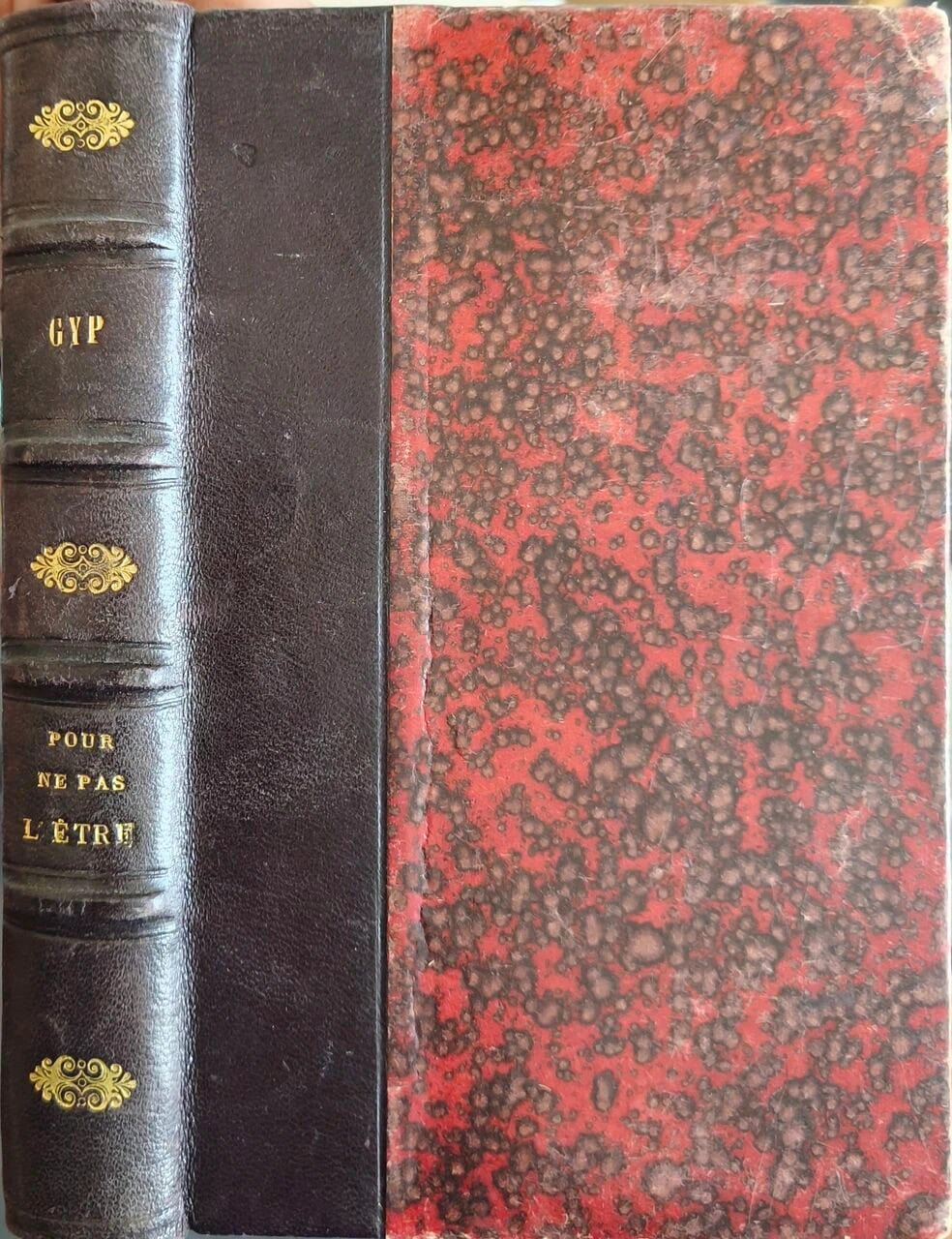
1900réf. 63439ca. 1900. Le Monde Intellectuel. - La France Contemporaine. - Berlin-Charlottenburg Adolf Eckstein Editeur o.J. ca.1900 300 x 460 mm; beigelegt 1 pp. Biographie von Albert de Ricaudy. Sibylle Aimée Marie-Antoinette Gabrielle de Riquetti de Mirabeau Gräfin de Martel de Janville 1849-1932 war eine französische Schriftstellerin die ihre Werke unter dem Pseudonym "Gyp" veröffentlichte. Ihren Salon in Neuilly-sur-Seine besuchten u. a. Robert de Montesquiou Marcel Proust Edgar Degas Maurice Barrès Anatole France Paul Valéry Alphonse Daudet und Jean-Louis Forain. unknown
réf. GF14749Eau-forte sur chine appliquée sur papier blanc - XIXéme siècle - format 22,5 x 16 cm pour le papier de chine - rousseurs sur les marges de papier blanc -
réf. GF15791Notice biographique de 4 pages in folio et portrait lithographié par Néraudeau Alexandre, peintre de portrait et lithographe - (format 38 x 26 cm marges comprises) - Ensemble extrait du "Panthéon Républicain" publié à Paris chez Fayard en 1874 - (quelques rousseurs) -
1851réf. GF206571851 Lithographie en noir et bistre - Format 18,5 x 12 cm environ sur une feuille de papier fort de 25,5 x 16 cm - Paris vers 1850 -
réf. GF20730Eau-forte originale en couleurs (coloris d'époque) - Format 26 x 17 cm environ - vers 1845 - petites mouillures anciennes en marge - Avec une Notice biographique de 16 pages (en feuilles) par Alfred NETTEMENT -
réf. GF6702Gravure à l'eau-forte - Format 16 x 11 cm environ sur une feuille de papier fort de 26,5 x 16 cm - Paris vers 1840 -
1863réf. 53871- Gravure 18 x 27 cm.
réf. 103495À Paris, Chez Baudouin, 1789 in-8, 25 pp., dérelié.
1789réf. 44726Paris, Baudouin, 1789. In-8 broché de 25 pp. couverture de papier saumon, pièce de titre manuscrite à l'encre du temps.
réf. 239238Paris, Baudouin, 1789 in-8, [2]-25 pp., broché, couv. papier bleu moderne.
réf. 16898In-8, broché, couverture papier marbré moderne, (2), 25 p. Paris, Baudouin, 1789.
réf. 015115Honoré-Gabriel Riqueti de Mirabeau (1749-1791), écrivain, grand orateur de la révolution française. P.A., 16 juin [1781], 1/2p in-12. « Je prie monsieur de [nom illisible] de m'envoyer la note précise de ce que je lui dois. Ce 16 juin ». Une note indique « Ecriture de Mirabeau (16 juin 1781) ». Sympathique document alors que Mirabeau avait de gros problèmes d'argent et avait fui Paris pour fuir ses créanciers. [370]
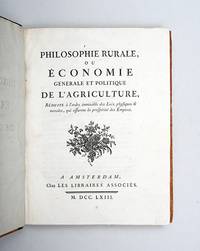
1763réf. 85559A Amsterdam: chez les Libraires Associés 1763. Cm. 26 pp. xxv 1 412. Con una testata in xilografia e tre tavole f.t. tableaux èconomiques. Solida ed elegante legatura coeva in piena pelle dorso a nervi con titoli in oro e ricchi fregi ai comparti. Tagli rossi e sguardie marmorizzate. Qualche brunitura marginale alle prime ed ultime carte ma complessivamente bell'esemplare genuino e marginoso in ottimo stato di conservazione. Edizione originale di grande rarità ed importanza che illustra per la prima volta in modo esauriente il pensiero della scuola fisiocratica. Opera celebrata dalle principali bibliografie. chez les Libraires Associés unknown
réf. 1169792251.Ghardcover. Good. Access codes and supplements are not guaranteed with used items. May be an ex-library book. hardcover
réf. 0331683369.Ghardcover. Good. Access codes and supplements are not guaranteed with used items. May be an ex-library book. hardcover
réf. 112001879X.Gpaperback. Good. Access codes and supplements are not guaranteed with used items. May be an ex-library book. paperback
réf. 1166328457.Gpaperback. Good. Access codes and supplements are not guaranteed with used items. May be an ex-library book. paperback
1763réf. 153616Amsterdam: Chez les Libraires Associés 1763. The new science of economics Rare first edition presenting "perhaps the most complete and magisterial account of the views of the Physiocratic school" Higgs. "Quesnay collaborated very substantially in preparing this last major work contributing the final chapter with further explanations and manipulations of his Tableau Économique analysis" The New Palgrave. Schumpeter calls the work "the first of the four textbooks of physiocrat orthodoxy" p. 225. It contains for the first time Quesnay's masterful explanation of his Tableau Économique "one of those works in the history of economics which have often been regarded as an anticipation of modern theories" Schumpeter p. 242. Originally printed as a pamphlet of 16 pages in 1758 in a minute number of copies Quesnay's Tableau Économique was first revealed to the public as the final part of Mirabeau's L'Ami des Hommes in 1760. In the Philosophie rurale Quesnay for the first time gives a full explanation of his system. The Tableau économique is credited as the "first precise formulation" of interdependent systems in economics and the origin of the theory of the multiplier in economics. An analogous table is used in the theory of money creation under fractional-reserve banking by relending of deposits leading to the money multiplier. In a letter to Mirabeau written late in 1758 Quesnay remarks "J'ai taché de faire un tableau fondamental de l'ordre économique pour y représenter les dépenses et les produits sous un aspect facile à saisir et pour juger clairment des arrangemens et des dérangemens que le gouvernement peut y causer" translated: "I have tried to make a fundamental table of the economic order in order to represent the expenses and the products in an aspect easy to grasp and to judge clearly of the arrangements and disturbances that the government can cause there". "A most remarkable analysis of the economic condition of his country" Palgrave the Tableau économique "is the most important and famous work of Physiocracy and has often been regarded as a summary of the entire corpus of Physiocratic economics. The Tableau has also been regarded as the analytical synthesis of the logical structure of Quesnay's economics or at least as its most relevant aspect. The Tableau économique is one of those works in the history of economics which have often been regarded as an anticipation of modern theories. The Tableau has been considered a first rough presentation of Keynes's multiplier and as a sort of general equilibrium system of a Walrasian type. For others the Tableau is an input-output table. Because of the Tableau Quesnay has been regarded as an early econometrician. The Tableau has also been interpreted as the first classical system of price determination thus anticipating Marx's reproduction schemes and Sraffa's price system" Giovanni Vaggi in The New Palgrave. Quarto 260 x 192 mm. With 3 engraved plates including the Tableau économique. Contemporary quarter marbled sheep orange paste paper sides light blue endpapers. Housed in a black cloth flat-back box by the Chelsea Bindery. Neatly restored at extremities insect abrasion to spine slight cockling to paste paper sides contents clean and fresh. A very good copy. Goldsmiths' 9836; Higgs 2881; INED 3204; Kress 6120; Mattioli 2435. hardcover