1009 resultados
ref. DADAX0415126878New unknown
ref. DADAX0415198534New unknown
First edition, 12mo (160 x 100 mm), [8], 122, [14]pp., with a final advert leaf, text very clean and bright, cont. calf, joint split, spine chipped, covers held by cords (rear cover by upper cord only). The anonymous author stresses the importance of the poor laws in his introduction and also points out "that in the Streets of this great Metropolis (the Capital, for Trade and Riches, of the whole World) more Unhappy, Miserable People are to be found, than in the Cities of the Poorest Nations Abroad; which is the greatest Scandal to the Kingdom of Great-Britain. By the Abuse or Non-use of our Excellent Laws for Providing for the Poor, we have Thousands of Beggars pestering our Streets...". Of this first edition ESTC locates 6 copies (3 in the UK: BMu; L; Lu; and 3 in North America: CaOHM; CLU-C; CaOTU), the second edition of 1727 is of similar rarity. Hanson, 3252; Goldsmiths'-Kress, 6333.
ref. DADAX0415206340New unknown
ref. DADAX041543176XNew unknown
ref. DADAX0415108659New unknown
ref. DADAX0415448794New unknown
ref. DADAX0415630339New unknown
1940ref. 223731940. Women's EmploymentLaborFeminismWWII Archive of ten original photos documenting American women's industrial labor during the 1930s and 1940s. Original black-and-white press photographs taken in various factories during World War II including steel works textiles candy production and industrial assembly lines. Stamped by press agencies including Acme Newspictures Brown Brothers and International News Photos several with annotated captions on verso. This collection of press photos captures the pivotal moment when women entered the industrial workforce en masse replacing men who were fighting overseas. These images were part of a wartime propaganda campaign to normalize and promote women's factory work paving the way for long-term shifts in gender roles in the American labor force. In one striking image captioned by the N.E.A. press service as "Portrait for Mother's Day" a steel worker identified as Mrs. Neel of Gary Indiana is praised as "the American Mother- 1943 style" echoing the iconic Rosie the Riveter with a new image of female patriotism: overalls bandanna badge and goggles in hand. Another shows women boxing chocolates along a conveyor line while several others reveal the mechanical precision and physical intensity of jobs in textile finishing labeling and industrial equipment handling. This archive is emblematic of the historical inflection point that sparked the modern women's labor movement. The war effort validated women's technical skills and economic participation giving rise to a postwar generation of women who emboldened by their wartime service laid the intellectual and organizational groundwork for second wave feminism. Many of these workers would later confront the "return to domesticity" in the 1950s and become active in labor organizing civil rights and feminist causes by the 1960s. Light edge wear. Overall good to very good condition. A photographic archive capturing the genesis of modern women's industrial labor and the cultural origins of second wave feminism in the WWII workplace. unknown
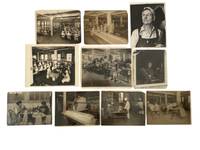
1940ref. 223731940. Women's EmploymentLaborFeminismWWII Archive of ten original photos documenting American women's industrial labor during the 1930s and 1940s. Original black-and-white press photographs taken in various factories during World War II including steel works textiles candy production and industrial assembly lines. Stamped by press agencies including Acme Newspictures Brown Brothers and International News Photos several with annotated captions on verso. This collection of press photos captures the pivotal moment when women entered the industrial workforce en masse replacing men who were fighting overseas. These images were part of a wartime propaganda campaign to normalize and promote women's factory work paving the way for long-term shifts in gender roles in the American labor force. In one striking image captioned by the N.E.A. press service as "Portrait for Mother's Day" a steel worker identified as Mrs. Neel of Gary Indiana is praised as "the American Mother- 1943 style" echoing the iconic Rosie the Riveter with a new image of female patriotism: overalls bandanna badge and goggles in hand. Another shows women boxing chocolates along a conveyor line while several others reveal the mechanical precision and physical intensity of jobs in textile finishing labeling and industrial equipment handling. This archive is emblematic of the historical inflection point that sparked the modern women's labor movement. The war effort validated women's technical skills and economic participation giving rise to a postwar generation of women who emboldened by their wartime service laid the intellectual and organizational groundwork for second wave feminism. Many of these workers would later confront the "return to domesticity" in the 1950s and become active in labor organizing civil rights and feminist causes by the 1960s. Light edge wear. Overall good to very good condition. A photographic archive capturing the genesis of modern women's industrial labor and the cultural origins of second wave feminism in the WWII workplace. unknown books
ref. DADAX0890592810New unknown
1953Contents include: Retail trade establishments by geographic areas, kinds of business and type of operations, including such data as number of establishments, sales, employment, payrolls, inventories and commodities. The 1951 census, held two years after Newfoundland became part of Canada, marked Canada's first census as a nation of ten provinces and two territories. The content of the population and household questionnaire covered name, sex, age, marital status, relationship to "head" of household, and the structural type and tenure of dwelling. This census also provided information for small areas such as counties, municipalities, cities, towns, etc. Multi-paginations. 11.25" x 9" x 1.7". 2.0 kg. Forest green buckram with gilt lettering upon backstrip. Usual library markings. Average wear. Binding sound. Quality copy. Book
1953Contents include: Wholesale trade establishments and service establishments by geographic areas, kinds of business and type of operations including such data as number of establishments, sales, employment and payrolls, with inventories and commodities shown for the wholesale trade. The 1951 census, held two years after Newfoundland became part of Canada, marked Canada's first census as a nation of ten provinces and two territories. The content of the population and household questionnaire covered name, sex, age, marital status, relationship to "head" of household, and the structural type and tenure of dwelling. This census also provided information for small areas such as counties, municipalities, cities, towns, etc. Multi-paginations. 11.25" x 9" x 1.7". 2.0 kg. Forest green buckram with gilt lettering upon backstrip. Usual library markings. Average wear. Binding sound. Quality copy. Book
1931ref. 2111902160500999Not Available 1931. Soft Cover. Fine. Number of copies: Central Employment Placement Secretariat Not Available paperback
ref. SONG0199243050Used: Good unknown
ref. DADAX0199248699New unknown
1945Features: Humorous cover art by Norris shows bored boy in church; Can We All Get Jobs? - an argument to boost exports; Home-Front Booby Traps - returning servicemen with their war earnings must beware sharpsters targeting their funds; It's The Happy Gang! - They boast over a million weekly radio listeners; Our Crazy Clothes - Eminent Toronto doctor claims never have so many worn so much - or so little - in the wrong places; This is Berlin - The crippled city struggles to its feet; Bug Busters - DDT and dimethyl phthalate; London Letter - Who Got Slapped?; Washington Memo - approval of the United Nations Charter; Backstage at Ottawa - Dominion-Provincial talks next month; Get in the Swim - photo-illustrated article on aquabats/ornamental swimmers/synchronized swimmers, including nine-time champion Doris Geldard of Toronto; It Happened in Norway - Paper shoes, paper clothes, no meat, but even traitor Quisling will get a fair trial; Turn Again Home (short story); A Date for Agnes (short story); Russian Lady (short story); Canny Canning; and more. Nice ads for: Fleet Aircraft; Moore Business Forms, Koroseal by B.F. Goodrich, Miracle Whip, White Rose petroleum products, Canada Dry sparking water, Absorbine Jr., John Labbatt Ltd., Kreml Hair Tonic, Arrid deodorant (featuring photo of Jessica Dragonette), Hiram Walker & Sons, Limited ("Serving the United Nations with War Alcohol"); Pep O Mint Life Savers; Eveready Flashlight Batteries (featuring photo of young radio singer Cleone Duncan of Calgary); Vitalis; Eversharp Red Top Lead (fantastic colour ad on back cover); Wonderful colour ad inside back cover by the Blue Top Brewing Company of Kitchener encourages readers to support Red Cross Blood Clinics to help soldiers. 52 pages. Unmarked with average wear. Small perforations in front cover to right of title. Several peripheral openings. A quality copy of this wonderful vintage issue. Book
ref. DADAX0199249261New unknown
1904216 pages, including index, plus 64 pages of advertisements. Illustrated with 184 engravings. Chocolate brown cloth exterior moderately worn with clearly legible gilt lettering upon backstrip. "I have been engaged in the construction of toothed gearing all my life, and many years ago felt the want of such a book as this. There is no work yet of this particular type published either in England or America, none which deals with the subject of toothed gearing from the standpoint of the workshop and drawing-office, none which goes over the whole field as this does. Only so much mathematics is introduced as is necessary to establish fundamental principles. But the practical methods of formation of tooth profiles, both cycloidal and involute, special forms, and the employment of Willis's Odontograph, have been treated fully. The various screw gears, angle wheels, worm wheels, helical wheels, etc. have received full illustration, and the essential elements of the practice of machine moulding have been described..." - from Preface. Prior owner's details neatly upon title page else unmarked. Fold-out drawing loose but present at page 18. Binding soundl Light to moderate soiling externally. Overall, a solid and pleasing opy of this pioneering work. Book
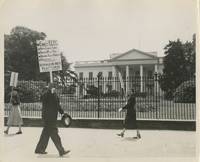
1950ref. BK0056Washington D.C.: Harris & Ewing Photographic News Service 1950. Original gelatin silver press photograph showing Paul Robeson picketing in front of the White House carrying a large placard reading "Enact F.E.P.C. / Anti-Lynch Law / Abolish Poll Tax / Amend Taft-Hartley / Housing / Republican Party Platform." Harris & Ewing Photographic News Service credit stamp and original typed caption to verso with later Globe Photos label. 8 x 10 inches. Light handling wear and creasing otherwise very good. A photograph of Paul Robeson demonstrating directly outside the Truman White House. The original Harris & Ewing caption identifies him as leading representatives of the Progressive Party who "began picketing the White House today asking for more positive action by President Truman on FEPC." The demands on Robeson's placard reflect the stalled federal civil rights agenda of the period. Roosevelt had created the Fair Employment Practice Committee in 1941 after A. Philip Randolph threatened a mass march on Washington over discrimination in defense employment. Truman's President's Committee on Civil Rights subsequently recommended a permanent FEPC federal anti-lynching legislation and abolition of the poll tax; in February 1948 Truman formally asked Congress to enact those measures. The Progressive Party's 1948 platform had called for immediate anti-poll tax legislation and an expansive federal civil-rights program. By 1950 however the major legislative proposals remained blocked in Congress. . Harris & Ewing Photographic News Service unknown
1950ref. BK0056Washington D.C.: Harris & Ewing Photographic News Service 1950. Original gelatin silver press photograph showing Paul Robeson picketing in front of the White House carrying a large placard reading "Enact F.E.P.C. / Anti-Lynch Law / Abolish Poll Tax / Amend Taft-Hartley / Housing / Republican Party Platform." Harris & Ewing Photographic News Service credit stamp and original typed caption to verso with later Globe Photos label. 8 x 10 inches. Light handling wear and creasing otherwise very good. A photograph of Paul Robeson demonstrating directly outside the Truman White House. The original Harris & Ewing caption identifies him as leading representatives of the Progressive Party who "began picketing the White House today asking for more positive action by President Truman on FEPC." The demands on Robeson's placard reflect the stalled federal civil rights agenda of the period. Roosevelt had created the Fair Employment Practice Committee in 1941 after A. Philip Randolph threatened a mass march on Washington over discrimination in defense employment. Truman's President's Committee on Civil Rights subsequently recommended a permanent FEPC federal anti-lynching legislation and abolition of the poll tax; in February 1948 Truman formally asked Congress to enact those measures. The Progressive Party's 1948 platform had called for immediate anti-poll tax legislation and an expansive federal civil-rights program. By 1950 however the major legislative proposals remained blocked in Congress. . Harris & Ewing Photographic News Service unknown books
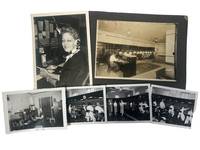
1900ref. 200911900. Telephone operator photo archive circa 1900 to 1958 documents women's labor within telephone exchange systems showing how urban communications depended on trained female operators seated at switchboards connecting calls handling information and maintaining the human infrastructure behind early and mid twentieth century telephone service. The material documents telephone communication labor through photographs of switchboard rooms operators wearing headsets plug boards supervisory presence and grouped clerical activity revealing how connection work operated in practice before automated dialing fully displaced manual exchange work. The archive supports research into women's wage labor communications history gendered office work New York telephone service and the disciplined workplace culture that positioned young women as the public voice and operational center of the telephone network. The archive consists of six black-and-white photographs including five silver gelatin photographs and one early albumen photograph with images measuring from approximately 3.5 x 4.25 inches to 7 x 9 inches. The date range appears to extend from the early twentieth century to 1958 based on the later dated images. Several photographs show women seated in tight rows facing large switchboards wearing heavy headsets with horn mouthpieces and working among dense arrangements of cords and plugs. The early albumen photograph shows a row of women facing the switchboards while a female supervisor watches over the room indicating both the gendered hierarchy and procedural discipline of the exchange floor. One image shows an operator turning toward the camera with a plug in hand smiling while gesturing toward the board. Four smaller photographs dated 1958 show teams of women moving between boards and a small group with paperwork behind the operating area; pencil inscriptions on the versos identify the location as New York. The photographs are valuable because they make visible the labor system behind telephone service: rows of operators standardized equipment supervisors paperwork and the coordinated manual routing of calls. They also record the gendered character of communications work in which women's voices posture speed and manner were made part of the service itself. Light handling wear minor edge wear and expected age toning; images remain crisp with equipment and personnel details clearly visible; overall very good. Strong women's labor and communications history archive documenting the human operation of telephone exchange systems across the first half of the twentieth century and into the postwar period. unknown
1900ref. 200911900. Telephone operator photo archive circa 1900 to 1958 documents women's labor within telephone exchange systems showing how urban communications depended on trained female operators seated at switchboards connecting calls handling information and maintaining the human infrastructure behind early and mid twentieth century telephone service. The material documents telephone communication labor through photographs of switchboard rooms operators wearing headsets plug boards supervisory presence and grouped clerical activity revealing how connection work operated in practice before automated dialing fully displaced manual exchange work. The archive supports research into women's wage labor communications history gendered office work New York telephone service and the disciplined workplace culture that positioned young women as the public voice and operational center of the telephone network. The archive consists of six black-and-white photographs including five silver gelatin photographs and one early albumen photograph with images measuring from approximately 3.5 x 4.25 inches to 7 x 9 inches. The date range appears to extend from the early twentieth century to 1958 based on the later dated images. Several photographs show women seated in tight rows facing large switchboards wearing heavy headsets with horn mouthpieces and working among dense arrangements of cords and plugs. The early albumen photograph shows a row of women facing the switchboards while a female supervisor watches over the room indicating both the gendered hierarchy and procedural discipline of the exchange floor. One image shows an operator turning toward the camera with a plug in hand smiling while gesturing toward the board. Four smaller photographs dated 1958 show teams of women moving between boards and a small group with paperwork behind the operating area; pencil inscriptions on the versos identify the location as New York. The photographs are valuable because they make visible the labor system behind telephone service: rows of operators standardized equipment supervisors paperwork and the coordinated manual routing of calls. They also record the gendered character of communications work in which women's voices posture speed and manner were made part of the service itself. Light handling wear minor edge wear and expected age toning; images remain crisp with equipment and personnel details clearly visible; overall very good. Strong women's labor and communications history archive documenting the human operation of telephone exchange systems across the first half of the twentieth century and into the postwar period. unknown books
ref. Z1-I-004-01527Stationery Office Books TSO. Used - Good. Ships from UK in 48 hours or less usually same day. Your purchase helps support Sri Lankan Children's Charity 'The Rainbow Centre'. Ex-library so some stamps and wear but in good overall condition. 100% money back guarantee. We are a world class secondhand bookstore based in Hertfordshire United Kingdom and specialize in high quality textbooks across an enormous variety of subjects. We aim to provide a vast range of textbooks rare and collectible books at a great price. Our donations to The Rainbow Centre have helped provide an education and a safe haven to hundreds of children who live in appalling conditions. We provide a 100% money back guarantee and are dedicated to providing our customers with the highest standards of service in the bookselling industry. Stationery Office Books (TSO) unknown
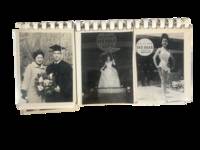
1960ref. 227401960. Korean-American Women's Employment Fashion Photo Album of a Korean-American dressmaker students and Korean pageant shows 1960s. Provenance unknown but most photos seem to be on the East Coast with a few in Korea. Collection of approximately 45 black and white and color Polaroid prints housed in a black faux-leather spiral album. Album measures 11" x 5.5" and photos approximately 3.5" x 3" each. Some have captions in Korean and/or English en verso. An evocative and culturally layered mid-century photo album documenting the life and career of a Korean American woman likely working as a tailor or dressmaking instructor in the United States during the 1960s. The album juxtaposes scenes of professional life of classroom instruction fashion shows and tailoring studios with moments of leisure and family portraiture in both Western and traditional hanbok attire that together reflect the hybrid social world of Korean immigrant professionals in postwar America. Several photographs show groups of women inside a sewing or fashion studio including one captioned in English on the verso "Me and my students." Other images depict a 1964 Miss Korea pageant with contestants modeling Western evening gowns and swimsuits possibly wearing designs by the album's compiler. Some of these images have handwritten captions in Korean script en verso. The pageant scenes bearing visible banners in Korean script suggest ties to Korean American community networks and cultural events that celebrated modern femininity and national identity during a period of postwar reconstruction and Diaspora visibility. Korean Americans in the 1960s represented a small but rapidly growing immigrant community shaped by both Cold War geopolitics and the aftermath of the Korean War. The Immigration and Nationality Act of 1965 which abolished national-origin quotas marked a turning point that encouraged the arrival of highly educated professionals including teachers engineers nurses and artists many of whom were women. These new immigrants often balanced preservation of traditional Korean customs with adaptation to American professional and social norms forming churches cultural associations and language schools that became vital centers of community life. Within this historical frame the album reflects the self-fashioning of a generation striving for both cultural dignity and modern achievement a narrative rarely preserved through visual documentation especially among women engaged in skilled trades and design education. Light wear to album exterior minor toning to some prints though images remain crisp and clean. Overall very good condition. unknown