HENRY N.E et G GUIBOURTLivre Rare Book

527 Ergebnisse
Best.-Nr. 6236ou traité de pharmacie pratique et théorique,deuxième édition revue,corrigée et considérablement augmentée. Par M.M.GUIBOURT 2 tomes en 2 volumes in 8 demi-cuir fauve, titre,tomaison,roulette dorées filets à froid Tome 1er faux-titre,titre,XXXV 1 page d’errata,638 pages rousseurs en début et fin de volume Tome deuxième faux-titre,titre , 701 pages,2 pages de catalogue 21 planches gravées dont deux dépliantes dessins de A.TALLE gravure de ADAM.Tranches marbrées.Rousseurs en début et fin de volume,mouillure brune en marge extérieure de la page 689 à la planche V, G.S Chaudé libraire éditeur 1834
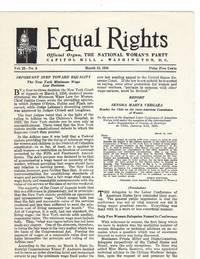
1936Best.-Nr. 160251936. National Woman's Party. Equal Rights March 15 1936 documents the organization's campaign for legal equality at a time when women's workplace legislation divided American feminists over whether sex-specific protections advanced or restricted women workers. Founded in 1916 by Alice Paul and Lucy Burns during the suffrage campaign the National Woman's Party continued after ratification of the Nineteenth Amendment by advocating the Equal Rights Amendment then commonly associated with the Lucretia Mott Amendment and by opposing laws that imposed legal distinctions based solely on sex. This issue addresses the New York minimum wage controversy international equal-rights efforts and proposed workplace protections for women and children. National Woman's Party. Equal Rights. Vol. 22 No. 6. March 15 1936. 4 pages. 8 1/2 x 11 inches. Official organ of the National Woman's Party. The issue reports on the New York minimum wage case after the New York Court of Appeals struck down the state law regulating minimum wages for women; the United States Supreme Court subsequently affirmed that judgment in Morehead v. New York ex rel. Tipaldo on June 1 1936. It also discusses the Equal Rights Treaty signed at Montevideo by Cuba Ecuador Paraguay and Uruguay part of the National Woman's Party's effort to establish sex equality in international law. Another article addresses workplace hygiene and a resolution requiring employers to provide women with separate quarters for washing changing clothes and general use as well as seats for women and children when the work did not require them to remain standing. Published two years before enactment of the Fair Labor Standards Act of 1938 the issue records a central dispute in interwar women's rights politics: whether legislation written specifically for women offered necessary labor protection or created legal distinctions that could restrict women's employment and undermine demands for equal rights. The National Woman's Party pursued the latter argument while simultaneously campaigning internationally for legal equality between the sexes. The March 1936 issue therefore preserves contemporary evidence of the relationship among the Equal Rights Amendment campaign minimum wage litigation international treaty advocacy and debates over sex-specific workplace regulation. In excellent condition. unknown
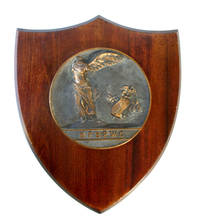
1919Best.-Nr. 149951919. National Federation of Business and Professional Women's Clubs plaque 1919 commemorates the founding year of a national organization created to coordinate and advance the interests of business and professional women. Established on July 16 1919 after wartime efforts to identify women's professional skills and experience the Federation developed from organizing associated with the Women's War Council and the mobilization of women workers during World War I. Its formation preceded ratification of the Nineteenth Amendment in 1920 and placed questions of women's employment professional advancement and political participation within a national organizational structure. Large bronze embossed seal of the National Federation of Business and Professional Women's Clubs mounted on wood and dated 1919. The Federation was organized at its first national convention in St. Louis in July 1919 under the leadership of Lena Madesin Phillips with Gail Laughlin elected its first national president. Early Federation work included a national survey of business and professional women addressing their status qualifications opportunities and working conditions providing an organized basis for advocacy concerning women's economic and professional life. The plaque dates from the Federation's founding year when women were entering professional occupations in greater numbers while still lacking federally protected voting rights nationwide. The organization continued to advocate on issues affecting working women and to promote professional development leadership and economic opportunity. The bronze seal mounted on wood survives as an organizational artifact from the Federation's establishment in 1919 one year before ratification of the Nineteenth Amendment extended constitutional protection for women's suffrage nationwide. unknown
Best.-Nr. 16574Women Employment Lucy Wilson. "Women and Legislation." Vigilance Association for the Defence of Personal Rights. June 20 1874. Original paper wrappers. 4 pages. First edition. 8 1/2 x 5 in. A Letter addressed to the Editors of the Leeds Mercury. "These measures all point to one conclusion that motherhood is a crime. The woman who is guilty of it unless.she is rich and independent shall not eat bread for six months thereafter or twelve as the House may determine." In this open letter Wilson decries legislation which would forbid new mothers from working yet fails to provide any public assistance for them to care for their families. "No Act has been passed decreeing that such women shall not suffer cold or hunger or to 'deem that they commit an offence' if they are hungry." Vigilance Association for the Defence of Personal Rights was a British organization dedicated to watching restraining and influencing legislation especially in matters affecting the interests of women and the personal rights and liberties of the people. Small losses along spine. Very good condition. unknown books
1859Best.-Nr. 165681859. Parkes Bessie Rayner. The Market for Educated Female Labor 1859 argues that girls and young women should receive education or vocational training sufficient to support themselves rather than being prepared exclusively for marriage. Parkes wrote amid organized efforts to expand employment opportunities for middle-class women and in the same year that the Society for Promoting the Employment of Women was established. She rejects the assumption that marriage guaranteed lifelong financial support observing "The daughter may marry but her husband may die.or be too poor to support her and her children; let her at least be trained beforehand to some possible way of getting her bread." Her argument treats women's preparation for paid work as an ordinary parental responsibility rather than an emergency measure reserved for poverty. Parkes Bessie Rayner. The Market for Educated Female Labor. 1859. First edition. 6 pages present of an original 8 lacking the final two pages. Unbound measuring 8 1/4 x 5 inches. The text was delivered as a paper at the 1859 Bradford meeting of the Association for the Promotion of Social Science. Parkes states "We lay it down as a primary social law conceded by all political economists that a father ought to provide for all his children or give them the means of providing for themselves." She further counters the idea that paid employment among middle-class women was exceptional: "Probably every person present has a female relative or intimate friend whom trade-failure the exigencies of a numerous household or the early death of husband or father has compelled to this course; it is the experience of every family." The surviving text consequently links women's education to specific economic contingencies including business failure large households widowhood and the death of a father or husband. Parkes was then a central figure in the Langham Place circle and a founding editor of the English Woman's Journal established in 1858 to address women's employment education legal disabilities and related reforms. Her paper appeared as these activists were moving from publication and debate toward practical employment initiatives; the Society for Promoting the Employment of Women was founded in 1859 to train women and open additional occupations to them. At the time this description was prepared no copies were recorded in American institutional holdings consulted; OCLC search results remain subject to cataloging changes and should be reconfirmed. Repairs to the upper right corner and right edge of page 1 and a small repair to the left edge of page 6. Lacking the final two pages; good condition. The surviving six pages preserve Parkes's direct argument that women's education should provide the means for economic self-support in circumstances she described as common within middle-class families. unknown
Best.-Nr. 16266Circular of the Working Girls' Society. Bylaws for one of the first organizations in New York that was created specifically to support women workers. Extremely rare.Two very light horizontal fold marks. Light thumb-soiling. 2" tear at bottom of center fold. Very good condition. The Working Girls' Society was designed to provide space for girls and women to gather take classes and socialize after working hours; it was dedicated to providing working women with a safe and clean space that could help them advance their professional lives. Information in the bylaws related to membership and to members' uses of the organization's library and rooms at 222 West 38th Street. Perks of joining the society the club even include special vacation benefits and discounted train tickets. An extremely rare early document that details the social communities which developed around a larger urban female workforce in the late 19th century. Extremely scarce OCLC Worldcat lists no other known copies of this document in any institution of library worldwide. unknown books
1919Best.-Nr. 163201919. Ministry of Reconstruction Women's Advisory Committee. Report of the Sub-Committee Appointed to Consider the Position after the War of Women Holding Temporary Appointments in Government Departments 1919 addresses the status of women recruited into temporary government service during World War I and the terms under which they might remain in public employment after demobilization. The report concerns the transition from wartime labor to the permanent Civil Service including questions of women's eligibility for continued appointment equality of treatment with male colleagues pay and the assignment of clerical duties. Produced as the British government confronted the employment consequences of women's expanded wartime service it records official consideration of whether women who had entered departments under emergency conditions should retain a place in the postwar state workforce. Ministry of Reconstruction. Women's Advisory Committee. Report of the Sub-Committee Appointed to Consider the Position after the War of Women Holding Temporary Appointments in Government Departments. Presented to Parliament by Command of His Majesty. London: Published by His Majesty's Stationery Office 1919. Folio. 8 pages. The sub-committee consisted of six women and two men and was charged specifically with examining the position of women holding temporary government appointments after the war. Its recommendations address routes by which women might become permanent government employees and argue for treatment on terms comparable to male colleagues including questions of equal pay and the expectation that women should not automatically be assigned additional clerical work because of their sex. As an official parliamentary publication rather than an outside campaign tract the report documents how women's wartime employment had become an administrative question within government itself. Women entered British government departments in substantially increased numbers during World War I filling posts created or expanded by wartime administration while large numbers of men were serving in the armed forces. The end of the war raised immediate questions about whether these appointments would be terminated converted into permanent positions or reorganized along sex-segregated lines. This report preserves the Women's Advisory Committee's intervention in that process and records specific arguments over permanence pay duties and women's place in the postwar Civil Service. Modern blue card wrappers with paper label. Very good condition. An official 1919 statement of the employment claims advanced for women whose wartime government service had demonstrated their capacity to perform work previously reserved largely for men. unknown
1952290 pages. "This plan has two principal objects as follows: i) to act as a general and flexible guide to all concerned as to the manner in which planning control within the area of the plan will be discharged, and particularly as to the kind of development for which planning permission is likely to be granted by the Local Planning Authority. ii) to designate land as subject to compulsory acquisiton by any Minister, Local Authority or Statutory Undertaker." - from Foreword. Topics treated in this volume include: Regional Setting and Characteristics; Development of Settlement Pattern and Main Land Use Features; Communications and Transport; Employment, Industry and Population; Agriculture, Derelict and Marginal Land, and Forestry; Economic Geology and Mineral Resources; Housing; Public Utility, Educational, Library, Health, Recreational and Social Services; Landscape and Development in Rural Areas; Camping and Caravanning; Archaeology, Ancient Monuments and Buildings of Special Architectural or Historic Interest; Development by Government Departments; Programming; Summary of Analysis. Former reference library markings. Average wear. Binding intact. A sound copy. Book
1952301 pages. "This plan has two principal objects as follows: i) to act as a general and flexible guide to all concerned as to the manner in which planning control within the area of the plan will be discharged, and particularly as to the kind of development for which planning permission is likely to be granted by the Local Planning Authority. ii) to designate land as subject to compulsory acquisiton by any Minister, Local Authority or Statutory Undertaker." - from Foreword to Part I. This part considers the following towns: Bodmin, Bude-Stratton; Falmouth; Fowey; Launceston; Lostwitheil, Newquay, Padstow, Saltash, St. Austell, Torpoint, Truro. For each of these towns the text is divided into the following sections and includes diagrams relating to Population and the Location and Growth of each town: introduction and brief description; Historical Summary and Population Trends since 1801; Regional Communications; Mineral Resources; Population Structure in relation to Employment; Topography and Existing Land Use; Housing; Public Utilities; Social Services; Analysis of Urban Survey; Other Primary Land Uses; Programming. Former reference library markings. Average wear. Binding intact. A sound copy. Book
1999112 pages. Features: Human Smugglers - Running refugees into the U.S. from the Akwesasne Reserve; Chinese migrants risk their lives to be smuggled to North America; Patrolling 'Little Korea' - illegals from all over jump the U.S. border in southern B.C.; Chinese migrants seek release in B.C.; The Tragedy of Andrew Rich - teen Innu suicide victim; Problems with Emploi Quebec; Britain's hereditary peers fall victim to reform; Plunge of Flight 990 off Massachusetts; Feature Article - Wayne Gretzky's New World - he talks of family, life, and the public perils of selling himself; Bill Gates - as Microsoft fights antitrust findings, rivals gear up in the battle for web markets; Smart Appliances are set to rival the PC's role; Chris Staples and his Vancouver ad agency Palmer Jarvis DDB; Photo of young entrepreneur award recipients Stephen J.P. Comeau and Michael-Andreas Kuttner with their mentor, Wendy Paquette; Photos and short write-ups of additional entrepreneurs: Colleen Kennedy, Paul Wareham, Mark McLane, Allen and Tim McCandless, Ariel and Ron Shlien, Dave Zakutin, Kirt Eliza Kootoo, Chris Bond, Ken Zorniak, Daniel and Garnette Weber, Alan and Ian Andreasen, Susan Ireland, Daniel Sacks; Johan Arnet, and Samson Hartland; Brian Scudamore and 1-800-Got-Junk?; The Harry Potter Series; Pianist Naida Cole; Alexei Yashin and Carol Alt; and more. Clean, bright and unmarked with very light wear. One-inch opening to top of cover fold. A high-quality copy. Book
Best.-Nr. GOR006782046Paperback. Very Good. paperback
1847Best.-Nr. 162581847. Goddard Emily L. Archive of thirteen letters of recommendation and certification 1847-1853 documents a woman teacher establishing her professional qualifications across the common schools of western Massachusetts. Written by school officials and other individuals in Barre Wilbraham New Salem Athol Petersham and surrounding communities the letters certify Goddard's eligibility to teach in particular districts or attest to her general qualifications for common-school instruction. Spanning six years the correspondence records the repeated process by which a woman teacher obtained written approval and recommendations as she sought successive teaching positions in antebellum New England. Thirteen manuscript letters 1847-1853 concerning Emily L. Goddard's qualifications and employment as a teacher in western Massachusetts. The documents originate from multiple towns including Barre Wilbraham New Salem Athol and Petersham and consist principally of certifications and recommendations addressing Goddard's ability to teach a common school. The individual letters preserve the assessments she carried between districts as evidence of her preparation and prior work. Their geographic range and successive dates trace a professional record extending beyond a single appointment or school and show how recommendations from local authorities could accompany a teacher seeking employment elsewhere. Goddard's papers date from the expansion of the Massachusetts common-school movement when public education reform increased demand for teachers and teaching became an increasingly important occupation for women. Women's employment in common schools expanded substantially during the nineteenth century although hiring certification salaries and continued employment remained subject to local school authorities. This archive records those practices through one teacher's surviving credentials: thirteen documents produced over six years as Goddard accumulated certifications and endorsements in several Massachusetts communities. Fold lines and creases with very little foxing; handwriting remains clear and legible throughout. All thirteen letters in very good condition. A sustained documentary record of a woman building a teaching career within the local certification and recommendation practices of antebellum Massachusetts. unknown
Best.-Nr. 16266Working Girls' Society. Circular of the Working Girls' Society late nineteenth century sets out the rules and benefits of a New York organization created for wage-earning women. The Society provided working women with rooms for social meetings classes reading and recreation after working hours while its bylaws governed membership and access to the organization's facilities. Contemporary accounts of New York working girls' clubs describe them as cooperative organizations in which members pursued self-education social activity and practical assistance rather than simply receiving charity. Circular of the Working Girls' Society. New York: Working Girls' Society n.d. Bylaws governing membership and use of the Society's library and rooms at 222 West 38th Street. The circular describes benefits available to members including special vacation privileges and discounted railway tickets combining educational and social provisions with practical assistance for women earning wages in the city. The regulations document the daily administration of a women's club formed around the needs of an expanding urban female workforce and show how membership could provide access to books meeting rooms instruction recreation and reduced-cost travel. The circular survives from the period in which working women's clubs expanded in New York; by the early twentieth century contemporary descriptions traced the movement to clubs organized during the 1880s and emphasized their classes member government and opportunities for social intercourse and self-improvement. Two very light horizontal folds and light thumb-soiling with a 2-inch tear at the bottom of the center fold; overall Very Good Condition. unknown
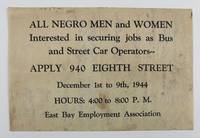
1944Best.-Nr. 3081N.p. but perhaps Oakland or Berkeley 1944. Very good. Printed broadside 5.25 x 8 inches. Minor foxing and staining light edge wear penciled note covering most of verso. A small and apparently unrecorded broadside calling for African Americans interested in working as bus drivers and street car operators in the San Francisco Bay Area during the latter portion of World War II. The notice calls for interested parties to apply at the offices of the East Bay Employment Association between 4:00 and 8:00 PM between December 1 and 9 1944. We could locate no information on the East Bay Employment Association but it was almost certainly located in either Oakland or Berkeley. This employment advertisement was perhaps the result of a wartime shortage of bus drivers and street car operators in the Bay Area. We could locate no other copies of this interesting and somewhat mysterious broadside. unknown
Best.-Nr. 798troisième édition entièrement refondue et très augmentée. In 8 cartonné.Pièce de titre imprimée, Faux-titre,frontispice illustré et gravé,titre,VII,568 pages.non rogné.Dondey-Dupré père & fils 1824(1/3 de la page de faux-t coupé)bon exemplaire Méthode ayant pour objet de régler le bon emploi du temps à l'aide d'une série de tableaux synoptiques présentant la suite rationnelle et progressive des occupations de la naissance à l'âge adulte.Il reprit ce plan qu'il développa à part dans son Essai sur l'Emploi du Tems,publié pour la première fois en 1808.Mêlé de très bonne heure à la politique militante,attaché à l'administration de la guerre sous le directoire, le Consulat et l'Empire,auteur d'un très grand nombre d'écrits d'actualité,Jullien de Paris (1775-1848),eut jusque dans les premières années du gouvernement de Juillet, eut une grande activité de publiciste. Buisson,Dictionnaire de Pédagogie
1972Best.-Nr. mon0000584191HMSO 1972T. paperback. Acceptable. in x in x in. NOT an ex-library book. Pages are clean but cover has foxing stains along edges. HMSO paperback
1878Best.-Nr. 189841878. Watherston Edward J. The Industrial Employment of Women in France Compared with England. London: Spottiswoods and Co. 1878. French Silk Manufactures and the Industrial Employment of Women. London: Dryden Pres - J Davy and Sons 1879. Both measure 8.5" x 5.25". 16 and 23 pages respectively. The 1878 pamphlet "The Industrial Employment of Women in France." is a comparative analysis of the labor participation rate of women in France and in England. French women were much more integrated into the labor market this study finds even despite the fact that England had a disproportionate demographic surplus of women and an even more developed industrial sector. At the conclusion of the pamphlet Watherston proposes three major steps spur female employment in England based off the French example which are the: "1. Establishment of special training schools for certain trades following a preliminary general education. 2. These training schools. must be made self-supporting within a short time. All pupils must pay a moderate fee for being taught. 3. There should be union of the managers of training schools with all manufacturers wishing to employ female labour. The union must aim both to give employment to women and to advise as to the directions in which it may be sought and into which it may be extended." Watherston lays blame for the poor labor participation rate of English women at the fact that they are barred from major employment sectors such as the railways as well as a private sector which demonstrated no inclination to hire them. He concludes that English women need organization first and foremost and should establish a "Society for the Industrial Employment of Women". The second pamphlet focuses on first the history of the French silk industry and later women's employment within it noting the unique advances that the French female silk workers enjoyed. Watherston notes that "Other countries before France made use of female labour but the French were the first who employed not only as we do the hands but also the brains of women. The technical education of female workers took place simultaneously with that of the men and it is to the results of this that not a little of the excellence of the French silk manufactures of the present day is due." Watherston goes on to examine the silk manufacture at Jujurieux which took in young women from a rural underdeveloped region and lodged fed and rigorously trained them in silk production. In both of these pamphlets he highlights and endorses enterprises that transform women into workers often through a process that includes living and training amongst fellow apprentices for years at a time. There is a prevailing belief that women must be engineered into working class subjects through this total immersion but with a confidence that they are technically and intellectually skilled enough should they be properly acclimated. Some minor chipping to left edge 3/4 in. tear on top edge of one pamphlet overall in very good condition. unknown
1918Features: Title page illustration of French Cavalry on the Oise Front; Two pages of illustrations of Royal visit to 'Khaki Country' - among the mills of the West Riding; Reserves and Their Employment (article); The Patron Saint of the Allies (article); Concerning National Kitchens (article); Photos of events in Italy, Portugal, Greece and France, including two photos of the funeral of Sister G.M.M. Wake, a Canadian nurse killed by a German bomb; Article on current events by G.K. Chesterton; Photos of John Robert Clynes, M.P., Sir Richard David Muir, The Duke of Rutland, Sir William James Tatem, and Sir John Merry Le Sage; Text and two illustrations describe the American's First "Big Thing" in France - The Cantigny Fight; The Moral and Material Effect of Bombing Germany (article by C.G. Grey); Six photos of British and U.S. Observers training Aerial Gunnery together; Wonderful 11-photo spread over two pages of the United States Army at the front where it is 'taking a gallant share in resisting the German offensive; Three illustrations and text describe the shelling of Paris from 74 miles by German super-gun "Long Bertha"; Seven photos of Sea-Warfare mementos from Zeebrugge - war museum additions; Centrefold illustration "The Last of the Albert Madonna - British Artillery In Action Near The Town; Photos of injured German POWs; Article on the saving of clerical labour; Two half-page aerial photos illustrate a British air attack on the main railway station at Metz; Roll of Honour - photos of 18 officers including Lieut.-Colonel James Hugh Coles, D.S.O.; Several lovely car ads; Fantastic two-colour back cover ad for "Erasmic" The Dainty Soap features well-dressed lady in boudoir studying her mirror; and more. 36 pages including several pages of marvelous vintage ads, most of which are illustrated. Unmarked with average wear. Binding intact. A sound copy of this excellent WWI-era issue. Magazine
1918273-384, [110] ads, pages. Profusely illustrated with black and white photos and drawings. Printed upon glossy stock. The many pages of ads include an abundance of nostalgic illustrations. Features: The American Country House, with particular references to types developed or improved during the war; Part I - The Charm of This Small House; Part II - The Workingman and His House; Part III - Of Fireplaces; Part IV - Some Larger Country Houses; Notes and Comments - Small Window Panes, A Red Cross Village at Pisa, A Glass Front Building, Training Schools for Employment Managers. Average external wear. Library stamp atop front cover, otherwise unmarked. Binding intact. Two small binding holes near spine. A sound copy of this wonderful vintage issue. Book
Best.-Nr. 15644Early Women's Liberation and the Automobile in the Age of Suffrage. Collection of 4 pieces tracing the new path to independence gained by women with the invention of the automobile. Coming of age at the same time as the suffrage movement was reaching full swing the new technology offered by the automobile allowed women not only a newfound sense of freedom but the ability to travel unimpeded to demonstrate mastery of a new technology and even opened careers in mobility. This collection's vintage pieces include rare printed material on women and the automobile a signed license letters and photos from women who drove right over gender barriers explore the new world opening to women in the 20th century. Leading up to the 20th century automobiles became a symbol of women's increasing social mobility and financial independence. Car makers and dealers realized that a significant number of women wanted and were capable of purchasing their own cars; and so they developed vehicles and marketing campaigns specifically for the female population. This collection's early 1913 brochure "To the American Woman" represents this trend and it declares that "the automobile . is of the greatest use to the woman.because of the importance of her work a woman's need for saving time and effort is imperative." The car saved wives and mothers time as they executed familial duties. It also provided some single women with independent incomes. As young women purchased their own vehicles some used the technology to support themselves by becoming mechanics and chauffeurs. These women are represented in this collection by a 1923 "Motor Magazine" with coverage on women car owners a vintage photo of the first woman to motor from Africa to London and an original 1929 Professional Chauffeur's License for Vivian Pickard. Pioneering women like those in this collection overcame gender barriers by increasing their mobility taking advantage of opportunities for mechanical and technical education thus opening new possibilities for women in transportation technology. unknown books
193680 pages. Features: Nice colour ad for Dominion Inlaid Linoleum inside front cover; Editorial topics include - Advertising our country, Typical problems in the western provinces, The Return of Employment, and The Cost of Sickness; The Smooth Silence (short story); The Carpenter (short story); Peiping (Beijing/Peking) Under Martial Law - photo-illustrated article of events in troubled China; Not a Case for the Jury (short story); The Girl Who Wouldn't Get Up (short story); The Spongers (short story); First Easter Among the Godless - photo-illustrated article told by Alexander Welikotny describes his experiences in Russia; Heil Summer, Heil Sport, All Heil! - article looks forward to the Olympics, with photos of Canadian Crew Champions, The Leanders "Eight" of Hamilton, broad jumper "Sammy" Richardson, and walker "Hank" Cieman of Toronto; Nice one-page Plymouth ad features a four-Door Touring Sedan and photo of A.B. Ellis, Radio Engineer of station CKLW; Parker pen one-page ad features photo of Princess Rostislav; Nice one-page Dodge care ad includes photo of a Model "D2" four-door Touring Sedan, and photo of Mr. F. Lyle Kelly, of Windsor, Ontario; First report of the Bank of Canada; Great two-page Easter Chevrolet ad features a green two-door; Movie news includes photos of Warner Baxter, Charlie Chaplin, Jessie Matthews, Sonnie Hale, Norma Shearer, Leslie Howard, Billy Lee, and Shirley Temple; Great one-page Lux soap ad features photo of Grace Moore; Pond's ad includes photo of Eleanor Roosevelt, Daughter of Mr. and Mrs. Henry Latrobe Roosevelt of Washington, D.C.; Blue Jay Corn Plaster ad entitled "Corn Demon Killed"; Half-page Canadian National Railways ad features Jasper National Park; Cooking article; Nice one-page ad for Magic Baking Powder; features Miss Lillian Loughton; Spring Cleaning article; Nice one-page Heinz ad features photo of Josephine Gibson; Canadian Pacific half-page ad features photo of the Empress of Britain; Uncommon half-page ad for Ingram's Milkweed Cream; Beauty article; Tangee ad features photo of Lyle Talbot who picked the most appealing lips in an interesting test; World Sayings; Ad inside back cover protests preferential treatment of foreign periodicals in Canada; Wonderful colour back-cover ad for Tea features a Ripley's Believe it or Not theme and says "Drink More Tea for Vitality!"; and more. Average wear. A sound copy of this great vintage issue. Book
195964 pages. Features: The Court-Martial of Smedley Butler - an off-the-cuff remark about Mussolini spelled trouble for this famous Marine Corps hero - photo-illustrated feature article; Bell Telephone ad features photo of Edward Ohm, David Hogg and Robert DeGrasse working with a large horn reflector; Nice illustrated ad for the Sikorsky S-64 flying crane; Small Atomics (bombs) - a Big Problem; Tong Yong Operation near Pusan, Korea in August 1950; Block Buster - airlifting palletized Caterpillar tractors; Flying Saucers - A Hard Look - illustrated article on ground effect vehicles; No Pitch, No Roll - article on amphibious helicopters; The Soviet Officer Corps - Just how good are the officers who command the Red Army?; Article on Soviet military pay; Organized Air-Ground Reserves - 1959; Support by Fire - Part VI - Target Information; Colt .45 vs. the Luger; Employment of Recon; and more. Average wear. Unmarked. A sound vintage copy of this important issue. Magazine
1935Best.-Nr. 153591935. American League Against War and Fascism. Women War and Fascism 1935 links women's labor conditions in the United States to the League's broader campaign against militarism and fascism during the Depression. The pamphlet protests the employment of women as low-paid labor in factories and offices describes dangerous work performed by women in munitions plants condemns long hours and unequal wages and calls for the defeat of discriminatory legislation and equal pay for equal work. Founded in 1933 the American League Against War and Fascism brought communists socialists liberals labor activists and clergy into a national coalition opposed to war and the expanding power of fascist governments. Its appeal for supporters to "defend peace democracy and the rights of the working people" joined opposition to fascism abroad with labor and civil-liberties campaigns in the United States. American League Against War and Fascism. Women War and Fascism. New York: The American League Against War and Fascism 1935. Original paper wrappers. 18 pages. The text identifies women's low wages as both a labor issue and a feature of militarized industrial production drawing particular attention to women employed at hazardous tasks in munitions plants for long hours and inadequate pay. Its demand that "women's wages be made equal with men's for equal work" places wage discrimination alongside discriminatory laws as conditions requiring organized political opposition. Published as Hitler consolidated Nazi rule in Germany Mussolini prepared and commenced Italy's invasion of Ethiopia and Japanese military expansion continued in Asia the pamphlet shows how the League connected developments abroad with domestic labor organizing and resistance to American militarization. The pamphlet was issued during the growth of Popular Front anti-fascist organizing several years before the United States entered the Second World War and records an effort to place women workers within campaigns against both economic exploitation and militarism. Its combination of equal-pay demands criticism of dangerous industrial labor and anti-fascist politics documents an early convergence of women's labor activism and organized opposition to fascism in the United States. Light edgewear and faint toning to wrappers with a small closed tear at the spine fold; overall Very Good. Buhle 372; Seidman M182. unknown
First edition, 12mo (160 x 100 mm), [8], 122, [14]pp., with a final advert leaf, text very clean and bright, cont. calf, joint split, spine chipped, covers held by cords (rear cover by upper cord only). The anonymous author stresses the importance of the poor laws in his introduction and also points out "that in the Streets of this great Metropolis (the Capital, for Trade and Riches, of the whole World) more Unhappy, Miserable People are to be found, than in the Cities of the Poorest Nations Abroad; which is the greatest Scandal to the Kingdom of Great-Britain. By the Abuse or Non-use of our Excellent Laws for Providing for the Poor, we have Thousands of Beggars pestering our Streets...". Of this first edition ESTC locates 6 copies (3 in the UK: BMu; L; Lu; and 3 in North America: CaOHM; CLU-C; CaOTU), the second edition of 1727 is of similar rarity. Hanson, 3252; Goldsmiths'-Kress, 6333.
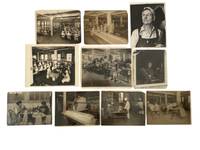
1940Best.-Nr. 223731940. Women's EmploymentLaborFeminismWWII Archive of ten original photos documenting American women's industrial labor during the 1930s and 1940s. Original black-and-white press photographs taken in various factories during World War II including steel works textiles candy production and industrial assembly lines. Stamped by press agencies including Acme Newspictures Brown Brothers and International News Photos several with annotated captions on verso. This collection of press photos captures the pivotal moment when women entered the industrial workforce en masse replacing men who were fighting overseas. These images were part of a wartime propaganda campaign to normalize and promote women's factory work paving the way for long-term shifts in gender roles in the American labor force. In one striking image captioned by the N.E.A. press service as "Portrait for Mother's Day" a steel worker identified as Mrs. Neel of Gary Indiana is praised as "the American Mother- 1943 style" echoing the iconic Rosie the Riveter with a new image of female patriotism: overalls bandanna badge and goggles in hand. Another shows women boxing chocolates along a conveyor line while several others reveal the mechanical precision and physical intensity of jobs in textile finishing labeling and industrial equipment handling. This archive is emblematic of the historical inflection point that sparked the modern women's labor movement. The war effort validated women's technical skills and economic participation giving rise to a postwar generation of women who emboldened by their wartime service laid the intellectual and organizational groundwork for second wave feminism. Many of these workers would later confront the "return to domesticity" in the 1950s and become active in labor organizing civil rights and feminist causes by the 1960s. Light edge wear. Overall good to very good condition. A photographic archive capturing the genesis of modern women's industrial labor and the cultural origins of second wave feminism in the WWII workplace. unknown