ABDELKEBIR KHATIBILivre Rare Book
527 Ergebnisse
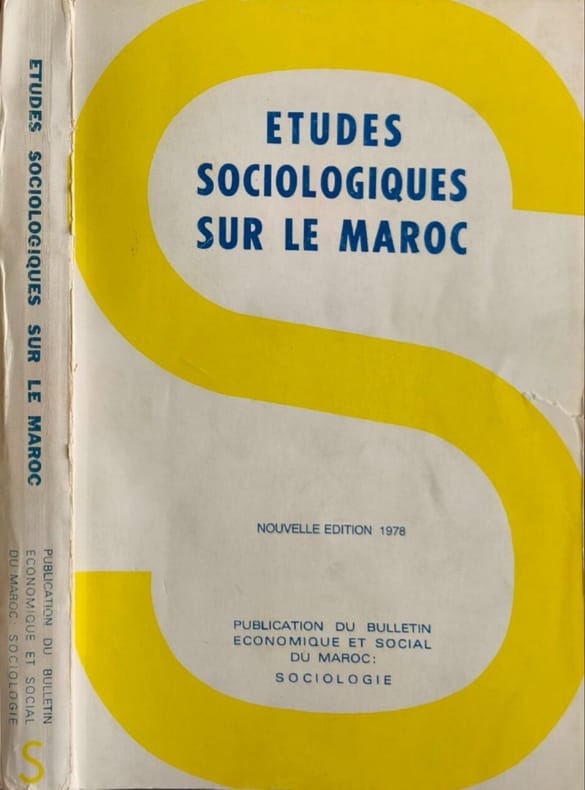
1978Best.-Nr. 13600Éditions marocaines et internationales 1978 361 pages in8. 1978. broché. 361 pages. Cet ouvrage est un recueil d'articles conçu et préparé par le sociologue marocain Abdelkébir Khatibi publié en 1971 par les Éditions marocaines et internationales. Il propose une analyse sociologique du Maroc abordant des thèmes comme les classes sociales les collectivités rurales les concessions foncières et l'emploi
1st edition. VG pbk. 9437. eng
1991Best.-Nr. VIEN0130(Wien), Verlag f. Gesellschaftskritik (1991). 235 S., 2 Bl. Anzeigen, OKart., schwache Knickspuren. (= Aufrisse Buch 15).
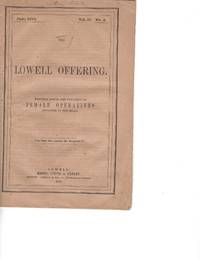
Best.-Nr. 16739Women's Fight for Employment Equality. "Lowell Offering. Written Edited and Published by Female Operatives Employed in the Mills." 1844. Pamphlet. The Lowell Offering was a monthly publication run by women working in the Lowell Textile Mill from 1840-1845. Featuring the women's poetry essays and other literary efforts the magazine gave female factory workers the opportunity to share their creative endeavors; for the women who edited and published the periodical the Lowell Offering also provided demonstrable and employable skills in publishing and journalism. This 1844 edition comes from the penultimate year of the publication. It is the earliest piece in the collection. Lowell solved the problem of labor at his mills by employing young women between the ages of 15 and 35 who became known as "mill girls". Unlike European industries which had access to "large landless urban populations whose reliance on the wage system gave them few economic choices" American companies had to grapple with a small labor supply because the population was small and most preferred farming their own land and the economic independence that came with it. In order to persuade these young women to work at a mill they were paid in cash once "every week or two weeks". In line with the Boston Associates' worldview the mill girls were encouraged to educate themselves and pursue intellectual activities. They attended free lectures by Ralph Waldo Emerson and John Quincy Adams and read books they borrowed from circulating libraries. They were also encouraged to join "improvement circles" that promoted creative writing and public discussion. unknown books
Best.-Nr. 16266Working Girls' Society. Circular of the Working Girls' Society late nineteenth century sets out the rules and benefits of a New York organization created for wage-earning women. The Society provided working women with rooms for social meetings classes reading and recreation after working hours while its bylaws governed membership and access to the organization's facilities. Contemporary accounts of New York working girls' clubs describe them as cooperative organizations in which members pursued self-education social activity and practical assistance rather than simply receiving charity. Circular of the Working Girls' Society. New York: Working Girls' Society n.d. Bylaws governing membership and use of the Society's library and rooms at 222 West 38th Street. The circular describes benefits available to members including special vacation privileges and discounted railway tickets combining educational and social provisions with practical assistance for women earning wages in the city. The regulations document the daily administration of a women's club formed around the needs of an expanding urban female workforce and show how membership could provide access to books meeting rooms instruction recreation and reduced-cost travel. The circular survives from the period in which working women's clubs expanded in New York; by the early twentieth century contemporary descriptions traced the movement to clubs organized during the 1880s and emphasized their classes member government and opportunities for social intercourse and self-improvement. Two very light horizontal folds and light thumb-soiling with a 2-inch tear at the bottom of the center fold; overall Very Good Condition. unknown
Inscribed by Marianne Gray on front end paper. No other marks or inscriptions. A very clean very tight copy with unmarked maroon cloth boards, well-tanned pages edgesand margins and no bumping to corners. Dust jacket not price clipped or marked or torn with light creasing to upper edge. 239pp. An invaluable book for many these days which sets out the pros and cons of home working and includes over 200 ideas for ways of earning money from home.
No marks or inscriptions. No creasing to covers or to spine. A very clean very tight copy with bright unmarked slightly foxed boards and no bumping to corners. 40pp. A discussion of the means needed to further the aims of the proletariat.
Previous owner's name inside front cover. No other marks or inscriptions. Tiny crease to upper edge of front cover, none to rear, crease to spine. A very clean very tight copy with bright unmarked boards and no bumping to corners. 310pp. We do not use stock photos, the picture displayed is of the actual book for sale. Every one of our books is in stock in the UK ready for immediate delivery.
little creasing on the corners of the cover and on the spine, last owers name on the FEP.
Best.-Nr. BN725316mit press 1975. work in america work in america w.e.upjohn institute for employment research mit press 1975 unknown
No marks or inscriptions. Very small crease to lower spine corner of front cover, none to rear or to spine. A lovely clean very tight copy with bright unmarked boards and no bumping to corners. 236pp. An examination of the world of work in the light of the major changes which took place in the previous decade.
212 pages. "These essays emphasize the social, cultural, economic, historical, and geographical contexts in which women work, and the effect of specific conditions on women's experineces." - from back cover. Soiling to top edge. Few markings to contents. Light wear. Sound working copy. Book
Dust jacket shows minor wear; gilt title on top board and spine wearing off a little. Contents remain clean and sound throughout. Used
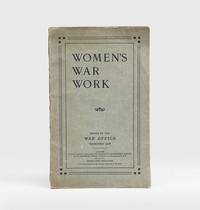
1916Best.-Nr. 183494London: Chiswick Press 1916. First edition of this illustrated government publication promoting women's wartime employment. Women's War Work contains a detailed list of several hundred roles left vacant by men that women successfully fulfilled. Several of these are demonstrated by characterful photographs which show women employed in a range of professions including the postal service factories breweries and shops. The War Office recruited women into the workplace to maintain productivity produce munitions and ensure that as many men as possible were available for the Armed Forces. By July 1916 it was estimated that 750000 women across Britain had taken up such work and the War Office produced Women's War Work in September to further increase their numbers. The preface asserts that employers who had women in their workface would "readily admit that the results achieved by the temporary employment of women far exceed their original estimates and even so are capable of much further extension" p. 5. Women's contributions to the war effort drastically changed public perception of their capabilities and helped women over 30 to achieve enfranchisement in 1918. Provenance: from the collection of the suffrage historian Elizabeth Crawford. Quarto. 72 black and white photographs. Drab paper wrappers front and rear cover printed in black. Library sticker of the Women's Service Library and withdrawal stamp on front inside cover former shelfmark to front cover in pencil former bookseller's price to half-title. Spine repaired loss to ends wrappers lightly toned extremities a little creased extending to outer leaves at bottom corner occasional light finger-soiling to contents but otherwise clean: a very good copy of a fragile publication. unknown
Name on front end paper. No other marks or inscriptions. No creasing to covers. A very clean very tight pamphlet with slightly foxed unmarked rear cover and no bumping to corners. 20pp. A report on the problems facing women in gaining employment.
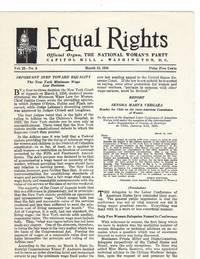
1936Best.-Nr. 160251936. National Woman's Party. Equal Rights March 15 1936 documents the organization's campaign for legal equality at a time when women's workplace legislation divided American feminists over whether sex-specific protections advanced or restricted women workers. Founded in 1916 by Alice Paul and Lucy Burns during the suffrage campaign the National Woman's Party continued after ratification of the Nineteenth Amendment by advocating the Equal Rights Amendment then commonly associated with the Lucretia Mott Amendment and by opposing laws that imposed legal distinctions based solely on sex. This issue addresses the New York minimum wage controversy international equal-rights efforts and proposed workplace protections for women and children. National Woman's Party. Equal Rights. Vol. 22 No. 6. March 15 1936. 4 pages. 8 1/2 x 11 inches. Official organ of the National Woman's Party. The issue reports on the New York minimum wage case after the New York Court of Appeals struck down the state law regulating minimum wages for women; the United States Supreme Court subsequently affirmed that judgment in Morehead v. New York ex rel. Tipaldo on June 1 1936. It also discusses the Equal Rights Treaty signed at Montevideo by Cuba Ecuador Paraguay and Uruguay part of the National Woman's Party's effort to establish sex equality in international law. Another article addresses workplace hygiene and a resolution requiring employers to provide women with separate quarters for washing changing clothes and general use as well as seats for women and children when the work did not require them to remain standing. Published two years before enactment of the Fair Labor Standards Act of 1938 the issue records a central dispute in interwar women's rights politics: whether legislation written specifically for women offered necessary labor protection or created legal distinctions that could restrict women's employment and undermine demands for equal rights. The National Woman's Party pursued the latter argument while simultaneously campaigning internationally for legal equality between the sexes. The March 1936 issue therefore preserves contemporary evidence of the relationship among the Equal Rights Amendment campaign minimum wage litigation international treaty advocacy and debates over sex-specific workplace regulation. In excellent condition. unknown
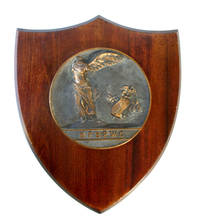
1919Best.-Nr. 149951919. National Federation of Business and Professional Women's Clubs plaque 1919 commemorates the founding year of a national organization created to coordinate and advance the interests of business and professional women. Established on July 16 1919 after wartime efforts to identify women's professional skills and experience the Federation developed from organizing associated with the Women's War Council and the mobilization of women workers during World War I. Its formation preceded ratification of the Nineteenth Amendment in 1920 and placed questions of women's employment professional advancement and political participation within a national organizational structure. Large bronze embossed seal of the National Federation of Business and Professional Women's Clubs mounted on wood and dated 1919. The Federation was organized at its first national convention in St. Louis in July 1919 under the leadership of Lena Madesin Phillips with Gail Laughlin elected its first national president. Early Federation work included a national survey of business and professional women addressing their status qualifications opportunities and working conditions providing an organized basis for advocacy concerning women's economic and professional life. The plaque dates from the Federation's founding year when women were entering professional occupations in greater numbers while still lacking federally protected voting rights nationwide. The organization continued to advocate on issues affecting working women and to promote professional development leadership and economic opportunity. The bronze seal mounted on wood survives as an organizational artifact from the Federation's establishment in 1919 one year before ratification of the Nineteenth Amendment extended constitutional protection for women's suffrage nationwide. unknown
Best.-Nr. 18979Women's Employment Workingmen Want this Bill! An Act To Amend the Labor Law Relative to Hours of Labor. Utica: Utica Trades Assembly n.d. Measuring 9.5" x 6" on tan paper. A women's labor broadside calling attention to the modification of "labor laws relative to the hours of labor" for women and minors in New York. Decorated in bold black lettering the slogan reads "Workingmen Want this Bill!" followed by the contention that the bill "provides for a half holiday on Saturday for women and minors employed on factories without the necessity of working overtime on other days of the week". This is succeeded by the presentation of the act by "The People of the State of New York represented in Senate and Assembly with excerpts from Sections 1 2 3 and 77. Section 77 states that "Hours of labor of minors and women--No minor under the age of eighteen years and no female shall be employed at labor in any factory in this State before six o'clock in the morning or after nine o'clock in the evening of any day or for more than ten hours in any one day of sixty fifty six hours in any one week nor more than six hours on the last day of the week.". As of this writing OCLC reports fewer than three copies in the United States. This document seems to follow some text from the Keating-Owen Child Labor Act 1916. In very good condition. unknown
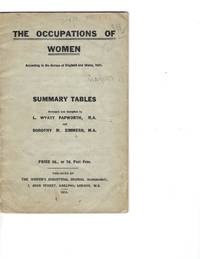
1914Best.-Nr. 162641914. Papworth L. Wyatt and Dorothy M. Zimmern comps. The Occupations of Women According to the Census of England and Wales 1911 1914 uses government census data to quantify women's participation in the British labor force and identify occupations offering employment to women. Published by the Women's Industrial Council an organization concerned with women's working conditions and economic opportunities the pamphlet converts the 1911 Census into tables comparing male and female employment and distinguishing women workers according to marital and occupational status. Appearing before the First World War substantially altered women's employment in Britain the study provides a statistical record of the labor market immediately preceding wartime expansion into occupations from which women had previously been excluded or employed only in limited numbers. Papworth L. Wyatt and Dorothy M. Zimmern comps. The Occupations of Women According to the Census of England and Wales 1911. London: Women's Industrial Council 1914. Paper wrappers. The compilers arrange census figures into tables analyzing the occupations of men and women the marital status of women workers and the number of retired women workers among other categories. The statistics were assembled not simply to enumerate existing employment but to determine which industries were open to women and where further employment opportunities might be developed. By separating workers according to sex and marital status the pamphlet supplies contemporary evidence of how women's paid labor was measured and classified immediately before the economic disruptions of the First World War. This copy bears provenance from the Women's Service Library at Millicent Fawcett House connecting it to an institution devoted to collecting documentation on women's political social and economic history. The library developed from the collections of the London Society for Women's Service and was named for suffrage leader Millicent Garrett Fawcett whose work also encompassed women's educational and employment opportunities. The association is particularly pertinent to a Women's Industrial Council publication concerned with expanding women's economic participation. Handling creases and soiling to wrappers with creased corners to front wrapper and small loss at lower right corner of rear wrapper and several leaves; overall good condition. A census-based record of women's employment immediately before the First World War with provenance linking the copy to a major British collection devoted to the history of women's rights and work. unknown
1919Best.-Nr. 163201919. Ministry of Reconstruction Women's Advisory Committee. Report of the Sub-Committee Appointed to Consider the Position after the War of Women Holding Temporary Appointments in Government Departments 1919 addresses the status of women recruited into temporary government service during World War I and the terms under which they might remain in public employment after demobilization. The report concerns the transition from wartime labor to the permanent Civil Service including questions of women's eligibility for continued appointment equality of treatment with male colleagues pay and the assignment of clerical duties. Produced as the British government confronted the employment consequences of women's expanded wartime service it records official consideration of whether women who had entered departments under emergency conditions should retain a place in the postwar state workforce. Ministry of Reconstruction. Women's Advisory Committee. Report of the Sub-Committee Appointed to Consider the Position after the War of Women Holding Temporary Appointments in Government Departments. Presented to Parliament by Command of His Majesty. London: Published by His Majesty's Stationery Office 1919. Folio. 8 pages. The sub-committee consisted of six women and two men and was charged specifically with examining the position of women holding temporary government appointments after the war. Its recommendations address routes by which women might become permanent government employees and argue for treatment on terms comparable to male colleagues including questions of equal pay and the expectation that women should not automatically be assigned additional clerical work because of their sex. As an official parliamentary publication rather than an outside campaign tract the report documents how women's wartime employment had become an administrative question within government itself. Women entered British government departments in substantially increased numbers during World War I filling posts created or expanded by wartime administration while large numbers of men were serving in the armed forces. The end of the war raised immediate questions about whether these appointments would be terminated converted into permanent positions or reorganized along sex-segregated lines. This report preserves the Women's Advisory Committee's intervention in that process and records specific arguments over permanence pay duties and women's place in the postwar Civil Service. Modern blue card wrappers with paper label. Very good condition. An official 1919 statement of the employment claims advanced for women whose wartime government service had demonstrated their capacity to perform work previously reserved largely for men. unknown
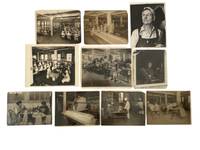
1940Best.-Nr. 223731940. Women's EmploymentLaborFeminismWWII Archive of ten original photos documenting American women's industrial labor during the 1930s and 1940s. Original black-and-white press photographs taken in various factories during World War II including steel works textiles candy production and industrial assembly lines. Stamped by press agencies including Acme Newspictures Brown Brothers and International News Photos several with annotated captions on verso. This collection of press photos captures the pivotal moment when women entered the industrial workforce en masse replacing men who were fighting overseas. These images were part of a wartime propaganda campaign to normalize and promote women's factory work paving the way for long-term shifts in gender roles in the American labor force. In one striking image captioned by the N.E.A. press service as "Portrait for Mother's Day" a steel worker identified as Mrs. Neel of Gary Indiana is praised as "the American Mother- 1943 style" echoing the iconic Rosie the Riveter with a new image of female patriotism: overalls bandanna badge and goggles in hand. Another shows women boxing chocolates along a conveyor line while several others reveal the mechanical precision and physical intensity of jobs in textile finishing labeling and industrial equipment handling. This archive is emblematic of the historical inflection point that sparked the modern women's labor movement. The war effort validated women's technical skills and economic participation giving rise to a postwar generation of women who emboldened by their wartime service laid the intellectual and organizational groundwork for second wave feminism. Many of these workers would later confront the "return to domesticity" in the 1950s and become active in labor organizing civil rights and feminist causes by the 1960s. Light edge wear. Overall good to very good condition. A photographic archive capturing the genesis of modern women's industrial labor and the cultural origins of second wave feminism in the WWII workplace. unknown
1859Best.-Nr. 165681859. Parkes Bessie Rayner. The Market for Educated Female Labor 1859 argues that girls and young women should receive education or vocational training sufficient to support themselves rather than being prepared exclusively for marriage. Parkes wrote amid organized efforts to expand employment opportunities for middle-class women and in the same year that the Society for Promoting the Employment of Women was established. She rejects the assumption that marriage guaranteed lifelong financial support observing "The daughter may marry but her husband may die.or be too poor to support her and her children; let her at least be trained beforehand to some possible way of getting her bread." Her argument treats women's preparation for paid work as an ordinary parental responsibility rather than an emergency measure reserved for poverty. Parkes Bessie Rayner. The Market for Educated Female Labor. 1859. First edition. 6 pages present of an original 8 lacking the final two pages. Unbound measuring 8 1/4 x 5 inches. The text was delivered as a paper at the 1859 Bradford meeting of the Association for the Promotion of Social Science. Parkes states "We lay it down as a primary social law conceded by all political economists that a father ought to provide for all his children or give them the means of providing for themselves." She further counters the idea that paid employment among middle-class women was exceptional: "Probably every person present has a female relative or intimate friend whom trade-failure the exigencies of a numerous household or the early death of husband or father has compelled to this course; it is the experience of every family." The surviving text consequently links women's education to specific economic contingencies including business failure large households widowhood and the death of a father or husband. Parkes was then a central figure in the Langham Place circle and a founding editor of the English Woman's Journal established in 1858 to address women's employment education legal disabilities and related reforms. Her paper appeared as these activists were moving from publication and debate toward practical employment initiatives; the Society for Promoting the Employment of Women was founded in 1859 to train women and open additional occupations to them. At the time this description was prepared no copies were recorded in American institutional holdings consulted; OCLC search results remain subject to cataloging changes and should be reconfirmed. Repairs to the upper right corner and right edge of page 1 and a small repair to the left edge of page 6. Lacking the final two pages; good condition. The surviving six pages preserve Parkes's direct argument that women's education should provide the means for economic self-support in circumstances she described as common within middle-class families. unknown
1873Best.-Nr. 165671873. Kinnear John Boyd. The Right of Women to Labour 1873 argues against restrictions on women's employment and examines the economic consequences of industrialization for women who depended upon paid work. Kinnear a Scottish lawyer writer and later Liberal politician rejects occupational exclusion based on sex writing "there are other things which women can do at least as well as men.Then why should women not do it" His argument extends beyond access to employment to the conditions under which women worked including their difficulty in "forming effective trade unions to secure their rights." The pamphlet thus addresses both women's right to enter occupations and their limited power to protect themselves collectively once employed. Kinnear John Boyd. The Right of Women to Labour. Being Portions of an Essay Re-printed by Permission from "Woman's Work and Woman's Culture." London: Printed by Frederick Bell & Co. Chelsea S.W. 1873. First edition. 14 pages. The text reprints portions of Kinnear's contribution to Josephine Butler's Woman's Work and Woman's Culture first published in 1869 a collection addressing women's education employment legal status suffrage and professional opportunities. Kinnear argues that mechanization and the movement of production from households into factories had eliminated forms of work traditionally performed by women while exposing those who remained in industrial employment to increased competition. He answers these changes by demanding access to work according to ability rather than sex and by identifying workers' collective organization as a means of defending wages and employment rights. Published amid nineteenth-century campaigns to expand women's access to education professions property rights and political participation Kinnear's pamphlet concentrates specifically on economic independence and the organization of women workers. One pamphlet 14 pages in original paper wrappers measuring 8 x 5 1/4 inches. Very good condition. Its discussion of occupational exclusion mechanization and trade union organization records an early argument that women's economic rights required both access to paid employment and the ability to defend their position within the labor market. unknown
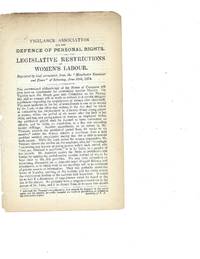
1874Best.-Nr. 165761874. Vigilance Association for the Defence of Personal Rights. Legislative Restrictions on Women's Labour 1874 opposes proposed factory legislation that would prevent women from returning to industrial employment for six months after childbirth. The Association argues that a measure presented as protection would fall most heavily on women whose families depended upon their wages asking "Who in thousands of cases where there is no helper will assure them and their children bread" Its objections connect employment restrictions to married women's precarious legal and economic position particularly women deserted or unsupported by husbands and left without an enforceable claim upon their husbands' earnings. Vigilance Association for the Defence of Personal Rights. Legislative Restrictions on Women's Labour. Extract reprinted by kind permission from the Manchester Examiner and Times of Saturday June 20th 1874. London: Vigilance Association for the Defence of Personal Rights 1874. First edition extract. 4 pages. Original paper wrappers. 8 1/2 x 5 inches. The pamphlet challenges legislation directed specifically at working women while leaving wealthier women free from comparable interference. Addressing married workers it notes that there are ".many married women deserted or uncared for by their husbands" and argues that "no marriage law secures to the wife a share in the earnings of the father of her children." The text consequently treats freedom to work not as an abstract principle but as an immediate question of food wages and support for women and children and calls upon women themselves to oppose the proposed restriction. The pamphlet belongs to the Vigilance Association's campaign against statutory limitations imposed specifically upon adult women's labor during the parliamentary debates surrounding the Factory Acts in 1874. Its argument exposes a central conflict in nineteenth-century labor reform: legislation intended to protect women workers could also restrict their access to wages without providing an alternative means of family support. At the time this description was prepared no copies were located in American institutions through the OCLC search consulted; institutional records are subject to revision and should be reconfirmed. Condition information was not supplied. The four-page tract records an organized women's-rights response to factory regulation that linked employment freedom directly to marriage law household income and women's economic dependence. unknown
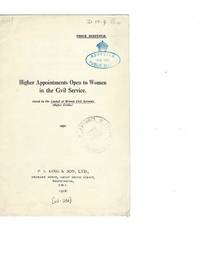
1928Best.-Nr. 162621928. Council of Women Civil Servants Higher Grades. Higher Appointments Open to Women in the Civil Service 1928 publicized routes into senior British government employment three years after women became eligible for direct recruitment into the Administrative Class of the Home Civil Service. The Council founded in 1920 to represent women in administrative professional and executive grades campaigned during the interwar period for equal opportunity and equal pay and against restrictions including the marriage bar. This pamphlet addressed a practical obstacle to women's advancement: insufficient knowledge of the senior Civil Service careers then available to female applicants. Its publication belongs to the Council's broader campaign to increase women's access to government positions beyond the clerical grades. Council of Women Civil Servants Higher Grades. Higher Appointments Open to Women in the Civil Service. London: P. S. King & Son Ltd. 1928. 8½ x 5½ inches. Eight-page pamphlet in paper wrappers staple bound. The Council begins from its belief that the "number and the importance of the careers in the Civil Service open to women are not fully recognized" then supplies information intended to acquaint prospective applicants with higher appointments and the procedures for obtaining them. The text describes opportunities in administrative executive and clerical work making the pamphlet both a recruitment document and evidence of the methods used by an organization of women civil servants to encourage women to pursue positions within the government's higher grades. A contemporary listing records another copy as formerly held by the Board of Education library. The pamphlet appeared during a period when formal access to higher Civil Service employment had expanded without eliminating sex-based restrictions within government employment. Women gained access to direct recruitment into the Administrative Class in 1925 yet women civil servants continued to encounter unequal pay restricted advancement and the marriage bar; the Council subsequently presented evidence to the Royal Commission on the Civil Service in 1929-1931 and remained active in campaigns concerning equal pay and women's eligibility for government posts. The present copy has light thumb-soiling stamps on the front wrapper a library sticker on the rear and rusting to the staple binding; good condition. Its eight pages preserve the Council's own effort to translate newly available avenues of advancement into concrete information about careers and application procedures for women seeking higher appointments in the inter war British Civil Service. unknown