Hakim, CliffMareMagnum

656 Ergebnisse
1994No marks or inscriptions. A very clean very tight copy with bright unmarked light blue cloth boards and no bumping to corners. Dust jacket not price clipped or marked or torn with minor creasing to top of spine. 230pp. The drastically changing world of work demands a new social contract - one that says we are all self-employed whether we work inside or outside of organizations. The author describes this new contract, its practical application and how to use it to mobilize your career. Hardback edition scarce in the UK.
1996Best.-Nr. 2083002115802909Socioeconomic Productivity Headquarters 1996. Soft Cover. Fine. Number of books: 1 book Socioeconomic Productivity Headquarters paperback
in-16, 283 pp., broché, couv. Illus Tres bel exemplaire. [MB-2]
1983No marks or inscriptions. No creasing to covers or to spine. A very clean very tight copy with bright unmarked slightly rubbed boards and no bumping to corners. 62pp. A Government report on unemployed people taking part in voluntary activities. Very scarce.
1950Best.-Nr. 100139Couverture souple. Brochure. 16 pages.
Best.-Nr. 2081002109001728Employment Problem Study Group N.A. Soft Cover. Fine. Number of pages: 2 books Size: 26cm Employment Problem Study Group paperback
Best.-Nr. 16188Original vintage photograph of a large group of women seamstresses and tailors at their sewing machines in a factory setting. Sepia. Approximately 5" x 8" with back matting. Rows and rows of women sitting in front of sewing machines gaze into the camera. While single women faced barriers to employment wives and mothers confronted prejudice that put their jobs at risk after marriage and childbirth. As women took advantage of expanded access to jobs with the advent of factory lines a new push was made for job security and upward mobility. The women's employment movement first picked up traction in the industrial revolution as women fought to secure fair hours and wages for female factory workers; In the late 1870s and 80s women's organizations lobbied for safe conditions and job protection for married women and mothers; and through the 20th century expansion of skilled female labor including civil service publishing and medicine. Some of the most radical labor organizing in the West happened thanks to women in the textiles industry as women fought to secure prosperity and safety under new work conditions. A beautiful photograph of the spirited women young and old at the front lines of the changing workplace. Baxandall "America's Working Women" p. 94-96 158. Papachristou "Documents of the Women's Movement" p. 126-39. Hunt Oxford Dictionary of National Biography 2004-2005. The Women's Library London School of Economics. Krichmar 2423 2610 2766 2839. unknown books
Best.-Nr. 16265Woman's Work For Woman A Union Illustrated Magazine Published Monthly by the Women's Foreign Missionary Societies of the Presbyterian Church. Vol. XI No. 1. January 1896. New York. 28 pages. Vertical fold down the center of the booklet with soiling on the front and back cover water damage on the top and right edge of the front cover and small losses on the bottom edge of the back cover. Very rare; OCLC locates no other known copies. Woman's Work for Woman was published from 1890-1904. The magazine contains articles and updates about life in different missionary locations in Asia South America and the Middle East. With most of the submissions by women and with an all women Editorial Committee this magazine is indicative of some of the most acceptable ways for women to participate in public life in the late 19th century. Women were not allowed to participate in Presbyterian church councils or leadership until the mid-twentieth century but working with the Women's Missionary Societies gave new opportunities for writing organizing and leadership positions. In the late 19th century women who sought work outside the home were often criticized for abandoning family and domestic responsibilities but women who pursued religious work did not face this same criticism since they had an altruistic motive. Working on religious causes allowed women agency and independence that they would not be able to access in other occupations. Very rare; OCLC Worldcat locates no known copies at any library or institution. unknown books
1932Best.-Nr. 3080648Jena, Fischer, 1932. 66 S. Kart.
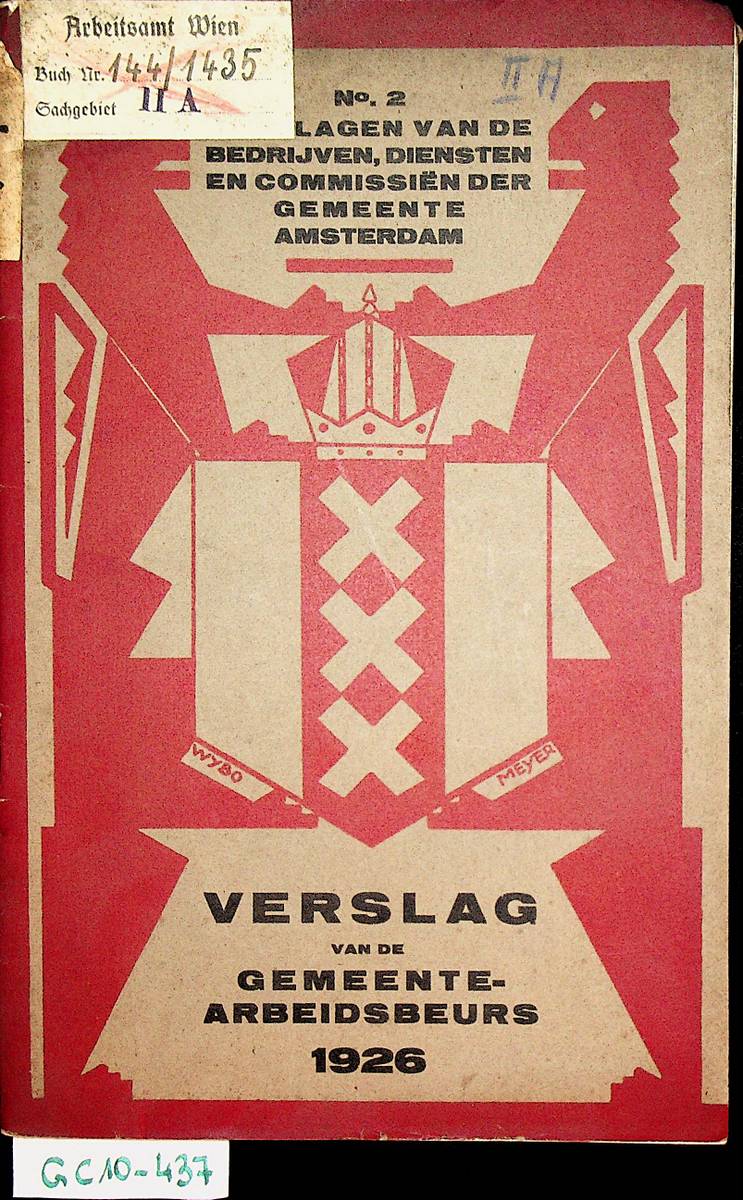
1926Best.-Nr. GC10-437Amsterdam, Stadsdrukkerij, ca 1926. original Broschur, gr.-8?, 56 S.; Bibliothekstempel / bibliotheekstempel / cachet de biblioth?que / librarystamp
1977Best.-Nr. 3111982Baden-Baden, Nomos, 1977. 295 S. OKart.
Best.-Nr. 50424679-6Used - Good. Former library copy. Pages intact with minimal writing/highlighting. The binding may be loose and creased. Dust jackets/supplements are not included. Includes library markings. Stock photo provided. Product includes identifying sticker. Better World Books: Buy Books. Do Good. unknown
1974Previous owner's name to front end paper, yet appears unread. No other marks or inscriptions. No creasing to covers or to spine. A very clean very tight copy with bright unmarked boards, slight browning to pages and no bumping to corners. 277pp. We do not use stock photos, the picture displayed is of the actual book for sale. Every one of our books is in stock in the UK ready for immediate delivery.
1994Desclée de Brouwer 1994, In-8 broché, 125 pages. Très bon état.
1994Best.-Nr. 99937274Desclée de Brouwer Desclée de Brouwer 1994, In-8 broché, 125 pages. Très bon état.
1979Best.-Nr. 206544Couverture souple. Broché. 179 pages. Couverture légèrement défraîchie.
2012Best.-Nr. 9772012 - broché - Editions La Découverte - 2012 - In-8 (24 x 15,5 cm) broché - 229 pages - ISBN : 9782707145710
1999Best.-Nr. 1015Atlantica 1999 Broché 104 pages Bon état Page de garde ex-dono 179 g
1878Best.-Nr. 189841878. Watherston Edward J. The Industrial Employment of Women in France Compared with England. London: Spottiswoods and Co. 1878. French Silk Manufactures and the Industrial Employment of Women. London: Dryden Pres - J Davy and Sons 1879. Both measure 8.5" x 5.25". 16 and 23 pages respectively. The 1878 pamphlet "The Industrial Employment of Women in France." is a comparative analysis of the labor participation rate of women in France and in England. French women were much more integrated into the labor market this study finds even despite the fact that England had a disproportionate demographic surplus of women and an even more developed industrial sector. At the conclusion of the pamphlet Watherston proposes three major steps spur female employment in England based off the French example which are the: "1. Establishment of special training schools for certain trades following a preliminary general education. 2. These training schools. must be made self-supporting within a short time. All pupils must pay a moderate fee for being taught. 3. There should be union of the managers of training schools with all manufacturers wishing to employ female labour. The union must aim both to give employment to women and to advise as to the directions in which it may be sought and into which it may be extended." Watherston lays blame for the poor labor participation rate of English women at the fact that they are barred from major employment sectors such as the railways as well as a private sector which demonstrated no inclination to hire them. He concludes that English women need organization first and foremost and should establish a "Society for the Industrial Employment of Women". The second pamphlet focuses on first the history of the French silk industry and later women's employment within it noting the unique advances that the French female silk workers enjoyed. Watherston notes that "Other countries before France made use of female labour but the French were the first who employed not only as we do the hands but also the brains of women. The technical education of female workers took place simultaneously with that of the men and it is to the results of this that not a little of the excellence of the French silk manufactures of the present day is due." Watherston goes on to examine the silk manufacture at Jujurieux which took in young women from a rural underdeveloped region and lodged fed and rigorously trained them in silk production. In both of these pamphlets he highlights and endorses enterprises that transform women into workers often through a process that includes living and training amongst fellow apprentices for years at a time. There is a prevailing belief that women must be engineered into working class subjects through this total immersion but with a confidence that they are technically and intellectually skilled enough should they be properly acclimated. Some minor chipping to left edge 3/4 in. tear on top edge of one pamphlet overall in very good condition. unknown
1987Best.-Nr. mon0000017399Coalition of Publishers for Employment 1987. Hardcover. Very Good. This Hardcover copy has a signed gift inscription from Introduction Author Dorothy Sterling on title page that reads; "For Ruth Spity with much appretiation Dorothy Sterling". Covers show some light fading and shelf wear and corners show some rubbing and bumping. Coalition of Publishers for Employment hardcover
1972Best.-Nr. mon0000586802Stationery Office Books 01/07/1972 00:00:01. paperback. Acceptable. in x in x in. NOT an ex-library book. Cover has a few stains but otherwise in good condition but still very useable. Stationery Office Books paperback
1995Dust jacket, black cover with gilt lettering to spine and contents in almost new condition. Light creasing to top corner of page 27. Clean Copy
1950Pencil signature of T Pendry (MP) to front end paper. No other marks or inscriptions. No creasing to covers or to slightly sunned spine. A very clean very tight copy with bright unmarked boards, a few creased upper corners and no bumping to corners. 182pp. A treatise on trades unions and how they had changed over the period 1914 to 1945, how they now interact with the public and a discussion on trades unions and the law.
1988Best.-Nr. LFA-126717204Un ouvrage de 167 pages, format 160 x 240 mm, broché, publié en 1988, Les Editions Sociales Françaises, bon état
Best.-Nr. 8901PUF In-8, broché, couverture rempliée, 163 pages, bel exemplaire.