624 risultati
1948rif. 200371948. African American Ottley Roi. Black Odyssey: The Story of the Negro in America. New York: Charles Scribner's Sons 1948. Hardcover with Dust Jacket. 340 pages. Measures 6" x 8.5". Born in New York City in 1906 Black author and journalist Roi Ottley began his career as a reporter for the New York Amsterdam Star-News. He went on to serve as publicity director for the National C.I.O. War Relief Committee and served as a war correspondent in the 1940s. Here he "traces the strange history of his race in America from the very beginning up to the present day. In early colonial times the Negro was a free and often respected individual; as the colonies grew and cheap labor was needed he was reduced to the status of a slave." The book includes historical moments as well as personal anecdotes from interviews and covers a wide range of events "from the day in 1664 when Maryland became the first colony to legalize slavery through the dark days of servitude to the Emancipation Proclamation and the beginning of the Negro's modern history as a free but segregated citizen." Dust jacket has only minor wear with a small piece of visible tape-repair at the top of spine. Pages are very clean and texblock still tight. Overall in very good condition. unknown books
1905rif. 190541905. Women Employment Albumen photograph of two women and a male supervisor working in a textile factory 1905. Measures 6" x 8.5". The photographer captures two women in modest long day dresses leaning upon a large table filled with various textiles and cloths. Beside them a man in a large black top hat stands stoically as his hands rest behind his back. In the background piles of cloth and textiles lay upon large tables and large pipes connect on the ceiling. During the second half of the 19th and early 20th century women began to work in textile clothing factories workshops coal mines tin mines commerce and on farms. Many women were employed in small industries including shirt creation nail making chain production and shoe stitching. Consequently these were known as "sweated industries" as the working hours were lengthy with low pay. Factories organized work along the lines of gender--with men performing the supervisory roles and work which was categorized as "skilled". The edges are minorly worn and the bottom right edge is cut not affecting the image. In very good condition. unknown
1905rif. 190541905. Women Employment Albumen photograph of two women and a male supervisor working in a textile factory 1905. Measures 6" x 8.5". The photographer captures two women in modest long day dresses leaning upon a large table filled with various textiles and cloths. Beside them a man in a large black top hat stands stoically as his hands rest behind his back. In the background piles of cloth and textiles lay upon large tables and large pipes connect on the ceiling. During the second half of the 19th and early 20th century women began to work in textile clothing factories workshops coal mines tin mines commerce and on farms. Many women were employed in small industries including shirt creation nail making chain production and shoe stitching. Consequently these were known as "sweated industries" as the working hours were lengthy with low pay. Factories organized work along the lines of gender--with men performing the supervisory roles and work which was categorized as "skilled". The edges are minorly worn and the bottom right edge is cut not affecting the image. In very good condition. unknown books
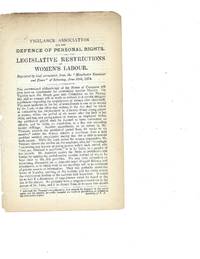
1874rif. 165761874. Vigilance Association for the Defence of Personal Rights. Legislative Restrictions on Women's Labour 1874 opposes proposed factory legislation that would prevent women from returning to industrial employment for six months after childbirth. The Association argues that a measure presented as protection would fall most heavily on women whose families depended upon their wages asking "Who in thousands of cases where there is no helper will assure them and their children bread" Its objections connect employment restrictions to married women's precarious legal and economic position particularly women deserted or unsupported by husbands and left without an enforceable claim upon their husbands' earnings. Vigilance Association for the Defence of Personal Rights. Legislative Restrictions on Women's Labour. Extract reprinted by kind permission from the Manchester Examiner and Times of Saturday June 20th 1874. London: Vigilance Association for the Defence of Personal Rights 1874. First edition extract. 4 pages. Original paper wrappers. 8 1/2 x 5 inches. The pamphlet challenges legislation directed specifically at working women while leaving wealthier women free from comparable interference. Addressing married workers it notes that there are ".many married women deserted or uncared for by their husbands" and argues that "no marriage law secures to the wife a share in the earnings of the father of her children." The text consequently treats freedom to work not as an abstract principle but as an immediate question of food wages and support for women and children and calls upon women themselves to oppose the proposed restriction. The pamphlet belongs to the Vigilance Association's campaign against statutory limitations imposed specifically upon adult women's labor during the parliamentary debates surrounding the Factory Acts in 1874. Its argument exposes a central conflict in nineteenth-century labor reform: legislation intended to protect women workers could also restrict their access to wages without providing an alternative means of family support. At the time this description was prepared no copies were located in American institutions through the OCLC search consulted; institutional records are subject to revision and should be reconfirmed. Condition information was not supplied. The four-page tract records an organized women's-rights response to factory regulation that linked employment freedom directly to marriage law household income and women's economic dependence. unknown
1874rif. 165761874. Vigilance Association for the Defence of Personal Rights. Legislative Restrictions on Women's Labour 1874 opposes proposed factory legislation that would prevent women from returning to industrial employment for six months after childbirth. The Association argues that a measure presented as protection would fall most heavily on women whose families depended upon their wages asking "Who in thousands of cases where there is no helper will assure them and their children bread" Its objections connect employment restrictions to married women's precarious legal and economic position particularly women deserted or unsupported by husbands and left without an enforceable claim upon their husbands' earnings. Vigilance Association for the Defence of Personal Rights. Legislative Restrictions on Women's Labour. Extract reprinted by kind permission from the Manchester Examiner and Times of Saturday June 20th 1874. London: Vigilance Association for the Defence of Personal Rights 1874. First edition extract. 4 pages. Original paper wrappers. 8 1/2 x 5 inches. The pamphlet challenges legislation directed specifically at working women while leaving wealthier women free from comparable interference. Addressing married workers it notes that there are ".many married women deserted or uncared for by their husbands" and argues that "no marriage law secures to the wife a share in the earnings of the father of her children." The text consequently treats freedom to work not as an abstract principle but as an immediate question of food wages and support for women and children and calls upon women themselves to oppose the proposed restriction. The pamphlet belongs to the Vigilance Association's campaign against statutory limitations imposed specifically upon adult women's labor during the parliamentary debates surrounding the Factory Acts in 1874. Its argument exposes a central conflict in nineteenth-century labor reform: legislation intended to protect women workers could also restrict their access to wages without providing an alternative means of family support. At the time this description was prepared no copies were located in American institutions through the OCLC search consulted; institutional records are subject to revision and should be reconfirmed. Condition information was not supplied. The four-page tract records an organized women's-rights response to factory regulation that linked employment freedom directly to marriage law household income and women's economic dependence. unknown books
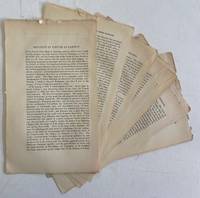
1873rif. 165661873. Taylor Whately Cooke. The Employment of Married Women in Manufacture 1874. First edition of a paper delivered at the Social Science Congress in Norwich in October 1873 opposing proposed legislation that would restrict or prohibit married women's employment in British manufacturing. Taylor challenges the argument that married women should be excluded from factory labor because of their maternal and domestic responsibilities emphasizing the financial consequences for working-class families dependent upon women's earnings. He condemns the inconsistency of restricting married women's industrial employment while permitting women in agriculture and domestic service to continue working without comparable legal limitations. His argument addresses a central dispute in Victorian labor reform: whether legislation intended to protect women from industrial exploitation could instead deprive them of economic independence and impose unequal restrictions upon their employment. Taylor Whately Cooke. The Employment of Married Women in Manufacture. A Paper Read at the Social Science Congress Held at Norwich October 1873. London: Frederick Bell & Co. Steam Printers King's Rd. Chelsea 1874. First edition. 12 pages. Original paper wrappers measuring 8 x 5¼ inches. Reprinted for the Vigilance Association for the Defence of Personal Rights the pamphlet develops an economic and legal argument against restricting married women's factory employment. Taylor writes: "It is at first sign a very humane sentiment no doubt to assert that married women should be relieved from all hard work because of the duties which maternity casts upon them; but when as that the same time you relieve them of some fifteen shillings a-week without providing any substitute you must not be surprised if they themselves do not view your condescension in the same light." His reference to fifteen shillings a week places the loss of wages rather than the stated benevolence of protective legislation at the center of his objection. The pamphlet appeared during parliamentary debates preceding the Factory Act of 1874 which further regulated the working hours of women and young persons in textile factories. The Vigilance Association for the Defence of Personal Rights opposed legislation that restricted adult women's freedom to contract for employment particularly when comparable restrictions did not apply to men. Taylor's comparison of factory workers with women employed in agriculture and domestic service exposes the unequal treatment of female occupations under proposed labor regulations. His paper documents opposition to sex-specific industrial legislation within the nineteenth-century movement for women's legal and economic rights. Very good condition. unknown
1873rif. 165661873. Taylor Whately Cooke. The Employment of Married Women in Manufacture 1874. First edition of a paper delivered at the Social Science Congress in Norwich in October 1873 opposing proposed legislation that would restrict or prohibit married women's employment in British manufacturing. Taylor challenges the argument that married women should be excluded from factory labor because of their maternal and domestic responsibilities emphasizing the financial consequences for working-class families dependent upon women's earnings. He condemns the inconsistency of restricting married women's industrial employment while permitting women in agriculture and domestic service to continue working without comparable legal limitations. His argument addresses a central dispute in Victorian labor reform: whether legislation intended to protect women from industrial exploitation could instead deprive them of economic independence and impose unequal restrictions upon their employment. Taylor Whately Cooke. The Employment of Married Women in Manufacture. A Paper Read at the Social Science Congress Held at Norwich October 1873. London: Frederick Bell & Co. Steam Printers King's Rd. Chelsea 1874. First edition. 12 pages. Original paper wrappers measuring 8 x 5¼ inches. Reprinted for the Vigilance Association for the Defence of Personal Rights the pamphlet develops an economic and legal argument against restricting married women's factory employment. Taylor writes: "It is at first sign a very humane sentiment no doubt to assert that married women should be relieved from all hard work because of the duties which maternity casts upon them; but when as that the same time you relieve them of some fifteen shillings a-week without providing any substitute you must not be surprised if they themselves do not view your condescension in the same light." His reference to fifteen shillings a week places the loss of wages rather than the stated benevolence of protective legislation at the center of his objection. The pamphlet appeared during parliamentary debates preceding the Factory Act of 1874 which further regulated the working hours of women and young persons in textile factories. The Vigilance Association for the Defence of Personal Rights opposed legislation that restricted adult women's freedom to contract for employment particularly when comparable restrictions did not apply to men. Taylor's comparison of factory workers with women employed in agriculture and domestic service exposes the unequal treatment of female occupations under proposed labor regulations. His paper documents opposition to sex-specific industrial legislation within the nineteenth-century movement for women's legal and economic rights. Very good condition. unknown books
1871rif. 165651871. To the Right Honorable Richard Assheton Cross M.P. Secretary of State for the Home Department dated 1871 in the supplied description. Petition by British women workers opposing proposed factory legislation that threatened to restrict women's paid employment particularly that of married women and mothers. The petitioners object to proposals that would "restrict the paid labour of all women.or even make all married women half-timers" arguing that legislation presented as protecting female workers could instead deprive them of wages and economic independence. Their objections distinguish between protections against dangerous industrial conditions and restrictions imposed specifically because of sex or marital status. The petition documents women's direct intervention in nineteenth-century labor legislation challenging the assumption that Parliament could protect married women by limiting their right to earn wages. To the Right Honorable Richard Assheton Cross M.P. Secretary of State for the Home Department. 1871 date requires verification. 4 pages. Measuring 8 x 5 inches. The memorialists argue that regulations imposed upon married women would discriminate against unmarried women as well establishing different legal rights to employment according to marital status. They declare "Your Memorialists assert that it is unjust to place restriction son the labour of unmarried women for the presumed protection of married women or mothers" and further maintain that "any special restrictions upon the labour of married women is practically a penalty imposed on marriage as regards to the woman." These statements identify the economic consequences of proposed restrictions and insist that marriage and motherhood should not diminish a woman's right to paid employment. The petition belongs to Victorian debates over factory regulation women's industrial employment and the distinction between protective legislation and unequal treatment under labor law. While reformers sought shorter hours and safer working conditions for women and children opponents of sex-specific restrictions argued that compulsory limits could reduce women's earnings exclude them from certain occupations and reinforce their financial dependence upon men. The memorialists articulate this objection in their own words documenting women's resistance to legislation that treated marital status as grounds for restricting employment. Chipping with small losses along the upper and right edges repairs to two tears on page 2 and loss to the upper left corner. Good condition. unknown
1871rif. 165651871. To the Right Honorable Richard Assheton Cross M.P. Secretary of State for the Home Department dated 1871 in the supplied description. Petition by British women workers opposing proposed factory legislation that threatened to restrict women's paid employment particularly that of married women and mothers. The petitioners object to proposals that would "restrict the paid labour of all women.or even make all married women half-timers" arguing that legislation presented as protecting female workers could instead deprive them of wages and economic independence. Their objections distinguish between protections against dangerous industrial conditions and restrictions imposed specifically because of sex or marital status. The petition documents women's direct intervention in nineteenth-century labor legislation challenging the assumption that Parliament could protect married women by limiting their right to earn wages. To the Right Honorable Richard Assheton Cross M.P. Secretary of State for the Home Department. 1871 date requires verification. 4 pages. Measuring 8 x 5 inches. The memorialists argue that regulations imposed upon married women would discriminate against unmarried women as well establishing different legal rights to employment according to marital status. They declare "Your Memorialists assert that it is unjust to place restriction son the labour of unmarried women for the presumed protection of married women or mothers" and further maintain that "any special restrictions upon the labour of married women is practically a penalty imposed on marriage as regards to the woman." These statements identify the economic consequences of proposed restrictions and insist that marriage and motherhood should not diminish a woman's right to paid employment. The petition belongs to Victorian debates over factory regulation women's industrial employment and the distinction between protective legislation and unequal treatment under labor law. While reformers sought shorter hours and safer working conditions for women and children opponents of sex-specific restrictions argued that compulsory limits could reduce women's earnings exclude them from certain occupations and reinforce their financial dependence upon men. The memorialists articulate this objection in their own words documenting women's resistance to legislation that treated marital status as grounds for restricting employment. Chipping with small losses along the upper and right edges repairs to two tears on page 2 and loss to the upper left corner. Good condition. unknown books
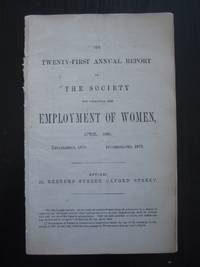
1880rif. 165711880. Society for Promoting the Employment of Women. The Twenty-First Annual Report of the Society for Promoting the Employment of Women 1880 documents an organization established to expand women's access to vocational training and paid employment in occupations beyond the limited fields conventionally open to them in nineteenth-century Britain. Founded in 1859 through the work of women's rights reformers including Jessie Boucherett Barbara Bodichon and Adelaide Anne Procter the Society connected demands for women's economic independence with practical programs for training and placement. Its purpose is stated directly in the report: "The Society is formed for promoting the Training of Women and their employment in industrial pursuits." Society for Promoting the Employment of Women. The Twenty-First Annual Report of the Society for Promoting the Employment of Women April 1880. London: Printed by John Bale & Sons 1880. First edition. The thirty-page report records the Society's work in preparing women for specific occupations and discusses the training required to enter fields including wood carving hospital nursing and hairdressing among others. Rather than arguing only for women's abstract right to employment the report records the practical means by which the Society attempted to open occupations through instruction and professional preparation. Its annual accounting of such programs shows how an organization founded by members of the mid-century women's rights movement addressed the economic restrictions confronting women through vocational initiatives maintained over more than two decades. The report appeared twenty-one years after the Society's establishment and shortly after its incorporation in 1879 when campaigns for women's property rights education professional access and suffrage were expanding the legal and economic questions surrounding women's independence. The Society's emphasis on training addressed one concrete barrier to entry into skilled occupations: women could not compete for work from which they had also been excluded from acquiring the necessary preparation. 30 pages. Original paper wrappers measuring 8 x 5 inches. Light pencil marks in the margins; otherwise very good condition. At the time this description was prepared no copies were recorded in American institutions in the OCLC search consulted; institutional holdings and OCLC records remain subject to revision. unknown
1880rif. 165711880. Society for Promoting the Employment of Women. The Twenty-First Annual Report of the Society for Promoting the Employment of Women 1880 documents an organization established to expand women's access to vocational training and paid employment in occupations beyond the limited fields conventionally open to them in nineteenth-century Britain. Founded in 1859 through the work of women's rights reformers including Jessie Boucherett Barbara Bodichon and Adelaide Anne Procter the Society connected demands for women's economic independence with practical programs for training and placement. Its purpose is stated directly in the report: "The Society is formed for promoting the Training of Women and their employment in industrial pursuits." Society for Promoting the Employment of Women. The Twenty-First Annual Report of the Society for Promoting the Employment of Women April 1880. London: Printed by John Bale & Sons 1880. First edition. The thirty-page report records the Society's work in preparing women for specific occupations and discusses the training required to enter fields including wood carving hospital nursing and hairdressing among others. Rather than arguing only for women's abstract right to employment the report records the practical means by which the Society attempted to open occupations through instruction and professional preparation. Its annual accounting of such programs shows how an organization founded by members of the mid-century women's rights movement addressed the economic restrictions confronting women through vocational initiatives maintained over more than two decades. The report appeared twenty-one years after the Society's establishment and shortly after its incorporation in 1879 when campaigns for women's property rights education professional access and suffrage were expanding the legal and economic questions surrounding women's independence. The Society's emphasis on training addressed one concrete barrier to entry into skilled occupations: women could not compete for work from which they had also been excluded from acquiring the necessary preparation. 30 pages. Original paper wrappers measuring 8 x 5 inches. Light pencil marks in the margins; otherwise very good condition. At the time this description was prepared no copies were recorded in American institutions in the OCLC search consulted; institutional holdings and OCLC records remain subject to revision. unknown books
1935rif. 189931935. Women's Employment World-War II McConnell Dorothy. Women War and Fascism. New York: The American League Against War and Fascism 1935. 18 pages. Bound in brown cardstock wrappers. Measuring 5.5" x 8". McConnell presents a "protest against the use of women as cheap labor in factories and offices in the U.S. as well as in the fascist states" asserting that "Munitions plants employ women at dangerous tasks with long hours and low wages. Discriminatory laws against women should be defeated and women's wages made equal with men's for equal work". Wrappers are vibrant and unworn. Small penciled inscription on the title page not affecting text. An interesting pamphlet promoting the fight for women's labor safety and equal pay during WWII. Very clean and bright pages in very good condition. unknown
1935rif. 189931935. Women's Employment World-War II McConnell Dorothy. Women War and Fascism. New York: The American League Against War and Fascism 1935. 18 pages. Bound in brown cardstock wrappers. Measuring 5.5" x 8". McConnell presents a "protest against the use of women as cheap labor in factories and offices in the U.S. as well as in the fascist states" asserting that "Munitions plants employ women at dangerous tasks with long hours and low wages. Discriminatory laws against women should be defeated and women's wages made equal with men's for equal work". Wrappers are vibrant and unworn. Small penciled inscription on the title page not affecting text. An interesting pamphlet promoting the fight for women's labor safety and equal pay during WWII. Very clean and bright pages in very good condition. unknown books
1933223 pages. Signed and inscribed by author upon blank leaf following copyright page. Several black and white photographic plates including portrait of author and, at page 107, an amazing 1929 scene of many dozens of fedora-wearing investors crammed into Solloway, Mills & Company's Vancouver office engaged in what was surely frenetic stock trading. Mr. Solloway argues for a Canadian National Economic Council, a National Stock Exchange, and government control of large financial institutions. In the second part he uses his company, Solloway, Mills and its prosecutions to show that money used in Canadian investment and speculation creates Canadian employment, and that the mistakes of politicians can destroy industry, resulting in unemployment. One plate loose but present. Front free endpaper removed, resulting in the binding being open at that point. Above-average external wear. Binding brittle. A worthy copy of this fascinating work. Book
1887rif. 174331887. Women's Employment MABEL Robert F. Our Working Women and Their Earnings. United States 1887. First Edition. 13 pages measuring approximately 6" x 10" inches. At the time that this description is being written no copies are recorded in American institutions. OCLC search results are at best an estimate and can vary over time. The article begins "We as a nation have made no effort to teach our redundant female population to support itself although our position as a mother of colonies leaves us with a steadily increasing proportion of women who through the emigration of their male relatives are forces to provide for themselves." and concludes that "a woman's technical training will have still done her a good service in quickening her intelligence and in thus making her a wiser mother to her children and a more sympathetic companion to her husband above all in banishing much care by ensuring to her a means of livelihood in case of need." A compassionate thoughtful appraisal of the state of women's labor and financial prospects in the United States backed up by employment and pay statistics from the end of the 19th century. Cleanly disbound. Chipped along top edge. Toning. Pages clean and uncreased. Overall in good condition. unknown
1887rif. 174331887. Women's Employment MABEL Robert F. Our Working Women and Their Earnings. United States 1887. First Edition. 13 pages measuring approximately 6" x 10" inches. At the time that this description is being written no copies are recorded in American institutions. OCLC search results are at best an estimate and can vary over time. The article begins "We as a nation have made no effort to teach our redundant female population to support itself although our position as a mother of colonies leaves us with a steadily increasing proportion of women who through the emigration of their male relatives are forces to provide for themselves." and concludes that "a woman's technical training will have still done her a good service in quickening her intelligence and in thus making her a wiser mother to her children and a more sympathetic companion to her husband above all in banishing much care by ensuring to her a means of livelihood in case of need." A compassionate thoughtful appraisal of the state of women's labor and financial prospects in the United States backed up by employment and pay statistics from the end of the 19th century. Cleanly disbound. Chipped along top edge. Toning. Pages clean and uncreased. Overall in good condition. unknown books
197968 pages. Features: Film-Maker Robert Altman; Two-page color-photo ad for the Volkswagen Rabbit features Mr. Leslie T. Cho-Chu and family of Agincourt, Ontario; Retinitis Pigmentosa (RP Foundation) ad; Norman Bethune - Not Yet Ready for Prime Time; Two-page color-photo ad for the Honda Accords (2- and 4-door); The Sheik of Massawippi - Saad Gabr of North Hatley, Qubec; Election coverage of Joe Clark vs. Pierre Trudeau; Federal election race in Atlantic Canada, where bread and butter count; Lie Detectors used in employment screening; Bone marrow transplant between twin brothers Barry and Gary Armstrong of Chipman, New Brunswick; Ed Broadbent - The Third Man; NDP - the party that rose from the dust - with nice photo of CCFers in 1933; Idi Amin looses power in Uganda; Violence in Nicaragua; Warfare inside the Teamsters union; Actor John Voight; Jake Moore of Brascan attempts to buy F.W. Woolworth Co.; Guitar Manufacturer Normand Boucher of La Patrie, Quebec; Archaeology article re: Old Crow; Overuse and Abuse stalk Lake Louise - "The Coney Island of the Rockies"; Childhood Leukemia - stalemate in a long war - article with photo of Carol and Becki Scott; Musician Murray McLauchlan; Michael Ondaatje - "Home is Where the Hurt Is"; and more. Average wear. A sound vintage copy. Book
rif. 300-04180Republic of Benin. Paperback. Good. Good condition with wear and markings. Looks like an interesting title! Republic of Benin paperback
rif. BN725316mit press 1975. work in america work in america w.e.upjohn institute for employment research mit press 1975 unknown
1931rif. 2111902160500875Not Available 1931. Soft Cover. Fine. Number of copies: Secretariat Not Available paperback
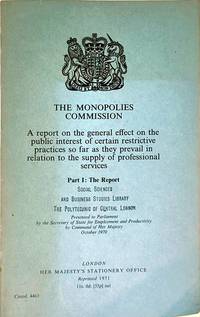
rif. 467688HM Stationery Office. Paperback. Good. The Monopolies Commission Report from HM Stationery Office HM Stationery Office paperback
1834Professionally rebound with original boards, new end papers and spine. Name to title page and that of Professor Peter Townsend on front end paper. No other marks or inscriptions. No creasing to covers or to spine. Clean slightly tanned slightly wrinkled pages in a very tight binding with roughly trimmed dusty page edges. 362 pages plus Supplement No 1 of 128pp. Official Report on the workings of The Poor Law and the Poor Law Amendment Act which led to the establishment of workhouses. From the Personal Library of the late Emeritus Professor Peter Townsend of Bristol University and the London School of Economics, Founding Professor of the University of Essex and founder of the Child Poverty Action Group. We are also selling a large number of other books from Professor Townsend's Collection including many of his signed and authored works.
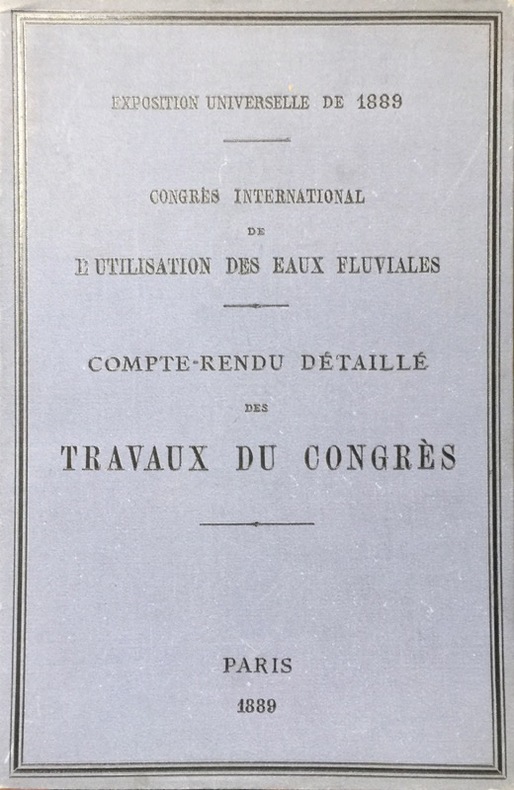
1889rif. 10732Paris, Lahure, 1889 ; in-8 ; cartonnage d'éditeur de percaline bleu-pétrole, titrage noir et doré ; (4), XXI, (3), 556 pp., nombreuses figures, 6 planches hors-texte dont 4 dépliantes, grande carte dépliante en couleurs de navigation entre Paris et Rouen.
1938rif. 013125Paris N.R.F., Editions Gallimard 1938 In-12 Broché Ed. originale
rif. Z1-C-076-00476Department For Education And Employment. Used - Good. Ships from UK in 48 hours or less usually same day. Your purchase helps support Sri Lankan Children's Charity 'The Rainbow Centre'. Ex-library so some stamps and wear but in good overall condition. 100% money back guarantee. We are a world class secondhand bookstore based in Hertfordshire United Kingdom and specialize in high quality textbooks across an enormous variety of subjects. We aim to provide a vast range of textbooks rare and collectible books at a great price. Our donations to The Rainbow Centre have helped provide an education and a safe haven to hundreds of children who live in appalling conditions. We provide a 100% money back guarantee and are dedicated to providing our customers with the highest standards of service in the bookselling industry. Department For Education And Employment unknown