Gray, MarianneMareMagnum

656 risultati
1982Inscribed by Marianne Gray on front end paper. No other marks or inscriptions. A very clean very tight copy with unmarked maroon cloth boards, well-tanned pages edgesand margins and no bumping to corners. Dust jacket not price clipped or marked or torn with light creasing to upper edge. 239pp. An invaluable book for many these days which sets out the pros and cons of home working and includes over 200 ideas for ways of earning money from home.
rif. 16266Working Girls' Society. Circular of the Working Girls' Society late nineteenth century sets out the rules and benefits of a New York organization created for wage-earning women. The Society provided working women with rooms for social meetings classes reading and recreation after working hours while its bylaws governed membership and access to the organization's facilities. Contemporary accounts of New York working girls' clubs describe them as cooperative organizations in which members pursued self-education social activity and practical assistance rather than simply receiving charity. Circular of the Working Girls' Society. New York: Working Girls' Society n.d. Bylaws governing membership and use of the Society's library and rooms at 222 West 38th Street. The circular describes benefits available to members including special vacation privileges and discounted railway tickets combining educational and social provisions with practical assistance for women earning wages in the city. The regulations document the daily administration of a women's club formed around the needs of an expanding urban female workforce and show how membership could provide access to books meeting rooms instruction recreation and reduced-cost travel. The circular survives from the period in which working women's clubs expanded in New York; by the early twentieth century contemporary descriptions traced the movement to clubs organized during the 1880s and emphasized their classes member government and opportunities for social intercourse and self-improvement. Two very light horizontal folds and light thumb-soiling with a 2-inch tear at the bottom of the center fold; overall Very Good Condition. unknown
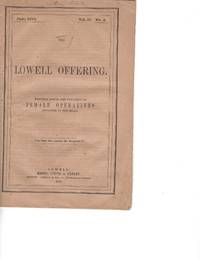
rif. 16739Women's Fight for Employment Equality. "Lowell Offering. Written Edited and Published by Female Operatives Employed in the Mills." 1844. Pamphlet. The Lowell Offering was a monthly publication run by women working in the Lowell Textile Mill from 1840-1845. Featuring the women's poetry essays and other literary efforts the magazine gave female factory workers the opportunity to share their creative endeavors; for the women who edited and published the periodical the Lowell Offering also provided demonstrable and employable skills in publishing and journalism. This 1844 edition comes from the penultimate year of the publication. It is the earliest piece in the collection. Lowell solved the problem of labor at his mills by employing young women between the ages of 15 and 35 who became known as "mill girls". Unlike European industries which had access to "large landless urban populations whose reliance on the wage system gave them few economic choices" American companies had to grapple with a small labor supply because the population was small and most preferred farming their own land and the economic independence that came with it. In order to persuade these young women to work at a mill they were paid in cash once "every week or two weeks". In line with the Boston Associates' worldview the mill girls were encouraged to educate themselves and pursue intellectual activities. They attended free lectures by Ralph Waldo Emerson and John Quincy Adams and read books they borrowed from circulating libraries. They were also encouraged to join "improvement circles" that promoted creative writing and public discussion. unknown books
1991rif. VIEN0130(Wien), Verlag f. Gesellschaftskritik (1991). 235 S., 2 Bl. Anzeigen, OKart., schwache Knickspuren. (= Aufrisse Buch 15).
19841st edition. VG pbk. 9437. eng
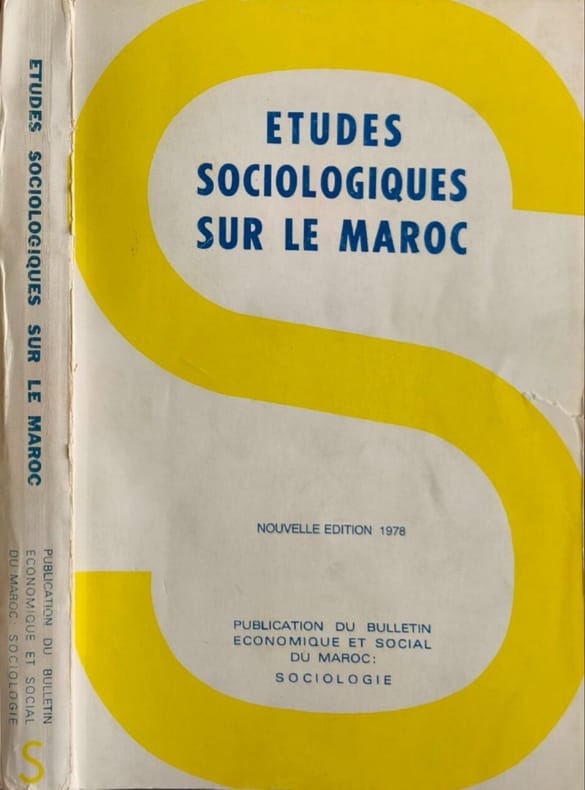
1978rif. 13600Éditions marocaines et internationales 1978 361 pages in8. 1978. broché. 361 pages. Cet ouvrage est un recueil d'articles conçu et préparé par le sociologue marocain Abdelkébir Khatibi publié en 1971 par les Éditions marocaines et internationales. Il propose une analyse sociologique du Maroc abordant des thèmes comme les classes sociales les collectivités rurales les concessions foncières et l'emploi