3 309 résultats
1919réf. 520599Köln: DuMont Schauberg. 1919. 18 Seiten. 25x18cm. Zustand: Gut min. bis gering gebräunt (Innen); Besitzerstempel; Einband (Außen) hat leichte Gebrauchsspuren; Vorderdeckel hat unten im Rand einen kleinen Riß und dort eine querverlaufende Knickspur; Deckel ist etwas lichtrandig; Archivex. mit Klebestreifenrest (Außen); Fadenfheftung
1989réf. 2476Bergisch Gladbach [u.a.] : Eul, 1989. XIII, 347 S. : graph. Darst. ; 21 cm. 8°. OPb. (Reihe: Planung, Information u. Unternehmungsführung ; 27)
1969réf. 351485Leipzig: Duncker & Humblot. 1969. 127 Seiten. 23,5cm. Zustand: Gut gering gebräunt (Innen); Besitzerstempel; Einband Außen hat leichte Gebrauchsspuren; Einband hat Klebeschutzumschlag, ist foliert; Archivex. mit Klebestreifenrest (Außen); Broschiert
1989réf. 99602München: Beck. 1989. XXII.; 1796. 19cm. 13., völlig neubearb. Aufl. d. von Friedrich Zeller von d. 6. bis zur 10. Aufl. bearb. Werks. Zustand: Gut bis Sehr Gut min. bis gering gebräunt (Innen); Besitzerstempel; Einband Außen hat geringe bis leichte Gebrauchsspuren; Sauberes nichtöffentliches Archivex. mit Klebestreifenrest (Außen); Schutzumschlag fehlt; Vorderdeckelunterrand hat wenige Druckstellen; Schutzumschlag hat Mängel - gemeint ist hier mehr als leichte Gebrauchsspuren; (Gewebe) Grauer Leinen
2020ill., br. Cosa sbagliano (quasi) tutti i dentisti italiani alla ricerca di nuovi pazienti? Cosa potrebbero fare, invece, per avere un enorme successo? Il primo errore, ovviamente, è non fare alcuna azione di marketing. Il secondo è partire concentrandosi solo ed esclusivamente sulle azioni da mettere in campo: creazione di un sito web, promozione sui social network, cartellonistica... Ma tu... nel tuo studio... faresti mai una terapia senza fare una diagnosi? La risposta è ovvia e una sola: NO. Nel marketing il concetto è lo stesso. Prima di predisporre gli strumenti pubblicitari bisogna partire dal principio rispondendo alla domanda «Perché un paziente dovrebbe scegliermi?». Una domanda semplice ma a cui è molto complesso rispondere. Cosa ti distingue dai tuoi concorrenti? Cosa ti rende differente ed appetibile agli occhi dei potenziali pazienti? Perché dovrebbero scegliere te e non lo studio concorrente a 100 metri dal tuo? In questo libro troverai il sistema per creare il tuo posizionamento strategico, la base da cui partire per trovare nuovi pazienti, riempire la tua sala d'aspetto e importi sui tuoi concorrenti di zona.
2003réf. 853601Marburg: Metropolis-Verl. 2003. 376 Seiten. 21cm. Zustand: Gut bis Sehr Gut min. gebräunt (Innen); Besitzerstempel; Einband Außen hat geringe bis leichte Gebrauchsspuren; Sauberes Archivex. mit Klebestreifenrest (Außen); Drei Besitzerstempel auf Schnitt; Broschiert
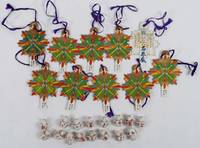
1937réf. 218484東京. Tokyo.: 名誉蔵. Meiyokura. Showa 12 1937-1939. Sixteen delightful small porcelain spinning tops measuring 2.0 x 1.7cm in size each accompanied by ten handsome colour printed product labels heightened in gilt with soft purple cord ties 8.3 x 6cm. An intriguing collection of sake advertising ephemera in very good condition. These sake promotional giveaways and accompanying die-cut cards in the shape of the Order of the Golden Kite are advertisements associated with Meiyo-gura a sake brand sold in Nihonbashi Tokyo. The advertisement describes a koma spinning top attached beneath the bottle top which could also serve as a small entertainment item. Each koma was hexagonal and could be used as a dice or a novelty accessory for drinking games. The value printed on the koma could be redeemed if customers presented both the koma and the accompanying medal card. These redemption promotions were available between 1937 and 1939. However in June 1941 the rationing of sake was introduced firmly ending such promotional schemes. The product labels which were finely printed as these are also informed customers about how to claim these discounts further enhancing the appeal of the product during its promotional period. A curious example of the everyday cultural impacts of Japanese militarism - the Order of the Golden Kite was an award exclusively for military service and was not available to the civilian public. Over the course of the Second Sino-Japanese and Pacific Wars the order would be awarded over 140000 times dwarfing all previous conflicts and reflecting the frenetic nature of Japan's total mobilisation. . 名誉蔵. [Meiyokura]. unknown