251 Ergebnisse
Best.-Nr. 1979428like new. unknown
1999Signed, without inscription, by James Wesley Rawles upon title page. "Rawles, a former Army Intelligence officer, uses the format of an exciting action novel to present a wealth of timely and invaluable survival information. An exceptional reference." - J. Stachow. 342 pages. Unread and as new. Clean, bright and unmarked. A great gift idea for a dedicated survivalist. Book
Best.-Nr. DADAX0140136096New unknown
192848 pages. Second issue of this marvelous publication. Features: Loening Aeronautical Engineering Corporation ad inside front cover; Nice photo-illustrated Fairchild ad on page 1 features the Vickers-Fairchild Cabin Monoplane; Photo-ad for Canadian Vickers Limited shows the Vicers Vedette; Goodyear airplane tire ad; Armstrong Siddleley ad for their Lynx radial engine; Wakefield Castrol Motor Oil ad; Editorial comments on why the achievements of Canadian aviators are not 'ballyhoo-ed' across the world, and why insurance companies must act to service the rapidly developing aviation industry in Canada; Great article explains how E.W.G. Moore (shown in photo inset) and other public-spirited citizens secured an airport for London, Ontario after the electorate refused to approve the expense; Photos of the Prince of Wales in flying kit, Sir Alan Cobham after his 22,000-mile flight, Amelia Earhart in group photo at Southampton after crossing the Atlantic for the first time, and Miss Earhart's seaplaine "Friendship" afloat at Southampton; Inauguration of the Winnipeg Flying Club - article with photos of Manitoba Premier John Bracken and his wife, Major Ray Miller, Lieut. Palmer, and W.A. Major, Attorney-General of Manitoba, plus a photo of Captain H.A. Oaks who was awared the McKee trophy for the most valuable contribution to aviation in Canada; Progress of Civil Aviation in Canada - article; Photo memorializing Captain Emilio Carranza, Mexico's "Lone Eagle" flying ambassador to the United States who died at age 22 in a crash; Photo of the Trans Canada trophy won by Capt. H.A. Oaks; Canadian Aviation and the University of Toronto - article with five photos which document the University's aerodynamic laboratory which was established ten years ago and is now being used for undergraduate instruction; First aircraft show opened at Montreal - article with photos of officials E.F. Peacock and Capt. W. S. Lighthall; Photo of Joaquim Pacheco and Fritz Bieler, the first aviators to make the flight from Canada to Mexico; Canada leads in Aerial Photography - article with photos; Is Your Life Insurance Policy Affected? - Part II - article deals with confusion over insurance coverage of aviation risk; Nice aerial photos of Gaspe and the Royal Military College; Detroit Air Olympics Draw Mammoth Crowds - article with nine photos; News from flying clubs; Nice ad for the De Havilland Moth; Pioneer Altimeter ad; Numerous press comments on the first issue of Canadian Aviation; Fantastic photo full-page ad for Canadian Pacific Express - World Wide Service - photos shows truck backed up to plane; Toronto Boys Compete at Detroit Model Aircraft Contest - article with photos of Edward Adams, H.H. McKinnon, Richard Hiscocks, Ford Grant, Aram Abgarian, Jack Loughner and Thomas Hill; Fantastic full-page photo ad for International Airways of Canada (Hamilton, Ontario) shows their Loening Amphibian plane; Model Aircraft flights are helpful - article; Air Services in Canada - Part II - information about the R.C.A.F. with three photos; Marvelube ad on back cover. Somewhat above-average wear. Binding intact. Three-inch opening to base of coverfold. A sound vintage copy of this early issue. Book
Best.-Nr. 1979428-nnew. unknown
Best.-Nr. DADAX1844150747New unknown
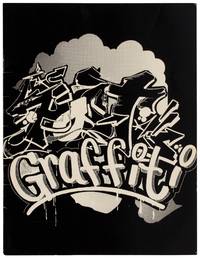
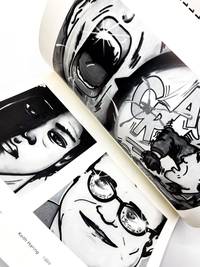
1983Best.-Nr. 30786New York: Sidney Janis Gallery 1983. Minor edge-wear to illustrated wrappers; near fine. First Edition. Thin quarto. Catalogue for the exhibition "Post-Graffiti" at Sidney Janis Gallery New York Dec. 1 - 31 1983. An important early catalogue marking the transposition of graffiti from the streets of New York to the white cube of the gallery featuring images of works by Jean-Michel Basquiat Daze Keith Haring Lady Pink Angel Ortiz and Kenny Scharf among other artists. With introductory texts by Dolores Neumann and Sidney Janis. Cover design by Crash. New York: Sidney Janis Gallery unknown
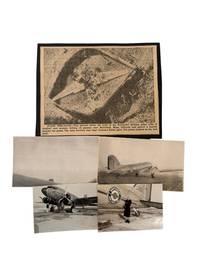
1941Best.-Nr. 235251941. Northwest Airlines Flight 5 crash archive documenting one of the most deadly commercial aviation disasters in the carrier's early history pairing operational views of Northwest's Douglas airliners with contemporary evidence from the fatal October 30 1941 crash near Moorhead Minnesota. Flight 5 was a scheduled transcontinental Northwest Airlines route traveling from Chicago toward Seattle through Minneapolis Fargo Billings Butte and Spokane when its Douglas DC-3A-269 registration NC21712 encountered severe icing and poor visibility during approach. The aircraft plunged to the ground in fog and freezing conditions killing twelve passengers and two crew members. Captain Clarence F. Bates emerged as the sole survivor. The subsequent Civil Aeronautics Board investigation concluded that dangerous ice accumulation on the wings played a critical role in the disaster making the crash an important chapter in the evolution of commercial aviation safety during the final weeks before America entered the Second World War. Archive of four silver gelatin photographs and a contemporary newspaper clipping photographs approx 3.5" x 5" to 5" x 7" circa 1941. The photographs capture Northwest Airlines aircraft in active service during the same period as the disaster. One image shows a Northwest airliner standing on a frozen airfield with registration number NC21711 visible on the tail and prominent "Northwest" and "U.S. Mail Air Express" markings along the fuselage. Another view depicts a woman posing beside the company's large winged emblem with mail and express service markings visible near the tail section. A third photograph records ground operations beneath a Northwest aircraft as personnel stand near a baggage cart marked "Shell" illustrating the everyday routines of America's growing commercial airline network. A final image looks outward from above an aircraft wing toward the horizon placing the viewer inside the world of prewar air travel. The accompanying newspaper clipping dramatically contrasts these routine scenes with aerial views of the burned wreckage of NC21712 near Moorhead identifying the disaster the fourteen fatalities the role of fog and icing and Captain Bates' remarkable survival. The archive place the optimism and expansion of early commercial aviation beside the harsh realities of flying in an era when weather forecasting radio navigation aircraft de-icing technology and long-distance passenger service were still developing. Created less than six weeks before the United States entered World War II the archive captures Northwest Airlines at a pivotal moment when passenger travel air mail contracts and express cargo routes were rapidly connecting the Midwest Northern Plains Rocky Mountains and Pacific Northwest. The juxtaposition of aircraft operating normally in service with contemporary documentation of Flight 5's destruction transforms the group into more than a simple airline archive-it becomes a visual record of the risks ambitions and technological challenges of American aviation on the eve of wartime expansion. Light handling wear mild curling toning and creasing to the newspaper clipping; photographs remain very good. A tightly related aviation archive combining identifiable Northwest Airlines aircraft visible registration numbers airline operations and one of the carrier's most significant prewar disasters. unknown
1941Best.-Nr. 235251941. Northwest Airlines Flight 5 crash archive documenting one of the most deadly commercial aviation disasters in the carrier's early history pairing operational views of Northwest's Douglas airliners with contemporary evidence from the fatal October 30 1941 crash near Moorhead Minnesota. Flight 5 was a scheduled transcontinental Northwest Airlines route traveling from Chicago toward Seattle through Minneapolis Fargo Billings Butte and Spokane when its Douglas DC-3A-269 registration NC21712 encountered severe icing and poor visibility during approach. The aircraft plunged to the ground in fog and freezing conditions killing twelve passengers and two crew members. Captain Clarence F. Bates emerged as the sole survivor. The subsequent Civil Aeronautics Board investigation concluded that dangerous ice accumulation on the wings played a critical role in the disaster making the crash an important chapter in the evolution of commercial aviation safety during the final weeks before America entered the Second World War. Archive of four silver gelatin photographs and a contemporary newspaper clipping photographs approx 3.5" x 5" to 5" x 7" circa 1941. The photographs capture Northwest Airlines aircraft in active service during the same period as the disaster. One image shows a Northwest airliner standing on a frozen airfield with registration number NC21711 visible on the tail and prominent "Northwest" and "U.S. Mail Air Express" markings along the fuselage. Another view depicts a woman posing beside the company's large winged emblem with mail and express service markings visible near the tail section. A third photograph records ground operations beneath a Northwest aircraft as personnel stand near a baggage cart marked "Shell" illustrating the everyday routines of America's growing commercial airline network. A final image looks outward from above an aircraft wing toward the horizon placing the viewer inside the world of prewar air travel. The accompanying newspaper clipping dramatically contrasts these routine scenes with aerial views of the burned wreckage of NC21712 near Moorhead identifying the disaster the fourteen fatalities the role of fog and icing and Captain Bates' remarkable survival. The archive place the optimism and expansion of early commercial aviation beside the harsh realities of flying in an era when weather forecasting radio navigation aircraft de-icing technology and long-distance passenger service were still developing. Created less than six weeks before the United States entered World War II the archive captures Northwest Airlines at a pivotal moment when passenger travel air mail contracts and express cargo routes were rapidly connecting the Midwest Northern Plains Rocky Mountains and Pacific Northwest. The juxtaposition of aircraft operating normally in service with contemporary documentation of Flight 5's destruction transforms the group into more than a simple airline archive-it becomes a visual record of the risks ambitions and technological challenges of American aviation on the eve of wartime expansion. Light handling wear mild curling toning and creasing to the newspaper clipping; photographs remain very good. A tightly related aviation archive combining identifiable Northwest Airlines aircraft visible registration numbers airline operations and one of the carrier's most significant prewar disasters. unknown books
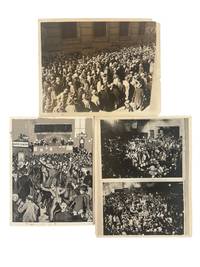
1930Best.-Nr. 225141930. New York Stock Exchange photo archive three press images dated 1893 to the early 1930s documenting major moments of financial crisis and market activity in the United States. The material captures both interior trading floor operations and exterior public response during periods of extreme volatility including the Panic of 1893 and the economic downturn following the 1929 stock market crash. These images provide direct visual evidence of how financial markets functioned in practice showing brokers traders and public crowds reacting to rapid shifts in economic conditions and offering insight into the social and institutional centrality of the New York Stock Exchange during periods of national instability. Three original photographs and printed image including a halftone engraving dated May 18 1893 alongside two press photographs bearing stamps from 1930 and 1932 each measuring approximately 7 x 9 inches to 8 x 10 inches. The 1893 image originally published in Frank Leslie's Illustrated Newspaper depicts the interior of the Exchange during the Panic of 1893 with brokers in formal attire densely clustered beneath ticker boards and gas lighting engaged in open outcry trading. A later double-image press photograph presents elevated views over the trading floor showing large groups of traders gathered around circular posts holding telephones and exchange slips illustrating the mechanics of pre-digital trading systems. The final photograph an Acme press image with original caption on verso shows a dense crowd gathered outside the Exchange on Broad Street during the early years of the Great Depression with men in suits and hats pressed together as they observe market activity and posted updates. Verso annotations editorial crop marks and press stamps indicate these images were used in contemporary newspaper reporting on stock market conditions. Spanning four decades of financial history these images document the continuity and transformation of market behavior from the late nineteenth century through the Great Depression. The Panic of 1893 marked by railroad failures and widespread bankruptcies and the crash of 1929 which contributed to prolonged economic collapse both intensified trading activity and public engagement with the Exchange. The photographs illustrate the persistence of open outcry systems reliance on manual communication and the physical concentration of traders and observers in moments of crisis. This archive supports research into financial history media representation of economic events and the lived experience of market speculation during periods of instability. Light handling wear minor edge creasing and some editorial markings; overall very good condition. A concise visual record of market activity and public response across two major economic crises. unknown
1930Best.-Nr. 225141930. New York Stock Exchange photo archive three press images dated 1893 to the early 1930s documenting major moments of financial crisis and market activity in the United States. The material captures both interior trading floor operations and exterior public response during periods of extreme volatility including the Panic of 1893 and the economic downturn following the 1929 stock market crash. These images provide direct visual evidence of how financial markets functioned in practice showing brokers traders and public crowds reacting to rapid shifts in economic conditions and offering insight into the social and institutional centrality of the New York Stock Exchange during periods of national instability. Three original photographs and printed image including a halftone engraving dated May 18 1893 alongside two press photographs bearing stamps from 1930 and 1932 each measuring approximately 7 x 9 inches to 8 x 10 inches. The 1893 image originally published in Frank Leslie's Illustrated Newspaper depicts the interior of the Exchange during the Panic of 1893 with brokers in formal attire densely clustered beneath ticker boards and gas lighting engaged in open outcry trading. A later double-image press photograph presents elevated views over the trading floor showing large groups of traders gathered around circular posts holding telephones and exchange slips illustrating the mechanics of pre-digital trading systems. The final photograph an Acme press image with original caption on verso shows a dense crowd gathered outside the Exchange on Broad Street during the early years of the Great Depression with men in suits and hats pressed together as they observe market activity and posted updates. Verso annotations editorial crop marks and press stamps indicate these images were used in contemporary newspaper reporting on stock market conditions. Spanning four decades of financial history these images document the continuity and transformation of market behavior from the late nineteenth century through the Great Depression. The Panic of 1893 marked by railroad failures and widespread bankruptcies and the crash of 1929 which contributed to prolonged economic collapse both intensified trading activity and public engagement with the Exchange. The photographs illustrate the persistence of open outcry systems reliance on manual communication and the physical concentration of traders and observers in moments of crisis. This archive supports research into financial history media representation of economic events and the lived experience of market speculation during periods of instability. Light handling wear minor edge creasing and some editorial markings; overall very good condition. A concise visual record of market activity and public response across two major economic crises. unknown books
1923Abundant black and white illustrations and reproductions of photos. Features: Twenty-Four Days Adrift - The appalling experiences that befell the crew of the U.S. steamer Dumaru, destroyed by fire and explosion in the Pacific in 1918 - from the logs of Radio-Operator T.W. Bean and Assistant Engineer F.J. Harmon; The Kidnapping of Father Heslin - this unassuming parish priest of Colma, California ultimately died - newspapers helped in catching the kidnapper; The Cross-Eyed Englishman - a rousing story of the Canadian North-West which occured 150 miles north and west of Winnipeg near Lake Winnipegosis; After Big Game With a Camera - Major A. Radclyffe Dugmore hunts big African game with a camera; A Wipe In the Eye - A British officer's amusing account of a lion-hunt which involves a spear; At Grips With a Leopard - Story from Jan Pienaar of the Beira Mashonaland Rhodesia Railway; The Man-Eating Crocodile - The Native Commissioner in charge at Balovale in Northern Rhodesia describes a crocodile surely responsible for many deaths; The Cannibal Islands - Part III - Clifford W. Collinson lived for several years in the Solomon Islands and here describes his visit to the mysterious island of Choiseul and its hidden stronghold - with nice photos; A Rescue By Aeroplane - Captain M.N. Albert's plane crashed on a trip over Northern Quebec and Ontario; Photo of bamboo organ in Catholic church in Los Pinas, Philippines; England's Oddest Treasure-Trove - A vast hoard of gold and silver coins is discovered at Seaton Carew, on the Durham Coast; Exploring in Central Brazil - Part I - A small expedition left England in 1921 to explore the mighty Amazon forests and study the wild Indian tribes - article with photos; Bandit-Hunting - Captain George Ash describes his 18 months serving under Francisco (Pancho) Villa, and a battle with outlaws in Santo Domingo; The Voyage of the "Sargon" - The disastrous voyage of this Grimsby trawler which arrived home weeks late - article with photos; The Bandit of Marseilles - A Bulgarian in France, upset for a sentence passed upon him,begins a vendetta against inoffensive citizens; and more. 88 pages plus 16 pages of nostalgic ads. Clean and unmarked with light wear. A quality copy of this excellent vintage issue. Book
1929164 pages. Features: Editorial discusses the likely impact of the October 29 stock market crash on the building business; Optimistic Outlook for Sound Construction Projects - interview with Nicholas Roberts of S.W. Straus & Co.; President Hoover Enlists Builders to Stimulate Business - article with group photo; "Modernesque" - unique home built by McWilliams and Meloney outside Philadelphia; Mortgages Yielding Higher; How to Build the Colonial Entrance Pictured on Front cover; Waste not high wages makes building costly; The Story of the Development of Gladstone Manor, located in Lansdowne Borough, PA; Public Garages - a discussion of the layout of special buildings devoted to the handling and storing of motor cars - article with photo of the Glenn E. Holmes Garage, Chicago; A Sound Proof Studio Apartment - The Sherman Square Studios, West 73rd St., New York, are built to interest singers, artists and writers; Conveniently Equipped Kitchens Help Builders Sell; Six Model Homes in Cleveland; Home Plan Suggestions; All-Feature Home - complete workings plans to one-eighth inch scale for a model brick bungalow; Where Stores and Apartments are Combined - Rissman and Hirschfeld Architects designed a triangular structure at the diagonal intersection of Milwaukee Ave. and Diversey Blvd. in Chicagp; Framing the Gambrel Roof; Dozens of sensational illustrated ads, some in color, are sure to tickle any modern designer with a taste for the past; and more. Some writing on heavily-worn color-illustrated covers. Binding intact. A worthy reference copy of this wonderful vintage issue. Book
191893 pages plus 8 pages of wonderful vintage ads. Features: My Bear Hunt in the B.C. Rockies - Part I, by E. Ashmead-Bartlett; Thrilling stories of the Air, with amazing crash photos; A Doctor in the Holy Land - Dr. H.J. Bailey in Palestine - Gaza and Nablus; Facing Death for Cinema Thrills - some hairbreadth escapes of well-known motion-picture stars, related by themselves, with photos; Tales of the Service - part IV - Tossed into the Bog - a true tale by a Customs Officer from the West Coast of Scotland; The Pirate of the Pacific - Count von Luckner - with photos; A Woman's Journey Across Africa - part V of Eva J. Jordan's 4,000 mile honeymoon trip across the dark continent; Beyond the Law - part IV, by Emmett Dalton, the sole survivor of the Dalton Gang; Exploring the Ice-Wilds of Eastern Karakoram - Part IV, by Fanny Bullock Workman and William Hunter Workman - with photos by the authors; The Drover Dempster - A.A. Beattie relates a deadly drive of 500 miles in Australia; The Disappearing Island - Helen Darbishire describes Ocean Island in the South Pacific - built entirely of phosphates - with nice photos; "Lionel - Because of the Lions" - Mrs. Fred Maturin (Edith Porch) explains how she came to name a lonely station near the Congo, on the Cape-to-Cairo Railway; The Water Miracles of India - how the engineer has wiped out India's famine scourge and reclaimed millions of acres of land by the erection of vast irrigation works - with great photos; Photo of 28-lb lobster; Photo of French school-children in war zone wearing gas masks; Photo of a Mormon Church in Salt Lake City converted into an auto shop; photo of the quaint circumcision garb worn in Uganda. Nostalgic back cover ad by the Haywood Tire & Equipment Co. of Indianapolis proves that the tire repair business was booming in 1918! Full-page ad inside back cover boasts that the Newell Pharmacal Co. can banish the smoking habit in 48 to 72 hours. Small ad for Emblem motorcycles and bicycles. Moderate wear. Unmarked. Binding intact. A sound copy of this excellent vintage issue. Book
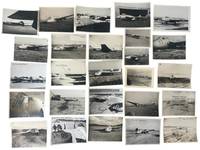
1957Best.-Nr. 233541957. De Havilland Vampire jet photographs documenting French Air Force training accident inspection and air base control at Meknès Morocco in the years immediately following Moroccan independence with direct evidence of how Base École 708 recorded aircraft damage runway incidents and jet operations within the shrinking French military presence in North Africa. French military personnel are identifiable not through portraiture but through the administrative system embedded in the material itself: repeated verso stamps reading Section Photo 21/708 Meknès dated from 1957 to 1959 and technical annotations that turn the group into an official working record rather than informal aviation imagery. The historical force of the archive lies in that function. Meknès served as a major French fighter training center the de Havilland Vampire formed part of its early jet instruction program and the base remained active until its dissolution in 1961 placing these photographs within the last phase of French air force operations in Morocco after France recognized Moroccan independence in 1956. Photo archive of approximately 27 silver gelatin photographs approximately 4.5 x 3.5 inches each Meknès Morocco 1957 to 1959. The images center on multiple de Havilland Vampire aircraft marked with large fuselage letters including TT UA RD RG RE and UM photographed from the nose wing cockpit tail and runway line in a methodical sequence. Several prints isolate impact evidence and structural damage: one close view marks "traces de frottement" on a crushed nose section another labels "cockpit avion abordeur / plan gauche avion abordé" and others identify "vue générale" "vue 3/4 arrière" and "axe de la bande" showing that the planes were being recorded for inspection orientation and incident analysis. Additional photographs show grounded jets in grass beside the field aircraft parked on the tarmac in rows hangar exteriors and broad runway views with service vehicles nearby. The versos carry dated Meknès section stamps penciled numbering and occasional reference notes from French military photographic and cinematographic services preserving the bureaucratic chain by which the images were produced filed and cross referenced. The archive belongs to the first generation of French jet aviation in North Africa. The Vampire was among the earliest jet fighters used by the French Air Force and Meknès was one of the key training sites where pilots moved into jet instruction before the school later shifted to newer aircraft and eventually left Morocco. In that setting aircraft photography was not decorative; it was part of the operational machinery of flight training maintenance and accident inquiry. These prints preserve that machinery at the moment when French colonial authority in Morocco had formally ended but French bases and training institutions still operated on Moroccan soil linking jet modernization to decolonization and military retrenchment. Written notes and official stamps throughout; light handling wear from use otherwise well preserved. Overall good condition. unknown
1957Best.-Nr. 233541957. De Havilland Vampire jet photographs documenting French Air Force training accident inspection and air base control at Meknès Morocco in the years immediately following Moroccan independence with direct evidence of how Base École 708 recorded aircraft damage runway incidents and jet operations within the shrinking French military presence in North Africa. French military personnel are identifiable not through portraiture but through the administrative system embedded in the material itself: repeated verso stamps reading Section Photo 21/708 Meknès dated from 1957 to 1959 and technical annotations that turn the group into an official working record rather than informal aviation imagery. The historical force of the archive lies in that function. Meknès served as a major French fighter training center the de Havilland Vampire formed part of its early jet instruction program and the base remained active until its dissolution in 1961 placing these photographs within the last phase of French air force operations in Morocco after France recognized Moroccan independence in 1956. Photo archive of approximately 27 silver gelatin photographs approximately 4.5 x 3.5 inches each Meknès Morocco 1957 to 1959. The images center on multiple de Havilland Vampire aircraft marked with large fuselage letters including TT UA RD RG RE and UM photographed from the nose wing cockpit tail and runway line in a methodical sequence. Several prints isolate impact evidence and structural damage: one close view marks "traces de frottement" on a crushed nose section another labels "cockpit avion abordeur / plan gauche avion abordé" and others identify "vue générale" "vue 3/4 arrière" and "axe de la bande" showing that the planes were being recorded for inspection orientation and incident analysis. Additional photographs show grounded jets in grass beside the field aircraft parked on the tarmac in rows hangar exteriors and broad runway views with service vehicles nearby. The versos carry dated Meknès section stamps penciled numbering and occasional reference notes from French military photographic and cinematographic services preserving the bureaucratic chain by which the images were produced filed and cross referenced. The archive belongs to the first generation of French jet aviation in North Africa. The Vampire was among the earliest jet fighters used by the French Air Force and Meknès was one of the key training sites where pilots moved into jet instruction before the school later shifted to newer aircraft and eventually left Morocco. In that setting aircraft photography was not decorative; it was part of the operational machinery of flight training maintenance and accident inquiry. These prints preserve that machinery at the moment when French colonial authority in Morocco had formally ended but French bases and training institutions still operated on Moroccan soil linking jet modernization to decolonization and military retrenchment. Written notes and official stamps throughout; light handling wear from use otherwise well preserved. Overall good condition. unknown books
Best.-Nr. DADAX092191234XNew unknown
1988Signed, without inscription, by John Kenneth Galbraith [1908-2006] upon first blank leaf. xx, [5], 2-206 pages. Index. Includes a new introduction which comments on the crash of 1987. First published in 1955, this work is a "skilled chronicle and analysis of the causes of that most memorable year in our economic history, 1929. A trenchant and timely re-examination of the most spectatular boom-and-bust period in American history." - back cover. Clean and unmarked with moderate wear. A sound copy. Book
1984Best.-Nr. 53609New York: Sidney Janis 1984. First edition. Very good plus. Scarce catalogue of this early joint exhibition by graffiti artists Crash and Daze at the Sidney Janis gallery in New York. Artists and frequent co-exhibitors Daze and Crash were both born in New York City in the early 1960s and both began building a style and a reputation in their teens in the late '70s first meeting in 1977. In October 1980 Crash curated the first major graffiti show Graffiti Art Success for America at Fashion Moda in the South Bronx; Daze was first featured in a gallery space in 1981 in the Beyond Words exhibition alongside Jean-Michel Basquiat and Keith Haring. Crash's own portraits of Basquiat and Haring are among the nine pieces illustrated in this catalogue selected from the 18 and 19 works in each artist's exhibition checklist. 11'' x 8.5''. Original saddle-stapled black and white wrappers. 9 black and white plates. 8 pages. Light edgewear and rubbing to wrappers. (Sidney Janis) unknown
1984Best.-Nr. 53609New York: Sidney Janis 1984. First edition. Very good plus. Scarce catalogue of this early joint exhibition by graffiti artists Crash and Daze at the Sidney Janis gallery in New York. Artists and frequent co-exhibitors Daze and Crash were both born in New York City in the early 1960s and both began building a style and a reputation in their teens in the late '70s first meeting in 1977. In October 1980 Crash curated the first major graffiti show Graffiti Art Success for America at Fashion Moda in the South Bronx; Daze was first featured in a gallery space in 1981 in the Beyond Words exhibition alongside Jean-Michel Basquiat and Keith Haring. Crash's own portraits of Basquiat and Haring are among the nine pieces illustrated in this catalogue selected from the 18 and 19 works in each artist's exhibition checklist. 11'' x 8.5''. Original saddle-stapled black and white wrappers. 9 black and white plates. 8 pages. Light edgewear and rubbing to wrappers. (Sidney Janis) unknown books
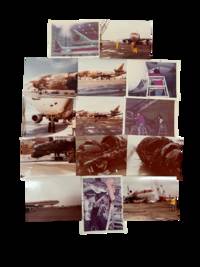
1978Best.-Nr. 233051978. Continental Airlines Flight 603 disaster photographs documenting the burned wreckage and structural damage of the DC 10 runway overrun at Los Angeles International Airport on March 1 1978 one of the most consequential American aviation accidents of the late 1970s and a major catalyst for changes in tire safety standards rejected takeoff procedures and aircraft evacuation systems. Flight 603 a Continental Airlines DC 10 10 scheduled from Los Angeles to Honolulu attempted to abort takeoff after multiple tire failures near decision speed on a wet runway; the aircraft overran runway 6R at LAX the left main landing gear collapsed beyond the pavement fuel tanks ruptured and a major fire engulfed the underside and left side of the aircraft during evacuation. The NTSB recorded 2 deaths and 28 serious injuries in its formal report while later accounts place the eventual death toll at 4 after additional passengers later died from injuries sustained in the crash. Photo archive of 14 color snapshot photographs each approximately 3.5" x 4.5" Los Angeles International Airport California March 1978. The photographs show Continental Airlines McDonnell Douglas DC 10 10 N68045 after the accident resting heavily fire damaged on the runway and adjacent overrun area. Multiple images focus closely on the burned underside of the fuselage where large sections of aluminum skin have been completely burned away exposing the aircraft's internal rib structure wiring insulation and lower cabin framework. Other views show extensive scorching along the left side of the aircraft blackened and partially melted fuselage panels around the wing root and landing gear area collapsed structural sections beneath the passenger cabin and debris scattered across the wet runway surface. Several photographs widen outward to show emergency and recovery operations surrounding the aircraft including personnel service vehicles cranes and towing equipment positioned around the destroyed DC 10. One image records the full profile of the aircraft from a distance emphasizing the scale of the burn damage extending across much of the fuselage exterior. Together the photographs document not merely the existence of the accident but the specific physical consequences of the runway overrun and post crash fire: ruptured lower fuselage sections exposed aircraft structure burned cabin undersides and the recovery environment at LAX immediately after the disaster. Flight 603 became an important case study in late twentieth century aviation safety because the accident linked tire failure runway conditions aircraft stopping performance and evacuation survivability within the emerging era of mass deregulated air travel. The NTSB investigation led to recommendations intended to "significantly reduce the incidence of tire failures during takeoffs and rejected takeoffs" while later FAA and industry reforms addressed tire testing standards takeoff performance calculations and the durability and fire resistance of emergency evacuation slides. These photographs preserve the material evidence behind those institutional and engineering changes documenting the burned airframe and structural destruction that transformed Flight 603 into a major reference point in modern commercial aviation safety history. Minor wear from handling. Overall very good condition. unknown
1978Best.-Nr. 233051978. Continental Airlines Flight 603 disaster photographs documenting the burned wreckage and structural damage of the DC 10 runway overrun at Los Angeles International Airport on March 1 1978 one of the most consequential American aviation accidents of the late 1970s and a major catalyst for changes in tire safety standards rejected takeoff procedures and aircraft evacuation systems. Flight 603 a Continental Airlines DC 10 10 scheduled from Los Angeles to Honolulu attempted to abort takeoff after multiple tire failures near decision speed on a wet runway; the aircraft overran runway 6R at LAX the left main landing gear collapsed beyond the pavement fuel tanks ruptured and a major fire engulfed the underside and left side of the aircraft during evacuation. The NTSB recorded 2 deaths and 28 serious injuries in its formal report while later accounts place the eventual death toll at 4 after additional passengers later died from injuries sustained in the crash. Photo archive of 14 color snapshot photographs each approximately 3.5" x 4.5" Los Angeles International Airport California March 1978. The photographs show Continental Airlines McDonnell Douglas DC 10 10 N68045 after the accident resting heavily fire damaged on the runway and adjacent overrun area. Multiple images focus closely on the burned underside of the fuselage where large sections of aluminum skin have been completely burned away exposing the aircraft's internal rib structure wiring insulation and lower cabin framework. Other views show extensive scorching along the left side of the aircraft blackened and partially melted fuselage panels around the wing root and landing gear area collapsed structural sections beneath the passenger cabin and debris scattered across the wet runway surface. Several photographs widen outward to show emergency and recovery operations surrounding the aircraft including personnel service vehicles cranes and towing equipment positioned around the destroyed DC 10. One image records the full profile of the aircraft from a distance emphasizing the scale of the burn damage extending across much of the fuselage exterior. Together the photographs document not merely the existence of the accident but the specific physical consequences of the runway overrun and post crash fire: ruptured lower fuselage sections exposed aircraft structure burned cabin undersides and the recovery environment at LAX immediately after the disaster. Flight 603 became an important case study in late twentieth century aviation safety because the accident linked tire failure runway conditions aircraft stopping performance and evacuation survivability within the emerging era of mass deregulated air travel. The NTSB investigation led to recommendations intended to "significantly reduce the incidence of tire failures during takeoffs and rejected takeoffs" while later FAA and industry reforms addressed tire testing standards takeoff performance calculations and the durability and fire resistance of emergency evacuation slides. These photographs preserve the material evidence behind those institutional and engineering changes documenting the burned airframe and structural destruction that transformed Flight 603 into a major reference point in modern commercial aviation safety history. Minor wear from handling. Overall very good condition. unknown books
Best.-Nr. DADAX039449881XNew unknown
Best.-Nr. 30433Milan: Gabriele Mazzotta 1984. Near fine in near fine dust jackets; matching slipcase with very light soiling to the gray cloth else near fine. Uncommon in the deluxe edition. Deluxe Edition. Quarto. Two hardcover volumes in matching slipcase. Published to accompany an influential group show of American graffiti artists that traveled through Italy this monograph features essays from curator Francesca Alinovi and gallerist Tony Shafrazi printed in both Italian and English a hip hop glossary and mostly-color reproductions of works from the likes of A One Jean-Michel Basquiat Crash Futura 2000 Richard Hambleton Keith Haring Jenny Holzer & Lady Pink and Lee Quiñones along with artist bios. This deluxe hardcover edition features a second volume—Quattordio Graffiti edited by Italian art critic Tommaso Trini—reproducing newspaper coverage from the exhibition's stops through Bologna Milan and Rome and documenting works produced by Delta 2 Ero Phase 2 and Rammellzee during their artist residencies at the sponsoring IVI paint factory in the Piedmontese village of Quattordio. Text in Italian for this second volume. Milan: Gabriele Mazzotta unknown
1927247 pages. Black and white photographic frontis portrait of author. "This is a book written by a German after a war which brought defeat to his country and a great civilized people to a condition of dependence and subordination... The German Inflation can only be understood as part of the general history of the time. May we all learn from the past and emerge from the destructive era of reciprocal hostility into a new constructive period of international well-being." - from Foreward. Chapters include: The Inflation of the War Period; From the Armistice to the Invasion of the Ruhr; From the Invasion of the Ruhr to the Stabilization of the Mark; The Stabilization of the Mark; From Rentenbank to Golddiskontbank; From Currency Crisis to Economic Crisis; The Dawes Plan; The Reconstruction of German Money and Capital Markets; Foreign Credits; International Co-operation. "(Schacht) became one of the directors of the Reichsbank in 1916 and in 1923 became currency commissioner for the Reich. After his economic policies helped reduce German inflation and stabilize the German mark, Schacht was appointed president of the Reichsbank. He collaborated with other prominent figures in economics to form the Young Plan to modify the way that war reparations were paid after Germany's economy was destabilizing under the Dawes Plan. Though on March 7, 1930, six months after the beginning of the Great Depression, he stepped down from the position of Reichsbank Chairman, but returned on March 17, 1933 after Hitler's rise to power." - from wikipedia dot org. Binding intact. Unmarked with average wear. Bright gilt lettering upon black cloth backstrip. Mild foxing to endpapers. A sound copy. Aldcroft & Rodger p.83, Peterson p.367. Book