506 resultados
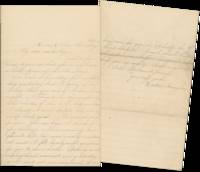
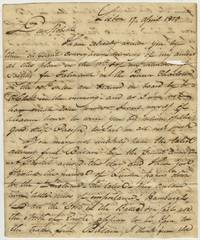
1813ref. BK0183Lisbon 1813. Autograph letter signed 3 pp. on a folded sheet with integral address panel to Messrs. Brown & Ives Providence Rhode Island and Newport "SHIP" and circular datestamps. 8 x 9 ¾ inches. Folded for mailing with considerable wear along the folds several tears and small losses including losses from opening the seal affecting scattered words. Good overall and substantially legible. A commercial letter written from Lisbon during the War of 1812 by "P. Falconer" probably the Baltimore merchant Peregrine Falconer. The identification remains somewhat tentative but the 1812 Baltimore directory lists Comegys Falconer & Co. merchants at 190 Baltimore Street while later Maryland Chancery records document the estate of Peregrine Falconer; Missouri archival records also document Falconer and Comegys and both "Perregrine" and "Perry" Falconer. Falconer was preparing to sail from Lisbon for Falmouth and writes Brown & Ives with the latest commercial and political intelligence reaching Portugal. He expected the widening European opposition to Napoleon to bring still more nations into the war then turned immediately to British policy toward American trade: "from the complexion of affairs that in the course of the Summer all the powers in Europe will be joined against France. If I am correctly informed a new duty of 6d. pr lb in addition is imposed in Britain upon American Cotton . Savannah Charleston & New York in a state of Blockade - this with the new duty has advanced the Price of Cotton .". The Russo-Prussian alliance had been concluded only weeks earlier Sweden joined the anti-Napoleonic alliance on March 24 and the coalition would continue to expand during the year. At the same time the English Parliament was debating additional duties on American cotton: on March 31 the government proposed sixpence per pound on American cotton imported in foreign vessels while Alexander Baring warned that American cotton carried by neutral ships would consequently bear a total duty of ninepence per pound. British naval pressure on the American coast was also rapidly increasing during the spring of 1813 trapping increasing amounts of American shipping in port. Falconer's letter thus records from Lisbon the immediate commercial relationship between the blockade British taxation and the price of American cotton. The war also forced Falconer to reconsider how Brown & Ives should communicate with him once he reached Britain. He gives explicit instructions intended to obscure their route: "I presume the only means of corresponding with Liverpool will be by the way of Lisbon. I have to request that you will write to me . frequently enclosing your letters under cover to Messrs. - & Brown without marking 'Via Lisbon' as letters coming from America are all opened in Britain." The remainder concerns the practical movement of merchants and shipping through the same wartime network including Falmouth and Liverpool passage arrangements vessels preparing to sail and convoying. Overall a useful merchant's-eye letter from the spring of 1813 with the blockade of American ports the British cotton duty the developing coalition against Napoleon and the routing of commercial correspondence all appearing as parts of the same Atlantic problem. . unknown books
1762ref. 10095Breslau .: G G Horn 1762. First Edition. Contemporry three quarter leather. A very good copy with some wear to the binding. 8vo. There is an elaborate eng. vignette title. A two-part analysis of coinage and monetary value. The first section deals with the origin and implementation of monetary regulation and minting of money. The second is an essay on the maintenance of exchange rates and relative values of currency in the modern era. G G Horn hardcover books
ref. 10746Illus. throughout. 202 pp. 4to four-ring binder with Posthumus logo on upper cover and spine. N.p.: 1960s or early 1970s. A delightful trade catalogue of stamps published by one of the leading fabricators of the time. Thousands of designs and samples are presented. Near fine but lacking the first two leaves 4 pp. unknown books
ref. 10745Color illus. throughout. 45 pp. 4to pictorial covers plastic spiral-bound. Amsterdam: ca. 1970s. A superbly illustrated catalogue of stamps perforators hole-punches staplers etc. and all manner of office supplies made by Posthumus B. V. the Dutch royal manufacturer of stamps. Their products are carefully arranged and photographed in this nice catalogue. Near fine. unknown books
ref. 35912TRADE CATALOGUE Portuguese Metal Household Articles. Braga: circa 1920. Oblong folio 15 x 18 1.2 inches. Wrappers. 53 plates. Scarce Portuguese trade catalogue illustrating hundreds of domestic household articles drawn to scale. Included are picture frames mirrors sculptures trays plaques medallions candlesticks vases etc. They include various styles and feature sculptures influenced by African and Asian themes and elaborate baroque and Renaissance styled pieces. Plates are sepia prints and some signed F. Gortz and M. Silva. Edges of plain wrappers sunned. unknown books
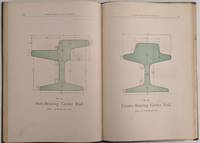
1890ref. 502San Francsico California: Pacific Rolling Mill Company 1890. 8vo. 250 x 170 mm. 10 x 7 inches. 100 pp. plus 4 leaves of ruled paper 2 with measurements in manuscript. Illustrated throughout with simple drawings of parts many stenciled with green wash; one plate folding. Bound in limp cloth covered boards title in gilt on front cover; a cloth binding shows some wear to gilt title two pencil drawings on front endpaper; other a very good sound copy. Straight forward price list of iron bar steel rail rolled and forged metal axles nuts bolts washers and dozens of other metal products. There is no introduction about the history of the firm just images of parts prices and a few lines of text describing specifications for some of the more complicated manufacture items. What distinguishes this rare trade catalogue is the design sense of many of the images and the application of stenciled color to highlight the object. The printed form of the parts are in outline and as one pages through the catalogue the images take on an abstract quality. Metal parts become contoured shapes with form being determined only by the light green wash applied to the physical part of the design. Although unintentional I am sure this late 19th century publication replete with many of the characteristics of period book design exhibits a very modernist feel one that is most unusual in publications of this nature. Although called the 7th edition this is only one of three issues of the PRMC's product guide and price list that is known. Organized in 1867 PRMC grew continuously and by 1892 was producing more than 40 thousand tons of iron and steel. "This giant enterprise is so closely identified with the manufacturing interests of the Pacific Coast that there is scarcely a manufacturing firm or corporation on the Coast that does not depend upon its output. The mills are located at Potrero Point in South San Francisco and cover an immense area" Master Hands. Romaine Guide to American Trade Catalogues p. 200 this edition and one from 1886 both known in only one copy each at California Historical Society. OCLC cites an edition from 1885 in one copy at San Francisco Public Library and this edition 1890 also in only one copy at California H. S. See: Master Hands in the Affairs of the Pacific Coast Historical Biographical and Descriptive. A Resumé of the Builders of Our Material Progress. San Francisco: Western Historical Publishing Company 1892 pp. 260. Pacific Rolling Mill Company unknown books
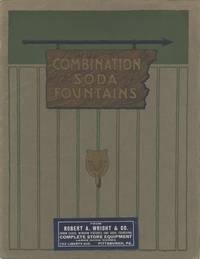
1925ref. 6884Decatur Ill.; Fort Wayne Ind: the company; The General Printing Corp 1925. Folio x cm. 24 pages. Illustrated throughout and with a color illustrated title page. Printed throughout in green and black ink. An attractively printed trade catalogue for the Combination Soda Fountain Company founded in 1898 with the introduction of the “Iceless” soda water machine. The company further expanded in 1919 with the purchase of the Wise Soda Apparatus Company of Ohio. The catalogue depicts and provides information for various scale soda water set-ups both counter and wall type as well as a few pages of smaller equipment and accessories. A bit or edgewear to the decorated stiff wrappers printed in black green brown and gold otherwise fine. With the ownership label of the Robert A. Wright & Co. “Complete Store Equipment” of Pittsburgh. No publications of the company are located by OCLC. the company; The General Printing Corp unknown books
ref. 35910TRADE CATALOGUE Portuguese Door Hardware. Braga: circa 1920's. Oblong folio 15 x 18 1.2 inches. Wrappers. 73 plates. Scarce Portuguese trade catalogue illustrating hundreds of door and furniture hardware samples drawn to scale. Included are escutcheons pulls strap hinges knobs etc. Represented are various styles from simple modern styles to elaborate baroque designs. Plates are sepia prints. Plain wrappers worn and chipped and partially missing. Plates have circular stamps. unknown books
1794ref. 354283Philadelphia: Printed by Francis Childs and John Swaine 1794. 8pp. Dbd. Contemporary ownership signature on titlepage and manuscript notes on final leaf. Very good. 8pp. Dbd. This copy bears the ownership signature of noted New York jurist and legal scholar James Kent who ran for Congress from New York in 1793 but was defeated by his brother-in-law Theodorus Bailey. He would go on to a distinguished career as a judge on the Chancery court and as an author of legal commentaries. At the conclusion of the text is a manuscript note: "Mr. Wadsworth stated in the House of Representatives the 19th May 1794 that within the last six months American vessels & property had been captured by the British Privateer in the W. Indies to the extent of one million of dollars - & that other nations had seized American property to ½ mil. dol. & that the total loss to our commerce was 1½ mil. dol." In this report to President Washington the new Secretary of State Edmund Randolph details the depredations against American shipping caused by the powers involved in the French Revolutionary Wars. He quotes from a study by the "committee of Philadelphia" on the interference with American trade by the British French Spanish and Dutch and summarizes the methods used by those countries. The British impress American sailors into service the French are embargoing American goods etc. He makes no recommendations as to an appropriate response. OCLC locates four copies. Scarce. EVANS 27917. OCLC 8090321 Printed by Francis Childs and John Swaine unknown books
1927ref. 250121New York: William Edwin Rudge 1927. First Edition. One of 50 copies specially bound with a double-page frontispiece color reproduction of a trade card for a Mitchell & Crosdale Philadelphia dealer in Sperm Whale Lard & Tanners Oils Candes Rice & c. of Whale killing. XLIV plates uncut. 25 pages of text. 1 vols. 4to. Bound in quarter vellum and patterned boards. Very Fine in remains of original glassine. First Edition. One of 50 copies specially bound with a double-page frontispiece color reproduction of a trade card for a Mitchell & Crosdale Philadelphia dealer in Sperm Whale Lard & Tanners Oils Candes Rice & c. of Whale killing. XLIV plates uncut. 25 pages of text. 1 vols. 4to. William Edwin Rudge unknown books
ref. 35911TRADE CATALOGUE Portuguese Door Hardware. Braga: circa 1920's. Oblong folio 15 x 18 1.2 inches. Wrappers. 127 plates. Scarce Portuguese trade catalogue illustrating hundreds of door and furniture hardware samples drawn to scale. Included are escutcheons pulls strap hinges knobs keys etc. Represented are various styles from simple modern styles to elaborate baroque designs. Plates are sepia prints. Many plates signed F. Costa. Plain wrappers worn and chipped and partially missing. Plates have rectangular stamps. unknown books
1909ref. List3421Ohio Illinois Michigan and Ontario 1909. Seventy-four letters in thirty-seven envelopes mainly dating between 1885 and 1895. With two undated and one empty envelope. Conditions vary with a few letters having damage intersecting with significant amounts of text and others Near Fine. Overall excellent. A collection of letters mainly sent between Captain William Faragher 1842–1921 and his second wife Harriet Chamberlin 1853–1920 with several from Faragher’s children from his first marriage Burton 1872–1961 and Maude 1875–1952. Most letters are from Chamberlin to Faragher with fourteen from Faragher to Chamberlin. Faragher owned and captained several merchant ships in Lake Erie and Lake St. Clair—presumably sailboats as he frequently complains of having been stuck without wind. He also describes more severe weather out on the lake writing from St. Clair Michigan: “I am anxious to get down from here but as the day advanced the wind began to frisken and it began to snow hard and as it was freezing hard it had rained then snowed and then froze hard saturday night so the poor Venture was in a sad plight but she was in a worse one when we got to where we lay run as it breezed up fresh and the wind dead ahead the water was flying over her in all directions and froze wherever it fell and besides it had turned into a blinding snow storm but we had a certain point to make . she seemed as anxious to get to a place of safety as I did and as the boys say she got there and none too soon as it has been blowing a gale ever since and snowing and freezing but we are in the lee and at a good dock and are comfortable but oh the wind is whistling through the rigging .” November 20 1887 In the 1880s steamships were increasing in popularity on the Great Lakes primarily because of sailboats’ susceptibility to both calm and weather; steamboats were bulky for their capacity and slow but more reliable whereas sailboats could carry overall more cargo.1 Generally steamers took packaged goods and passengers and sailboats mainly schooners took bulk cargo. The Great Lakes were the site of much shipping innovation; Faragher’s fleet was not yet behind the times but steam would overtake sail in the 1880s and 90s. Faragher’s cargo was mainly produce—apples and grapes—though he does mention picking up salt and other materials. His letters indicate that his business involved both shipping and mercantile aspects: he chose and bought the products shipped them to their destination and then also had to find and sell to customers. The grapes in particular seem to cause a lot of trouble: “We left Lorain Sunday morning early and had a nice trip to the Island got there at 4 PM bustled around monday morning and bought 400 baskets of grapes and had them all aboard by dark . it commenced to snow just as we got to Marine City bad bad omen for grapes but imagine my chagrin when I went up town and not a store or commission house wanted a grape folks were full of grapes and there was no sale for them and they said that I had got left and if the truth were known they were glad of it but its a cold day when I get left if trying will lit me out but one thing certain the weather and the lateness of the season were against me but you know I never cross a bridge before I get to it well we hauled up to our old Island Saturday morning and I sold out to my old friend . we had sold since 11 am 190 baskets of grapes . only half our cargo and at a good margin too. People would ask are you the man that was arrested here for selling grapes when told yes they seldom failed to buy but the strangest part was the number of ladies that came to buy”. October 28 1887 Though he does not narrate the incident in which he was arrested for grape peddling—nor does it appear to have made the paper—he later mentions yet another grape-related debacle this time at Port Huron: “Sander and I went to town to sell the grapes today . when down came a city official and wanted to know if I had a license to sell . well I couldent sell another grape without paying 5.00 a day license that was a stormer you see the whole sale men were going to drive me out of the market . but they were not as sharp as they thought they were I went and gave a bill of sale of my whole cargo to a citizen here and he appointed one of his agents to sell the grapes” September 20 1888 Faragher’s letters here do not discuss the financial state of his business but given Chamberlin’s statements it cannot have been all too positive. Chamberlin’s letters depict a woman struggling with her financial circumstances and with how the era’s expectations of her gender intersected with them. In one illustrative letter she writes: “A man drove by here Sat. asking for you. Ms. Lawler has given him her note to collect. He says the interest brings it to nearly fifty dollars. I told him I thought you could not meet it just at present but he said he must have the money and would give you just one week and if it was not paid then he would let the law settle it. Marvin and Laird are his lawyers. Mr. Laird is the one who helped get my money from father’s estate. I would not have them connected in this way about you for – O a great deal!! I have thought and planned till it seems as though my brain would burst. I have inquired about that law regarding taking any more married women as teachers. If Mr. Day would work for me it might perhaps be broken. There will be a vacancy in the Detroit building this fall. Will if I possibly can I want to commence teaching in Sept. The children would have to learn to do more about the house and with both of us earning it seems as though some of these harassing debts must be settled after a time. The frequent calls of men with bills against you have taken away all my pride and I believe I am humble enough to do most anything now.” July 11 1887 In 1887 Ohio passed the Married Women’s Property Act which allowed married women to keep their own property separate from their husbands’—in fact Chamberlin occasionally mentions “her” money in her correspondence. At the same time the state’s Board of Education was debating passing an act that would not only ban school districts from hiring married women as teachers but also fire all the married women it then employed. Newspaper reporting at the time indicates that this measure was not particularly popular not the least because married women tended to be older and more experienced with the job. Chamberlin clearly perceives her role as a wife in a rather more progressive way at one point writing to Faragher that “a true wife” is “not a doll-baby to be kept in finery” N.d. after he had taken out a loan to send her money for a new hat. Throughout their correspondence Chamberlin is perhaps surprisingly open with Faragher about her opinions particularly on his work and their financial affairs; for instance: “I should like to examine your pocket-book after that $25 tax money left it. What are you going to live on up there while you are hunting for freight Sawdust won’t put any fat on your bones. Sailing up and down past Saginaw bay won’t prolong your life or lessen your grey hairs. What are you sailing for anyway For the sake of wearing yourself out and giving employment to two or three men and keeping the Root from rusting out I guess I am naughty!” May 25 1894 She also frequently provides her opinion on whether and at what rate Faragher should sell his two other ships besides the Root the Venture and the Sassacus. She continues in the same letter: “I know I almost had a regular fight yesterday morning right there on the lounge. I wanted to do my housework and I couldn’t. I wanted to sew and I couldn’t sit up long for that. I wanted to help you and I couldn’t. I wanted to earn money and whereas I used to earn fifty-five cents for every hour I worked now I can not earn anything. Then if I could not do for self and family I wanted to make church and S.S. calls but I couldn’t walk for that.” Of course she was at that time prevented from these activities by her health not by gendered standards but she clearly had financial ambitions for herself. After her time as a regular school teacher Chamberlin taught at a Sunday school where she earned a few cents per student and in one letter reported having eighty-one students in a single session. Chamberlin also struggles with the expectations of her as step-mother to Faragher’s two children from his first marriage to Emma Humphrey 1848–1880. She writes: “I get so discouraged sometimes and it seems as though I am in the wrong place as mother. I think of Emma as my sister. I want to do as she would have me. I look upon my work as sacred. And yet sometimes I feel as though life was not worth living.” November 5 1886 She frequently describes conflict with Burt who was then in his late teens to early twenties writing that she could not “have quite the very own mother-love for him” though she is “sure that Emma was not more conscientious in her desires to do right by him than I am” May 20 1891. As it still is today the role of step-mother was a difficult and frequently demonized one with the trauma of losing a mother and wife often in conflict with the feminine duty of maintaining perfect domestic harmony. In general Chamberlin seems to have been somewhat out of step with the feminine ideal of the time even telling Faragher in a letter describing the death of an acquaintance’s baby how glad she was to not have any children of her own. Overall a look at the private lives and difficulties of a middle-class Ohio household as despite the relative prestige of its head being a captain-owner it struggled with debt. Of interest to both historians of Great Lakes trade and those of women’s roles in the late nineteenth century. 1 Dina M. Bazzill “The Missing Link Between Sail and Steam: Steambarges and the Joys of Door County Wisconsin” East Carolina University Program in Maritime Studies Research Report no. 19 2007. unknown books
1950ref. 5503N.p.: Ministerstvo Pishevoy Promishlennocti 1950. Octavo-sized accordion fold 25 x 18 cm. 24 pages. Illustrated with seventeen color plates by C.B. Popov. FIRST EDITION. A trade catalogue of Russian liquors issued by the Russian Ministry of Food. The spirits are of all types with a wide range of vodkas but also a rich variety of cordials brandies and dessert liqueurs. The handsome color plates all stand out for their single color backgrounds and the printing process would appear to have been a hybrid combining photolithography and lithography and then colored. Whatever one makes of the Soviet cultural landscape in general it did attain high standards in some fields and in a modest way this trade catalogue is a proud reflection of its aesthetic achievement. Clean and bright within. Textured wrappers with debossed copper lettering and gilt ruling; lightly soiled and with wear and some separation at spine. Good. OCLC locates no copies. Ministerstvo Pishevoy Promishlennocti unknown books
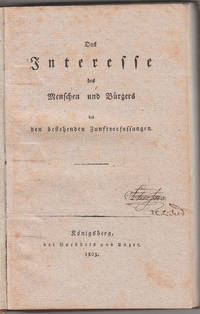
1803ref. 10056Konigsberg: Goebbels und Unzer 1803. First Edition. Contemporary paper backed boards and label. Very good; spine label partially abraded. 8vo xvi 1 - 232 pp. Statesman statistician and economist the author had an eminent career in public policy making and teaching. He was for a time the principal advisor to Hardenberg and present at Paris for the peace conference in 1813 as well as the Congress of Vienna. He was also responsible for the complete overhaul and modernization of the Prussian satistical bureau beginning in 1810. He was the author of several books on statistics as well as economics and law. The work offered here is his first publication. It is a detailed exposition of how the social and commercial maintenance of the guild system is an obstacle to the economic progress of the state and its populace. Given the author's proximity to the center of Prussian power and government it can be read as a 'map' for the future development of the German state under Prussian leadership after unification. Palgrave II p. 318. Goebbels und Unzer hardcover books
1883ref. 236859Kansas City Missouri: Press of Ramsey Millett & Hudson 1883. Illustrated with 2 full-page Engravings. 76 pp. 1 vols. 8vo. Original wrappers printed in red and black. Vertical crease to front wrap and a few corners previously turned down a few prices realized in pencil. Very good. Illustrated with 2 full-page Engravings. 76 pp. 1 vols. 8vo. Over sixty-five Galloway bulls and heifers on the block giving detailed pedigree. With an introduction by Matthews explaining the his interest in the breed. Not in OCLC Press of Ramsey, Millett & Hudson unknown books
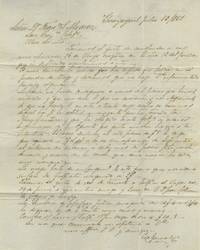
1851ref. BK0071Guayaquil Ecuador 1851. Folded manuscript letter in Spanish with an earlier communication dated June 13 copied and headed "Duplicado" followed by a second communication dated July 18 on the same folded sheet. Integral address panel to "Sr. Dn. Fran.co S. Alvarez / San Francisco / Alta California" with oval "FORWARDED BY / ZACHRISSON NELSON & CO. / PANAMA" handstamp and large "20" due marking. 2 pp. 8 ¼ x 10 ¼ inches. Old folds with several small losses and separations along folds and margins only minimally affecting the text. A detailed commercial letter from the Guayaquil mercantile house V. Gómez & Ca. to Francisco Salvador Ãlvarez Pérez the prominent Valparaíso merchant then engaged in business in San Francisco during the opening years of the California Gold Rush. Ãlvarez belonged to one of Valparaíso's established commercial families and maintained extensive Pacific trading interests. He would shortly afterward serve as Chilean consul in San Francisco. In the letters Gómez & Co. supply Ãlvarez with current market information from Ecuador. They also apparently executed purchases on behalf of his Valparaíso interests. The first communication dated June 13 and recopied here as a duplicate reports extensively on the Guayaquil commodity market. Gómez & Co. describe the year's cacao crop as exceptionally poor discuss newly arrived cacao from Machala and the prices being asked for it and report purchases and quantities associated with Ãlvarez's business. They also give information on barley Jipijapa Panama hats exchange rates and other current prices. The July 18 continuation connects those commodity markets directly to the political crisis then unfolding between Ecuador and New Granada. Explaining why barley cannot be purchased below a previously quoted price Gómez & Ca. cite the fact that threats from New Granada had compelled the Ecuadorian government to form an army thereby taking many workers away from industry "la actitud amenazante que ha tomado la Nueva Granada y que ha obligado a este Gobierno a ordenar la formación de un Ejército que quite muchos brazos a la industria". The letter is dated July 18 1851 amid the military and political crisis of that summer and just one day after the Guayaquil garrison proclaimed José María Urbina Supreme Chief. The integral address leaf preserves the letter's route northward through Panama in the hands of Zachrisson Nelson & Co. one of the forwarding firms handling correspondence in the early California traffic. An interesting document of the commercial infrastructure connecting South America with California in 1851 with identifiable firms and recipients content regarding Gold Rush-era Pacific trade contemporary commentary on Ecuadorian mobilization and Panama forwarding marks. . unknown books
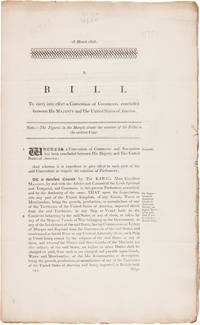
1816ref. 39129London: Ordered by the House of Commons to be Printed March 18 1816. Trade Restored After the War of 1812 Official Parliamentary draft printing of a commercial agreement between the United Kingdom and the United States passed just over a year after the signing of the Treaty of Ghent. The convention of commerce establishes that the same import and export duties be applied to goods carried by American and British ships in direct British-American commerce. Duties on and bounties for prize ships and goods are also put on the same terms. This version of the bill would have been printed while the question was being considered by Parliament. Not in Kress or TPL and not listed on OCLC. 2pp. plus docket title printed on verso of second leaf. Folio. Early horizontal folds. Near fine. Untrimmed. unknown books
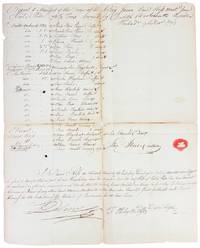
1792ref. 31794Philadelphia: s.i. 1792. Very Good. Philadelphia: 1792-93. Single folded sheet 41.5 x 33.5cm; report in manuscript verso filled nearly to completion recto a quarter filled. Signed by Captain David Ross and two other parties; docket dated 1793 signed by Inspector Jeremiah Simmons. Stock exceedingly brittle with shallow chipping long closed tears along folds with old archival mending age-toning and light soiling as well as contemporary wax seal remnants. Overall a Very Good and legible survival. Cargo report executed in manuscript and dated November 9th 1792 listing materials shipped from Port-de-Paix Saint-Domingue modern day Haiti to Philadelphia for the firm Dutilh & Wachsmuth. The date places this report in the early days of the Haitian Revolution following the August 1791 enslaved peoples' revolt. The island was a vital source of commercial interests to Philadelphia and the burgeoning revolution was at the forefront of everyone's mind making this voyage and the survival of associated documents all the more significant. Dun cites one contemporary account "'No business is going on here' one letter told 'as every one is taken up with meetings committees and arming themselves.'" Dun p. 484. Goods delivered include wine sugar and coffee and were delivered to Dutilh and a handful of others including Captain Ross himself who received a hogshead of molasses. Ross eventually rose to the rank of Continental Navy Lieutenant during the Quasi-War with France and is remembered for commanding the privateer Belvedere guiding her back to Dover after an engagement with a French brig "leaving Belvedere with 50 round shot in her hull and her sails and rigging further shredded." References: James Alexander Dun "What Avenues of Commerce Will You Americans Not Explore! Commercial Philadelphia's Vantage onto the Early Haitian Revolution." The William and Mary Quarterly July 2005 Third Series Vol. 62 No. 3 pp. 473-504 See also the Destroyer History Foundation website. [s.i.] unknown books
1850ref. 61392Philadelphia PA: The company 1850. Engraved broadside 14 x 12 inches text executed in several sizes and styles of lettering. Krider was a long-time Philadelphia sporting goods dealer and sportsman and the author of Krider's Sporting Anecdotes 1853. Henderson p. 158 dating the broadside "ca. 1850". Augustus Kollner has been identified as the engraver. OCLC locates four copies Clements American Antiquarian Society Hagley Museum Library of Congress. Margins a little browned several short tears into margins but a very good example of a handsome sporting exhibition broadside. #8465. The company unknown books
1880ref. 237851880. Ceylon colonial photo archive depicting tea cultivation estate labor transportation and urban life circa 1880s to 1910s documenting the plantation economy that made the island one of Britain's principal sources of tea as British merchants shifted the enormous domestic tea market away from China and toward production within the Empire. Coffee leaf rust appeared in Ceylon in 1869 and spread rapidly through the island's coffee districts precipitating the collapse of the crop that had dominated the colonial export economy and accelerating planters' conversion of the central highlands to tea. James Taylor had established commercial tea cultivation at Loolecondera Estate near Kandy in 1867 and the new industry expanded rapidly as coffee failed; by 1900 some 380000 acres in Ceylon were planted in tea. By 1879 the results showed that in more than 70 percent of tea sold in London still came from China while by 1900 China supplied only about 10 percent and black teas from British controlled India and Ceylon constituted the bulk of the market. Photo archive of albumen and silver gelatin photographs and photographic postcards ranging from approximately 3½ x 5 to 4 x 6 inches Ceylon circa 1880s to 1910s. Tea production forms the strongest body of imagery. Women and men stand among densely planted tea bushes or work through rows of plants with women carrying the large woven baskets used to collect leaves; individual and group views are captioned "Tea plucker" "Tea picking Ceylon" "Pruning tea Kandy" and in French "Cueillette du thé à Ceylan." One Skeen & Co. Colombo card numbered 84 and captioned "Tea plucker" isolates a woman at work with a large basket strapped behind her while another shows a large group of workers seated with baskets and gathered tea in a plantation clearing. A card captioned "Estate coolies Ceylon" depicts an estate employee in European dress standing with women and a child outside a thatched dwelling preserving in its printed terminology the racial and labor classifications through which plantation workers were presented to contemporary consumers of colonial imagery. Other photographs move from plantation production into the roads vehicles and cities of colonial Ceylon: rickshaw pullers pose with European passengers and beside their vehicles; a street scene records "Native town Kandy Ceylon"; Colombo appears in views of the "Colpetty Road near Galle Face Colombo" a crowded procession captioned in French "Colombo départ des troupes Anglaises" and a civic monument among palms. Another postcard depicts "Royal visitors leaving Ceylon" while a country road scene shows pedestrians carts and roadside activity. Skeen & Co. one of the principal commercial photographic firms operating from Colombo in the late nineteenth and early twentieth centuries is identified on several cards but no single photographer can be assigned to the archive as a whole. The tea scenes record the labor at the center of one of the fastest agricultural conversions in the nineteenth century British Empire. Coffee rust Hemileia vastatrix was first observed in Ceylon in 1869 and within little more than a decade had destroyed the commercial basis of the coffee plantation system; tea already demonstrated commercially by Taylor replaced it across much of the highlands. Ceylon tea exports to Britain rose from only 282 pounds in 1875 to more than 4.3 million pounds in 1885 while the plantation landscape expanded until almost all former coffee districts had been replanted with tea during the 1890s. That expansion depended on a large year round plantation workforce much of it composed of Tamil laborers brought from southern India and on the colonial infrastructure that connected the highlands with Colombo and overseas markets. Roads and the railway between Kandy and Colombo had initially served the coffee economy and could be redirected toward tea after the blight while Colombo developed as the commercial and shipping center through which the crop entered imperial markets. The archive therefore records several stages and social spaces of the same colonial economy from plucking and pruning in the highlands to estate communities road transport Kandy and the metropolitan port city of Colombo while the postcards themselves show how plantation labor and colonial development were converted into commercial images for circulation beyond the island. Light to moderate surface wear toning occasional fading and creasing with some photographs showing age related discoloration and edge wear. Overall in good condition. A visual record of the plantation labor and colonial infrastructure behind Ceylon's transformation from a failed coffee economy into a major tea producer that helped Britain replace Chinese tea with supplies produced under imperial control. unknown books
ref. 339716Print. Color offset lithograph. Sheet measures 30" x 20". The "Decouvrez un Nouveau Monde - Visitez les Etats-Unis" poster series was produced from 1960-1963 by the United States Department of Commerce to promote American culture and travel to French-speaking audiences. This poster features an aerial view of lower Manhattan showing the Battery and many docks and piers. unknown books
1870ref. 315110New York: George Blackie & Co 1870. Woodcut illustrations throughout. 12mo. Publishers pink pictorial wrappers. Woodcut illustrations throughout. 12mo. Includes marked playing cards gambling and magic books magic tricks novelties and all sorts of curiosities and miscellany such as "False Moustaches that cannot be detected when worn" offered by New York wholesale agents George Blackie & Co. George Blackie & Co unknown books
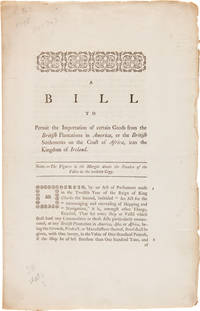
1778ref. 39128London. 1778. The rare Parliamentary printing of a bill relating to American trade under consideration by the House of Commons. In 1660 during the reign of Charles II Parliament passed a bill "for the encouraging and encreasing of Shipping and Navigation" which granted bonding for ships and vessels transporting goods from British plantations in Africa Asia and America directly to another British plantation or to a port in England Ireland or Wales. Three years later Ireland was struck from the list. The present law passed during the American Revolution restores Ireland's bonds privileges allowing her ports to accept goods directly from the colonies in the Americas now mostly limited to Canada and the West Indies Asia and Africa. Not in Kress Goldsmiths' or TPL. OCLC locates three copies at the University of Arizona the University of Texas at Dallas and the University of Regina Saskatchewan. A rare example of a law reflecting the changes of British mercantilism at the close of the First Empire. 3pp. plus printed docket title on verso of second leaf. Bifolium. Three early horizontal folds. Very minor foxing and soiling. Near fine untrimmed. unknown books
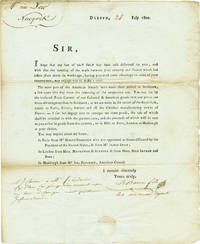
1801ref. 44263Dieppe France. July 1801. Rebuilding Trade After the Quasi War An interesting and rare artifact of the attempt to rebuild French-American trading relations in the wake of the so-called "Quasi-War" between the two nations. The Quasi-War was an undeclared conflict between the United States and France during John Adams' administration in the late 1790s manifested mostly in naval engagements between the two nations. The war wreaked havoc on American commerce with France which only began to be rebuilt with the Convention of 1800. The present printed circular was created by "Le Baron fils" the former American consular agent in Dieppe and was apparently sent to a variety of American merchants encouraging them to once again send shipments of American goods to that French port. Not much is known of Le Baron fils though he did correspond with Benjamin Franklin and he served as the American consular agent at Dieppe for several years. This copy of Le Baron fils' circular was sent to prominent New York merchant and politician Nicholas Low and is dated in manuscript July "24." It is addressed to Low in manuscript on the fourth page and his name is also written in the upper left corner of the circular. In the printed text Le Baron fils states: "you may see by the inclosed Price Current of our Colonial & American goods not present here that our prices are more advantageous than in Bordeaux as we are more in the center of the Republick nearer to Paris Rouen Amiens and all the Chiefest manufacturing towns of France." Low is encouraged to "consign me some goods the sale of which shall be attended to with the greatest care and the proceeds of which will be sent to you either in goods from this country or in Bills on Paris London or Hamburgh at your choice." The printed text concludes by giving the names of the American consuls at Paris and Hamburg as well as two English trading houses as references to Le Baron fils' character. Le Baron fils adds in manuscript: "Mr. J. Clason & Mr. C. Codwise of yr place can give you an account upon my house in case you want quick information." Old folds some edge wear small tears at edges of fold fourth page torn from wax seal. Very good overall. unknown books
1910ref. 6626New Orleans; New York: The Board of Trade; Printed by H. R. Elliot & Co. Printers and Embossers 1910. Stapled booklet 10.25 x 15.25 cm. 14 unnumbered leaves; printed text decorated with red borders on rectos only. Cover title: Recipes for Cooking Rice. Author information inferred from external evidence. Printer from rear panel of wrappers. ~ Evident FIRST EDITION. A promotional publication designed “to create a greater interest” in a foodstuff that had yet to become a staple in many parts of the United States. With a dozen recipes including Gumbo Soup Jambalaya Belle Calas fritters Rice Pudding Riz au Lait. ~ The phrase “Louisiana Rice Exhibit” can be found in reference to displays in the agricultural halls of world’s fairs – the World’s Columbian Exposition Chicago 1893 for instance as well as the Louisiana Purchase Exposition St. Louis 1904 – but in the event the phrase is better understood not as an installation but as a program. The New Orleans Board of Trade had indeed exploited opportunities to educate the public by such means cf A. C. Cantley “Rice Display by Louisiana at World's Fair of 1904” The Planter and Sugar Manufacturer 32 no. 7 February 13 1904 page 121 but it would have been highly unlikely for booklets such as How to Cook Rice to have been produced specifically for them without bearing any mark of the association. Moreover Louisiana Rice Exhibits so-named were also staged at parish fairs livestock shows even horse races. Their visual aspect was meant to entrance and amuse. “The New Orleans Board of Trade made a very splendid exhibit” a trade paper reported “at the National Farm and Livestock Show with a display of all the products it handles with the centerpiece a working model of a rice mill” “Current Rice News Notes” The Rice Journal and Southern Farmer 19 no. 12 December 1916 page 33. ~ Founded in 1880 the Board itself coordinated among many other activities rice shipments from mills in Louisiana and to a smaller extent from eastern Texas and Arkansas too. In this case their printing contract with H. R. Elliot & Co. places the publication later than the Chicago Exposition as this form of name was not in use until after 1900 “The Manufacturing Stationer” Walden’s Stationer and Printer 31 Spring 1909 page 16. The date of issue proposed here rests on reports that the Board of Trade distributed booklets in or perhaps slightly before 1910 a note for example from the American Poultry World recorded that recipes from the Louisiana Rice Exhibit of New Orleans had been received 1 no. 5 March 1910 pages 354-355. ~ Interior clean and bright. Stapled in ivory wrappers with gilt illustration of rice plants overseen by a pelican in honor of the Pelican State. Near fine. OCLC locates four copies; Uhler 252; New Orleans Culinary History Group page 152; not in Bitting Brown or Cagle. [The Board of Trade; Printed by] H. R. Elliot & Co., Printers and Embossers paperback books