World Chamber of Commerce Directory, IncBiblio.com

3183 resultados
ref. 7660602-75Used - Good. Former library copy. Pages intact with minimal writing/highlighting. The binding may be loose and creased. Dust jackets/supplements are not included. Includes library markings. Stock photo provided. Product includes identifying sticker. Better World Books: Buy Books. Do Good. unknown
ref. 67568681-6Used - Good. Former library copy. Pages intact with minimal writing/highlighting. The binding may be loose and creased. Dust jackets/supplements are not included. Includes library markings. Stock photo provided. Product includes identifying sticker. Better World Books: Buy Books. Do Good. unknown
2018ref. __1331302757Forgotten Books 2018. Paperback. New. 548 pages. 9.02x6.02x1.18 inches. Forgotten Books paperback
ref. ria9781394401529_inpHardback. New. New Book; Fast Shipping from UK; Not signed; Not First Edition; N/A hardcover
1880ref. 237851880. Ceylon colonial photo archive depicting tea cultivation estate labor transportation and urban life circa 1880s to 1910s documenting the plantation economy that made the island one of Britain's principal sources of tea as British merchants shifted the enormous domestic tea market away from China and toward production within the Empire. Coffee leaf rust appeared in Ceylon in 1869 and spread rapidly through the island's coffee districts precipitating the collapse of the crop that had dominated the colonial export economy and accelerating planters' conversion of the central highlands to tea. James Taylor had established commercial tea cultivation at Loolecondera Estate near Kandy in 1867 and the new industry expanded rapidly as coffee failed; by 1900 some 380000 acres in Ceylon were planted in tea. By 1879 the results showed that in more than 70 percent of tea sold in London still came from China while by 1900 China supplied only about 10 percent and black teas from British controlled India and Ceylon constituted the bulk of the market. Photo archive of albumen and silver gelatin photographs and photographic postcards ranging from approximately 3½ x 5 to 4 x 6 inches Ceylon circa 1880s to 1910s. Tea production forms the strongest body of imagery. Women and men stand among densely planted tea bushes or work through rows of plants with women carrying the large woven baskets used to collect leaves; individual and group views are captioned "Tea plucker" "Tea picking Ceylon" "Pruning tea Kandy" and in French "Cueillette du thé à Ceylan." One Skeen & Co. Colombo card numbered 84 and captioned "Tea plucker" isolates a woman at work with a large basket strapped behind her while another shows a large group of workers seated with baskets and gathered tea in a plantation clearing. A card captioned "Estate coolies Ceylon" depicts an estate employee in European dress standing with women and a child outside a thatched dwelling preserving in its printed terminology the racial and labor classifications through which plantation workers were presented to contemporary consumers of colonial imagery. Other photographs move from plantation production into the roads vehicles and cities of colonial Ceylon: rickshaw pullers pose with European passengers and beside their vehicles; a street scene records "Native town Kandy Ceylon"; Colombo appears in views of the "Colpetty Road near Galle Face Colombo" a crowded procession captioned in French "Colombo départ des troupes Anglaises" and a civic monument among palms. Another postcard depicts "Royal visitors leaving Ceylon" while a country road scene shows pedestrians carts and roadside activity. Skeen & Co. one of the principal commercial photographic firms operating from Colombo in the late nineteenth and early twentieth centuries is identified on several cards but no single photographer can be assigned to the archive as a whole. The tea scenes record the labor at the center of one of the fastest agricultural conversions in the nineteenth century British Empire. Coffee rust Hemileia vastatrix was first observed in Ceylon in 1869 and within little more than a decade had destroyed the commercial basis of the coffee plantation system; tea already demonstrated commercially by Taylor replaced it across much of the highlands. Ceylon tea exports to Britain rose from only 282 pounds in 1875 to more than 4.3 million pounds in 1885 while the plantation landscape expanded until almost all former coffee districts had been replanted with tea during the 1890s. That expansion depended on a large year round plantation workforce much of it composed of Tamil laborers brought from southern India and on the colonial infrastructure that connected the highlands with Colombo and overseas markets. Roads and the railway between Kandy and Colombo had initially served the coffee economy and could be redirected toward tea after the blight while Colombo developed as the commercial and shipping center through which the crop entered imperial markets. The archive therefore records several stages and social spaces of the same colonial economy from plucking and pruning in the highlands to estate communities road transport Kandy and the metropolitan port city of Colombo while the postcards themselves show how plantation labor and colonial development were converted into commercial images for circulation beyond the island. Light to moderate surface wear toning occasional fading and creasing with some photographs showing age related discoloration and edge wear. Overall in good condition. A visual record of the plantation labor and colonial infrastructure behind Ceylon's transformation from a failed coffee economy into a major tea producer that helped Britain replace Chinese tea with supplies produced under imperial control. unknown
ref. GECC-010038Hardcover. Very Good. Very Good used condition. Minor shelf wear and signs of use. Pages are clean with no markings. Includes dustjacket in similar Very Good used condition. Ships quickly from Ontario! hardcover
1667ref. ABC_508101667. Ca. 23.5 x 26.5 cm and ca. 20 x 24 cm. With a woodcut decorated initial on each ordinance. Two closely related Dutch Republic broadsides both concerned with the suppression of fraud in the spice trade under the monopoly and protection of the Dutch East India Company. Together they form a vivid legal response to widespread commercial adulteration of imported spices particularly pepper nutmeg and mace reflecting both the economic importance and vulnerability of the Dutch spice trade in the 17th century. Both texts are issued as public ordinances intended for proclamation and posting throughout the provinces and both impose heavy fines and confiscation for violations alongside rewards for informants and penalties distributed between officials and local relief funds.The first proclamation from 16 September 1667 responds to reports of severely compromised pepper entering the Dutch Republic via England explicitly referencing the aftermath of the Great Fire of London. The text describes burnt pepper imported after the disaster which is said to retain only the outward appearance of pepper while being stripped of all quality and even emitting a foul smell. Authorities warn that such material is being mixed with genuine spice and sold fraudulently undermining both consumers and the reputation of the VOC.The second later and more extensive proclamation of 22 November 1669 significantly broadens the scope of earlier regulations. Rather than focusing solely on pepper it addresses systematic adulteration across a wide range of spices including pepper nutmeg mace and powdered spice residues. It describes the importation of dust powder and refuse of spices from abroad which are being reprocessed and mixed with genuine goods or artificially manipulated such as being moistened with water to increase weight and deceive buyers.The margins of both of the ordinances are cut short the first ordinance shows some browning and a minor tear. Otherwise in good condition. unknown
1741ref. ABC_50545Amsterdam: Hendrik Boussière 1741. Tipped into a passe-partout. A long sheet ca. 40.5 x 14.5 cm printed on two sides with the woodcut coat of arms of Amsterdam at the head. Exceptionally rare issue of a commodity price current for the Amsterdam market providing merchants with up-to-date market prices for a wide range of goods. This publication was issued every Monday from 1609 onward although comparable price lists are known to have circulated as early as 1585. To regulate the market the guilds of merchants and traders were required to publish standardised price information on a weekly basis. These lists were submitted to the authorities such as the mayor sheriff and aldermen as well as to subscribers but could also be purchased at the stock exchange. They were especially popular among foreign merchants.The present issue dated 13 February 1741 provides a detailed overview of contemporary market prices across a wide range of commodities. These include herbs and spices sugar materials for paint production pharmaceutical goods salt metals and munitions flax and hemp animal skins pitch and tar fish oils tobacco honey and wax as well as various textiles including silks cottons and woollens. It further records prices for butter wines grains and seeds. The list concludes with exchange rates for several currencies. Ephemeral by nature and often discarded after use these publications are now very scarce. We have only been able to trace one other copy of the present issue.The work has been folded in the past the bottom margin has been cut somewhat short with some loss of text. Otherwise in very good condition.l Internationaal Instituut voor Sociale Geschiedenis PM 405 1 copy; Wittop Koning Geschiedenis van de Pharmacie in Nederland figure 78 this copy; cf. W.P. Sautijn Kluit "De Amsterdamsche prijs-courantiers in de 17e en 18e eeuw" in: R. Fruin red. Bijdragen voor vaderlandsche geschiedenis en oudheidkunde Nieuwe Reeks deel 8 1875 p. 58-66; STCN 427437431 1 copy other issue from the same year; Wittop Koning p. 82. Hendrik Boussière, unknown
1781ref. ABC_50510Pressburg =Bratislava 1781. Ca. 46 x 32 cm. With an engraving of Pressburg Bratislava and an engraved title. A rare and highly evocative example of an 18th-century Preis-courant or commodity price current published in Pressburg modern-day Bratislava capital of Slovakia. Such documents produced at regular intervals often weekly served as indispensable instruments of commerce providing merchants and their correspondents with up-to-date market prices for a wide range of goods.The present work dated 2 April 1781 is a particularly attractive sheet. It combines a finely engraved panoramic view of the city with a densely organised tabular listing of commodities arranged in four columns on both sides. Prices are carefully entered by hand in ink in florins fl. and kreuzer kr. reflecting the customary monetary system of the Habsburg lands. The mixture of printed framework and manuscript additions is characteristic of privately published price currents which were distributed rapidly and updated locally to reflect current market conditions.The range of goods listed points to the thriving trade in raw materials medicinal substances and colonial produce. As was common practice in the 18th century many items are recorded using Latin nomenclature underscoring the documents relevance to apothecaries wholesalers and international merchants alike. Such lists offer a vivid cross-section of early modern trade from local agricultural products to exotic imports circulating along established commercial routes.At the time of publication Pressburg occupied a position of considerable importance within the Habsburg Monarchy. Situated on the Danube it functioned as a major trading hub linking Vienna Buda and the wider regions of Central Europe. Until 1783 it also served as the capital of the Kingdom of Hungary and as a major administrative and cultural centre where German predominated as the language of official and commercial communication. Its mercantile community comprising traders professionals and artisans played a key role in sustaining long-distance trade networks.The work has been folded the folds are slightly torn along the edges. Otherwise in good condition. unknown
1762ref. ABC_508791762. Various sizes. Ad 1-3: Contemporary sturdy paper wrappers sewn on 3 vellum supports; ad 4: the 12 documents are held together by a narrow paper wrapper with the text: "Onafgedaane Indiësche zaaken concentreerende de Amphioen Societeyt" and a string. With 12 manuscript documents and a manuscript on paper in 2 different hands. 15 1 blank; 3 ll. Collection of thirteen Dutch manuscripts concerning the Amfioensociëteit Amfioen Society documenting both its establishment in 1745 and its dissolution half a century later. Founded by the Dutch East India Company VOC to maintain its monopoly on the opium trade in the Dutch East Indies the Amfioensociëteit controlled one of the colony's most profitable monopolies until its liquidation in 1794.The earliest manuscript ads 1-3 contains the charter octrooi granted to the society for the period 1745-1755 together with its renewal for 1755-1765. Although the original charter was printed in Batavia in 1745 and survives in a single known copy that edition does not include the renewal. The present manuscript further contains a third text added in a different hand and dated November 1762 concerning the management of the society's outstanding affairs. Written on paper bearing the watermark of the VOC Chamber of Amsterdam it was probably intended for official administrative use.The remaining twelve documents relate to the financial settlement following the dissolution of the society in 1794. Most date from 1793 1794 and 1797 with one document dated 1807 reflecting the prolonged liquidation process. They concern the distribution of assets among shareholders outstanding debts and other administrative matters arising from the winding up of the company. Several documents are signed by Pieter van de Weert dates unknown cashier of the Amfioensociëteit while others mention Jacob Mossel 1704-1761 governor-general of the Dutch East Indies and the society's first director and Gerard Maximiliaan Taets van Amerongen 1727-1788 who was married to Mossel's daughter. Although several documents are headed "Copie" they are contemporary manuscript records rather than later transcripts many containing calculations annotations and other traces of active administrative use. Together they document the final years of the Amfioen Sociëteit and the administration of its dissolution.The wrappers of ads 1-3 are somewhat water stained with worm holes in the back wrapper and final leaf. The leaves are somewhat water stained especially the 3 final leaves an ink stain on leaf 12; the remaining 12 documents are folded several with small tears in the margins without loss of text occasional mild soiling. Otherwise in good condition.l Cf. Landwehr VOC 1449 printed copy of ad 1; STCN 240022416 1 copy; Wit Herman de 2012. Aandeelhouders van de opgeheven Amfioensociëteit in 1801. AUTOGRAPHS DOCUMENTS & MANUSCRIPTS ECONOMY TRADE & NUMISMATICS LOW COUNTRIES Autographs & Letters Economic History & Trade Indonesia / Dutch East Indies Manuscripts & Documents VOC hardcover
1667ref. ABC_508101667. Ca. 23.5 x 26.5 cm and ca. 20 x 24 cm. With a woodcut decorated initial on each ordinance. Two closely related Dutch Republic broadsides both concerned with the suppression of fraud in the spice trade under the monopoly and protection of the Dutch East India Company. Together they form a vivid legal response to widespread commercial adulteration of imported spices particularly pepper nutmeg and mace reflecting both the economic importance and vulnerability of the Dutch spice trade in the 17th century. Both texts are issued as public ordinances intended for proclamation and posting throughout the provinces and both impose heavy fines and confiscation for violations alongside rewards for informants and penalties distributed between officials and local relief funds.The first proclamation from 16 September 1667 responds to reports of severely compromised pepper entering the Dutch Republic via England explicitly referencing the aftermath of the Great Fire of London. The text describes burnt pepper imported after the disaster which is said to retain only the outward appearance of pepper while being stripped of all quality and even emitting a foul smell. Authorities warn that such material is being mixed with genuine spice and sold fraudulently undermining both consumers and the reputation of the VOC.The second later and more extensive proclamation of 22 November 1669 significantly broadens the scope of earlier regulations. Rather than focusing solely on pepper it addresses systematic adulteration across a wide range of spices including pepper nutmeg mace and powdered spice residues. It describes the importation of dust powder and refuse of spices from abroad which are being reprocessed and mixed with genuine goods or artificially manipulated such as being moistened with water to increase weight and deceive buyers.The margins of both of the ordinances are cut short the first ordinance shows some browning and a minor tear. Otherwise in good condition. BOOK HISTORY & PRINTING LAW PHILOSOPHY & POLITICS LOW COUNTRIES Broadsides Ephemera & Pamphlets Law & Politics Netherlands VOC unknown
1741ref. ABC_50545Amsterdam 1741. Hendrik Boussière Tipped into a passe-partout. A long sheet ca. 40.5 x 14.5 cm printed on two sides with the woodcut coat of arms of Amsterdam at the head. 2 pp. Exceptionally rare issue of a commodity price current for the Amsterdam market providing merchants with up-to-date market prices for a wide range of goods. This publication was issued every Monday from 1609 onward although comparable price lists are known to have circulated as early as 1585. To regulate the market the guilds of merchants and traders were required to publish standardised price information on a weekly basis. These lists were submitted to the authorities such as the mayor sheriff and aldermen as well as to subscribers but could also be purchased at the stock exchange. They were especially popular among foreign merchants.The present issue dated 13 February 1741 provides a detailed overview of contemporary market prices across a wide range of commodities. These include herbs and spices sugar materials for paint production pharmaceutical goods salt metals and munitions flax and hemp animal skins pitch and tar fish oils tobacco honey and wax as well as various textiles including silks cottons and woollens. It further records prices for butter wines grains and seeds. The list concludes with exchange rates for several currencies. Ephemeral by nature and often discarded after use these publications are now very scarce. We have only been able to trace one other copy of the present issue.The work has been folded in the past the bottom margin has been cut somewhat short with some loss of text. Otherwise in very good condition.l Internationaal Instituut voor Sociale Geschiedenis PM 405 1 copy; Wittop Koning Geschiedenis van de Pharmacie in Nederland figure 78 this copy; cf. W.P. Sautijn Kluit "De Amsterdamsche prijs-courantiers in de 17e en 18e eeuw" in: R. Fruin red. Bijdragen voor vaderlandsche geschiedenis en oudheidkunde Nieuwe Reeks deel 8 1875 p. 58-66; STCN 427437431 1 copy other issue from the same year; Wittop Koning p. 82. BOOK HISTORY & PRINTING ECONOMY TRADE & NUMISMATICS LOW COUNTRIES Amsterdam Broadsides Ephemera & Pamphlets Economic History & Trade Netherlands unknown
1781ref. ABC_50510Pressburg =Bratislava 1781. Ca. 46 x 32 cm. With an engraving of Pressburg Bratislava and an engraved title. A rare and highly evocative example of an 18th-century Preis-courant or commodity price current published in Pressburg modern-day Bratislava capital of Slovakia. Such documents produced at regular intervals often weekly served as indispensable instruments of commerce providing merchants and their correspondents with up-to-date market prices for a wide range of goods.The present work dated 2 April 1781 is a particularly attractive sheet. It combines a finely engraved panoramic view of the city with a densely organised tabular listing of commodities arranged in four columns on both sides. Prices are carefully entered by hand in ink in florins fl. and kreuzer kr. reflecting the customary monetary system of the Habsburg lands. The mixture of printed framework and manuscript additions is characteristic of privately published price currents which were distributed rapidly and updated locally to reflect current market conditions.The range of goods listed points to the thriving trade in raw materials medicinal substances and colonial produce. As was common practice in the 18th century many items are recorded using Latin nomenclature underscoring the documents relevance to apothecaries wholesalers and international merchants alike. Such lists offer a vivid cross-section of early modern trade from local agricultural products to exotic imports circulating along established commercial routes.At the time of publication Pressburg occupied a position of considerable importance within the Habsburg Monarchy. Situated on the Danube it functioned as a major trading hub linking Vienna Buda and the wider regions of Central Europe. Until 1783 it also served as the capital of the Kingdom of Hungary and as a major administrative and cultural centre where German predominated as the language of official and commercial communication. Its mercantile community comprising traders professionals and artisans played a key role in sustaining long-distance trade networks.The work has been folded the folds are slightly torn along the edges. Otherwise in good condition. BOOK HISTORY & PRINTING ECONOMY TRADE & NUMISMATICS EUROPE Broadsides Ephemera & Pamphlets Central Europe Economic History & Trade unknown
2008ref. 1-0470238984John Wiley & Sons Inc 2008. Hardcover. New. 1st edition. 400 pages. 9.00x6.25x1.50 inches. John Wiley & Sons Inc hardcover
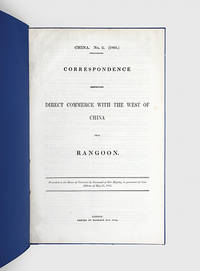
1876ref. 195373London: Eyre and Spottiswoode 1876. First edition of this collection of official documents and despatches concerning the expedition of Colonel Horace Browne launched to traverse China from west to east and consolidate the gains made by the Sladen expedition of 1868. Browne's party rendezvoused in Bhamo with the westward-travelling Augustus Margary whose murder soon after sparked a diplomatic crisis between Britain and China. Browne 1831-1914 whose most memorable feature was his large moustache left Calcutta in November 1874 and met Margary the following January. Continuing on to Yunnan the expedition encountered unexpected Chinese hostility. Scouting the route Margary and his local assistants were killed and Browne also coming under attack reversed course retreating to the safety of Rangoon. The ensuing crisis was settled by the 1876 Chefoo Convention which granted Britain further commercial concessions in China. Quarto 320 x 207 mm. Diagram and tables in text. Disbound gatherings sewn edges sprinkled green. Leaves foliated on recto. Generally clean: very good. unknown
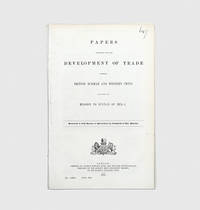
1865ref. 195501London: Printed by Harrison and Sons 1865. First edition containing several detailed reports of British expeditions undertaken in the early 1860s in search of a route into China via the Irrawaddy or Salween rivers. Among the papers is a long 1864 memorandum pp. 68-82 by Dr Clement Williams 1833-1879 the first political agent in Mandalay which draws on his explorations of the Irrawaddy. He argues strongly in favour of a trade route running by steamer along the river as far as Bhamo and onwards to Yunnan by road. Williams subsequently published Through Burmah to Western China 1868 and joined the Sladen Expedition of the same year. Two other accounts are by Lieutenants Gideon Colquhoun Sconce pp. 32-51 and C. E. Watson pp. 55-66 who both surveyed the upper course of the Salween between November 1863 and March 1864. Large quarto 321 x 204 mm. Tables in text. Recent blue limp card wrappers printed title label on front cover. Ex-All Souls College University of Oxford with its 19th-century ink stamp on list of papers; leaves foliated in pencil. Light foxing and creasing: very good. unknown
1942ref. GB0046CR3GMI3N01McGraw-Hill Book Company Inc 1942. Hardcover. Good. Missing dust jacket; Pages can have notes/highlighting. Spine may show signs of wear. ~ ThriftBooks: Read More Spend Less.Dust jacket quality is not guaranteed. McGraw-Hill Book Company, Inc hardcover
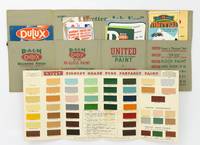
1950ref. 147809Sydney: Australasian United Paint Co. Ltd. and British Australian Lead Manufacturers Pty. Ltd 1950. First Edition. Hardcover. Fine. Sydney Australasian United Paint Co. Ltd. and British Australian Lead Manufacturers Pty. Ltd. circa 1950. A cloth folder 260 × 590 mm comprising 4 sections each with a pocket for brochures on the recto folding down to 260 × 150 mm containing an assortment of 10 contemporary colour cards brochures and leaflets see below with two-colour advertisements printed on the front cover panel and across the recto. Sewn limp waterproof cloth with cloth ties attached to the leading edge when folded; minimal signs of use; in excellent condition with all but one of the inserts in fine condition. There are four colour cards three containing a total of 78 mounted paint samples one with 32 printed samples all approximately 225 mm tall folding down to between 95 mm and 125 mm wide; a 20-page octavo booklet 'incorporating expert guidance on the use of all paint materials'; two small colour leaflets on paint products for the home; two leaflets on paints for steelwork; and a leaflet extolling the virtues of 'Decorators Heavy Bodied White' 'now weighs 32 lbs per gallon'. Australasian United Paint Co. Ltd., and British Australian Lead Manufacturers Pty. Ltd hardcover
ref. ANAIS-9284205107ICC. paperback. Good. 1.8x09x2.1. Buy with confidence. Excellent Customer Service & Return policy. ICC paperback
ref. 3848736527.Gpaperback. Good. Access codes and supplements are not guaranteed with used items. May be an ex-library book. paperback
ref. 153161051X.Ghardcover. Good. Access codes and supplements are not guaranteed with used items. May be an ex-library book. hardcover
1986ref. 035100Pasadena: Windsor Publications 1986. 1st Edition 1st Printing. Hardcover. Near Fine/Near Fine. Photographs Throughout. 288 Pp. Brown Cloth Gilt. Near Fine In Near Fine Price Clipped Dj No Wear Slight Fading To Background Color On Spine Inscribed By The Author In 1986 On Half Title With Second Owner's Name Beneath Dated 1994 And On Front Pastedown Under Front Flap. Windsor Publications hardcover
1925ref. 005924New York: John Wiley & Sons Inc. 1925. First Edition . Maroon Cloth. Very Good/No Dust Jacket. 9 1/4" High. Profusely Illustrated with Charts Diagrams and Photographs. 219 Clean Unmarked Pages. Red Cloth Gilt. First Printing With 1925 Date On Title Page. No Inscriptions. Corners And Bottom Of Spine Bumped. Top Of Spine Slightly Frayed. John Wiley & Sons, Inc. hardcover
2005ref. SONG0521857333Cambridge University Press 2005-09-05. 2003 ed. hardcover. Used: Good. 6.50x1.50x9.50. Buy with confidence. Excellent Customer Service & Return policy. Cambridge University Press hardcover
2003ref. SONG0521828538Cambridge University Press 2003-03-24. 2000 ed. hardcover. Used: Good. 6.25x1.25x9.50. Buy with confidence. Excellent Customer Service & Return policy. Cambridge University Press hardcover