[US DEPARTMENT OF COMMERCE] U SBiblio.com

16.533 resultados
1936ref. 44300Washington: Bureau of the Census 1936. 1936. 8 1/4" x 9" vanilla sheet folded in half to create 4 panels. Cover panel offers title and farming scene with various statistics on sides. 2-panel color map showing population by color. One page of facts and facts pertaining to Texas. A fascinating brochure. Light soiling and with light wear to extremities. Bureau of the Census, 1936. unknown
1939ref. 158Washington DC: United States Government Printing OFfice 1939. Second Edition. Cloth. Very good. Inserted maps and charts fold-out: Index Map: Coast and Geodetic Survey Charts 1939; U.S. Coast and Geodetic Survey Inside Route Key West to Rio Grande No. 1 1936 Florida and Gulf of Mexico; No. 2 1936 Gulf of Mexico: Sabine Pass to St. George Sound; No. 3 1936 Gulf of Mexico: coast of Texas. 8vo; vi 397pp; pale green buckram over board with black decorative border and title to front cover and spine stamped in black seal of Department of Commerce to back cover; purple stamp of Hydrographic Office Navy to front free endpaper; errata and updates with tipped in corrections at page; light green edges; light foxing to edges and cover light soiling to cover lightly cocked forward; binding tight maps all present and clean; very good. United States Government Printing OFfice unknown
1939ref. 158Washington DC: United States Government Printing OFfice 1939. Second Edition. Cloth. Very good. Inserted maps and charts fold-out: Index Map: Coast and Geodetic Survey Charts 1939; U.S. Coast and Geodetic Survey Inside Route Key West to Rio Grande No. 1 1936 Florida and Gulf of Mexico; No. 2 1936 Gulf of Mexico: Sabine Pass to St. George Sound; No. 3 1936 Gulf of Mexico: coast of Texas. 8vo; vi 397pp; pale green buckram over board with black decorative border and title to front cover and spine stamped in black seal of Department of Commerce to back cover; purple stamp of Hydrographic Office Navy to front free endpaper; errata and updates with tipped in corrections at page; light green edges; light foxing to edges and cover light soiling to cover lightly cocked forward; binding tight maps all present and clean; very good. United States Government Printing OFfice unknown books
1885ref. AQ35201Washington: Government Printing Office 1885. 438pp. Together with: US TRADE REPORTS. Reports of the commission appointed under an act of congress approved july 7 1884 "to ascertain and report upon the best modes of securing more intimate international and commercial relations between the united states and the several countries of central and south america." Washington. Government Printing Office 1886. First edition. 491pp 1. With two large folding maps to rear. 8vo. Modern burgundy cloth ruled and lettered in gilt to spine. Very lightly rubbed. Very occasional spotting; edges of some leaves browned. The sole edition of several collected reports of the United States government outlining the details of the appointment of a Central and South American Commission in July 1884 with the aim of improving international and commercial relations with the nations of Central and South America. The ventures of the Commission were addressed by President Chester A. Arthur as he delivered to Congress the Annual Message of the President on December 1 1884: 'The Central and South American Commission appointed by authority of the act of July 7 1884 will soon proceed to Mexico. It has been furnished with instructions which will be laid before you. They contain a statement of the general policy of the Government for enlarging its commercial intercourse with American States. The commissioners have been actively preparing for their responsible task by holding conferences in the principal cities with merchants and others interested in Central and South American trade.' . First edition. Government Printing Office hardcover
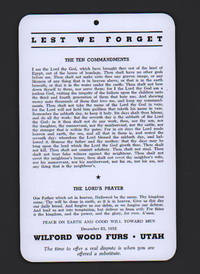
ref. 54790Trade card 3 3/4" x 6" The date listed is 1952 however this is most likely a reproduction. unknown books
ref. 166566S.l.n.d. in-4, 25 pp., dérelié. Petit manque à la page 5, sans atteinte au texte.
ref. 206898Valenciennes, Imprimerie de la veuve J.-B.-G. Henry, 1773 in-12, 252 pp., broché sous couverture d'attente de papier marbré, manque la première couverture.
ref. ORD-15394Paris. 15 Avril 1820. In-4 (199 x 251mm) broché, sans couverture, tel que paru, 18, (2) pages. Bel exemplaire.
1779ref. 11842Orléans, Veuve Rouzeau-Montaut, 1779. In-12 de [2]-VIII-394 pages, plein veau marbré brun, dos à nerfs orné de filets et fleurons dorés, pièce de titre bordeaux, filet doré sur les coupes, tranches rouge. Ex-libris de Béat Fidèle Antoine Jean Dominique de La Tour-Châtillon de Zurlauben, militaire et fameux histoirien suisse.
1935ref. 44871Vancouver: Vancouver Chamber of Commerce Evergreen Hotel 1935. 1935. WASHINGTON. First edition. 8 1/2" x 6" in pictorial wrappers showing Beacon Rock. 24 pp. Numerous photo illustrations illustrated ads maps 1 double-page centerfold pictorial map. Land promotion and local history of Vancouver Washington detailing city growth history and economic opportunities as the Great Depression receded. Light tanning to edge of front wrapper along with very light wear to the extremities as well as rubbing to spine. Very good. Vancouver Chamber of Commerce, Evergreen Hotel, 1935. unknown
1900ref. 858291900 Le Puy, Marchessou, 1900, in 8° broché, 231 pages ; couverture fanée, le plat inférieur manque.
ref. 209381Rouen, Imprimerie de I.-S. Lefevre, 1843 in-8, 16 pp., broché. Trace de crayon de couleur verte en page 4 seulement, datant vraisemblablement de l'époque.
ref. 116926Paris, Imprimerie de Selligue, 1830 in-8, 76 pp., bradel papier marbré (rel. moderne).
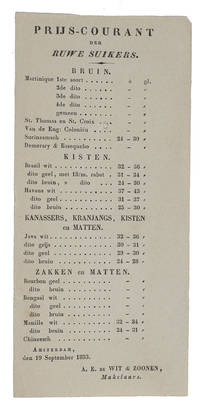
1721ref. LC4D1MQ3QGJ6Amsterdam 1721. 1 leaf 21 x 8 cm; 1 leaf 20.5 x 8 cm; 1 leaf 17.5 x 8 cm. Jacobus van Egmond Ad 1: Text printed on both sides each in a border built up from typographic ornaments. Ad 2: Text printed on one side. Ad 3: Text printed on one side. 3 documents. Ad. 1: Rare VOC ships manifest for cargo shipped from the East Indies - Batavia and Ceylon Sri Lanka - on 22 East-Indiamen sailing on 1 December 1720 from Batavia and on 15 November from Ceylon. The list includes more than 100 different colonial wares and gives the weights in pounds or the lengths in feet: from pepper more than 6.5 million pounds cloves 694000 pounds cinnamon 604000 pounds and coffee more than 1.77 million pounds to 962 pounds of Javanese cardamom some jewels and rariora and many feet of silk and linen cloth. Small wormhole affecting two characters otherwise in good condition.Ad. 2: Rare list of the results of the auctions of colonial wares organized in 1781 by the Chambers of the VOC Amsterdam 30 April 1781; Zeeland 7 May; Delft 15 May; Rotterdam 17 May; Hoorn 22 May; Enkhuizen 23 May including pepper cinnamon nutmeg etc. with the prices fetched. With a small tear not affecting the text. Still in good condition.Ad. 3: Price list of the various varieties of raw sugar: brown sugar from Martinique Surinam etc.; sugar packed in chests from Brazil Havana; in bales from Bengal Manilla etc.Small hole not affecting the text.l Ad. 1: cf. Landwehr VOC 1123-1134 other manifests. hardcover
1667ref. ABC_508101667. Ca. 23.5 x 26.5 cm and ca. 20 x 24 cm. With a woodcut decorated initial on each ordinance. Two closely related Dutch Republic broadsides both concerned with the suppression of fraud in the spice trade under the monopoly and protection of the Dutch East India Company. Together they form a vivid legal response to widespread commercial adulteration of imported spices particularly pepper nutmeg and mace reflecting both the economic importance and vulnerability of the Dutch spice trade in the 17th century. Both texts are issued as public ordinances intended for proclamation and posting throughout the provinces and both impose heavy fines and confiscation for violations alongside rewards for informants and penalties distributed between officials and local relief funds.The first proclamation from 16 September 1667 responds to reports of severely compromised pepper entering the Dutch Republic via England explicitly referencing the aftermath of the Great Fire of London. The text describes burnt pepper imported after the disaster which is said to retain only the outward appearance of pepper while being stripped of all quality and even emitting a foul smell. Authorities warn that such material is being mixed with genuine spice and sold fraudulently undermining both consumers and the reputation of the VOC.The second later and more extensive proclamation of 22 November 1669 significantly broadens the scope of earlier regulations. Rather than focusing solely on pepper it addresses systematic adulteration across a wide range of spices including pepper nutmeg mace and powdered spice residues. It describes the importation of dust powder and refuse of spices from abroad which are being reprocessed and mixed with genuine goods or artificially manipulated such as being moistened with water to increase weight and deceive buyers.The margins of both of the ordinances are cut short the first ordinance shows some browning and a minor tear. Otherwise in good condition. unknown
1667ref. ABC_508101667. Ca. 23.5 x 26.5 cm and ca. 20 x 24 cm. With a woodcut decorated initial on each ordinance. Two closely related Dutch Republic broadsides both concerned with the suppression of fraud in the spice trade under the monopoly and protection of the Dutch East India Company. Together they form a vivid legal response to widespread commercial adulteration of imported spices particularly pepper nutmeg and mace reflecting both the economic importance and vulnerability of the Dutch spice trade in the 17th century. Both texts are issued as public ordinances intended for proclamation and posting throughout the provinces and both impose heavy fines and confiscation for violations alongside rewards for informants and penalties distributed between officials and local relief funds.The first proclamation from 16 September 1667 responds to reports of severely compromised pepper entering the Dutch Republic via England explicitly referencing the aftermath of the Great Fire of London. The text describes burnt pepper imported after the disaster which is said to retain only the outward appearance of pepper while being stripped of all quality and even emitting a foul smell. Authorities warn that such material is being mixed with genuine spice and sold fraudulently undermining both consumers and the reputation of the VOC.The second later and more extensive proclamation of 22 November 1669 significantly broadens the scope of earlier regulations. Rather than focusing solely on pepper it addresses systematic adulteration across a wide range of spices including pepper nutmeg mace and powdered spice residues. It describes the importation of dust powder and refuse of spices from abroad which are being reprocessed and mixed with genuine goods or artificially manipulated such as being moistened with water to increase weight and deceive buyers.The margins of both of the ordinances are cut short the first ordinance shows some browning and a minor tear. Otherwise in good condition. unknown
Second edition, 110pp., pamphlet with a marbled paper spine. Hanson, 4813n; Goldsmiths', 7306.
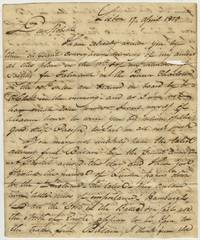
1813ref. BK0183Lisbon 1813. Autograph letter signed 3 pp. on a folded sheet with integral address panel to Messrs. Brown & Ives Providence Rhode Island and Newport "SHIP" and circular datestamps. 8 x 9 ¾ inches. Folded for mailing with considerable wear along the folds several tears and small losses including losses from opening the seal affecting scattered words. Good overall and substantially legible. A commercial letter written from Lisbon during the War of 1812 by "P. Falconer" probably the Baltimore merchant Peregrine Falconer. The identification remains somewhat tentative but the 1812 Baltimore directory lists Comegys Falconer & Co. merchants at 190 Baltimore Street while later Maryland Chancery records document the estate of Peregrine Falconer; Missouri archival records also document Falconer and Comegys and both "Perregrine" and "Perry" Falconer. Falconer was preparing to sail from Lisbon for Falmouth and writes Brown & Ives with the latest commercial and political intelligence reaching Portugal. He expected the widening European opposition to Napoleon to bring still more nations into the war then turned immediately to British policy toward American trade: "from the complexion of affairs that in the course of the Summer all the powers in Europe will be joined against France. If I am correctly informed a new duty of 6d. pr lb in addition is imposed in Britain upon American Cotton . Savannah Charleston & New York in a state of Blockade - this with the new duty has advanced the Price of Cotton .". The Russo-Prussian alliance had been concluded only weeks earlier Sweden joined the anti-Napoleonic alliance on March 24 and the coalition would continue to expand during the year. At the same time the English Parliament was debating additional duties on American cotton: on March 31 the government proposed sixpence per pound on American cotton imported in foreign vessels while Alexander Baring warned that American cotton carried by neutral ships would consequently bear a total duty of ninepence per pound. British naval pressure on the American coast was also rapidly increasing during the spring of 1813 trapping increasing amounts of American shipping in port. Falconer's letter thus records from Lisbon the immediate commercial relationship between the blockade British taxation and the price of American cotton. The war also forced Falconer to reconsider how Brown & Ives should communicate with him once he reached Britain. He gives explicit instructions intended to obscure their route: "I presume the only means of corresponding with Liverpool will be by the way of Lisbon. I have to request that you will write to me . frequently enclosing your letters under cover to Messrs. - & Brown without marking 'Via Lisbon' as letters coming from America are all opened in Britain." The remainder concerns the practical movement of merchants and shipping through the same wartime network including Falmouth and Liverpool passage arrangements vessels preparing to sail and convoying. Overall a useful merchant's-eye letter from the spring of 1813 with the blockade of American ports the British cotton duty the developing coalition against Napoleon and the routing of commercial correspondence all appearing as parts of the same Atlantic problem. . unknown
1813ref. BK0183Lisbon 1813. Autograph letter signed 3 pp. on a folded sheet with integral address panel to Messrs. Brown & Ives Providence Rhode Island and Newport "SHIP" and circular datestamps. 8 x 9 ¾ inches. Folded for mailing with considerable wear along the folds several tears and small losses including losses from opening the seal affecting scattered words. Good overall and substantially legible. A commercial letter written from Lisbon during the War of 1812 by "P. Falconer" probably the Baltimore merchant Peregrine Falconer. The identification remains somewhat tentative but the 1812 Baltimore directory lists Comegys Falconer & Co. merchants at 190 Baltimore Street while later Maryland Chancery records document the estate of Peregrine Falconer; Missouri archival records also document Falconer and Comegys and both "Perregrine" and "Perry" Falconer. Falconer was preparing to sail from Lisbon for Falmouth and writes Brown & Ives with the latest commercial and political intelligence reaching Portugal. He expected the widening European opposition to Napoleon to bring still more nations into the war then turned immediately to British policy toward American trade: "from the complexion of affairs that in the course of the Summer all the powers in Europe will be joined against France. If I am correctly informed a new duty of 6d. pr lb in addition is imposed in Britain upon American Cotton . Savannah Charleston & New York in a state of Blockade - this with the new duty has advanced the Price of Cotton .". The Russo-Prussian alliance had been concluded only weeks earlier Sweden joined the anti-Napoleonic alliance on March 24 and the coalition would continue to expand during the year. At the same time the English Parliament was debating additional duties on American cotton: on March 31 the government proposed sixpence per pound on American cotton imported in foreign vessels while Alexander Baring warned that American cotton carried by neutral ships would consequently bear a total duty of ninepence per pound. British naval pressure on the American coast was also rapidly increasing during the spring of 1813 trapping increasing amounts of American shipping in port. Falconer's letter thus records from Lisbon the immediate commercial relationship between the blockade British taxation and the price of American cotton. The war also forced Falconer to reconsider how Brown & Ives should communicate with him once he reached Britain. He gives explicit instructions intended to obscure their route: "I presume the only means of corresponding with Liverpool will be by the way of Lisbon. I have to request that you will write to me . frequently enclosing your letters under cover to Messrs. - & Brown without marking 'Via Lisbon' as letters coming from America are all opened in Britain." The remainder concerns the practical movement of merchants and shipping through the same wartime network including Falmouth and Liverpool passage arrangements vessels preparing to sail and convoying. Overall a useful merchant's-eye letter from the spring of 1813 with the blockade of American ports the British cotton duty the developing coalition against Napoleon and the routing of commercial correspondence all appearing as parts of the same Atlantic problem. . unknown books
1900ref. 70853Warrenton VA: Joseph A. Jeffries 1900. Small broadside 9 ½ x 6 inches printing a long advertising statement for the store "Restore your health keep your health and add to your comfort by placing your orders where you may be assured they will be conscientiously filled" signed in type at the end "Joseph A. Jeffries Practical Pharmacist. Jeffries 1840-1919 served in the 17th Virginia during the Civil War and ran the pharmacy under his own name 1877-1908. Apparently not recorded on OCLC. Old central fold else very good. Joseph A. Jeffries unknown
1900ref. 70853Warrenton VA: Joseph A. Jeffries 1900. Small broadside 9 ½ x 6 inches printing a long advertising statement for the store "Restore your health keep your health and add to your comfort by placing your orders where you may be assured they will be conscientiously filled" signed in type at the end "Joseph A. Jeffries Practical Pharmacist. Jeffries 1840-1919 served in the 17th Virginia during the Civil War and ran the pharmacy under his own name 1877-1908. Apparently not recorded on OCLC. Old central fold else very good. Joseph A. Jeffries unknown books
First edition, vi, [1], 26 pp., disbound. Kress, 4479; Goldsmith, 7700.
Third Edition, 35, [1] pp., modern marbled wrappers. Kress, 4538; Goldsmith, 7763.
27, [1]pp., final leaf stained, stitched as issued, uncut.
1851ref. 61963London: Longman Brown Green and Longmans 1851. First Edition. First printing. Octavo 21cm. Two volumes in brown cloth stamped in blind and gilt; blue and white printed endpapers with publisher's advertisements; xii244pp; vi248pp; 10 tinted lithographs some with hand coloring and 3 black and white lithographs. Errata slip in vol. I following contents. Binder's ticket of Remnant & Edmonds London to rear pastedown of vol. I. Ownership inscriptions of F. J. Young to front endpaper versos. Unfaded and straight frayed at spine ends vol. I with tear to cloth over rear joint and minor perforations to paper over interior hinges vol. II starting split to front joint short tears to cloth over both joints and short 2-in crack to rear hinge; occasional spots of browning but generally clean: Very Good. A Royal Naval officer's journals of visits to Dahomey a kingdom located in what is now southern Benin published with an antislavery intent: "It is the object of the author.to illustrate the dreadful slave hunts and ravages the annihiliations and exterminations consequent on this trade; and to bring prominently before the British public the sacred service they are rendering" through their efforts to halt the slave trade p.iv vol.I. NOT IN ABBEY. Longman, Brown, Green, and Longmans unknown