TAVERNIER , Jean BaptisteLivre Rare Book
8 615 résultats
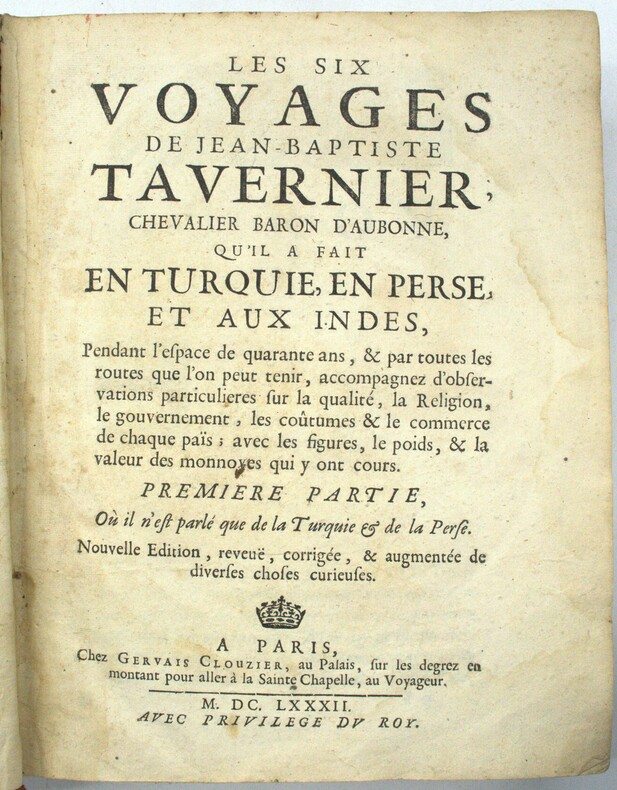
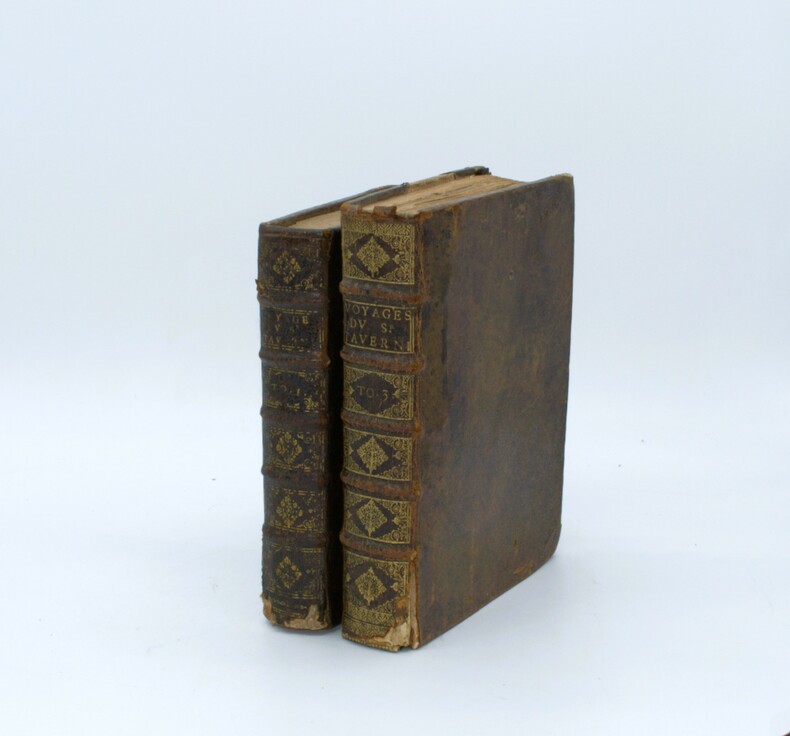
1676réf. PHO-1352A Paris, Chez Gervais Clouzier, 1676-79, 2 volume in-4 (sur 3),30pp.- 698pp.-8pp.-2ff.,8 ff., 72 pp., 1 f., 156 pp.,2 ff., 96 pp. , 1 f., 178 pp., tome 1 ,illustré de 6 planches (7) et tome 3 ; 12 cartes et planches (complet), relié plein veau époque , dos à nerfs ornés avec titre et tomaison , tranches mouchetées , coins , coiffes et coupes usés , début de fente, manque de matière , tome 1 plus petit avec quelques rousseurs , plan d’Erevan coupé court , déchirures aux plis ,réparation carte du Tunquin , manque le tome 2.
1680réf. PHO-1964Paris, chez Gervais Clouzier, 1682-1680, 3 volumes in-4 (246x195mm), 14ff.-636pp., 4ff.-481pp., 8ff.-72pp.-1f.-156pp.-1f.-96pp.-4ff.-1f.-178pp., Illustration : Tome 1 ; 7 planches (6 dépliantes) sur 8, Tome 2 ; 26 planches dont 15 de monnaies, 5 de pierres et 4 gravures dans le texte, Tome 3 ; 2 grandes cartes (Japon, 79x56cm et Tunquin, 56x41cm) et 8 planches dépliantes. Basane époque, dos à nerfs avec titre et tomaison, frottements, griffures et épidermures, Tome 1 ; accroc au plat, coiffe sup. absente, 2 coins usés, rousseurs, mouillure en coin puis en marge, planches avec déchirures sans manque, page 431 déchirée avec manque. Tome 2 ; fente au dos et charnière, coins usés, rousseurs et brunissures, 1 planche déchirée sans manque. Tome 3 ; coins usés, coiffes arasées, carte du Japon volante, déchirure carte du Tunquin, carte du Japon légèrement oxydée, petites rousseurs.
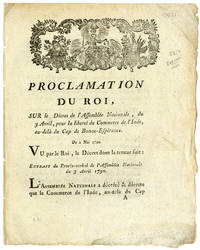
1790réf. 51521Rouen: L. Oursel 1790. With a Partially-Printed Letter Transmitting the French Revolutionary Proclamation Proclamation by the Revolutionary government of France abolishing the monopoly of the French East India Company on trade beyond the Cape of Good Hope and declaring it open to all Frenchmen. The Compagnie des Indes Orientales was established in 1664 to compete with the British and Dutch East India companies. It had considerable difficulty maintaining itself financially through its long history and it was finally liquidated in 1769. In 1785 it was reconstituted and granted a seven-year monopoly on trade beyond the Cape of Good Hope but the French Revolution and the democratic zeal that accompanied it put an end to that with the present decree. The brief proclamation is accompanied by a transmittal form from the Bureau Intermediane du Departement de Montivilliers indicating that one copy of the proclamation was sent to the recipient. Quarto on a folded folio sheet. Light wear and soiling. Very good. unknown
1790réf. 51521Rouen: L. Oursel 1790. With a Partially-Printed Letter Transmitting the French Revolutionary Proclamation Proclamation by the Revolutionary government of France abolishing the monopoly of the French East India Company on trade beyond the Cape of Good Hope and declaring it open to all Frenchmen. The Compagnie des Indes Orientales was established in 1664 to compete with the British and Dutch East India companies. It had considerable difficulty maintaining itself financially through its long history and it was finally liquidated in 1769. In 1785 it was reconstituted and granted a seven-year monopoly on trade beyond the Cape of Good Hope but the French Revolution and the democratic zeal that accompanied it put an end to that with the present decree. The brief proclamation is accompanied by a transmittal form from the Bureau Intermediane du Departement de Montivilliers indicating that one copy of the proclamation was sent to the recipient. Quarto on a folded folio sheet. Light wear and soiling. Very good. unknown books
1917réf. 57734Dallas TX: printed by Egan Printing Co. for the company 1917. Trade catalogue. Oblong 4to. 526 pp. Frontispiece trademark illustration and numerous other illustrations from line drawings and photographs. Padgitt Brothers Company was established in 1869 and incorporated in 1900; the company's success "in supplying the needs of the saddlery trade of the Southwest gave them first-hand knowledge of materials and design that were recognized as standard wherever good goods are sold." Their catalogues were "a veritable encyclopedia of saddlery facts classified for your convenience . there is no reason why this book should not prove a 'silent partner' in the success of every dealer who will utilize its pages freely." The profusely illustrated catalogue with pricing information is organized into sections for saddles and varieties of tack down to spurs buckles hobbles canvas wagon covers buggy tops blankets and feedbags. The Padgitt "Bronco Brand" saddle and accessories were widely known throughout the Southwest. OCLC locates two copies of this number National Cowboy & Western Heritage Museum San Jacinto Museum of History. Owner's name on front wrapper a very good copy. Printed green wrappers original printed cloth tape spine some soiling and chipping to wrappers tape repair to verso of rear wrapper chipping to margin of final blank. #6216. (printed by Egan Printing Co., for the company) unknown
1917réf. 57734Dallas TX: printed by Egan Printing Co. for the company 1917. Trade catalogue. Oblong 4to. 526 pp. Frontispiece trademark illustration and numerous other illustrations from line drawings and photographs. Padgitt Brothers Company was established in 1869 and incorporated in 1900; the company's success "in supplying the needs of the saddlery trade of the Southwest gave them first-hand knowledge of materials and design that were recognized as standard wherever good goods are sold." Their catalogues were "a veritable encyclopedia of saddlery facts classified for your convenience . there is no reason why this book should not prove a 'silent partner' in the success of every dealer who will utilize its pages freely." The profusely illustrated catalogue with pricing information is organized into sections for saddles and varieties of tack down to spurs buckles hobbles canvas wagon covers buggy tops blankets and feedbags. The Padgitt "Bronco Brand" saddle and accessories were widely known throughout the Southwest. OCLC locates two copies of this number National Cowboy & Western Heritage Museum San Jacinto Museum of History. Owner's name on front wrapper a very good copy. Printed green wrappers original printed cloth tape spine some soiling and chipping to wrappers tape repair to verso of rear wrapper chipping to margin of final blank. #6216. (printed by Egan Printing Co., for the company) unknown books
1698réf. PHO-1906London, Chiswell, 1698. In-folio (310x210mm) relié plein veau époque, dos à nerfs, x, xiii, 427, xxiv pp., illustré d’un frontispice, de 5 planches hors-texte dont 3 dépliantes et de 3 cartes, plats détachés, petit trou page 81/82, manque de papier en marge page 80. Titre imprimé en rouge et noir. Fryer était un chirurgien au service de la compagnie des Indes Orientales, pendant 9 ans il voyagea extrêmement des côtes de Coromandel et malabar. Il décrivit les villes de Surat et Bombay le commerce et les coutumes de Madras et de la Perse. Très RARE. Folio, full period paneled calf, boards and free enpaper detached, x, xiii, 427, xxiv pp., illus. with engraved frontispiece portrait of the author, 5 engraved plates (3 folding) and 3 maps, one with printed overslip; title in red and black, woodcut illustrations in text.
1900réf. 263502Lyon France: J. Bouvard & Cie 20 Rue Lafont 1900. 14 thick card sheets with samples centrally mounted vertically to recto and verso some sheets quite thick to accommodate larger epaulets each with manuscript notations of name size etc. 11-3/4 x 6-3/4 inches. Black cloth album with the printed label of "J. Bouvard et Cie Fabrique de Dorures Soireries Ornaments d'Eglise" to front paste-down. Some wear commensurate with age and use spotting and thumbsoiling apparently complete with all samples backing possibly restored at an early date. 14 thick card sheets with samples centrally mounted vertically to recto and verso some sheets quite thick to accommodate larger epaulets each with manuscript notations of name size etc. 11-3/4 x 6-3/4 inches. This very unusual French sample book contains a large range of epaulets and sequin samples with a few lettering and star samples. J. Bouvard & Cie 20, Rue Lafont unknown
1900réf. 263502Lyon France: J. Bouvard & Cie 20 Rue Lafont 1900. 14 thick card sheets with samples centrally mounted vertically to recto and verso some sheets quite thick to accommodate larger epaulets each with manuscript notations of name size etc. 11-3/4 x 6-3/4 inches. Black cloth album with the printed label of "J. Bouvard et Cie Fabrique de Dorures Soireries Ornaments d'Eglise" to front paste-down. Some wear commensurate with age and use spotting and thumbsoiling apparently complete with all samples backing possibly restored at an early date. 14 thick card sheets with samples centrally mounted vertically to recto and verso some sheets quite thick to accommodate larger epaulets each with manuscript notations of name size etc. 11-3/4 x 6-3/4 inches. This very unusual French sample book contains a large range of epaulets and sequin samples with a few lettering and star samples. J. Bouvard & Cie 20, Rue Lafont unknown books
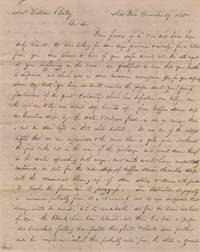
1835réf. BK0025New York City 1835. Autograph letter signed by the merchant firm Baker & Moore 4 pp. addressed to General William Battey care of Dr. Charles Luzenberg at the Franklin Infirmary on the Pontchartrain Railroad New Orleans. Stampless folded letter with red circular "NEW-YORK" December 31 datestamp and manuscript "25" rate. Appx. 1000 words. File folds; otherwise very good. A lengthy commercial letter written thirteen days after the Great Fire of New York describing the destruction of the city's mercantile district and tracing its immediate effects through insurance capital banking commodity prices and trade with New Orleans. Written by the New York firm of Baker & Moore to their associate William Battey the letter provides a near-contemporary account of the fire an assessment of the city's financial resilience and instructions for exploiting the resulting fluctuations in the markets for brandy wine raisins tobacco iron and copper. The fire began on the evening of December 16 during an extraordinary cold spell and northwest gale. Frozen hydrants wells cisterns and hoses left the city's volunteer fire companies largely unable to contain it. By the following day the fire had destroyed much of the commercial district between Wall Street and the East River including the Merchants' Exchange and hundreds of stores and warehouses. Buildings were eventually demolished with gunpowder to create firebreaks at Exchange Place and Coenties Slip. Contemporary estimates varied but approximately 674 buildings were destroyed with losses eventually placed at twenty million dollars or more.1 Baker & Moore begin by describing the extent of the burned district the severe weather and the use of explosives to arrest the flames: "Since my last you have no doubt received the paper sent you giving particulars of the great calamity which has befallen our City. On the 16th our City was about half burned up. From Coffee House Slip to Coenties Slip by the water & William Street is all in ruins. There is but one store left in that whole district. It was one of the coldest nights that we ever experienced & the wind blew a gale from Northwest. The fire broke out in the rear of the Exchange and went down through to the water spreading both ways and would have undoubtedly continued on but for the wide slips of Coffee House & Coenties Slip with the occasional blowing up of some stores & houses with powder to check the flame in its progress" The account quickly turns from the physical destruction to the distribution of its financial losses: "The destruction of property is immense probably from 10 to 15000000$ and it was supposed that many would be ruined but tis remarkable so far we have not heard of one. The Banks have been liberal and there has been a proper and benevolent feeling manifested throughout & should some further aid be brought in which probably will from the State or general government we think there may be no failures. The Insurance companies most of them are ruined and the principal loss is in Insurance capital. The loss will in some instances fall upon those who cannot well afford it. Many widows & orphans have had their all taken from them. The loss is large and New York has met with a great calamity but she is made of such materials & her facilities are so large & varied that the mercantile community will bear up under more than any other place in the Union & we think in one year's time it will be almost forgotten." The confidence expressed here correctly anticipated the city's rapid commercial recovery. Banks and government agencies extended credit and payment terms rebuilding began almost immediately and the burned district was reconstructed with new countinghouses and warehouses. The disaster also exposed the inadequacy of New York's water supply and firefighting arrangements contributing to later infrastructure and institutional reforms. Baker & Moore then apply the disaster to their own trade with New Orleans. Hundreds of warehouses and their contents had been destroyed increasing prices of imported foods wines and spirits. The firm instructs Battey to use the New York price current to obtain higher prices for their consignments: "This fire has advanced most all kinds of goods. Raisins are worth here $3-$3½. Wines such as Mess. Eastman's have advanced with us 4-6 cents. So many hundred casks destroyed must advance it and make it higher through the season. More than one half the Brandy was consumed tis now selling at $1.75 and some are asking $2. We wish what we sent you sold & this will be a favorable time to sell-show N.Y. price current-and get as good a price as you can. There will we think be no want of Brandy. Those raisins we think you had better dispose of at once. We think from N.O. current must pay something handsome for us. In regard to old Iron we find good old iron will always sell for the money for 112½ gross hundred equal to 1c per lb. Cast & wrought are same price. If you can come across a lot to do you may make it answer & pay us well. Copper if you can buy low enough may pay something. We thought hay might pay out but tis so high we cannot buy to send. We are of opinion that goods generally will be higher in consequence of this fire yet when we consign goods we wish them sold when they can to pay and we wish Eastman & Co. to sell and close up our affairs in their hands." The concluding paragraph briefly introduces events in Florida. The Second Seminole War had begun that month following mounting resistance to the forced removal of the Seminole people from Florida. Baker & Moore believed that the conflict might affect the movements of a brig expected in New Orleans: "We observe that trouble is anticipated with the Indians in Florida & if so our Brig may not get a load of them & be in N. Orleans earlier than we anticipated tis uncertain what will be the result they may detain her longer until they can get them on board." The wording appears to indicate that the vessel was expected to transport a group of Native people although the letter does not identify the brig its owners or the precise circumstances of the contemplated voyage. The recipient General William Battey was then in New Orleans apparently acting as Baker & Moore's commercial representative while also attending to his health at the Franklin Infirmary. The firm gave him considerable discretion to supervise consignments collect funds purchase goods when opportunities arose and forward current market information to New York. The address places him in the care of Dr. Charles Aloysius Luzenberg who founded the Franklin Infirmary with municipal support in 1835 and subsequently helped establish the Medical College of Louisiana the forerunner of Tulane's medical school.2 Baker & Moore appear to have been commission or importing merchants whose own affairs escaped direct damage but whose trade was immediately altered by the destruction of competing inventories. The letter thus follows the fire from the burned commercial district into the decisions of a New York firm and its representative in New Orleans. A substantial contemporary account of the Great Fire of 1835 documenting the destruction of New York's commercial center and the disaster's immediate movement through insurance banking commodity markets interregional credit and trade with New Orleans. We find no similar examples on the secondary market or in auction records. 1 Herbert Asbury "The Great Fire of 1835" The New Yorker July 26 1930. 2 Louisiana Historical Association "Luzenberg Charles Aloysius" in Dictionary of Louisiana Biography accessed August 2 2026 https://www.lahistory.org/resources/dictionary-louisiana-biography/dictionary-of-louisiana-biography-l/. . unknown
1835réf. BK0025New York City 1835. Autograph letter signed by the merchant firm Baker & Moore 4 pp. addressed to General William Battey care of Dr. Charles Luzenberg at the Franklin Infirmary on the Pontchartrain Railroad New Orleans. Stampless folded letter with red circular "NEW-YORK" December 31 datestamp and manuscript "25" rate. Appx. 1000 words. File folds; otherwise very good. A lengthy commercial letter written thirteen days after the Great Fire of New York describing the destruction of the city's mercantile district and tracing its immediate effects through insurance capital banking commodity prices and trade with New Orleans. Written by the New York firm of Baker & Moore to their associate William Battey the letter provides a near-contemporary account of the fire an assessment of the city's financial resilience and instructions for exploiting the resulting fluctuations in the markets for brandy wine raisins tobacco iron and copper. The fire began on the evening of December 16 during an extraordinary cold spell and northwest gale. Frozen hydrants wells cisterns and hoses left the city's volunteer fire companies largely unable to contain it. By the following day the fire had destroyed much of the commercial district between Wall Street and the East River including the Merchants' Exchange and hundreds of stores and warehouses. Buildings were eventually demolished with gunpowder to create firebreaks at Exchange Place and Coenties Slip. Contemporary estimates varied but approximately 674 buildings were destroyed with losses eventually placed at twenty million dollars or more.1 Baker & Moore begin by describing the extent of the burned district the severe weather and the use of explosives to arrest the flames: "Since my last you have no doubt received the paper sent you giving particulars of the great calamity which has befallen our City. On the 16th our City was about half burned up. From Coffee House Slip to Coenties Slip by the water & William Street is all in ruins. There is but one store left in that whole district. It was one of the coldest nights that we ever experienced & the wind blew a gale from Northwest. The fire broke out in the rear of the Exchange and went down through to the water spreading both ways and would have undoubtedly continued on but for the wide slips of Coffee House & Coenties Slip with the occasional blowing up of some stores & houses with powder to check the flame in its progress" The account quickly turns from the physical destruction to the distribution of its financial losses: "The destruction of property is immense probably from 10 to 15000000$ and it was supposed that many would be ruined but tis remarkable so far we have not heard of one. The Banks have been liberal and there has been a proper and benevolent feeling manifested throughout & should some further aid be brought in which probably will from the State or general government we think there may be no failures. The Insurance companies most of them are ruined and the principal loss is in Insurance capital. The loss will in some instances fall upon those who cannot well afford it. Many widows & orphans have had their all taken from them. The loss is large and New York has met with a great calamity but she is made of such materials & her facilities are so large & varied that the mercantile community will bear up under more than any other place in the Union & we think in one year's time it will be almost forgotten." The confidence expressed here correctly anticipated the city's rapid commercial recovery. Banks and government agencies extended credit and payment terms rebuilding began almost immediately and the burned district was reconstructed with new countinghouses and warehouses. The disaster also exposed the inadequacy of New York's water supply and firefighting arrangements contributing to later infrastructure and institutional reforms. Baker & Moore then apply the disaster to their own trade with New Orleans. Hundreds of warehouses and their contents had been destroyed increasing prices of imported foods wines and spirits. The firm instructs Battey to use the New York price current to obtain higher prices for their consignments: "This fire has advanced most all kinds of goods. Raisins are worth here $3-$3½. Wines such as Mess. Eastman's have advanced with us 4-6 cents. So many hundred casks destroyed must advance it and make it higher through the season. More than one half the Brandy was consumed tis now selling at $1.75 and some are asking $2. We wish what we sent you sold & this will be a favorable time to sell-show N.Y. price current-and get as good a price as you can. There will we think be no want of Brandy. Those raisins we think you had better dispose of at once. We think from N.O. current must pay something handsome for us. In regard to old Iron we find good old iron will always sell for the money for 112½ gross hundred equal to 1c per lb. Cast & wrought are same price. If you can come across a lot to do you may make it answer & pay us well. Copper if you can buy low enough may pay something. We thought hay might pay out but tis so high we cannot buy to send. We are of opinion that goods generally will be higher in consequence of this fire yet when we consign goods we wish them sold when they can to pay and we wish Eastman & Co. to sell and close up our affairs in their hands." The concluding paragraph briefly introduces events in Florida. The Second Seminole War had begun that month following mounting resistance to the forced removal of the Seminole people from Florida. Baker & Moore believed that the conflict might affect the movements of a brig expected in New Orleans: "We observe that trouble is anticipated with the Indians in Florida & if so our Brig may not get a load of them & be in N. Orleans earlier than we anticipated tis uncertain what will be the result they may detain her longer until they can get them on board." The wording appears to indicate that the vessel was expected to transport a group of Native people although the letter does not identify the brig its owners or the precise circumstances of the contemplated voyage. The recipient General William Battey was then in New Orleans apparently acting as Baker & Moore's commercial representative while also attending to his health at the Franklin Infirmary. The firm gave him considerable discretion to supervise consignments collect funds purchase goods when opportunities arose and forward current market information to New York. The address places him in the care of Dr. Charles Aloysius Luzenberg who founded the Franklin Infirmary with municipal support in 1835 and subsequently helped establish the Medical College of Louisiana the forerunner of Tulane's medical school.2 Baker & Moore appear to have been commission or importing merchants whose own affairs escaped direct damage but whose trade was immediately altered by the destruction of competing inventories. The letter thus follows the fire from the burned commercial district into the decisions of a New York firm and its representative in New Orleans. A substantial contemporary account of the Great Fire of 1835 documenting the destruction of New York's commercial center and the disaster's immediate movement through insurance banking commodity markets interregional credit and trade with New Orleans. We find no similar examples on the secondary market or in auction records. 1 Herbert Asbury "The Great Fire of 1835" The New Yorker July 26 1930. 2 Louisiana Historical Association "Luzenberg Charles Aloysius" in Dictionary of Louisiana Biography accessed August 2 2026 https://www.lahistory.org/resources/dictionary-louisiana-biography/dictionary-of-louisiana-biography-l/. . unknown books
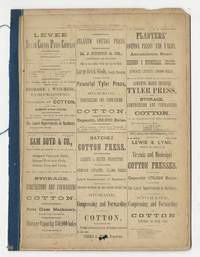
1880réf. 1631880. Photo album; Albumen prints 30; Each 5 3/4 x 4 inches An interesting and unusual album consisting of photographic reproductions of all four pages from the September 1 1880 issue followed by all 26 pages of the Annual Review of Commercial New Orleans published as a supplement on the same day. The photographs chronicle an immense amount of advertisements for the business houses stores and companies active in New Orleans at the time including ads for photographers T. Lilienthal and W. W. Washburn. Also present are ads for various insurance agencies and banks; dealers and importers of everything from musical instruments barbed wire French plate mirrors and fireworks to furniture books stationary and dry-goods; and of course odd-ball promotions for bizarre 19th-century miracle cures such as "Kidnegen: The Great Kidney Regulator and Ditretic" and Reed's Tonic "a thorough remedy in every case of Malarial fever." Also advertised are products and companies still recognized today such as Lea and Perrins Genuine Worcestershire sauce and Procter & Gamble Soaps. At least 2 pages are dedicated solely to the Cotton trade in the region and dealers in "Plantation Machinery." Meandering in-between the company advertisements are brief reports on the current state of trade in all manner of business sectors; Lumber Freight Paper-making Leather manufacturing Land prices Mineral resources and many many more. The greatest mystery here is why the album was produced in the first place; perhaps as a means to later reproduce the list of businesses--a sort of Yellow Pages. It is fairly likely that the photographs were produced by either Lilienthal or Washburn due to their inclusion in the directory. Another point of curiosity is the size of the album. While the minuscule text is mostly legible under magnification the miniature quality of the advertisements does not exactly suggest every day use! The photographs are mounted recto/verso to 15 cards which were formerly attached to the present gilt-decorated morocco album. The cloth hinges have fully deteriorated and the cards are loose and collated in order. unknown
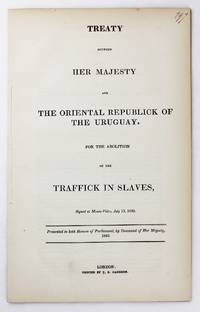
1842réf. 6316London: T.R. Harrison 1842. Near fine. 38pp. stitched. Very minor bumps to top edge of first leaf light dust-soiling to outer leaves. A very rare treaty between Queen Victoria’s Britain and the “Oriental Republick of the Uruguay” printed in both English and Spanish in two parallel columns throughout. According to the text the parties were “mutually animated by a sincere desire to co-operate for the utter extinction of the barbarous Traffick in Slaves.for the special purpose of immediately attaining this object so far as relates to the total and final abolition of the Slave Trade of the Oriental Republick of the Uruguay.” The treaty is comprised of fourteen original articles plus three annexes totaling forty-six additional articles and four additional articles at the end covering a host of issues pertaining to the suppression of the slave trade. These issues included enforcement procedures the establishment of “Mixed Courts of Justice” “Regulations in respect to treatments of liberated negroes” and much more. With regard to slaves found on international vessels the two nations hoped for “permanent good treatment and a full and complete emancipation according to the humane intentions of the Parties of the Treaty.” The present treaty was part of a larger effort by the British Crown to put an end to the transatlantic slave trade in the first half of the 19th century; at this same time Britain had reached terms on a similar treaty with the Republic of Texas and other nations. The document is signed at the end in type by J.H. Mandeville and Jose Ellauri representatives of the two countries who originally signed the treaty at Montevideo on July 13 1839; the present work was “Presented to both Houses of Parliament by Command of Her Majesty” in 1842 likely due to bureaucratic delays. Uruguay would have been an important ally for Great Britain in monitoring the seas against the transatlantic slave trade given its position opposite the South Atlantic Ocean from West Africa. OCLC records just a single physical copy of this treaty at the University of Arizona. Cundall 2854. T.R. Harrison unknown
1842réf. 6316London: T.R. Harrison 1842. Near fine. 38pp. stitched. Very minor bumps to top edge of first leaf light dust-soiling to outer leaves. A very rare treaty between Queen Victoria’s Britain and the “Oriental Republick of the Uruguay” printed in both English and Spanish in two parallel columns throughout. According to the text the parties were “mutually animated by a sincere desire to co-operate for the utter extinction of the barbarous Traffick in Slaves.for the special purpose of immediately attaining this object so far as relates to the total and final abolition of the Slave Trade of the Oriental Republick of the Uruguay.” The treaty is comprised of fourteen original articles plus three annexes totaling forty-six additional articles and four additional articles at the end covering a host of issues pertaining to the suppression of the slave trade. These issues included enforcement procedures the establishment of “Mixed Courts of Justice” “Regulations in respect to treatments of liberated negroes” and much more. With regard to slaves found on international vessels the two nations hoped for “permanent good treatment and a full and complete emancipation according to the humane intentions of the Parties of the Treaty.” The present treaty was part of a larger effort by the British Crown to put an end to the transatlantic slave trade in the first half of the 19th century; at this same time Britain had reached terms on a similar treaty with the Republic of Texas and other nations. The document is signed at the end in type by J.H. Mandeville and Jose Ellauri representatives of the two countries who originally signed the treaty at Montevideo on July 13 1839; the present work was “Presented to both Houses of Parliament by Command of Her Majesty” in 1842 likely due to bureaucratic delays. Uruguay would have been an important ally for Great Britain in monitoring the seas against the transatlantic slave trade given its position opposite the South Atlantic Ocean from West Africa. OCLC records just a single physical copy of this treaty at the University of Arizona. Cundall 2854. T.R. Harrison unknown books
1920réf. 18053Frankfort NY ca1920. Leatherette string tied albums. . Very good; some wear to the leatherette bindings. Oblong 4to appx. 200 8 x 10 inch photographs. One volume with brief type written text descriptions of the machines on the verso of each photograph. A superb road construction machinery catalog illustrated with original 8 x 10 inch photographs. The catalog includes many different types of exotic equipment not normally depicted in such catalogs e.g. belt-hoists conveyors crushers roller screens scrapers etc. There are also occasional pencil notes on the verso with prices. Also included in the notes are some of the American locations where Acme equipment was in use. hardcover books
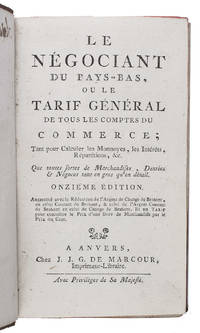
1780réf. 95L94ST53226Antwerp 1780. 12mo. Johannes Judocus Gerardus de Marcour Contemporary mottled tanned sheepskin gold-tooled spine with olive title-label red edges. XXIII 1 543 1 pp. Corrected and augmented eleventh edition of a handbook for merchants and traders in the Southern Netherlands here in a French edition but also available in Dutch Den Nederlandschen negociant . All editions appear to be very rare. It consists of numerous tables giving information for the conversion of monetary units weights and measures.The privilege p. XXIV is issued in the name of Maria Theresa who died in 1780 and De Marcour was active from 1764 to 1797. The many unnumbered editions no doubt confused publishers who probably numbered their editions to follow the highest number they had seen: the University of Kansas has a ninth edition Liege 1784 the Hendrik Conscience library a ninth Antwerp De Marcour 1792; ; and there is a tenth Antwerp Grangé 1798.With some early 19th-century annotations on endpapers. Spine slightly rubbed one leaf party detached but otherwise in very good condition.l Groote Vijftig jaar boekdrukkunst te Antwerpen p. 31; Anet 3 copies; STCV 1 of the same copies; WorldCat 2 of the same copies. unknown
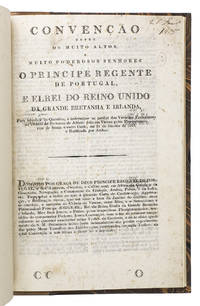
réf. ABC_48887Lisbon: Na Impressão Regia 1815. Modern half calf marbled paper sides with the title and year of publication lettered in gold on the spine. Small folio ca. 28.5 x 18 cm. With the text printed in two columns in Portuguese on the left and in English on the right. Very rare first Portuguese edition of this treaty between Portugal and the United Kingdom of Great Britain and Ireland concerning the indemnification of Portuguese subjects for certain detained slave trade vessels as a result of British actions undertaken in pursuit of the abolition of the slave trade. "Britain agreed to pay compensation for the several Portuguese slavers detained brought before and condemned by British courts on the ground of illegal slave-trading along the African coast prior to 1814" J.P. van Niekerk "British Portuguese and American judges in Adderley Street ." pp. 22-23. Another edition of this same treaty in 8 pages was printed in the same year in Rio de Janeiro with the complete imprint including the place of publication.The present bilateral treaty comprising three articles printed in two columns in Portuguese and English was drafted on 21 January 1815 during the Congress of Vienna a series of international diplomatic meetings held in Vienna from September 1814 to June 1815 concerning the new layout of the European political and constitutional order after the downfall of the French Emperor Napoleon Bonaparte. The signatories of the present treaty were plenipotentiary at the Congress of Vienna formally this treaty was concluded between the Prince Regent of Portugal - future King John VI 1767-1826 - and the King of Great Britain and Ireland George III 1738-1820 as mentioned in the title.A more detailed description is available upon request.With the book plate of "Biblioteca de Hariberto de Miranda Jordão Filho" mounted on the front pastedown. The text leaves with a vague horizontal and vertical fold in the centre a manuscript annotation "21 Janeiro 1815" in brown ink in the upper outer corner of the first page some foxing. Otherwise in good condition.l Gauz Portuguese and Brazilian books in the JCB 815/10; Porbase 3240734 1 copy; WorldCat 1042407673 12791342 38346960 4 copies; cf. Camargo & Moraes Bibl. da Impressão Régia do Rio de Janeiro I 428; Rodrigues 735 & 737 Rio de Janeiro ed.; for more context relating to the treaty: Lesaffer R. "Vienna and the Abolition of the Slave Trade" Oxford Public International Law online via: https://opil.ouplaw.com/page/498; Niekerk J.P. van "British Portuguese and American judges in Adderley Street: the international legal background to and some judicial aspects of the Cape Town Mixed Commissions for the suppression of the transatlantic slave trade in the nineteenth century Part 1" in: The Comparative and International Law Journal of Southern Africa Vol. 37 No. 1 March 2004 pp. 1-39. online via: https://journals.co.za/doi/pdf/10.10520/AJA00104051_114. Na Impressão Regia, unknown
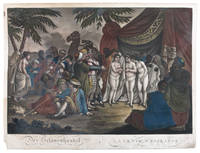
1800réf. I7DD3T6LJ6QQNo place 1800. 27 x 40 cm. Aquatint in contemporary hand colour engraved by "J. L. T." after "J. R. P." Three partly exposed women before a large tent being advertised and inspected by several men dressed in fine oriental garb. On the left is another woman whose price is under discussion while the background shows date palms and two dromedaries.Rather severe water stains and a few small holes in the blank margin; some scuff marks in the image; trimmed closely with loss to lower left corner. A very appealing print. Rare. unknown
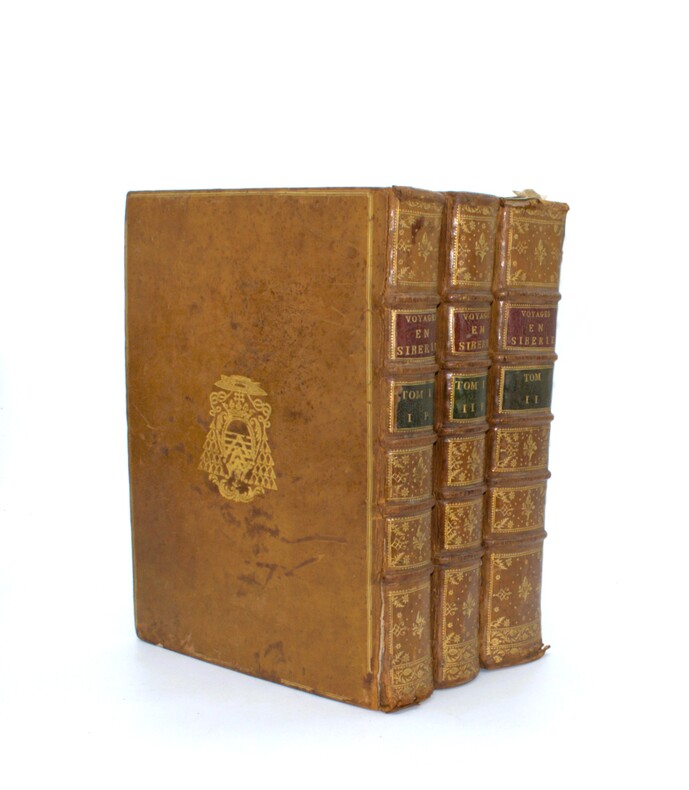
1768réf. PHO-2449Paris, Chez DEBURE père, 1768, 3 volumes in-folio (sur 4) (35x26cm), 3ff.-XXX-347pp., 1f.-348pp.-767pp., X-627pp.-2ff., plein veau glacé lavallière, dos à nerfs, caissons ornés de fleurons dorés, pièces de titre et de tomaison en maroquin rouge et vert, plats frappés aux armes de Dominique de la Rochefoucauld dans un triple encadrement doré, toutes tranches dorées, double filet doré sur les coupes, frise intérieure, doublures et gardes de papier marbré (reliure de l'époque). Épidermures, coiffes abimées, coins usés certains avec manque, charnières fendillées, quelques cahiers brunis, très petite mouillure marginale au tome 2 sur quelques feuillets.
réf. 221218Genève, Jean-Léonard Pellet, 1780 10 vol. in-8 et 1 atlas in-4, veau fauve marbré, dos lisse orné, pièce de titre et de tomaison de maroquin rouge et vert, tranches marbrées, demi-veau fauve marbrée, dos lisse orné, tranches rouges pour l'atlas (reliure de l'époque). Restaurations sur certains plats, quelques épidermures. Coiffe absente et coins usés pour l'atlas. Quelques rousseurs.
1823réf. PHO-2335Paris, Ponthieu, Lesage, Gide fils, 1823. 2 volumes in-8, xlix, [1]. 344 ; [4], 407 pp., relié demi basane époque, dos lisse orné avec pièce de titre et tomaison, coiffes abimées, petits manques au dos, coins usés, frottements, manque la mappemonde Chadenat, n°1196. - Forbes, n°569. - Sabin, n°73149.
1875réf. 20118New York: J L Mott Iron Works 1875 / 1877. First Editions. The catalog of 1875 is in its original printed limp black cloth gilt stamped publisher's binding; the Supplement is as issued - a printed title wrapper. Both contained within a custom made portfolio with cloth ties. Very good; neatly rebacked; occasional marginal tears; one endpaper with modest chipping at the fore-edge. Folio. 2 132 pp.; Supplement - 8 pp. The catalogs measure appx. 54 x 38 cm. Both are lavishly illustrated throughout; printed on glazed paper. A stunning large format catalog for all kinds of garden ornaments - for public and private use. There are also several pages for stable equipment lamps aquariums garden seating planters etc. Mott was a manufacturer of all kinds of metal goods and plumbing supplies. McKinstry citing only much later printings of smaller catalogs; Romaine p. 258 - citing a much later printing of this garden ornament catalog in the same large format as a "masterpiece". J L Mott Iron Works hardcover books
réf. 006865New York : Commerce Clearing House 1913-1986 1986. Hardcover. Fine/No Jacket. 91 volumes ; A nearly complete run from 1913-1986 ; almost 75 years of tax litigation history ; At head of title: CCH./ Published: Chicago IL : CCH Incorporated / Accompanied by separately numbered Consolidated volumes vol. 1 1913/1929-v. 5 1917/1940 published 1938-1940 which make available in permanent bound form the opinions originally reproduced and reported in the publisher's "court decisions" division of Standard federal tax service./ "The fifth vol. of the consolidated vols. presents court decisions handed down under the excess profits tax statutes which were effective from 1917 to 1921."--Foreword to v. 5 ; LC: KF6280.A2; HJ3251.A39; Dewey: 343/.73/0402643 ; OCLC: 3157871 ; ISSN: 0277-402X; Other format's ISSN: 1084-0125; National Library: 011150635; LCCN: 37-1000 ; without vols. for 79-2 80-2 81-83 84-1 and duplicates of 74 & 75-1 ; As published in book form we must point out that this set can be used without electricity computers or the internet! ; A fine first impression for anyone entering a law office ; or could make a great stage prop ; FINE New York : Commerce Clearing House, 1913-1986 hardcover
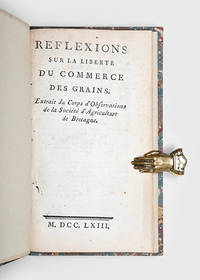
1763réf. 1730471763. Grain policy in the ancien régime First edition of this exceptionally scarce economic tract on the grain trade. We trace only two institutional copies worldwide: at the University of Chicago and the BnF. The recent spine label attributes this work to Louis Paul Abeille 1719-1807 an early convert to physiocracy and a friend of Quesnay and Mirabeau. Abeille served as secretary of commerce under Louis XV & XVI from 1769-83. A series of subsistence crises brought concerns over public access to grain to the forefront of French economic debate in the mid-18th century. In the absence of public granaries government policy was to regulate more strictly the distribution of grain by private commercial interests but periodic subsistence crises revealed the inadequacy of this policy. Over the next decade the physiocrats continued to promote deregulation of the grain trade which contributed to spiralling prices and the Flour War of 1775. The attribution to Abeille is presumably based on his publication in 1760 of the Corps d'observations de la Société d'agriculture de commerce et des arts établie par les États de Bretagne années 1757 & 1758 which brought him to the attention of Quesnay and Mirabeau in Paris. Abeille was the secretary of the Agricultural Society of Brittany a learned society for agricultural improvement. Duodecimo 159 x 92 mm. Recent marbled paper boards gilt label to spine edges sprinkled red. Minor foxing and browning: a very good copy. Not in Black Goldsmiths' or Kress. hardcover
1663réf. PHO-2278A Paris, chez Jacques Langlois, 1663-1666 3 parties en 1 volumes in-folio (38x25cm). Veau tacheté époque, dos à nerfs ornés avec pièce de titre en maroquin et tomaison, tranches jaspées rouges. Réparations au dos et coins, mouillure, quelques rousseurs, réparation au titre, renforcement à la carte. Complet de ses relations de voyage selon Brunet & Camus