LAW (John)Livre Rare Book

8 615 résultats
réf. 17699La Haye, Jean Neaulme, 1720. In-12, [8]-187-[19] pp. 1 pl., veau marbré fauve de l'époque, triple filet doré en encadrement sur les plats cantonnés de fleurons dorés, dos lisse orné de caissons et fleurons dorés, pièce de titre rouge, tranches dorées (coiffe arasée, mors fendus, épidermures, quelques rousseurs, dernier cahier relié dans le désordre).
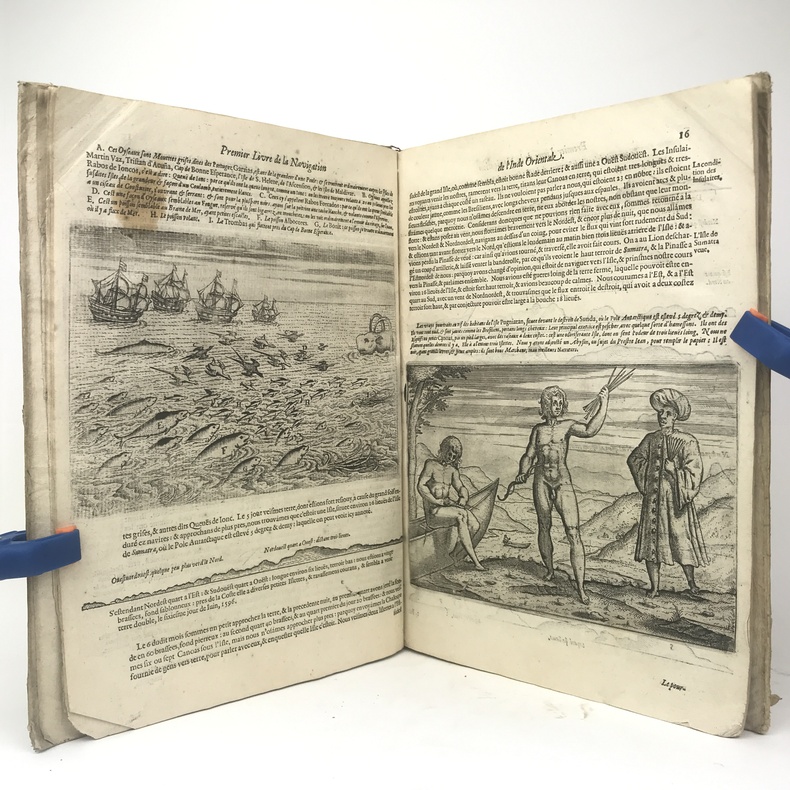
1609réf. PHO-11431 volume in-folio (33 x 23 cm), vélin rigide parchemin (reliure de l'époque), dos lisse titré à l'encre, nombreuses écritures manuscrites sur les plats, 5 à 53-[1] feuillets. Page de titre, 3 premiers feuillets et feuillets 51 et 52 manquants, charnière fendue ,mouillure sur 5 ff et manque de papier en marge , galerie de vers avec manque. Seconde édition française, illustrée de 55 gravures sur bois in-texte.
1798réf. PHO-1092Deuxième reliure de la première édition. Édition originale in-4 sur grand papier, remise en circulation en 1841 avec un nouveau titre avec la mention fictive "nouvelle édition" (quelques exemplaires imprimés en 1798 n'avaient toujours pas trouvé preneur). Une édition octavo en six volumes a également été publiée. in-4 ,y compris l'atlas. Avec 16 (10 dépliantes) dont 15 cartes gravées, 1 planche gravée et table dépliante. - Beau demi-cuir contemp , dos lisse avec titre et tomaison , petits manques au dos , quelques mouillures intermittentes et vieille trace d’humidité (T1), déchirure carte hydrographique sans manque. xii, cxliv, 628, [3] ; xvi, 676, [2] ;[xi], 431, [1];[2],viii, 158pp.
réf. 231706Paris, Frères Estienne, 1769 in-8, viij pp., 382 pp., un f. n. ch., 34 pp., demi-basane fauve, dos à nerfs cloisonné et fleuronné, coins en vélin moucheté, tranches mouchetées de rouge (reliure de l'époque). Discrètes restaurations aux coiffes.
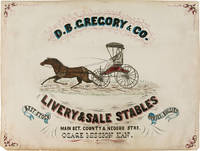
1870réf. 55334Osage Mission Ks. N.d. ca. 1870s. Hand-Painted Trade Sign for a Kansas Livery Stable A remarkable and very attractive handmade sign for D.B. Gregory's livery stable in Osage Mission Kansas. Undated the style of the sign suggests a date of the 1870s. The center of the sign shows a lovely illustration in profile of a horse pulling a single-rider four-wheeled carriage along a dirt road. The text above the illustration reads "D.B. Gregory & Co." and below: "Livery & Sale Stables / Best Stock / Horse & Buggies / Main Bet. County & Neosho Strs. / Osage Mission Kan." The lettering is in black with blue and purple shadowing and "Osage Mission Kan." is drawn in a very ornate style. The entire sign is decorated with purple watercolor ornamentation. On the verso is a pencil sketch of the horse and the lower half of the carriage likely a preliminary sketch for the finished illustration. David B. Gregory born in 1846 in Iowa established his livery business with his brother in Osage Mission now St. Paul Neosho County Kansas by the early 1870s. An advertisement in the March 23 1873 issue of the OSAGE MISSION TRANSCRIPT describes Gregory's livery as having a "fine and well selected stock of horses and carriages.the best matched teams for style and speed in the city. Saddle horses for ladies and gents a specialty that defy competition." Settlers came to the region around Osage Mission in the 1840s following the founding of nearby Fort Scott in 1842. Osage Mission itself was founded in 1847 by Father John Schoenmakers as a mission to local Indian tribes and then grew into a town in its own right serving as a trading post and gateway for commerce and westward exploration. By the late 1860s it had grown to nearly 900 people with a hotel boarding house saloon stables general store hardware store and blacksmith. A rare significant and informative survival from the American frontier. Hand-drawn and hand-painted watercolor sign on a 14 x 18¾-inch sheet of cardstock. Pencil sketch for the same sign on the verso. Small chips at lower corners some light soiling. Very good. unknown
1870réf. 55334Osage Mission Ks. N.d. ca. 1870s. Hand-Painted Trade Sign for a Kansas Livery Stable A remarkable and very attractive handmade sign for D.B. Gregory's livery stable in Osage Mission Kansas. Undated the style of the sign suggests a date of the 1870s. The center of the sign shows a lovely illustration in profile of a horse pulling a single-rider four-wheeled carriage along a dirt road. The text above the illustration reads "D.B. Gregory & Co." and below: "Livery & Sale Stables / Best Stock / Horse & Buggies / Main Bet. County & Neosho Strs. / Osage Mission Kan." The lettering is in black with blue and purple shadowing and "Osage Mission Kan." is drawn in a very ornate style. The entire sign is decorated with purple watercolor ornamentation. On the verso is a pencil sketch of the horse and the lower half of the carriage likely a preliminary sketch for the finished illustration. David B. Gregory born in 1846 in Iowa established his livery business with his brother in Osage Mission now St. Paul Neosho County Kansas by the early 1870s. An advertisement in the March 23 1873 issue of the OSAGE MISSION TRANSCRIPT describes Gregory's livery as having a "fine and well selected stock of horses and carriages.the best matched teams for style and speed in the city. Saddle horses for ladies and gents a specialty that defy competition." Settlers came to the region around Osage Mission in the 1840s following the founding of nearby Fort Scott in 1842. Osage Mission itself was founded in 1847 by Father John Schoenmakers as a mission to local Indian tribes and then grew into a town in its own right serving as a trading post and gateway for commerce and westward exploration. By the late 1860s it had grown to nearly 900 people with a hotel boarding house saloon stables general store hardware store and blacksmith. A rare significant and informative survival from the American frontier. Hand-drawn and hand-painted watercolor sign on a 14 x 18¾-inch sheet of cardstock. Pencil sketch for the same sign on the verso. Small chips at lower corners some light soiling. Very good. unknown books
1938réf. 23642Sans lieu, sans nom, 1938. Fort in-4 (21 x 30 cm) maroquin marron, premier plat orné des lettres dorées A. O. F. dans un contour dessinant l'Afrique de l'Ouest avec petit décor d'instruments de musique, dos à nerfs avec filets dorés, plats et doublures de maroquin marron, chemise de maroquin marron à bandes doublée de suédine de couleur noisette, étui bordé. 662 pages.
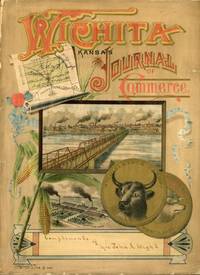
1888réf. 54232Wichita Kansas: Eagle Printing House 1888. 1888. KANSAS. First edition.4to. Original color pictorial wrappers 92 pp. introduction numerous illustrations numerous advertisements mostly printed in double column. This promotional publication by the Wichita Board of Trade was published to counter the "malignant attacks" conducted by "powerful newspapers all over the country" who have "deliberately leveled their batteries at Wichita." The promotional contains an historical overview of Wichita in the cattle trade information on crops and capabilities of Kansas and calls Wichita "The Southwestern Metropolis." Illustrations include street cars telegrams churches private residences and schools. Containing also a directory of wholesale business information on Wichita's railroads and railway connections lists of industrial enterprises the meat packing centers the livestock market and information on taxes and building enterprises. In addition there are numerous advertisements for various businesses in Wichita. Light cosmetic touch-up to the spine and extremities by a master paper conservator else an attractive informational and scarce promotional for Wichita. Housed in a quarter leather and color decorated boards with raised bands and titles stamped in gilt on the spine. Not in Adams Herd. Not in Graff Eberstadt or Howes. OCLC locating only three copies. Considered to be very scarce with only a few known surviving copies. Eagle Printing House, 1888. hardcover
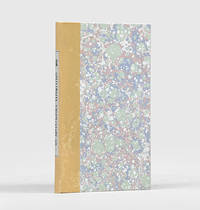
1818réf. 127276London: J. M. Richardson 1818. One of the outstanding exponents of the theory of international trade in the nineteenth century First separate edition of this anonymous tract originally published in The Pamphleteer Volume XII number 23. Arnold Plant declared that "the anonymous author of this tract should take his place with Ricardo J. S. Mill Longfield Mangoldt and Edgeworth as one of the outstanding exponents of the theory of international trade in the nineteenth century. His use of algebraic symbols in setting out the ratios between the quantities of commodities his method of ascertaining from these ratios which of a number of commodities can be most advantageously exported and imported his demonstration that the ratios used may be either those of quantities of different commodities within the same countries or of the same commodities in different countries will bear comparison with for instance Professor Viner's own lucid exposition well over a century later" Plant introduction to 1933 reprinting pp. 40-41. Although the tract was reprinted in the Pamphleteer in the same year it has otherwise left little trace. Octavo 197 x 120 mm. Recent quarter cloth paper label to spine marbled paper sides. Light marking to cloth some very faint scattered foxing else an excellent copy. See Goldsmiths' 22070 for The Pamphleteer. hardcover
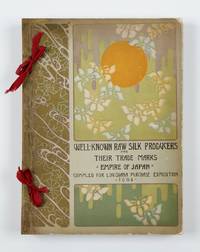
réf. 77254Tokio Tokyo The Japan Sericultural Association 1904. Folio 29.6 x 22.0 cm. Preliminary leaf title page xiv advertisements 166 7 ix pp. 144 text illustrations logos of which 142 in colour - mostly in full colour chromolithography a few partly printed in silver. Additional full-colour illustrations in the advertisement sections. Original multi-colour pochoir wrappers with two silk ties. Printed erratum leaf tipped in. = A very rare survey of Japanese silk producers prepared for the 1904 Louisiana Purchase Exposition. In all 144 companies present themselves here each providing a - mostly very colourful - logo often depicting birds as well as various other animals flowers geishas warriors etc. Included is an overview of the silk industry and its history. Between 1850 and 1930 raw silk ranked as the leading export of Japan accounting for 20 per cent to 40 per cent of Japans total exports. Between the 1890s and the 1930s Japanese silk exports quadrupled making Japan the largest silk exporter in the world. "The Louisiana Purchase Exposition informally known as the St. Louis World's Fair was an international exposition held in St. Louis Missouri United States from April 30 to December 1 1904. Local state and federal funds totaling $15 million were used to finance the event. More than 60 countries and 43 of the then 45 American states maintained exhibition spaces at the fair which was attended by nearly 19.7 million people" Wikipedia. It was by far the most important world fair before WWI." The Japanese government spent lavishly: $400000 plus $50000 from the Japanese colonial government of Formosa with an additional $250000 coming from Japanese commercial interests and regional governments". This lavishly illustrated work was not for sale and it seems likely that most copies ended up in governmental libraries. This copy however is not a library copy and apart from some very light wear to the wrappers is in excellent condition. Provenance: inscribed on the front free endpaper William Streuli from Berizzi Bute . One copy in the collection of The Met in New York City and one copy recorded in OCLC in a Danish library. We found only one auction record. unknown
réf. 7223Amsterdam & Paris, Desaint, 1768. Cinq ouvrages en un volume in-8 (195 x 124 mm), IV pp., 162 pp., 3 tables dépl.; 48 pp.(interversion du texte avec le quatrième ouvrage à partir du cahier C); 8 pp.; 8 pp.; un tableau dépl., 147 pp. et 1 p. n. ch.; 2 ff. n. ch., 314 pp., 1 f. n. ch. Veau porphyre, triple filet doré en encadrement sur les plats, dos à nerfs orné de caissons avec pièce d'armes au cerf doré répété, pièces de titre vert foncé et rouge, coupes filetées, tranches marbrées, habiles restaurations (reliure de l’époque).
1954réf. 21470Paris, Chez Grasset, 1954 ; in-quarto tellière broché, chemise-étui moderne ; 140 pp., [2]ff., couverture granitée jaune rempliée, imprimée en noir et chocolat ; page de titre imprimée en noir et vert printemps.
1821réf. PHO-2480Paris, Imprimerie Royale,1821, in-folio (47x31cm), XVII-120pp., 24 planches sous serpentes dont 2 cartes et une planche en couleur d’époque. Basane racinée époque, dos lisse orné avec pièce de titre verte, frises aux plats et aux champs, tranches marbrées. Frottements, quelques épidermures et griffures, petits trous au dos en pied, rares rousseurs
1764réf. 0041111764 Avignon, sans nom d’éditeur, 1764. Deux volumes in-quarto (211 X 260 mm) basane fauve marbrée, dos cinq nerfs ornés, caissons ornés aux petits fers, pièces de titre et tomaison maroquin rouge et vert, tranches rouges (reliure de l'époque). Tome I: titre illustré, (4) ff. de titre, avertissement et table des chapitres, 615 pages, (1) page d'errata, 7 cartes et 7 planches hors-texte; Tome II: titre illustré, (4) ff. de titre, avertissement et table des chapitres, 618 pages, (1) page d'errata, 3 cartes et 5 planches hors-texte. Quelques pointes de rousseurs et piqures.
1665réf. PHO-2284Leide, Jacob de Meurs, 1665. In-folio (38x25cm), titre frontispice, portrait, 290pp.-1f-134pp. erreurs de pagination, veau tacheté époque, dos à nerfs orné avec pièce de titre, réparation au dos avec caissons conservés et coins, trou sur la carte, réparations aux feuillets 93 & 188, petit trou de ver en marge, un feuillet (page 59) facsimilé manuscrit ancien, réparation à 1 planches, 2 feuillets renforcés en marge. Illustré d’un titre frontispice, un portrait de Colbert, une carte dépliante, 34 planches doubles et nombreuses vignettes
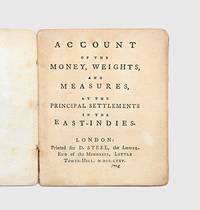
1775réf. 191552London: Printed for D. Steel 1775. Catties cowries candarines and comashees An otherwise untraced pocket reference for supercargos with alphabetically arranged sections for major destinations along eastern trade routes including China Medina Mecca Bengal Bombay and Batavia. The final page concerns Japan evidence of British commercial dealings with the Dutch East India Company. Pages 19-24 concern the sterling value of local coins offering exchange rates for the Chinese tael a Bengali English crown and for sequins dollars piastres and other currencies used in Arabia. For Bengal a special section discusses sea shells cowries as a currency for "coolies labourers and other small payment" over 2400 cowries making one "current rupee". The publisher David Steel 1734-1799 specialized in handbooks charts maps and other maritime material for naval use and for seaborne commerce. Trading out of his warehouse at Little Tower Hill Steel built a publishing empire that was continued by his son of the same name and his daughter-in-law Penelope Steel. The latter continued the business alone following David Steel the younger's death in 1803. In 1775 Steel published two other longer works for the India and China trade including the 56-page Indian Trader's Complete Pocket-Assistant which was an expanded form of the present handbook. Small duodecimo pp. 24. Sewn into contemporary marbled wrappers edges trimmed. Housed in custom grey card box. 1974 ownership signature of one E. Harris on inner front cover; date added in same ink on title page. Covers rubbed some browning internally: well-preserved. Not in ESTC or Witt. unknown
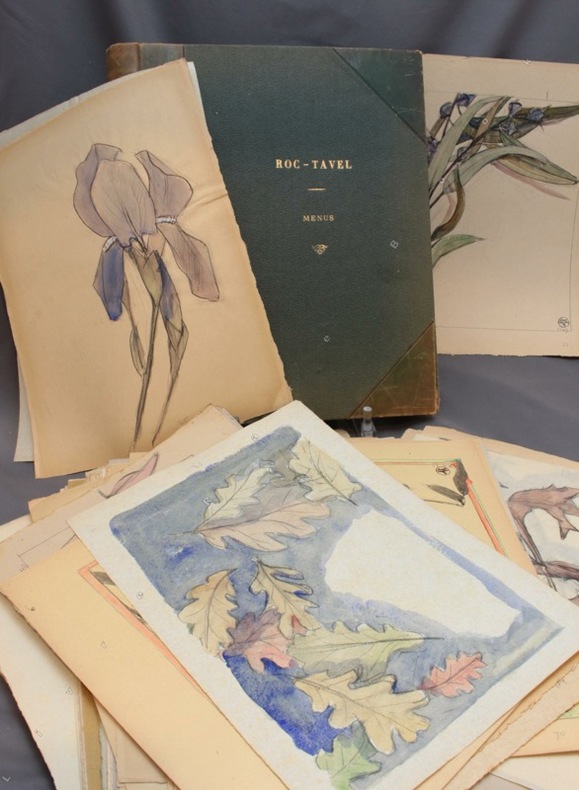
réf. 10630[Le Cannet], [1901 - 1927]. Important ensemble de 330 aquarelles, empreintes et dessins originaux d'Auguste Tavel, ayant pour motifs des compositions végétales. La plupart devaient servir pour des menus. Ainsi 74 feuillets sont non seulement décorés, mais ils sont datés, le menu y est inscrit à l'aquarelle, et les noms des invités figurent souvent au verso, avec le plan de table. L'artiste a utilisé des papiers de différentes teintes et textures. Presque chaque feuillet porte le tampon de Tavel. L'ensemble n'est pas relié, mais conservé sous une reliure portant la mention "Roc-Tavel - Menus" au dos et sur le premier plat.
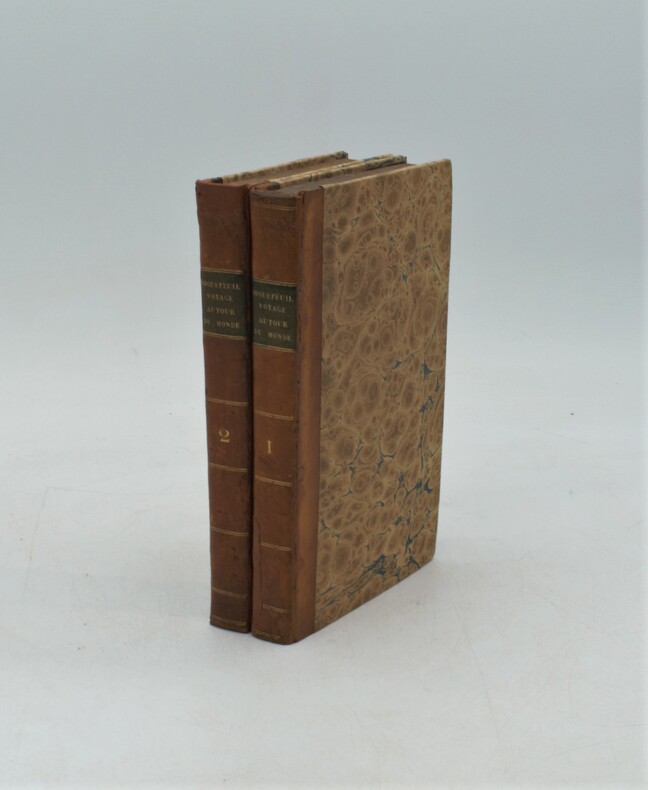
1823réf. PHO-2006Paris, Ponthieu, Lesage, Gide fils, 1823. 2 volumes in-8, xlix, [1]. 344 ; [4], 407 pp., relié demi basane époque, dos lisse orné avec pièce de titre olive et tomaison, ex-libris Jacob Fagel, réparations, quelques rousseurs. Chadenat, n°1196. - Forbes, n°569. - Sabin, n°73149.
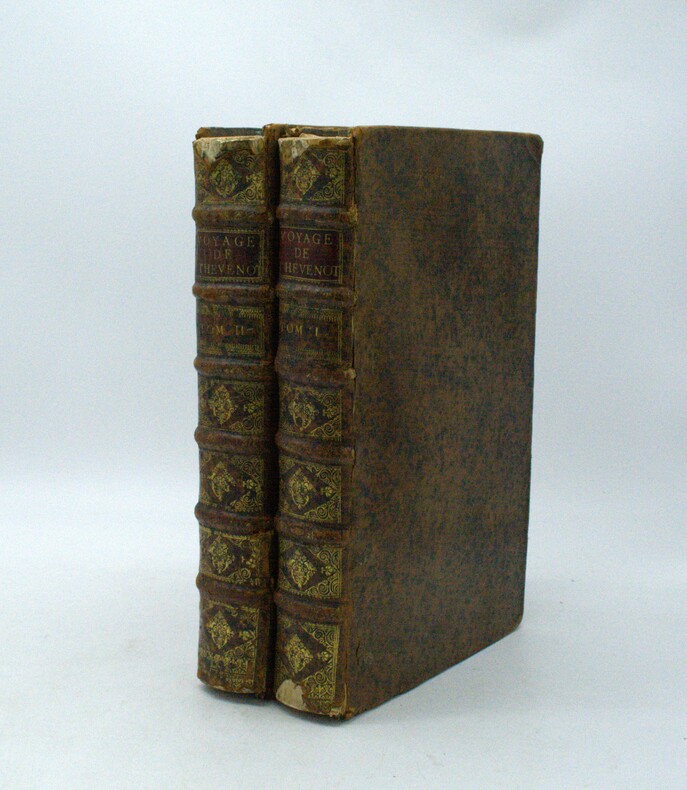
1696réf. PHO-1981Paris, Thomas Moette, 1696 ; 5 parties en 2 vol. in-folio (37x23,5cm), veau marbré, dos à nerfs richement orné de motifs dorés avec tomaison et pièce de titre grenat, quelques frottements, charnières fendillées, manque au dos, coins usés, coiffes absentes, 8 feuillets détachés, rousseurs, qlqs feuillets brunis. L’illustration comporte de nombreuses gravures et illustrations dans et hors texte, 6 cartes dont la carte de l’Indostan, de la Colchide, du Japon (qui regarde l’Amérique), carte de la route du voyage de Canton à Péking, carte de l’Éthiopie, carte de l'Éthiopie ["Entrée de quelques ports…"]. Il manque la Carte de Bassorah, les 2 planches de caractères Chaldéens, la carte de l’Australie, la carte des côtes d’Arabie et d’Asie, la carte des Costes de Sierlionne, la carte des Philippines et Chine, la carte de Chine
1789réf. 76951789 (vers 1789-1793). 7 volumes in-8, cartonnage orange de l'époque. Infimes rousseurs.
1723réf. 41374A Paris, chez Jacques Estienne, 1723. 2 vol. in-folio de (8)-XXVIII pp. 2002 col. (2) pp. pour le tome I; (4)-1956 col. pour le tome II, maroquin rouge, dos orné à nerfs, triple filet doré sur les plats, armes frappées au centre, tranches dorées sur marbrure (reliure de l'époque).
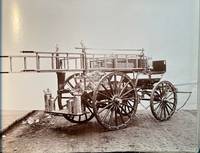
1890réf. 24064Chicago: Unique. ca1890. Bolted stainless steel clamp needed to support the weight of the contents. Overall very good; some of the photographs are faded to various degrees otherwise rich crisp images most likely contact prints from a view camera negative. Oblong folio. Album 2.5" x 15.5" x 11.5"; photographs 13.75" x 11"; containing 129 albumen or early silver bromide original photographs mounted on to cloth backing along with several blueprints; a handful of additional photographs are laid in with a paper wrap. Most of the images are uncredited though about six have the photographer's stamps on the back. Album cover stamped in gilt with the name of the firm. Small silver plaque affixed to the center of the cover with the name E F Steck engraved upon it. Steck was the superintendent of the company. The inside front cover is marked #1. Exhaustive catalog documenting firefighting equipment used during the waning days of the horse-drawn fire truck era with photographs of various fire pumps hook and ladder trucks fire extinguishers fire grenades water nozzles etc. and two blueprints showing the inner workings of a carbonic acid chemical engine pump and extinguisher. Probably a unique prototype to hold all of the original photographs taken of the company's inventory. Photographs depict an array of trucks and apparatus including several views of the same product used by fire companies from across the country including Massachusetts Pennsylvania New York Chicago Los Angeles and Oregon. While the majority of the images show unmanned trucks and apparatus against a white canvas background there are some photographs taken on the street in front of fire stations or with firefighters to show scale or in action shots notably one image depicting nine men on a ladder reaching to the top of a five-story building and firefighters shooting water at smoldering buildings. A few images capture civilians usually on the periphery or looking out windows. The first 80 photographs in the album have red and white number labels on the reverse. The following 27 photographs are not numbered but are titled and listed by the manufacturer's style type; there are 13 styles and between one and three photographs of each style. The next 20 photographs feature a variety of apparatus and the last two depict fire extinguisher products. Unique. unknown books
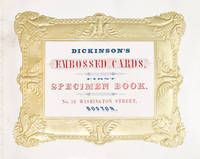
1842réf. 232013Boston: Samuel N. Dickinson 1842. Printed title in blue and red within an embossed gilt ornamental frame one printed "Notice" from the publisher dated June 1842 49 specimens of embossed cards many tinted some printed all mounted to stiff card stock; and 7 sheets of "Embossed Specimens of Printed Billets" sewn to a stiff printed card. Oblong 4to. Bound in an album of contemporary half calf and marbled paper boards with red leather label on upper cover stamped in gilt "Dickinson's Embossed Cards" calf shows much deterioration and corrosion although the sewing is still intact 28 specimen cards have been removed and are no longer present some minor soiling and foxing but generally vey clean and sound internally custom morocco backed folding box. Printed title in blue and red within an embossed gilt ornamental frame one printed "Notice" from the publisher dated June 1842 49 specimens of embossed cards many tinted some printed all mounted to stiff card stock; and 7 sheets of "Embossed Specimens of Printed Billets" sewn to a stiff printed card. Oblong 4to. With a very interesting presentation note from a previous Philadelphia owner Alfred Darrach dated 1928 affixed to the front pastedown identifying the original owner his grandfather as Christian Gobrecht 1785-1844 artist engraver embosser inventor engraver to the U.S. Mint and from 1840-1844 the 4th United States Engraver of the Mint where he was responsible for the creation of several new models and designs including the famous Seated Liberty design which appeared on a variety of American coins from 1836 through 1890. Gobrecht designed many notable medals coins and dies during his career but he also "invented a speaking doll and later a camera lucida. He also produced engravings for calico printers and dies for bookbinders. He engraved the brass dies for embossing the Morocco covers of the Boston Token from 1831 - 1836 as well as the eagle cover of the Philadelphia Token. Among the medals he engraved were the Charles Willson Peale medal the Franklin Institute medal etc ." - DAB. A remarkable specimen album in and of itself all the more so for having belonged to one of America's most important engravers. We cannot say for sure but it is entirely likely that if Gobrecht himself did not design many of the dies for this embosser he may have used the album for his own work and possibly removed the cards which are no longer present. Samuel N. Dickinson unknown
1842réf. 232013Boston: Samuel N. Dickinson 1842. Printed title in blue and red within an embossed gilt ornamental frame one printed "Notice" from the publisher dated June 1842 49 specimens of embossed cards many tinted some printed all mounted to stiff card stock; and 7 sheets of "Embossed Specimens of Printed Billets" sewn to a stiff printed card. Oblong 4to. Bound in an album of contemporary half calf and marbled paper boards with red leather label on upper cover stamped in gilt "Dickinson's Embossed Cards" calf shows much deterioration and corrosion although the sewing is still intact 28 specimen cards have been removed and are no longer present some minor soiling and foxing but generally vey clean and sound internally custom morocco backed folding box. Printed title in blue and red within an embossed gilt ornamental frame one printed "Notice" from the publisher dated June 1842 49 specimens of embossed cards many tinted some printed all mounted to stiff card stock; and 7 sheets of "Embossed Specimens of Printed Billets" sewn to a stiff printed card. Oblong 4to. With a very interesting presentation note from a previous Philadelphia owner Alfred Darrach dated 1928 affixed to the front pastedown identifying the original owner his grandfather as Christian Gobrecht 1785-1844 artist engraver embosser inventor engraver to the U.S. Mint and from 1840-1844 the 4th United States Engraver of the Mint where he was responsible for the creation of several new models and designs including the famous Seated Liberty design which appeared on a variety of American coins from 1836 through 1890. Gobrecht designed many notable medals coins and dies during his career but he also "invented a speaking doll and later a camera lucida. He also produced engravings for calico printers and dies for bookbinders. He engraved the brass dies for embossing the Morocco covers of the Boston Token from 1831 - 1836 as well as the eagle cover of the Philadelphia Token. Among the medals he engraved were the Charles Willson Peale medal the Franklin Institute medal etc ." - DAB. A remarkable specimen album in and of itself all the more so for having belonged to one of America's most important engravers. We cannot say for sure but it is entirely likely that if Gobrecht himself did not design many of the dies for this embosser he may have used the album for his own work and possibly removed the cards which are no longer present. Samuel N. Dickinson unknown books
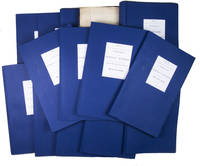
1837réf. ABC_47982London 1837. Folio 32 x 20.5 cm. William Clowes 1837-1845; T. R. Harrison 1848-1872. Later stiff blue paper wrappers with white title-label on the front cover blue sprinkled edges. Ad. 11 in beige paper wrappers. With several tables of data. 14 volumes. Rare collection of 14 volumes containing transcriptions of British diplomatic correspondence with other countries relating to the slave trade in the 19th century printed for the British government. Although slavery in the British Empire was abolished in 1807 enslaved people in the colonies were not freed until 1838. In the present volumes which mostly date from 1837-1846 directly after slavery was abolished in most British colonies the British government urges other countries to help put a halt to the now illegal slave trade. The present collection contains the correspondence between Britain and numerous countries in Europe the Americas and North Africa especially France Spain the United States and Austria. The letters describe the ships carrying enslaved people in detail also mentioning their ports of call so they could be more easily found and stopped. Of particular interest are the transcriptions of slave trade acts from various countries as well as the treaties between France and chiefs in African colonies which are difficult to find in print anywhere else.The letters reveal the profound change in attitude towards slavery in the middle of the 19th century. The tone of the correspondence with countries that were quick in abolishing slavery like Denmark is very different than that of the countries that were much slower like the Netherlands and various countries in Latin America. However the letters especially make clear how difficult it must have been to find and stop the ships that were illegally carrying enslaved people. The owners of the vessels often hid their illegal practices behind obscure transactions and renamings which made finding them arduous and sometimes dangerous. It was the task of British commissioners and naval officers to try to uncover the network behind the Atlantic slave traders and bring them to justice. By collaborating with other countries the courts succeeded in the condemnation of over 600 vessels engaged in the slave trade and the liberation of nearly 80000 enslaved people.Ad 11 with blue library stamp on the title-page "Bibliothèque du palais de la paix". All volumes in good to very good condition some very slight browning and foxing some marginal notes in most volumes. unknown