506 Ergebnisse
1880Best.-Nr. 237851880. Ceylon colonial photo archive depicting tea cultivation estate labor transportation and urban life circa 1880s to 1910s documenting the plantation economy that made the island one of Britain's principal sources of tea as British merchants shifted the enormous domestic tea market away from China and toward production within the Empire. Coffee leaf rust appeared in Ceylon in 1869 and spread rapidly through the island's coffee districts precipitating the collapse of the crop that had dominated the colonial export economy and accelerating planters' conversion of the central highlands to tea. James Taylor had established commercial tea cultivation at Loolecondera Estate near Kandy in 1867 and the new industry expanded rapidly as coffee failed; by 1900 some 380000 acres in Ceylon were planted in tea. By 1879 the results showed that in more than 70 percent of tea sold in London still came from China while by 1900 China supplied only about 10 percent and black teas from British controlled India and Ceylon constituted the bulk of the market. Photo archive of albumen and silver gelatin photographs and photographic postcards ranging from approximately 3½ x 5 to 4 x 6 inches Ceylon circa 1880s to 1910s. Tea production forms the strongest body of imagery. Women and men stand among densely planted tea bushes or work through rows of plants with women carrying the large woven baskets used to collect leaves; individual and group views are captioned "Tea plucker" "Tea picking Ceylon" "Pruning tea Kandy" and in French "Cueillette du thé à Ceylan." One Skeen & Co. Colombo card numbered 84 and captioned "Tea plucker" isolates a woman at work with a large basket strapped behind her while another shows a large group of workers seated with baskets and gathered tea in a plantation clearing. A card captioned "Estate coolies Ceylon" depicts an estate employee in European dress standing with women and a child outside a thatched dwelling preserving in its printed terminology the racial and labor classifications through which plantation workers were presented to contemporary consumers of colonial imagery. Other photographs move from plantation production into the roads vehicles and cities of colonial Ceylon: rickshaw pullers pose with European passengers and beside their vehicles; a street scene records "Native town Kandy Ceylon"; Colombo appears in views of the "Colpetty Road near Galle Face Colombo" a crowded procession captioned in French "Colombo départ des troupes Anglaises" and a civic monument among palms. Another postcard depicts "Royal visitors leaving Ceylon" while a country road scene shows pedestrians carts and roadside activity. Skeen & Co. one of the principal commercial photographic firms operating from Colombo in the late nineteenth and early twentieth centuries is identified on several cards but no single photographer can be assigned to the archive as a whole. The tea scenes record the labor at the center of one of the fastest agricultural conversions in the nineteenth century British Empire. Coffee rust Hemileia vastatrix was first observed in Ceylon in 1869 and within little more than a decade had destroyed the commercial basis of the coffee plantation system; tea already demonstrated commercially by Taylor replaced it across much of the highlands. Ceylon tea exports to Britain rose from only 282 pounds in 1875 to more than 4.3 million pounds in 1885 while the plantation landscape expanded until almost all former coffee districts had been replanted with tea during the 1890s. That expansion depended on a large year round plantation workforce much of it composed of Tamil laborers brought from southern India and on the colonial infrastructure that connected the highlands with Colombo and overseas markets. Roads and the railway between Kandy and Colombo had initially served the coffee economy and could be redirected toward tea after the blight while Colombo developed as the commercial and shipping center through which the crop entered imperial markets. The archive therefore records several stages and social spaces of the same colonial economy from plucking and pruning in the highlands to estate communities road transport Kandy and the metropolitan port city of Colombo while the postcards themselves show how plantation labor and colonial development were converted into commercial images for circulation beyond the island. Light to moderate surface wear toning occasional fading and creasing with some photographs showing age related discoloration and edge wear. Overall in good condition. A visual record of the plantation labor and colonial infrastructure behind Ceylon's transformation from a failed coffee economy into a major tea producer that helped Britain replace Chinese tea with supplies produced under imperial control. unknown books
Best.-Nr. TK0360no place: no date. 9.5 x 12.75 inches. 40 pages. 145 numbered photographic tinted illustrations each with numerous figures. Original plain black wrappers. With apologies but there is no manufacturer name on this trade catalogue of hand-crafted ornamental 'finishing' pieces such as decorative brasses for a piece of furniture. Many are with motifs from nature leaves flowers. Other ornaments: lions lizards angel wings wheat eagle-heads sun-faces etc. Each figure is numbered with the highest number showing is 3836 ornaments are shown. [no date]. unknown books
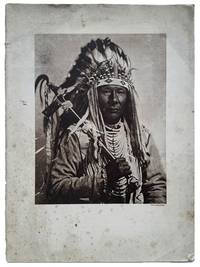
Best.-Nr. TK0335London:: Bradley's no date. 4to. 3-46 pp. Lacking the title-page. Illustrated throughout. Pictorial wrappers showing a Canadian-American Indian signed "PHOTO> POLLARD CALGARY". Good. As is. With a photographic portrait by Harry Pollard of a member of the First Nations tribe. Harry Pollard 1880–1968 was a Canadian photographer known for his photographs of First Nations peoples in Western Canada. Bradley's, no date. unknown books
1929Best.-Nr. 69460Washington DC: Government Printing Office 1929. 8vo pp. 29 1; printed paper self-wrappers; lower wrapper soiled vertical crease through middle corner folded text clean good. The Department of Commerce Aeronautics Branch was established in 1926 and had jurisdiction over the testing and licensing of pilots and aircraft maintaining right of way in the air and investigating crashes. Aeronautics bulletin No. 7. Government Printing Office unknown books
1937Best.-Nr. 215711937. Japanese WWII This archive of 3 publications on Japan spanning from 1937 to the 1950s offers a multifaceted examination of Japan's evolving role in global politics trade and military affairs from the pre-World War II era through the early Cold War period. These works provide crucial contemporary analyses of Japanese imperialism economic ambitions and the socio-political consequences of U.S. military occupation. Archive includes the following: 1 Amerasia: A Review of America and the Far East. New York. December 1937. Pre-WWII issue explores political economic and social developments in East Asia with a particular focus on the impact of Japanese expansionism and Chinese resistance including articles on Japan's anti-communist agreement with Germany leading up to the Second World War. Green staple-bound wrappers. 51 pages 7" x 9". The first issue of Amerasia a monthly magazine described as a "review of America and the Far East" was published in February of 1937. The periodical is describes itself as providing of a "forum for the expression and clarification of ideas concerning America's participation in Far Eastern affairs." Edited by leading scholars and analysts the publication features contributions from prominent experts such as Karl August Wittfogel Ch'ao-ting Chi Nathan M. Becker and Lawrence K. Rosinger. This issue of Amerasia offers valuable insight into the global discourse surrounding Japanese imperialism Chinese economic strategies and Western perceptions of the Far East during a crucial period of international tension. Some dog eared pages minor wear throughout binding is tight and pages and text are crisp and clear. Overall very good condition. 2 Farley Miriam S. The Problem of Japanese Trade Expansion in the Post-War Situation. New York: International Secretariat of the Institute of Pacific Relations. First edition 1940. Red cloth board with gilt title on spine. 93 pages. 8vo. This 93 page essay examines Japan's economic strategies and ambitions for trade expansion following World War II. Authored by Miriam S. Farley a research associate at the Institute of Pacific Relations since 1933 and later editor of Far Eastern Survey the book offers insights into Japan's pursuit of economic growth and its implications for global trade dynamics. During the late 1930s and early 1940s Japan's economy was rapidly industrializing with manufacturing and mining accounting for over 30% of its GDP. This industrial growth was closely linked to Japan's military expansion and its quest for natural resources leading to increased tensions with Western powers. Ex libris on front pastedown. Overall very good condition. 3 Inside Japan. New York: Far East Reporter 1950s. A critical perspective on postwar Japan highlighting the challenges faced by its people under U.S. military occupation and the broader political landscape of the early Cold War era. Original pictorial wrappers. 21 pages. 8vo. Illustrated with a woodcut-style image of a wounded Japanese man on crutches. The contents document rising anti-war sentiment among Japanese citizens particularly their resistance to further militarization and economic policies imposed by the U.S. government. Opening with the bold declaration "We want neither to lead a miserable life any longer nor to be dragged into another war" the text situates itself within Japan's growing opposition to Cold War power struggles. It discusses mass protests including demonstrations against the forced use of Japanese land for U.S. military bases and details how economic hardship and environmental destruction-such as radiation-contaminated tuna from American hydrogen bomb tests in the Pacific-fueled widespread frustration among the Japanese population. The pamphlet argues that American occupation policies continued to erode Japan's sovereignty tying the nation to U.S. strategic interests rather than allowing for true postwar reconstruction on Japan's terms.The text references significant events such as Japanese protests against military requisitions including U.S. land seizures in areas like Uchinada a fishing port repurposed for artillery training and the selection of Japan as a maneuvering ground for Korean War operations. It critiques American soldiers' conduct abroad arguing that local resentment stemmed not only from military presence but also from cultural insensitivity and racial hierarchies imposed by occupying forces. The pamphlet warns that American diplomacy in Japan was at risk of alienating the very people it sought to influence portraying Japan as caught between U.S. and Soviet interests in the broader Cold War struggle. Overall very good condition. unknown books
1930Best.-Nr. 69541Washington DC: Government Printing Office 1930. 8vo pp. 2 54; printed paper selfwrappers; some toning to paper else fine. A list of businesses across the country providing supplies parts hangars metals and services such as photography freight instruction dusting etc. Rice only in OCLC but likely present in other collections under the Aeronautics Bulletin series. Aeronautics Bulletin No. 3. Government Printing Office unknown books
1884Best.-Nr. 370801Boston: 33 to 51 Bowker Street and 49 & 51 Cardon Street printed by Wilson & Son University Press Cambridge 1884. 7 photogravure plates woodcut illustrations throughout text. With printed order slip tipped-in following text publisher's acknowledgment slip laid-in at front. 256pp. Roan cloth decoratively stamped in gilt and black on cover and spine; decorative blind stamping to rear board; minor edge wear mainly at head and tail of spine; illustrated throughout with black-and-white drawings and photographs. 7 photogravure plates woodcut illustrations throughout text. With printed order slip tipped-in following text publisher's acknowledgment slip laid-in at front. 256pp. A beautifully illustrated trade catalog detailing both the remarkable variety and elaborate designs of the Tufts company's commercial soda fountains. 33 to 51 Bowker Street, and 49 & 51 Cardon Street [printed by Wilson & Son, University Press, Cambridge] unknown books
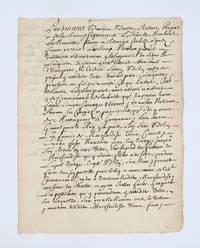
1688Best.-Nr. 368775Montreal 1688. In French. 2pp. recto and verso on a single leaf. Signed by Perrot Bleinz and notary Benigne Basset. With an English transcription. Quarto. Old folds. Near fine. Provenance: Archibald de Léry MacDonald; Lawrence Lande. Exhibition: An Exhibition of Early Documents and Printed Material Relating to the Beginnings of Trade in North America from the Private Collection of Dr. Lawrence M. Lande McGill University May 30-July 15 1985 with an 8-page exhibition catalogue. In French. 2pp. recto and verso on a single leaf. Signed by Perrot Bleinz and notary Benigne Basset. With an English transcription. Quarto. Scarce seventeenth century voyageur fur trade contract for an expedition to the wilderness to trade with the Ottawa signed by one of the most important early traders and explorers of Canada and the upper midwest. "Partnership agreements such as this one of Nicholas Perrot are of great rarity" Lande. Perrot 1644-1717 was an explorer interpreter trader commandant diplomat and seigneur. He was one of the best-known figures in the early fur trade of New France particularly during the latter part of the 17th century and took possession of large tracts of land in the Great Lakes region in the name of King Louis XIV. His travels commonly took him deep into unexplored territory and he was the first Frenchman to explore the Upper Mississippi in what is now Wisconsin and Minnesota. Perrot arrived in New France about 1660 as a young donné or contracted assistant in the company of Jesuit Missionaries and travelled to the western Great Lakes region where he gained the friendship of the local First Nations people by trading guns for furs believing that they were entitled to defend themselves from their enemies. He also took the opportunity to learn several Native languages which served him well during his career. Perrot soon entered the fur trade full time and began forming business partnerships. He enlisted himself as a translator with government authorities and participated in peacekeeping missions to bring warriors of several First Nations together to sign peace treaties. By 1685 he was appointed Commandant-in-Chief at Bais des Puants present day Green Bay Wisconsin and surrounding regions and travelled to the upper reaches of the Mississippi River in the territory of the Sioux tribes where he built Fort St. Antoine in present-day Minnesota. During the spring of 1687 in preparation for taking part in raids on Indian villages in the Seneca country Perrot left his store of furs with the Jesuits at St. Francois-Xavier mission in present-day Wisconsin. While out with the raid party a fire at the mission destroyed his entire fur inventory valued at more than 40000 livres. Financially ruined Perrot returned to Montreal to deal with creditors and renew partnership agreements like the present. In the summer of 1688 Perrot partnered with Simon Bleinz to undertake an expedition to trade with the Ottawa Indians and other Nations. Perrot had always been a staunch ally of Governor Frontenac and had obtained a fur trade license from the governor for this venture to ensure that his activities were in keeping with the rules and regulations of the trade. The agreement states that Perrot would supply Bleinz with goods food provisions a canoe and other necessary supplies for the voyage and that Bleinz would convey the goods to the trading area and do all that he was able for the success of the partnership. Bleinz had the option of taking at his own expense six shirts two capots or hooded coats of blanket cloth moosehide or other material and one rifle to trade for his own personal profit. The pelts resulting from the venture were to be distributed evenly amongst Bleinz another unnamed associate of the partnership and Perrot. An "apichimon" or bonus of six beaver pelts was to be paid to Bleinz by the partnership upon the successful conclusion of the expedition. "Perrot who was often unappreciated even during his lifetime was France's best representative among the Indians of the west. His knowledge of the languages of the country his natural eloquence the happy blend of daring and coolness that were the essence of his character had made it possible for him to win the esteem confidence and even affection of the Indians. The Potawatomis the Menominees the Foxes the Miamis the Mascoutens and the Sioux granted him with the honours of the pipe of peace the rights and prerogatives enjoyed by their own chiefs. His credit was not less among the Ottawas and the Hurons. During the last four decades of the 17th century at a time when alliance with the nations of the west was indispensable in order to ward off the Iroquois peril and allow access to new territories Perrot thanks to the influence that he had acquired rendered valuable assistance to the colony" Dictionary of Canadian Biography. The present document is from the famed collection of Lawrence M. Lande 1906-1998 detailed as item 107 in his second bibliography of his collection The Founder of our Monetary System John Law Compagnie des Indes & the Early Economy of North America Montreal: 1984. Lande began collecting manuscript material relating John Law the Compagnie des Indes and the fur trade - North America's first economy - as early as the 1960s principally working with dealers Izzy Ehrlich and Alfred Van Peteghem purchasing material from the collections of Thomas Phillips Philip Sang and historian Archibald Lery MacDonald the assemblage of which Van Peteghem termed an "unparalleled feat." All of the printed material and many of the documents were donated by Lande in his lifetime; however a grouping of the manuscript items including the present document were sold by his heirs after his death. Lande Founder of our Monetary System 107 unknown books
1924Best.-Nr. 64072New York: China Trade Bureau August 1921 to June 1924. 2 volumes large 4to lacking vol. I no. 1 and volume VI no. 6 but otherwise complete from volume I no 2 to volume VI no. 5 - 34 issues in all and contained in a library binding of blue cloth gilt-lettered spine; ex-Purdue University lightly marked. Issues range from 24 to 56 pages. Illustrated throughout. Publication was suspended during June July and August 1924 and finally folded withg the publication of volume VI no. 6 in September 1924. The China Review "is the only magazine published in the United States and edited by Chinese that deals exclusively with all phases of China political social industrial etc." Regular features include: book reviews China's Business Barometer; Finance Industry and Commerce; Foreign Press Comments; The Month in the East; Trans-Pacific Sailings; and Home and General News; together with feature articles by Nathaniel Peffer Cornelius Vanderbilt Charles Hodges Charles W. Mason Nora Waln Loretta Shaw Chungshu Kwei Dr. P. W. Kuo Genevieve Wimsatt K. H. Li Ma Soo James D. Bush and Robert Harris among others writing on various topics relating to China including Chinese Pagodas The Modern Chinese Girl The Future of American Trade in China China's Mathematics - The Oldest Approach and Development of Chinese Markets The Mongolian Situation Selling to the Chinese Millions China's Silk Industry China and the Four Power Treaty Tibet - The Closed Country The Part Birds Play in Chinese Life and many others of interesting content. China Trade Bureau, August, 1921 to June unknown books
1794Best.-Nr. 354283Philadelphia: Printed by Francis Childs and John Swaine 1794. 8pp. Dbd. Contemporary ownership signature on titlepage and manuscript notes on final leaf. Very good. 8pp. Dbd. This copy bears the ownership signature of noted New York jurist and legal scholar James Kent who ran for Congress from New York in 1793 but was defeated by his brother-in-law Theodorus Bailey. He would go on to a distinguished career as a judge on the Chancery court and as an author of legal commentaries. At the conclusion of the text is a manuscript note: "Mr. Wadsworth stated in the House of Representatives the 19th May 1794 that within the last six months American vessels & property had been captured by the British Privateer in the W. Indies to the extent of one million of dollars - & that other nations had seized American property to ½ mil. dol. & that the total loss to our commerce was 1½ mil. dol." In this report to President Washington the new Secretary of State Edmund Randolph details the depredations against American shipping caused by the powers involved in the French Revolutionary Wars. He quotes from a study by the "committee of Philadelphia" on the interference with American trade by the British French Spanish and Dutch and summarizes the methods used by those countries. The British impress American sailors into service the French are embargoing American goods etc. He makes no recommendations as to an appropriate response. OCLC locates four copies. Scarce. EVANS 27917. OCLC 8090321 Printed by Francis Childs and John Swaine unknown books
1802Best.-Nr. 354336Washington 1802. 4pp. Dbd. Contemporary manuscript page inscription and early stain in upper outer corner not affecting text. Minor foxing and offsetting. Good. 4pp. Dbd. Congressional report calling for government encouragement of infant industries by allowing certain raw materials to be imported free of duty while imposing a 20% duty on imported fur hats brushes stone ware printing types saddles cannon ball and glass ware and other duties on gun powder cordage soap candles of tallow window glass and iron. SHAW & SHOEMAKER 3412 unknown books
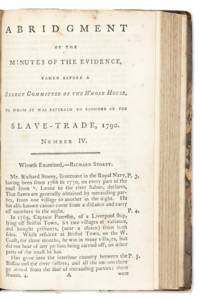
1789Best.-Nr. 187101789. Committee of the Whole House of the British Parliament investigation into the Atlantic slave trade recorded in Abridgment of the Minutes of the Evidence Taken Before a Committee of the Whole House to Whom It Was Referred to Consider of the Slave Trade published 1789 to 1791 presenting one of the earliest parliamentary documentary compilations addressing the operation and human consequences of the transatlantic slave trade. The volumes preserve testimony gathered during parliamentary inquiries that examined the practices of British slave traders and the treatment of enslaved Africans transported across the Atlantic. These proceedings formed part of the political campaign in Britain that eventually culminated in the abolition of the British slave trade in 1807. The collected evidence includes statements from ship surgeons naval officers merchants and other witnesses whose accounts describe the conditions experienced by enslaved Africans during capture transport and plantation labor. Abridgment of the Minutes of the Evidence Taken Before a Committee of the Whole House To Whom It Was Referred to Consider of the Slave Trade. London: 1789-1791. First edition first printing. Four volumes bound in two books. The compilation reproduces testimony presented before Parliament concerning the organization and operation of the slave trade and includes firsthand statements describing the physical suffering and resistance of enslaved Africans during transport. Surgeon Alexander Falcon-Bridge who had firsthand experience aboard slave ships described acts of despair among captives: he "Has known several enslaved persons to refuse sustenance with a design to starve themselves. refusing to take medicines when sick because they wished to die. Many other slaves expressed the same." Another witness Royal Navy surgeon Thomas Trotter recorded the emotional trauma experienced by captives during embarkation noting that "Slaves on being brought on board showed signs of extreme distress and despair from a feeling of their situation and regret at being torn from friends and connections." The volumes therefore preserve testimony that exposed the violence and human suffering embedded within the Atlantic slave trading system. During the eighteenth century European and American traders transported millions of Africans across the Atlantic through a commercial system that relied on maritime networks linking West Africa the Caribbean and the Americas. Parliamentary investigations of the slave trade in the late eighteenth century were fueled in part by abolitionist activism and public campaigns demanding government inquiry into the practice. Publications of witness testimony such as this abridged parliamentary record circulated evidence used by reformers advocating the end of the trade. Four volumes bound in two books with folding table in the fourth volume. Octavo format. Contemporary marbled quarter calf bindings with modern bookplates on the front past down. Wear present with most spine titles lacking and foxing primarily affecting the title pages; text remains clear. Overall condition very good. unknown books
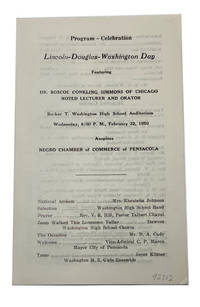
1950Best.-Nr. 92712Pensacola Florida 1950. Very Good. Folded four-page program. 23 cm. The third and fourth pages list about 175 individuals couples businesses and organizations as Patrons. We have no further information about the Negro Chamber of Commerce of Pensacola which appears to have organized this event. unknown books
1869Best.-Nr. 351956Cairo: Maṭbaʻat WÄdī al-Nīl 1869. 12 pp. 1 vols. 8vo. Rose printed wrappers. Removed. Very good. Contemporary note in English at top of front wrapper "E.A. Park presented by the Vice Consul at Cairo. 12 pp. 1 vols. 8vo. Speech on the history of Arab Ottoman trade noting the key position of Egypt as nexus between Red Sea and Mediterranean commercial routes. This was delivered at a time when Egypt was asserting greater claims of sovereignty under Isma'il and when the trade laws were moving away from shari'a basis to a commercial code often derived from European models. The author is named as the learned Italian Cavalieri Francis Anton DiMarca. Not in OCLC Maṭbaʻat WÄdī al-Nīl unknown books
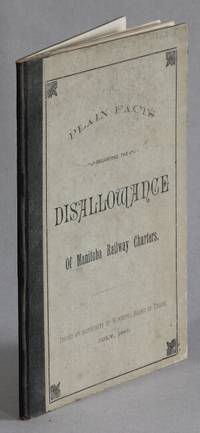
1887Best.-Nr. 7785Winnepeg 1887. Slim 8vo pp. 15 1; extremities rubbed covers slightly soiled else very good in grey paper-covered boards black cloth spine. unknown books
1748Best.-Nr. 143621748. Bellin Jacques Nicolas. Engraving of Arab and Moorish traders traveling to Senegal 1748 depicts the movement of gum through animal-borne commerce in eighteenth-century West Africa. Published in Histoire générale des voyages the scene identifies its subjects specifically as "Arabes et Mores" bringing gum to Senegal and shows the traders using camels horses and oxen for transport. The caption ties the image directly to the gum trade a commerce connecting inland producers and merchants with markets along the Senegal River and Atlantic coast. Bellin Jacques Nicolas. Arabes et Mores montés sur leurs Chameaux leurs Chevaux et leurs bœufs pour apporter des gommes au Senegal. From Histoire générale des voyages 1748. Overall page size 10 x 7.25 inches; image size 5.5 x 7.5 inches. The engraving shows a group of turbaned men in tunics traveling with camels horses and oxen. Some figures ride while the animals move as a caravan across the landscape. The printed caption below identifies both the travelers and their purpose: "Arabes et Mores montés sur leurs Chameaux leurs Chevaux et leurs bœufs pour apporter des gommes au Senegal" describing Arabs and Moors mounted on their camels horses and oxen to bring gum to Senegal. Published in 1748 the engraving records a European representation of the inland commercial networks supplying Senegal with gum particularly gum arabic during a period of expanding European competition for West African commodities. Its caption is unusually specific about the commodity destination traders and means of transportation connecting the figures and animals to a defined commercial activity rather than presenting them simply as generalized costume types. The combination of caravan transport and explicit reference to the Senegal gum trade provides visual evidence for eighteenth-century European descriptions of commerce between Saharan and Sahelian traders and the Senegal region. Some small markings in the margin. Overall very good condition. unknown books
2001Best.-Nr. 90582001. World Trade Center postcard postmarked September 11 2001 juxtaposes a pre-attack view of the New York skyline with a postal cancellation dated the day the Twin Towers were destroyed. The card documents how an ordinary piece of tourist ephemera acquired immediate memorial and historical significance through its date of postal processing supporting research into September 11 material culture public memory urban representation and the transformation of commercial images into artifacts of collective mourning. Color postcard New York undated printing; dimensions publisher sender recipient and postmark location not stated. The front reproduces the Manhattan skyline with the World Trade Center towers intact and visually dominant. The reverse bears a postage stamp canceled September 11 2001. The postmark establishes that the card entered or passed through the postal system on that date although it does not by itself identify the time of day or confirm whether processing occurred before or after the attacks. Contemporary evidence confirms the existence of New York postal handstamps dated September 11 2001 and postcards depicting the intact towers became particularly charged objects of remembrance immediately following their destruction. The card was reportedly obtained through a "Freedom for America Auction" benefiting victims' families; this may refer to 's Auction for America fundraising initiative but the precise provenance remains unverified without supporting documentation. The coincidence of image and cancellation gives the postcard its principal documentary force: an everyday representation of Lower Manhattan fixed to the calendar date on which that skyline changed permanently. No tears losses creasing or postal damage reported; image and postmark remain clear; overall near fine. A compact artifact connecting the visual culture of pre-September 11 tourism with the immediate material record of the attacks. unknown books
2001Best.-Nr. 90752001. World Trade Center postcard postmarked September 11 2001 juxtaposes a pre-attack view of the New York skyline with a postal cancellation dated the day the Twin Towers were destroyed. The card documents how an ordinary piece of tourist ephemera acquired immediate memorial and historical significance through its date of postal processing supporting research into September 11 material culture public memory urban representation and the transformation of commercial images into artifacts of collective mourning. Color postcard New York undated printing; dimensions publisher sender recipient and postmark location not stated. The front reproduces the Manhattan skyline with the World Trade Center towers intact and visually dominant. The reverse bears a postage stamp canceled September 11 2001. The postmark establishes that the card entered or passed through the postal system on that date although it does not by itself identify the time of day or confirm whether processing occurred before or after the attacks. Contemporary evidence confirms the existence of New York postal handstamps dated September 11 2001 and postcards depicting the intact towers became particularly charged objects of remembrance immediately following their destruction. The card was reportedly obtained through a "Freedom for America Auction" benefiting victims' families; this may refer to 's Auction for America fundraising initiative but the precise provenance remains unverified without supporting documentation. The coincidence of image and cancellation gives the postcard its principal documentary force: an everyday representation of Lower Manhattan fixed to the calendar date on which that skyline changed permanently. No tears losses creasing or postal damage reported; image and postmark remain clear; overall near fine. A compact artifact connecting the visual culture of pre-September 11 tourism with the immediate material record of the attacks. unknown books
2001Best.-Nr. 90602001. World Trade Center postcard postmarked September 11 2001 juxtaposes a pre-attack view of the New York skyline with a postal cancellation dated the day the Twin Towers were destroyed. The card documents how an ordinary piece of tourist ephemera acquired immediate memorial and historical significance through its date of postal processing supporting research into September 11 material culture public memory urban representation and the transformation of commercial images into artifacts of collective mourning. Color postcard New York undated printing; dimensions publisher sender recipient and postmark location not stated. The front reproduces the Manhattan skyline with the World Trade Center towers intact and visually dominant. The reverse bears a postage stamp canceled September 11 2001. The postmark establishes that the card entered or passed through the postal system on that date although it does not by itself identify the time of day or confirm whether processing occurred before or after the attacks. Contemporary evidence confirms the existence of New York postal handstamps dated September 11 2001 and postcards depicting the intact towers became particularly charged objects of remembrance immediately following their destruction. The card was reportedly obtained through a "Freedom for America Auction" benefiting victims' families; this may refer to 's Auction for America fundraising initiative but the precise provenance remains unverified without supporting documentation. The coincidence of image and cancellation gives the postcard its principal documentary force: an everyday representation of Lower Manhattan fixed to the calendar date on which that skyline changed permanently. No tears losses creasing or postal damage reported; image and postmark remain clear; overall near fine. A compact artifact connecting the visual culture of pre-September 11 tourism with the immediate material record of the attacks. unknown books
1870Best.-Nr. 315110New York: George Blackie & Co 1870. Woodcut illustrations throughout. 12mo. Publishers pink pictorial wrappers. Woodcut illustrations throughout. 12mo. Includes marked playing cards gambling and magic books magic tricks novelties and all sorts of curiosities and miscellany such as "False Moustaches that cannot be detected when worn" offered by New York wholesale agents George Blackie & Co. George Blackie & Co unknown books
1971Best.-Nr. 85213Manila: Bureau of Printing 1971. Hardcover. Good. 3 vols. frontises each section separately numbered. Contemporary blue boards with original wrappers for the various parts bound in. 29 cm. Corners bumped. Advance Report No. 48 is not present -- we don't know which Province is missing in this set. We assume that these volumes were compiled from separately issued Advance Reports. Bureau of Printing hardcover books
1951Best.-Nr. 85206Manila: Bureau of Printing 1951. Paperback. Good. frontis 2 folding maps 258p. Softcover in original blue wrapper. 25 cm. Ends of backstrip chipped. Bureau of Printing paperback books
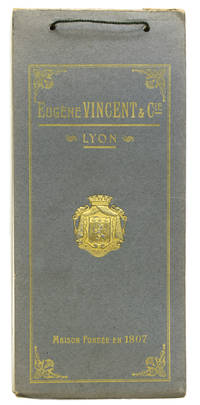
1907Best.-Nr. 302671Lyon: Imprimerie Gougenheim Frères 1907. 30 numbered chromolithograph plates. Thin oblong 8vo 9-3/4 x 4-1/4 in. Printed gray wrappers stapled and with hole punches and string gold foil stamped arms on front cover. Light wear to covers. With the distribution stamp of Albert Martin 6 Rue des Tonneliers Marseille. 30 numbered chromolithograph plates. Thin oblong 8vo 9-3/4 x 4-1/4 in. A finely printed trade catalogue illustrating the liqueurs and brandies offered by the Lyon wine distributors Eugéne Vincent & Cie including Crème de Cacoa-chouva various brands of curaçao and triple sec anisette fruit brandies Peronneau absinthe and Grog Americain a bottled punch. Imprimerie Gougenheim Frères unknown books
1900Best.-Nr. 263502Lyon France: J. Bouvard & Cie 20 Rue Lafont 1900. 14 thick card sheets with samples centrally mounted vertically to recto and verso some sheets quite thick to accommodate larger epaulets each with manuscript notations of name size etc. 11-3/4 x 6-3/4 inches. Black cloth album with the printed label of "J. Bouvard et Cie Fabrique de Dorures Soireries Ornaments d'Eglise" to front paste-down. Some wear commensurate with age and use spotting and thumbsoiling apparently complete with all samples backing possibly restored at an early date. 14 thick card sheets with samples centrally mounted vertically to recto and verso some sheets quite thick to accommodate larger epaulets each with manuscript notations of name size etc. 11-3/4 x 6-3/4 inches. This very unusual French sample book contains a large range of epaulets and sequin samples with a few lettering and star samples. J. Bouvard & Cie 20, Rue Lafont unknown books
1930Best.-Nr. 789341930. Hardcover. Very Good. First item: illustrations some color photos 332p. Second item: illustrations some color photos 324p. Original matching red cloth bindings. 25cm. Former owner's name a Presbyterian missionary in Thailand in both volumes. Calling card of Rear Admiral Mom Chao Thavara Mongolwongse first President of the Medical Association of Siam mounted on front pastedown of the second volume. Moderate scuffing and wear. No Jackets. Both volumes were issued for the Medical congress. hardcover books