504 résultats
1910réf. 3344Brooklyn: A. Johnson Machine Works 1910. Octavo 68 pages. Illustrations throughout. FIRST EDITION. Trade catalogue featuring machines for manufacturing of crown corks crowning machines machines for manufacturing of corks and cork discs machines for screw caps and special machines which include a friction capping machine automatic rotary cap spinning machine single head cap spinning machine and an automatic rotary screw cap capping machine. Each item includes detailed rendering as well as description mechanical and output details. In brown wrappers secured with brads quite bruised and worn. Text edges worn with slight foxing throughout. Title page marked up company address lined-out and amended in pen also with pencil marks. Otherwise good. OCLC locates just one copy at the Smithsonian. A. Johnson Machine Works unknown books
1960réf. 72915Washington 1960. Paperback. Very Good. v 56p. plus individually-numbered appendices. Wrapper. Stapled. 27cm. Statement No. 606 File No. 51-D-6. paperback books
réf. 172080TRADE CATALOGUE. Katalog masných výrobku a konserv. Catalogue of meat products and conserves. 100 pp. Oblong 4to publisher's cloth. Prague : Ministerstvo potravinárského prumyslu 1953. A handsome and unusual Eastern European trade catalogue full of edible delights which were probably available more in the imagination than reality in a year when most people's savings were wiped out. OCLC lists Wellesly Stanford and the Tate. hardcover books
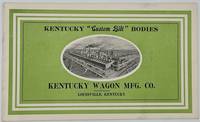
1920réf. 67766Louisville KY: Kentucky Wagon Mfg. Co 1920. Oblong 8vo 14 x 23 cm. 20 pp. "Title" leaf and 19 full-page color plates of custom bodies with descriptions and specifications; extra plate of one of the bodies verso unprinted laid in. A rare trade catalogue with beautiful color plates. Apparently not recorded on OCLC. Original illustrated wrappers stapled. Very good. Kentucky Wagon Mfg. Co unknown books
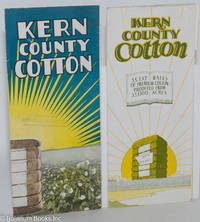
1931réf. 287395Bakersfield: Chamber of Commerce 1931. Pamphlet. Two folded brochures on the same subject much the same texts differing design and visuals: First item is a single leaf of coated alkaline stock measuring 18x12 inches folded three times to make an upright 9x4 inch flyer presswork in yellow green & black a very good clean copy that hails in a vignette a little-known exposition occurring in San Francisco Nov 1927 the "Pacific Foreign Trade & Travel Expo". Second item derives from the first four years later with a scaled-back design and shorter text; this is a single leaf measuring 16x9 folded twice to make another upright 9x4 flyer. This second flyer has an inch-by-half-inch chip to upper margin destroying the word 'Acre' of verso text otherwise an okay copy with same boosterism but different stats. The two together as a sort of pair. Chamber of Commerce unknown books
1922réf. 303665Bakersfield California Kern County Chamber of Commerce 1922. 1922. 6 panel folding brochure. Illustrated with 10 halftones and one map. Very good. No signatures or bookplates. Includes information on oil and gas wells farming irrigation gold and silver. Rocq 2431 - located only 1 copy. No Binding. Very Good. Bakersfield, California, Kern County Chamber of Commerce [1922]. unknown books
1922réf. 303664Bakersfield California Kern County Chamber of Commerce 1922. 1922. 6 panel folding brochure. Illustrated with 10 halftones and one map. Very good. No signatures or bookplates. Includes information on oil and gas wells farming irrigation gold and silver. Rocq 2431 - located only 1 copy. No Binding. Very Good. Bakersfield, California, Kern County Chamber of Commerce [1922]. unknown books
1869réf. 351956Cairo: Maṭbaʻat WÄdī al-Nīl 1869. 12 pp. 1 vols. 8vo. Rose printed wrappers. Removed. Very good. Contemporary note in English at top of front wrapper "E.A. Park presented by the Vice Consul at Cairo. 12 pp. 1 vols. 8vo. Speech on the history of Arab Ottoman trade noting the key position of Egypt as nexus between Red Sea and Mediterranean commercial routes. This was delivered at a time when Egypt was asserting greater claims of sovereignty under Isma'il and when the trade laws were moving away from shari'a basis to a commercial code often derived from European models. The author is named as the learned Italian Cavalieri Francis Anton DiMarca. Not in OCLC Maṭbaʻat WÄdī al-Nīl unknown books
1880réf. 6512East Liverpool Ohio: the company; Simms Steam Print 1880. 16mo single sheet uncut & folded to form 10 pages. Illustrated. FIRST EDITION. Net price list of decorated ware with descriptions of Toilet Sets Tea Sets Decorated Ware Covered Jugs Molasses Cans Etc. Knowles Taylor and Knowles was formed in 1870 though its antecedents date to 1854. By the early 1870's the company specialized in Iron Stone China and operated four kilns. One horizontal fold light edgewear with some tiny losses slightly foxed & soiled. Still very good. OCLC locates no copies. [the company]; Simms Steam Print unknown books
1888réf. 88722New York: by the Company 1888. Folding sales brochure opening to approx. 8-3/8" x 17-1/2." Illustrated with line engravings on three panels with ornamental engraved title page. Faint vertical crease; mild edge-soil still a handsome Very Good or better example. Stamped in three places with the hand-stamp of a local retailer "J.S. Harah" of Uniontown PA. Quite charming illustrated brochure for this prominent 19th-century American importer and wholesaler of hats gloves and accessories. Rear panel features a portrait of HRH the Prince of Wales later Edward VII "as he appeared at Homburg August Last Wearing Tyrolean Soft Hat" - a very early reference to the Homburg or Homborg hat that would become a ubiquitous men's topper through the first decades of the 20th century. by the Company unknown books
1939réf. 1729691939. INK TRADE CATALOGUE. Kraski. Trest 'Poligraf'. 173 unnumbered leaves of text and illustrations. Vertical 4to 265 x 175 mm publisher's cloth fastened with string. Moscow: Nauchno-issledovatel'skii institut poligraficheskoi i izdatel'skoi tekhniki 1939. The State Trust of the All-Union Economic Council of National Economy "Poligraf" existed since 1924 and produced movable types. They also produced printing inks. In this sample book they are divided by the techniques they were intended for: movable-type printing lithography offset lithography mezzotint. The samples are on different kinds of papers to show the differences for printing. At the end is an overview of complementary mixtures and drying oils including fatty printing pastes to increase the capacity of printed forms. One of 300 copies only. Of the greatest rarity and not listed on OCLC. hardcover books
1870réf. 315110New York: George Blackie & Co 1870. Woodcut illustrations throughout. 12mo. Publishers pink pictorial wrappers. Woodcut illustrations throughout. 12mo. Includes marked playing cards gambling and magic books magic tricks novelties and all sorts of curiosities and miscellany such as "False Moustaches that cannot be detected when worn" offered by New York wholesale agents George Blackie & Co. George Blackie & Co unknown books
1894réf. NF3183LAKE ERIE AND OHIO RIVER SHIP CANAL Provisional Committee of the Chamber of Commerce of Pittsburgh Pa. 1894 first edition minor clear tape reinforcement to the lower section of the spine and fore edge of the front cover both easily removed with careful means else a vg copy in wraps with map tipped in. The first of several pamphlets published in an attempt to connect Pittsburgh industry with the Great Lakes. Provisional Committee of the Chamber of Commerce of Pittsburgh, Pa paperback books
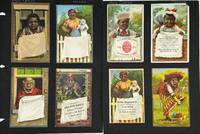
réf. 6863398 of the cards are mounted to black album paper 12 are loose all are housed in a three-ring binder. Chips to the edges of several cards but very good overall. For the lot of 110 cards unknown books
1993réf. 224782Pasadena: The Symposium the University and the Committee 1993. 12p 8.5x11 inches information agenda sponsors and co-sponsors participating institutionsregistration form very good newsletter format of nested sheets staple holes at fore edge map of the university on rear panel. A symposium to consider the education policy implications of the North American Free trade Agreement. The Symposium, the University and the Committee unknown books
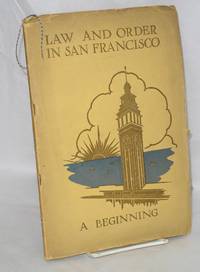
1916réf. 5551San Francisco: Chamber of Commerce 1916. Pamphlet. 41p. wraps the clerical edges worn with minor edge tears newsprint foldouts browned with some offsetting on facing pages else very good condition. The Chamber of Commerce's attack on union labor in San Francisco using the longshore and culinary strikes along with the preparedness day bombing of 1916 Tom Mooney and Warren Billings were framed for it as a reason to outlaw picketing and implement the open shop. Chamber of Commerce unknown books
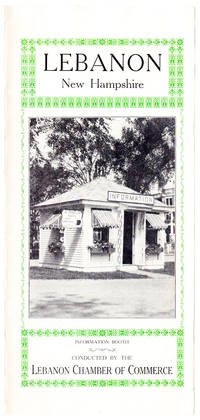
réf. 6319Lebanon: Knapp Printing Co. ca. 1930. Two-Color brochure 16" x 8.75" sheet folded into 8.75" x 4" printed on both sides one side with 4 panels including a 7.25 x 3" map in green verso with 6 b&w photographic illus. A 1930s brochure with images of the town of Lebanon population 7000 including the business district Hotel Rogers Lebanon Inn Carter Country Club Home and municipal buildings. Twin State Airport advertises a daily airplane service and cement road access. CONDITION: Very good light wear at extremities. Lebanon: Knapp Printing Co., ca. 1930 unknown books
1860réf. D4923Pennsylvania 1860s-1870s. Hardcover. Very Good. Ledger belonging to Levi Oberholzer manufacturer of cough medicines in Lancaster Pennsylvania. Reverse calf oblong 4to about 9.25-by-7.75 inches; spine stamped: RECEIPTS; contains hundreds of manuscript entries acknowledging payment for materials and ingredients for remedies many with attached revenue stamps plus numerous bank checks payable to Oberholzer's order. Offers a wealth of handwriting specimens and signatures pretty engraved checks and more from Philadelphia Boston and New York as well as smaller cities and towns in the northeastern United States. A nice example of the commerce of the period specific to health medicine and pharmacy. hardcover books
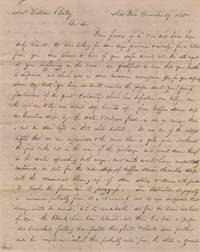
1835réf. BK0025New York City 1835. Autograph letter signed by the merchant firm Baker & Moore 4 pp. addressed to General William Battey care of Dr. Charles Luzenberg at the Franklin Infirmary on the Pontchartrain Railroad New Orleans. Stampless folded letter with red circular "NEW-YORK" December 31 datestamp and manuscript "25" rate. Appx. 1000 words. File folds; otherwise very good. A lengthy commercial letter written thirteen days after the Great Fire of New York describing the destruction of the city's mercantile district and tracing its immediate effects through insurance capital banking commodity prices and trade with New Orleans. Written by the New York firm of Baker & Moore to their associate William Battey the letter provides a near-contemporary account of the fire an assessment of the city's financial resilience and instructions for exploiting the resulting fluctuations in the markets for brandy wine raisins tobacco iron and copper. The fire began on the evening of December 16 during an extraordinary cold spell and northwest gale. Frozen hydrants wells cisterns and hoses left the city's volunteer fire companies largely unable to contain it. By the following day the fire had destroyed much of the commercial district between Wall Street and the East River including the Merchants' Exchange and hundreds of stores and warehouses. Buildings were eventually demolished with gunpowder to create firebreaks at Exchange Place and Coenties Slip. Contemporary estimates varied but approximately 674 buildings were destroyed with losses eventually placed at twenty million dollars or more.1 Baker & Moore begin by describing the extent of the burned district the severe weather and the use of explosives to arrest the flames: "Since my last you have no doubt received the paper sent you giving particulars of the great calamity which has befallen our City. On the 16th our City was about half burned up. From Coffee House Slip to Coenties Slip by the water & William Street is all in ruins. There is but one store left in that whole district. It was one of the coldest nights that we ever experienced & the wind blew a gale from Northwest. The fire broke out in the rear of the Exchange and went down through to the water spreading both ways and would have undoubtedly continued on but for the wide slips of Coffee House & Coenties Slip with the occasional blowing up of some stores & houses with powder to check the flame in its progress" The account quickly turns from the physical destruction to the distribution of its financial losses: "The destruction of property is immense probably from 10 to 15000000$ and it was supposed that many would be ruined but tis remarkable so far we have not heard of one. The Banks have been liberal and there has been a proper and benevolent feeling manifested throughout & should some further aid be brought in which probably will from the State or general government we think there may be no failures. The Insurance companies most of them are ruined and the principal loss is in Insurance capital. The loss will in some instances fall upon those who cannot well afford it. Many widows & orphans have had their all taken from them. The loss is large and New York has met with a great calamity but she is made of such materials & her facilities are so large & varied that the mercantile community will bear up under more than any other place in the Union & we think in one year's time it will be almost forgotten." The confidence expressed here correctly anticipated the city's rapid commercial recovery. Banks and government agencies extended credit and payment terms rebuilding began almost immediately and the burned district was reconstructed with new countinghouses and warehouses. The disaster also exposed the inadequacy of New York's water supply and firefighting arrangements contributing to later infrastructure and institutional reforms. Baker & Moore then apply the disaster to their own trade with New Orleans. Hundreds of warehouses and their contents had been destroyed increasing prices of imported foods wines and spirits. The firm instructs Battey to use the New York price current to obtain higher prices for their consignments: "This fire has advanced most all kinds of goods. Raisins are worth here $3-$3½. Wines such as Mess. Eastman's have advanced with us 4-6 cents. So many hundred casks destroyed must advance it and make it higher through the season. More than one half the Brandy was consumed tis now selling at $1.75 and some are asking $2. We wish what we sent you sold & this will be a favorable time to sell-show N.Y. price current-and get as good a price as you can. There will we think be no want of Brandy. Those raisins we think you had better dispose of at once. We think from N.O. current must pay something handsome for us. In regard to old Iron we find good old iron will always sell for the money for 112½ gross hundred equal to 1c per lb. Cast & wrought are same price. If you can come across a lot to do you may make it answer & pay us well. Copper if you can buy low enough may pay something. We thought hay might pay out but tis so high we cannot buy to send. We are of opinion that goods generally will be higher in consequence of this fire yet when we consign goods we wish them sold when they can to pay and we wish Eastman & Co. to sell and close up our affairs in their hands." The concluding paragraph briefly introduces events in Florida. The Second Seminole War had begun that month following mounting resistance to the forced removal of the Seminole people from Florida. Baker & Moore believed that the conflict might affect the movements of a brig expected in New Orleans: "We observe that trouble is anticipated with the Indians in Florida & if so our Brig may not get a load of them & be in N. Orleans earlier than we anticipated tis uncertain what will be the result they may detain her longer until they can get them on board." The wording appears to indicate that the vessel was expected to transport a group of Native people although the letter does not identify the brig its owners or the precise circumstances of the contemplated voyage. The recipient General William Battey was then in New Orleans apparently acting as Baker & Moore's commercial representative while also attending to his health at the Franklin Infirmary. The firm gave him considerable discretion to supervise consignments collect funds purchase goods when opportunities arose and forward current market information to New York. The address places him in the care of Dr. Charles Aloysius Luzenberg who founded the Franklin Infirmary with municipal support in 1835 and subsequently helped establish the Medical College of Louisiana the forerunner of Tulane's medical school.2 Baker & Moore appear to have been commission or importing merchants whose own affairs escaped direct damage but whose trade was immediately altered by the destruction of competing inventories. The letter thus follows the fire from the burned commercial district into the decisions of a New York firm and its representative in New Orleans. A substantial contemporary account of the Great Fire of 1835 documenting the destruction of New York's commercial center and the disaster's immediate movement through insurance banking commodity markets interregional credit and trade with New Orleans. We find no similar examples on the secondary market or in auction records. 1 Herbert Asbury "The Great Fire of 1835" The New Yorker July 26 1930. 2 Louisiana Historical Association "Luzenberg Charles Aloysius" in Dictionary of Louisiana Biography accessed August 2 2026 https://www.lahistory.org/resources/dictionary-louisiana-biography/dictionary-of-louisiana-biography-l/. . unknown books
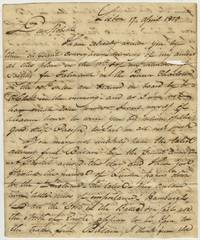
1813réf. BK0183Lisbon 1813. Autograph letter signed 3 pp. on a folded sheet with integral address panel to Messrs. Brown & Ives Providence Rhode Island and Newport "SHIP" and circular datestamps. 8 x 9 ¾ inches. Folded for mailing with considerable wear along the folds several tears and small losses including losses from opening the seal affecting scattered words. Good overall and substantially legible. A commercial letter written from Lisbon during the War of 1812 by "P. Falconer" probably the Baltimore merchant Peregrine Falconer. The identification remains somewhat tentative but the 1812 Baltimore directory lists Comegys Falconer & Co. merchants at 190 Baltimore Street while later Maryland Chancery records document the estate of Peregrine Falconer; Missouri archival records also document Falconer and Comegys and both "Perregrine" and "Perry" Falconer. Falconer was preparing to sail from Lisbon for Falmouth and writes Brown & Ives with the latest commercial and political intelligence reaching Portugal. He expected the widening European opposition to Napoleon to bring still more nations into the war then turned immediately to British policy toward American trade: "from the complexion of affairs that in the course of the Summer all the powers in Europe will be joined against France. If I am correctly informed a new duty of 6d. pr lb in addition is imposed in Britain upon American Cotton . Savannah Charleston & New York in a state of Blockade - this with the new duty has advanced the Price of Cotton .". The Russo-Prussian alliance had been concluded only weeks earlier Sweden joined the anti-Napoleonic alliance on March 24 and the coalition would continue to expand during the year. At the same time the English Parliament was debating additional duties on American cotton: on March 31 the government proposed sixpence per pound on American cotton imported in foreign vessels while Alexander Baring warned that American cotton carried by neutral ships would consequently bear a total duty of ninepence per pound. British naval pressure on the American coast was also rapidly increasing during the spring of 1813 trapping increasing amounts of American shipping in port. Falconer's letter thus records from Lisbon the immediate commercial relationship between the blockade British taxation and the price of American cotton. The war also forced Falconer to reconsider how Brown & Ives should communicate with him once he reached Britain. He gives explicit instructions intended to obscure their route: "I presume the only means of corresponding with Liverpool will be by the way of Lisbon. I have to request that you will write to me . frequently enclosing your letters under cover to Messrs. - & Brown without marking 'Via Lisbon' as letters coming from America are all opened in Britain." The remainder concerns the practical movement of merchants and shipping through the same wartime network including Falmouth and Liverpool passage arrangements vessels preparing to sail and convoying. Overall a useful merchant's-eye letter from the spring of 1813 with the blockade of American ports the British cotton duty the developing coalition against Napoleon and the routing of commercial correspondence all appearing as parts of the same Atlantic problem. . unknown books
1842réf. 3123New Orleans: January 21 1842. About very good. 3pp. on a folded folio sheet. Old folds. Small loss from wax seal affecting a few words on third page. Light wear and soiling. A wandering "woe is me" missive from Charles Penfield to his business partners back home in Massachusetts detailing his numerous misfortunes on a journey by boat to Mexico and thence to New Orleans. He writes: "To tell you of my misfortunes I think you should rather console with me than to sensure sic me however you can write your friends in Baltimore & let them see me &c. First of my troubles I was fined in Mexico as you have the documents to amount of moste 600 dollars with the expenses. Next misfortune was detained in town 22 days to attend to the board 2 dolls. per day horse hire about 25 or 40 dolls. with expenses on the road vessel being 40 miles before the town. Next I took the yellow fever or Mexican fever & as you must expect my bill was high when I went to town. The deaths was 25 a day population of 6000." He goes on to detail freight costs to New Orleans and the other expenses related to the journey writing: "You had better get these papers translated by some Spanish merchant in Boston & make claim on Mr. Brown." He also notes in a post script that the price of freighting cotton to Liverpool is a half penny per pound. A detailed account of the trials and tribulations of uncertain business ventures in antebellum America. January 21 unknown books
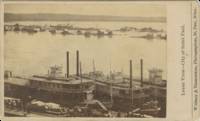
1870réf. List3896St. Paul Minnesota 1870. Carte de visite measuring 2 ½ x 4 inches captioned "Levee View-City of Saint Paul. / Whitney & Zimmeram Photographers St. Paul Minn. Excellent. A carte de visite photograph of steamboats on the levee in St. Paul Minnesota on the Mississippi River. By the time of Minnesota statehood in 1858 its Upper and Lower Levees together were one of the busiest ports in the country though activity was slowed by the 1862 Dakota War.1 The photograph is attributed to Whitney & Zimmerman. Joel E. Whitney 1822-d. born in Maine was the first photographer in St. Paul known for his portraits of Minnesota volunteers in the Civil War and of Indigenous Minnesotans.2 Charles A. Zimmerman 1844-1909 was a French-born photographer who immigrated to the US in 1848. The two worked as partners in the 1860s and 1870s and are together best known for their series of views of Minnehaha Falls.3 1 Joe Lepsche "The Upper Levee: Memories of Its People And Its Place in St. Paul History" Ramsey County History 33 no. 1 Spring 1998:18-21. 2 "Joel Emmons Whitney" The Autry Museum of the American West accessed May 28 2026 https://collections.theautry.org/mwebcgi/mweb.exerequest=record;id=PE65213;type=701. 3 "Charles A. Zimmerman" Smithsonian American Art Museum accessed May 28 2026 https://americanart.si.edu/artist/charles-zimmerman-7133. unknown books
1870réf. List3887654359St. Paul Minnesota 1870. Carte de visite measuring 2 ½ x 4 inches captioned "Levee View-City of Saint Paul. / Whitney & Zimmeram Photographers St. Paul Minn. Excellent. A carte de visite photograph of steamboats on the levee in St. Paul Minnesota on the Mississippi River. By the time of Minnesota statehood in 1858 its Upper and Lower Levees together were one of the busiest ports in the country though activity was slowed by the 1862 Dakota War.1 The photograph is attributed to Whitney & Zimmerman. Joel E. Whitney 1822-d. born in Maine was the first photographer in St. Paul known for his portraits of Minnesota volunteers in the Civil War and of Indigenous Minnesotans.2 Charles A. Zimmerman 1844-1909 was a French-born photographer who immigrated to the US in 1848. The two worked as partners in the 1860s and 1870s and are together best known for their series of views of Minnehaha Falls.3 1 Joe Lepsche "The Upper Levee: Memories of Its People And Its Place in St. Paul History" Ramsey County History 33 no. 1 Spring 1998:18-21. 2 "Joel Emmons Whitney" The Autry Museum of the American West accessed May 28 2026 https://collections.theautry.org/mwebcgi/mweb.exerequest=record;id=PE65213;type=701. 3 "Charles A. Zimmerman" Smithsonian American Art Museum accessed May 28 2026 https://americanart.si.edu/artist/charles-zimmerman-7133. unknown books
réf. 2473Denver Co.: The Company 1919. . 4to buff wrappers front pictorial printed in black and darker beige No holdings in OCLC for this company but its forerunner J. George Leyner is represented in 3 holdings . Denver, Co.: The Company], [1919]. unknown books
1950réf. 5503N.p.: Ministerstvo Pishevoy Promishlennocti 1950. Octavo-sized accordion fold 25 x 18 cm. 24 pages. Illustrated with seventeen color plates by C.B. Popov. FIRST EDITION. A trade catalogue of Russian liquors issued by the Russian Ministry of Food. The spirits are of all types with a wide range of vodkas but also a rich variety of cordials brandies and dessert liqueurs. The handsome color plates all stand out for their single color backgrounds and the printing process would appear to have been a hybrid combining photolithography and lithography and then colored. Whatever one makes of the Soviet cultural landscape in general it did attain high standards in some fields and in a modest way this trade catalogue is a proud reflection of its aesthetic achievement. Clean and bright within. Textured wrappers with debossed copper lettering and gilt ruling; lightly soiled and with wear and some separation at spine. Good. OCLC locates no copies. Ministerstvo Pishevoy Promishlennocti unknown books