MOUTON Eugène:Livre Rare Book

1828 risultati
1884rif. 3523Paris, Paul Ollendorff, 1884. 1 vol. in-8 de XIII-359-[2] pages. Demi-maroquin rouge, dos à nerfs, tête rouge, 1er plat de couverture conservé. Belle condition. Reliure signée H. Petit.
rif. 15579Bruxelles, E. Laurent, 1835. In-32, 339 pp., demi veau rubis à coins, dos à nerfs orné, tête dorée, couverture conservée, reliure signée L. Claessens & fils (quelques rousseurs).
rif. DADAX0394828739New unknown
1996rif. Q-030433264xCassell 1996-03-01. Paperback. New. In shrink wrap. Looks like an interesting title! Cassell paperback
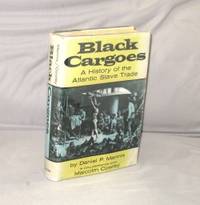
1962rif. 29404New York:: Viking Press 1962. Second Printing of the First Edition. A Very Good copy in a Very Good plus unclipped dust jacket with light edge wear to the extremities. The African slave trade in the Americas officially began in 1518 with the landing in the West Indies of the first black cargo direct from Africa and was offically suppressed in the United States in 1865. It is estimated that approximately 15 million Africans had crossed the Atlantic during this period. This book attempts to tell where the slaves came from how they were enslaved in Africa how they were purchased by sea captains how they wre transported and how the trip survivors were sold in West Indian and American markets. Viking Press, unknown
1862rif. 61272New York: D. Appleton & Co 1862. Second Edition. Octavo 20.5cm. Green cloth titled in gilt on spine; yellow coated endpapers; 39018pp; 8 tinted lithographs. A firm copy rubbed at spine ends and bumped at corners mildly foxed: Very Good. Commander Andrew Hull Foote 1806-1963 served on the USS Perry from 1849 to 1851 suppressing the slave trade off the coast of Africa. In 1854 he published an abolitionist history of Africa describing African cultures American colonies and the slave trade. He was a noted commander for the Union Navy until his unexpected death of kidney disease in 1863. D. Appleton & Co unknown
1862rif. 61272New York: D. Appleton & Co 1862. Second Edition. Octavo 20.5cm. Green cloth titled in gilt on spine; yellow coated endpapers; 39018pp; 8 tinted lithographs. A firm copy rubbed at spine ends and bumped at corners mildly foxed: Very Good. Commander Andrew Hull Foote 1806-1963 served on the USS Perry from 1849 to 1851 suppressing the slave trade off the coast of Africa. In 1854 he published an abolitionist history of Africa describing African cultures American colonies and the slave trade. He was a noted commander for the Union Navy until his unexpected death of kidney disease in 1863. D. Appleton & Co unknown books
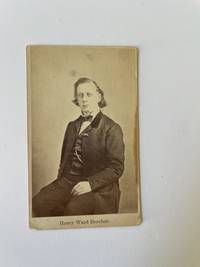
1861rif. 156211861. Beecher Henry Ward circa 1860s carte-de-visite portrait depicts the Congregationalist minister and abolitionist during the decade in which the national conflict over slavery culminated in the Civil War and emancipation. The Library of Congress identifies Beecher as an abolitionist author and Congregationalist clergyman with the bulk of his surviving papers dating from 1840 to 1865. As pastor of Plymouth Church in Brooklyn Beecher opposed the Fugitive Slave Law encouraged resistance to slavery supported Free-State settlers in Kansas and used his pulpit to raise money to purchase enslaved people from bondage. His association with antislavery rifles sent to Kansas also produced the widely used term "Beecher's Bibles." Albumen print carte de visite circa 1860s. 2½ x 4 inches. Sepia-toned image showing Beecher formally dressed and seated presented as a head-and-shoulders portrait. The small photographic format dates from a period when Beecher was nationally prominent as a clergyman and antislavery speaker. His abolitionist activity immediately preceding the Civil War included opposition to the Compromise of 1850 and Fugitive Slave Law and support for antislavery settlement in Kansas; in February 1860 he used Plymouth Church to raise the purchase price required to free a ten-year-old enslaved girl known as Pinky. The portrait dates to the decade in which Beecher's antislavery advocacy became connected to the Civil War itself. At the April 1865 flag-raising ceremony at Fort Sumter following the Union victory Beecher delivered an address condemning slavery after Robert Anderson raised the United States flag over the fort. The carte de visite is in excellent condition. A contemporary photographic portrait of one of the nineteenth century's prominent abolitionist clergymen dating from the period encompassing the Civil War and the abolition of slavery in the United States. unknown
1861rif. 156211861. Beecher Henry Ward circa 1860s carte-de-visite portrait depicts the Congregationalist minister and abolitionist during the decade in which the national conflict over slavery culminated in the Civil War and emancipation. The Library of Congress identifies Beecher as an abolitionist author and Congregationalist clergyman with the bulk of his surviving papers dating from 1840 to 1865. As pastor of Plymouth Church in Brooklyn Beecher opposed the Fugitive Slave Law encouraged resistance to slavery supported Free-State settlers in Kansas and used his pulpit to raise money to purchase enslaved people from bondage. His association with antislavery rifles sent to Kansas also produced the widely used term "Beecher's Bibles." Albumen print carte de visite circa 1860s. 2½ x 4 inches. Sepia-toned image showing Beecher formally dressed and seated presented as a head-and-shoulders portrait. The small photographic format dates from a period when Beecher was nationally prominent as a clergyman and antislavery speaker. His abolitionist activity immediately preceding the Civil War included opposition to the Compromise of 1850 and Fugitive Slave Law and support for antislavery settlement in Kansas; in February 1860 he used Plymouth Church to raise the purchase price required to free a ten-year-old enslaved girl known as Pinky. The portrait dates to the decade in which Beecher's antislavery advocacy became connected to the Civil War itself. At the April 1865 flag-raising ceremony at Fort Sumter following the Union victory Beecher delivered an address condemning slavery after Robert Anderson raised the United States flag over the fort. The carte de visite is in excellent condition. A contemporary photographic portrait of one of the nineteenth century's prominent abolitionist clergymen dating from the period encompassing the Civil War and the abolition of slavery in the United States. unknown books
rif. DADAX019511809XNew unknown
rif. DADAX0801443849New unknown
rif. DADAX0313320195New unknown
rif. DADAX0190908386New unknown
rif. DADAX0300192010New unknown
rif. SONG0199739706Used: Good unknown
rif. DADAX0520286219New unknown
1860rif. 82961860 demi-rel. basane verte. in-12, (2pp.), 301pp., P. Michel-Lévy 1860,
First edition, 15 pp., author's name supplied on title, modern wrappers. Sabin, 56538; Ragatz, p.343.
First edition, [2], 78, [2]pp., slight foxing of first few leaves, folding table, disbound. In reply to "An Address to the Members of the New Parliament, on the proceedings of the Colonial Department.....", which held that if slaves were freed they would not work, and as a consequence the colonialist's properties would fall into decay through lack of labourers. This pamphlet denies that the proceedings of the Colonial Department on the matter of Caribbean slavery had been injudicious and unauthorised. Ragatz, p.451; Sabin, 69410.
rif. SONG0195305698Used: Good unknown
rif. DADAX0199739706New unknown
rif. DADAX0521870119New unknown
197266 pages. Features: John Chisum - Empire Builder; Little Sister of Courage; Moman Pruiett - Genius of Hate; The Day Wyatt Earp Died; Tragedy on the Sweetwater; Guarding the Rio Grande (cover story); The Northfield Raid; Revival Meeting Cutups; Lake of the Pawnee Blood; "I Met Butch Cassidy"; Poker Alice - the West's First Female Gambler; Early Day Fire Departments; Slavery in the West. Magazine
1876rif. 2754Paris, Imprimerie Nationale, 1876. In-8 broché de 226 pp., couverture bleue imprimée.
1875rif. 2755Paris, Imprimerie Nationale, 1875. In-8 broché de 207 pp., couverture bleue imprimée.