1.545 Ergebnisse
1908Best.-Nr. 2201030038xbvkBlackburn, R. Denham & Co. / Southport, Shackerley Literary Agency; 1908. viii pages incl. foretitlepage, photographic frontispice-plate on glossy paper, titlepage, Dedication, 'Prelude', 'Contents' and prefaces to the first (''Feb. 16th, 1907.'') and this second edition (''Jan. 1st, 1908.''); 92 pages, except the photoplate printed on untrimmed handmade rag-paper throughout. - Publisher's illustrated cardboard-wrapper, titled in red and black, ornamentally framed; 8vo.(ca. 19,5 x 13,5 cm).
1791Best.-Nr. 7496BBElberfeld, Chr. Wilhelm Giesen, 1791. 8°. XX S., (2) Bl., 608 S.; XXXIX, 574 S.; (4) Bl., 400 S. Mit gest. Portrait. Pappband der Zeit mit verg. Rückensch. + Wichtig: Für unsere Kunden in der EU erfolgt der Versand alle 14 Tage verzollt ab Deutschland / Postbank-Konto in Deutschland vorhanden +, bild 3 Bände.
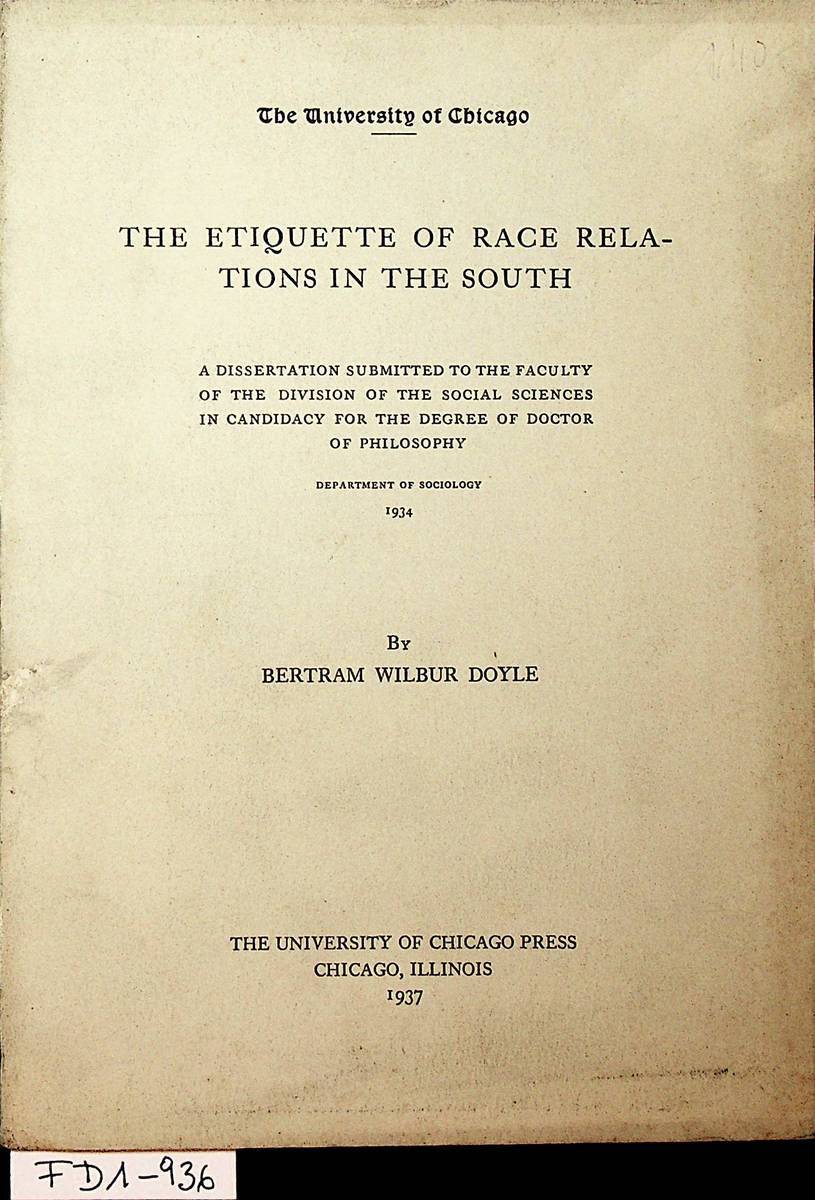
1937Best.-Nr. FD1-936Chicago, Univ. of Chicago Pr, 1937. original Broschur, 8?, XXV, 249 pages, a good copy
1998Best.-Nr. 40981BBArmonk, NY/London, Publishers: Sharpe, 1998. Original Flexible Boards. Very good Condition with only minimal Signs of Usage at the Cover. No Markings in the Text! No Underlinings! No Owner's Note! ('Latin American Realities').
1984Best.-Nr. Ge1324New York/London, W.W. Norton, 1984. Kartoniert. Ebd. u. Schnitt mit minimalen Gerbrauchs- u. Lagerspuren.- Sonst sehr gut erhaltenes Expl. 8° Buch Softcover
1895Best.-Nr. KULT0764Dresd. u. Lpz., Reißner 1895. VI, 200 S., HLn. d. Zt., Kanten leicht berieben u. abgewetzt, Ecken etwas bestoß., am vord. Innendeckel Besitzerstemp., vord. Vors. fingerfl., neu beschnitten.
1836Best.-Nr. 011073, 1836. Erstausgabe Goldgeprägter Halblederband Solide, Materiell Gut
1850Best.-Nr. 143199New York: M.B. Brady,, 1850. Format (Bildoval): 29 x 24,5 cm. Blattgröße: 37,5 x 27,5 cm.
1860Best.-Nr. 64534Augusta GA: Pritchard Abbott & Loomis 1860. Tall thick 8vo. xv 1 17-908 pp. plus 4 pp. publisher’s ads. Steel-engraved frontisp. 4 steel-engraved frontisp. plates for individual work interspersed. Contemporary full sheep red black & gilt spine labels rebacked w/ original labels laid-back down scuffing edgewear foxing to endpapers some foxing & occasional toning on some leaves tidemark at gutter margin through first few leaves still a VG- copy w/ ownership markings dated April 30 1860 for W.J. Freeman and Frank B. Freeman w/ price indicated as $ 6.00 about $ 250.00 today. First edition of this massive work considered the must-read for all good pro-Southern planters on the eve of the Civil War with the editor in the introduction declaiming the “anarchy and bloodshed in Kansas. . . the existence of the ‘Underground Railroad’ . . . a party in the North organized for the express purpose of robbing the citizens of the Southern States of their property; the almost daily occurrence of fugitive slave mobs. . . attempt to circulate incendiary documents among the slaves in the Southern States. . . and finally the recent attempt to excite at Harper’s Ferry and throughout the South an insurrection and a civil and servile war.” By 1860 slavery was becoming more concentrated in the southern United States fading somewhat from Brazil Cuba Puerto Rico and the Dutch Colonies and even in the U.S. abolitionist efforts had led to the proportions of lsaves dropping in Missouri from 18 to 10 percent of the populace Kentucky to 19 percent and even Maryland down to 13%. This anthology of racist polemics buttressed with the Dred Scott Decision included as one section blindly attempted to argue slavery was a humane and Christian institution justified by scripture and an economic underpinning of the South. Pritchard, Abbott & Loomis, unknown
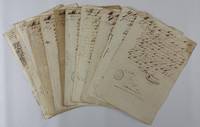
1873Best.-Nr. 12720Cuba 1873. Twelve manuscript documents on folio sheets approximately 8.5 x 12.5 inches all with official rubber-stamped seal. Small pinholes along left margin light wear occasional chipping to edges some ink bleed and light damp staining. Overall very good. A collection of documents recording the liberation or attempted liberation of numerous men women teenagers and a child from enslavement. The child is but seven years old while the remaining slaves range from fifteen to fifty-seven years old. The slave trade ended in Cuba around 1867 but the practice of owning slaves remained legal until 1880 and then was abolished completely by Spanish decree in 1886. Cuba was the penultimate country to outlaw slavery in the western hemisphere beating Brazil to formal abolishment by two years. Even before the official abolition of slavery in Cuba African or criollo slaves were manumitted by a variety of owners and at various costs as evidenced here especially after the practice of importing Chinese indentured servants began. Each of the present documents names the slaveholder and the slave granted "libertad" along with the cost in escudos or pesetas of that liberty. The slaves liberated here are as follows: 1 Luis criollo 7 years old for the sum of 28 pesos 2 Maria Antonia part criolla 20 years old for the sum of 2500 pesetas 3 Catalina morena de Africa 41 years old for c.200 pesetas 4 Lorenzo moreno criollo 21 years old for 2500 pesetas 5 Lucia morena criolla 15 years old for 320 pesos or 1600 pesetas 6 Frigidae "negro.de Africae" 56 years old 7 Augusto criollo 19 years old for 1750 pesetas 8 Marta criolla 16 years old for 1621 pesetas 9 Gil moreno de Africa 57 years old for 1500 pesos 10 Carmita morena criolla 20 years old for 1750 pesetas 11 Augustina Prieto morena criolla 30 years old for 1750 pesetas 12 Edwigio 39 criolla; Lazara 36 criolla; and Maria Leoncia 15 criolla for 2000 pesetas. These Cuban slave manumissions are offered with one 1844 manumission document liberating a slave in Spain totaling two pages and measuring about 8.5 x 13.5 inches. The document also has three rubber-stamped official seals at the head noting Isabella II. This document appears to free slave Nicolas 25 years old for the sum of 400 pesos and is signed November 5 1844. unknown
1798Best.-Nr. 1244831798. First Edition. SMITH Elihu.Hubbard. A Discourse Delivered April 11 1798 At the Request of and Before the New-York Society for Promoting the Manumission of Slaves and Protecting Such of Them as Have Been or May Be Liberated. New-York: T. & J. Swords 1798. Slim octavo original tan self-wrappers string tied uncut; pp. 1-5 6-30 2. $3500.First edition of Smith's scathing attack on American slavery declaring it a betrayal as ""thousands of your fellow-beings children of the same father and inheritors of the same destinyÉ writhe under the lash of cruelty"" an exceptional 18th-century abolitionist work published barely ten years after ratification of the Constitution exceedingly rare uncut in original wrappers.Trained as a physician under Benjamin Rush ""Smith was an early abolitionist a member and Recording Secretary of the New York Manumission Society and trustee of the city's African Free School"" Stevenson Litchfield Native. ""Passionately committed to the improvement of the fledgling nation through the acquisition and circulation of information"" Smith's analysis of slavery in this very rare work published the same year as his early death at 27 expresses his and the Society's commitment ""to ideals of human perfectibility which they combined with the practical labor of achieving change"" Kelly on Kaplan Men of Letters. Here he takes aim at leaders and nations where the ""spirit of despotismÉ multiplied and extended the evil"" of slavery and ""wrought it into a system."" Noting the influence of renowned abolitionists John Woolman and Anthony Benezet he asserts that it is those in slave trade who particularly ""opened a new field forÉ every baneful enterprise"" when they became ""the first to violate the noble principles by which they had been guided."" Smith especially speaks to American leaders and slaveholders who concede ""slavery is unjust"" but claim ""it is entailed upon us by our fathers; it is interwoven with every part of our social organization."" In reply he declares that it is ""strange reasoning"" to endorse slavery simply because it exists. Arguing ""the laws of our country authorized the possession in human flesh"" he asks: ""Shall the legislators of a great nation be denied the powerÉ of acknowledging their errors and laboring to correct themÉ Encumbered as we are with this mighty evil"" Smith proclaims: ""You yes you the Legislators of America you are the real upholders of slaveryÉ you foster and protect itÉ you immortalize injusticeÉ while thousands of your fellow-beings children of the same father and inheritors of the same destinyÉ writhe under the lash of cruelty."" Evans 34554. Sabin 82502. Dumond 103. ESTC W37980. Not in Blockson. Text quite fresh with only faintest foxing to original wrappers. An excellent about-fine uncut copy in original wrappers. unknown
1865Best.-Nr. 1260191865. First Edition. CONSTITUTION. Journal of the House of Delegates of the State of Virginia. for the Session of 1864Ñ5. Alexandria: D. Turner 1865. Octavo original front printed wrapper respined renewed rear wrapper original string stitching; pp. 1-3 4-83 1. Housed in a custom chemise and clamshell box. $4500.First edition one of 500 copies of the momentous Journal featuring its February 9 1865 entry on the Alexandria Virginia government's passage of the 13th Amendment mere days after the U.S. Congress the first of the four Unionist southern states to pass the Amendment also featuring the governor's Message noting: ""though we have in inherited from our fathers of the revolution the blessings of a great nation yet they also left to us an inheritance of African slavery which has proved a bitter dreg in our cup of freedom"" a vital record of forces for constitutional change near the end of the Civil War.Soon after the 1860 election amidst southern secession ""the great questions of union or disunion war or peace hung in the balance. Probably the crucial weight on the scale was VirginiaÉ as long as the federal government did not seek to coerce the states Virginia secessionists were unable to achieve a majority. When Lincoln responded with force to the attack on Fort Sumter however the vote in Virginia went in favor of secession."" Subsequently a Virginia convention ""met in Wheeling on May 13 1861É it elected as Governor Francis Pierpont a western Virginian and ardent Unionist and arranged for the creation of a legislature to replace the body sitting in RichmondÉ in July 1861 the new legislature met at the 'Restored Virginia' capital of Wheeling in a special session called by Pierpont."" Against its ""claim to represent a majority of Virginians"" a new state of West Virginia was created in 1863 and Pierpont's government moved to Alexandria to govern areas of Virginia under Union occupation Harrison Lawfulness of the Reconstruction Amendments 380-83.Scholars observe that the 13th Amendment its fellow amendments and Reconstruction as ""both a political process made possible by military successes and constitutional thought grew from wartime as well as post-Appomattox developments"" Hyman and Wiecek Equal Justice 247. This rare first edition of Journal of the House of Delegates substantiates that in documenting passage of the 13th Amendment by Pierpont's Virginia government mere days after the U.S. Congress passed the Amendment on January 31 1865. With that Virginia became the first of the four Unionist southern states that ratified the 13th Amendment. Of those Louisiana followed on February 17 with Arkansas and Tennessee that April. The 13th Amendment is the focus of the Journal's entry for February 9 1865 which states: ""Mr. Brownley called up Senate bill No. 12 entitled 'An Act to ratify the joint resolution of Congress passed January 31 1865 proposing an amendment to the Constitution of the United States.' The bill was read the first and second timeÉ and the rules were suspended and the bill read the third timeÉ and the bill passed."" Also notable herein is the complete printing of Governor Pierpont's opening Message where he notes: ""though we inherited from our fathers of the revolution the blessings of a great nation yet they also left to us an inheritance of African slavery which has proved a bitter dreg in our cup of freedom."" He speaks at length of the rights due people of color and the abolition of laws such as those that prohibit ""negro testimony"" or proscribe a ""different punishmentÉ for persons of African dissent"" from that of ""white persons.""""The legislature met for its second session on December 5 1864É The governor's message was a long and important document and indicated the changes of opinion that the war was bringing about. Pierpont gave his views upon the all-important negro question. He congratulated the constitutional convention which had met in the spring on the abolition of slavery in Virginia and advocated sweeping changes in the laws concerning negroes. The act prescribing different punishments for blacks should he said be altered in accordance with the amended constitution as well as the law for apprenticing them. The law prohibiting the education of negroes should be abolishedÉ His language was on the whole very moderate. He advised the legalizing of the marital relations of negroes and most important the establishment of public schoolsÉ Notwithstanding the governor's advice no acts of great importance passed the legislatureÉ On February 9 1865 the assembly ratified the 13th Amendment to the Constitution of the United States. It adjourned on March 7"" Eckenrode Political History of Virginia During the Reconstruction. Faint ""U.N.C. Duplicate"" stamp to front wrapper.Text fine; just a bit of faint soiling and a tide line to fragile front wrapper. An excellent copy of this elusive item. unknown
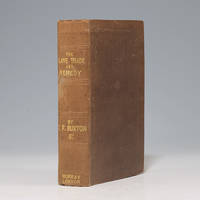
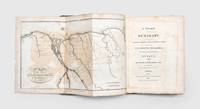
1840Best.-Nr. 1132391840. First Edition. SLAVERY BUXTON Thomas Fowell. The African Slave Trade and its Remedy. London: John Murray 1840. Octavooriginal brown clothuncut and partially unopened; pp.14 viii 3 6-273 274-276 i ii-vi 277 278-582. $2800.First expanded and revised edition of British abolitionist Buxton's powerful call for an end to the slave trade the first to include his extensive and influential Remedy two major works that followed the lead of Wilberforce in calling for treaties and commerce to end the slave trade and outlined a way to ""secure the regeneration of Africa through agricultural development"" with large folding map a handsome copy in original cloth.Quaker Thomas Buxton was in Parliament when in 1824 Wilberforce asked him to become his successor. ""In 1789 Wilberforce had begged Parliament to 'make reparation to AfricaÉ by establishing a trade upon true commercial principlesÉ Fifty years later Buxton redeveloped this appeal in The African Slave TradeÉ To support his vision Buxton formed the African Civilization Society July 1839."" In this first expanded edition of African Slave Trade 1839Ñthe first to include his RemedyÑBuxton argues for the ""agricultural colonization of West Africa and the development of a broad-based commerce that could undercut the economic dominance of the illicit slave trade"" Hopkins Peter Thonning 615. He documents the horrors of the Middle Passage to show that despite all efforts to end the slave trade ""twice as many human beings are now its victims as when Wilberforce and Clarkson entered upon their noble task."" And in Remedy he further develops his argument: showing how ""legitimate commerce would put down the Slave Trade by demonstrating the superior value of man as a laborer on the soil to man as an object of merchandise.""With African Slave Trade and its Remedy Buxton powerfully ""synthesized contemporary currents of thought developed the arguments about the relationship between abolition and African improvement more systematically than before and then catapulted them to national prominenceÉ His views prevailed. The belief that the only way to suppress the African slave trade was to promote 'legitimate commerce' and that this new trade would launch Africa on the road to moral and material progress became the conventional wisdom in mid-19th-century Britain."" Among those he convinced was David Livingstone who as ""an unknown medical student attended the 1840 meeting of the African Civilization Society where Buxton first announced his remedy for the slave trade. What Livingstone heard on that occasion helped inspire a lifetime of work and travel on the continent"" Mann Slavery and the Birth of an African City 88-90. First expanded and revised edition: first to include Buxton's Remedy which was issued separately in 1839. Precedes the first American edition. With folding map of ""Central Africa."" Paginated as issued without loss of text. With 14-page ""Prospectus of the Society for the Extinction of the Slave Trade and for the Civilization of Africa"" preceding title page. Sabin 9685. Goldsmith's 31743. Kress C5121 See Goldsmith's 31181; Kress C4818; Blockson 9121. Interior fresh with light foxing to folding map as often front inner paper hinge starting but very sound mild rubbing and toning to bright original cloth. A desirable near-fine copy. hardcover
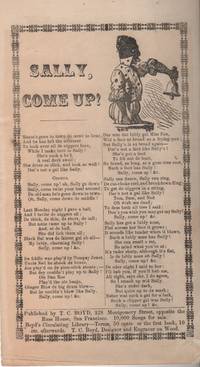
1860Best.-Nr. 43380San Francisco: T.C. Boyd 1860. Near fine. Racist slavery-era broadside printed and designed by one T.C. . Boyd featuring a drawing and lyrics to a ballad which begins: "Massa's gone to town de news to hear / And he has left the overseer / To look over all de nrs here / While I make love to Sally!" Boyd notes he had 10000 such sheets for sale at his shop. Broadside 8.5" by 4.5". Printed from type and wood engraving. Very near fine with trivial crease to edges. T.C. Boyd unknown
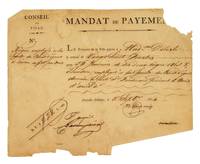
1914Best.-Nr. 1272741914. New Orleans: September 1 1814. Single sheet 242 x 197 mm printed and manuscript document age-toned with considerable edgewear and the loss of two corners affecting only two characters of the title and with no loss of sense. Good. § Municipal payment order issued by the New Orleans City Council to its treasurer to pay for the hire of two enslaved men Abel and Theodore to work on the drainage canal at Fort St. Ferdinand. The document is dated a few months before the Battle of New Orleans and likely concerns improvement to the city's defensive works. Nicholas Girod was mayor of New Orleans from 1812 to 1815. He was the first regularly elected mayor after Louisiana's admission to the Union and did much to prepare the city against the British invasion force. The text of the document reads: Conseil de Ville. Mandat de Payement Le Trésorier de la Ville payera à Madame Delisle la somme de Vingt huit Piastres pour 56 journées de ses deux nègres Abel & Théodore employés à la fouille du Canal d'égout derrière le Fort Saint Ferdinand pendant le mois d'août dernier. Nouvelle-Orléans le 1er Septembre 1814. signature N. Girod Maire Par le Maire struck through A marginal note adds "Nègres employés à la fouille du Canal d'égout à raison de $15 par mois. unknown
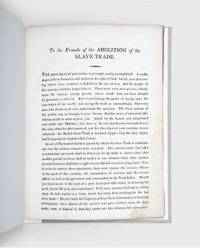
1807Best.-Nr. 190225London: W. Flint 1807. First edition published soon after the abolition of the slave trade in the British Empire appealing for Britain to make the international end of the trade a core part of its aims in the ongoing Napoleonic Wars. Quarto 248 x 194 mm 4 pp. Recent white and grey boards printed paper label to front cover. Light stain at bottom fore corner and light spotting: a good copy. hardcover
1807Best.-Nr. 177680London: Richard Phillips 1807. First edition of this account of the British colonies within modern-day Guyana. Bolingbroke was a staunch supporter of the Transatlantic slave trade which he discusses in Chapter Five and dedicated this work to the colonial secretary William Windham. Henry Bolingbroke 1785-1855 was a Norfolk merchant who first visited Demerara in 1798. This region had been under the control of the French and Dutch until it was captured by the British in 1796. Bolingbroke remained in the colony until 1805; he then travelled to Surinam in Dutch Guiana to become Deputy Vendue Master in 1807 responsible for public sales and auctions including those of enslaved people. He was one of the 16 MPs who voted against the abolition of slavery in March 1807. In Chapter Five Bolingbroke writes about slavery and what he viewed as its economic importance. In his dedication to Windham 1750-1810 he praised him for relaxing monopoly restrictions and "resisting the abolition of a liberty essential at new settlements of importing additional labourers" p. iii. Quarto pp. xii 400. Folding engraved map. Original green paper-covered boards rebacked modern spine label edges untrimmed. Signature of one George Atkinson on front pastedown a few pencil notes internally. Spine head stabilized boards marked foxing and toning to map and contents two small closed tears to map repaired offsetting to title page: a very good copy. Sabin 6182. hardcover
1850Best.-Nr. 1210761850. First Edition. SLAVERY SMITH Gerrit. Substance of the Speech Made by Gerrit Smith in the Capitol of the State of New York March 11th and 12th 1850. Albany: Jacob T. Hazen 1850. Octavo period-style half calf gilt marbled boards; pp. 1-3 4-25 26-27 28-30. $1500.First edition of the bold abolitionist's Speech proclaiming the Constitution ""does not allow the three million of our colored countrymen to be held in slavery"" a close friend of Frederick Douglass who ""openly embraced Smith's version of an antislavery interpretation of the Constitution"" delivered the same decade as John Brown's Harpers Ferry raid substantially financed by Smith.Smith a wealthy philanthropist was ""among the most outspoken"" of white abolitionists Jackson Force and Freedom 65. Once linked to William Lloyd Garrison's view of the Constitution as a ""covenant with death"" Smith split from Garrison and became a founder of both the Liberty Party and its successor the Radical Abolitionist Party. He was as well key in forging a close interracial alliance between Frederick Douglass Black abolitionist and physician James McCune Smith and John Brown. The four men shared the goal of achieving ""a 'radical change' in government."" By the early 1850s Douglass ""openly embraced Smith's version of an antislavery interpretation of the Constitution"" Blight 213. To Smith Douglass and figures as Alvan Stewart and Lysander Spooner ""the Constitution empoweredÑeven requiredÑCongress to abolish slavery in the southern states by direct legislationÉ As an editor Douglass had always engaged with national politics. Now the federal authority at the base of slavery's stranglehold on America became his intensive focus"" Blight 214; emphasis in original.This very scarce first edition captures the force of Smith's groundbreaking 1850 Speech and clearly demonstrates the breadth of his constitutional argument. Declaring ""law is for the protection of rightsÑnot for the destruction of rights"" emphasis in original he cites passages in the Declaration and Bill of Rights and addresses the pivotal ""three-fifths"" clause. Smith proclaims the Founding Fathers did not intend ""to make this whole land the slaveholder's hunting ground"" and asserts the Constitution ""does not allow the three million of our colored countrymen to be held in slavery."" He would use his wealth to help establish a Black settlement at North Elba N.Y. which was ""John Brown's permanent residence from 1854 until his death"" Stauffer Black Hearts 3. After Harpers Ferry and Brown's execution Smith faced demands that he be tried as an ""accessory after the fact."" While he ""publicly denied it Smith gave warm encouragement and financial assistance"" to Brown and the Harpers Ferry insurrection. Yet ""guilt over the failure of Brown's raid and fear of possible arrest as a co-conspirator caused Smith to commit himself to the Utica State Lunatic Asylum"" ANB. In time he publicly retreated from his Radical Abolitionist stance and died in 1874. Sabin 82670. A fine copy. hardcover
1845Best.-Nr. 1216681845. First Edition. PHILLIPS Wendell. Can Abolitionists Vote or Take Office under the United States Constitution New York: American Anti-Slavery Society 1845. Octavo half calf-gilt marbled boards; pp. 1-3 4-39 1. $1500.First edition of the provocative abolitionist's fierce attack on the ConstitutionÑproclaiming it ""an irredeemably proslavery document""Ñdeclaring its legacy implicates ""all Americans in the crimes of slaveholding"" and caused the American flag to be weighed ""heavy with blood.""An eloquent writer and orator abolitionist Wendell Phillips was the ""most important ally"" of William Lloyd Garrison who famously contended the Constitution was a ""covenant with death"" and ""an agreement with Hell."" As Garrison's ""deepest source of inspiration"" Phillips saw the ""abolitionist as the catalyst for revolution."" In this seminal work he contends ""that the U.S. Constitution was an irredeemably proslavery documentÉ and abolitionists must withdraw support from the political system because it implicated all Americans in the crimes of slaveholding"" ANB. He notes herein that since the ratification of the Constitution Americans witnessed ""slaves trebling in numbersÑslaveholders monopolizing the offices and dictating the policy of the GovernmentÉ making the courts of the country their tools.""A citizen's vote Phillips declares is ""an oath to support the ConstitutionÑthe whole of itÉ a contract with the whole nation"" emphasis in original. He cites key clauses quotes statements made by James Madison and others during its ratification and counters a series of 16 objections to the Garrisonian/Phillips position. In answering ""the question of slavery"" he states: ""we are not dealing with extreme casesÉ every sixth man is a slaveÉ the national banner clings to the flag-staff heavy with bloodÉ If the Constitution is not what history unbroken practice and the courts prove that our fathers intended to make it and what too their descendantsÉ say they did make it and agree to upholdÑwho shall decide what the Constitution is"" Scholar Paul Finkelman points out that while there now seems certain failure in the Garrisonian/Phillips position that the Constitution ""logically led to the conclusion that the free states should secede from the unionÉ in the 1830s and 40s the idea of a northern secession as a way of destroying slavery made some senseÉ what would happen if the Garrisonians accomplished their goal and the North left the Union to form a nation based on freedom instead of slavery It would be like moving the Canadian border to the Mason-Dixon line. Suddenly slavery would be threatened in Kentucky and Virginia because slaves could now escape to a free country just by crossing the Ohio River"" Making a Covenant. Phillips is widely esteemed as ""a commanding presence in the history of the nation's struggles to overcome racial and economic injustice"" ANB. First edition first printing: No. 13 The Anti-Slavery Examiner. '""Introduction"" signed in print ""Wendell Phillips. Boston Jan. 15 1845."" With ""Extracts from J.Q. Adams"" at rear. Sabin 81919. Text very fresh tiny gutter-edge-pinholes from original stitching handsomely bound. hardcover
1827Best.-Nr. 1184001827. First Edition. SLAVERY STROUD George M. A Sketch of the Laws Relating to Slavery in the Several States of the United States of America. Philadelphia: Kimber and Sharpless 1827. Octavo original half tan and light brown paper boards uncut. $1350.First edition of Judge Stroud's groundbreaking 1827 work documenting state slave laws and relevant Constitutional provisions held as a key resource for Harriet Beecher Stowe's Uncle Tom's Cabin a cornerstone volume Òconsidered by many the best of the ante-bellum studies"" on slavery uncut in original boards.""The ink was hardly dry on the Constitution when the powers of Congress relative to slavery were called into question"" Dumond 153. The Fugitive Slave Act was passed in 1793 and in 1819 Congress began a bitter debate over slavery in the territories that culminated in the 1820 Missouri Act. At this time Philadelphia Judge George Stroud began work on Sketch of the Laws. ""This work the first substantial legal treatise on American slavery is considered by many the best of the ante-bellum studies"" Cohen 9877. His coverage of state slave codes and Constitutional provisions is a cornerstone of the legal literature. Published well before ""the Dred Scott decision Stroud's book had extensive influence upon national legal thinking on the issue of slavery. For example it is believed by some scholars that Harriet Beecher Stowe gained her knowledge of slave laws from Stroud's work"" Johnson Stroud's Slave Laws vi. In legal literature of antislavery one key group is on ""slave codes and their administration. The purpose of these works was to use slave law as data credible data as to the realities of slavery. The first and in many ways the best of these works was George Stroud A Sketch of the Laws"" Cover Justice Accused 149n. Blockson 9965. Sabin 93097. Work 343. Harvard Law Catalogue II:680. Text generally fresh with scattered foxing mild embrowning mild edge-wear rubbing to spine label. A very good copy of a major early work on slavery. hardcover
1809Best.-Nr. 1187761809. First Edition. SLAVERYÑABOLITION MONTGOMERY James GRAHAME James and BENGER Elizabeth. Poems on the Abolition of the Slave Trade. London: Printed for R. Bowyer 1809 i.e. 1810. Tall quarto contemporary brown calf gilt rebacked with original spine laid down raised bands marbled endpapers and edges. $2000.First edition of famed publisher and artist BowyerÕs richly illustrated volume featuring eloquent anti-slavery poems by Montgomery Grahame and Benger a major antislavery work issued shortly after BritainÕs abolition of the slave trade with engraved portraits of abolitionists Sharpe Clarkson and Wilberforce engraved allegorical title page and nine full-page engravings after paintings by artist Sir Robert Smirke a handsome wide-margined copy in contemporary boards.This handsomely illustrated volume features three epic poemsÑMontgomery's The West Indies Grahame's Africa Delivered and Elizabeth Benger's A Poem Occasioned by the Abolition of the Slave Trade in 1806. All were ""commissioned by the London publisher Robert Bowyer for inclusion in a lavish volume of antislavery poetryÉ timed to celebrate the abolition of the slave trade"" Basker Amazing Grace 612. With biographies and engraved full-page medallion portraits of leading British abolitionists Sharpe Clarkson and Wilberforce Poems on the Abolition of the Slave Trade is especially noted for its nine full-page engravings and the allegorical title page vignette engraved by Scriven and Worthington after paintings by renowned artist Sir Robert Smirke whose works were considered ""gems in the art of history painting"" American Daily Advertiser. On presenting a copy to George III Bowyer described this as a ""most beautifully embellished volume of Poems which have been written expressly for the occasion on the Abolition of the Slave Trade"" Baptist Quarterly 35. Poems won early critical praise as an ""elegant publication on the Abolition of this traffic and we congratulate the poets the artist and the editor"" Monthly Review. First edition: plates dated ""Dec. 1 1809""; portraits dated ""Jan 1 1810."" With engraved and letterpress title pages. With directions to the binder leaf bound in at rear. Lowndes 1591. Goldsmiths 19923. Kress B5549. Sabin 50145. Benezit IX:656. Occasional faint foxing chiefly marginal. A near-fine copy scarce and desirable in contemporary binding. hardcover
1710Best.-Nr. 1200341710. First Edition. SLAVERY ANONYMOUS. A True State of the Present Difference Between the Royal African Company and the Separate Traders. London: No publisher 1710. Slim octavo period-style full tan sheep gilt red morocco spine label raised bands; pp. 40. $1650.First edition of this argument against providing a monopoly over the British slave trade to the Royal African Company with tipped-in diagram of one of the Royal African Company's forts.This work attempts to highlight the irregularities of the business practices of the Royal African Company and to argue for the superiority of open trade in Africa particularly as a means of supplying slaves to the American plantations. Founded in 1660 by the royal Stuart family and the City of London the Royal African Company was founded to exploit natural resources like gold along the west coast of Africa. While the Royal African Company did participate heavily in the gold trade the majority of their income came from slave-trading. The Royal African Company was part of a concerted effortÑfully elaboration in the Navigation ActsÑto establish dominance in the slave trade since the Dutch had been the leading slave-traders prior to the Restoration. To that end the Royal African Company established a brutal and highly efficient slave-trading system eventually providing more slaves to the West Indies than any other company or state. The slaves were branded with the initials of the company or its longtime governor the Duke of York. Children were included in the transports. Between 1662 and 1731 the Company transported approximately 212000 slaves a fifth of whom died enroute. While the Company formally gave up slave-trading in 1731 they remained involved in the trade of ivory and gold dust industries dependent on labor exploitation and slavery. Goldsmiths 4605. Kress 2677. Early ink underlining and marginal notations.Small paper repair to diagram text and diagram trimmed close affecting portion of imprint and scattered catchwords not affecting readability. A very good copy. hardcover
1816Best.-Nr. 1138361816. First Edition. SLAVERY. The Interference of the British Legislature in the Internal Concerns of the West India Islands Respecting Their Slaves Deprecated. London: J. Mawman 1816. Slim octavo modern blue-gray paper wrappers; pp. 58. $1800.First edition of this defense of the West Indian slave trade arguing against emancipation.Cloaked in pro-abolition language and anonymously written by a person claiming to be an abolitionist this work is actually a zealous condemnation of British interference in the slave trade of the West Indies. After briefly discussing the abolition movement the 1807 act abolishing slavery in britain and prominent anti-slavery organization the author sets out to make his main argument: that a bill requiring registry of slaves in the West Indies would infringe on the rights of those colonies. The author swiftly aligns himself with the interests of the West Indian Planters arguing that abolishing slavery is a different cause from emancipating people of African descent. He points out that this bill is merely the first in a projected series of measures meant to emancipate the Black population of the West Indies. Set in the awkward period between 1807 and 1833 when slavery in Britain was illegal but the slave trade still thrived abroad this work makes sense of obvious hypocrisy by arguing that slavery was permitted by God and that Blacks of African descent were better off as slaves than in Africa. The will of those against slavery proved stronger and complete abolition eventually became the law of the land. Sabin 34904. Kress 21649. This work last appeared at auction over 25 years ago; prior to that it had not been seen since the 1940s.Interior quite clean with only slight pressure offsetting toning to spine of modern wrappers. A beautiful copy in fine condition. unknown
1792Best.-Nr. 1262151792. HAITI SLAVERY. A Particular Account of the Insurrection of the Negroes of St. Domingo Begun in August 1791: Translated from the French caption title as issued. London: 1792. Slim octavo modern green cloth; pp. 32. $1800.Fourth edition published one year after the very rare first of this sensationalistic account of the early months of the Slave Rebellion in Haiti the beginnings of the Haitian Revolution which ultimately led to the establishment of the first independent black state in the New World. The publishers of this polemic hoped to frighten the British public and turn them away from the abolitionists Wilberforce and Clarkson who were trying to put and end to slavery in the British colonies in the West Indies.Translated into English this is a speech to France's National Assembly ""by the Deputies from the General Assembly of the French part of St. Domingo."" The tract provides a frightening and grisly account of the August 1791 Slave Rebellion the result of ""a plot to set fire to the plantations and to murder all the whites."" The start of the insurrection by its ""perfidious"" leaders resulted in a catalogue of horrors and atrocities as the rebels ""spread over the plain with dreadful shouts set fires to houses and canes and massacred the inhabitants."" The ""fury of the cannibals"" is recounted in gory detail. The Speech is signed at the bottom of page 19 by six Deputies who call the insurrection ""the greatest calamity that has visited the human race in the course of the eighteenth century."" An Appendix records Letters and Speeches concerning the Rebellion. ESTC T110428. Goldsmiths' 15167. See Sabin 58932 1791 first edition; LCP 7460 2nd edition 1792; Work 349 1832 printing. First and last leaf slightly darkened text quite clean. Trimmed irregularly along upper margin affecting page numbers on two leaves but not any text. A very good copy of this scarce item. hardcover
1883Best.-Nr. 1255001883. First Edition. Signed. PILLSBURY Parker. Acts of the Anti-Slavery Apostles. Concord N.H.: Clague Wegman Schlicht 1883. Octavo original gilt-lettered brown cloth floral endpapers; pp. 503. $1500.First edition of the fearless abolitionist's memoir a distinctive presentation copy inscribed by Pillsbury to ""To Mr. & Mrs. F. M. CÑ With sincere regards and best wishes of their friend Parker Pillsbury. Concord New Hampshire 1894."" Hailed as a ""fighting book"" it documents the bold tactics of this notorious radical who early warned America was ""hastening toÉ a baptism of blood"" and was praised by Emerson as a ""tough oak stock of a man not to be silenced or insulted or intimidated"" a splendid copy in original cloth.Born in Massachusetts in 1809 the son of a blacksmith Pillsbury became a Congregational minister but was soon famed as one of the era's most radical abolitionists. Having once witnessed a slave auction he recorded its advertisement of: ""'two mules a horse andÉ 27 Negroes'É Does any mortal man or woman"" he asked ""comprehend all the tremendous meaning of those words"" Infamous for his apocalyptic style and confrontational tactics Pillsbury early declared the nation was ""hastening to its baptism. It is a baptism of blood."" He was resolute in denying any possible ""union with slave-holders""and also insisted ""women must be given their due rights."" Emerson admired him as a ""tough oak stock of a man not to be silenced or insulted or intimidated by a mob because he is more mob than they. He mobs the mob."" He was ""in Susan B. Anthony's eyes the Jeremiah of the anti-slavery movement"" Filler Parker Pillsbury 315 328-37.Fiercely anticlerical in his writings and in action Pillsbury would dramatically interrupt ""religious servicesÉ calling on audiences to 'come out' from their proslavery churches."" He linked most clergy to timid politicians and cautious abolitionists proclaiming them a ""brotherhood of thieves"" Robertson Hard Cold Stern Life 189. Pillsbury's 1883 memoir Acts of the Anti-Slavery Apostles was above all ""a fighting book."" In it he writes of his esteem for his fellow white radical Stephen S. Foster and leading Black abolitionists such as David Ruggles as well as his disdain for Lincoln; Pillsbury ""never forgot that the idolized Lincoln meant to save the Union and not necessarily to free the slaves"" Filler 336. First edition first printing: issued in brown cloth this copy and in green cloth no priority determined. Blockson 9099. See Work 304 1884 edition. This copy is inscribed to ""To Mr. & Mrs. F. M. Crosby."" It is notable that while there was a Crosby family of abolitionists in New Hampshire the identity of this copy's recipients could not be confirmed.Text pristine; tiniest bit of soiling to cloth. An especially handsome copy in fine condition. hardcover