COMTE (François-Charles-Louis)Livre Rare Book
1 838 résultats
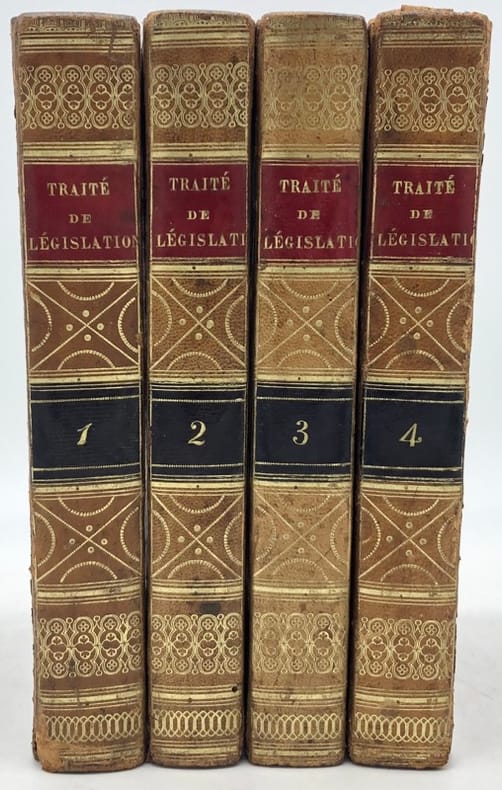
réf. 170358Paris, A. Sautelet, 1826-1827 4 vol. in-8, XIV-527, [4]-478, [4]-492 et [4]-538 pp., basane fauve marbrée, dos lisses ornés alternativement de motifs à la cathédrale et de croisillons de pointillés dorés, pièces de titre et de tomaison cerise et noires, encadrement de simple filet à froid sur les plats, simple filet doré sur les coupes, tranches marbrées (reliure de l'époque). Accroc à un mors inférieur, rousseurs parfois abondantes, mais bel exemplaire.
1998Le Temps des Cerises 1998, In-8 broché 210 p. Bon état.
réf. R240049527LIBRAIRIE NATIONALE D'EDUCATION ET DE RECREATION. NON DATE. In-8. Relié. Etat d'usage, Couv. convenable, Dos satisfaisant, Papier jauni. 191 pages - 10 gravures - 2 étiquettes collées sur le 1er contre plat.. . . . Classification Dewey : 326-Esclavage
1858réf. GITb744Paris Pagnerre 1858. In-18 broché 389pp 1f 32pp catalogue. Légères mouillures en bordure de certains feuillets.
1897réf. M151171897 London , Fisher Unwin , 1897 , in8 percaline verte éditeur , 264 - 24 ( catalogue ) pp , 1 gravure frontispice Edition originale. La gravure représentant une pendaison d' africain n' apparait plus dans les éditions suivantes. L' auteur est née dans la Colonie du Cap .
in-4° 142 pages, nombreuses illustrations n&b et couleurs, broche, cartonnage souple illustre plastifie de l'editeur. Tres bel exemplaire. [PLG-5/6] Exposition du Musee National des Arts et Traditions Populaires.
1710réf. 1200341710. First Edition. SLAVERY ANONYMOUS. A True State of the Present Difference Between the Royal African Company and the Separate Traders. London: No publisher 1710. Slim octavo period-style full tan sheep gilt red morocco spine label raised bands; pp. 40. $1650.First edition of this argument against providing a monopoly over the British slave trade to the Royal African Company with tipped-in diagram of one of the Royal African Company's forts.This work attempts to highlight the irregularities of the business practices of the Royal African Company and to argue for the superiority of open trade in Africa particularly as a means of supplying slaves to the American plantations. Founded in 1660 by the royal Stuart family and the City of London the Royal African Company was founded to exploit natural resources like gold along the west coast of Africa. While the Royal African Company did participate heavily in the gold trade the majority of their income came from slave-trading. The Royal African Company was part of a concerted effortÑfully elaboration in the Navigation ActsÑto establish dominance in the slave trade since the Dutch had been the leading slave-traders prior to the Restoration. To that end the Royal African Company established a brutal and highly efficient slave-trading system eventually providing more slaves to the West Indies than any other company or state. The slaves were branded with the initials of the company or its longtime governor the Duke of York. Children were included in the transports. Between 1662 and 1731 the Company transported approximately 212000 slaves a fifth of whom died enroute. While the Company formally gave up slave-trading in 1731 they remained involved in the trade of ivory and gold dust industries dependent on labor exploitation and slavery. Goldsmiths 4605. Kress 2677. Early ink underlining and marginal notations.Small paper repair to diagram text and diagram trimmed close affecting portion of imprint and scattered catchwords not affecting readability. A very good copy. hardcover
1710réf. 1200341710. First Edition. SLAVERY ANONYMOUS. A True State of the Present Difference Between the Royal African Company and the Separate Traders. London: No publisher 1710. Slim octavo period-style full tan sheep gilt red morocco spine label raised bands; pp. 40. $1650.First edition of this argument against providing a monopoly over the British slave trade to the Royal African Company with tipped-in diagram of one of the Royal African Company's forts.This work attempts to highlight the irregularities of the business practices of the Royal African Company and to argue for the superiority of open trade in Africa particularly as a means of supplying slaves to the American plantations. Founded in 1660 by the royal Stuart family and the City of London the Royal African Company was founded to exploit natural resources like gold along the west coast of Africa. While the Royal African Company did participate heavily in the gold trade the majority of their income came from slave-trading. The Royal African Company was part of a concerted effortÑfully elaboration in the Navigation ActsÑto establish dominance in the slave trade since the Dutch had been the leading slave-traders prior to the Restoration. To that end the Royal African Company established a brutal and highly efficient slave-trading system eventually providing more slaves to the West Indies than any other company or state. The slaves were branded with the initials of the company or its longtime governor the Duke of York. Children were included in the transports. Between 1662 and 1731 the Company transported approximately 212000 slaves a fifth of whom died enroute. While the Company formally gave up slave-trading in 1731 they remained involved in the trade of ivory and gold dust industries dependent on labor exploitation and slavery. Goldsmiths 4605. Kress 2677. Early ink underlining and marginal notations.Small paper repair to diagram text and diagram trimmed close affecting portion of imprint and scattered catchwords not affecting readability. A very good copy. hardcover books
1996réf. 210311010Cassell 1996-03-01. Paperback. Very Good. Softcover. Clean text. Tight binding. Free of any markings and no writings inside. For any additional information or pictures please inquire. Cassell paperback
1996réf. Q-030433264xCassell 1996-03-01. Paperback. New. In shrink wrap. Looks like an interesting title! Cassell paperback
2016No marks or inscriptions. No creasing to covers or to spine. A lovely clean very tight copy with bright unmarked boards and no bumping to corners. 420pp. The story of two brothers from Truevine, Virginia who were supposedly kidnapped in 1899 by the circus and put to work as circus freaks, entertaining as far afield as Buckingham Palace. The author tells the extraordinary story of what really happened.
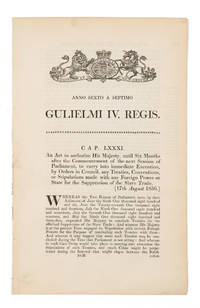
1836réf. 750641836. London: George Eyre and Andrew Spottiswoode 1836. London: George Eyre and Andrew Spottiswoode 1836. Payouts for Former British Enslavers Slavery. Great Britain. William IV 1765-1837 King of Great Britain. An Act for Carrying into Further Execution Two Acts of His Present Majesty Relating to the Compensation for Slaves Upon the Abolition of Slavery And for Facilitating the Distribution and Payment of Such Compensation. London: Printed by George Eyre and Andrew Spottiswoode 1836. 17-24 pp. Folio 11-3/4" x 7-1/2". With William IV King of Great Britain. An Act to Authorize His Majesty Until Six Months After the Commencement of the Next Session of Parliament To Carry into Immediate Execution By Orders in Council Any Treaties Conventions Or Stipulations Made with Any Foreign Power or State for the Suppression of the Slave Trade. London: Printed by George Eyre and Andrew Spottiswoode 1836. 873-876 pp. Folio 11-3/4" x 7-1/2". Disbound stab-stitched pamphlets. Light toning light foxing and soiling to a few leaves small holes to gutter of first two leaves of first act which are detached no loss to text. $950. Two acts dealing with the aftermath of the abolition of slavery in the United Kingdom. After the passage of the Slavery Abolition Act in 1833 all enslaved people in British colonies below the age of six were freed and others were redesignated as apprentices and gradually manumitted. One of the act's central provisions was a 20 million payout for "the persons hitherto entitled to the Services of such Slaves." The present act elaborates further on the logistics of the payout including the process by which former enslavers could claim "compensation" for their "great Inconvenience and Loss." The other act authorizes the king to negotiate treaties related to the end of the slave trade without Parliament when Parliament is not in session. unknown
1836réf. 750641836. London: George Eyre and Andrew Spottiswoode 1836. London: George Eyre and Andrew Spottiswoode 1836. Payouts for Former British Enslavers Slavery. Great Britain. William IV 1765-1837 King of Great Britain. An Act for Carrying into Further Execution Two Acts of His Present Majesty Relating to the Compensation for Slaves Upon the Abolition of Slavery And for Facilitating the Distribution and Payment of Such Compensation. London: Printed by George Eyre and Andrew Spottiswoode 1836. 17-24 pp. Folio 11-3/4" x 7-1/2". With William IV King of Great Britain. An Act to Authorize His Majesty Until Six Months After the Commencement of the Next Session of Parliament To Carry into Immediate Execution By Orders in Council Any Treaties Conventions Or Stipulations Made with Any Foreign Power or State for the Suppression of the Slave Trade. London: Printed by George Eyre and Andrew Spottiswoode 1836. 873-876 pp. Folio 11-3/4" x 7-1/2". Disbound stab-stitched pamphlets. Light toning light foxing and soiling to a few leaves small holes to gutter of first two leaves of first act which are detached no loss to text. $950. Two acts dealing with the aftermath of the abolition of slavery in the United Kingdom. After the passage of the Slavery Abolition Act in 1833 all enslaved people in British colonies below the age of six were freed and others were redesignated as apprentices and gradually manumitted. One of the act's central provisions was a 20 million payout for "the persons hitherto entitled to the Services of such Slaves." The present act elaborates further on the logistics of the payout including the process by which former enslavers could claim "compensation" for their "great Inconvenience and Loss." The other act authorizes the king to negotiate treaties related to the end of the slave trade without Parliament when Parliament is not in session. unknown books
1785réf. 13753A Londres, s.é., 1785. 2 vol. au format in-12 étroit (166 x 98 mm) de 154 et 158 pp. Reliures uniformes de l'époque de pleine basane marbrée havane, plats jansénistes, dos lisses ornés d'un double filet d'encadrement doré, triples filets dorés, larges fleurons dorés, semis de points dorés, pièces de titre de maroquin vieux-rouge, titre doré, tomaison dorée, filet doré sur les coupes, toutes tranches rouges.
réf. 102166A Paris, chez Devaux , Libraire, Patris, Imprimeur-Libraire, L'An Troisième (1795), 2 parties reliées en 1 tome in-18 de 135x85 mm environ, 1 f. blanc, faux-titre, frontispice, titre, 202 pages, faux-titre, titre, frontispice, 204 pages, 1 f. blanc, pleine basane marbrée fauve, titres dorés sur dos lisse, orné de caissons à fleurons et motifs dorés, tranches rouges, un ex-libris collé sur le premier contreplat, signature manuscrites sur les pages de titre. Mouillures et légères brunissures, petits frottements d'usage sur le cuir, sinon bon état.
réf. 516598P., Hachette, 1876. Grand in-8 reliure neuve pleine toile brun-roux, titre sur étiquette au dos, 160 pp., 1 carte dépl. h.-t. en couleurs.
1842réf. 142561842 P., Firmin-Didot frères, 1842, 1 vol. in-8° (212 x 135 mm) relié 1/2 veau marron, dos lisse, auteur, titre, filets et fleurons dorés, plats de papier marbré, tranches marbrées, de XI pp. (faux-titre, titre, table, avertissement du traducteur) - 358 pp.mors frottés, coiffe inférieure accidentée, quelques taches marginales en début et fin d'ouvrage, bon exemplaire par ailleurs.
1964réf. 99922798Téqui 1964, In-8 Téqui 1964, In-8 broché, 120 pages. Bon état.
1958réf. 619681958 Paris, Tequi, 1958, in 8°, broché, 120 pages, couverture illustrée ; cachets.
Paris, Hachette et Cie., 1876, 28 x 19 cm., rústica editorial, 160 págs. + 1 mapa de Africa, plegado y en colores. (Cubiertas originales algo deterioradas y con pérdida de papel en el lomo).
1964Téqui 1964, In-8 broché, 120 pages. Bon état.
1967S. l. (Haïti), Publications de l'Institut français de Haïti, 1967; petit in-8, 6 pp., couverture et feuilles agrafées. Extrait de Conjonction, N° 105.
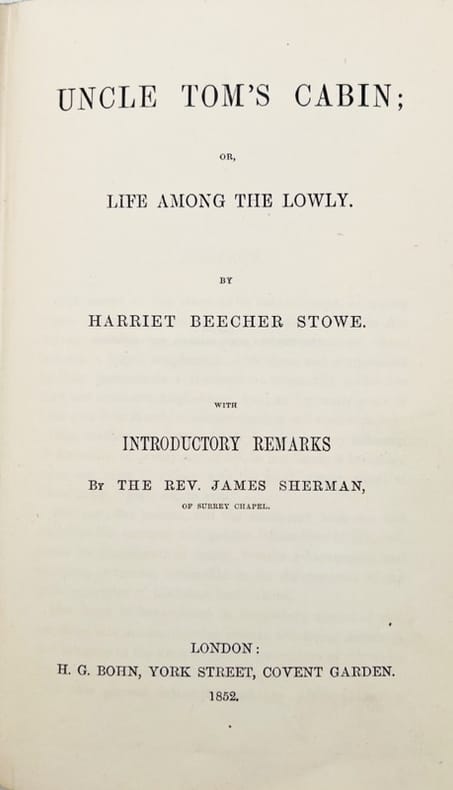
1852réf. 44735London, H. G. Bohn, 1852. Petit in-8 de XXX-483 pp., cartonnage de l'éditeur.
Small format book with a floral decorative binding of orange and green. Previous owner's inscription inside. Cover shows a bit of wear and some spots. Hinges are a bit loose. 4 1/4"w x 6"h. 478 pages. No date; circa 1900.
1998réf. 180708Jean-Paul Rocher éditeur Jean-Paul Rocher éditeur,1998. In-8 broché, couverture à rabats de 150 pages. Bon état