Sans auteurLivre Rare Book

1554 risultati
1847rif. 448051847. Paris, Pagnerre, 1847. Format 13x21 cm, broche, 32 pages. La couverture imprimee sert de page de titre. Une signature a l'encre sur la premiere page. Tres bon etat.
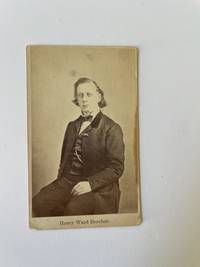
1861rif. 156211861. Beecher Henry Ward circa 1860s carte-de-visite portrait depicts the Congregationalist minister and abolitionist during the decade in which the national conflict over slavery culminated in the Civil War and emancipation. The Library of Congress identifies Beecher as an abolitionist author and Congregationalist clergyman with the bulk of his surviving papers dating from 1840 to 1865. As pastor of Plymouth Church in Brooklyn Beecher opposed the Fugitive Slave Law encouraged resistance to slavery supported Free-State settlers in Kansas and used his pulpit to raise money to purchase enslaved people from bondage. His association with antislavery rifles sent to Kansas also produced the widely used term "Beecher's Bibles." Albumen print carte de visite circa 1860s. 2½ x 4 inches. Sepia-toned image showing Beecher formally dressed and seated presented as a head-and-shoulders portrait. The small photographic format dates from a period when Beecher was nationally prominent as a clergyman and antislavery speaker. His abolitionist activity immediately preceding the Civil War included opposition to the Compromise of 1850 and Fugitive Slave Law and support for antislavery settlement in Kansas; in February 1860 he used Plymouth Church to raise the purchase price required to free a ten-year-old enslaved girl known as Pinky. The portrait dates to the decade in which Beecher's antislavery advocacy became connected to the Civil War itself. At the April 1865 flag-raising ceremony at Fort Sumter following the Union victory Beecher delivered an address condemning slavery after Robert Anderson raised the United States flag over the fort. The carte de visite is in excellent condition. A contemporary photographic portrait of one of the nineteenth century's prominent abolitionist clergymen dating from the period encompassing the Civil War and the abolition of slavery in the United States. unknown
1861rif. 156211861. Beecher Henry Ward circa 1860s carte-de-visite portrait depicts the Congregationalist minister and abolitionist during the decade in which the national conflict over slavery culminated in the Civil War and emancipation. The Library of Congress identifies Beecher as an abolitionist author and Congregationalist clergyman with the bulk of his surviving papers dating from 1840 to 1865. As pastor of Plymouth Church in Brooklyn Beecher opposed the Fugitive Slave Law encouraged resistance to slavery supported Free-State settlers in Kansas and used his pulpit to raise money to purchase enslaved people from bondage. His association with antislavery rifles sent to Kansas also produced the widely used term "Beecher's Bibles." Albumen print carte de visite circa 1860s. 2½ x 4 inches. Sepia-toned image showing Beecher formally dressed and seated presented as a head-and-shoulders portrait. The small photographic format dates from a period when Beecher was nationally prominent as a clergyman and antislavery speaker. His abolitionist activity immediately preceding the Civil War included opposition to the Compromise of 1850 and Fugitive Slave Law and support for antislavery settlement in Kansas; in February 1860 he used Plymouth Church to raise the purchase price required to free a ten-year-old enslaved girl known as Pinky. The portrait dates to the decade in which Beecher's antislavery advocacy became connected to the Civil War itself. At the April 1865 flag-raising ceremony at Fort Sumter following the Union victory Beecher delivered an address condemning slavery after Robert Anderson raised the United States flag over the fort. The carte de visite is in excellent condition. A contemporary photographic portrait of one of the nineteenth century's prominent abolitionist clergymen dating from the period encompassing the Civil War and the abolition of slavery in the United States. unknown books
1875rif. 56706Hachette, 1875, in-12, 256 pp, un portrait gravé en frontispice, reliure demi-basane verte, dos à 4 nerfs soulignés à froid, auteur, titre et fleurons dorés (rel. de l'époque), dos lég. frotté, bon état. Bon exemplaire sans rousseurs. Edition originale (Lincoln Bibliography, 3833)
1880rif. 771641880 Paris, Hachette, 1875, in 12 broché, 256 pages ; portrait en frontispicecouverture fanée.
rif. 34079Librairie Hachette Et Cie Paris 1875 In-12 ( 180 X 115 mm ) de 253 pages, demi-basane aubergine, dos lisse orné de filets dorés. Portrait en frontispice. Edition originale. Rousseurs claires, agréable exemplaire.
In-8, 256p. Avec un portrait gravé de Lincoln en frontispice. Tampon de possesseur sur page de garde, sinon bel exemplaire.
rif. 15584Edition DAPPER , 2007 - In-4° ( format petit cahier ), br, coverture ill, 165 pages, très belles ill in text, index et notes, cartes, éléments et tableaux, exhaustif et superbe exemplaire.
1982rif. ROD0031744Fayard. 1982. In-4. Cartonné. Bon état, Couv. convenable, Dos satisfaisant, Intérieur bon état. 96p. Nombreuses illustrations en couleurs in et hors texte.. . . . Classification Dewey : 326-Esclavage
rif. QWA-7199Annales littéraires de l'Université de Besançon / Les Belles Lettres, 1976, in-4 rel. pleine toile (19 x 24), 462 p.,"Annales littéraires de l'Université de Besançon - Centre de recherches d'histoire ancienne, vol. 18", couvertures ill. conservées, marque de bibliothèque, très bon état.
rif. QWA-6318Annales littéraires de l'Université de Besançon / Les Belles Lettres, 1974, in-4 br. (19,5 x 24), 393 p., "Annales littéraires de l'Université de Besançon - Centre de recherches d'histoire ancienne, vol. 11", 18 tableaux, 10 indices, un plan et 6 cartes, très bon état.
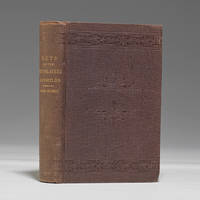
1883rif. 1255001883. First Edition. Signed. PILLSBURY Parker. Acts of the Anti-Slavery Apostles. Concord N.H.: Clague Wegman Schlicht 1883. Octavo original gilt-lettered brown cloth floral endpapers; pp. 503. $1500.First edition of the fearless abolitionist's memoir a distinctive presentation copy inscribed by Pillsbury to ""To Mr. & Mrs. F. M. CÑ With sincere regards and best wishes of their friend Parker Pillsbury. Concord New Hampshire 1894."" Hailed as a ""fighting book"" it documents the bold tactics of this notorious radical who early warned America was ""hastening toÉ a baptism of blood"" and was praised by Emerson as a ""tough oak stock of a man not to be silenced or insulted or intimidated"" a splendid copy in original cloth.Born in Massachusetts in 1809 the son of a blacksmith Pillsbury became a Congregational minister but was soon famed as one of the era's most radical abolitionists. Having once witnessed a slave auction he recorded its advertisement of: ""'two mules a horse andÉ 27 Negroes'É Does any mortal man or woman"" he asked ""comprehend all the tremendous meaning of those words"" Infamous for his apocalyptic style and confrontational tactics Pillsbury early declared the nation was ""hastening to its baptism. It is a baptism of blood."" He was resolute in denying any possible ""union with slave-holders""and also insisted ""women must be given their due rights."" Emerson admired him as a ""tough oak stock of a man not to be silenced or insulted or intimidated by a mob because he is more mob than they. He mobs the mob."" He was ""in Susan B. Anthony's eyes the Jeremiah of the anti-slavery movement"" Filler Parker Pillsbury 315 328-37.Fiercely anticlerical in his writings and in action Pillsbury would dramatically interrupt ""religious servicesÉ calling on audiences to 'come out' from their proslavery churches."" He linked most clergy to timid politicians and cautious abolitionists proclaiming them a ""brotherhood of thieves"" Robertson Hard Cold Stern Life 189. Pillsbury's 1883 memoir Acts of the Anti-Slavery Apostles was above all ""a fighting book."" In it he writes of his esteem for his fellow white radical Stephen S. Foster and leading Black abolitionists such as David Ruggles as well as his disdain for Lincoln; Pillsbury ""never forgot that the idolized Lincoln meant to save the Union and not necessarily to free the slaves"" Filler 336. First edition first printing: issued in brown cloth this copy and in green cloth no priority determined. Blockson 9099. See Work 304 1884 edition. This copy is inscribed to ""To Mr. & Mrs. F. M. Crosby."" It is notable that while there was a Crosby family of abolitionists in New Hampshire the identity of this copy's recipients could not be confirmed.Text pristine; tiniest bit of soiling to cloth. An especially handsome copy in fine condition. hardcover
1883rif. 1255001883. First Edition. Signed. PILLSBURY Parker. Acts of the Anti-Slavery Apostles. Concord N.H.: Clague Wegman Schlicht 1883. Octavo original gilt-lettered brown cloth floral endpapers; pp. 503. $1500.First edition of the fearless abolitionist's memoir a distinctive presentation copy inscribed by Pillsbury to ""To Mr. & Mrs. F. M. CÑ With sincere regards and best wishes of their friend Parker Pillsbury. Concord New Hampshire 1894."" Hailed as a ""fighting book"" it documents the bold tactics of this notorious radical who early warned America was ""hastening toÉ a baptism of blood"" and was praised by Emerson as a ""tough oak stock of a man not to be silenced or insulted or intimidated"" a splendid copy in original cloth.Born in Massachusetts in 1809 the son of a blacksmith Pillsbury became a Congregational minister but was soon famed as one of the era's most radical abolitionists. Having once witnessed a slave auction he recorded its advertisement of: ""'two mules a horse andÉ 27 Negroes'É Does any mortal man or woman"" he asked ""comprehend all the tremendous meaning of those words"" Infamous for his apocalyptic style and confrontational tactics Pillsbury early declared the nation was ""hastening to its baptism. It is a baptism of blood."" He was resolute in denying any possible ""union with slave-holders""and also insisted ""women must be given their due rights."" Emerson admired him as a ""tough oak stock of a man not to be silenced or insulted or intimidated by a mob because he is more mob than they. He mobs the mob."" He was ""in Susan B. Anthony's eyes the Jeremiah of the anti-slavery movement"" Filler Parker Pillsbury 315 328-37.Fiercely anticlerical in his writings and in action Pillsbury would dramatically interrupt ""religious servicesÉ calling on audiences to 'come out' from their proslavery churches."" He linked most clergy to timid politicians and cautious abolitionists proclaiming them a ""brotherhood of thieves"" Robertson Hard Cold Stern Life 189. Pillsbury's 1883 memoir Acts of the Anti-Slavery Apostles was above all ""a fighting book."" In it he writes of his esteem for his fellow white radical Stephen S. Foster and leading Black abolitionists such as David Ruggles as well as his disdain for Lincoln; Pillsbury ""never forgot that the idolized Lincoln meant to save the Union and not necessarily to free the slaves"" Filler 336. First edition first printing: issued in brown cloth this copy and in green cloth no priority determined. Blockson 9099. See Work 304 1884 edition. This copy is inscribed to ""To Mr. & Mrs. F. M. Crosby."" It is notable that while there was a Crosby family of abolitionists in New Hampshire the identity of this copy's recipients could not be confirmed.Text pristine; tiniest bit of soiling to cloth. An especially handsome copy in fine condition. hardcover books
1837rif. 101441Pamphlet small 8vo removed dbd 11 pp. Removed some minor foxing normal aging and browning; otherwise very good. This pamphlet was prepared for the New York chapter of the Religious Society of Friends Quakers for their annual meeting to oppose slavery. Not surprisingly this tract encourages people to help end "this stain upon our national character." While there are religious sentiments in this work much of the discussion relates to social injustice and morality. Mahlon Day (and New York Quakers),
1837rif. 101441Pamphlet small 8vo removed dbd 11 pp. Removed some minor foxing normal aging and browning; otherwise very good. This pamphlet was prepared for the New York chapter of the Religious Society of Friends Quakers for their annual meeting to oppose slavery. Not surprisingly this tract encourages people to help end "this stain upon our national character." While there are religious sentiments in this work much of the discussion relates to social injustice and morality. Mahlon Day (and New York Quakers), books
rif. 20451In-8, broché, couverture papier moderne, tranches rouges, 48 p. Paris, Imprimerie Nationale, [1790].
In-8 (220 x143 mm), broché sous couture, 32 p., non rogné. Edition grenobloise à la date de l’originale parisienne. Important texte théorique lu le 26 septembre 1791, par l’abbé Grégoire, devant la Société des amis de la Constitution qu’il présidait et qui deviendra le club des Jacobins. Alors que l’Assemblée constituante se séparait pour faire place à la Législative, Grégoire analyse avec sévérité les travaux de l’Assemblée durant sa session de vingt-neuf mois et en appelle à un nouvel élan révolutionnaire. Il revient sur la question de l’inviolabilité du roi et s’interroge sur la validité des institutions, notamment le régime monarchique. D’importantes pages sont consacrées à la question de l’esclavage dans lesquels Grégoire constate l’échec de ses tentatives abolitionnistes et attaque violemment le lobby pro esclavagiste ainsi que les colons blancs des îles. WorldCat ne recense qu’un unique exemplaire de cette édition grenobloise dans le monde. Quelques piqûres éparses. Bon exemplaire, non rogné, tel que paru.
In-8, broché, couverture papier moderne, tranches rouges, 48 p. Edition originale. Après avoir dressé un historique des relations entre Saint-Domingue et la métropole, les députés relatent, jour par jour, les événements qui ont secoué l'île depuis les débuts de la sédition et en analysent les conséquences. Importantes pièces justificatives en annexe. L'Adresse est signée nommément par les députés. (Martin & Walter, ‘Anonymes’, 14105. Manque à Sabin). Bon exemplaire.
rif. 9595Avignon, imprimerie de la Veuve Joly, 1772, 1 1 cahier, sans couverture. in-4 de 4 pages, paginées 89 à 96, texte sur 2 colonnes, pages 91 à 94 manquantes ;
2013rif. AFRIQQQQ30323Paris, L'Harmattan, 2013, 15,5 x 24, 224 pages sous couverture souple illustrée. Actes du colloque international en hommage à Edouard Glissant, les 11, 12 et 13 mai 2011 au Musée du Quai Branly. Iconographie noir & blanc.
1862rif. 61272New York: D. Appleton & Co 1862. Second Edition. Octavo 20.5cm. Green cloth titled in gilt on spine; yellow coated endpapers; 39018pp; 8 tinted lithographs. A firm copy rubbed at spine ends and bumped at corners mildly foxed: Very Good. Commander Andrew Hull Foote 1806-1963 served on the USS Perry from 1849 to 1851 suppressing the slave trade off the coast of Africa. In 1854 he published an abolitionist history of Africa describing African cultures American colonies and the slave trade. He was a noted commander for the Union Navy until his unexpected death of kidney disease in 1863. D. Appleton & Co unknown
1862rif. 61272New York: D. Appleton & Co 1862. Second Edition. Octavo 20.5cm. Green cloth titled in gilt on spine; yellow coated endpapers; 39018pp; 8 tinted lithographs. A firm copy rubbed at spine ends and bumped at corners mildly foxed: Very Good. Commander Andrew Hull Foote 1806-1963 served on the USS Perry from 1849 to 1851 suppressing the slave trade off the coast of Africa. In 1854 he published an abolitionist history of Africa describing African cultures American colonies and the slave trade. He was a noted commander for the Union Navy until his unexpected death of kidney disease in 1863. D. Appleton & Co unknown books
Hardcover in-8°, 132 pp, relie demi-percale d'epoque. Bel exemplaire. [NV-33] [F] Couronné pour le meilleur ouvrage sur l'Esclavage africain
1862rif. 127191862. The Detroit Free Press April 12 1862 reports House passage of legislation abolishing slavery in the District of Columbia one of the first major federal emancipation measures enacted during the Civil War. The bill preceded the Emancipation Proclamation and applied directly to the national capital where slavery remained legal despite Washington's position as the seat of the federal government. The issue records the congressional process behind the measure through detailed debate and proposed amendments preserving contemporary political arguments over federal authority emancipation and slavery during the second year of the war. The Detroit Free Press. Detroit Michigan. April 12 1862. Two pages measuring 19 × 26 inches. The front-page headline reads "The Bill Abolishing Slavery in the District of Columbia Passed the House." Coverage provides a blow-by-blow account of debate among House members and the various amendments considered with the bill concluding "The bill was passed 93 agains 39." The issue also contains local national and international reporting including a section headed "News From the South." Congressional passage placed the District of Columbia on a distinct path toward emancipation before Lincoln issued the preliminary Emancipation Proclamation later in 1862. Because the newspaper records both the vote and the legislative arguments surrounding the measure it documents emancipation as a contested act of federal lawmaking rather than solely as a presidential policy. Small tears at the left margin do not affect the text. A diagonal crease crosses the upper half of the paper and a small piece of yellow tape is adhered to the top margin. Very good condition overall. unknown
1862rif. 127191862. The Detroit Free Press April 12 1862 reports House passage of legislation abolishing slavery in the District of Columbia one of the first major federal emancipation measures enacted during the Civil War. The bill preceded the Emancipation Proclamation and applied directly to the national capital where slavery remained legal despite Washington's position as the seat of the federal government. The issue records the congressional process behind the measure through detailed debate and proposed amendments preserving contemporary political arguments over federal authority emancipation and slavery during the second year of the war. The Detroit Free Press. Detroit Michigan. April 12 1862. Two pages measuring 19 × 26 inches. The front-page headline reads "The Bill Abolishing Slavery in the District of Columbia Passed the House." Coverage provides a blow-by-blow account of debate among House members and the various amendments considered with the bill concluding "The bill was passed 93 agains 39." The issue also contains local national and international reporting including a section headed "News From the South." Congressional passage placed the District of Columbia on a distinct path toward emancipation before Lincoln issued the preliminary Emancipation Proclamation later in 1862. Because the newspaper records both the vote and the legislative arguments surrounding the measure it documents emancipation as a contested act of federal lawmaking rather than solely as a presidential policy. Small tears at the left margin do not affect the text. A diagonal crease crosses the upper half of the paper and a small piece of yellow tape is adhered to the top margin. Very good condition overall. unknown books