COLLECTIFLivre Rare Book
Jean LainéLivre Rare Book
Le Bateau Négrier
1998réf. 144641998. Saint-Malo Éditions L'Ancre de Marine 1998 - Broché 12 cm x 19 cm 351 pages - Texte de Jean Lainé - Bon état

Librairie Sedon · Rochefort, France15,00 €
1 590 résultats
1971réf. RO40115253Jacquemart. 1971. In-4. Broché. Bon état, Couv. convenable, Dos satisfaisant, Intérieur frais. 63 pages. Illustré de nombreuses photos en noir et blanc.. . . . Classification Dewey : 326-Esclavage
réf. M14725Couverture souple P, Hachette , 1909 , in12 broché , VI-256pp Couverture défraichie , dos restauré avec manques de papier , intérieur correct . Langue: Français
réf. 15828Paris, Le Masque, collection "Aventures et légendes de la mer", 1934, 1 br., couverture illustrée par Jean Bernard. in-8 de 219-(4) pp., titre illustré par Jean Bernard ;
réf. 31868P., Le Masque (Collection "Aventures et Légendes de la Mer"), 1934, in 12 broché, 221pp. ; jaquette illustrée en couleurs.
1934Broch?. 221 pages. Rousseurs.
1998réf. 144641998. Saint-Malo Éditions L'Ancre de Marine 1998 - Broché 12 cm x 19 cm 351 pages - Texte de Jean Lainé - Bon état
1991Broch?. 351 pages.
1970réf. 117151De Boccard 1970 Editions E. de Boccard, 2 volumes, 1970-1971, 433 et 506 p., brochés, environ 25x16cm. Couverture insolée avec des rousseurs. Bon état pour le reste et intérieurs propres, pages non coupées (jamais lu).
1925réf. 189221925. Paris Louis de Boye Imprimeur extrait du « Correspondant » 1925 - Broché 16 cm x 24 cm 27 pages - Texte de Monseigneur E. Julien - Bon état
réf. 59574Coll. "Archives", n° 40, Pais, Julliard, 1971, in-12, br., couv. ill. coul. éd., 288 pp., cahier central avec reproductions de documents anciens, en fin de volume une bibliographie, Bartolomé de Las Casas dénonce l'agonie du Nouveau Monde après la conquête et le passage des colonisateurs espagnols. Les auteurs ont ressortis les archives et de très nombreux documents pour ne pas oublier cet ethnocide. Bon état
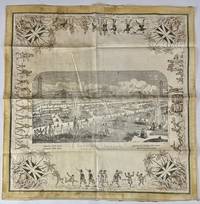
1890réf. 12893N.p. likely London 1890. Lithograph on silk handkerchief approximately 24 x 24 inches with additional lithographed scene printed around the outer margins in brown and blue ink. Previously matted and framed with resultant edge wear and adhesive staining around margins. Old folds some foxing and staining in image area. Overall good plus condition. A very rare and impactful 19th-century British lithograph-on-lithograph the original a view of London's Crystal Palace with the addition of a satirical scene detailing the history of British colonialist activities in Africa. The overall scene is presented in four linear parts one across each mostly blank margin of the Crystal Palace scene; interestingly the two lithographs overlap each other at a few places along the short edge. The scene seems to begin with the part labeled "African Slave Trade" picturing two slave traders leading a chained procession of African slaves men women and children. The next edge is labeled "The Rescue" and shows three British soldiers including one bagpiper freeing the slaves who are pictured free of their chains and dancing and now detaining the two slave traders in chains. The third panel pictures two groups of Africans -- one group running to a rum dealer and another group listening to a man holding a book presumably a missionary preacher. This scene seems to allude to British activities in the West Indies. The final panel labeled "Civilization" is the most varied. It pictures a couple of British railway agents under the banner "Change for Timbuctoo;" a group of African men in Western garb one holding a sign reading "African Times;" an African man riding a bicycle; and a family scene of a man kneeling in front of a seated woman while he kisses her hand and a young man in the background sells matches. How civilized indeed. Each corner of the work is emblazoned with a British lion and the Union Jack amidst a field of African foliage and West Indian palm trees. The scene seems to celebrate the effects of British colonialism while ignoring the country's own history as slaveholders and traffickers the previous century. "The border panels of this printed cotton handkerchief caricature the impact of British colonial policy on Africa. It was probably produced at the end of the 19th century at a period when European colonial rule led to increasing social and political intervention in African societies. It illustrates the rescue of a group of slaves by a British military detachment and their subsequent 'westernization' through the introduction of European goods and commodities." This description comes from the online description of the only other example of this scene we can find which resides at the National Maritime Museum NMM at Greenwich London. The NMM example is printed on a blank cotton handkerchief in brown and red and is slightly smaller on one side than our example. Their dating is likely correct if for nothing else because of the depiction of a chain-driven bicycle which became popular in the UK in the 1890s. unknown books
1890réf. 12893N.p. likely London 1890. Lithograph on silk handkerchief approximately 24 x 24 inches with additional lithographed scene printed around the outer margins in brown and blue ink. Previously matted and framed with resultant edge wear and adhesive staining around margins. Old folds some foxing and staining in image area. Overall good plus condition. A very rare and impactful 19th-century British lithograph-on-lithograph the original a view of London's Crystal Palace with the addition of a satirical scene detailing the history of British colonialist activities in Africa. The overall scene is presented in four linear parts one across each mostly blank margin of the Crystal Palace scene; interestingly the two lithographs overlap each other at a few places along the short edge. The scene seems to begin with the part labeled "African Slave Trade" picturing two slave traders leading a chained procession of African slaves men women and children. The next edge is labeled "The Rescue" and shows three British soldiers including one bagpiper freeing the slaves who are pictured free of their chains and dancing and now detaining the two slave traders in chains. The third panel pictures two groups of Africans -- one group running to a rum dealer and another group listening to a man holding a book presumably a missionary preacher. This scene seems to allude to British activities in the West Indies. The final panel labeled "Civilization" is the most varied. It pictures a couple of British railway agents under the banner "Change for Timbuctoo;" a group of African men in Western garb one holding a sign reading "African Times;" an African man riding a bicycle; and a family scene of a man kneeling in front of a seated woman while he kisses her hand and a young man in the background sells matches. How civilized indeed. Each corner of the work is emblazoned with a British lion and the Union Jack amidst a field of African foliage and West Indian palm trees. The scene seems to celebrate the effects of British colonialism while ignoring the country's own history as slaveholders and traffickers the previous century. "The border panels of this printed cotton handkerchief caricature the impact of British colonial policy on Africa. It was probably produced at the end of the 19th century at a period when European colonial rule led to increasing social and political intervention in African societies. It illustrates the rescue of a group of slaves by a British military detachment and their subsequent 'westernization' through the introduction of European goods and commodities." This description comes from the online description of the only other example of this scene we can find which resides at the National Maritime Museum NMM at Greenwich London. The NMM example is printed on a blank cotton handkerchief in brown and red and is slightly smaller on one side than our example. Their dating is likely correct if for nothing else because of the depiction of a chain-driven bicycle which became popular in the UK in the 1890s. unknown
réf. 500315571FERNAND NATHAN Sans date.
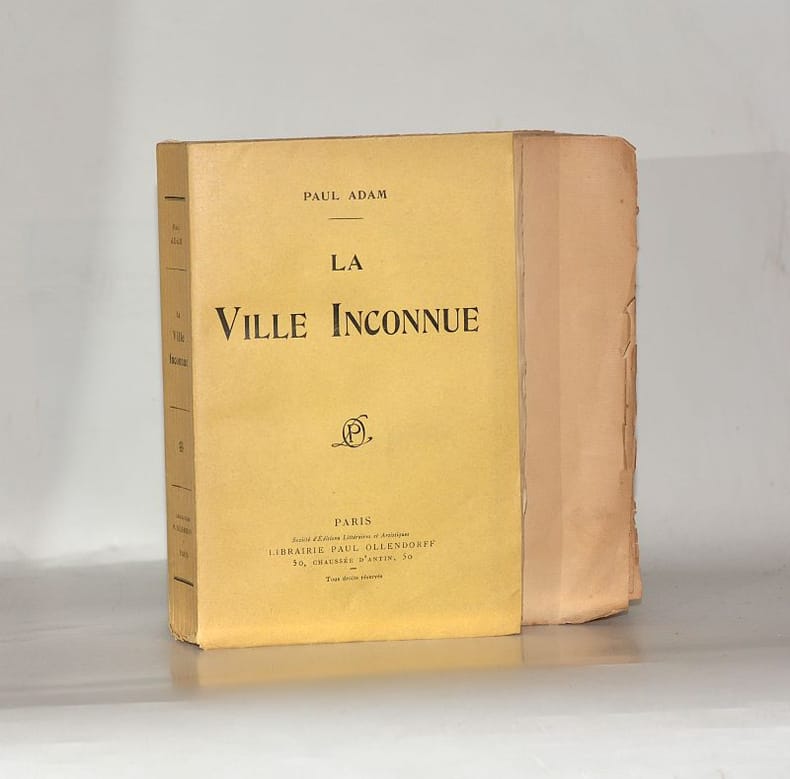
1911réf. 0057141911 Paris, Ollendorff, 1911. In-12 (195 X 185 mm marges comprises) broché, couverture à rabats ; (3) ff., IX-446 pages, (1) f. Marge latérale du feuillet de titre et témoins en partie brunis, petite déchirure recollée en tête du feuillet de faux-titre.
in-16, 144 p, ill. et cartes, broche, couverture illustree plast. Bel exemplaire. [PM-LP9]
1978réf. 10931Hachette 1978 445 pages in8. 1978. broché. 445 pages. Cet ouvrage historique de Liliane Crété explore la vie quotidienne en Louisiane entre 1815 et 1830 période où la région bien qu'américaine depuis 1803 conservait une forte identité française. L'auteure s'appuie sur de nombreux documents pour décrire la société créole dominante confrontée à l'expansion de la société industrielle et aborde sans complaisance la réalité de la vie des esclaves
2001réf. 192318Karthala Karthala, 2001. In-8 broché de 232 pages, planches hors texte. Rousseurs aux premiers et derniers feuillets blancs. Bon état
1972Un volume broché au format poche de 320 pp.; couverture illustrée; illustrations en noir dans le texte. Bon état. Voir photo.
réf. QWA-8669Dakar, Editions Clairafrique, 1982, in-8 br., 101 p., 2ème édition, préface de Léopold Sédar Senghor, cartes, ill. photos et fac-similés, très bon état.
réf. QWA-6566UNESCO, 1979, in-8 br., 341 p., Série "Histoire générale de l'Afrique / Etudes et documents 2", marque de pliure au dos, bon état.
1899réf. 24408Paris V. Giard & E. Brière 1899 in-8 broché, dos défraîchi
réf. 13980001Bruxelles: L'Auteur, 1929 in-8. xvi-308 pages, 37 illustrations hors texte. Importante "Bibliographie générale de la Traité et de l'Esclavage" (38 pages) et index (18 pages). Broché, bon état.
2006réf. ESCLAVAGE 10/9La Découverte, "cahiers libres", 2006, 13,5 x 22, 261 pages sous couverture illustrée.
2006La Découverte 2006, In-8 broché, 260 pages. Bon état.
2006réf. 128224La Découverte La Découverte 2006, In-8 broché, 260 pages. Bon état.