1,427 results
1976ref. 189477Ottawa Canada: The National Gallery of Canada 1976. First edition. Softcover. 261 pages. Features text by James Borcoman in English and French. Includes over 200 black and white images. A very near fine copy in wrappers. A very nice copy of what remains one of the better catalogs on this important early French photographer. The National Gallery of Canada unknown books
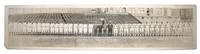
1925ref. 346509Philadelphia 1925. Panoramic photograph of both teams with the names of each player in the negative taken by Harold Stott Philadelphia. Approx. 8 x 35 inches. Expert restoration with some retouching archivally mounted. Panoramic photograph of both teams with the names of each player in the negative taken by Harold Stott Philadelphia. Approx. 8 x 35 inches. An extraordinarily rare image of the second Colored World Series. Taken in the Baker Bowl in Philadelphia prior to Game 5 of the series a rematch of the 1924 first World Series featuring the Kansas City Monarchs Champions of the Negro National League and the Hilldale Club the Eastern Colored Champions the panoramic photograph depicts 18 members of the Hilldale team and 15 Kansas City Monarch players with four league executives in the center. Included on the Hilldale team sometimes known as the Darby Daisies are Hall of fame catcher Biz Mackey Hall of Fame third basemen "Judy" Johnson player/manger Francis Warfield Hall of Fame slugger Louis Santop and southpaw ace "Nip" Winters. Notable players on the Monarchs included pitcher/manger Jose Mendez and second basemen Newt Allen; not pictured on the Monarchs was their ace Hall of Famer Bullet Rogan who injured himself prior to the series. Between the two teams in the center of the image stands Andrew "Rube" Foster the founder of the Negro National League and the "Father of the Negro Leagues." Hilldale would redeem their loss in the first world series wining this one 5-1. The last example of this photograph we could locate on the market appeared in the sale of the collection of Jeff Eastland selling at Robert Edwards Auctions in their Spring 2004 sale for $13800 said at the time to be one of two known copies. unknown books
1946ref. 91671New York 1946. Good. Folded program. 4p. Wear along three later horizontal folds. Some foxing and soiling. Sidney Poitier was cast as Lottie in "Riders to the Sea. unknown books
ref. 92820Very Good. Evvelope postmarked Sept. 2 1955. Cover letter issued under the name of Vivian C. Mason National President of the National Council of Negro Woman asks members of the organization for a special "anniversary gift" of ten cents for every years of the organization's existence meaning a gift of $2.00 for 20 years. Local councils reporting 100% participation would get a trophy. Return envelope and a smaller envelope to hold a donation present the small envelope is partially glued to the flap on the return envelope. Single sheet folded twice to create a narrow 6-page brochure 22 cm. outlining 1955 events planned to celebrate their 20th anniversary and to promote gifts. And finally" a printed double-columned fundraising letter dictated by Mary McLeod Bethune on April 11 1955 which says in part: "In your expenditures for every day living where you may use a cheaper cut of meat put that in a bank for the National Council of Negro Women. If you know widowed women who need instructions for placing their funds where they might do good for the great masses of our people think sometimes of the National Council of Negro Women. Some of us could take out a little insurance policy of twenty-five cents a month which upon our death could go the the National Council of Negro Women. unknown books
1988ref. 182395Munich: Schirmer/Mosel 1988. First edition. Hardcover. 232 pages. Text by Francoise Heilbrun in German. Includes 188 illustrations and 80 duotones. A very near fine copy in a very near fine dust jacket and still largely in the publisher's shrinkwrap. Schirmer/Mosel unknown books
1967ref. 49507Paris: Bouchet-Lakara 1967. Very Good/Very Good. Paris: Bouchet-Lakara 1967. First Edition. Square quarto 25cm; publisher's cloth in glossy black photo-illustrated dust jacket; 155pp.; full color tipped in frontispiece and nineteen plates collated complete halftone photographs throughout text. Dust jacket a bit rubbed and worn at margins with brief bubbling of lamination creasing and shallow dog-earing to frontispiece and a few tipped in plates else a Very Good and sound example. Text entirely in French. Scarce catalog published in the wake of the first World Festival of Negro Arts held in Dakar in 1966 to showcase Black art dance theater film and literature. Bouchet-Lakara unknown books
1971ref. 81683Palo Alto: American West Publishing Company 1971. Facsimile Edition. Octavo. 23.5cm. Publisher's deep blue cloth titled in gilt to spine and front board. Dustjacket. 412pp. A very handsome copy in clean. bright cloth in a gold dustjacket with some light wear to extremities rubbing at the spine ends and a single straight scratch running down the front panel. A very good copy. Downie originally born in Scotland was a prominent figure of the mid-19th century gold rushes in California and British Columbia pioneering several new routes to the goldfields on the Fraser River and claiming to be one of the first men to find gold in 1849 in Sierra County CA before the settlement there was re-christened Downieville. The true first ghost written with Downie's input by Waage was published in 1893. American West Publishing Company unknown books
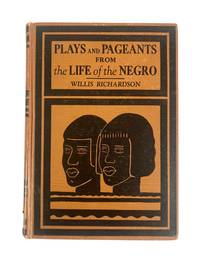
1930ref. 216541930. Richardson Willis. Plays and Pageants from the Life of the Negro 1930 is a major African American dramatic anthology compiled during the Harlem Renaissance to give Black actors students and audiences historically grounded material outside minstrel caricature and dialect convention. Richardson a pioneering Black playwright whose The Chip Woman's Fortune was produced on Broadway in 1923 assembled works by African American writers that used drama and pageantry to teach Black history affirm racial dignity and widen the cultural uses of school and community performance. The anthology belongs to African American theatrical and educational culture illustrating how Black dramatists used stage writing to preserve historical memory and support racial self-representation in the early twentieth century. Richardson Willis. Plays and Pageants from the Life of the Negro. Washington D.C.: The Associated Publishers Inc. 1930. First edition. 373 pages. Illustrated by James Lesesne Wells. Brown boards with black cover illustration no jacket as issued 8vo. The anthology includes plays and pageants by Richardson and other African American writers including Thelma Myrtle Duncan Maud Cuney-Hare John Matheus May Miller Inez M. Burke Dorothy C. Guinn Frances Gunn and Edward J. McCoo. Richardson notes the exclusion of dialect plays and later commentary on the volume identifies Carter G. Woodson and The Associated Publishers as central to its educational purpose: encouraging African Americans to know their history cultural contributions and responses to the modern world. James Lesesne Wells's cover and interior block-print illustrations strengthen the book's place in Harlem Renaissance visual culture; Wells taught at Howard University and was identified by James A. Porter as the "dean of Negro print-makers." The volume's combination of Black-authored drama historical pageantry Woodson's publishing network and Wells's modernist design makes it a substantial artifact of African American performance pedagogy and cultural self-definition. Ex-library stamps on front and rear pastedowns rear flyleaf bottom of spine and top and bottom fore edge; minor cover wear; penciled writing on title page; binding tight pages crisp and clean; very good. A significant 1930 anthology connecting Black theater historical education and Harlem Renaissance book design. unknown books
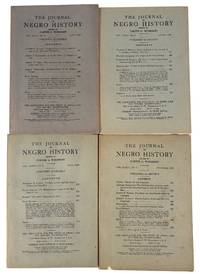
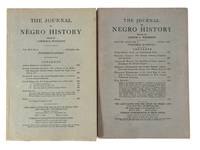
1942ref. 217921942. Woodson Carter Godwin. The Journal of Negro History. 1942-1949. Foundational issues of the journal established by Carter G. Woodson documenting the institutionalization of Black historical scholarship in the United States and advancing early academic study of African American military service political rights and diaspora culture. Issued by the Association for the Study of Negro Life and History which Woodson co-founded in 1915 these volumes situate Black experience within national and Atlantic frameworks including Revolutionary War service Reconstruction governance and twentieth-century military participation. The selection highlights how mid-century scholars constructed a documentary record of African American life in direct response to exclusion from mainstream historiography with particular emphasis on suffrage labor naval service and racial legislation. Woodson Carter Godwin ed. The Journal of Negro History. Washington D.C.: Association for the Study of Negro Life and History 1942 1947 1949. Four issues. 1 Jackson Luther P. "Virginia Negro Soldiers and Seamen in the American Revolution." The Journal of Negro History. Vol. XXVII No. 3. Washington D.C.: ASNLH 1942. Establishes early documentation of African American military participation in the Revolutionary War. Additional contents include Frank J. Klingberg's study of Jamaican legislation 1837 Ronald V. Sires's analysis of the Jamaica Slave Insurrection Loan 1832-1863 and Harold Courlander's "Profane Songs of the Haitian People" presenting vernacular cultural material from Haiti. 2 Wesley Charles H. "Negro Suffrage in the Period of Constitution-Making 1787-1865." The Journal of Negro History. Vol. XXXII No. 2. Washington D.C.: ASNLH 1947. Examines the development of Black political rights before the Civil War. Herbert Aptheker's "The Negro in the Union Navy" and Lawrence D. Reddick's "The Negro in the United States Navy during World War II" connect nineteenth-century and contemporary military service while Mercer Cook's essay surveys modern Haitian literature. 3 Lofton Williston H. "Northern Labor and the Negro during the Civil War." The Journal of Negro History. Vol. XXXIV No. 3. Washington D.C.: ASNLH 1949. Traces relationships between African American workers and Northern labor movements. Sidney Kaplan's "The Miscegenation Issue in the Election of 1864" analyzes race in wartime political discourse and Morris U. Schappes reprints Ernestine L. Rose's address on West Indian emancipation preserving a nineteenth-century abolitionist voice. 4 Bernstein Leonard. "The Participation of Negro Delegates in the Constitutional Convention of 1868 in North Carolina." The Journal of Negro History. Vol. XXXIV No. 4. Washington D.C.: ASNLH 1949. Documents Black political participation in Reconstruction governance. Additional contributions include Joseph H. Taylor on disfranchisement in Alabama Jessie P. Guzman on Monroe Nathan Work's scholarly contributions and a reprinted 1774 letter by Phillis Wheatley identified by Benjamin Quarles. These issues were published during World War II and the early Cold War when African American military service abroad and civil rights struggles at home intensified scholarly and political attention to Black history. Articles on the Union Navy and World War II naval service align with wartime debates over segregation and citizenship while studies of suffrage Reconstruction conventions and disfranchisement reflect renewed examination of constitutional rights in the context of emerging civil rights activism. Four issues in publisher's printed wrappers each approximately 108 to 118 pages. Light wear occasional foxing and minor soiling to wrappers; overall very good to near fine. A cohesive grouping illustrating how Black historians and intellectuals built an evidentiary foundation for African American history as a formal academic discipline in the mid twentieth century. unknown books
1924ref. 217871924. Woodson Carter Godwin. The Journal of Negro History. Archive of three landmark issues published between 1924 and 1928 documenting the institutional development of African American historical scholarship during the early twentieth century. The material records Black intellectual production historical recovery and scholarly publishing through the Association for the Study of Negro Life and History founded by Carter G. Woodson and Jesse E. Moorland in 1915. These issues include Black scholarship challenging white supremacist interpretations of Reconstruction slavery labor and African diasporic history through archival research and independent academic publication. The journal served as one of the central vehicles through which African American historians established scholarly networks disseminated original research and institutionalized the study of Black history within American intellectual life. The archive provides primary-source evidence for the emergence of modern African American historiography and the scholarly movement that later gave rise to Negro History Week and Black History Month. Woodson Carter Godwin ed. The Journal of Negro History. Lancaster PA and Washington D.C.: The Association for the Study of Negro Life and History 1924 1926 and 1928. Three issues in publisher's printed wrappers comprising Vol. IX No. 3 July 1924; Vol. XI No. 3 July 1926; and Vol. XIII No. 3 July 1928. Each issue measures approximately 10 x 6.5 inches and ranges between 120 and 176 pages. 1 Vol. IX No. 3 July 1924. Devoted primarily to Alrutheus Ambush Taylor's major study "The Negro in South Carolina During the Reconstruction" examining demographic change labor transition religion education and political organization in the post-emancipation South. Written while Taylor served as the first full-time Black researcher employed by Woodson's organization the study foregrounds African American agency during Reconstruction and anticipates interpretive frameworks later expanded by W.E.B. Du Bois in Black Reconstruction. 2 Vol. XI No. 3 July 1926. Continues Taylor's Reconstruction scholarship with "The Negro in the Reconstruction of Virginia" detailing Black political participation church organization disenfranchisement campaigns and the reestablishment of white political control in Virginia after Reconstruction. The article constitutes one of the earliest extended scholarly treatments of Black Reconstruction politics in the state. 3 Vol. XIII No. 3 July 1928. Broadens the journal's scope beyond the Reconstruction South through studies including N. Andrew N. Cleven's "The First Panama Mission and the Congress of the United States" W. Sherman Savage's early survey "The Negro in the History of the Pacific Northwest" and Jean Trapp's "The Liverpool Movement for the Abolition of the English Slave Trade." The issue additionally includes Ruth A. Fisher's extensive 109-page documentary compilation "Extracts from the Records of the African Companies" reproducing archival material relating to British commercial participation in the transatlantic slave trade. These issues record the emergence of African American historical scholarship as an organized intellectual discipline during a period when Black historians faced systematic exclusion from mainstream academic institutions and publishing networks. The journal's sustained attention to Reconstruction history preceded revisionist scholarship that later transformed the field with early interpretations centered on Black political participation labor and institutional development rather than Lost Cause narratives dominant in white historiography of the era. Studies on the Pacific Northwest Panama and British antislavery movements extend the journal's diasporic approach to Black history beyond the American South. Minor edgewear and faint toning to wrappers; overall very good condition. An archive of foundational African American historical scholarship and one of the central publishing achievements of twentieth-century Black intellectual life. unknown books
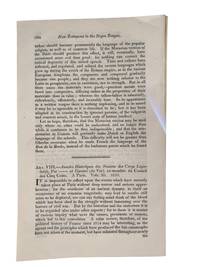
1931ref. 217891931. Woodson Carter Godwin. The Journal of Negro History. Archive of two significant issues published in 1931 and 1938 documenting the institutional growth and expanding scholarly scope of African American historiography during the interwar period. The material records Black intellectual production historical scholarship and diasporic research through the editorial and publishing activities of the Association for the Study of Negro Life and History founded by Carter G. Woodson and Jesse E. Moorland in 1915. These issues include scholarship on slavery Reconstruction Black religious institutions international colonial politics abolitionist movements and urban Black life at a time when Black scholarship remained marginalized within predominantly white academic institutions. The journal served as one of the principal vehicles through which Black historians circulated archival research fostered interdisciplinary inquiry and established African American history as a formal academic field. The archive provides primary-source evidence for the maturation of Black historical studies and diasporic intellectual thought in the early twentieth century. Woodson Carter Godwin ed. The Journal of Negro History. Lancaster PA and Washington D.C.: The Association for the Study of Negro Life and History 1931 and 1938. Two issues in publisher's printed wrappers comprising Vol. XVI No. 4 October 1931 and Vol. XXIII No. 2 April 1938. Each issue measures approximately 10 x 6.5 inches and contains 125 and 144 pages respectively. 1 Vol. XVI No. 4 October 1931. Includes Eugene Portlette Southall's "The Attitude of the Methodist Episcopal Church South Toward the Negro from 1844 to 1870" examining racial theology and denominational policy during and after slavery. Rayford W. Logan contributes "The Anglo-Egyptian Sudan a Problem in International Relations" an early analysis of colonial governance and African international politics anticipating his later work in Pan-African and diplomatic studies. Leo H. Hirsch Jr.'s extensive "The Negro and New York 1783 to 1865" surveys slavery free Black life and antislavery politics in New York before the Civil War. The issue concludes with organizational reports and a memorial tribute titled "The Passing of George W. Cook." 2 Vol. XXIII No. 2 April 1938. Opens with Benjamin Quarles's "The Breach Between Douglass and Garrison" reassessing the political and ideological divide between Frederick Douglass and William Lloyd Garrison within abolitionist movements and Black political organizing. Charles H. Wesley contributes "The Abolition of Negro Apprenticeship in the British Empire" situating emancipation and labor reform within broader imperial and diasporic contexts. Anthropologists Hortense Powdermaker and Joseph Semper examine labor and education patterns among African Americans in Connecticut through "Education and Occupation among New Haven Negroes" while Waldemar Westergaard's "A St. Croix Map of 1796" analyzes plantation geography and Caribbean slavery through archival cartographic evidence. The issue additionally contains scholarly reviews in English and French reflecting the journal's international intellectual orientation. These issues record the widening methodological and geographic range of African American scholarship during the interwar years when Black historians connected local histories of slavery and segregation to international questions of empire labor abolition and diasporic identity. The journal's interdisciplinary composition includes historical research anthropology political analysis religious studies and archival geography within a single scholarly forum. Contributions by Rayford Logan Benjamin Quarles Charles H. Wesley and Hortense Powdermaker reflect the emergence of scholars and allied researchers who reshaped twentieth-century understandings of African American and diasporic history. Minor edgewear and faint toning to wrappers with light handling wear; overall very good condition. A pair of interwar issues documenting the consolidation and internationalization of early African American historical scholarship. unknown books
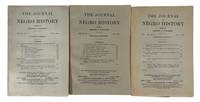
1943ref. 217911943. Woodson Carter Godwin. The Journal of Negro History. Archive of three significant issues published between 1943 and 1946 documenting the continued expansion of African American historical scholarship during the Second World War and immediate postwar period. The material records Black intellectual production historical recovery and interdisciplinary scholarship through the editorial and publishing work of the Association for the Study of Negro Life and History founded by Carter G. Woodson and Jesse E. Moorland in 1915. These issues include archival evidence and field research on slavery Black political organization African diasporic identity labor systems and racial discrimination across the United States the Caribbean and Latin America. The journal served as one of the central institutional vehicles through which African American scholars circulated research challenging dominant white historical narratives while building an international framework for Black historical studies. The archive provides primary-source evidence for the maturation of mid-century African American historiography and the broadening geographic scope of Black intellectual inquiry during the 1940s. Woodson Carter Godwin ed. The Journal of Negro History. Washington D.C.: The Association for the Study of Negro Life and History 1943 and 1946. Three issues in publisher's printed wrappers comprising Vol. XXVIII No. 3 July 1943; Vol. XXXI No. 3 July 1946; and Vol. XXXI No. 4 October 1946. Each issue measures approximately 10 x 6.5 inches and ranges between 111 and 137 pages. 1 Vol. XXVIII No. 3 July 1943. Includes Vincent W. Byas' "Ethnologic Aspects of the Martinique Creole" examining Creole identity and cultural formation in the French Caribbean; John Hope Franklin's influential "Slaves Virtually Free in Ante-Bellum North Carolina" reassessing the legal and social complexities of slavery in the Upper South; W. Sherman Savage's "The Contest over Slavery between Illinois and Missouri" addressing sectional political tensions; and Arthur J. Alexander's "Federal Officeholders in New York State as Slaveholders 1789-1805" documenting Northern political participation in slavery. 2 Vol. XXXI No. 3 July 1946. Features Charles W. Cobb Jr.'s "The Outlook Regarding State FEPC Legislation" analyzing anti-discrimination policy and fair employment campaigns during the early civil rights era; Mozell C. Hill's "The All-Negro Communities of Oklahoma: The Natural History of a Social Movement" documenting Black autonomous communities and rural self-governance in Oklahoma; and Gonzalo Aguirre Beltrán's "Tribal Origins of Slaves in Mexico" tracing African ethnic origins and cultural survivals within Mexican slavery and the broader Atlantic world. 3 Vol. XXXI No. 4 October 1946. Opens with the Annual Report of the Director and includes Bernard H. Nelson's "Confederate Slave Impressment Legislation 1861-1865" examining the forced wartime conscription of enslaved labor; Marion J. Russell's "American Slave Discontent in Records of the High Courts" focusing on legal evidence of enslaved resistance; Bella Gross' "The First National Negro Convention" revisiting antebellum Black political organizing; and John A. Schutz and Maud O'Neil's "Arthur Holt Anglican Clergyman Reports on Barbados 1725-1733" documenting Caribbean plantation society through missionary observation. These issues record the international and interdisciplinary character of African American scholarship under Woodson's editorial leadership during the 1940s. Contributors examine Black political organization labor systems diasporic identity formation and legal structures across multiple regions of the Atlantic world. Work by John Hope Franklin Charles W. Cobb Jr. Gonzalo Aguirre Beltrán and other scholars reflects the journal's role in shaping modern African American and African diasporic historiography during the mid-twentieth century. Light edge toning and faint foxing to wrappers with minor handling wear; overall very good to near fine condition. An archive documenting the intellectual development and international reach of Black historical scholarship in the World War II and immediate postwar era. unknown books
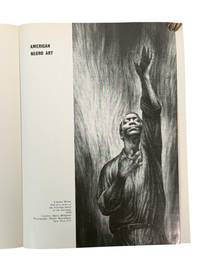
1960ref. 236661960. Cedric Dover's survey of African American visual art from early portraiture through the postwar period published in 1960 while the work of Black artists remained marginal within standard American art histories. Dover connects artistic production to slavery emancipation migration industrial labor the Harlem Renaissance federal arts programs and the growth of Black cultural institutions. Reproductions of works by Aaron Douglas Charles White Richmond Barthé Jacob Lawrence William H. Johnson Hale Woodruff Selma Burke and others establish a lineage across painting sculpture drawing printmaking and mural art. Dover Cedric. American Negro Art. New York: New York Graphic Society 1960. First edition. 186 pages. 8vo. Hardcover in original brown cloth with silver spine lettering extensively illustrated in black and white and color no dust jacket. The volume opens with Charles White's 1958 ink drawing based on the spiritual "One of a series of ink drawings based on the spirituals" and includes Aaron Douglas's The Negro Looks Ahead Richmond Barthé's sculpted head Hubert Howard's Show Girl Jacob Lawrence's Ambulance Call and a color reproduction of Aaron Douglas's A Harlem Matron. Dover's text addresses the circumstances under which Black artists studied exhibited and found patronage with sections including "Mulattoes and Atelier Art" "For Aaron Douglas" and "The Artists." One illustrated spread reproduces Charles White's mural sketch for the Harlem Hospital beside Douglas's The Continuation of Life while another places a photograph of industrial workers beside Hale Woodruff's printmaking and William H. Johnson's Aunt Alice. Dover an Anglo Indian writer and scholar who published extensively on race anthropology and modern art presents African American art as a continuous field shaped by both formal experimentation and the political conditions governing Black life. His discussion of Harlem Renaissance circles historically Black colleges museum access commercial galleries and federal patronage records the institutional structures through which artists built careers despite segregation and restricted exhibition opportunities. The book's period terminology including its title and chapter language records the vocabulary through which African American art was categorized by publishers and scholars at midcentury. Light shelf wear to binding; permanent marker block on title page else clean and firmly bound. Overall very good condition. A substantial midcentury attempt to place African American artists within the history of American modernism through named works institutions movements and individual careers. unknown books
1967ref. 235281967. Woodson Carter Godwin. The Journal of Negro History traces Black historical scholarship from the civil rights movement of the late 1960s to the constitutional battles over affirmative action in the early 1980s. Kenneth B. Clark a psychologist whose work with Mamie Phipps Clark on children and racial segregation was cited in Brown v. Board of Education opens the January 1968 issue with "The Present Dilemma of the Negro" while other issues examine racial thought in colonial America Black sailors in the Navy and merchant service discipline under industrial slavery in the Old South antislavery agents working with free Black communities from 1833 to 1838 and the Bakke Weber and Fullilove affirmative-action cases. William M. Brewer and Alton Hornsby Jr. eds. The Journal of Negro History. Washington D.C.: The Association for the Study of Negro Life and History Inc. 1967-1982. Nine quarterly issues. Vol. LIII Nos. 3 and 4 July and October 1967; Vol. LIII Nos. 1 and 2 January and April 1968; Vol. LIV Nos. 1 2 3 and 4 January April July and October 1969; Vol. LV No. 1 January 1970; and Vol. LXVII No. 3 Fall 1982. Including writings "The Emergence of DuBois As An African Nationalist"; Max Welborn "Racial Massacre In Atlanta September 22 1906"; Valeria W. Weaver "The Failure Of Civil Rights 1875-1883 And Its Repercussions"; and "The Ethel Johns Report: Black Women In The Nursing Profession 1925." These issues show Woodson's program in the decades after civil rights activism brought Black historical scholarship into debates over school desegregation voting rights enforcement affirmative action and the recovery of African origins in Atlantic slavery. January 1969 number includes the annual report "The Mis-Education of The Negro" tying the Association's current work to Woodson's critique of American schooling while the 1982 number places King's memory Central African slavery Black women's nursing labor affirmative action and Civil War freedom claims in the same scholarly forum. A compact run of The Journal of Negro History that connects ASALH's Woodson-era mission to late twentieth-century scholarship on enslavement civil rights enforcement African Diaspora origins Black labor and affirmative action law. Wrappers show toning some scattered stains with some issues showing binding weakness; interiors remain readable. Overall very good condition. unknown books
1829ref. 225831829. African AmericanReligionCarribean New Testament in the Negro Tongue. In The Eclectic Review Vol. XLIII No. LXXXVI. London: 1829. Excerpt: pp. 553-564. Disbound 12pp. A rare excerpt reviewing a missionaries' translation of the New Testament into "Negro-English" also called talkee-talkee the Creole language spoken by enslaved and free Black populations in Demerara and Surinam. The British and Foreign Bible Society issued the translation in 1829 for missionary use representing one of the earliest attempts to render the Christian scriptures into an Afro-diasporic Creole tongue of the Caribbean basin. This review in The Eclectic Review a leading 19th-century dissenting religious periodical gives a lengthy discussion of the translation providing contemporary reactions that ranged from grudging acknowledgment to outright racist dismissal. The review juxtaposes biblical passages rendered into Creole with commentary often mocking the "mixed speech" as "ridiculously offensively and incurably base." Yet despite its dismissive tone the piece captures critical evidence of how missionaries and colonial observers grappled with African- and Creole-derived linguistic traditions including debates over whether vernacular scripture empowered conversion or threatened white control. The review references Moravian missionary John Latrobe's efforts in Suriname as well as comparisons to African Dutch and Portuguese linguistic influences. Particularly striking are verbatim transcriptions of gospel passages in Creole offering researchers a rare contemporaneous witness to early printed Afro-Caribbean language. Light toning disbound with clean margins preserved; pages complete and supple. A rare document of the intersection of race religion and language in the British Caribbean revealing both the efforts made by missionaries to connect through Creole scripture and the entrenched racism of the colonial intellectual establishment. unknown books
1970ref. 209241970. African American Black World: A Johnson Publication. Chicago: Johnson Publishing Company 588 pages total. Five magazine issues in library binding 1970. Contains individual magazine covers in book binding. A five issue set of Black World from the months of May to October of 1970. The magazine was initially called Negro Digest and was founded by John H. Johnson in order to provide an African-American alternative to the broadly white focused Reader's Digest. Founded in 1942 the magazine experienced a collapse in 1950s but was revived in the 1960s as Black World. Reflecting the influence of the Black Power movement of the time the magazine shifted its focus towards political economic and social issues effecting the black community at the time. The five volumes contained within this book contain poetry short stories reflections on pan-Africanism examinations of racism Swahili language studies and continental African politics. Much of the content of the issues reflects a wider change at the apex of the Black Power movement in which the magazine pivoted towards the politics of continental Africa and the Caribbean broadening the scope of the movement itself. Overall very good condition pages 57-62 of September volume missing. Ultimately the issues demonstrate a new moment in African-American politics following the Civil Rights Movement. unknown books
1864ref. 196771864. African American The Negro Race in America. Edinburgh Review 1864. First Edition. Rebound in lavender wrappers. Original 39 page article with 5 headings extracted from the Edinburgh Review of January 1864. Octavo. An intricate look in 1860's into the transition from slavery to emancipation to reintegration in Western society. Topics covered within follow the "character and probable destiny of the negroes quite apart from the merits and demerits of the classes or parties brought by parties whose strifes they have been brought into by their present position". The author surfaces critical notions on the Black experience more specifically chartering the detrimental effects of enslavement and the difficulties of reintegration. An important text in very good condition. unknown books
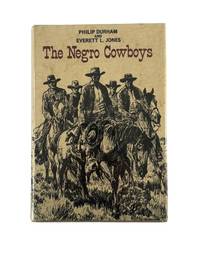
1965ref. 183241965. Western Americana The Negro Cowboys. Philip Durham and Everett L. Jones. Dodd Mead and Company: New York 1965. First edition. 278 pages Hardcover Measures 6 x 8 inches. Original dust jacket shows a group of men on horseback their faces obscured in shadow. The text begins "Now they are forgotten but once they rode all the trails driving millions of cattle before them.They numbered thousands among them many of the best riders ropers and wranglers." The true history of the cowboy stands in stark contrast to the mythology of John Wayne that surrounds it. African Americans escaping slavery and limited opportunity sought out the vast expanse of the American west to build new lives. Published in 1965 amid race riots and the assassination of Malcolm X this text made visible the invaluable contributions made by African American cowboys whose lives and contributions had been long buried. Cover clean and intact very slightly creased. Textblock clean tight and bright. Overall very good condition. unknown books
1941ref. 173141941. Bureau of Educational Research Howard University Washington DC. The Journal of Negro Education A Quarterly Review of Problems Incident to the Education of Negroes Racial Minorities and the Present International Crisis. July 1941. In original wrappers. 622 pages. Tear on spine toning on covers. Some foxing in interior and some wormholing on blank margin in bottom right of text block but absolutely legible. Fair to good condition. An interesting historical snapshot of world events through a Black lens. unknown books
1920ref. 171801920. Club teaches African-American girls about Home Economics Gardening Social and Civic Responsibility. C. 1920s. Negro Girls' Club Record Book. Published by Georgia State College of Agriculture in Athens Georgia. 20 pages. 9 x 5.75 in. Original printed wrappers. "Use this book to keep a record of al the club work done during the entire year." Printed as workbook with pages to take notes on numerous domestic projects including planning a garden canning produce cooking sewing and balancing a budget. Includes a rubric where a member's annual work will be evaluated. "Each club member is expected to make an exhibit at some fair or public meeting." Most of the pages are not filled in. 5 pages have child-like scribbles and doodles in pencil. Originally belonged to Sarah G. Daniel a girl in 6th Grade. Thumb-soiling to wrappers. In good condition. unknown books
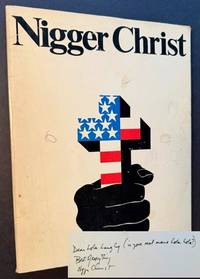
1971ref. 258231971. Original wraps. Very Good. The 1971 stated first --and almost certainly only-- edition of this undoubtedly scarce racial polemic INSCRIBED BY "NIGGER CHRIST" on the front pastedown. We have no printed information on the who or where of publishing but we do have the pseudonymous names of the father-and-son authors "American Prince" and "Nigger Christ". Presumably the name "Nigger Christ" referes to Langston Hughes' famous use of it in his 1931 poem "Christ in Alabama" which was written in response to the infamous Scottsboro Boys trial. The quarto paperback is solifd and VG in its pictorial wrappers with light staining and scuffing --and just a bit of ink scribbling-- along the panels. Internally very clean with few markings beyond the author's inscription. An incendiary reckoning of where things are at racially at this writing 1971 in The United States. Even by today's standards provocative and scorching. unknown books
1963ref. 221701963. Civil Rights African American Slavery and Abolition A complete set of the Adventures in Negro History educational LP series created to promote Black history and culture during the Civil Rights era through dramatized narration and scholarly commentary. Adventures in Negro History: Volumes I-III. Highlight Radio Productions 1963 1966 1969. Three original 12-inch 33⅓ rpm vinyl LPs each record housed in original illustrated jacket. Commissioned by Pepsi-Cola and produced by the Chicago-based Highlight Radio Productions this project brought together historians actors and community leaders in an accessible audio-driven public history format. Each volume explores a distinct theme in African American experience with powerful graphic covers and scholarly liner notes by eminent historians John Hope Franklin and Elsie M. Lewis. 1 Volume I: Adventures in Negro History 1963. Illustrated in stark black and white the cover features a stylized portrait of a bound enslaved man visually evoking the violent conditions of enslavement and the struggle for freedom. The back cover provides capsule biographies of pivotal figures including Estevanico Crispus Attucks and W.E.B. Du Bois as well as dramatizations of "Douglass!" and "Pinchback!" The LP includes dramatized reenactments written and directed by Ossie Davis and is voiced by Ruby Dee Godfrey Cambridge Brock Peters and Roy Glenn. The liner text opens: "We cannot afford to let the story of Negro Americans-who they were how they lived what they did-go untold. This is a job that needs doing in all the classrooms of America." The tone is urgent and pedagogical designed to be played in schools libraries and community centers. 2 Volume II: The Frederick Douglass Years 1817-1895 1966.With a bold blue cover echoing the design of Volume I this LP focuses entirely on Douglass's life from enslavement to abolitionist leader. A full panel on the reverse contains the essay What the Douglass Years Mean to America by John Hope Franklin then Professor of American History at the University of Chicago. Franklin writes: "The Frederick Douglass story is the story of America in the nineteenth century. it is the story of man's struggle for justice and liberty in a society often committed more to self-interest than to high principle." The dramatizations include scenes from Douglass's escape from slavery his debates with white abolitionists and his role during Reconstruction. The same acclaimed voice cast from Volume I returns. 3 Volume III: The Afro-American's Quest for Education - A Black Odyssey 1969.This volume shifts focus to the historical struggle for Black educational access from slavery through desegregation. The cover rendered in burnt sienna and black features a graphic portrait of a bearded elder flanked by line drawings of teachers students and historic Black institutions. On the verso Dr. Elsie M. Lewis Professor of History at Howard University contributes a major essay declaring: "No phase of the American Negro's history is more crucial more dramatic or more moving than his long dogged quest for education." Her commentary frames education as both a right and revolutionary act for African Americans. Like earlier entries Volume III blends narrative scenes with documentary-style commentary. All three LPs are in very good condition with minor edge wear to sleeves. Vinyl appears clean with no visible scratches. These records were not mass-marketed and were distributed largely through educational and community networks making complete sets scarce. unknown books
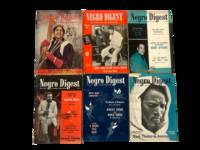
1947ref. 223891947. Johnson John H. founder. Negro Digest 1947-1969 documents African American political thought literary production and cultural criticism across the postwar period the Civil Rights Movement and the emergence of the Black Arts Movement. Published as a digest format periodical the magazine brought together essays fiction journalism and commentary by leading Black writers and public intellectuals establishing a widely circulated forum for debate on race identity labor international politics and the arts. The issues in this archive include contributions by figures such as LeRoi Jones Alice Childress C. Eric Lincoln Arna Bontemps and Barbara Ann Teer supporting research into African American intellectual history Black theater and mid twentieth century print culture. Negro Digest. Chicago: Johnson Publishing Company 1947-1969. Archive of six issues in printed wrappers each approximately 7.5 x 5.5 inches. Issues included are: 1 January 1947 with articles including Richard Wright's "How Jim Crow Feels" Eleanor Roosevelt's contributions and "How Jackie Robinson Took It"; 2 February 1951 featuring "I Didn't Raise My Boy to Be a Fighter" by Lillie Brooks and articles by Walter White and Roi Ottley; 3 November 1961 including "The New Black Renaissance" by Arna Bontemps and commentary by Duke Ellington and C. Eric Lincoln; 4 December 1962 featuring "The Menace of Mediocrity" by C. Eric Lincoln and essays on African American urban life and global politics; 5 April 1967 Second Annual Theater Issue including LeRoi Jones's play Slave Ship and essays by Alice Childress Ronald Milner and others on Black theater and performance; 6 April 1969 Annual Report on Black Theater in America with contributions by Barbara Ann Teer Woodie King Jr. and a roundtable including Sam Greenlee and Hoyt W. Fuller. The issues include essays reportage literary excerpts and visual material documenting cultural and political developments. Published during a period of expanding Black media and activism Negro Digest functioned as a central platform connecting literary production with political discourse tracing shifts from integrationist arguments in the postwar years to the cultural nationalism and artistic experimentation of the late 1960s. The inclusion of theater-focused issues reflects the increasing importance of performance as a site of political expression within the Black Arts Movement while earlier issues address labor segregation and international Black identity. Light edge wear and rubbing particularly to earlier issues; covers remain vibrant with pages clean and intact; overall very good condition. This archive provides sustained documentation of African American intellectual and cultural life across a critical period of twentieth century history. unknown books
1989ref. 225821989. Mexico Lucha Libre Lucha Libre: Arena Puebla. Puebla Mexico: January 9 1989. Printed broadside on thin newsprint paper. Measures 14" x 9.25". Bold broadside advertising a lucha libre match held at Arena Puebla on Lunes 9 de Enero de 1989 a las 9:00 p.m. The main event is billed as the "Grandiosa Reaparición de los Misioneros de la Muerte!!!" "Grandiose Reappearance of the Missionaries of Death!!!" one of the most infamous heel trios in lucha history featuring Negro Navarro Black Power and El Signo. They were matched against El Texano Dos Caras and Tamba a high-profile face team. Lucha libre first popularized in the 1930s quickly grew into one of Mexico's most enduring cultural spectacles defined by its masked heroes and villains elaborate identities and the dramatic storytelling of the ring. By the 1980s it had become a cornerstone of Mexican popular culture blending sport theater and myth in a way that resonated deeply across social classes and borders. The headlining trio on this 1989 card the Misioneros de la Muerte "Missionaries of Death" comprised Negro Navarro El Signo and Black Power. Formed in the late 1970s they were one of the most feared and influential rudo stables in lucha libre history known for their aggressive style technical skill and ability to generate massive heat with audiences. Their battles against trios like Los Brazos and Los Villanos helped define the trios match format that remains a staple of Mexican wrestling today. Revered for their role in elevating the art of the six-man tag the Misioneros are remembered as innovators who reshaped the dynamics of lucha storytelling and solidified the dominance of faction-based rivalries in the sport The undercard includes a series of celebrated names; "Los Juniors" Blue Demon Jr. Huracán Jr. and El Hijo de Black Shadow versus Kahos Lobo Rubio and Zandokan -- Valente Fernández La Mascara and El Fantasma versus Scorpio Sr. Scorpio Jr. and Barba Negra-- Kendo Star Lasser and Danny Boy versus Rizado Ruiz Ruddy Reyna and El Hijo del Diablo. Additional notes on the broadside include rules and pricing; "Todas estas luchas serán a 2 de 3 caídas sin límite de tiempo" "All these matches will be best two out of three falls no time limit" and "Las personas que arrojen objetos a los luchadores serán consignadas a las Autoridades competentes" "Anyone who throws objects at the wrestlers will be turned over to the authorities" as examples. The poster features striking black-and-white illustrations including a masked luchador with a championship belt at upper left alongside halftone portraits of individual wrestlers giving spectators a glimpse of the billed stars. Light toning and edgewear original fold creases. Overall very good condition. A scarce surviving Arena Puebla lucha libre broadside notable for headlining the Misioneros de la Muerte and featuring early appearances of Blue Demon Jr. and other "junior" heirs of Mexico's legendary masked heroes marking a generational transition in lucha libre history. unknown books
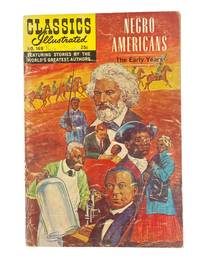
1962ref. 220401962. African American Comics Negro Americans: The Early Years Classics Illustrated No. 169. New York: Gilberton Company Inc. 1962. Staplebound with color-illustrated wrappers. A standalone issue of Classics Illustrated devoted entirely to the contributions of Black Americans from the colonial period through the 20th century. Published in 1962 during the height of the Civil Rights Movement this comic-format educational work-unusual in the Classics Illustrated series for focusing on real historical figures rather than literary fiction-was part of a broader mid-century effort to integrate African American history into mainstream curricula. As the cover proclaims the issue was intended to spotlight "the early years" of Black American achievement and in doing so it offers one of the earliest accessible visual histories of Black leaders for a youth audience. Historical figures covered in this issue include Crispus Attucks the first American killed in the Revolutionary War Benjamin Banneker mathematician and surveyor of Washington D.C. James Beckwourth a pioneering scout of the American West Harriet Tubman Frederick Douglass Daniel Hale Williams the first successful heart surgeon Booker T. Washington educator and founder of Tuskegee Institute George Washington Carver agricultural scientist and Matthew Henson co-discoverer of the North Pole. The comic also addresses Black contributions to the American Revolutionary War and Civil War with attention to the roles of enslaved people Black regiments and wartime espionage. Notably the "Inventors" section highlights Elijah McCoy lubrication systems Garrett Morgan gas mask and traffic light and Granville T. Woods rail signaling foregrounding underacknowledged Black innovation in American industrial history. Illustrated in full color throughout with strong sequential art emphasizing dignity resilience and ingenuity. Though the terminology "Negro Americans" reflects mid-century nomenclature the tone is respectful and didactic aimed at broad public education. These visual histories played an important role in the representation of African American figures in postwar American youth culture.Light wear and creasing consistent with age and small pen marks to cover but internally clean and complete. A remarkable and visually compelling early effort to narrate African American history to a popular audience. unknown books