5543 risultati
1823rif. S81886London, E. and C. M'Lean 1823 Complete with 29 engraved plates + 1 engraved figure at titlepage, 29cm., hardcover (leather spine repaired, marbled boards with the title on the upper cover, used), some foxing, previous owner's name written on title page, tipped-in engraved ex-libris of Charles John Myles, S81886
1823Complete with 29 engraved plates + 1 engraved figure at titlepage, 29cm., hardcover (leather spine repaired, marbled boards with the title on the upper cover, used), some foxing, previous owner's name written on title page, tipped-in engraved ex-libris of Charles John Myles, S81886
1568rif. 19512Lyon Roville 1568 -in-folio Une gravure de l'Edition Originale au burin sur papier vergé, Format à la cuvette : 27 centimètres de haut par 17,5 centimètres de large. Format total : 35 centimètres de haut par 24 centimètres de large, colorée d'époque à la main (couleurs trés fraîches) gravées par L. Danet, taches brunes à nettoyer) 1568 Lyon : G. Roville Editeur,
rif. 606954Oxford, Grifffith Institute, 1993. In-8, rel. éd. pleine-toile bordeaux sous jaquette ill. en coul.; XXIV-408 pp., 6 plans, 18 fig., 64 pl. d'ill. photogr. en n/b., texte en anglais,bibliographie, index. Edition originale.
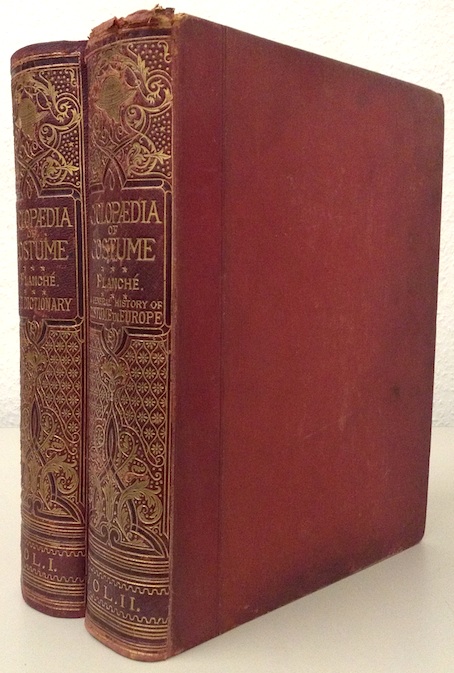
1876rif. 621516London, Chatto and Windus, 1876-79. 4to. VI S., 1 Bl., 527 S.; XI S., 1 Bl., 448 S. Mit zahlreichen Textillustrationen, meist in Holzstich, zusammen 23 (statt 24) Tafeln in Chromolithographie (inkl. 2 Front.), zus. 40 (recte 42) lithographierten Tafeln mit zahlreichen Darstellungen, meist in braunem Liniendruck; 2 Kupfertafeln und 1 aquarellierten Federzeichnung des 18. Jahrhunderts sowie einigen Fotoabbildungen als Beilagen. Rote Originalhalbleder mit reicher Rückenvergoldung (fleckig u. berieben, Vorsätze in Bd. 1 erneuert, Rücken von Bd. 2 am Kopf mit kurzen Einrissen, Innengelenke gebrochen). [3 Warenabbildungen]
1780reliure fin XIXème en demi-basane bleue, tit. doré, fers à froid sur dos lisse, bandeau, vignette, impression à grandes marges, (plats frottés, coupes et coins émoussés avec ptt mq., rares mouillures et piqûres), intérieur très frais Une des dernières œuvres de la littérature coutumière, dans laquelle Pothier déploie à plein son talent. Il s’agit aussi pour lui d’un moyen d’appliquer les théories qui figurent dans ses différents traités à un exemple concret qui lui était bien connu. C’est aussi un des textes les moins courants de l’auteur. Dernière édition connue.
rif. 12444Clermont-Ferrand, Pierre Viallanes, 1745 ; 2 vol. in-8 (22,5 x 15 cm). 1 f. bl.-Titre-516 pp.-2ff. / 424 pp.-10 ff. Basane brune marbrée, dos à nerfs orné, pièces de titre et de tomaison fauves. Coiffes arasées, coins frottées. manque de cuir en pied du tome 1, tâches d'encre marginales et perforations sans pertes atteignant les 100 premières pages au même tome. Ex-libris manuscrit sur les titres : "Desalles de Champneuf".
rif. 14930Taschen, 2003 - Fort in folio de 636 pages, reliure pleine toile sérigraphiée colorisée, ensemble sous étui cartonné illustré protecteur, 500 planches hors patrons, exemplaire à l'état de neuf.
rif. 237230Paris, J.-P. Roret [Imprimerie et fonderie de G. Doyen], 1829 in-16, 9 pp. (prospectus des autres codes), 294 pp., avec un frontispice gravé par Alfred Johannot, demi-veau cerise, dos lisse, pièce de titre grise, couverture imprimée conservée (reliure moderne).
1870rif. J94126Bruxelles, Gobbaerts 1870 Tome 1 seul (des 5): ix + 554pp., 29cm., reliure cart. (plats marbrés, dos en toile avec titre doré), 2 cachets sur la p.d.t., texte frais (très peu de rousserus), dans la série "Recueil des anciennes coutumes de la Belgique", bon état, [Contenu: Li Paweilhars, Li patron del temporaliteit, Chartes paix statuts et autres sources du droit coutumier liégeois], J94126
1873rif. B116583Bruxelles, Gobbaerts 1873 Tome 2 seul (des 5): CLXXXI + 612pp., 31cm., publié dans la série "Recueil des anciennes coutumes de la Belgique", reliure solide en demi-toile (plats marbrés, dos en toile avec des rousseurs, titre doré), imprimé sur papier de luxe, texte et intérieur sont frais sauf quelques rousseurs occasionnelles, 3 cachets sur la p.d.t., poids: 4kg., B116583
1870Tome 1 seul (des 5): ix + 554pp., 29cm., reliure cart. (plats marbrés, dos en toile avec titre doré), 2 cachets sur la p.d.t., texte frais (très peu de rousserus), dans la série "Recueil des anciennes coutumes de la Belgique", bon état, [Contenu: Li Paweilhars, Li patron del temporaliteit, Chartes paix statuts et autres sources du droit coutumier liégeois], J94126
1771plein veau brun, tit. & tom. dorés sur pc. blonde, dos à 5 nerfs ornés de fleurons et filets dorés encadrants, tr. rouges, (rel. très abîmée, mq. 3 pc. de tit. sur 4, mq. deux caissons au t. I, nb. galeries de vers marginales, marques d’humidité sur l’ensemble des deux vol.)
1884débr., non rogné, (couv. détachée et abîmée)
rif. 108018Paris, A. Quantin, Imprimeur-Editeur, 7 rue Saint-Benoit, 7, 1883, 1 volume in-4 de 270x180x20 mm environ, faux-titre, titre avec vignette, iv-138 pages, 1f. achevé d'imprimer, demi maroquin à coins tabac, avec les couvertures imprimées finement illustrées en couleurs et dorées conservées, dos à nerfs portant titres dorés, cuir souligné d'un double filet doré sur les plats, tête dorée, gardes marbrées. Avec des illustrations teintées de Paul Avril qui se fondent admirablement dans le texte. Quelques illustrations ont laissé une trace sur la page en regard, bon état, bel exemplaire.
1854rif. GITe598Paris Typographie de Firmin Didot Frères, Fils et Cie 1854. 2 tomes en 1 volume in-8 totalisant 9pp 513 feuillets chiffrés 18 et 19pp de table (celles-ci à la fin de chaque tome). Demi chagrin brun, dos à nerfs, tête dorée, reliure ancienne. Orné de 2 beaux titres-frontispices, texte bilingue dans un large et élégant encadrement, 509 gravures sur bois de costumes masculins ou féminins, de conditions et de nations différentes, 4 vues de Venise. Le tout redessiné par Seguin et gravé par Huyot. Légère usure du papier des plats, rousseurs. Réimpression de l'édition de 1590.
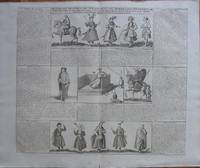
1720rif. 143601720. Atlas historique engraving of Persian costume and customs 1720 records an early eighteenth-century European presentation of dress military equipment horsemanship and tobacco use in Persia during the late Safavid period. Rather than presenting a single landscape or event the plate assembles male and female costume hairstyles turbans footwear weapons armor horses and smoking implements into a comparative visual survey. Its attention to cavalry equipment and what the accompanying description calls the "militia and their weapons" and the "offensive and defensive" equipment worn by soldiers at war documents the categories through which European geographical publications described Persian society and military culture. Atlas historique. Description of Persia and Persian costumes. 1720. Sheet size 51 x 43 cm. The engraving contains numerous individual figures and objects arranged for comparison including four men in different Persian costumes women in period dress examples of female hairstyles turbans and shoes and representations of tobacco smoking and pipes including a hookah. Military subjects include armor weapons cavalry horses an elaborate bow and equestrian equipment. The combination of human figures with separately illustrated articles of clothing arms and personal equipment allows individual elements of Persian dress and material culture to be examined across the sheet. Published in 1720 the engraving dates to the final years of Safavid rule when European atlases and geographical compilations increasingly combined maps with images and written accounts of the peoples clothing military practices and customs of regions beyond Europe. Here Persian men and women cavalry weapons tobacco consumption and dress are organized as subjects of geographical and ethnographic description providing evidence of how Persia was visually classified for an early eighteenth-century European audience. The detailed renderings of costume armor weapons horses hairstyles and smoking implements also preserve period representations of material culture associated with Safavid Persia. Very good condition. unknown
1720rif. 143601720. Atlas historique engraving of Persian costume and customs 1720 records an early eighteenth-century European presentation of dress military equipment horsemanship and tobacco use in Persia during the late Safavid period. Rather than presenting a single landscape or event the plate assembles male and female costume hairstyles turbans footwear weapons armor horses and smoking implements into a comparative visual survey. Its attention to cavalry equipment and what the accompanying description calls the "militia and their weapons" and the "offensive and defensive" equipment worn by soldiers at war documents the categories through which European geographical publications described Persian society and military culture. Atlas historique. Description of Persia and Persian costumes. 1720. Sheet size 51 x 43 cm. The engraving contains numerous individual figures and objects arranged for comparison including four men in different Persian costumes women in period dress examples of female hairstyles turbans and shoes and representations of tobacco smoking and pipes including a hookah. Military subjects include armor weapons cavalry horses an elaborate bow and equestrian equipment. The combination of human figures with separately illustrated articles of clothing arms and personal equipment allows individual elements of Persian dress and material culture to be examined across the sheet. Published in 1720 the engraving dates to the final years of Safavid rule when European atlases and geographical compilations increasingly combined maps with images and written accounts of the peoples clothing military practices and customs of regions beyond Europe. Here Persian men and women cavalry weapons tobacco consumption and dress are organized as subjects of geographical and ethnographic description providing evidence of how Persia was visually classified for an early eighteenth-century European audience. The detailed renderings of costume armor weapons horses hairstyles and smoking implements also preserve period representations of material culture associated with Safavid Persia. Very good condition. unknown books
1864rif. 145861864. Two original antique steel costume engravings of a Persian Iran Royal Officer and Noble woman printed in 1864. Overall size: 9" x 12.5." The plate illustrations are brightly colored and intricately detailed characterization of the traditional costumes of a Persian Royal Officer and Noble woman. In the engraving of the Royal Officer titled "Khatchadour D'hohannes: Officier du Prince Royal de Perse" his attire entails a vibrant green coat with gold trimmings which covers a gold-colored ensemble with a purple sash that stores his dagger. In the engraving of the Persian Woman titled "Dame Persane" she is depicted in traditional costume as imagined by Europeans in the 1800's. The woman is shown leaning against a banister wearing an embroidered white satin gown with a pink silk and fur trimmed coat and a feathered headdress. General age related toning. Overall both prints are in very good condition. unknown
1864rif. 145861864. Two original antique steel costume engravings of a Persian Iran Royal Officer and Noble woman printed in 1864. Overall size: 9" x 12.5." The plate illustrations are brightly colored and intricately detailed characterization of the traditional costumes of a Persian Royal Officer and Noble woman. In the engraving of the Royal Officer titled "Khatchadour D'hohannes: Officier du Prince Royal de Perse" his attire entails a vibrant green coat with gold trimmings which covers a gold-colored ensemble with a purple sash that stores his dagger. In the engraving of the Persian Woman titled "Dame Persane" she is depicted in traditional costume as imagined by Europeans in the 1800's. The woman is shown leaning against a banister wearing an embroidered white satin gown with a pink silk and fur trimmed coat and a feathered headdress. General age related toning. Overall both prints are in very good condition. unknown books
1888rif. 145681888. Collection of 3 chromolithographic prints from The Illustrated History of Costume : period styles and accessories by Albert Racinet published by Firmin Didot & Cie in Paris in 1888. Titled: PERSIA - PERSE- PERSIEN. 7 ½" x 8 ¾". These lithographs beautifully depict Persian costumes and interior décor from Iran. In the first lithograph we can see 10 men and one woman dressed in the various traditional Qajar attires of Iran. The second lithograph shows the beautiful interior décor including very intercate and vibrant Persian rugs elaborately scrolled door and window frames of a Kajar residence. The third lithograph captures five musicians playing various instruments and four women dancers. In very good condition. unknown
1888rif. 145681888. Collection of 3 chromolithographic prints from The Illustrated History of Costume : period styles and accessories by Albert Racinet published by Firmin Didot & Cie in Paris in 1888. Titled: PERSIA - PERSE- PERSIEN. 7 ½" x 8 ¾". These lithographs beautifully depict Persian costumes and interior décor from Iran. In the first lithograph we can see 10 men and one woman dressed in the various traditional Qajar attires of Iran. The second lithograph shows the beautiful interior décor including very intercate and vibrant Persian rugs elaborately scrolled door and window frames of a Kajar residence. The third lithograph captures five musicians playing various instruments and four women dancers. In very good condition. unknown books
1748rif. 143711748. Mallet Allain Manesson. "Arabes" 1748 presents two male figures identified as Arabs through the conventions of European geographical and costume illustration derived from Mallet's Description de l'Univers. Mallet's original work first published in Paris in 1683 combined maps city views portraits and images of dress with accounts of the customs religions and governments attributed to different nations; its second volume treated Asia. The engraving records the visual vocabulary through which Arab clothing and appearance were presented to European readers within this encyclopedic geographical tradition. Mallet Allain Manesson. "Arabes." 1748. Engraving. Overall page 10" x 7.25"; image 5.5" x 7.5". Beneath a decorative banner lettered "Arabes" two standing men wear contrasting garments against a mountainous landscape. One wears a buttoned tunic overcoat pointed shoes and a large turban; he holds a decorative cane while resting his other hand at his belt. The second wears a decorated collared tunic beneath an overcoat pointed shoes and a tall head covering from which a long length of fabric descends. The paired figures allow differences in headwear garment ornament and accessories to be compared within a single composition. The plate derives from an illustrated geographical work conceived by Mallet a French military engineer and mathematics teacher whose Description de l'Univers organized contemporary geographical knowledge alongside images of the "divers habillemens" of different peoples. The "Arabes" composition therefore records an eighteenth-century European printed conception of Arab dress rather than serving as direct ethnographic documentation of a specific Arab population or locality. Overall very good condition. The combination of costume detail and explicit ethnic captioning documents how Arab peoples were visually categorized for European audiences in early modern geographical publishing. unknown
1748rif. 143711748. Mallet Allain Manesson. "Arabes" 1748 presents two male figures identified as Arabs through the conventions of European geographical and costume illustration derived from Mallet's Description de l'Univers. Mallet's original work first published in Paris in 1683 combined maps city views portraits and images of dress with accounts of the customs religions and governments attributed to different nations; its second volume treated Asia. The engraving records the visual vocabulary through which Arab clothing and appearance were presented to European readers within this encyclopedic geographical tradition. Mallet Allain Manesson. "Arabes." 1748. Engraving. Overall page 10" x 7.25"; image 5.5" x 7.5". Beneath a decorative banner lettered "Arabes" two standing men wear contrasting garments against a mountainous landscape. One wears a buttoned tunic overcoat pointed shoes and a large turban; he holds a decorative cane while resting his other hand at his belt. The second wears a decorated collared tunic beneath an overcoat pointed shoes and a tall head covering from which a long length of fabric descends. The paired figures allow differences in headwear garment ornament and accessories to be compared within a single composition. The plate derives from an illustrated geographical work conceived by Mallet a French military engineer and mathematics teacher whose Description de l'Univers organized contemporary geographical knowledge alongside images of the "divers habillemens" of different peoples. The "Arabes" composition therefore records an eighteenth-century European printed conception of Arab dress rather than serving as direct ethnographic documentation of a specific Arab population or locality. Overall very good condition. The combination of costume detail and explicit ethnic captioning documents how Arab peoples were visually categorized for European audiences in early modern geographical publishing. unknown books
rif. Morten StrangeIn Pristine Condition. unknown