Early, GeraldABAA

5594 risultati
1989rif. 10869NY: Ecco 1989. First edition first prnt. Beginning foxing on the topedge and foreedge. Unread copy in Near Fine condition in a Fine dustjacket with an archival cover. Early's first book a collection of essays on cultural subjects. Hardcovers. 8vo - over 7¾" - 9¾" tall. The image is of the book described and not a stock photo. Ecco hardcover books
1902rif. 887431902. CUSTOMS HIRADE Kojiro author. TOKYO FUZOKU-SHI 3 vols. Tokyo Meiji 35 1902. Tassel-bound Japanese-style fukuro-toji. 22.9 x 15.0 cm. Original printed patterned covers and printed title labels. Illustrated throughout with bw wood engravings and what appears to be the occasional copper engraving along with a very few color woodblock prints. A very interesting and exhaustive look at the customs of a Tokyo deep into the process of transition from the traditional to the "modern" amalgam of cultural elements that was 20th century Japan. Written on the eve of the Russo-Japanese War which would hasten that transition. Well known as an important piece of early scholarship on the subject this original edition is by no means common. Near fine complete. unknown books
1790rif. ST14261Paris: Drouhin 1790. FIRST EDITION. 265 x 205 mm. 10 3/8 x 8". Two volumes. VERY ATTRACTIVE CONTEMPORARY MARBLED CALF GILT IN A NEOCLASSICAL DESIGN covers with a cresting palmette frame featuring ornate urn ornaments at corners flat spine divided into compartments by Greek key roll floral spray centerpieces one green and one black label marbled endpapers. With 55 PLATES OF COSTUMES designed by Philippe Chéry and engraved by Pierre-Michel Alix 50 of these PRINTED IN COLOR five in black and white a couple of these with color highlights applied by hand and with a color portrait of the author from the 1802 edition tipped in at front. Colas 717; Hiler p. 542; Lipperheide 3203; Cohen-de Ricci 227; Brunet IV 1135. One corner worn to board joints and extremities lightly rubbed but the bindings lustrous and generally very attractive. First volume slightly browned throughout second volume occasionally so volume II with two-inch marginal stain to upper gutter affecting four quires and six plates but not touching text or images two plates with pen marks in margins touching lettering but not image other trivial defects but still an excellent copy internally the colors especially clear and pleasing. This is an elegant production with the Neoclassical binding being the perfect complement to the color engravings of ancient Greek and Roman costumes that illustrate the present history of theatrical attire. In the two volumes here theater critic and historian Jean Charles Le Vacher de Charnois 1749-92 covers Classical tragedies and comedies as well as later interpretations of these dramas by playwrights including Racine. Le Vacher de Charnois intended a series of books encompassing as the title indicates theatrical costumes from all nations and from the ancient to the modern; however the French Revolution interrupted his scheme and as a monarchist he was imprisoned in 1792 for his writings in support of the aristocracy. It was long thought that he had died in the massacres at the Abbaye prison in September of that year but later research indicates that he may have been executed during the Reign of Terror in 1794. The artists who illustrated this work were at the opposite end of the political spectrum. Painter Philippe Chéry 1759-1838 studied with Jacques-Louis David and adopted his master's passionate support for the Revolution as well as his Neoclassical style. Engraver Pierre-Michel Alix 1762-1817 was a specialist in color printing best known for his portraits of leaders of the French Revolution and later of Napoleon and First Empire dignitaries. While the handsome binding here is unsigned the palmette roll on the covers is very similar but not identical to one used by Bozerian see Culot "Jean-Claude Bozerian" roll #44 and plate #XXIV. Perhaps our binder had trained in that atelier as the design and workmanship are certainly of that level. Drouhin unknown books
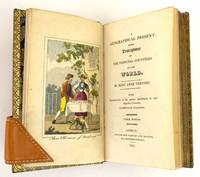
1820rif. ST16372eLondon: Printed for Harvey and Darton 1820. Third Edition. 155 x 95 mm. 6 x 3 3/4". 144 pp. Appealing sprinkled calf by Wallis for C. E. Lauriat stamp-signed on verso of front free endpaper covers bordered by double gilt fillet raised bands spine gilt in compartments with floral spray at center encircled by small tools leafy branch at corners red morocco label densely gilt turn-ins marbled endpapers all edges gilt. WITH 60 HAND-COLORED PLATES of costumes from around the world. For first edition: Lipperheide 480; Osborne Collection p. 193. See also: Megan Nourcia "X Marks the Spot: Women Writers Map the Empire for British Children 1790-1895" pp. 33-34. A tiny bit of wear to the top of the front joint occasional trivial marginal stains or the faintest of browning but still a fine copy clean and fresh internally with brightly colored plates in a well-preserved lustrous binding. Attractively bound and enhanced with excellent contemporary hand coloring this charming introduction to geography aimed at young readers contains numerous plates depicting the traditional dress of cultures from around the world. Beginning in London and spreading to almost every corner of Western Europe the book then guides us to Asia Africa and finally to the Americas ending in Tierra del Fuego. First published in 1817 "A Geographical Present" was the author's most successful work. There is little known about the life of Mary Anne Venning but according to Megan Nourcia the present work "had a broad circulation launching her career as a scientific writer and establishing her authority as an educator of the young." Nourcia also notes that "Venning's texts were marketed as educational aids of keepsake quality"; as we see here the attractive binding and lovely hand-colored plates add an element of luxury to this pedagogical work and the fine condition of our copy suggests that it was carefully looked after by its presumably young previous owners. Printed for Harvey and Darton unknown books
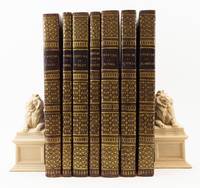
1800rif. ST17757London: William Miller; T. M'Lean; William Bulmer 1800-18. 370 x 270 mm. 14 1/2 x 10 1/2". Seven volumes. Uniformly bound in stately contemporary dark burgundy straight-grain morocco covers with gilt palmette-and-wheat-sheaf border inner frame of blind-stamped grapevine raised bands spine compartments densely gilt with repeating botanical tools gilt lettering gilt-rolled turn-ins all edges gilt. Two engraved titles with hand-colored vignettes not included in plate count and 356 FULL-PAGE HAND-COLORED PLATES FEATURING COSTUMES OCCUPATIONS AND SOCIAL INTERACTION OF VARIOUS NATIONS. Volume I-III V and VI with text in French as well as English. Front pastedown with armorial bookplate of Edward Gordon Douglas-Pennant 1st Baron Penrhyn. Abbey Life 430; Abbey Travel 71 244 370 373 532 533. Joints and extremities lightly rubbed one board with a couple of faint scratches two rear boards with neat older repairs to short tears at tail edge but the bindings quite sound and most attractive on the shelf. Flyleaves a little foxed minor offsetting from plates to text leaves occasionally more pronounced but never offensive isolated minor marginal foxing to plates otherwise very fine WITH CLEAN BRIGHT PLATES. This is a collection of major early 19th century color plate books with well-drawn and richly-colored engravings in bindings that make a handsome appearance on the shelf. All of these works have appealing plates where the costumes of the various social strata are carefully and colorfully delineated. And two of the volumes--those showing British costumes and the book on Chinese punishments--contain in addition a good deal of diverting background detail that serves as a revealing context for each of the costumes depicted. The content of each of the volumes is worth noting. With a few exceptions the plates in the "Costumes of China" portray ordinary working-class men and women toiling at their trades. We see a bookseller with his wares spread out on a mat women sewing and embroidering a butcher a fisher a barber a man with a "magic lantern" show and a "man striking a small gong during an eclipse" an ancient ritual that the author tells us he was privileged to witness on 17 November 1789. The "Punishments of China" volume is filled with almost gleefully painful depictions of all degrees of disciplinary action from the relatively minor twisting of the ears or chaining to an iron pole to the humiliating ordeal of the wooden collar to methods of execution by beheading or by crucifixion using a cord. The opulent and brightly colored costumes in Dalvimart's volume on Turkey are mostly those of the ruling classes although also represented is a wide variety of native dress from the many regions of the vast Turkish empire of the day which included Bosnia Albania Syria Egypt and parts of Greece. It is particularly interesting to contrast the clothing of the very heavily veiled Turkish and Egyptian women with the much more relaxed style of the Greek women and the nearly immodest garb of the female Bedouin. We also are shown a eunuch an odalisque from the harem a grand vizier various royal functionaries and government officials all splendidly attired. The Russian costumes based on engravings done by C. W. Müller at the request of Empress Catherine the Great are focused on the ethnic dress of the empire's many holdings. The Laplanders and Finns wear clothing that would look familiar to most Europeans but the Mongols in their Oriental dress would be quite exotic. The clothing of the northern tribes such as the Kamchatkans Aleutians Koriaks and Tungoosi will impress the modern reader with their similarity to the traditional dress of Native American and First Nation peoples. The Tchutski woman is even depicted naked to display her tattoos. Bertrand de Moleville's Austrian costumes also illustrate the native dress of the empire's citizens but the illustrations here are less fashion plates than romanticized scenes: peasant couples are shown courting and dancing; Croatian women gossip beside a stream; and a wild-haired Bohemian gypsy whose "profession is not hard to guess" from her state of "déshabillé" flees with her naked and no doubt illegitimate child. Pyne's "Costumes of Great Britain" is one of the most highly praised works in this set and for good reason: the simple working men and women of Britain it depicts are always shown going about their daily tasks in the midst of a well-realized scene. The woman selling "salop" a hot morning beverage is seated at her cart with its urn judiciously located by the watchman's stall surrounded by customers including soldiers and a woman with her market basket. A fireman with an ax and a torch hurries toward his engine company while they unwrap their hose. The potter is at his wheel the tanner is cleaning skins and the bill-sticker posts the winning lottery numbers. The clothing while carefully detailed is almost secondary to the depictions of everyday life. The "Military Costumes of Turkey" illustrates the official regalia "uniform" is much too drab a word for these outfits worn by officers in various regions of the empire. Perhaps the most intriguing plate here is that of the Ladle Bearer a post that was also illustrated in "Costumes of Turkey." What appears to be a man with a giant spoon is in fact the holder of an important military position equivalent to the color-bearer in a western army. We are told that the loss of its ladles is the greatest disgrace that can befall a Turkish regiment: if the two great ladles the size of a grown man that are borne into battle at the head of the troops are captured the regiment must be disbanded and formed anew. Former owner Edward Gordon Douglas-Pennant 1st Baron Penrhyn 1800-86 was a leading figure in the Welsh slate industry; he owned the Penrhyn Quarry the largest slate quarry in the world at the end of the 19th century. He was known for his paternalistic attitude to his employees creating the "model village" of Llandegai to house the quarry workers. It was notable for having "no corrupting alehouse." He was ruthless enough to fire 80 men in 1868 because they did not vote for his son George who was running for a seat in Parliament. Single volumes from this set appear with frequency in the marketplace; full sets show up much less often; sets as handsome and well preserved as the present are rarely seen. William Miller; T. M'Lean; William Bulmer unknown books
1854rif. List2974New York City 1854. Single one-page letter measuring 8 x 12 ½ inches. Folded with one small tear; near fine. A letter from “C. Riddle” with the New York City Inspector’s Department to “Sant. Mairs Esq” concerning the best way to push through their choice of appointee for the Collector of the Port of New York. Riddle writes: “I write this to inform you that there has been six or seven appointments made in the Custom House within the last few days. You know what the old man told us the other day when you were here. This looks to me as if there was some humbug going on. Now my dear sir in my opinion the certain way to secure Mr. Van Derlip’s appointment is for you to write to Washington and secure the influence of Dayton or Miller or someone of your Congressmen to see the Secretary of the Treasury and let them use their influence with him. It is said here by the knowing ones that all the appointments are made at Washington now if this be so this is the only way to fix the Collector. . A little effort on your part in this way will I think fix the matter.” Given that Riddle mentions the Custom House the “Collector” position the two are trying to fix is likely Collector of the Port of New York. This position which oversaw the collection of import duties and fines was extremely lucrative: it paid a percentage of money collected at what was then the busiest port in the US and the Collector’s office was also able to hand out federal jobs. The Collector was appointed by the President who at the time was Franklin Pierce; the Secretary of the Treasury whom Riddle is suggesting Mairs influence was James Guthrie. Guthrie pushed reforms on customs collectors including requiring much more frequent reports from them. If Collector of the Port was the position in question the pair were unsuccessful; State Senator Heman J. Redfield was the Pierce-appointed Collector from 1853 to 1857 and no one named Van Derlip ever held the position. An intriguing example of an attempt at political maneuvering. Of interest to scholars of New York City politics. unknown books
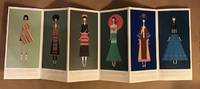
rif. 34153Dalian City: Dalian Nationalities University. Fine in Near Fine dust jacket. N.D. First Edition; First Printing. Hardcover. Fine book in close to fine cover. This was the winning graduation project of 2011 and consists of 56 individual illustrations of ethnic costumes of China including Hong Kong Macao and Taiwan. The university emphasizes educating the minorities from the 56 nationalities in China. The book is constructed in accordion folds with colored illustrations on both sides. The cover folds over the book and has a magnetic closure. The illustrations are lovely. ; 12 1/2 " tall x 6 1/2" wide . Dalian Nationalities University hardcover books
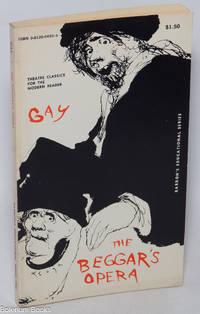
1962rif. 322346Woodbury: Barron's Educational Series 1962. Paperback. 162p. essays on the playwright the play & the staging introduction footnotes bibliography illustrations of the characters costumes and sets musical notations and lyrics very good mass-market paperback in pictorial wraps. Theatre Classics for the Modern Reader. Basis of Brecht's "Threepenny Opera Barron's Educational Series paperback books
1900rif. 1337915Washington: Government Printing Office 1900. January 1900. Softcover. Booklet 10x13; Fair/paperback; dark peach covers; black titles and lettering to front; front cover detached front binding as is; some chips to spine and edges; exterior has mild wear; text block has mild toning; illustrated; pp 73 NOTE: Shelved in Locked Annex Area Oversized Ephemera Case. 1337915. FP New Rockville Stock. Government Printing Office unknown books
1868rif. 001949Philadelphia: By the author 1868. Softcover. Manuscript; 10 1/2 x 8; pp. 4; written in brown ink on "Custom House Philadelphia" stationary; a couple of small nicks to edges; age-toning to margins; very good condition. The report addressed to Charles Gilpin Esq. of the US District Attorney's Office describes the arrival of the Ship Bombay from Liverpool upon which various violations of current laws are discovered - there are 29 1/2 passengers when only 13 1/2 are allowed only 12 berths are present with the majority of them less than 2 ft. wide and one of them less than 6 ft. long the height of the booby hatch is 1 ft. 4 in. shorter than the one specified by law and so on. The last paragraph of the document specifies the fines to be imposed including $50 per head for the extra 16 passengers to the amount of $800 and $5 per head for the narrow berths for 29 1/2 passengers to the amount of $147.50 for a total of $947.50. Philadelphia: By the author paperback books
2000rif. 22311NY: Hippocrene Books. Fine in Near Fine dust jacket. 2000. Hardcover. 0781807549 . First edition. Fine in an about fine dust jacket. . Hippocrene Books hardcover books
1920rif. 14008Paris, Gazette du Bon Ton, 1920. Origi.Broschur, Gr.-8°, enthält die Tafeln 9-16. Gazette du Bon Ton N.2.
1726rif. 26340Amsterdam, Antoni Schoonenburg en Nicolaas ten Hoorn, 1726. Gr. 4°, 34 cm. Nur der 2. Band. Mit 10 (inkls.Titel) Kupferstichen auf Tafeln und im Text. Titel, 852 Seten, 5 Blatt Register Pergament der Zeit, Fehlstelle, siehe Fotos. [5 Warenabbildungen]
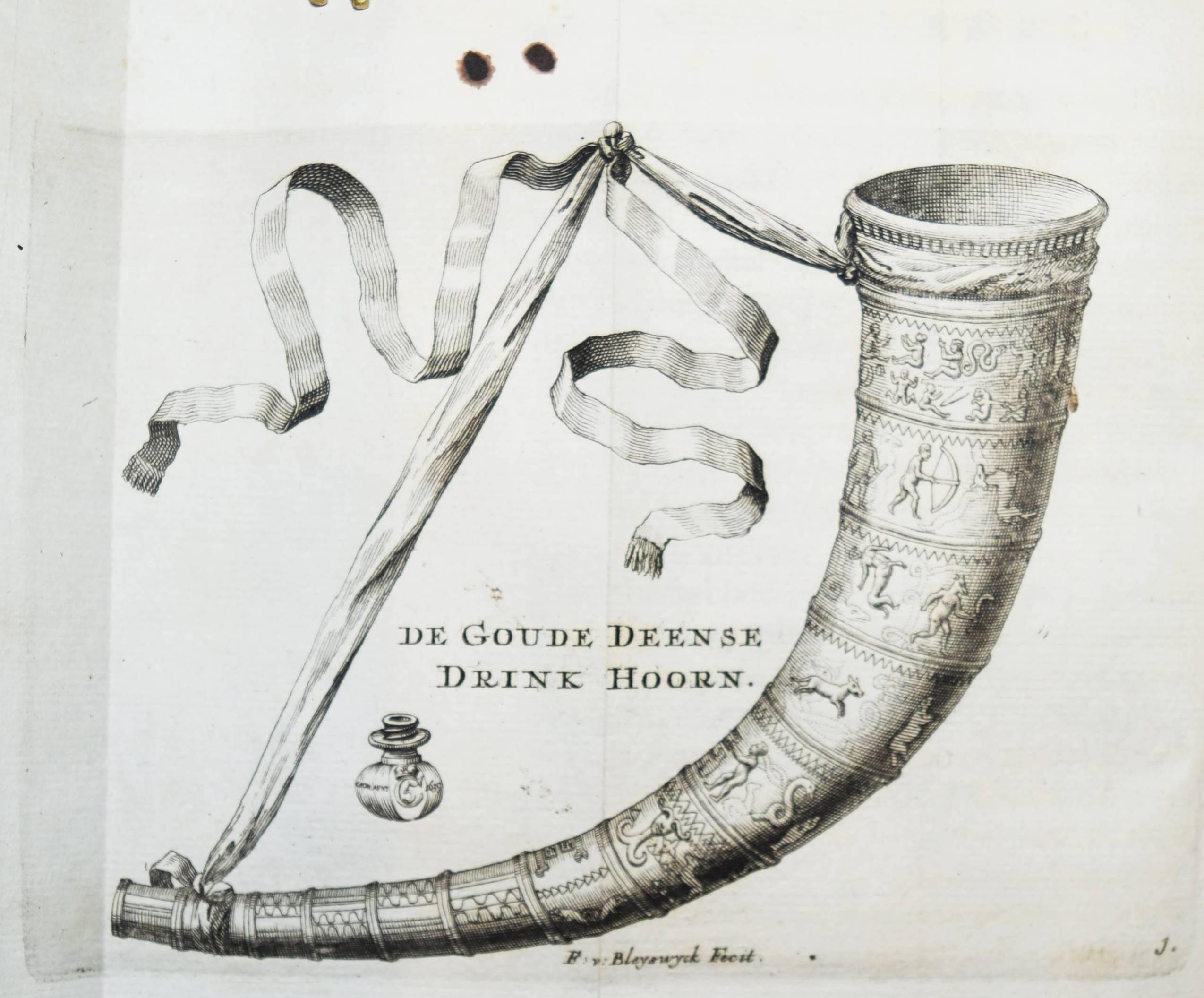
1732rif. 104372BBRotterdam, Philippus Losel, 1732-1735. 8°. [68] Bl., 562 S.; Titel, 557, (61) S.; [46] Bl., 612 S., [27] Bl. mit 2 gestoch. Frontisp. u. 15 (5 gefalt.) Kupfertafeln von F. v. Bleyswyck. Prgt. d. Zt. mit handschr. Rückentitel. 3 Bände. [12 Warenabbildungen]
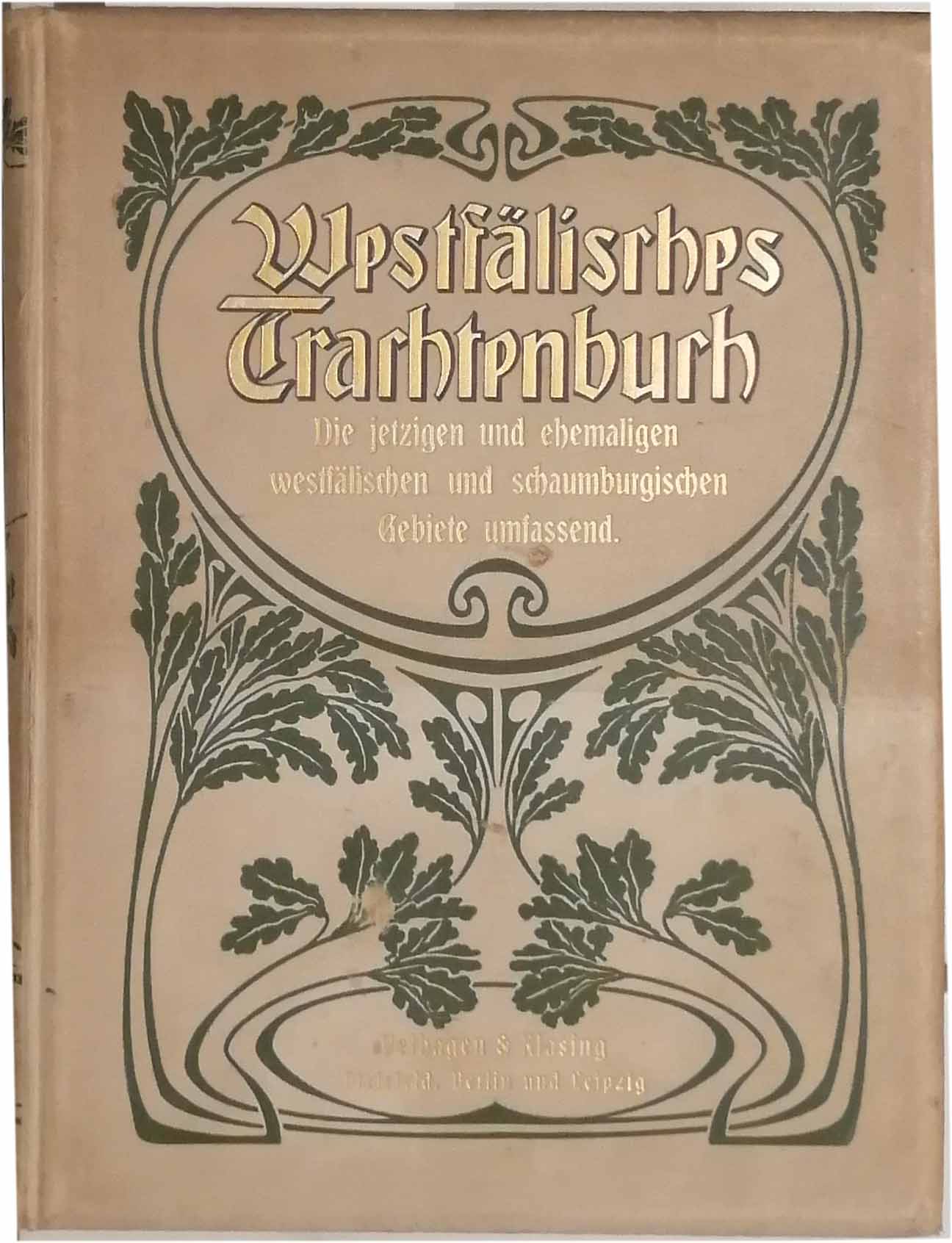
1904rif. 4572Bielefeld, Berlin und Leipzig, Velhagen & Klasing, 1904. (1. Aufl.) mit 24 Tafeln in Farbendruck nach Originalzeichnungen von Johs. GEHRTS sowie 256 Textabb. und einer historischen Übersichtskarte (Doppelblatt). ill. OLwd. (Farbblindprägung), 208 S., 2°
1950rif. 1206041332xbvkPorto, Imprensa Moderna, 1950. 316 (2) pages, with many illustrations. - Publisher's illustrated softcover; 8vo.(ca. 22 x 18 x 2 cm).
1926rif. 2310310184xbvkBerlin, 1926 [Druck: Leipzig, Offizin W. Drugulin, 1925/1926]. XVI, 97 Seiten / (58) Blätter, alles auf kräftigem tlw. unbeschnittenem Papier. - Dunkelblauer kräftiger Original-Pappeinband mit goldgeprägtem Deckelsignet; 4to.(ca. 26 x 20 x 2 cm; ca. 1 kg.).
2003rif. 2301200033x4th01Tehran, Barjesteh - Zaman Publishers, 2003. 174 (1) pages, photographically illustrated throughout. - Publisher's gilt-titled strong brown-cardboard binding, imitiating a leather-binding, with photographically and oriental-ornamentally designed dustjacket; 4to.(ca. 28 x 21 cm; ca. 1,3 kg.).
1880rif. GRAP0012aBerlin, Lipperheide um 1880. Blattgr.: 20x29 cm, Darst.: 13x18 cm, handkol. Holzstich, schwach angestaubt. (aus "Blätter f. Kostümkunde". Neue Folge. 60. Bl.).
1880rif. GRAP0022Bln., Lipperheide um 1880. Blattgr.: 20x28,5 cm, Darst.: 13,5x19 cm, handkol. Holzstich, schwache Staubspuren. (aus "Blätter f. Kostümkunde". Neue Folge. 47. Bl.). Männl. Figur, frontal stehend, den Kopf nach links geneigt in braunen, weiten Kniebundhosen, blauen Strümpfen u. bräunlichen Schuhen, braunrotes Wams mit großen Silberknöpfen, breiter brauner Ledergürtel mit eingesteckter Schusswaffe, offenes, dunkelgrünes Wams mit hellbraunem Futter und großen Silberknöpfen, großer, gefältelter, weißer Kragen. Die linke Hand abgewinkelt, den Gürtel haltend, die re. Hand aufgestützt auf einen Kriegsflegel.
1880rif. GRAP0020Bln., Lipperheide um 1880. Blattgr.: 20,2x28,6 cm, Darst.: 13x18 cm, handkol. Holzstich, schwach angestaubt, winzige Braunfl. außerhalb der Figur. (aus "Blätter f. Kostümkunde". Neue Folge. 42. Bl.). Junger Mann, frontal stehend, re. Hand auf Stock gestützt, li. Hand eine Pfeife haltend, dunkelbraune Kniehosen mit seitlichen Knöpfen, am Hosenbund ebenfalls Knöpfe und ein Uhranhänger, grauer Spenzer, Stehkragen, zweireihig geschlossen, dunkles Halstuch, darüber weißer halblanger Mantel mit rotem Futter, einreihige Knopfleiste, breitkrempiger schwarzer Hut. Im Hintergrund Gatter und Toreinfahrt.
1880rif. GRAP0012Berlin, Lipperheide um 1880. Blattgr.: 20x29 cm, Darst.: 13x18 cm, handkol. Holzstiche, schwach angestaubt. (aus "Blätter f. Kostümkunde". Neue Folge. 59. u. 60. Bl.). Zusammen :
1880rif. GRAP0021Bln., Lipperheide um 1880. Blattgr.: ca. 20x28,5 cm, Darst.: 18,5 cm, hankol. Holzstich, leichte Staub- u. Knickspuren, tlw. etwas randrissig. (aus "Blätter f. Kostümkunde". Neue Folge. 89. Bl.). Frontal stehende männliche Figur, schwarze Pumphose mit gebundenen Abschlussbändern, schwarzen Schuhen u. Strümpfen, einem gefälteltem, schwarzem Wams mit grünem Besatz u. Ausschlag, gefältelter weißer Krausenkragen, breiter, flacher Hut mit grünem Rindsymbol als Hutschmuck.
1880rif. GRAP0022aBln., Lipperheide um 1880. Blattgr.: 20x28,5 cm, Darst.: 13,5x19 cm, handkol. Holzstich, kleine Randrisse u. Knickspuren, verstaubtes Blatt, schwache Braunfl. außerhalb der Figur. (aus "Blätter f. Kostümkunde". Neue Folge. 47. Bl.). Männl. Figur, frontal stehend, den Kopf nach links geneigt in braunen, weiten Kniebundhosen, blauen Strümpfen u. bräunlichen Schuhen, braunrotes Wams mit großen Silberknöpfen, breiter brauner Ledergürtel mit eingesteckter Schusswaffe, offenes, dunkelgrünes Wams mit hellbraunem Futter und großen Silberknöpfen, großer, gefältelter, weißer Kragen. Die linke Hand abgewinkelt, den Gürtel haltend, die re. Hand aufgestützt auf einen Kriegsflegel.
1880rif. GRAP0010Bln., Lipperheide um 1880. Blattgr.: 20x28,8 cm, Darst.: 13x18 cm, handkol. Holzstich, leicht angestaubt, einige kl. Ranrisse, schwache Braunfl. außerhalb der Figur. (aus "Blätter f. Kostümkunde." Neue Folge. 63. Bl.). Männl. Figur mit rechtem, seitlich vorgestelltem Fuß, der rechte Arm etwas abgewinkelt, auf Gehstock gestützt, in weißer Bundhose, dunkelblauem Spenzer mit Silberknöpfen u. schwarzer Längsborte, darüber ein weißer wadenlanger Mantel mit rotbraunem Innenfutter, ein schwarzes, gebundenes Halstuch, mittelblaue Strümpfe, schwarze Schnallenschuhe und schwarzer Flügelhut. Auf grüner Wiese stehend, im Hintergrund reetgedeckte Fachwerkbauten, ein heubeladenes Fuhrwerk mit Pferd und ein Stück Lattenzaun mit einigen Hühnern.