3268 risultati
rif. Q-159558076XNew Press The. Hardcover. New. New. In shrink wrap. Looks like an interesting title! New Press, The hardcover
2005rif. Q-0553584421Bantam 2005-03-01. Mass Market Paperback. New. New. In shrink wrap. Looks like an interesting title! Bantam paperback
2001rif. 65128ΕΥΕΡΓΕΤΙÎΟΣ - Συναγωγή των θεοφθόγγων Ïημάτων και διδασκαλιών των Αγίων και ΘεοφόÏων ΠατÎÏων από πάσης γÏαφής θεοπνεÏστου συναθÏοισθείσα In Greek. Four volumes hard coverjacket 25 cm 2672 pp.; net weight 5080 gr. Contains the original text in mediaeval Greek translation and interpretation in modern Greek. The book known as EVERGETINOS used to be a popular Byzantine four-volume work containing a fully integrated collection of sayings sermons and teachings of the ascetic Fathers of the Desert; it is dating back to the 11th century. The author of the book was the monk Paul founder of the Monastery of the Virgin Mother Theotocos near Constantinople. . . ================================================ IMPORTANT: VERY HEAVY BOOK. The shipping cost in not included in the price. You will have to approve it at confirmation of the order. Synaxaristes hardcover
rif. 43003Bruxelles, Bibliothèque Royale Albert Ier, 1990. 20 x 26, 74 pp., nombreuses illustrations en N/B, broché + jaquette calque, bon état.
2015rif. 1377149NASA. New. 2015. Soft Cover. Reprint Edition . NASA paperback
2015rif. 1377046NASA. New. 2015. Soft Cover. Reprint Edition . NASA paperback
2014rif. 1388551NASA. New. 2014. Soft Cover. Reprint Edition . NASA paperback
2014rif. 1387186NASA. New. 2014. Soft Cover. Reprint Edition . NASA paperback
2014rif. 1388471NASA. New. 2014. Soft Cover. Reprint Edition . NASA paperback
rif. 0332255514.Gpaperback. Good. Access codes and supplements are not guaranteed with used items. May be an ex-library book. paperback
1811rif. 500049770Payne Mawman 1811. Hardcover. Fair. Paper covered boards. Inked title on spine . Euripides Hippolytus Coronifer. Ad fidem manuscriptorum ac veterum editionum emendavit et annotationibus instruxit J. H. Monk. Payne Mawman hardcover
1872rif. T27577Bruxelles, V.Devaux 1872 131pp., dos restauré, couv.abîmée, texte complet et en bon état
rif. 8399broché - 21,5x27 - 100 pp - 22 octobre 1958 - Laboratoire de géologie de l'université de BESANCON, diplome d'études supérieures de géologie.
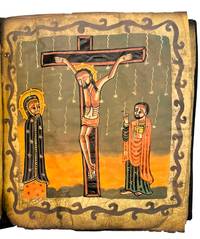
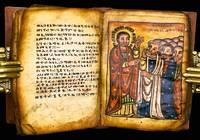
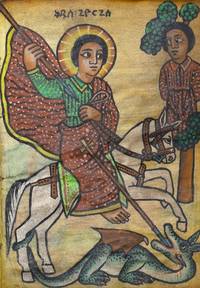
1780rif. 507Ethiopia: Unknown 1780. First edition. Hand-made: Hand-tooled full red morocco over wood boards. Very Good/`. Ethiopian Monk. MAGNIFICENT EXAMPLE OF AN ANTIQUE ETHIOPIAN-HANDMADE HANDWRITTEN AND HAND-PAINTED- COPTIC MANUSCRIPT ON PARCHMENT. This is a large luxurious monastic psalter comprised of about 75 psalms of 151 total handwritten and handmade at an Ethiopian monastery by a talented scribe at the height of the Second Gondarine period in Ethiopia or shortly thereafter circa 1780s to 1830s judging by the aging of the vellum signs of centuries-old wear and the distinct paleography. Its four hand-painted miniatures were added later by a skilled artist over existing text circa mid-19th to early 20th century. The beautifully preserved leather wrap-around binding over heavy wood boards is later with remnants of unremoved goat hair still intact. Most examples of Ethiopian Coptic manuscripts are quite small usually ranging between 3" x 5" to 7" x 5" or pocket-sized for personal use and often lack illustrations or sparsely and crudely have a page or two illustrated. This example is quite large for an Ethiopian Coptic manuscript: 9" x 8" 2 to 5 times larger than a typical example and features 122 total unnumbered pages written in Ge'ez - the ancient liturgical language of the Ethiopian Orthodox Tewahedo Church. This lovely lectern copy was designed to be used during religious ceremonies. The Ge'ez script is written in a confident highly practiced monastic hand. The letters are bold sharp neat and evenly spaced which is characteristic of the late Gondarine literary renaissance. The alternating black and red ink red being used to rubricate sacred names or section headers utilizes traditional organic soot and mineral pigments. The symbol composed of red and black dots at the end of each text line is a traditional scribal verse separator called a Geʽez misraf. The prayer book is bound in luxurious red-brown morocco Beranna stretched tightly over wooden boards with intricate tooling in blind framing a large centralized cross. Interlaced within the text are four full-page miniatures that were added later and painted over existing text in a Gondarine style using more modern pigments. The paintings are themes commonly featured in psalters from the late 18th century to early 20th century. 1. Saint George Slaying the Dragon. This painting is a classic representation of Saint George. In the Ethiopian tradition he is deeply venerated as the patron saint of the nation a protector of the faithful and a symbol of unwavering courage. The large expressive almond-shaped eyes of St. George the three-quarter turn of the head the specific layout of the horse's tack and the warm earth-and-mineral pigments reds yellows and deep charcoals are highly characteristic of Second Gondarine and post-Gondarine art styles. In the upper right corner is Birutawit the maiden of Beirut whom Saint George saved from being sacrificed to the dragon. 2. The Masqalaor the Image of the Virgin and Child with Her Guardians. A foundational piece of art frequently included in highly sacred texts like the Psalter Dawit. The Virgin Mary is holding the Christ Child Maryam and Iyasus flanked by the Archangels Michael and Gabriel wielding drawn swords. Mary is wearing a deep indigo or charcoal-colored maphorion cloak with distinct fold lines a Gondarine art form not developed until the late 1700s adorned with small golden stars. The decorative red and gold borders on her clothing are highly characteristic of styles used late18th century to early 20th century. The inscription written in Ge'ez above Mary's shoulder translates to 'With Her Beloved Son.' 3. The Crucifixion. Jesus is depicted on a dark T-shaped or Latin cross wearing a traditional striped loincloth. His frame is long and thin and his ribs are prominently exposed. His head leans gently to the side representing his death. Jesus is flanked by the two traditional figures from the Gospels. On the left stands the Virgin Mary Maryam and on the right stands Saint John the Evangelist Yohannes holding a book in one hand and offering a blessing with the other. 4. The Resurrection. Rather than showing Christ emerging from a stone tomb like in Western European art Ethiopian icons depict Jesus standing victoriously upon a stylized pedestal platform which represents Hades or the broken gates of Death. He holds a long slender staff capped with a cross Qewami Meskel that serves as a sign of victory over death showing that the tool of his execution has become his instrument of triumph. His multi-layered radiant golden halo indicates his divinity. He is accompanied by witnesses bottom and angels in the sky. HOW THIS MANUSCRIPT WAS MADE Ge'ez calligraphy executed in natural red and black inks with a reed pen in single columns a format unique to psalters for religious texts otherwise two or three columns were used to maximize the use of expensive parchment and rubricated throughout adorns hand-made parchment made from goatskin or sheepskin. The parchment sheets are folded and then bound together using reed with a link chain stitch for the quires and housed in wooden boards made from local trees. Goatskin was tanned dyed and treated and stretched tightly over the wooden boards and then intricately tooled in blind. These same techniques have been consistently used for more than 1000 years and it is this consistency of technique that makes Ethiopian Coptic texts notoriously difficult to exactly date without carbon dating methods. HISTORY OF ETHIOPIAN COPTIC MANUSCRIPTS IN GE'EZ Ethiopian Handwritten Coptic Ge'ez Bibles and liturgical texts were produced as early as the fourteenth century until the early 20th century throughout Ethiopia the first country to become an independent African nation. Christianity was introduced to Ethiopia in the 4th century when Syrian missionaries first translated the Bible into Ge'ez the language of the Ethiopian Orthodox Tewahedo Church. The surviving body of Ge'ez literature is composed almost entirely of Christian liturgy as education was exclusively the responsibility of priests and monks. The bibles produced typically contain the gospels of the New Testament recounting the life of Jesus of Nazareth and the foundation of the Christian. The Ethiopian Bible contains a significantly larger canon of books than Western Bibles including texts like the Book of Enoch and the Book of Jubilees which are often found in its broader canon. It is considered one of the oldest and most complete Bibles containing more than 80 books compared to the 66 in the Protestant canon. The world's earliest illustrated Christian book is the Garima Gospels written in Ge'ez found in a remote Ethiopian monastery. It is named after a monk who arrived in Ethiopia in the 5th century and is beautifully illustrated. For perspective it predates the first King James Bible by about 1200 years. CONDITION REPORT Very Good for a hand-made Ethiopian psalter used in religious ceremonies for centuries. 'Good' by antiquarian book standards. Exterior and binding: Firmly bound. Minimal wear beautifully preserved. Some light scratches and areas of light rubbing. Interior: The vellum pages show significant natural aging - internal cracking within the parchment caused by the breakdown of collagen over the centuries and shrinking and yellowing of the vellum - all caused by fluctuating changes in heat and humidity over long periods of time. The page margins are layered in hand-soiling and hand oils as well as soot and residue from wax candles and frankincense censers which burn continuously in monastic buildings. Over decades and centuries this airborne resin and carbon settle directly onto the exposed outer page edges and the first few pages of a book left on a lectern or internally if a book is left open as is the case in several spots in this manuscript. This created the classic gray-black 'church dust' film visible on the first two miniatures while the other two are in FINE condition and exceptionally preserved. The edges of the pages are brittle with age and there are numerous cracks chips creases and marginal tears. There are a few spots of immature marginal art in a child's hand added in more modern times and some examples of later added Ethiopian writing in pen. Other signs of use like stains soiling and water dampening spots. All in all a lovely large example of a late 18th century to early 19th century Ethiopian hand-made psalter used in religious ceremonies for generations with later added masterfully painted religious scenes and bound in luxurious red-brown morocco hand-tooled in blind. Unknown unknown
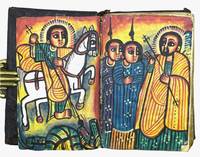
1890rif. 513Ethiopia: Unknown 1890. First edition. Hand-made: Hand-tooled red-brown morocco over wood boards. Very Good/`. Ethiopian Monk. BEAUTIFUL ANTIQUE ETHIOPIAN-HANDMADE HANDWRITTEN AND HAND-PAINTED RELIGIOUS MANUSCRIPT ON VELLUM. WITHIN THIS LITURGIC WORK IN ADDITION TO THE MANY PRAYERS AND INVOCATIONS INVOLVING JESUS AND THE VIRGIN MARY THE MANUSCRIPT IS BLESSED AND SANCTIFIED TO PROTECT THE OWNER AND HIS ENTIRE BLOODLINE FROM EVIL AND HARM INCLUDING DARK SPIRITS PHANTOM ILLUSIONS DEMONS DISEASE WAR AND SORCERY. This is a medium pocket-sized 6 3/8 inches x 4 1/4 inches 92-page collection of Christian liturgical prayers and blessings found in the sacred Ethiopian religious works Sene Golgotha and the Miracles of Mary. It was hand-made and personalized for an individual and his family by an Ethiopian monk circa 1890s to 1920s. It is handwritten entirely in the classical Semitic liturgical language Ge'ez on vellum and bound in blind-tooled morocco tightly stretched over wooden boards. The manuscript serves a dual purpose: 1 it functions as an active liturgical devotional script used by a priest during family or church gatherings and 2 it acts as an apotropaic evil-averting physical shield meant to safeguard an individual and his entire multi-generational bloodline. A hand-made prayer manual of this quality with six miniatures and finely bound in morocco would have been a luxurious and expensive item of importance made for a more affluent family. ABOUT THE WORK The original recipient's personal info has been painted over and replaced with that of a new recipient throughout the manuscript. The final page of the manuscript is a colophon page written by a prior owner not the scribe. It is dated 1914 Ethiopian 1921-1922 in Western years in both purple and blue ink and lists personal and family tree information. In traditional Ethiopian manuscripts a page like this located at the very end of a prayer book was frequently used as a family register or a commemorative prayer list. The owner would write down the baptismal names of their family members so that a priest could read them aloud during services asking for a blessing over their household. It is quite lovely to find provenance of ownership and specific dates as they are often lacking in Ethiopian Coptic manuscripts. The original owner of the manuscript is unknown 'whited out' but the subsequent owner is identified as Walda Yared throughout the manuscript. In 1921-1922 ownership passed on to Wongelawi Wolde Rufael whose name and family tree is identified on the last page colophon. The Ge'ez script is written in strokes executed with a thick heavy rounded hand using a split-nib reed pen bila. The scribe is writing efficiently and smoothly in a style typical of the late 19th century to turn-of-the-century expansion of book production rather than using the strict elongated razor-sharp geometric strokes demanded by early to mid-18th-century imperial scriptoriums. The alternating black and red ink red being used for sacred names the recipient's and his family member's names or section headers utilizes traditional organic soot or another local carbon source for the black ink and imported vermillion or another source like cinnabar introduced via trade for the red ink. Subject matters include the following prayers and blessings: For and from the Virgin Mary and Jesus for the man and his bloodline for whom this prayer manual was made from passages found in the New Testament - birth of Jesus Jesus's teachings the Crucifixion and Annunciation the archangels and more and specific prayers and blessings to ward off evil and offer protection to the family who possessed this holy prayer book. Some examples of striking content: 1. The manuscript opens with hand paintings and opening prayers for the owner and transitions into the protective amulet-style properties of the manuscript page 6 declaring how its physical presence shields against natural disasters sickness and attacks while prominently inserting a personal blessing for the manuscript's owner Walda Yared. 2 There is a section emphasizing Christ's absolute dominion over death and the underworld. It states that by binding the names that command Sheol subdue the primeval serpent and govern cosmic borders like Jordan Mary guarantees that the Covenant of Mercy she is securing reaches into the deepest abyss to rescue souls from damnation Miracles of Mary. 3 There is a vivid passage that functions as a powerful exorcism and protective shield explicitly listing various categories of dark spirits phantom illusions and sorceries that are completely paralyzed and banished by the presence of this prayer manuscript. 4 The manuscript owner's name is written in red text by a scribe and included throughout the work; it is the ultimate fulfillment of the manuscript's purpose. By writing the name directly into the climax of Sene Golgotha for example the scribe structurally links his soul and those of his loved ones to Christ's promise: that anyone who commissions or possesses this text is guaranteed safety from the powers of darkness and absolute remission of sins. 5 Page 44 Jesus speaking Sene Golgotha: 'Whether they are tested by a sudden affliction or by evil spirits or by a snake's bite; whether by a burning fire or by deep water. They shall be saved when they enter or when they go out. All of these shall not be able to draw near to anyone who carries this prayer. And the power of human curses and sorcery and the evil eye of man or woman shall not be able to draw near to anyone who carries this prayer. The power of evil spirits and demons shall find no place against anyone who carries this prayer. And inside their fields if they read this prayer the pests that destroy the harvest shall not be able to draw near. And all their crops shall be blessed and multiply up to thirtyfold and sixtyfold and an hundredfold and all the fruits of the earth. And no destruction or plague shall come upon them.' ELEMENTS OF THE MANUSCRIPT The prayer book is bound in luxurious and dark red-brown morocco Beranna stretched tightly over wooden boards with intricate tooling in blind framing a large centralized cross. Interlaced within the text are six full-page miniatures in groupings of two that are painted in the artistic revival style prominent during the reign of Emperor Menelik II 1889 - 1913 style. The paintings are themes commonly featured in Ethiopian Christian liturgical texts. In order of appearance: 1. Saint George Slaying the Dragon. This painting is a classic representation of Saint George. In the Ethiopian tradition he is deeply venerated as the patron saint of the nation a protector of the faithful and a symbol of unwavering courage. The very large expressive almond-shaped eyes and vividly colorful robes are characteristic of the late 19th century to early 20th century period in Ethiopian manuscript painting. 2. A Saint Blessing Disciples. The scene features a saint as designated by the halo and cross-staff possibly Saint Philip the Evangelist or Saint Peter or Saint Paul all who are often depicted in similar fashion. The saint is scene offering a blessing with his right hand to the people in attendance. 3. Nativity Scene. The Virgin Mary is with the swaddled Christ Child; they have matching radiant halos. Mary is wearing a deep indigo or charcoal-colored maphorion cloak with distinct fold lines a Gondarine art form first developed in the late 1700s. 4. & 5. Jesus & Disciples. Jesus is depicted offering prayer and guidance to his disciples. 6. Virgin Mary. Mary is shown offering blessings or intercessory prayer to two holy attendants with hands reverently crossed. HOW THIS MANUSCRIPT WAS MADE Ge'ez calligraphy executed in natural carbon-based black ink and imported vermillion- or cinnabar-based red inks with a reed pen in double columns and rubricated throughout adorns hand-made parchment made from goatskin or sheepskin. The vellum sheets are folded and then bound together using reed with a link chain stitch for the quires and housed in wooden boards made from local trees typically olive or wanza. Goatskin was tanned dyed and treated and stretched tightly over the wooden boards and then intricately tooled in blind. These same techniques have been consistently used for more than 1000 years and it is this consistency of technique that makes Ethiopian Coptic texts notoriously difficult to exactly date without carbon dating methods or in this case distinct paleography artistic style paint sources used and most importantly provided dates of ownership. HISTORY OF ETHIOPIAN COPTIC MANUSCRIPTS IN GE'EZ Ethiopian Handwritten Coptic Ge'ez Bibles and liturgical texts were produced as early as the fourteenth century until the early 20th century throughout Ethiopia the first country to become an independent African nation. Christianity was introduced to Ethiopia in the 4th century when Syrian missionaries first translated the Bible into Ge'ez the language of the Ethiopian Orthodox Tewahedo Church. The surviving body of Ge'ez literature is composed almost entirely of Christian liturgy as education was exclusively the responsibility of priests and monks. The bibles produced typically contain the gospels of the New Testament recounting the life of Jesus of Nazareth and the foundation of the Christian. The Ethiopian Bible contains a significantly larger canon of books than Western Bibles including texts like the Book of Enoch and the Book of Jubilees which are often found in its broader canon. It is considered one of the oldest and most complete Bibles containing more than 80 books compared to the 66 in the Protestant canon. The world's earliest illustrated Christian book is the Garima Gospels written in Ge'ez found in a remote Ethiopian monastery. It is named after a monk who arrived in Ethiopia in the 5th century and is beautifully illustrated. For perspective it predates the first King James Bible by about 1200 years. CONDITION REPORT Very Good for a hand-made Ethiopian prayer manual used in religious ceremonies and rites of protection for over a century. Exterior and binding: Firmly bound with some spine twist. Boards and spine are naturally worn by generations of handling and rubbing. Some scrapes and spots of soiling. Interior: The vellum pages show light natural aging - mostly light toning more yellowed and browned on occasion. Marginal finger soiling particularly the bottom margin which was intentionally made wide for handling purposes. Quite a few pages soiled in a thin layer of dust that the vellum has soaked up. The first and last pages are quite grubby. The colophon hand-written 1921-22 is faded. The paintings are well-preserved colorful and bright and nicely executed. Signs of handling like stains some creases smudges dust soiling 'whited out names replaced with family names of a new owner. A few small areas of marginal vellum loss. All in all a lovely medium-sized example of a late 19th century to early 1920s Ethiopian hand-made prayer manuscript and protective ward from physical and spiritual harm used by multiple families over the past 100 years. Please view pictures as they are an important part of the condition description and book information. As a fellow book collector I know how frustrating it can be when items aren't accurately described or poorly packaged for shipping. That is why I 1 take a lot of pictures and try to describe condition issues as accurately as possible and 2 pack your book purchases with the utmost care before shipping. . Unknown unknown
1890rif. 516Ethiopia: Unknown 1890. First edition. Hand-made: Hand-tooled red-brown leather over wood boards. Good/`. Ethiopian Monk. Pocket-sized Ethiopian Coptic Christian Manuscript Book of the Cross. Handmade handwritten and hand-painted on vellum. This is a small pocket-sized 4 1/2 inches x 3 5/8 inches 38-page manuscript of the Ethiopian Book of the Cross. In Ethiopia the Cross is not only a Christian symbol but also a sacred matrix in religious life embedded in rituals art and identity. The Book of the Cross reflects this deep tradition showing how the Cross is celebrated in liturgy devotion and theological reflection. It was hand-made by a rural/provincial Ethiopian monk circa late 18th century to 19th century. The ink materials used are organic and local as access to foreign materials was more limited than in larger cities closer to trade routes. It is handwritten entirely in the classical Semitic liturgical language Ge'ez on vellum and bound in blind-tooled goatskin or sheepskin tightly stretched over wooden boards. ABOUT THE WORK The Book of the Cross is a devotional material comprised of the following elements: 1 Honors the Cross of Christ as the central symbol of salvation. 2 Contains hymns təwÄb prayers and readings that recount the Passion Resurrection and the veneration of the Cross. 3 Is used in worship to focus the faithful on the theological meaning of the Cross - the 'made one' Tewahedo unity of Christ's divine and human natures. 4 Often includes narratives and psalms that parallel the biblical Passion accounts but are framed in the Ethiopian liturgical tradition. It contains Cross hymns təwÄb praising the Cross and the Passion of Christ; prayers for the faithful especially during Timkat and other feasts; scriptural readings from the Old and New Testaments that focus on the Cross e.g. Psalms the Passion narratives in the Gospels; traditional narratives of the veneration of the Cross in Ethiopian history and tradition and liturgical instructions for how the Cross is venerated in the church. The Ge'ez script is written in strokes quickly executed in a more flowing rounded style versus the rigidly aligned and exacting calligraphy associated with scribal monks in more structured urban environments particularly during the 18th century Gandarian style or late 19th century imperialistic revival period. Elongated razor-sharp geometric strokes were demanded by early to mid-18th-century imperial scriptoriums. The alternating black and red ink red being used for sacred names or section headers utilizes local organic and mineral sources. The black ink does not appear to be made from soot or another burnt carbon source as is typically found based on the fading of the black ink in spots; fading of black ink from soot-based sources is a largely absent occurrence under normal environmental circumstances even after many hundreds of years. Local organic sources like red‑colored leaves bark and roots were used for the red ink. The latter is evident by the fading and color changes to the red ink over time. Imported raw materials like cinnabar and vermillion introduced along trade routes in Eastern Africa were also used to make red ink at the time of this manuscript's creation but they do not fade in the same way as organic sources instead remaining a red or red-orange hue when naturally aged. ELEMENTS OF THE MANUSCRIPT The prayer book is bound in a dark red-brown goatskin or sheepskin the heavy dye job obscures the grain size and pattern but it looks to be sheep stretched tightly over wooden boards with intricate tooling in blind framing side-by-side Ethiopian crosses - a characteristic design for a Book of the Cross manuscript. Interlaced within the text are four full-page miniatures in groupings of two that are painted in a more rustic style by an amateur artist more typical of a small village with limited resources versus by a more practiced hand found in large Ethiopian monasteries or affluent cities. In order of appearance: 1. Jesus Carrying the True Cross Along the Via Dolorosa During the Passion. This illustration serves as the visual centerpiece of the prayer cycle and is the opening page to the manuscript. Jesus is depicted with a halo atserga dressed in traditional striped garments physically carrying the massive wooden cross on His shoulder. To the right stands Simon of Cyrene who was compelled by the Roman soldiers to help carry the cross. The figure on the left represents either a disciple watching in mourning or one of the Roman guards leading the procession. The painting follows a rural or provincial derivative of Ethiopian iconographic art. Key features include the large stylized almond-shaped eyes thick bold black outlines simple flat color planes using earth-tone reds yellows and blues and the lack of three-dimensional perspective. 2. Christ Teaching or Delivering a Decree. The illustration emphasizes the divine authority of Christ's word seamlessly connecting to the theological themes of the surrounding text. The text on the scroll Jesus is carrying translates to 'In the name of the Father and of the Son and of the Holy Spirit.' 3. The Crucifixion. As the foundational visual of this Haza Mesqel Book of the Cross manuscript this scene serves as the ultimate theological anchor for the surrounding prayers and praises. On the left side of the painting The Virgin Mary Maryam is shown wrapped in a dark blue-grey mantle holding her hands up to her face in a traditional posture of deep mourning and weeping. On the right Saint John the Evangelist is depicted similarly shrouded in a red mantle mirroring Mary's grief-stricken gesture as he witnesses the event. 4. Christ in Majesty Offering a Blessing. This illumination acts as a celebratory closing or protective visual within your Haza Mesqel Book of the Cross manuscript emphasizing Christ's eternal authority and power after the Resurrection. HOW THIS MANUSCRIPT WAS MADE Ge'ez calligraphy executed in natural local-based black and red ink with a reed pen in double columns and rubricated throughout adorns hand-made parchment made from goatskin or sheepskin. The large vellum sheets in this manuscript have been cut in half horizontally to fit inside this diminutive pocket-sized binding. The leaves were not placed back in their original order but rather comprise a mix of prayers and liturgy from the Book of the Cross. The binding was simply sewn together and does not appear to use a link chain stitch for the quires as is typically found. The wooden boards are made from local trees typically olive or wanza. The leather appears to be sheepskin was tanned dyed and treated and stretched tightly over the wooden boards and then intricately tooled in blind. HISTORY OF ETHIOPIAN COPTIC MANUSCRIPTS IN GE'EZ Ethiopian Handwritten Coptic Ge'ez Bibles and liturgical texts were produced as early as the fourteenth century until the early 20th century throughout Ethiopia the first country to become an independent African nation. Christianity was introduced to Ethiopia in the 4th century when Syrian missionaries first translated the Bible into Ge'ez the language of the Ethiopian Orthodox Tewahedo Church. The surviving body of Ge'ez literature is composed almost entirely of Christian liturgy as education was exclusively the responsibility of priests and monks. The bibles produced typically contain the gospels of the New Testament recounting the life of Jesus of Nazareth and the foundation of the Christian. The Ethiopian Bible contains a significantly larger canon of books than Western Bibles including texts like the Book of Enoch and the Book of Jubilees which are often found in its broader canon. It is considered one of the oldest and most complete Bibles containing more than 80 books compared to the 66 in the Protestant canon. The world's earliest illustrated Christian book is the Garima Gospels written in Ge'ez found in a remote Ethiopian monastery. It is named after a monk who arrived in Ethiopia in the 5th century and is beautifully illustrated. For perspective it predates the first King James Bible by about 1200 years. CONDITION REPORT Fair by book standards but this is a hand-made Ethiopian prayer manual used in religious ceremonies and kept in an open-air environment for over 150 years so it's hard to truly compare. Good by rural Ethiopian manuscript standards. Exterior and binding: Cracked hinges. Spine leather with a large vertical tear. The leather is hand-worn and soiled from generations of use. All edges blackened with soot and sun-exposure. Interior: The vellum pages are soiled with dust and soot from candles and incense burners. There are multiple water dampening stains smudges finger soiling some old repairs made from sinew and natural yellowing and shrinking of the vellum both with age and exposure to the natural environment. The first leaf with an old repair to a tear main image and second painting shown. One leaf has a quarter-sized hole 1" x 1" in the middle of the text. There is loss of letters and words from where leaves were sliced in half. All in all a Book of the Cross broken down to a more manageable pocket-size with four full-page paintings. This is not a book carefully shelved on a bookcase in an English manor for the past 150 years. Rather it is a sturdily made religious manuscript heavily used in a rural agrarian setting where it was likely stored outside at times exposed to the elements. It has seen a lot of 'love' and 'honest wear.' . Unknown unknown
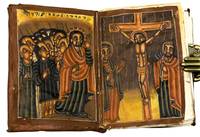
1780rif. 517Ethiopia: Unknown 1780. First edition. Hand-tooled full brown morocco over wood boards. Very Good/`. Ethiopian Monk. BEAUTIFULLY PRESERVED EXAMPLE OF AN ANTIQUE ETHIOPIAN-HANDMADE HANDWRITTEN AND HAND-PAINTED- COPTIC MANUSCRIPT ON PARCHMENT. This is an Ethiopian monastic work covering Christ's Teaching of the Secrets The Mystagogia and Commemoration of Saints and Prophets handwritten and handmade at an Ethiopian monastery by a master scribe in the imperialistic artistic revival style initiated under Emperor Menelik II circa 1890-1920s. In the Ethiopian Orthodox Tewahedo Church the phrase 'Teaching of the Secrets' is most closely connected to the Church's mystagogical instruction - the process of guiding the faithful into the 'mysteries' sacraments of the faith. In Greek mystagogia means 'initiation into the mysteries' and in the Ethiopian context it refers to the spiritual and theological teaching that reveals the hidden grace of God through the Church's sacraments Ethiopian Coptic manuscripts are notoriously hard to pin down an exact composition date without advanced carbon dating techniques due to centuries of similarly produced anonymous undated works by monastic scribes. However there are tell-tale signs that help narrow down a time period including the aging of the vellum signs of wear paleography artistic style and sources of pigment used. This manuscript substitutes a synthetic bright pink or magenta/fuchsia ink for traditional natural organic red hues when rubricating text. These vibrant pink colors were not introduced to Ethiopia until the late 1890s about 40 years after they were first developed in Europe. They were at their height in use in the late 19th century to about mid-20th century. Most examples of Ethiopian Coptic manuscripts are quite small usually ranging between 3" x 5" to 7" x 5" or pocket-sized for personal use and often lack illustrations or sparsely and crudely have a page or two illustrated. This example is medium-sized at 6.25" x 4" and is finely bound showcasing masterful calligraphy and painting techniques and a lovely state of preservation. It features 40 total unnumbered pages written in Ge'ez - the ancient liturgical language of the Ethiopian Orthodox Tewahedo Church and 4 full-page miniatures. The Ge'ez script is written in a confident highly practiced monastic hand. The letters are bold sharp blocky and tightly spaced which is characteristic of the literary and artistic renaissance at its height between 1890-1929. The spelling is exact and the text is neatly aligned in rows and columns. The alternating black and vivid pink ink pink being used for sacred names or section headers utilizes traditional carbon-based soot for black text and imported synthetic European dyes for the pink rubricated text. This liturgical work is bound in lovely brown morocco Beranna stretched tightly over wooden boards with intricate tooling in blind framing a large centralized cross. Interlaced within the text are four full-page miniatures painted in the imperialistic revival style under Emperor Menelik II using a more simplified late-Gondarine to post-Gondarine color scheme: heavy locally sourced charcoal black for outlines and colorful hues derived from materials acquired along trade routes. The style features thick black outlines dramatic almond-shaped eyes flat blocks of vivid color and gradient orange/ochre washes to represent uncreated divine light. The paintings are as follows: 1. The Communion / Apparition of Maundy Thursday. This scene visualizes the events of Holy Week leading to the Last Supper. On the right stands Jesus Christ identifiable by His distinct cruciform halo lifting His hand in a traditional gesture of blessing and instruction. Gathered on the left is the tight cluster of His disciples rendered with overlapping deep-set large eyes and draped in flowing robes. The background features a striking split field of deep charcoal and glowing ochre symbolizing the transition from worldly darkness to spiritual light. The scene is titled Ze-Hamus Ze-Egzi'ena Of the Thursday of Our Lord. 2. The Crucifixion. A dramatic full-page depiction of the sacrifice on Golgotha. The background transitions from a somber charcoal-brown at the top to a bright golden ochre at the bottom. To His left stands the Virgin Mary in deep mourning her dark cloak decorated with delicate details while Saint John the Evangelist Yohannes stands to His right holding a witness cloth to his face as he stares at the scene in shock and disbelief. 3. The Mystagogia / Post-Resurrection Teaching. The central theme of this Ethiopian manuscript. A haloed Jesus stands at the center holding a delicate spear-cross. He looks upward to Heaven raising His hand with two fingers extended in a formal gesture of blessing. In the upper corners heavenly cherubim emerge from stylized geometric clouds to bear witness. Below the disciples flank Him in strict profile looking upward in rapt attention to absorb the hidden teachings. The work is titled Temeherte Hebu'at The Teaching of Secrets. 4. The Creation and Fall of Adam and Eve. A vibrant highly expressive Old Testament miniature set against a fiery orange and yellow paradise wash. On the left the Tree of Knowledge is depicted with a thick textured winding trunk culminating in a massive dense canopy of leaves. Satan in snake form is coiled around the tree his head menacingly angled downward from the canopy at Eve's head. Adam and Eve stand flanking the center painted in warm ochre body washes with defined linear muscle markings. Caught in the immediate aftermath of the transgression they gesture toward each other and look outward with large startled eyes. Eve covers her nakedness with a small apron of leaves while Adam covers his nether regions with his hand. HOW THIS MANUSCRIPT WAS MADE Ge'ez calligraphy executed in natural black inks and synthetic color inks with a reed pen in double columns and rubricated throughout in pink adorns hand-made parchment made from goatskin or sheepskin. The parchment sheets are folded and then bound together using reed with a link chain stitch for the quires and housed in wooden boards made from local trees. Goatskin was tanned dyed and treated and stretched tightly over the wooden boards and then intricately tooled in blind. These same techniques have been consistently used for more than 1000 years. HISTORY OF ETHIOPIAN COPTIC MANUSCRIPTS IN GE'EZ Ethiopian Handwritten Coptic Ge'ez Bibles and liturgical texts were produced as early as the fourteenth century until the early 20th century throughout Ethiopia the first country to become an independent African nation. Christianity was introduced to Ethiopia in the 4th century when Syrian missionaries first translated the Bible into Ge'ez the language of the Ethiopian Orthodox Tewahedo Church. The surviving body of Ge'ez literature is composed almost entirely of Christian liturgy as education was exclusively the responsibility of priests and monks. The bibles produced typically contain the gospels of the New Testament recounting the life of Jesus of Nazareth and the foundation of the Christian. The Ethiopian Bible contains a significantly larger canon of books than Western Bibles including texts like the Book of Enoch and the Book of Jubilees which are often found in its broader canon. It is considered one of the oldest and most complete Bibles containing more than 80 books compared to the 66 in the Protestant canon. The world's earliest illustrated Christian book is the Garima Gospels written in Ge'ez found in a remote Ethiopian monastery. It is named after a monk who arrived in Ethiopia in the 5th century and is beautifully illustrated. For perspective it predates the first King James Bible by about 1200 years. CONDITION REPORT Very Good for a hand-made Ethiopian manuscript. This was clearly a treasured heirloom infrequently used in ceremonies and safeguarded for generations. Exterior and binding: Firmly bound. Minimal wear beautifully preserved. Some light scratches and areas of light rubbing. Minimal darkening to page edges. Interior: The vellum leaves are in well-preserved condition overall showing light natural aging and yellowing and some light dust that has been soaked up by the pages. A few leaves with a bit darker thicker layer of dust. Some of the leaves are still a creamy white. One leaf has a small 1/8" diameter hole affecting a few letters of text. The final page of text has a modern ink pen with '20 4' apparently indicating 20 leaves of text and the 4 paintings. The art is very well preserved overall colorful and bright. The final painting shows an old repair using sinew along the fore-margin not affecting the image. Minimal wear to page edges and only light marginal soiling. All in all a lovely higher-grade example of a late 19th century to early 20th century hand-made Ethiopian Christian liturgic manuscript crafted by a highly skilled artist and well-trained scribe. It that has been carefully preserved for generations. Unknown unknown
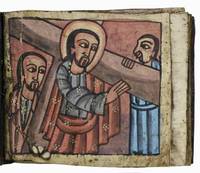
1890rif. 518Ethiopia: Unknown 1890. First edition. Hand-tooled full red morocco over wood boards. `. Ethiopian Monk. ANTIQUE ETHIOPIAN-HANDMADE HANDWRITTEN AND HAND-PAINTED- COPTIC CHRISTIAN MANUSCRIPT PRIEST MISSAL ON PARCHMENT. This is a small monastic handmade Christian missal Maṣḥafa Qeddase made for a priest of the Ethiopian Orthodox Tewahedo Church when leading masses/religious ceremonies. It contains the divine liturgy of the church and is comprised of prayers and psalms handwritten at an Ethiopian monastery by a talented scribe circa 1890 - 1920 during the imperialistic revival period ushered in during the reign of Emperor Menelik II 1844-1913 of Ethiopia or his successor. This is evident through careful analysis of paint pigments used artistic style natural aging of the vellum signs of antiquarian wear and the distinct paleography of the period. Its four hand-painted full-page miniatures show an exceptional artistry influenced by European schools of art typical of the period. They show greater technical achievement and refinement than typically seen showing more proficient training in color balance perspective and proportionalism aside from curious uneven eye placement at times. The beautiful red morocco is later circa latter part of the 20th century and is exceptionally well-crafted and tooled in blind using traditional Ethiopian religious iconography. Most examples of Ethiopian Coptic manuscripts are quite small usually ranging between 3" x 5" to 7" x 5" or pocket-sized for personal use and often lack illustrations or sparsely and crudely have a page or two illustrated. This example is of a typical size used for an Ethiopian Coptic manuscript: 5.5 in. x 4.25 in. and features 116 total unnumbered pages written in Ge'ez - the ancient liturgical language of the Ethiopian Orthodox Tewahedo Church. Unlike most examples this missal was designed for use by a priest: there are rubrics in red ink-instructions and also horizontal red-and-black cross-shaped marks indicating when the priest should perform a specific action cantillation marks called melekket. Melekket guide the priest's movements gestures and timing and his leading of the congregation throughout the ceremony. The Ge'ez script is written in a confident highly practiced monastic hand. The letters are bold sharp and tightly spaced which is characteristic of the late- to post-Gondarine literary renaissance. The alternating black and red ink red being used for sacred names section headers or priest instructions utilizes traditional organic soot for the black ink and an imported material like cinnabar or vermillion for the red pigment. There are also harags rectangular horizontal headers with geometric patterns which signal the opening page of a new chapter or major liturgical section within the Maṣḥafa Qeddas. Some are contemporary to the text and others are more modern using ballpoint ink. The missal is bound in a later 20th century luxurious red morocco karta stretched tightly over wooden boards with exceptional tooling in blind comprised of traditional Ethiopian Christian religious symbols and motifs framing a large centralized cross. There is uniform precision in the blind-tooled geometric stamps crisp overlapping corner turn-ins and tight structural integrity of the binding. The boards and binding cords are original to the work. Interlaced within the text are four full-page miniatures in the imperialistic revival style at its height between 1890-1929. The paintings use more modern pigments made accessible through the burgeoning trade with Europe at this time. The four paintings showcase famous healing miracles performed by Jesus: 1. The Healing of the Man Born Blind from the Gospel of John Chapter 9. Jesus stands on the left adorned with a cruciform halo. He is extending his hand to touch the eyes of a blind man who is leaning forward respectfully with closed eyes. A disciple stands closely behind the blind man looking on to witness the miracle. The Ge'ez script in the top-right corner explicitly labels the scene: Wa-aḥyawo əgzi əna la- əwur which translates directly to 'And our Lord healed the blind man. 2. The Commissioning or Healing of the Apostles. Christ stands with a radiant cruciform halo raising His right hand in a classic gesture of blessing and instruction. He extends His left hand angles toward Saint Peter who stands directly at the front of the group of disciples touching his face or gesturing toward him in dialogue. Behind Saint Peter a dense layered cluster of disciples looks onward. Their highly structured stacked halo-like head shapes behind them represent the larger group of the Twelve Apostles. The Ge'ez script in the top-right corner translates to 'And our Lord taught the Apostles' - a symbolic healing of their minds and spirits. 3. The Healing of the Paralytic Man from the Gospel of Mark 2:1-12 or John 5:1-9. Jesus stands with a golden cruciform halo dressed in red and green vestments. He extends His right hand to touch the shoulder of a man dressed in a patterned dark blue robe. The healed man is walking away while carrying his bed/cot strapped to his back directly illustrating Jesus's famous scriptural command: 'Rise take up your bed and walk.' Behind Jesus Saint Peter distinguished by his white hair and beard watches the miracle with a hand extended in reverence. The Ge'ez script in the top-right corner translates directly to 'And our Lord healed the paralytic.' 4. The Raising of Lazarus from the Gospel of John Chapter 11. Jesus has His right hand raised in a gesture of divine authority and blessing commanding the dead man to arise. On the left Lazarus is shown wrapped tightly in white burial shrouds mummy-like bindings standard for Orthodox icons of this scene. He is rising vertically directly out of his open block-like wooden tomb box. Behind Jesus Saint Peter looks on closely witnessing the miraculous return to life. The painting inscription translation: 'And our Lord raised Lazarus.' HOW THIS MANUSCRIPT WAS MADE Ge'ez calligraphy executed in natural red and black inks with a reed pen in single column a format unique to psalters and missals for where many lines end in verse; otherwise two or three columns were used to maximize the use of expensive parchment and rubricated throughout adorns hand-made parchment made from goatskin or sheepskin. The parchment sheets are folded and then bound together using reed with a link chain stitch for the quires and housed in wooden boards made from local trees. Goatskin was tanned dyed and treated and stretched tightly over the wooden boards and tooled in blind. These same techniques have been consistently used for more than 1000 years and it is this consistency of technique that makes Ethiopian Coptic texts notoriously difficult to exactly date without carbon dating methods. Time periods of construction can be narrowed down with knowledge of period artistic styles pigments and materials used analysis of vellum aging and wear and the distinct changes in Ethiopian paleography over time and setting. HISTORY OF ETHIOPIAN COPTIC MANUSCRIPTS IN GE'EZ Ethiopian Handwritten Coptic Ge'ez Bibles and liturgical texts were produced as early as the fourteenth century until the early 20th century throughout Ethiopia the first country to become an independent African nation. Christianity was introduced to Ethiopia in the 4th century when Syrian missionaries first translated the Bible into Ge'ez the language of the Ethiopian Orthodox Tewahedo Church. The surviving body of Ge'ez literature is composed almost entirely of Christian liturgy as education was exclusively the responsibility of priests and monks. The bibles produced typically contain the gospels of the New Testament recounting the life of Jesus of Nazareth and the foundation of the Christian. The Ethiopian Bible contains a significantly larger canon of books than Western Bibles including texts like the Book of Enoch and the Book of Jubilees which are often found in its broader canon. It is considered one of the oldest and most complete Bibles containing more than 80 books compared to the 66 in the Protestant canon. The world's earliest illustrated Christian book is the Garima Gospels written in Ge'ez found in a remote Ethiopian monastery. It is named after a monk who arrived in Ethiopia in the 5th century and is beautifully illustrated. For perspective it predates the first King James Bible by about 1200 years. CONDITION REPORT Exterior and binding are NEAR FINE. Interior is Poor. The missal has been subjected to severe natural weathering. The sacred manuscript was salvaged and rebound in its current beautiful modern fine goatskin binding over its original wooden boards. Exterior and binding: Firmly bound. Minimal wear beautifully preserved. Some light scratches and areas of light rubbing. Vellum page edges heavily darkened with soot sun and natural aging. Interior: The vellum leaves show significant wear soiling warping and water damage. It appears as if the entire manuscript was water-logged at some point perhaps caught up a torrential East-African downpour during the rainy season. Many of the leaves are heavily water-browned and there are many areas where the text is obscured. There are also multiple areas of text loss from rips tears fading holes and heavy soiling/vellum darkening. Fortunately the exceptional paintings avoided most of the condition issues and are still colorful though darkened with age and a thin film of dust. The first painting has a large area of loss to the gutter margin fortunately only affecting the border and not the painted figural scene. There are multiple instances of modern ink marginalia and a few text corrections and insertions of harags divisional borders. All in all a scarce heavily weathered surviving example of a priest's missal rebound in modern fine goatskin leather over its original wood boards with four high-quality hand-painted miniatures. Most of the value is retained in the beautiful art fine binding and scarcity as a priest missal. Unknown unknown
1890rif. 529Ethiopia: Ethiopian monastery 1890. Ethiopian monastic cross-stich four-hold wood boards. ANTIQUE ETHIOPIAN-HANDMADE HANDWRITTEN AND HAND-PAINTED- COPTIC CHRISTIAN MANUSCRIPT PRIEST'S MISSAL ON PARCHMENT. This is a medium-sized monastic handmade Christian missal Mäṣḥafä Qəddase appended with two smaller works Haza Mesqel Book of the Cross and the Gadl Acts of the Archangels. It is a fantastic and scarce example of a First Gondarine revival work made circa 1890-1920. This is a pocket-sized missal made for a likely traveling priest of the Ethiopian Orthodox Tewahedo Church when leading religious ceremonies with chants and songs. Interestingly the missal omits liturgic text that was exclusively used for baptized congregation members meaning all people were welcome baptized church member or not to participate in ceremonies using this missal. The Ethiopian Christian missal contains the divine liturgy of the church and contains specific directions and cues for the priest that are synchronized with the spoken prayers and sung liturgy. Meticulously included by the original scribe are tiny interlinear musical notations called melekket between the lines of the Ge'ez liturgical text. The melekket guide the priest or liturgical singer a dabtaraon on what pitch and rhythm to use with the corresponding liturgy. Throughout the text rectangular purple marks are used to obfuscate some of the melekket. On the final blank page there is a brief ecclesiastical ownership record written in pencil by a contemporary hand which translates to 'This is the book of the Church of Saint Mary'. Most Ethiopian Coptic manuscripts are quite small usually ranging between 3" x 5" to 7" x 5" or pocket-sized for personal use and often lack illustrations or sparsely and crudely have a page or two illustrated. This manuscript is 6.75" x 5" and features 222 total unnumbered pages written in Ge'ez - the ancient liturgical language of the Ethiopian Orthodox Tewahedo Church. It is richly illustrated with 11 hand-painted pages an expensive and time-consuming proposition. There are rubrics in red ink and also special marks indicating when the priest should perform a specific action. The codex was hand-written and hand-painted at an Ethiopian monastery by a scribe circa 1890 - 1920 during the imperialistic revival period of Emperor Menelik II 1844-1913 or his successor. Its 11 striking illuminations were painted in a First Gondarine style early 17th to early 18th century incorporating the following compositional hallmarks of the period: 1 neutral backgrounds for colorful figures typically the naked vellum itself the chief distinction of this era; 2 art comprised of solid vivid colors with minimal blending or color gradients; 3 strikingly vivid color pigments used; 4 deep perspective avoided an emphasis on delicate facial shading and thick black outlines. While the sammelband contains many First Gondarine elements it still retains distinct characteristics of high-end imperialistic Gondarine revival craftsmanship ushered under the rule of Manelik II. The writing is more rounded fluid and quickly executed rather than the consistently neat uniform and methodically executed First Gondarine calligraphy. The figures are painted in 3/4 profile rather than the First Gondarine style in which full faces are shown for the righteous and one-eyed profiles for the villainous like Judas and Roman guards. The definitive tell-tale indicator is the use of paint pigments that were simply not available until the late 19th century including the striking purple hues and vibrant fluorescent-like light greens. Following are eleven paintings painted in the manuscript in order featured: 1 Saint Yared and the Three Heavenly Birds. The 6th-century Aksumite father of Ethiopian music is depicted holding a golden Sistrum and a prayer staff with a polished golden pommel. Three divine birds from Paradise are nested beside him in a stylized round-canopy tree imparting the heavenly melodies of the church. 2 The Betrayal in the Garden / The Arrest of Christ: Shows Judas leaning in close to deliver the signal the infamous kiss of Judas kissing while surrounded by a tightly packed group of temple guards. Christ is depicted with a finely detailed red-and-gold striped halo while a central guard behind Him holds a drawn weapon. 3 The Madonna and Child. A magnificent double-bordered iconographic centerpiece showing the Virgin Mary holding the Christ Child. They are flanked by the protective wings and drawn swords of the Archangels Michael and Gabriel. 4 Saint George Slaying the Dragon. This painting is a classic representation of Saint George. In the Ethiopian tradition he is deeply venerated as the patron saint of the nation a protector of the faithful and a symbol of unwavering courage. In the upper right corner is Birutawit the maiden of Beirut whom Saint George saved from being sacrificed to the dragon. 5 Christ Teaching His Disciples and Followers. Christ acts as the tall anchor on the left with his hand raised in instruction while the stacked crowd listens attentively. 6 The Crucifixion. Jesus is depicted nailed to the cross wearing a crown of thorns and blood flowing from his wounds. His frame is long and thin and his ribs are exposed. His head leans gently to the side with his eyes closed representing his death. Jesus is flanked by the two traditional figures from the Gospels. On the left stands the Virgin Mary Maryam and on the right stands Saint John the Evangelist Yohannes offering a blessing with the other. Tears stream down their faces which are filled with grief. 7 The Via Dolorosa Christ Carrying the Cross: Depicts Christ physically bearing the massive wooden beam of the cross on his shoulders pushed forward by a tightly packed column of guards and onlookers. To the right stands Simon of Cyrene who was compelled by the Roman soldiers to help carry the cross. 8 The Deliverance of the Three Holy Children: Archangel Gabriel descends from heaven with a drawn sword and a cross-topped staff to shield Shadrach Meshach and Abednego as they stand in the middle of a blazing bright red fiery furnace with their arms crossed in prayer profound reference and humility before God. They are unharmed through this divine intervention. 9 The Entombment of Christ. Shows the shrouded body of Christ being bound tightly with cords and laid to rest. A teary-eyed Virgin Mary and disciples are in the foreground of a massive multi-row stacked background of mourning followers of Christ. 10 The Raising of Lazarus. Christ extends his hand in a gesture of blessing toward a completely swaddled Lazarus rising vertically from his tomb. Martha the sister of Lazarus lifts a hand to her face in profound emotion. Surrounding them is a dense crowd of onlookers. 11 The Assembly of the Holy Fathers / Monastic Saints: A powerful liturgical gathering depicting nine high-ranking church fathers clad in traditional monastic caps and decorative capes kaba each tightly clutching a hand-cross Masqal and gospel codex. The nine saints were a group of missionaries who arrived in Axum Ethiopia during the late 5th century. They are credited with significantly expanding and cementing Christianity across the region. They were also responsible for translating the Bible and liturgical texts from Greek into Classical Ge'ez. HOW THIS MANUSCRIPT WAS MADE Ge'ez calligraphy executed in natural red and black inks with a reed pen in double columns and rubricated throughout adorns hand-made parchment made from goatskin or sheepskin. The parchment sheets are folded and then bound together using reed with a link chain stitch for the quires and housed in wooden boards made from local trees. These same techniques have been consistently used for more than 1000 years and it is this consistency of technique that makes Ethiopian Coptic texts notoriously difficult to exactly date without carbon dating and other advanced scientific methods. HISTORY OF ETHIOPIAN COPTIC MANUSCRIPTS IN GE'EZ Ethiopian Handwritten Coptic Ge'ez Bibles and liturgical texts were produced as early as the fourteenth century until the early 20th century throughout Ethiopia the first country to become an independent African nation. Christianity was introduced to Ethiopia in the 4th century when Syrian missionaries first translated the Bible into Ge'ez the language of the Ethiopian Orthodox Tewahedo Church. The surviving body of Ge'ez literature is composed almost entirely of Christian liturgy as education was exclusively the responsibility of priests and monks. The bibles produced typically contain the gospels of the New Testament recounting the life of Jesus of Nazareth and the foundation of the Christian. The Ethiopian Bible contains a significantly larger canon of books than Western Bibles including texts like the Book of Enoch and the Book of Jubilees which are often found in its broader canon. It is considered one of the oldest and most complete Bibles containing more than 80 books compared to the 66 in the Protestant canon. The world's earliest illustrated Christian book is the Garima Gospels written in Ge'ez found in a remote Ethiopian monastery. It is named after a monk who arrived in Ethiopia in the 5th century and is beautifully illustrated. For perspective it predates the first King James Bible by about 1200 years. CONDITION REPORT Exterior and binding: The uneven hand-carved boards have been worn smooth with a natural patina from over a century of use within a church by a priest. The boards have been darkened by soot smoke and the natural oils from hands. All page edges are heavily darkened. The last quartile of the codex is loose with several signatures detached and the rear board hanging on by a single cord. This takes place where the appended works were added within the missal likely creating a structural weak point when rebound. Interior: The vellum has mostly darkened to a yellowish to golden amber. with the leaves most preserved toward the center of the manuscript. The page margins are darkened and toned with hand-soiling and hand oils. The miniatures and initial dozen or so leaves and last dozen or so leaves are particularly infused with smoke and have layers of soot and residue from wax candles and frankincense censers which burned continuously in monastic buildings where this missal resided. This airborne resin and carbon settle directly onto the exposed outer page edges and the terminal pages of a book left on a lectern on its side and on certain internal pages left open for an extended period of time. This created the classic gray-black 'church dust' film visible on all the miniatures which have all been darkened. The first miniature is the least impacted and the final miniature of the nine holy fathers is heavily darkened. There are a few spots of more modern blue ink runs and writing. Other signs of use like stains soiling and water dampening spots. Evidence of bio-predation from insects on multiple leaves with holes or areas of loss with some words/letters and the bottom of one miniature impacted. One leaf has an antique repair using animal sinew stitching. All in all a scarce example of a well-loved and authentically used and aged priest's Coptic manuscript missal sammelband in Ge'ez with Ethiopian ecclesiastical provenance and 11 beautiful First Gondarine Revival paintings. . Ethiopian monastery unknown
1718rif. 238501718 A Paris, chez Joseph Mongé ... M.DCC.XVIII., 1718. in-12 (9,5x16,5cm),[6], 72, 83, [12], 339, [12] p, [1] pl.-bl pp., 3 parties reliées en un volume.: "L'histoire abrégée de la Moscovie, des Czars ou Empereurs qui y ont regne, jusques a present", "La relation de ce que Pierre Alexeowitz, a present regnant, a fait de plus remarquable dans ses Etats" - Nouvelle édition française, rare. Illustrée d'un portrait au frontispice de Pierre 1er et d'une grande carte dépliante. Réimpression de l'originale française parue en 1717 chez Jean Boudot. Reliure en pleine basane brune d'époque. Dos à nerfs orné. Coiffes de tête et queue en partie élimées. Epidermures sur les plats. Frottements au coiffes et bordures,tranches rouges.Texte et ill.fraiches.
2017rif. 1-3639537378Editorial Académica Española 2017. Paperback. New. 68 pages. Spanish language. 8.66x5.91x0.16 inches. Editorial Académica Española paperback
2014rif. 1386523NASA. New. 2014. Soft Cover. Reprint Edition . NASA paperback
rif. 0077701402.Ghardcover. Good. Access codes and supplements are not guaranteed with used items. May be an ex-library book. hardcover
rif. 28112647-nnew. unknown
rif. 28112647like new. unknown