Dionisio AnzilottiBiblio.com

551 résultats
réf. 036465175X.Ghardcover. Good. Access codes and supplements are not guaranteed with used items. May be an ex-library book. hardcover
réf. 0666544824.Gpaperback. Good. Access codes and supplements are not guaranteed with used items. May be an ex-library book. paperback
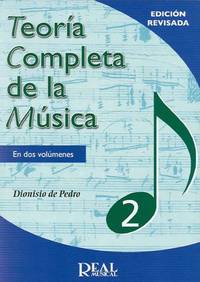
réf. MLU681835658New. Teoría Completa de la Música Vol. 2. Autor: Dionisio de Pedro. Colección: Teoría completa de la música. Idioma: Spanish. Materia: Música / Music. ISBN: 9788438712580. Ejemplar nuevo. Referencia: MLU681835658. Spanish-language edition. Ships from Uruguay with full tracking. Every book is individually wrapped with care and securely packed so it reaches you in excellent condition. Looking for a title you can't find We source books on request. Thank you for letting us serve you. Amado Libros Montevideo. Edición en español. Enviamos desde Uruguay con seguimiento completo. Cada libro va envuelto con cuidado y bien protegido para que llegue a sus manos en excelentes condiciones. ¿Busca un título que no encuentra Conseguimos libros por encargo. Gracias por permitirnos servirle. Amado Libros Montevideo. unknown
2021réf. 260225004Dark Force Ent 2021-05-25. blu_ray. Very Good. 0x0x0. collectible OOP Blu-ray release; case is vg; Blu-ray disc remains in excellent condition and looks as if it has rarely been played; All Region formatting for playback nearly worldwide; because we care that your order arrives in the condition stated we have additionally sealed the case in bubblewrap for added protection during shipment Dark Force Ent unknown
2003réf. 7747VB2003. 1st ed. Springer 2003. 28 x 3 cm. 450 pages. HC Versand aus Deutschland / We dispatch from Germany via Air Mail. Einband bestoßen daher Mängelexemplar gestempelt sonst sehr guter Zustand. Imperfect copy due to slightly bumped cover apart from this in very good condition. Stamped. hardcover
2003réf. Adhya-9788847001749Springer 2003. Paperback. New. Springer paperback
2003réf. Adhya-9788847001749Springer 2003. Paperback. New. Springer paperback
réf. CA13AA-00056Longman Rees Orme Brown Green & Longman. Collectible - Acceptable. London: Longman Rees Orme Brown Green & Longman 1833. 1st edition. 16 mo Paperback. 416pp. Poor book. Reading copy only. Lacking covers. Pages detatched chipped and torn. Ex-library with usual markings. In polypropylene bag. philosophy astronomy Inquire if you need further information. Longman, Rees, Orme, Brown, Green, & Longman paperback
1867réf. 7841London: James Walton 1867. 8vo pp. xii 272 4 ads. Frontispiece included within pagination. Original blue cloth boards bordered with a blind rule spine and front board lettered direct in gilt. A little spotting. A little soiled and marked some rubbing to edges. ‘Early Technology’ bookplate of Michael Bennett-Levy to pastedown. A rewritten and updated version of Lardner’s 1855 book ‘The Electric Telegraph Popularised’ which was itself reworked from one of his popular science publications the production of which Lardner is best-remembered for: His articles on telegraphy come from ‘The Museum of Science and Art’ which he also edited. Wheeler Gift 1681. James Walton hardcover
1955165p. Hardcover Very good condition
1960xviii, 62 p. illus. 29 cm. Hardcover Very good condition in slipcase Bound (inverted) with the author's The birds. With an introd. by Dudley Fitts and illus. by Marian Parry. xii, 52 p.
réf. ria9798407139171_inpPaperback. New. New Book; Fast Shipping from UK; Not signed; Not First Edition; The Frosbite Journals: Samples of My Life is the diary of one Adam Snowflake as he details and journals his overdramatic spiritual and traumatic life. The story features dark 13 content in some places. The journal details Adam Snowfla paperback
2012réf. DADAX3659170267LAP Lambert Academic Publishing 2012-08-13. paperback. New. 5.91x0.61x8.66. Buy with confidence. Excellent Customer Service & Return policy. LAP Lambert Academic Publishing paperback
réf. 6895495Jones & Bartlett Publishers Incorporated . Papeback. New. pp. viii 95 Jones & Bartlett Publishers, Incorporated unknown
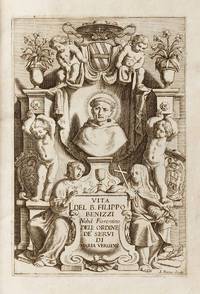
réf. 54778Bologna: Giacomo Monti 1668. Small quarto 23 × 17 cm. Contemporary elaborately decorated and richly gilt morocco binding with the armorial supralibros of Pope Clement X. on the front and back covers from the orbit of the Andreoli/Rospigliosi bindery with gilt edges; 16 148 pp. with engraved title page 14 copper-engraved plates by Lorenzo Tinti and numerous initials. Inner lid with ex-libris from the notable collection of the London bookseller W. A. Foyle Beeleigh Abbey; binding showing traces of former ties; joints headcaps edges and corners lightly rubbed the joints slightly more so; spine with a few minute almost imperceptible restorations and a few tiny wormholes; slightly toned and faintly fox-stained in places along the edges; else very good. First edition with the copperplate engravings by Lorenzo Tinti and the second edition of the text first published in Florence in 1626 under the equally fictitious authorship of Pandolfo Ricasoli Baroni see Melzi and Moreni. This Vita replaced Arcangelo Giani's "Della historia del b. Filippo Benizii nobile fiorentino" published in 1604 as the authoritative hagiography updating Giani's account in light of the Processi informativi completed in 1621 in preparation for the canonization proceedings. During this process the commissions in Florence Philip's birthplace and Todi the place of his death interviewed more than fifty witnesses and inspected the principal sites of veneration see the Preface and Sabine Hoffmann Ein heiliger und sieben Gründer . Munich 2013 p. 47. The occasion for this second edition of the Vita enriched with copperplate engravings was the renewed - and this time successful - effort undertaken in Rome by the Florentines and the Servite Order to secure the canonization of their fifth Prior General. To him they owed the survival of the Order after the Second Council of Lyon 1274 when the smaller mendicant orders faced compulsory suppression. The Servite Order subsequently received papal confirmation in 1304 and Benizi has therefore often been regarded as its founder. For four centuries the friars of the Ordo Servorum Mariae and the Florentines sought the canonization of their patron who during the conclave at Viterbo 1268-1271 was proposed for election as pope and is therefore said to have hidden in a grotto on Monte Amiata near Siena. The first major success in this long campaign came under Pope Leo X the first pope of the Florentine Medici family who in 1516 authorized the celebration of the Feast of Philip with its own Mass and Proper Office. By this time the veneration of Philip had reached its height in Florence. For this and the following see Hoffmann 2013 pp. 15-48. In the Servites' mother church Basilica della Santissima Annunziata a church central to the Florentines that housed one of the city's most important sanctuaries the miraculous image of the Annunciation Cosimo Rosselli as is well known the painter who alongside Ghirlandaio Perugino Botticelli and Signorelli executed three of the frescos in the Sistine Chapel began around 1475 a fresco cycle on the life of the city's venerated son. The cycle was continued in 1509-1510 with five frescos by Andrea del Sarto. Together with his pupils Pontormo and Rosso Fiorentino he subsequently worked also in the forecourt of the basilica the "Chiostrino dei Voti" on a second cycle whose subject was the life of the Virgin Mary. With these two cycles the pictorial biographies of the two figures of greatest importance to the order were placed before the basilica. When Vasari later wrote at length about the frescos he referred to Filippo Benizi more than a century before his canonization quite matter-of-factly as a saint "san Filippo" even though his descriptions of the paintings or more precisely his iconographic reading of the frescos suggest that he was not entirely familiar with the associated legends G. Vasari Le vite de' piu eccellenti pittori scultori e architettori Volume 1 of Part 3. Florence 1568 p. 152. Andrea del Sarto's cycle was also significant for the canonization process. At the beginning of the seventeenth century the cycle was studied by the canonization commission since it constituted an outstanding testimony to Philip's veneration. In more recent scholarship the depositions from the canonization proceedings conducted between 1619 and 1621 have been used as a source for examining the effect of the cycle on its viewers. The account of the cults in the third part of the Vita likewise makes it possible to understand the liturgical and social interconnections within which the frescoes were received at the time. On this see Alana O'Brien San Filippo Benizi 'Honour of the Servi and Florence': His Cycle and Cult at SS. Annunziata 1460-1621 Ph.D. diss. La Trobe University 2 vols. 2001. Even before Leo X approved the invocation and liturgy of Benizi the veneration of relics had already attained such significance that del Sarto depicted it in one of his frescos. On several occasions the Florentines attempted in vain to obtain the bones preserved in Todi. The Vita however lists a series of minor primary relics in Florence including a thumb and fragments of the forearm and elbow. Del Sarto by contrast depicts the veneration of the Florentine "cushion-shaped reliquary capsule" described in the Vita in which a garment of the Servite was preserved. The condition of the relic is described in detail. Furthermore additional relics in other Italian cities are listed. The accounts extensively report on the veneration as well as the miracles attributed to the relics. Thus a garment of the Servite friar preserved in Todi is said to have repeatedly brought about instantaneous healings. In this way a famous legend likewise depicted by Andrea del Sarto and here also by Lorenzo Tinti appears as it were to have been perpetuated: Philip who had once studied medicine and philosophy in Paris and Padua is said to have spontaneously healed a freezing leper by giving the beggar his garment for warmth: "No sooner was the poor man clothed than the foul-smelling scales of his disease fell to the ground his flesh was immediately cleansed and his limbs were restored as though he had never been leprous." p. 56ff. In its account of the miracle the Vita explicitly refers to del Sarto's depiction. Time and again the Vita returns to the frescoes including in its account of the "Punishment of the Blasphemers." According to the text the Florentine painter rendered the "harrowing event" "so terrifying" that "it can scarcely be viewed without dread." Both the painting and Lorenzo Tinti's engraving depict the very moment in which the blasphemers who had been warned by Philip while resting beneath an elm tree are struck dead by a bolt of lightning. p 66f. The veneration is said to have begun immediately after his death. Thus it is reported that the dying man's final words were answered by a voice audible to all proclaiming: "Faithful servant whom the Virgin has appointed to care for her household come and enter into the glory of your Lord!" Thereupon the friars are said to have set aside their grief and "contrary to the customary order begun to sing hymns and psalms." The conclusion of both the fresco cycle and the Vita is formed by the miracle that is said to have occurred during the lying in state of Philip's body: "When news of the death of the blessed Philip spread through the city of Todi people of every rank flocked to the Church of San Marco to pay their final respects to his body. Among them was the notary Paolo di Guido whose daughter Agnoletta had long suffered from a grave illness. Her hands had become completely twisted and paralyzed by the disease and her feet were so contracted that she could neither walk nor help herself. . No sooner had the girl been brought near the holy body than her condition began visibly to change. Her contracted limbs relaxed her hands opened once again her feet straightened and she fully regained her strength. Before the eyes of all those present she rose healed and unharmed." pp. 115ff. This account is followed by an extensive list spanning many pages of all the miracles said to have occurred after Philip's death. Yet despite the great efforts undertaken by the Florentines and the small mendicant order to secure his canonization the papal decision continued to be delayed even after the thorough investigation had been completed. The petitions of Grand Duke Ferdinando II de' Medici and Emperor Ferdinand III to Urban VIII and Innocent X remained unsuccessful. Only the insistence of Emperor Leopold I with Clement IX brought about the conditions under which Clement X finally canonized Philip on April 12 1671 together with Cajetan of Thiene co-founder of the Theatine Order Rose of Lima the first female saint of the Americas Louis Bertrand a Dominican missionary in Colombia and Francis Borgia who above all promoted the Jesuit mission in Central and South America. Philip was the only one among them who had died long before the sixteenth century. The present copy is distinguished above all by the binding made for Pope Clement X to be understood within the context of the centuries long campaign for the canonization of the Florentine saint. Although the Andreoli brothers were still active at this time the present lavishly decorated and highly accomplished binding is more plausibly attributable to the wider circle of the workshop known as the Rospigliosi Bindery. While the compartments framing both the octagonal armorial supralibros and the laurel wreath filled with flame motifs and terminating in volutes at the corners display clear affinities with documented bindings associated with the Rospigliosi workshop tradition including those made for Christina of Sweden and for Popes Clement IX and Clement X no correspondences could be established in a comparison of the finishing tools. Moreover the exclusive use of a single roll tool on the spine would be highly unusual. Guido Vianini Tolomei I rerri e le botteghe di legatori in: Legatura romana barocca Rome 1991 pp. 31-33; José Ruysschaert Les frères Andreoli relieurs des Chigi. Cité du Vatican 1992. Melzi Dizionario di opere anonime e pseudonime di scrittori italiani vol. III p. 231; Moreni Bibliografia storicoragionata della Toscana vol. I p. 446 cf. vol II p. 245f. As of June 2026 KVK OCLC show six copies in North America. unknown
1946Foxing to top of textblock. Very Slight spine slant. Faint sunning to spine. Scholar's name to inner cover (Cedric Boulter) with some bibliographical notes. Endpapers tanned. ; There are over 140 illustrations including pull-out diagrams of theatre remains. ; 288 pages; Chapter titles include: The Theatre Before Lycurgus: Evidence of the Plays; Special Problems of The Theatre Before Lycurgus; the Lycurgean Theatre; The Hellenistic Theatre; The Theatre in the Roman Period
1968Scholar's name to ffep and stamp to half-title (M. F. Fresco). Spine lightly sunned. Very light tanning to endpapers. ; Purpose of this study is to inquire into the exact relation between the cult of Dionysus and the tragedies which were performed as part of this cult. ; 358 pages
réf. 2200Madrid: Imprenta de las Escuelas Pias 1861 reprint. A standard bibliographical account of early printing in Spain organized by town. XIV 436 pp. and a large folding chart. Extensive studies of the earliest printers in Spain and their productions. Mendez had planned to publish a second volume but the manuscript was lost before it had been printed. One color plate numerous facsimiles. Printed on laid paper. 4to original wraps. Fine and bright. Bigmore & Wyman II 36: "This is still a most esteemed work on Spanish typography." Madrid: Imprenta de las Escuelas Pias, 1861 (reprint) paperback
1974réf. RO40175432Pontificia Universitas Gregoriana. 1974. In-8. Broché. Bon état, Couv. convenable, Dos satisfaisant, Intérieur frais. 87 pages. Etiquettes de code sur le dos et le 1er plat. Tampons et annotations de bibliothèque sur le 1er plat et en page de titre. Dos muet.. . . . Classification Dewey : 460-Langues espagnole et portugaise
réf. 306386Seville Imprenta y Libreria Espanola y Extrangera de Rafael Tarasco y Lassa 1882. First edition thus. 8vo. Full contemporary gilt stamped black morocco front joint cracked; t.e.g. Good-very good. xx 315 pages. No foxing. Bookplate of Irish prelate Vincent Lloyd Russell on the front pastedown. One of 300 copies on large paper Sociedad de Bibliofilos Andaluies. Palau 139797. Hardcover. Good. Seville, Imprenta y Libreria Espanola y Extrangera de Rafael Tarasco y Lassa, 1882. hardcover
réf. 306386Seville Imprenta y Libreria Espanola y Extrangera de Rafael Tarasco y Lassa 1882. First edition thus. 8vo. Full contemporary gilt stamped black morocco front joint cracked; t.e.g. Good-very good. xx 315 pages. No foxing. Bookplate of Irish prelate Vincent Lloyd Russell on the front pastedown. One of 300 copies on large paper Sociedad de Bibliofilos Andaluies. Palau 139797. Hardcover. Good. Seville, Imprenta y Libreria Espanola y Extrangera de Rafael Tarasco y Lassa, 1882. hardcover books
réf. 2509RS362Introdução e actualização do texto por Maria Leonor Carvalhão Buescu. Imprensa Nacional. Casa da Moeda. Lisboa. 1984. De 25x16 cm. Com 146 ix págs. Encadernação com lombada e cantos em pele nervos e ferros a ouro na lombada. Pastas revestidas em papel marmoreado e preserva as capas e lombada original. Exemplar com sublinhados e algumas notas a lápis na folha de rosto. SACO RS696-19 unknown
2017réf. 2-6202246073Editorial Académica Española 2017. Paperback. New. 96 pages. Spanish language. 8.66x5.91x0.22 inches. Editorial Académica Española paperback
1822réf. 40096Milano: Società tip. De' Classici Italiani 1822. Cm. 205 pp. xvi 140. Graziosa vigneta incisa in rame al frontespizio. Leg. coeva in cart. rigido alla bodoniana. Esemplare marginoso e stampato su carta di buona qualità. Ottimo stato di conservazione. Società tip. De' Classici Italiani unknown
réf. A9781167241895New. unknown