647 résultats
1995réf. 123159New York: W. W. Norton & Company 1995. Hardcover. 108p. very good first edition in cloth boards and unclipped dj. Cuban American poet winner of the 1993 Whiting Award. W. W. Norton & Company hardcover books
1995réf. 27704NY: Norton 1995. First edition. 105 pp. Fine in fine dust jacket. His third collection of poems. Promotional flyer and author photo laid in. NY: Norton unknown books
1995réf. 43318NY: W.W. Norton 1995. Hardcover. Very good. Hardcover. First Edition. Very good hardback in a very good dustjacket. W.W. Norton hardcover books
1995réf. 709552NY: W.W. Norton. 1995. Advance Uncorrected Proof. Very Good in wrappers. Unless otherwise noted our first editions are first printings. First Edition. Softcover. Very Good. W.W. Norton paperback books
1995réf. 141191New York: W.W. Norton & Company 1995. First edition. Hardcover. First printing. 108 pages. A review copy with laid in publisher information sheet and publicity photo. Martinez's third collection of poems. A fine copy in a fine dust jacket. W.W. Norton & Company unknown books
1995Mm 170x240 Brossura editoriale con bandelle, 222 pagine con numerose illustrazioni in nero e a colori nel testo. Dorso un po' scolorito, per il resto opera in ottime condizioni. Spedizione in 24 ore dalla conferma dell'ordine.
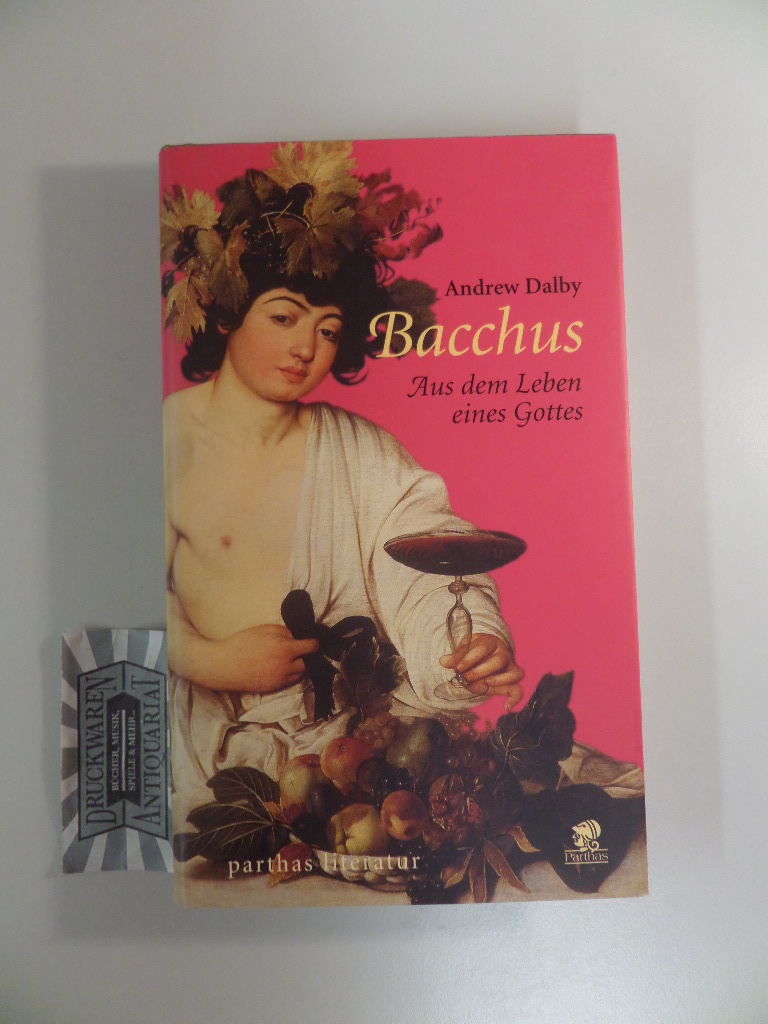
2005réf. 72163Berlin : Parthas, 2005. 204 S., Ill. OPp., gebundene Ausgabe, SU.
réf. 9788535904130CIA DAS LETRAS. new. O personagem central do segundo romance de Dionisio Jacob � um sujeito indeciso sem voca��o para o sucesso. Lima o protagonista de Assombros urbanos define-se como aquele que sempre chega depois que a festa acabou. Foi ator de teatro de vanguarda na d�cada de 70 - quando levava ""duas horas para atravessar completamente nu um pequeno palco de seis metros"" - fez terapia do grito primal morou em comunidade hippie foi ator de comerciais e acabou como apresentador de Assombros na madrugada programa de TV que vai ao ar ��s duas da manh� - e que ningu�m assiste. Ele se sente �� vontade por apresentar com muito mau humor um programa ignorado pelo p�blico. Lima entrevista indiv�duos ""peculiares"" como o dono de uma planta carn�vora que pretende ensin�-la a ser vegetariana um alfaiate que se considera o rei do mundo e procura desesperadamente uma mulher para dar continuidade �� sua dinastia um sujeito cujo amigo se transformou num perigoso sapato tumultuador e um fiscal sanit�rio que denuncia um sandu�che que ataca freq��entadores de lanchonete. Para o azar de Lima por�m o programa que ele apresenta come�a a fazer sucesso e se torna um fen�meno de audi�ncia causando uma s�rie de transtornos em sua vida. Num texto marcado pelo humor Dionisio Jacob satiriza a desorienta��o da sociedade brasileira p�s-ditadura. CIA DAS LETRAS unknown
1976réf. 162076Frankfurt: Twentieth Century-Fox 1976. Vintage borderless reference photograph from the 1976 German film showing actress Silvia Dionisio. Printed mimeo snipe affixed to the verso with text in German. From the collection of artist and author Duncan Hannah. Duncan Hannah was a key figure in the burgeoning New York underground arts scene befriending Andy Warhol and his superstars Lou Reed Allen Ginsberg Patti Smith Salvador Dali and many others. A graduate of the Parsons School of Design his paintings were exhibited in the influential 1980 Times Square Show alongside work by Keith Haring and Jean-Michel Basquiat and several of his paintings are held in the permanent collection of the Metropolitan Museum of Art. A gangster retires to his ancestral home in the Abruzzi mountains taking with him tapes which incriminate an American politician and his own Mafia contacts. 7 x 9.5 inches. Very Good plus lightly edgeworn with fading along the top edge. Twentieth Century-Fox unknown books
1976réf. 162076Frankfurt: Twentieth Century-Fox 1976. Vintage borderless reference photograph from the 1976 German film showing actress Silvia Dionisio. Printed mimeo snipe affixed to the verso with text in German. From the collection of artist and author Duncan Hannah. Duncan Hannah was a key figure in the burgeoning New York underground arts scene befriending Andy Warhol and his superstars Lou Reed Allen Ginsberg Patti Smith Salvador Dali and many others. A graduate of the Parsons School of Design his paintings were exhibited in the influential 1980 Times Square Show alongside work by Keith Haring and Jean-Michel Basquiat and several of his paintings are held in the permanent collection of the Metropolitan Museum of Art. A gangster retires to his ancestral home in the Abruzzi mountains taking with him tapes which incriminate an American politician and his own Mafia contacts. 7 x 9.5 inches. Very Good plus lightly edgeworn with fading along the top edge. Twentieth Century-Fox unknown
1977Pubblicazione curata da alcuni amici di Oreste Ferrari e stampata in 500 esemplari fuori commercio da Ottavio Capriolo in Milano nel MCMLXXVII - Prefazione - Ariadne, Come fu? Quali segni - Sotto lo sguardo della rondine (21 poesie) - Le api del desiderio (9) - Scherzi e malumori di Dioniso (32) - Altre cinque poesie (5) - Varianti - Nota - Bibliografia - Manoscritti 1 21x14 cm., in brossura con risvolto, in apertura ritratto in disegno di Guido Tallone (1942), pp. 116 (3), prima edizione, di pregio, fuori commercio, tiratura limitata di 500 copie, buone condizioni. Allegato biglietto da visita.
1961Faint edgewear to wraps. Pages unopened. ; Collection D'Études Anciennes; 329 pages
1961Mm 130x205 Brossura editoriale di 329 pagine, testo in lingua francese. Buono stato. Spedizione entro 24 ore dalla conferma dell'ordine.
réf. 8413735599.Gpaperback. Good. Access codes and supplements are not guaranteed with used items. May be an ex-library book. paperback
réf. 8413736625.Gpaperback. Good. Access codes and supplements are not guaranteed with used items. May be an ex-library book. paperback
réf. 2608SB002DIONYSII HALICARNASSEI Antiquitatum Rom. Libri XI. AB ÆMILIO PORTO recens & post aliorum interpretationes Latinè redditi. Huic editioni accesserunt Argumenta seu breuiaria singulis libris præfixa: Gnomologia noua id est Sententiarum Selectarum quæ in toto Halicarnassei opere occurrunt alphabetica tabula: Rerum item & verborum copiosus Index. Ex Officina Iacobi Stoer Anno M. D. XC. 1590. In-16.º de 135x9 cm. Com xxxii 1082 xxx págs. Encadernação do século XVIII inteira de pele com nervos rótulo e ferros a ouro na lombada. Impressão em caracteres redondos nas páginas preliminares e nos índices; o extenso corpo da tradução latina encontra-se predominantemente composto em caracteres itálicos de tipos muito pequenos. A marca xilográfica de Jacob Stoer ocupa a parte inferior do rosto: dois homens cuidam de uma árvore iluminada por raios provenientes de uma nuvem onde figura o Tetragrama hebraico o nome divino. Texto ornamentado com modestos cabeções e iniciais com motivos vegetalistas. Exemplar com inscrição manuscrita não identificada no rosto. Apresenta notas marginais manuscritas a tinta e em latim mais frequentes nos primeiros cadernos assinalando personagens povos e lugares mencionados no texto entre os quais Cacus latro Hércules Campani Arcades e Croto. Nas guardas encontra-se uma nota sobre a integração da obra no período greco-latino da literatura grega e apontamentos de venda datados do Porto 13 de Dezembro de 1985. Nome do autor manuscrito no corte lateral das folhas permitindo identificar o volume quando arrumado com a lombada voltada para o interior. Desgaste superficial na coifa superior e no canto inferior da pasta anterior. Cortes das folhas acastanhados por sujidade com pequenas manchas de humidade à cabeça. Abertura pronunciada do miolo junto às págs. 464-465 deixando visível parte da estrutura da lombada e uma mancha de humidade junto ao festo embora os cadernos permaneçam presos à costura. Edição quinhentista pouco comum da tradução latina das Antiquitates Romanae preparada por Aemilius Portus não representada na Biblioteca Nacional de Portugal. A tradução fora publicada pela primeira vez em 1588 em edição in-fólio impressa por Eustache Vignon para Henri Estienne; esta edição genovense de 1590 apresenta-a num compacto in-16.º acrescida de instrumentos destinados à consulta: um argumento geral breviários antepostos a cada livro uma gnomologia alfabética de sentenças e um extenso índice final de nomes e matérias. As páginas preliminares abrem com o Argumentum rerum quæ in universa Dionysii historia continentur exposição da matéria e dos propósitos historiográficos da obra seguido pela Gnomologia» que reúne alfabeticamente máximas extraídas dos onze livros sob conceitos como amizade ambição paz pátria nobreza necessidade e virtude. Cada livro principia com um breviário numerado dos assuntos tratados. As trinta páginas finais contêm o «Index nominum et rerum» disposto em duas colunas. As Antiquitates Romanae foram concebidas em vinte livros narrando a história de Roma desde as origens lendárias até ao início da Primeira Guerra Púnica; sobreviveram integralmente os primeiros onze que alcançam 441 a.C. Dionísio procurou apresentar as instituições leis conflitos civis costumes e campanhas militares romanas a leitores de língua grega sustentando simultaneamente a origem helénica de Roma. A abundância de discursos e episódios exemplares explica a utilidade da gnomologia acrescentada a esta edição que converte a narrativa histórica num repertório de máximas políticas e morais. A publicação enquadra-se na orientação editorial da oficina de Jacob Stoer durante as décadas de 1580 e 1590 quando o impressor genovense concentrou parte importante da sua produção nos autores gregos e latinos nos textos jurídicos e nos manuais escolares. O pequeno formato e os índices copiosos tornavam este volume adequado à leitura ao ensino e à consulta funções também testemunhadas neste exemplar pelas notas marginais latinas e pelo título antigo inscrito nos cortes. Dionísio de Halicarnasso Halicarnasso ca. 60 a.C. depois de 7 a.C. foi historiador grego professor de retórica e crítico literário. Estabeleceu-se em Roma cerca de 30 a.C. onde ensinou e estudou a língua as instituições e a tradição historiográfica romanas. Compôs as Antiquitates Romanae em vinte livros dos quais os primeiros onze subsistem integralmente. Escreveu também tratados sobre composição e oratória estudos dedicados aos antigos oradores áticos e cartas de crítica literária. Aemilius Portus ou Emilio Porto Ferrara 1550 Stadthagen 1614 ou 1615 foi filólogo e professor de Grego. Filho do helenista cretense Franciscus Portus ensinou línguas antigas em Genebra desde 1569 e ocupava a cátedra de Grego da Academia de Lausanne quando publicou a sua tradução de Dionísio de Halicarnasso. Foi depois professor de Grego e Retórica em Heidelberg onde preparou edições e traduções de Eurípides Aristóteles Píndaro Homero e outros autores além de léxicos greco-latinos dos dialectos jónico e dórico. Jacob Stoer Ettlingen 1542 Genebra 1610 foi impressor livreiro e editor. Chegou a Genebra em 1559 aprendendo o ofício na oficina de Jean Crespin e trabalhou por conta própria a partir de 1571. Publicou cerca de 368 títulos com particular incidência em textos religiosos jurídicos e clássicos greco-latinos; a presente edição pertence ao período em que a sua oficina se afirmou na produção de autores antigos e livros de estudo em formatos de circulação prática. EN In 16mo 13.5 × 9 cm. xxxii 1082 xxx pp. 18th-century full leather binding with raised bands label and gilt-stamped lettering on the spine. The preliminary pages and tables of contents are printed in round type; the main body of the Latin translation is predominantly set in very small italic type. Jacob Stoers woodcut mark occupies the lower part of the title page: two men tend to a tree illuminated by rays emanating from a cloud bearing the Hebrew Tetragrammaton the divine name. The text is adorned with modest capitals and initials featuring plant motifs. A copy with an unidentified handwritten inscription on the title page. It contains handwritten marginal notes in ink and in Latin which are more frequent in the early quires highlighting characters peoples and places mentioned in the text including Cacus latro Hercules the Campanians the Arcadians and Croto. On the endpapers there is a note regarding the works place within the Greco-Latin period of Greek literature and sales notes dated in Porto 13 December 1985. The authors name is handwritten on the side edge of the leaves allowing the volume to be identified when stored with the spine facing inwards. Superficial signs of wear to the top cap and the lower corner of the front cover. The edges of the leaves are browned by dirt with small moisture stains at the top. There is pronounced gaping of the pages near pp. 464465 revealing part of the spine structure and a moisture stain near the headband although the quires remain attached to the binding. Rare 16th-century edition of the Latin translation of Antiquitates Romanae prepared by Aemilius Portus not held by the National Library of Portugal. The translation was first published in 1588 in a folio edition printed by Eustache Vignon for Henri Estienne; this Genoese edition of 1590 presents it in a compact 16mo format supplemented by reference tools: a general table of contents summaries preceding each book an alphabetical gnomology of maxims and an extensive final index of names and subjects. The introductory pages open with the Argumentum rerum quæ in universa Dionysii historia continentur an exposition of the works subject matter and historiographical aims followed by the Gnomologia which brings together in alphabetical order maxims drawn from the eleven books under headings such as friendship ambition peace homeland nobility necessity and virtue. Each book begins with a numbered summary of the topics covered. The final thirty pages contain the Index nominum et rerum arranged in two columns. The Antiquitates Romanae were conceived as a twenty-volume work recounting the history of Rome from its legendary origins to the start of the First Punic War; the first eleven volumes covering the period up to 441 BC have survived in their entirety. Dionysius sought to present Roman institutions laws civil conflicts customs and military campaigns to Greek-speaking readers whilst at the same time upholding the Hellenic origins of Rome. The abundance of speeches and exemplary episodes explains the usefulness of the gnomology added to this edition which transforms the historical narrative into a collection of political and moral maxims. This publication is in keeping with the editorial focus of Jacob Stoers printing workshop during the 1580s and 1590s when the Genoese printer devoted a significant part of his output to Greek and Latin authors legal texts and school textbooks. Its small format and extensive indexes made this volume well-suited to reading teaching and reference; these functions are also evidenced in this copy by the Latin marginal notes and the old title inscribed on the edges. Dionysius of Halicarnassus Halicarnassus c. 60 BC after 7 BC was a Greek historian teacher of rhetoric and literary critic. He settled in Rome around 30 BC where he taught and studied the Roman language institutions and historiographical tradition. He composed the Antiquitates Romanae in twenty books of which the first eleven survive in their entirety. He also wrote treatises on composition and oratory studies devoted to the ancient Attic orators and letters of literary criticism. Aemilius Portus or Emilio Porto Ferrara 1550 Stadthagen 1614 or 1615 was a philologist and professor of Greek. The son of the Cretan Hellenist Franciscus Portus he taught ancient languages in Geneva from 1569 and held the chair of Greek at the Academy of Lausanne when he published his translation of Dionysius of Halicarnassus. He later became a professor of Greek and rhetoric at Heidelberg where he prepared editions and translations of Euripides Aristotle Pindar Homer and other authors as well as GreekLatin lexicons of the Ionic and Doric dialects. Jacob Stoer Ettlingen 1542 Geneva 1610 was a printer bookseller and publisher. He arrived in Geneva in 1559 learnt the trade at Jean Crespins workshop and worked independently from 1571 onwards. He published some 368 titles with a particular focus on religious legal and Greco-Latin classical texts; this edition dates from the period when his workshop established itself in the production of ancient authors and study books in practical formats. Ref.: - Bibliothèque de Genève Cota: S 28711; GLN-3419. - PAN Biblioteka Kórnicka Cota: 13915; USTC 451235; Adams D 634. - Russell Donald. «Dionysius 7 of Halicarnassus Greek critic and historian». Oxford Classical Dictionary 2016. - Hoche Richard. «Portus Aemilius». Allgemeine Deutsche Biographie vol. 26 1888 pp. 447-449. - Dubois Alain. «Jacob Stoer 1542-1610 un éditeur et ses auteurs». In Riffaud Alain dir. Lécrivain et limprimeur. Rennes: Presses universitaires de Rennes 2010 pp. 75-93. SACO SB282-02 hardcover
réf. 1711JC039Em que se Critica Responde Convence e refuta hum manifesto que a favor dos DD. Legistas fez hum Anonymo pertendendo mostrar que eraõ habeis para as Conezias Doutoraes da Universidade de Coimbra. A PARIZ. Ches Pierre Pravlt. Quay de Gesures au Paradis. M. D. CC. XXXV. 1735 Avec Approbation. In fólio de xvi 224 xxiv 280 i.é: 279 i xxiv págs. Encadernação da época inteira de pele com nervos rótulo vermelho e ferros a ouro em casas fechadas na lombada. Cortes das folhas levemente carminados. Apresenta uma cesta com flores no centro da folha de rosto e a mesma xilogravura repete-se como florão de remate na página 263 da segunda numeração e na página final. Exemplar com assinatura de posse coeva na folha de guarda. Com desgaste na encadernação em especial nos cantos e na coifa com perda de pele. Pequeno pico de traça marginal desde a página 314 até à pasta posterior e outro no pé das folhas da segunda numeração sem afectar mancha gráfica. As folhas preliminares contêm a aprovação das autoridades francesas Garde des Sceux e registo na Câmara Real dos Livreiros e Impressores de Paris extenso registo de erratas e uma Advertência. A segunda parte que ocupa as páginas da segunda numeração inclui um apêndice e uma resposta a um manifesto anónimo sobre o mesmo assunto. No fim nas páginas sem numeração transcreve dois folhetos escritos por defensores de opiniões contrárias às do autor. Muito raro pois Inocêncio regista-o mas nunca viu exemplares do livro. Foi publicada anónima e a atribuição da autoria é feita por Barbosa Machado. É uma obra de vasta erudição com a citação de grande número de fontes jurídicas literárias e históricas que o autor usa para defender o seu ponto de vista e por isso tem grande interesse para o estudo da cultura jurídica e institucional do século XVIII em especial na Universidade de Coimbra. Faz parte de uma polémica sobre quem tinha direito a concorrer para as conezias magistral e doutoral que existiam nos cabidos das Catedrais em Portugal. Os doutores legistas eram os juristas das leis do Desembargo Régio. A partir de um determinado momento começaram a concorrer às Conezias Magistrais e às Conezias Doutorais que estavam reservadas segundo o presente autor a doutores ou licenciados em Teologia e a um doutor ou licenciado em Cânones respectivamente apresentados pela Universidade de Coimbra. Dionísio Bernardes de Morais Lisboa c. 1680 - depois de 1760 Doutor em Cânones pela Universidade de Coimbra e Prelado da Igreja Patriarcal de Lisboa era sobrinho pela parte paterna do insigne Padre Manuel Bernardes. É autor de diversas obras em português e latim quase todas de carácter polémico. Publicou as seguintes obras todas anónimas ou sob pseudónimo: Anti-epitome ou anti-legista disforçado. Dialogos criticos ou colloquios jocoserios sobre a controversia entre cartonistas e legistas ácerca das conesias doutoraes da Universidade de Coimbra. Salamanca por la Viuda de Antonio Ortiz Gallardo 1737. Parece que sahiu com o nome de Leonardo Luis de Queiroz.; Carta censoria em que se advertem as inadvertencias que contém a Pastoral do Arcebispo Bispo do Algarve. Madrid pelos herdeiros de Francisco del Hierro 1746; Crisol critico balança da verdade e invectiva apologetica em que se refutam as doutrinas de um papel manuscripto que d´Evora se remetteu a esta cidade sobre varios pontos. Sevilha en la Imprenta Real. S. d. EN In folio. xvi 224 xxiv 280 i.e.: 279 i xxiv pp. Contemporary full leather binding with raised bands red label gilt iron tools. Light red edges. It features an engraving depicting a basket with flowers in the centre of the title page and the same woodcut is repeated as a closing 'fleuron' on page 263 of the second numbering and on the final page. Copy with coeval ownership signature on the front endpaper. Worn binding in particular at the corners and on the coping with some loss of leather. Small moth peak from page 314 of the second numbering to the rear pastedown and another at the foot of the second group of numbered leaves. The preliminary leaves contain the approval of the French authorities Garde des Sceux and registration with the Royal Chamber of Booksellers and Printers of Paris extensive errata and a Warning. The second part which occupies the second group of numbered pages includes an appendix and a reply to an anonymous manifesto on the same subject. At the end in the unnumbered pages two pamphlets written by advocates of opinions contrary to those of the author are transcribed. Very rare as Inocêncio records it but never saw copies of the book. It was published anonymously and the attribution is made by Barbosa Machado. It is a work of vast erudition with the citation of a large number of legal literary and historical sources that the author uses to defend his point of view and is therefore of great interest for the study of the legal and institutional culture of the 18th century especially at the University of Coimbra. It was part of a polemic about who had the right to apply for the magistral and doctoral conezies which existed in the cathedrals in Portugal. The doctores legistas were the jurists of the laws of the Royal Court. From a certain moment onwards they began to apply for the Conezias Magistrales and Conezias Doctorales which were reserved according to this author for doctors or graduates in Theology and a doctor or graduate in Canon Law respectively presented by the University of Coimbra. Dionísio Bernardes de Morais Lisbon c. 1680 - after 1760 Doctor in Canon Law by the University of Coimbra and Prelate of the Patriarchal Church of Lisbon he was the paternal nephew of the eminent Father Manuel Bernardes. He is the author of several works in Portuguese and Latin almost all of them of polemic character. He published the following works all anonymously or under pseudonym: Anti-epitome ou anti-legista disforçado. Dialogos criticos ou colloquios jocoserios sobre a controversia entre cartonistas e legistas ácerca das conesias doutoraes da Universidade de Coimbra. Salamanca por la Viuda de Antonio Ortiz Gallardo 1737 It seems to have come out under the name of Leonardo Luis de Queiroz; Carta censoria em que se advertem as inadvertencias que contém a Pastoral do Arcebispo Bispo do Algarve. Madrid pelos herdeiros de Francisco del Hierro 1746; Crisol critico balança da verdade e invectiva apologetica em que se refutam as doutrinas de um papel manuscripto que d´Evora se remetteu a esta cidade sobre varios pontos. Sevilha en la Imprenta Real. S. d. Refs: - Inocêncio II 178-179. IX 139. Sobre o pseudónimo António Rodrigues Flores: I 259. VIII 299. - Barbosa Machado I 705 e IV 106-107. M-15-A-30 hardcover
réf. 2104MA141Edição da Seara Nova. Lisboa. 1933. De 19x13 cm. Com 228 iii págs. Brochado. Exemplar com falta de uma folha inicial em branco. I-102-H-26 unknown
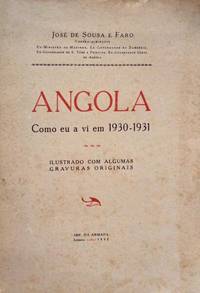
réf. 1310JC086Por José de Sousa e Faro Contra-Almirante Ex-Ministro da Marinha Ex-Governador da Zambézia Ex-Governador de S. Tomé e Príncipe Ex-Governador Geral de Angola. Ilustrado com algumas gravuras originais. Imprensa da Armada. Lisboa. 1932. De 24x17 cm. Com 225 pags. Brochado. Ilustrado com fotogravuras em extratexto impressas sobre papel couché fino entre as quais em anterrosto o retrato em meio-corpo de Sua Magestade D. Pedro VII Rei do Congo com regália de monarca europeu. I-93-B-4 unknown
réf. 2103MA128Por José de Sousa e Faro Contra-Almirante. Ex-Ministro da Marinha. Ex-Governador da Zambézia. Ex-Governador de S.Tomé e Príncipe. Ex-Governador Geral de Angola. Ilustrado com algumas gravuras originais. Imp. da Armada. Lisboa. 1932. De 24x17 cm. Com 233 ii págs. Brochado. Ilustrado em extratexto sobre papel couché com fotografia a preto e branco. Exemplar com danos com perda de papel na brochura manchas de humidade e oxidação na brochura e nas folhas. Contém dedicatória na folha de rosto. I-193-G-42 unknown
1990Instructions on how to to produce replicas of two famed buildings of the Acropolis from the card stock pages of this book - with scissors, knife, color markers and glue - [1/250th size of the original structures] 48p.Illus, UNUSED craft book ILLUS new uniused craft book Book
1974réf. 056096Lima Peru: San Antonio 1974. Paper Back. Good /No Jackets. 8vo - over 7¾" - 9¾" tall. 2vol.set: 943pp.incl.indexadvert; SCs blk.w/white-photocovers; heavy rub w/wear on edges&corners; spines&edges w/tape reinforcement; corner-folds; 2x2"chiptp.edgev2.; tanned pages clean&tight. Title trans. "Alto Ucayali & Pachitea: Historical Vision of Two Important Regions of the Peruvian Jungle" some illus. in Spanish San Antonio unknown
réf. 1612JR027Lello & Irmão Editores. Porto. 1973. De 20x13 cm. Com 246 págs. Brochado. Ilustrado em extratexto com 6 fotogravuras da região duriense impressas em papel couché. Crónica dedicada à descrição apaixonada das paisagens física e humana da região do Douro localizada no Norte de Portugal. O autor proporciona ao leitor um quadro histórico e geográfico detalhado desta região descrevendo simultaneamente as gentes que ali habitavam à época e os seus costumes. I-31-F-17 unknown
1974réf. ZB957231Madrid: 1974. 341 pp. large quarto later cloth near fine. - If you are reading this this item is actually physically in our stock and ready for shipment once ordered. We are not bookjackers. Buyer is responsible for any additional duties taxes or fees required by recipient's country. Photos available upon request. Madrid: hardcover
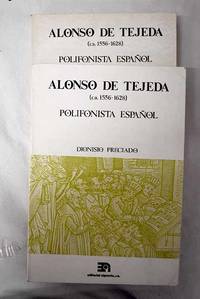
1974réf. 3786223Madrid.: Alpuerto. 1974. Paperback. Good. 33 cm. 2 v. Encuadernación en tapa blanda de editorial. Tejeda Alonso de 1540-1628. Obras. Alonso de Tejeda polifonista español. Obra galardonada con la medalla de oro de S. S. Pablo VI. I. Biografía transcripción y estudio de su primer libro de motetes -- II. Transcripción y estudio de su segundo libro de motetes. Coros religiosos Voces mixtas 4 partes. Coros religiosos Voces mixtas 5 partes. Coros religiosos Voces mixtas 6 partes. Preciado Dionisio. 1919-2007 . ISBN: 8438100589 Alpuerto. paperback