2 979 résultats
2003réf. 195315Madison Wisconsin: GUILD Publishing 2003. Paperback. VG Light smudging and edgewear to wraps; interior is clean; binding is solid. Color pictorial wraps; 208 pp.; Profusely illustrated with over 200 color plates and figures. Accompanied the exhibition of the same name which featured contemporary pottery from the collection held at The Newark Museum; Includes pottery from the 1930s through to the twenty-first century from America Europe Asia and Africa; Wonderful photos and extensive annotations. GUILD Publishing paperback books
1905réf. 191468Paris France: Alphonse Picard et Fils 1905. Hardcover. Good boards scuffed & scratched; edges rubbed. corners rubbed. leather spine edges & ends rubbed. split to hinge at column pgs 3/6; joints intact & holding. spotting to textblock edges w/ speckled foxing. pgs have light tanning to edges remaing fairly bright. red marbled boards w/ quarter red leather spine; gilt printed spine w/ five raised bands. 2290 columns. Shelf-wear/scuff to lower textblock edge. Endpapers and opening pages have a myriad of smudges to edges. A nice copy with dark detailed text. Text in French. Alphonse Picard et Fils hardcover books
2003réf. 160676Madison Wisconsin: GUILD Publishing 2003. Hardcover. NF/VG- light wear to top front edge of dj. Black boards; silver lettering. Color-illus. dj with white lettering. 208 pp.; Profusely illustrated with over 200 color plates and figures. Accompanied the exhibition of the same name which featured contemporary pottery from the collection held at The Newark Museum; Includes pottery from the 1930s through to the twenty-first century from America Europe Asia and Africa; Wonderful photos and extensive annotations. "Despite the enormous interest in the works of contemporary studio potters worldwide surprisingly few books explore the best of these works in a large full-color format. Great Pots: Contemporary Ceramics from Function to Fantasy does exactly that. With a focus on The Newark Museum's collection it is both a feast for the eyes and a testament to the power of the pot. Striking images and fascinating commentary demonstrate how a small pot can be a masterpiece and how even the most outrageous sculptural vessels of the 1990s share fundamental meanings with the craft pots of the 1950s. Two hundred color photographs taken especially for this book invite the reader to explore and relish this collection of truly great pots."--BOOK JACKET. GUILD Publishing hardcover books
2003réf. 160677Madison Wisconsin: GUILD Publishing 2003. Signed. Hardcover. NF/VG light rubbing to dj; signed by the author on the half title 2003. Black boards; silver lettering. Color-illus. dj with white lettering. 208 pp.; Profusely illustrated with over 200 color plates and figures. Accompanied the exhibition of the same name which featured contemporary pottery from the collection held at The Newark Museum; Includes pottery from the 1930s through to the twenty-first century from America Europe Asia and Africa; Wonderful photos and extensive annotations. "Despite the enormous interest in the works of contemporary studio potters worldwide surprisingly few books explore the best of these works in a large full-color format. Great Pots: Contemporary Ceramics from Function to Fantasy does exactly that. With a focus on The Newark Museum's collection it is both a feast for the eyes and a testament to the power of the pot. Striking images and fascinating commentary demonstrate how a small pot can be a masterpiece and how even the most outrageous sculptural vessels of the 1990s share fundamental meanings with the craft pots of the 1950s. Two hundred color photographs taken especially for this book invite the reader to explore and relish this collection of truly great pots."--BOOK JACKET. GUILD Publishing hardcover books
1983réf. 22971The Newark Museum 1983. Softcover. VG- Slight wear to covers including small tear at top of front cover pages are beginning to tan lightly and are nice. Black and color pictorial and stapled wraps. 63 pp. 54 bw plates. Title on cover: Century of Revivals: Nineteenth-Century American Furniture in The Newark Museum. Issued in conjunction with a 1982-1983 exhibition of this 19th-century American furnitute. With an introduction and by Ulysses G. Dietz. The annotated and illustrated catalogue presents 54 pieces. Uncommon. The Newark Museum paperback books
2011réf. 149643Washington DC: Renwick Gallery 2011. Softcover. NF. Grey wraps with image of silver vessel. Black lettering on pale blue spine. French flaps. 104 pp. with 59 color figures and additional images. Features the work of four artists whose work explores the deep roots of contemporary American craft and decorative arts. Ubaldo Vitali is a fourth-generation silversmith and conservator of antique silver; Cliff Lee is a neurosurgeon who creates elegant porcelain vessels using medieval Chinese glazes; Judith Schaechter uses traditional stained glass practice to create her works from gothic to punk; and Mattias Pliessnig combines traditional boat-building technology with 3-D design to create innovative seating out of steam-bent oad strips that may have up to 7000 points of contact without the use of hardware. Beautifully-illustrated and unique works. Essays and bios on each artist and with a checklist of the exhibition. Renwick Gallery paperback books
2009réf. 123469New York New York: Acanthus Press 2009. Hardcover. VG. Off-white cloth over boards; Black dj.; 304 pp.; Profusely illustrated in bw and color. A history of the White House its interiors furnishings and gardens from 1801 through the present Obama administration; Compares and contrasts it to the "regular" American home over the years; Wonderfully illustrated; Extensive annotations; Fascinating. Acanthus Press hardcover books
réf. 60370The letter reads: Washington DC Apl 51864 I have examined the new gun and saber shield invented by Crpl Moffett and would recommend its adoption for such veteran Rang who have been known to make and receive a casualty claim with saber I would not recommend it for any cavalry of less than two years service and constantly in the field US Grant Lt Gen unknown books
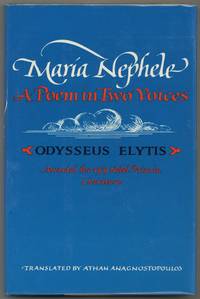
1981réf. 589056Boston: Houghton Mifflin Company 1981. Hardcover. Fine/Fine. First American edition. Translated from the Greek by Athan Anagnostopoulos. Fine in a fine dust jacket with just a touch of wear. Advance Review Copy with publishers material laid in. Houghton Mifflin Company hardcover books
réf. 1122470 pp. Small 4to 210 x 160 mm. pictorial semi-stiff wrappers title on spine. Amsterdam: VOID distributors 1980. The essential compendium of Ulises Carrión’s polemical essays; printed in an edition of 500 by Hetty Huisman’s VOID Distributors. His trailblazing theories and beliefs about artists’ books and mail art remain influential to this day. “The New Art of Making Books” first published in Plural no. 41 1975 is frequently cited by contemporary book artists. The book includes his most important essays: “The New Art of Making Books” “From Bookworks to Mailworks” “Rubber Stamp Theory and Praxis” “Rubber Stamp Art” “Mail Art and the Big Monster” “Table of Mail Art Works” “Personal Worlds or Cultural Strategies” “Bookworks Revisited.” Each has printed notes in the margins providing clarifications or revealing Carrión’s latest views on a subject. Fine copy. This book is now rather rare on the market. â§ John Held Jr. ed. Mail Art: An Annotated Bibliography 1991 6–”Highly recommended.”. unknown books
1992réf. 321218New York: American Classics Library 1992. Facsimile. hardcover. fine. Some b/w illustrations. 2 volumes. Thick 8vos full gilt-decorated gray leather all edges gilt marble endpapers. New York: American Classics Library/Gryphon Editions. Fine. A facsimile of the first editions from 1885/86. American Classics Library unknown books
2009réf. 264566New York: Acanthus Press 2009. hardcover. fine/very good. Many Illus. some in color. 4to white cloth d.w. New York: Acanthus Press 2009. Very good Acanthus Press unknown books
1894réf. 16816Paris: Montbeliard 1894. First. hardcover. very good. 3 volumes printed on wood-pulp paper double column rebound in black cloth-backed marbled boards volume 3 backed in green cloth volume 1 with no lettering on spine. Paris: Montbeliard 1894-1903. A source book of all European medieval history Besterman 2885-2886. With the small ownership label of art historian Meyer Schapiro. Montbeliard unknown books
1981réf. 60394Boston: Houghton Mifflin 1981. First Edition. 8vo pp. 74. VG copy in dj. Review copy with PR sheets laid in. Book Translation into English byAthan Anagnostopoulos of the work for which Odysseas Elytis was awarded the 1979 Nobel Prize for Literature. Houghton Mifflin unknown books
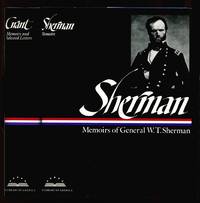
1990réf. 589654New York: The Library of America 1990. Hardcover. Fine/Fine. First editions. 1199 1136pp. Two volume set. Fine in fine dust jackets housed in a near fine slipcase with light general wear. Volume one: Ulysses S. Grant: Personal Memoirs of U.S. Grant Selected Letters 1839-1865. Volume two: William Tecumseh Sherman: Memoirs of General W.T. Sherman. The Library of America 50 51. The Library of America hardcover books
1962réf. 420661Colorado Springs: United States Air Force Academy 1962. Softcover. Near Fine. First edition. 46pp. Stapled original printed wrappers. Slight sunning faint crease front wrap very near fine. The Harmon Memorial Lectures in Military History. Number Four. Laid in is a letter from the Director of the Air Force Academy Library presenting the pamphlet to Maj. Gen. Ulysses S. Grant III. United States Air Force Academy unknown books
réf. 1117720 leaves. Small 8vo 178 x 115 mm. orig. black printed dust-jacket perfect-bound. Geneva Switzerland: Ateliers Typographiques Héros-Limite 1995. The very rare second edition of Carrión’s beguiling bookwork composed of bound wallpaper samples one of the artist’s lesser-known books due to its rarity. The 1973 first edition published by the artists’ space In-Out Center was made in an edition of 50 numbered copies. The present work is one of 52 copies 26 of which are lettered A-Z the rest numbered 27 to 52; our copy is no. 42. This book is part of a series of re-publications that Juan J. Agius an executor of Carrión’s estate undertook to replicate the increasingly scarce and fragile bookworks Ulises Carrión 1941-89 created in the 70s. Under the imprint of Editions Héros-Limite in Geneva Agius produced second editions of Mirror Box 1st ed.: 1979 Looking for Poetry / Tras la Poesía 1st ed.: 1973 Arguments 1st ed.: 1973 and the present bookwork. ”In Ulises Carrión’s bookworks the ellipsis of the literary text is accompanied by an ellipsis of the narrative as can be seen in the listing of names or the identification of characters that are not linked by any narrative relationship within a story…In Tell me what sort of wall paper your room has and I will tell you who you are 1973 Carrión cuts out and binds together a set of wallpaper samples typing on them the name of the room in which each will appear. The names start in the first person my room then identify the members of his family and relations my parent’s room my sister’s room my uncle’s room my wife’s room my teacher’s room finally reaching a progressive lack of differentiation of the person to whom the room with the specific wallpaper belongs your room a room …’s room. The subtlety of this bookwork is apparent not only in the readymade of the wallpapers but also in the suggestion of a narrative that does not require a text for its construction: the simple association of the identities of the rooms’ owners in the first person informs us that the narrator has a teacher a wife etc. The progression of these identifications suggests a leaving of the family home to enter the world the framework of so many narratives found in short stories novellas and novels. The new art of making books permits the insinuation of a story without resorting to text or narrative…”–João Fernandes “Art as Subversion: Make and Remake to Make Anew” in Guy Schraenen ed. Dear reader. Don’t read. 2016 p. 41 analyzing the 1st ed. In excellent and fresh condition. The first edition is unrecorded on WorldCat and we find only three copies of the second in North American institutions. â§ Juan J. Agius & Ricardo Ocampo eds. Ulises Carrión: Books & More Catalogue Raisonné 2013 25 pictured. unknown books
1954réf. List3210Greenville Illinois 1954. Two stapled packets of mimeographed typed pages eighty-seven and twenty-eight pages with one signed. Excellent to Near Fine. An autobiography and genealogy written by Ulysses S. DeMoulin 1871–1955 founder of DeMoulin Bros. a uniform manufacturing company which now mainly supplies marching band attire. The genealogy incorrectly traces the family’s history back to French Revolutionary figure Camille Desmoulins though it appears accurate otherwise. It includes a description of early Sebastopol Highland Illinois with a simple map. In the autobiography which is told in a large number of short anecdotes DeMoulin discusses his childhood and early life in Jamestown and Sebastopol and goes into detail about the early years of his company beginning with the formation of the Modern Woodmen of America fraternal organization for which the company supplied uniforms and items used in ‘rituals’. DeMoulin used the profits from this enterprise to invest in a number of others including a mine near Gold Hill Colorado and oil drilling land in Illinois. However the most interesting portions of the autobiography concern DeMoulin’s role in the development of agriculture in California’s Imperial Valley. DeMoulin first travels to southern California in 1903 happening to meet several engineers involved with the Imperial Irrigation System who take him to see the new town of Brawley: “Here by lantern light we sat around on the ground in the evening discussing many kinds of farm lands and if soft hard or sandy. We slept in ‘remadas’ made by setting posts to protrude about twelve feet above the ground which were then braced and divided into small box-like stalls. The remada was then covered with tree branches and a huge heavy taupalin sic curtain hung over the sides and front at night to keep out the dust of which you might find two or three inches at your door in the morning. A pitcher of water and a bowl were your only means of bathing. There were no streets in Brawley at this time only trails as the town had not yet been surveyed having only been founded in October 1902. People were living in tents while waiting for completion of hotel accommodations and other living quarters under construction.” DeMoulin begins buying land in the Brawley area to rent to farmers and traveling to the area regularly. He describes the building of the Laguna Dam spending a week at the workers’ camp “at which time I slept in the workmen’s crudely-built bunks and ate with them at the long rough pine tables”; and befriends author Harold Bell Wright. He also witnesses several conflicts with the IWW: “In 1908 there moved into Brawley about 200 International Workmen of the World or more familiarly known as ‘I.W.W.’s’ I won’t Work and in command was a Captain Stanley. However as most unwelcome guests they proceeded to join a strike in the cantaloupe sheds and inserting razor blades into apples the strikers threw them at workers. ‘Goons’ also tried to interfere with the trucking operations from the fields to the packing sheds. I recall of one driver telling a goon that if he even attempted to place a foot in his truck he would shoot him. And defying the driver the goon was instantly killed. Naturally this would cause a riot and they sent to El Centro for a tank such as it was in those days - a cannon and several machine guns. But soon after the Mayor had issued orders to shoot anyone getting out of hand an agreement was easily reached.” University of Washington’s IWW History Project documents two IWW actions in Brawley between 1905 and 1920 neither of which match DeMoulin’s description; nor does the event appear in newspapers. However “Captain” William Stanley was in the area serving as the secretary of the I.W.W.’s chapter in the Imperial Valley. In 1911 Stanley was killed in an early battle of the Mexican Revolution assisting Mexican Liberal Party fighters in occupying Mexicali. DeMoulin claims to have traveled with several others to watch the fighting that would end the occupation: “It was suddenly discovered one morning that Captain Stanley and his I.W.W.’s had disappeared during the night and word had gotten around they had settled in Mexicalo sic a Mexican border town and were so strong in number they overpowered the police pillaged the shops and stores defying the Mexican Government by taking over complete possession of Mexicalo. However after putting up with this condition for several months the Mexican Government sent in about 500 Infantrymen with orders to get rid of them immediately under any condition. . Stanley’s men had made a large opening in the river bank to a depth of about five feet which led through to the bank facing south. From this vantage point his men could fire their muskets when the Mexicans advanced towards them and soon took to their heels when Stanley’s men began firing. . Several of us had driven down to sic Brawley to witness the fighting and bullets had been spattered everywhere. Many of the people never thinking of danger stood out in the open so as not to miss what was going on but I was glad to stay in the back of the adobes at least where one was protected from stray bullets. And having heard rumors of their retreating possibly the next day which was Sunday we drove down again but all was quiet and we met with no resistance. Many of the men were swimming and others were entertaining their wives and families in one way or another. We didn’t stay too long on that trip as one never knew what might happen. But it wasn’t long before they disappeared from Mexicalo entirely for which everyone was most grateful and happy.” DeMoulin is none too fond of Mexican workers either describing how the 1928 construction of a primitive border wall “didn’t stop the wetbacks . from swimming across” and complaining that “regardless of having no sense nor education many were hired and the employers would hide them in groves because if they were arrested it would cost $160.00 including court and attorney fees to have each one returned to Mexico.” DeMoulin’s other targets for racial abuse include “a couple of crooked ‘Jewish Kikes’” who were “certainly professionals when it came to putting the money in their pockets” and several Black men who he claims steal from him. DeMoulin credits himself with bringing grapefruit production to the Imperial Valley and describes a scam by the area’s real estate agents to unload inferior farmland onto unsuspecting investors. He recounts his company making leather “‘Red Men’s’ costumes” for a “Chief Gray Eagle” in Oklahoma whose “squaws wouldn’t work for him any more.” Of interest to historians of the Imperial Valley’s development and especially of labor relations in the agriculture industry. unknown books
réf. 1089086 1 p. 8vo 225 x 155 mm. orig. printed red semi-stiff wrappers title on spine. Cullompton Devon: Beau Geste Press 1973. First edition the deluxe version on vibrant multi-colored Strathmore Grandee paper of this scarce and early Carrión 1941-89 bookwork. Arguments was printed in a total edition of 400 copies 200 on Huntsman white cartridge and unsigned and 200 deluxe copies and signed on the verso of the title-page. Formed in 1970 by Felipe Ehrenberg Martha Hellion David Mayor Chris Welch and Madeleine Gallard the Beau Geste Press was instrumental in Carrión’s growing engagement with artists’ books. The scholar Zanna Gilbert recalls in the Beau Geste Press catalogue p. 405 that in 2017 Ehrenberg “commented that Carrión had never gotten his hands dirty with ink before visiting the Beau Geste Press.” In 1973 the Press published two of his books Arguments Autumn and Looking for Poetry/Tras la Poesía Winter. In the Getty Research Institute exhibition catalogue Artists and Their Books Books and Their Artists 2018 Gilbert describes the present bookwork: “Carrión humorously interrogates the structure and content of books and the literary devices used by authors and playwrights. The titular exchanges in Arguments are indicated only by the names of the participants with no reference to the actual content of their disagreements. The distinctly Anglophone names are arranged in various configurations on each page of the book leaving the reader to wonder about the substance of the disputes. Indeed as the ‘arguments’ play out across the gridded field of the typeset page the book increasingly becomes about the materiality of the text itself with Carrión adding symbols such as the ampersand or violating the names themselves—as when for example ‘Marion’ becomes ‘Mar ion’—resulting in ever more complex exchanges” p. 72. The book was beautifully typeset by Terry Wright a skilled printer who joined the Press in 1972; laid out by Mayor; and offset-printed by Ehrenberg. Each “Argument” is numbered by hand there are 25 in total with several misnumbered and corrected in this copy nos. 5 22 23 24. Carrión’s book concludes with an unnumbered page on translucent paper with the entreaty: “My name is Ulises / What’s yours ” A fine copy; spine a trifle sunned. â§ Alice Motard ed. Beau Geste Press 2020 No. 48 pp. 186-91 illustrating both versions. J. J. Agius & R. Ocampo eds. Ulises Carrión: Books & More Catalogue Raisonné 2013 7. unknown books
1959réf. 76150New York: Kraus Reprint Corporation 1959. publishers cloth with stamped gilt lettering. small 4to. publishers cloth with stamped gilt lettering. iv1592; iv1593-3384 columns two per page. Two volumes. This is a facsimile reprint of the 1894 edition that was published by the Société anonyme d'imprimerie montbéliardaise. Spines lightly faded else a near fine set. Biography and bibliography of sources and personages of the middle ages. Although published in France this is a source book for all of European medieval history. Besterman 2885-2886. Kraus Reprint Corporation unknown books
réf. 11126Black & white illus. 51 pp. & colophon. 4to stamped softcover stapled with black cloth tape over spine. London: Royal College of Art 2010. The rare exhibition catalogue for an innovative presentation of Carrión’s work at the Showroom 12-26 June 2010 in London. Supervised by Clare Carolin it was organized by first-year MA Curating Contemporary Art students at the Royal College of Art and staged with the help of Martha Hellion a close friend of the artist In fine condition. Designed by Fraser Muggeridge. Edition of 500 copies. unknown books
1879réf. 1404973Philadelphia: Hubbard Bros 1879. Hardcover. Octavo xxii 599 pages. In Fair condition. Spine is brown with gold print. Boards in brown cloth mitred edges gold print; tattering to spine caps and corners toning to spine peripheral toning light smudging/shelf wear. Text block has name in pencil on front flyleaf cracked hinges intermittent spine breaks. Illustrated: “Profusely illustrated”— title page; b&w frontispiece portrait and text drawings. NOTE: Shelved in Locked Annex Area ND-HV Section. 1404973. FP New Rockville Stock. Hubbard Bros hardcover books
réf. 11037Single A4 sheet printed & stamped on one side. Amsterdam: 1978. Scarce flyer announcement of the artist’s utopian vision of a free artist-run postal system called E.A.M.I.S. and operated from his Other Books and So bookstore in Amsterdam. Referring to himself as the “Post Master” Carrión writes eight point describing the network the final item on the flyer reads: “By usin sic. the E.A.M.I.S. you support the only alternative to the national bureaucracies and you strengthen the international artists community.” “Carrión conceived a support other than the official postal system to deliver letters and packages. It was based on the erratic distribution of the mail by people traveling around. As Postmaster of E.A.M.I.S. he set up the rules and services of this alternative system in 8 points as the concept of the project. It was mimeographed on a DIN A4 sheet and distributed and included in the program of the International Artists’ Meeting at the Galeria Remont Warsaw in April 1978 for the first time…A couple of months later as the project came to an end 24 letters and parcels were distributed and reached their addresses while 9 others remained undelivered.”–Juan J. Agius ed. Ulises Carrión & The Big Monster 2014 pp. 64-65 pictured on p. 64. In fine condition. unknown books
réf. 11038Illus. to recto details on verso. Pictorial postcard mailed. Maastricht: Stichting Agora 1980. Postcard invitation for the artist’s 1980 presentation in Maastricht mailed to collector Tjeerd Deelstra b. 1937. Fine. unknown books
réf. 11039Printed on one side with ms. date: “1976.” Single leaf 208 x 150 mm. London: 1975. Invitation/announcement for the artist’s fourth solo show held at art meeting place in London. The show occurred in 1975 but on this copy the year has been written in as “1976.” The rest of the show’s details have been printed in breaks in the text from page 133 of H.G. Wells’s You Can’t Be Too Careful. In fine condition. â§ Guy Schraenen ed. Dear reader. Don’t read. 2016 pp. 174 & 178 pictured. unknown books