Adam Ulysses CrullBiblio.com

2 929 résultats
réf. 46461918like new. unknown
réf. 1020383291.Ghardcover. Good. Access codes and supplements are not guaranteed with used items. May be an ex-library book. hardcover
réf. 1147161631.Gpaperback. Good. Access codes and supplements are not guaranteed with used items. May be an ex-library book. paperback
1954réf. 300005737Charles-Lavauzelle 1954 388 pages 1954. 388 pages.
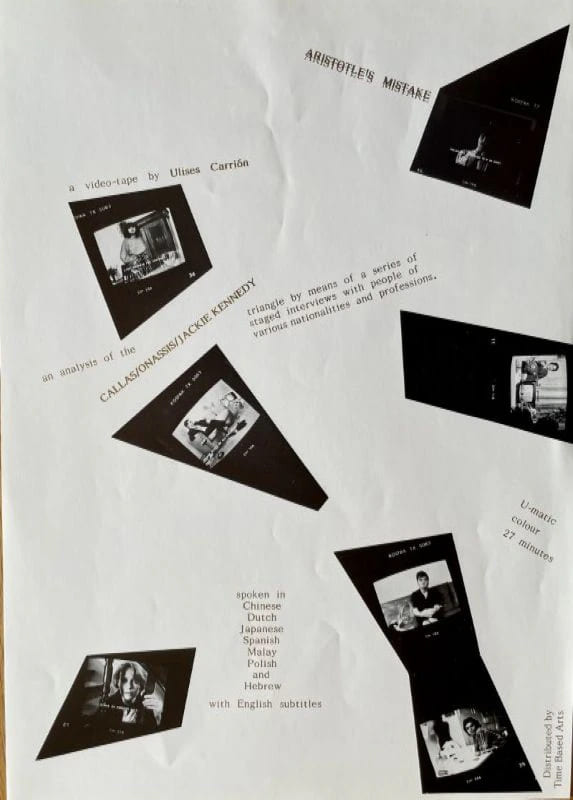
réf. 105960Amsterdam, Time Based Arts, sans date, (1985), une feuille 210 X 297 mm, imprimé au recto, illustrée.
réf. 109037Librairie Ancienne d'Auguste Brun, 1887, xviij-258 p., broché, environ 145x225mm, couverture insolée, dos en mauvais état (fendu, manques de papier), mors en partie fendus, notes biffées au feutre noir sur le haut du premier plat, des rousseurs sur la tranche mais intérieur propre.
réf. 75-9950Vienna Austria: Galerie Ulysses. 8vo. Soft Cover. Very Good. Some Color Plates. 50 pp. Vienna, Austria: Galerie Ulysses paperback
1990réf. 42018New York: Ulysses 1990. paperback. very good/very good. With foreword by John Sailer. Illustrated with 30 color plates of Rainer's paintings. 60pp plus introductory 8pp facsimile from "Boydell's Graphic Illustration." Square 8vo paper wrappers d.w. d.w. slightly scuffed with minor fraying on top end of spine. New York: Ulysses Gallery 1990. A very good copy. Exhibition catalogue from the Ulysses Gallery of New York and Vienna. Ulysses unknown books
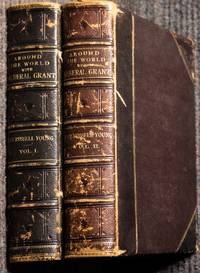
1879réf. 0010432New York: American News Company 1879 . First Edition. Quarto 631 pages half brown morocco edgeworn marbled endpapers. With a handsome engraved frontispiece portrait of Grant designed exclusively for this work by Wm. E. Marshall. His previous print of Lincoln drawn engraved and published by William E. Marshall was accepted as soon as it was issued accepted as the finest portrait ever done of Lincoln and in fact was claimed by a number of critics to be one of the finest engravings ever produced. With 20 other full-page illustrations by FennSchell and others with uncounted smaller cuts by A. R. Waud W. H. Gibson Thomas Moran and others there are 800 illustrations claimed for both volumes. This is ONLY VOLUME 1 of 2. American News Company unknown
1879réf. mon0003527901AMERICAN NEWS COMPANY 1879-01-01. Leather Bound. Acceptable. . 2-volume set brown cloth with gilt rebound spines splitting and edgewear rubbing and loss. Loose bindings torn hinges repaired with cloth tape. Pages are tanned and mostly clean. AMERICAN NEWS COMPANY hardcover
1877réf. 40409Ny NY: Subscription Book Department With American News Co. Very Good with no dust jacket. 1877-9. FIRST EDITION. Leather. 4to 11.5"; Solidly bound with contents fine. Text is fine with 800 illustrations. Vol II spine has faded to brown from black. 3/4 leather bound at spne and corners. Golden print on covers. One of the most popular of the 19th century books. Very discrete inked ownership of Winokur. . Subscription Book Department With American News Co hardcover
1879réf. 100138New York City: The American News Company 1879. First edition of Young's illustrated narrative of Grant's international travel with an original document signed by Ulysses S. Grant as President. Quartos two volumes bound in three quarters morocco over pebbled leatherette boards gilt titles and elaborate gilt tooling to the spine in six compartments within raised gilt bands marbled endpapers all edges marbled tissue-guarded engraved frontispiece portrait of grant illustrated with engravings both full page and within the text. In near fine condition. One page partially printed the document reads "I hereby authorize and direct the Secretary of State to affix the Seal of the United States to a Warrant for the pardon of Harris Fisher and Henry Goldstein dated this day and signed by me and for so doing this shall be his warrant. "U.S. Grant" Washington 23 Nov. 1874." In fine condition. The document measures 10 inches by 7.75 inches. Ulysses S. Grant was the 18th President of the United States 1869-77. As Commanding General of the United States Army 1864-69 Grant worked closely with President Abraham Lincoln to lead the Union Army to victory over the Confederacy in the Civil War. He implemented Congressional Reconstruction often at odds with Lincoln's successor Andrew Johnson. Twice elected president Grant led the Republicans in their effort to remove the vestiges of Confederate nationalism and slavery protect African-American citizenship and supported unbridled nationwide industrial expansionism during the Gilded Age. The American News Company hardcover books
2012réf. DADAX3844349413Eae Editorial Academia Espanola 2012-12-01. paperback. New. 5.91x1.47x8.66. Buy with confidence. Excellent Customer Service & Return policy. Eae Editorial Academia Espanola paperback
2014réf. 1153093Marburg : Jonas-Verl., 2014. 112 S. : Ill. ; 17 cm, kart.
1884réf. 108418Century Company. Very Good with no dust jacket. 1884. Magazine. Battles & Leaders of the Civil War; 9 x 11; 75 pages; Very nice condition with illustrations . Century Company unknown
1985réf. TK241200Gibbs M Smith Inc / Peregrine Smith Books / Visual Studies Workshop Press New York 1985. 1st Edition. HARDCOVER. 1st printing. Large 8vo in brown faux leather covered boards 269pp numerous illustrations in text bibliography index etc __CONDITION : An extremely well preserved almost AS NEW unmarked and unread copy hint of tanning to last few leaves in an AS NEW complete Dust Jacket. An excellent copy. . __We always ship in PROTECTIVE CARD PARCELS Gibbs M Smith, Inc / Peregrine Smith Books / Visual Studies Workshop Press, New York hardcover
réf. 8591492-20Harvard University Press. Used - Good. Pages intact with minimal writing/highlighting. The binding may be loose and creased. Dust jackets/supplements are not included. Stock photo provided. Product includes identifying sticker. Better World Books: Buy Books. Do Good. Harvard University Press unknown
1993réf. Q-0674048768Harvard University Press 1993-12-01. Paperback. New. New. In shrink wrap. Looks like an interesting title! Harvard University Press paperback
réf. 621815-nnew. unknown
réf. 658658290Harvard University Press . Papeback. New. pp. 256 Harvard University Press unknown
réf. ria9780674048768_inpPaperback / softback. New. New Book; Fast Shipping from UK; Not signed; Not First Edition; Taking three artists - Beckett Rothko and Resnais the book demonstrates that these artists train us in new modes of mobility which differ from the moves of an appropriating consciousness. paperback
1864réf. 2764930/12/1864. Welles had written at the President's suggestion: ""The largest naval force ever assembled is ready"" Fort Fisher guarded the port of Wilmington NC the last port open to blockade runners supplying Robert E. Lee’s Confederate forces in Virginia <img class=""alignnone wp-image-28384 size-post-window"" src=""https://cdn.raabcollection.com/wp-content/uploads/20231204120136/Grant_168-2-1-e1694097936583-1600x492.jpg"" alt="""" width=""1600"" height=""492"" /> As 1864 dawned Wilmington North Carolina protected by Fort Fisher was one of the Confederacy’s last remaining major ports on the Atlantic open to blockade runners and was the chief supply line for General Robert E. Lee’s Army of Northern Virginia. Navy Secretary Gideon Welles reintroduced the idea of a joint operation against Wilmington to the Secretary of the War Edwin Stanton but Stanton saw it as premature. After the Navy’s occupation of Mobile Bay in August all eyes turned to Wilmington. In October 1864 Wilmington finally became the next objective for a joint amphibious operation. Admiral David Porter was chosen to command the naval squadron and General Benjamin Butler the army contingent. On December 24 the 63 ships of Porter’s fleet prepared to bombard the fort. Thirty-seven ships formed in three lines of battle end-to-end facing the enemy. Just after midday Porter commenced the Navy’s first bombardment of the fort and continued firing until it became too dark to aim the guns effectively. While the Confederate troops hid and huddled beneath the mounds of the fort this bombardment actually did little damage with the exception of the wooden quarters of the garrison which were set ablaze. Butler’s force returned too late on that first night to attempt a landing. The next morning December 25 the fleet resumed its barrage while a naval contingent sought to secure a landing area for the Union infantry north of the fort. A group of sailors was sent to take soundings south of the fort but Porter withdrew the sounding party after it became clear that the army group was making no progress north of the fort. The timely arrival of Confederate reinforcements caused Butler to question the strength of his position. He felt his forces could not take the fort without a siege for which they were unprepared. Butler immediately began to re-embark his soldiers. On December 27 he called off the expedition and directed the transports to return to Hampton Roads. The U.S. Navy had suffered 83 casualties and the U.S. Army 12. Thus the first attempt by the Union forces to close the port of Wilmington ended in failure. While Butler returned to Hampton Roads Porter remained off the coast of North Carolina dedicated to preparing another attempt to capture Fort Fisher. Following the fall of Savannah on December 21 1864 General William T. Sherman prepared to march through the Carolinas. Knowing Sherman could soon be in North Carolina and ready to try to capture the fort again on December 25 Porter wrote to Sherman clearly expressing his frustration with Butler’s decision to abandon the joint operation. Porter was also in communication with Welles. With these communications in hand Welles spoke to President Lincoln who was all for trying again to take the fort. On December 29 Welles wrote to General U.S. Grant in overall command of the army that the President hoped that another joint operation might be forthcoming. Welles’s telegram to Grant stated: “December 29 1864 at 9:30 pm. The substance of dispatches and reports from Rear-Admiral Porter off Wilmington is briefly this: The ships can approach nearer to the enemy’s works than was anticipated. Their fire can keep the enemy away from their guns. A landing can easily be effected upon the beach north of Fort Fisher not only of troops but all their supplies and artillery. This force can have its flanks protected by gun-boats. The navy can assist in the siege of Fort Fisher precisely as it covered the operations which resulted in the capture of Fort Wagner. The winter season is the most favorable for operations against Fort Fisher. The largest naval force ever assembled is ready to lend its co-operation. Rear-Admiral Porter will remain off Fort Fisher continuing a moderate fire to prevent new works from being erected and the ironclad have proved that they can maintain themselves in spite of bad weather. Under all these circumstances I invite to such a military co-operations as will insure the fall of Fort Fisher the importance of which has already received your careful consideration. This telegram is made at the suggestion of the President and in hopes that you will be able at this time to give the troops which heretofore were required elsewhere. If it cannot be done the fleet will have to disperse whence it cannot again be brought to this coast.” <img class=""alignnone wp-image-28385 size-post-window"" src=""https://cdn.raabcollection.com/wp-content/uploads/20231204120124/Grant_177-1-1-e1694097999755-1600x684.jpg"" alt="""" width=""1600"" height=""684"" /> Grant responded to Welles immediately. Autograph letter signed headquarters at City Point Va. December 30 1864 to Welles. “Your dispatch of 9:30 p.m. 29th received. I will advise fully with the Sec. of War about what you propose. Please call on him for information. U.S. Grant Lieut. Gen.” Thus Grant promised to inform Stanton “fully” about the plan and requested that Welles consult with Stanton to finalize it. Grant had told Stanton that he did not intend to correspond with the Navy Department except through Stanton and this letter further indicates that. Porter had a good working relationship with Grant and a solid record of success in joint operations. Due to this Welles was able to argue successfully with Lincoln for Porter’s retention as commander. In early January Porter coordinated directly with Sherman and Grant about plans for a renewal of operations against Fort Fisher. As Sherman marched north the port of Wilmington was now more important to the U.S. Army than it had been during the first battle for Fort Fisher. Butler rightly took the blame for the first expedition’s failure. For his replacement Grant chose General Alfred Terry one of Butler’s staff officers. Grant assigned him the same troops that had participated in the first attempt augmented with an additional brigade for a total of 8000 soldiers. On January 4 1865 the second expedition to capture Fort Fisher embarked from Bermuda Landing in Virginia. On January 12 they headed for Fort Fisher. Arriving that night Porter and Terry prepared to commence their attack the next day. At dawn on January 13 8000 Federal soldiers landed above the fort as the Navy began its bombardment. Sailors were landed on the 15th and drew fire. This diversion allowed the army to breach the walls of the fort. By 10 p.m. the fort was in possession of the Federal forces. The Confederates started a retreat and when Federal infantry caught up with them General Terry accepted the formal surrender of the fort. The first battle of Fort Fisher was the most concentrated naval bombardment of the war. The fleet fired 20271 projectiles into the fort during the first battle. Another 19682 were fired during the second battle. In total the U.S. Navy expended 39953 projectiles at the fort. After Fort Fisher’s capture Porter proceeded to put vessels over the bar and into the Cape Fear River. He declared the port of Wilmington to be “hermetically sealed against blockade runners”. Five weeks after the fall of Fort Fisher the Federal army occupied the city of Wilmington. This occupation ended the trickle of supplies coming along the Wilmington and Weldon Railroad to the Army of Northern Virginia. The fall of Wilmington contributed directly to this army’s surrender at Appomattox Courthouse in April 1865. <img class=""alignnone wp-image-25018 size-post-window"" src=""https://cdn.raabcollection.com/wp-content/uploads/20231204144051/Folder-site-11-1600x1327.jpg"" alt="""" width=""1600"" height=""1327"" /> unknown
réf. 2894647239-11-1Hunter Pub Inc. 5. Very Good. It's a well-cared-for item that has seen limited use. The item may show minor signs of wear. All the text is legible with all pages included. It may have slight markings and/or highlighting. Hunter Pub Inc unknown
2009réf. 1229471PN. New. 2009. Reprint Edition. Soft Cover. Date is copyright date; this is a later reprint edition . PN paperback
1950réf. 774311950 Le Puy, Imprimerie Jeanne d'Arc, sans date (vers 1950), plaquette petit in 8° brochée, 40 pages ; couverture ; jaquette.