2 961 résultats
1981réf. 60394Boston: Houghton Mifflin 1981. First Edition. 8vo pp. 74. VG copy in dj. Review copy with PR sheets laid in. Book Translation into English byAthan Anagnostopoulos of the work for which Odysseas Elytis was awarded the 1979 Nobel Prize for Literature. Houghton Mifflin unknown
réf. 0395294657.Ghardcover. Good. Access codes and supplements are not guaranteed with used items. May be an ex-library book. hardcover
1981réf. Q-0395294657Houghton Mifflin Co 1981-01-01. Hardcover. New. In shrink wrap. Looks like an interesting title! Houghton Mifflin Co hardcover
réf. 9786555268676-11-23486MIZUNO. New. MIZUNO unknown
réf. 9788578900847-11-09750Servanda. New. Servanda unknown
réf. 9788589206457-11-09752HABERMANN. New. HABERMANN unknown
réf. 3838334310.Gpaperback. Good. Access codes and supplements are not guaranteed with used items. May be an ex-library book. paperback
réf. 1342126351.Ghardcover. Good. Access codes and supplements are not guaranteed with used items. May be an ex-library book. hardcover
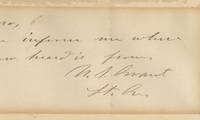
1864réf. 334181864. This letter has been for several generations in a private collection and is unpublished In January 1864 General Ambrose E. Burnside was asked to reorganize the IX Corps. He asked for and was granted permission by Secretary of War Edwin Stanton to form a division of “colored troops.” The 4th Division of the IX Corps infantry would be all black troops commanded by General Edward Ferrero. The regiments were divided into two brigades; the first brigade was made up by the 27th 30th 39th and 43rd USCT. The second brigade was the 30th Connecticut Colored Infantry only 4 companies formed then consolidated into 31st USCT 19th 23rd 31st USCT. The 28th and 29th USCT regiments would be added to the second brigade. These regiments came from all across the North. When the 4th Division of the IX Corps left Camp Stanton in Annapolis Maryland they were paraded in front of President Abraham Lincoln and General Burnside in Washington DC. The 23rd joined the division when the men marched across the bridge into Virginia. In March 1864 Ulysses S. Grant was appointed by President Abraham Lincoln commander of the Union Armies. Grant developed a strategy to defeat the Confederacy by placing his army between the rebel capital of Richmond and Gen. Robert E. Lee’s Army of Northern Virginia. Grant moved southeast to try to create a wedge between Lee and Richmond but Lee's army successfully followed up the engagements by foiling that maneuver. Then Grant's assaults at Cold Harbor his most mistaken plan of the war and the one he most regretted resulted in a sharp defeat. Grant thus found that he was unable to take Richmond directly. Next Grant focused on Petersburg due south of Richmond. If Grant could take Petersburg then the Confederates would have to abandon Richmond. Grant's attempt to take it quickly failed so by mid-June 1864 Lee ended up in Petersburg with the Appomattox River protecting his back and surrounding the city below the river he built two lines of works that covered the entire area. Grant would besiege Petersburg and the IX corps played a part under General Ferrero. The 23rd USCT became the first colored troops to fight in “directed combat” against Lee’s Army of Northern Virginia. The skirmish was fought at the intersection of Catharpin and Old Plank Roads originally Orange Plank Road on May 15 1864. The 23rd was at the Chancellorsville ruins when the Union 2nd Ohio Cavalry was chased by General Thomas Rosser’s Confederate Cavalry Brigade. The 2nd asked for assistance and the only soldiers nearby were General Edward Ferrero’s colored division. The 23rd USCT “double quicked” the two miles to the intersection and drove back Rosser’s cavalry as ordered by General Ferrero. The black soldiers were cheered by the 2nd Ohio who now gave chase to Rosser’s cavalry. This battle action proved to the white troops that black soldiers would fight against the Confederate army. With the end of that campaign Grant ended up besieging the city and his Army of the Potomac built works from the river northeast of Petersburg down to south of the city as far as they could go. The Confederates controlled all the ground from Grant’s southern tip west up to the river. Grant’s main objective during the ten-month Siege of Petersburg was to extend his lines south and west to cut Lee’s railroad links and encircle him at the same time. Lee’s problem was that he was stuck in Petersburg and every Union successful extension west forced him to extend his lines. And every time he had to extend those lines became thinner. In mid June as Grant prepared for his long assault on Petersburg Ferrero's black soldiers were now placed in the trenches with the other three divisions. The part of the line occupied by the IX Corps was very near the enemy's works and an incessant firing was kept up during the siege resulting in a daily loss of men killed or wounded. While there was a comparative quiet in front of the other corps positions the men of the IX Corps were subjected to the terrible strain of a constant watchfulness and deadly exposure. The enemy seemed to be excited to an undue activity by the presence of Ferrero's Colored Division. In late July 1864 during the Battle of the Crater Ferrero's men had been trained for the attack on the Confederate line. However due to a last minute change by General George G. Meade the black soldiers were the last to enter the battle instead of the first. The three white divisions of the IX Corps did not follow General Burnside’s plan and delayed the attack. By the time the colored troops entered the battle the Confederates were ready to counterattack. Before being driven into the Crater the black troops advanced further than the white troops. The Confederate counterattack was a furious attack that won the day for the Confederate army. The black troops sustained the worst casualties. Ferrero initially accused of dereliction in this duty was cleared. Autograph letter signed no date but during the early siege perhaps mid to late June 1864 to General Ferrero. ""General Ferrero please inform me where the firing now heard is from."" This letter has been for several generations in a private collection and is unpublished. We are not aware of another letter of Grant to Ferrero. <img class=""alignnone wp-image-25018 size-post-window"" src=""https://cdn.raabcollection.com/wp-content/uploads/20231204144051/Folder-site-11-1600x1327.jpg"" alt="""" width=""1600"" height=""1327"" /> unknown books
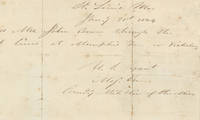
1864réf. 3548131/01/1864. Written by Grant while on a visit to his family in St. Louis as he awaited his promotion to Lieutenant General His great victory at the Battle of Chattanooga in November 1863 made Major General Ulysses S. Grant the most prominent Union general. Soon legislation would be introduced in Congress to revive the rank of Lieutenant General—previously held only by George Washington and Winfield Scott—specifically to give Grant command of all Union armies. This Congress did on February 29 1864 and Grant would officially receive this promotion and the role of General-in-Chief on March 10. In January 1864 Grant fresh from his victories in the West was still serving as the commander of the Military Division of the Mississippi overseeing Union operations in the Western Theater of the war. His activities that month focused on administrative and inspection tours of Kentucky and Tennessee and assessing supply lines. Finding the Cumberland Gap route for supplies unfeasible due to terrible road conditions he favored using the Nashville & Stevenson Railroad and the Tennessee River instead. More importantly he also concentrated on planning for the crucial 1864 spring campaign and the development of a grand strategy for the war. In a letter of January 19 to Gen. Henry Halleck demonstrating his proactive approach to ending the war Grant suggested a bold plan to invade North Carolina from New Bern to cut Confederate supply lines through Wilmington and capture Raleigh. Amidst all these activities Grant also took time to join his family in St. Louis for a short trip from January 27-February 3. <img class=""alignnone wp-image-35510 size-post-window"" src=""https://cdn.raabcollection.com/wp-content/uploads/20260125192231/Grant-Jan-31-1864-1-1600x664.jpg"" alt="""" width=""1600"" height=""664"" /> After his promotion Grant's subsequent strategy implemented from the field with the Army of the Potomac focused on simultaneous relentless pressure on Confederate forces leading to eventual victory. Mrs. Bowen was the wife of Confederate general John Bowen a fine military commander who battled Grant and his armies in the final defense of Vicksburg. Bowen would die of disease just as the battle concluded in 1863. The Bowens were from St. Louis and when Gen. Bowen first left St. Louis to enter the war his wife Mary was by his side leaving their two young children at the family home to be cared for by Mary's mother. It is known that Mrs. Bowen passed through the lines after her husband’s demise and her passing back and forth to St. Louis and her access to Grant suggest this pass was almost certainly. for her. Autograph document signed St. Louis Mo. January 31 1864. “Pass Mrs. John Bowen through the Federal lines at Memphis Tenn. or Vicksburg Miss.” It is signed “U.S. Grant Maj. Gen. commanding Mil. Div. of the Miss.” Grant was known to be helpful to southern women so this would be consistent with his practice. This must be one of the few papers Grant signed while on the brief visit to his family. <img class=""alignnone wp-image-25018 size-post-window"" src=""https://cdn.raabcollection.com/wp-content/uploads/20231204144051/Folder-site-11-1600x1327.jpg"" alt="""" width=""1600"" height=""1327"" /> unknown books
1864réf. 3548131/01/1864. Written by Grant while on a visit to his family in St. Louis as he awaited his promotion to Lieutenant General His great victory at the Battle of Chattanooga in November 1863 made Major General Ulysses S. Grant the most prominent Union general. Soon legislation would be introduced in Congress to revive the rank of Lieutenant General—previously held only by George Washington and Winfield Scott—specifically to give Grant command of all Union armies. This Congress did on February 29 1864 and Grant would officially receive this promotion and the role of General-in-Chief on March 10. In January 1864 Grant fresh from his victories in the West was still serving as the commander of the Military Division of the Mississippi overseeing Union operations in the Western Theater of the war. His activities that month focused on administrative and inspection tours of Kentucky and Tennessee and assessing supply lines. Finding the Cumberland Gap route for supplies unfeasible due to terrible road conditions he favored using the Nashville & Stevenson Railroad and the Tennessee River instead. More importantly he also concentrated on planning for the crucial 1864 spring campaign and the development of a grand strategy for the war. In a letter of January 19 to Gen. Henry Halleck demonstrating his proactive approach to ending the war Grant suggested a bold plan to invade North Carolina from New Bern to cut Confederate supply lines through Wilmington and capture Raleigh. Amidst all these activities Grant also took time to join his family in St. Louis for a short trip from January 27-February 3. <img class=""alignnone wp-image-35510 size-post-window"" src=""https://cdn.raabcollection.com/wp-content/uploads/20260125192231/Grant-Jan-31-1864-1-1600x664.jpg"" alt="""" width=""1600"" height=""664"" /> After his promotion Grant's subsequent strategy implemented from the field with the Army of the Potomac focused on simultaneous relentless pressure on Confederate forces leading to eventual victory. Mrs. Bowen was the wife of Confederate general John Bowen a fine military commander who battled Grant and his armies in the final defense of Vicksburg. Bowen would die of disease just as the battle concluded in 1863. The Bowens were from St. Louis and when Gen. Bowen first left St. Louis to enter the war his wife Mary was by his side leaving their two young children at the family home to be cared for by Mary's mother. It is known that Mrs. Bowen passed through the lines after her husband’s demise and her passing back and forth to St. Louis and her access to Grant suggest this pass was almost certainly. for her. Autograph document signed St. Louis Mo. January 31 1864. “Pass Mrs. John Bowen through the Federal lines at Memphis Tenn. or Vicksburg Miss.” It is signed “U.S. Grant Maj. Gen. commanding Mil. Div. of the Miss.” Grant was known to be helpful to southern women so this would be consistent with his practice. This must be one of the few papers Grant signed while on the brief visit to his family. <img class=""alignnone wp-image-25018 size-post-window"" src=""https://cdn.raabcollection.com/wp-content/uploads/20231204144051/Folder-site-11-1600x1327.jpg"" alt="""" width=""1600"" height=""1327"" /> unknown
1864réf. 334181864. This letter has been for several generations in a private collection and is unpublished In January 1864 General Ambrose E. Burnside was asked to reorganize the IX Corps. He asked for and was granted permission by Secretary of War Edwin Stanton to form a division of “colored troops.” The 4th Division of the IX Corps infantry would be all black troops commanded by General Edward Ferrero. The regiments were divided into two brigades; the first brigade was made up by the 27th 30th 39th and 43rd USCT. The second brigade was the 30th Connecticut Colored Infantry only 4 companies formed then consolidated into 31st USCT 19th 23rd 31st USCT. The 28th and 29th USCT regiments would be added to the second brigade. These regiments came from all across the North. When the 4th Division of the IX Corps left Camp Stanton in Annapolis Maryland they were paraded in front of President Abraham Lincoln and General Burnside in Washington DC. The 23rd joined the division when the men marched across the bridge into Virginia. In March 1864 Ulysses S. Grant was appointed by President Abraham Lincoln commander of the Union Armies. Grant developed a strategy to defeat the Confederacy by placing his army between the rebel capital of Richmond and Gen. Robert E. Lee’s Army of Northern Virginia. Grant moved southeast to try to create a wedge between Lee and Richmond but Lee's army successfully followed up the engagements by foiling that maneuver. Then Grant's assaults at Cold Harbor his most mistaken plan of the war and the one he most regretted resulted in a sharp defeat. Grant thus found that he was unable to take Richmond directly. Next Grant focused on Petersburg due south of Richmond. If Grant could take Petersburg then the Confederates would have to abandon Richmond. Grant's attempt to take it quickly failed so by mid-June 1864 Lee ended up in Petersburg with the Appomattox River protecting his back and surrounding the city below the river he built two lines of works that covered the entire area. Grant would besiege Petersburg and the IX corps played a part under General Ferrero. The 23rd USCT became the first colored troops to fight in “directed combat” against Lee’s Army of Northern Virginia. The skirmish was fought at the intersection of Catharpin and Old Plank Roads originally Orange Plank Road on May 15 1864. The 23rd was at the Chancellorsville ruins when the Union 2nd Ohio Cavalry was chased by General Thomas Rosser’s Confederate Cavalry Brigade. The 2nd asked for assistance and the only soldiers nearby were General Edward Ferrero’s colored division. The 23rd USCT “double quicked” the two miles to the intersection and drove back Rosser’s cavalry as ordered by General Ferrero. The black soldiers were cheered by the 2nd Ohio who now gave chase to Rosser’s cavalry. This battle action proved to the white troops that black soldiers would fight against the Confederate army. With the end of that campaign Grant ended up besieging the city and his Army of the Potomac built works from the river northeast of Petersburg down to south of the city as far as they could go. The Confederates controlled all the ground from Grant’s southern tip west up to the river. Grant’s main objective during the ten-month Siege of Petersburg was to extend his lines south and west to cut Lee’s railroad links and encircle him at the same time. Lee’s problem was that he was stuck in Petersburg and every Union successful extension west forced him to extend his lines. And every time he had to extend those lines became thinner. In mid June as Grant prepared for his long assault on Petersburg Ferrero's black soldiers were now placed in the trenches with the other three divisions. The part of the line occupied by the IX Corps was very near the enemy's works and an incessant firing was kept up during the siege resulting in a daily loss of men killed or wounded. While there was a comparative quiet in front of the other corps positions the men of the IX Corps were subjected to the terrible strain of a constant watchfulness and deadly exposure. The enemy seemed to be excited to an undue activity by the presence of Ferrero's Colored Division. In late July 1864 during the Battle of the Crater Ferrero's men had been trained for the attack on the Confederate line. However due to a last minute change by General George G. Meade the black soldiers were the last to enter the battle instead of the first. The three white divisions of the IX Corps did not follow General Burnside’s plan and delayed the attack. By the time the colored troops entered the battle the Confederates were ready to counterattack. Before being driven into the Crater the black troops advanced further than the white troops. The Confederate counterattack was a furious attack that won the day for the Confederate army. The black troops sustained the worst casualties. Ferrero initially accused of dereliction in this duty was cleared. Autograph letter signed no date but during the early siege perhaps mid to late June 1864 to General Ferrero. ""General Ferrero please inform me where the firing now heard is from."" This letter has been for several generations in a private collection and is unpublished. We are not aware of another letter of Grant to Ferrero. <img class=""alignnone wp-image-25018 size-post-window"" src=""https://cdn.raabcollection.com/wp-content/uploads/20231204144051/Folder-site-11-1600x1327.jpg"" alt="""" width=""1600"" height=""1327"" /> unknown
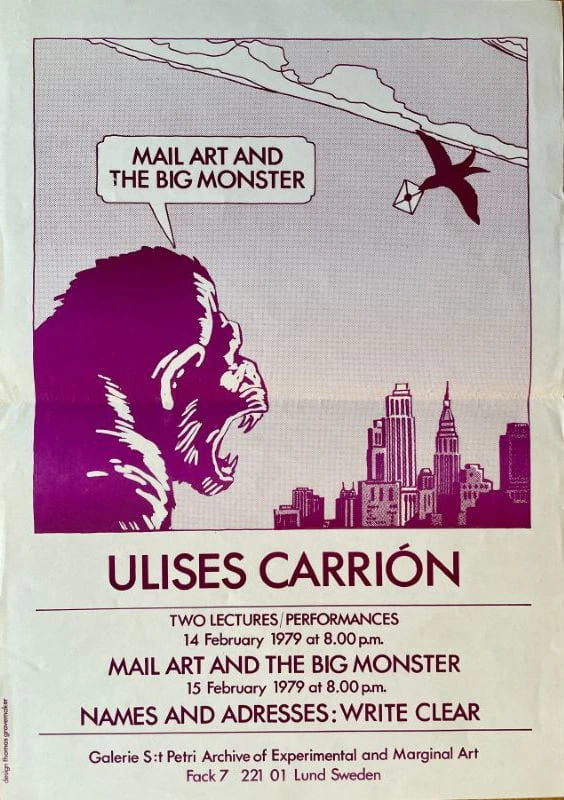
réf. 105947Lund, Suède, Galerie St Petri, Archive of Experimental and Marginal Art, 1979.Affiche, 297 X 420 mm imprimée recto seul.
1984réf. ABE-1513900291696 PAGES FORMAT 21,5 CM X 27 CM-COUVERTURE COULEURS DE MORETTI-VIENNE L'AUBE DU SIECLE, 2P PAR LIONEL RICHARD-IMPRESSIONS DE VOYAGE VIENNE 1984, 2P PAR OLIVIER POIVRE D'ARVOR, PHOTO, VIENNE 1900, PAR ULYSSE ROBERT, PHOTO, ECRIT AU CAFE, PAR MIGUEL COUFFON, UNE ESQUISSE D'ALTENBERG, TRADUIT PAR MIGUEL COUFFON-DOSSIER UN PAYS POUR GENIES, 2P PAR JEAN GYORY, 8 PHOTOS, LA REVOLTE DES NOVATEURS, PAR MICHAEL POLLAK-FRANCOIS-JOSEPH EMPEREUR MALGRE TOUT, 3P PAR CLAUDIO MAGRIS, DESSIN DE BARBE-L'IMPOSTURE, 2P PAR ROBERT MUSIL, 2 ILL-LES INVENTEURS DU SIECLE, 6P PAR LIONEL RICHARD, 2 PHOTOS, 16 LETTRINES-UN CLINICIEN DE L'AME, SCHNITZLER, PHOTO MICHEL BONDY ET LUC BONDY, SCHNITZLER VU PAR BONDY, PROPOS RECUEILLIS PAR LIONEL RICHARD, SCHNITZLER LU PAR ZWEIG-UNE TRISTESSE TRIOMPHALE, PAR FERRUCIO MASINI, HUGO VON HOFMANNSTHAL, 2 DESSINS DE KLIMT-LE DERNIER DES CACANIENS, PAR PIERRE COMBESCOT, ZWEIG-LA DERNIERE VALSE, PAR ANTOINE LIVIO, 3 PHOTOS, UN GRAND MAHLER, PAR PIERRE COMBESCOT-L'EXPLOSION DES SCIENCES, PAR PAUL BRAFFORT-L'ANGOISSE DU PHILOSOPHE, PAR DOMINIQUE A.GRISONI, WITTGENSTEIN-KRAUS L'INCENDIAIRE, PAR OLIVIER POIVRE D'ARVOR-NI FLEURS NI ORNEMENTS, PAR JACQUES LE RIDER-GREEN: VERTIGINEUX, 2P PAR PIERRE KYRIA, PHOTO-LE MAGICIEN DOUCET, 3P PAR PIERRE KYRIA, 2 PHOTOS, LA CAVERNE DOUCET, PAR SYLVIANE TAQUET-ENTRETIEN, FRANCOISE SAGAN ROUGE, PAIR ET GAGNE, PROPOS RECUEILLIS PAR JEAN-JACQUES BROCHIER, 4P, 2 PHOTOS-

1966Features: Gorgeous red photo ad for the 1967 Buick Wildcat Custom Sport Coupe inside front cover; Eilat hopes to be a tourist Garden of Eden; Montreal - how a big town became a great city - many great colour photos with article; Photos and brief write-ups for: Ulysse Comtois; John David Molson; Michel Robichaud; Louis Tavan; Hubert Aquin; Monique Leyrac; The Idler's Guide to Montreal; Can Israel cope with war adn peace? - Blair Fraser in Tel Aviv; Powell Smily reveals the living hell he experienced through Blackmail - it cost him $25,000 before he wrote this story; England Swings? - maybe the tiny, mini-skirted minority, but Alan Edmonds found the country depressing and he's glad to be back home; Gerald Stevens on Canadiana; Enjoying Montreal without speaking French; Nice full-page colour photo ad for the Chevrolet Camaro; Ad for the Bolens snowmobile called the Diablo Rouge; Crown Zellerbach ad features a majestic black and white photo of their log-laden train passing over the Nanaimo River on it's way to the Ladysmith booming grounds; The NFB - rudderless in a sea of talent - according to Don Bell; and more. Average wear. A sound copy. Book
réf. 10278Valence, imp. Céas, 1912, 1 br. grand in-8 de XLIV-102-(3) pages non coupées, 2 photos h.t., dont 1 en frontispice (portrait) ;
1903réf. LFA-126728229Un ouvrage de 116 pages, format 200 x 285 mm, une illustration, broché, publié en 1903, Impr. Jules Céas et Fils, bon état, peu courant (avec un envoi et une longue lettre manuscrite de l'auteur
1922réf. 860041922 Le Puy, Marchessou, 1922, plaquette in 8° brochée, 24 pages ; portrait en frontispice et 4 planche hors-texte ; avec, in-fine, un "Essai de répertoire de l'oeuvre de Léon Giron".
réf. 6205743779.Gpaperback. Good. Access codes and supplements are not guaranteed with used items. May be an ex-library book. paperback
réf. 6278923Humana Press . Hardback. New. pp. 616 Index Humana Press hardcover
2005réf. AME_9781588293886Humana Press 2005. 1st. Hardcover. New/New. _ Humana Press hardcover
2005réf. 6305Totowa New Jersey U.S.A.: Humana Pr Inc 2005. Hardback in very good condition. Book includes CD. Hardcover. Very Good. Totowa, New Jersey, U.S.A.: Humana Pr Inc Hardcover
1987réf. RO20276664LAROUSSE CLASSIQUES JUNIORS. 1986-1987. In-12. Broché. Etat d'usage, Couv. légèrement passée, Dos satisfaisant, Quelques rousseurs. 63 + 47 + 78 pages - Exemplaires de bibliotheque avec divers tampons/ annotations/ etiquettes sans conséquence sur la lecture + deux des ouvrages sont recouvert d'un film plastique adhésif transparent - Dos insolés - Nombreux dessins, dans et hors texte, en noir/blanc et vert ou bleu selon les livres. . . . Classification Dewey : 843.0692-Livres d'enfants
2017réf. 2-6202250518Editorial Académica Española 2017. Paperback. New. 56 pages. Spanish language. 8.66x5.91x0.13 inches. Editorial Académica Española paperback
réf. 6203034630.Gpaperback. Good. Access codes and supplements are not guaranteed with used items. May be an ex-library book. paperback