Red Dragon (Hannibal Lecter Series)Biblio.com
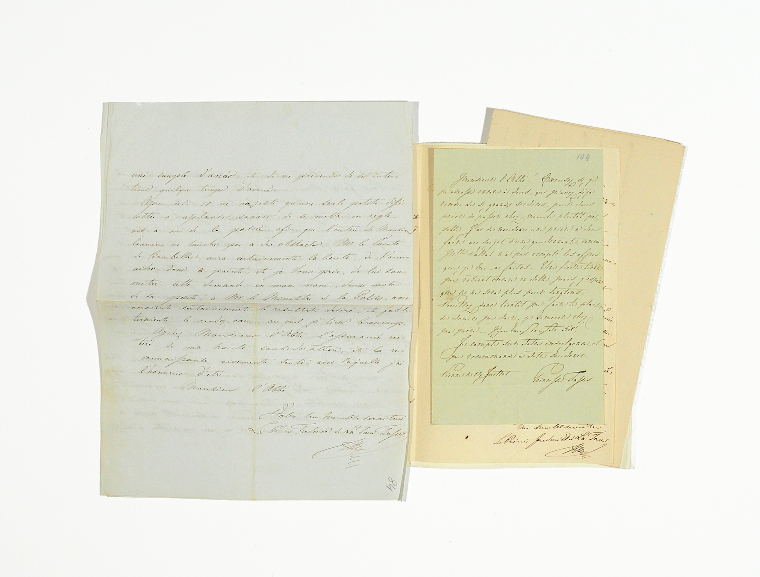
4 eigenh. Briefe m. Unterschrift.
1840ref. 41140Wien u.a., 1839-1840 bzw. o. J. Zus. 11 S., 8° bis 4°.
1153 resultados
ref. DADAX0525945563New unknown
ref. DADAX0434009059New unknown
ref. DADAX1887159126New unknown
1840ref. 41140Wien u.a., 1839-1840 bzw. o. J. Zus. 11 S., 8° bis 4°.
1846ref. 78264Washington D. C.: Ritchie & Heiss Print. Very Good. 1846. Disbound. Original disbound document complete in 22 bright pages. . Ritchie & Heiss, Print. unknown books
1865ref. 551740Ship Island Mississippi 1865. Near Fine. Printed certificate completed in manuscript. 8" x 10". Two slight original horizontal folds near fine. This Union Army "Certificate to be Given to Union Volunteers at the Time of their Discharge" was issued for Robert Brown an African-American Private in Company C of the Second Regiment of the Louisiana Native Guard also known as the Corps d'Afrique. The document is Signed by Captain Hannibal Carter and the additional text was likely handwritten by him. Carter was Brown's African-American Company Commander. He formerly had been a Private in the first Black Confederate Army unit also known as the 1st Louisiana Native Guard. When Louisiana seceded from the Union New Orleans free Black citizens and Creoles of color initially supported the Confederacy and briefly offered their volunteer service as soldiers and nurses. When Union General Benjamin Butler occupied New Orleans with regiments hailing from New England his command was inundated with enslaved Blacks from the city as well as those who had fled their plantations. Butler who feared a possible Confederate campaign to retake the city formed several regiments composed of loyal Irishmen and Germans who had settled in the city and he also interviewed former Black officers of the Confederate 1st Native Guard. After being convinced they would transfer their allegiance to the Union he established the first Black military unit to serve in the Union Army: the Louisiana Native Guard. Its first regiment included many members of the former Confederate militia unit plus two additional regiments-over 2700 men in total-were raised from other "free men of color" and former slaves. This certificate was issued to Brown at Ship Island Mississippi on 8 March 1865. Robert Brown's unit the 2nd Regiment of the Louisiana Native Guard initially remained in New Orleans and Lafourche Parish where it guarded railroads and strategic locations while confiscating Confederate supplies. In January of 1863 Brown's company was deployed to defend Ship Island. In April a detachment from Ship Island boarded vessels to raid East Pascagoula Mississippi becoming the second Black unit to meet Confederates in combat. The Louisiana Native Guard was eventually renamed the Corps d' Afrique and later the 2nd Regiment was redesignated as the 74th Regiment of U.S. Colored Infantry. Hannibal Caesar Carter Brown's Company Commander was an original member of the Confederate Army's 1st Louisiana Native Guard. He was born in New Albany Indiana where he received his common schooling and eventually became a barber and tobacconist. He his father and his brother Edward were traveling to New Orleans on the Mississippi riverboat Vicksburg when Fort Sumner fell to the Confederates in April 1861. Sometime after their arrival both brothers joined the 1st Louisiana Native Guard. After the war Carter became a prominent Republican and served as Mississippi's second Black Secretary of State. A scarce survival. This certificate appears to be the only identified Civil War military document signed by an African-American man who had served in both the first Black Confederate unit and the first Black Union unit. unknown books
1865ref. 551740Ship Island Mississippi 1865. Near Fine. Printed certificate completed in manuscript. 8" x 10". Two slight original horizontal folds near fine. This Union Army "Certificate to be Given to Union Volunteers at the Time of their Discharge" was issued for Robert Brown an African-American Private in Company C of the Second Regiment of the Louisiana Native Guard also known as the Corps d'Afrique. The document is Signed by Captain Hannibal Carter and the additional text was likely handwritten by him. Carter was Brown's African-American Company Commander. He formerly had been a Private in the first Black Confederate Army unit also known as the 1st Louisiana Native Guard. When Louisiana seceded from the Union New Orleans free Black citizens and Creoles of color initially supported the Confederacy and briefly offered their volunteer service as soldiers and nurses. When Union General Benjamin Butler occupied New Orleans with regiments hailing from New England his command was inundated with enslaved Blacks from the city as well as those who had fled their plantations. Butler who feared a possible Confederate campaign to retake the city formed several regiments composed of loyal Irishmen and Germans who had settled in the city and he also interviewed former Black officers of the Confederate 1st Native Guard. After being convinced they would transfer their allegiance to the Union he established the first Black military unit to serve in the Union Army: the Louisiana Native Guard. Its first regiment included many members of the former Confederate militia unit plus two additional regiments-over 2700 men in total-were raised from other "free men of color" and former slaves. This certificate was issued to Brown at Ship Island Mississippi on 8 March 1865. Robert Brown's unit the 2nd Regiment of the Louisiana Native Guard initially remained in New Orleans and Lafourche Parish where it guarded railroads and strategic locations while confiscating Confederate supplies. In January of 1863 Brown's company was deployed to defend Ship Island. In April a detachment from Ship Island boarded vessels to raid East Pascagoula Mississippi becoming the second Black unit to meet Confederates in combat. The Louisiana Native Guard was eventually renamed the Corps d' Afrique and later the 2nd Regiment was redesignated as the 74th Regiment of U.S. Colored Infantry. Hannibal Caesar Carter Brown's Company Commander was an original member of the Confederate Army's 1st Louisiana Native Guard. He was born in New Albany Indiana where he received his common schooling and eventually became a barber and tobacconist. He his father and his brother Edward were traveling to New Orleans on the Mississippi riverboat Vicksburg when Fort Sumner fell to the Confederates in April 1861. Sometime after their arrival both brothers joined the 1st Louisiana Native Guard. After the war Carter became a prominent Republican and served as Mississippi's second Black Secretary of State. A scarce survival. This certificate appears to be the only identified Civil War military document signed by an African-American man who had served in both the first Black Confederate unit and the first Black Union unit. unknown
ref. 47334595-nnew. unknown
ref. 47334595like new. unknown
ref. 607882841X.Ghardcover. Good. Access codes and supplements are not guaranteed with used items. May be an ex-library book. hardcover
ref. 9877470152.Ghardcover. Good. Access codes and supplements are not guaranteed with used items. May be an ex-library book. hardcover
ref. 9876121561.Gpaperback. Good. Access codes and supplements are not guaranteed with used items. May be an ex-library book. paperback
ref. SONG0815636369Used: Good unknown
ref. DADAX0786463902New unknown
ref. DADAX1250001145New unknown
ref. SONG054810820XUsed: Good unknown
ref. SONG8466651861Used: Good unknown
ref. DADAX1594488126New unknown
ref. DADAX0434014087New unknown
ref. DADAX1439164487New unknown
ref. SONG0548093733Used: Good unknown
1969ref. 33956New York: Vito Hannibal Acconci 1969. Very Good. New York: Vito Hannibal Acconci 1969. First Edition. Small quarto; staple bound wrappers; 96pp. printed mimeograph; black and white illustrations throughout. Front wrap wrinkled with a few scrapes; binding sound; pages unmarked; Very Good. Late issue of this experimental mimeographed magazine exploring the role and use of language and performance art. Includes "Moon in Three Sentences" by Bernadette Mayer "Sentences on Conceptual Art" by Sol LeWitt and "Firecrackers" by Rosemary Mayer an attempt to document firecrackers going off in Little Italy on July 4th 1968. . Vito Hannibal Acconci unknown books
1967ref. 515258New York: Acconci 1967. Mimeographed staple-bound 1st edition in very good condition. This is the 2nd of 6 issues of the literary magazine featuring contributions from Gertrude Stein and Aram Saroyan plus many more. Quite rare. There is some light foxing to front cover and page block and corners are lightly scuffed. Yellow colour from front cover has bled-through to following page. Text is clean and clear throughout. AD. First Edition. Paperback. Very Good. Used. Acconci Paperback
1969ref. 33956New York: Vito Hannibal Acconci 1969. Very Good. New York: Vito Hannibal Acconci 1969. First Edition. Small quarto; staple bound wrappers; 96pp. printed mimeograph; black and white illustrations throughout. Front wrap wrinkled with a few scrapes; binding sound; pages unmarked; Very Good. Late issue of this experimental mimeographed magazine exploring the role and use of language and performance art. Includes "Moon in Three Sentences" by Bernadette Mayer "Sentences on Conceptual Art" by Sol LeWitt and "Firecrackers" by Rosemary Mayer an attempt to document firecrackers going off in Little Italy on July 4th 1968. . Vito Hannibal Acconci unknown
1968ref. 41969New York: Vito H. Acconci 1968. Good. New York: Vito H. Acconci 1968. First Edition. Quarto; publisher's grey staple bound wrappers; 282pp. Lacking rear wrapper upper wrapper evenly toned else a Good copy essentially near fine except for the missing rear wrapper contents in clean and sound condition. Contents include poetry by Clark Coolidge Guillaume Apollinaire John Giorno Ted Berrigan Aram Saroyan as well as both editors. Vito H. Acconci unknown books