CHAMPOLLION JacquesLivre Rare Book
5.030 resultados
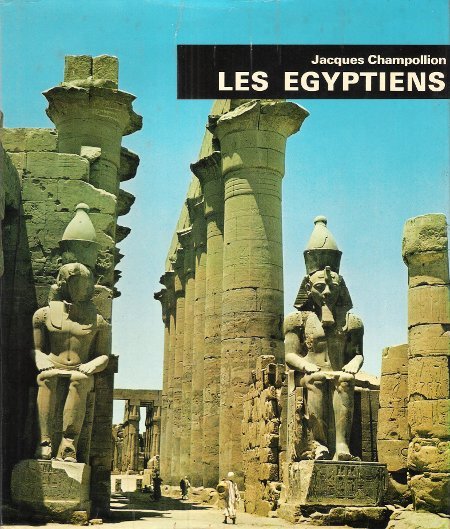
1971ref. 014102Genève Minerva 1971 In Quarto Abondamment illustré en couleurs et noir et blanc . Jaquette d'origine mal pelliculée chez l'éditeur . - 160 p. , 850 gr.
ref. ARCHI818M1931, Société d'Éditions Littéraires et Techniques, Paris. In-12, broché, 498pp largement illustrées n&b. Frottements d'usage. Exemplaire satisfaisant
Hardcover in-8, 241 pp, broche, couverture carton souple illustree.- 9782702877814 Bel exemplaire. [DV-2]
1998120pp.with 28 ills., 21cm., softcover, G, X72345
1998ref. X72345Ulm, Fabri Verlag 1998 120pp.with 28 ills., 21cm., softcover, G, X72345
195634pp., 26cm., in de reeks "Mededelingen van de Koninklijke Vlaamse Academie voor Wetenschappen, Letteren en Schone Kunsten van België. Klasse der Letteren" jg.18 no.2, goede staat, [avec résumé français], C73148
1956ref. C73148Brussel, Paleis der Academiën 1956 34pp., 26cm., in de reeks "Mededelingen van de Koninklijke Vlaamse Academie voor Wetenschappen, Letteren en Schone Kunsten van België. Klasse der Letteren" jg.18 no.2, goede staat, [avec résumé français], C73148
in-8°, 234 pages, ill. h-t., broche, couverture illustree plast. a rabats. Bel exemplaire. [LA-6]
ref. 74476Paris, Editions Plon/Le Club du Livre du Mois, 1951. 14 x 20, 287 pp., reliure d'édition carton, bon état.
1939ref. 10338ARRAULT & Cie MAITRES IMPRIMEURS 1939 215 pages in8. 1939. broché. première édition. 215 pages. Ouvrage publié en 1939-1940 qui présente l'Égypte sous tous ses aspects : ses curiosités et merveilles son présent et son passé. Le livre contient des illustrations dans le texte et des planches hors-texte
ref. c4896Paris, Institut de France, 1955 ; plaquette in-4°, brochée, couverture verte imprimée en noir; 11pp.; ex-libris manuscrit sur la couverture.
grand in-8°, 107 pages, front., XV pl. hors texte N&B, broche, couverture illustree Tres bel exemplaire. [CL-5]
Hardcover grand in-8 carré, 35 pages, illustrations en couleurs, cartonnage sous jaquette illustrée. Bel exemplaire. [GD8-1]
2015Lower corners bumped. Minor shelfwear . ; Sometime in the early fourth century BC, an unknown Egyptian master carved an exquisite portrait in dark-green stone. The statue that included this head of a priest, likely a citizen of ancient Memphis, may have been damaged when the Persians conquered Egypt in 343 BC, before it was buried in a temple complex. Its adventures were not over: after almost two millennia, the head was excavated by Auguste Mariette, a founding figure in French archaeology. Sent to France as part of a collection assembled for the inimitable Bonaparte prince known as Plon-Plon, it found a home in his faux Pompeian palace. After disappearing again, it resurfaced in the collection of American aesthete Edward Perry Warren, who donated it to the MFA, Boston. Along the way, this compelling, mysterious sculpture has reflected the evolving understanding of Egyptian art. ; 8.4 X 6.1 X 0.9 inches; 208 pages
1951Minor shelfwear. ; 4to 11" - 13" tall; 8 pages
2004Narrating the development and disappearance of the world's first war machine, this book reminds readers that much of the power of ancient empires was two-wheeled and horse-driven. Harnessed to other historians' broad-spectrum research on the causes of the end of the Bronze Age, Cotterell argues that, much like the later introduction of the stirrup, chariot technology dramatically recast battlefield strategy across the ancient world. Egyptians employed chariots as all-purpose fighting machines, while Roman chariots were more ceremonial, and Indian troops used theirs as archery platforms; Chinese engineers developed more efficient harnesses, permitting heavier cars. The author's comparative approach broadens the appeal of what would otherwise seem a narrow topic, but this account nevertheless behaves as a detailed military history. Particularly interesting for such scholarship, the author also discusses the chariot as a vehicle for modern popular culture; it aims to dispel the notion that chariots were simply horse-pulled tanks. Scholarly yet accessible, ; 344 pages
1989Very light shelfwear to book. DJ has light edgewear now in mylar. ; 223pp, nicely illustrated.; 4to - over 9¾" - 12" tall; 223 pages
1974Dustjacket has wear but no tears. ; This is the story of the technical, financial and economic colonisation of Egypt by Western Europe between Napoleon's invasion in 1798 and the British occupation in 1882. During this period a country which remained, formally, a province of the Ottoman Empire enjoying a considerable measure of autonomy, in fact fell almost entirely under the control of European foreigners. John Marlowe begins by describing how the French invasion opened up Egypt to Western influences, and how British involvement derived principally from anxiety over communications with India. He goes on to demonstrate how the economic and financial invasion of Egypt which started after the defeat and diminution of Mohamed Ali in 1840 was facilitated by the extraterritorial privileges and immunities conferred on Europeans by the Capitulations; and how this invasion was accelerated and complicated by rivalry and suspicion between the Powers, and was made lethal to Egypt by the folly of her rulers. Under Mohamet Said (1854-63) and Ismail (1853 until his deposition in 1879) the key word in Egyptian affairs was 'loan'. A defenceless country which offered rich prizes to European investors and adventurers was steered into bankruptcy by men governing in a despotic tradition who regarded the country's wealth as their own and whose only remedy for debt was to borrow more. ; 280 pages
1995Very light shelfwear. Else fine. ; Egyptian Bookshelf; 96 pages; One of the most outstanding inventions of ancient Egypt was the making of "paper" from the papyrus plant. As early as 3000 B. C. , sheets and rolls of papyrus provided an ideal surface for writing with reed pen and cakes of carbon black and red ochre pigment. Egyptian scribes were able to record on papyri everyday details such as administrative records, legal documents, and letters of business and personal life. Equally important for our understanding of ancient Egypt, pen and papyrus were used to record literary texts, tales, and moral instructions, as well as compendia of Egyptian knowledge exemplified by the famous Rhind Mathematical Papyrus and the books of treatment, prescriptions, and recitations for healing. Religious hymns and litanies are recorded, as are the great formulae to secure life after death--the Coffin Texts and the Book of the Dead. In this book, Richard Parkinson and Stephen Quirke freshly examine the methods of papyrus-making and its different uses, not only under the Pharaohs, but also other Egyptian civilizations such as the Hellenistic kingdom of the Ptolemies and the colonial rule of the Roman Empire. Papyrus remained the writing material of the Mediterranean world until it was eclipsed by the cloth paper of the Orient in the ninth century A. D. , bringing four thousand years of writing tradition to an end.
1912Pages unopened. Light tanning to pages. ; Vorträge Der Theologischen Konferenz Zu Giessen 34; 26 pages
1957Pictorial boards. Light sheflwear. ; 122 pages
1552ref. 56291552 Broché, très bon état, 155 x240, 160 gr, 93 pages, N° 382, 69ème année, fondateur Paul Le Cour, 69 ème année, illustrations N&B, collectif d'auteurs sur le sujet -
in-8°, 381 pages, illustrations hors texte N&B/couleurs, broche, couverture illustree plastifiee. Bel exemplaire [CA32-1]
2002ref. 11180LEVI 2002 265 pages 14x2x21cm. 2002. Broché. 265 pages. L'ouvrage explore la médecine pratiquée dans l'Égypte ancienne en s'appuyant sur l'analyse des vestiges archéologiques comme les momies les papyrus et les stèles. Il cherche à comprendre comment les Égyptiens maîtrisaient les maladies et pratiquaient la médecine et la chirurgie au-delà des simples rituels magiques
1997ref. 31360Paris JC Lattès 1997 In-8 316 pp et un cahier photo en noir central


