Antiquariat.de

77 Ergebnisse
1788Best.-Nr. 97191CB[London?], 1788. 1 Blatt: 53,5 x 75,2 cm. [2 Warenabbildungen]
1823Best.-Nr. 11828L. G. Michaud 1823 458 pages in8. 1823. reliure editeur plein veau dos orné. 458 pages.
1937Best.-Nr. 98431937 London, Jonathan Cape, 1937, In huit, 318 pp, reliure toilée d'éditeur, bleu nuit, auteur et titre dorés sur dos lisse, tête bleutée, qqs rousseurs,
16mo., First Edition, on laid paper; attractively bound in twentieth century grey boards, paper label lettered and ruled in black on upper board, small marginal chip in D4 (not affecting text), a remarkably bright, fresh, clean copy. Most attractive copy of a none-too-subtle satire on the supposed power of the Scots in the English establishment and society. The barb was evidently a popular one, for it reissued in the same year with a third printing in 1780. Rare.
8vo., First Edition, on laid paper, with a portrait frontispiece (original tissue guard present); original red cloth, gilt back, uncut, top a little dust-soiled else a very good, bright, clean copy. Uncommon in this condition
8vo., Second Impression, some moderate offsetting from fold-ins to free endpapers, neat contemporary signature on front free endpaper; blue cloth, gilt back, a bright, clean copy in unclipped dustwrapper, the latter browned at backstrip and extremities. Published a year after the first edition.
8vo., First Edition, with plates; black cloth, pictorial endpapers, a fine copy in unclipped dustwrapper.
8vo., First Edition, small neat signature on front free endpaper; green cloth, gilt back, a very good, bright copy in unclipped dustwrapper.
304 p. illus. (part col.), facsims., map, ports. (part col.) 26 cm. Hardcover Very good condition good
160 p. 16mo. Original full leather binding. With a contemporary (American?) printed label: "WILLIAM NICHOLS Requests any person who may borrow this Book, to return it as soon as possible." With Nichols' manuscript ownership and additional manuscript presentations of Dr. L. Armstrong. Mark Akenside was a famed English poet and physician. His chief literary work was the didactic poem The Pleasures of Imagination (1744). Among his other works are the neoclassical Odes on Various Subjects (1745) and the Epistle to Curio (1744), a vigorous political satire. Akenside's conversion to Tory principles at the accession of George III earned him the appointment of Physician to the Queen. The early ownerships and label are especially interesting. JUN2A/W140 RtStk
Biography of George IV, with eight illustrations. 301 pages. Index. ex-libris label on front pastedown, two creases on front free endpaper, spine faded and browned, covers faded in parts, particularly on back cover, light foxing to page edges.
15 illustrations. 219 pages. Maroon cloth covers. Rubbing to surface of dust jacket. Dust jacket price clipped.
1788Best.-Nr. 38765London: Stockdale 1788. George III 1738-1820. Report from the committee appointed to examine the physicians who have attended his Majesty. . . . 8vo. 16pp. London: J. Stockdale 1778 i.e. 1788. 210 x210 x 133 mm. Modern boards. Fine apart from a little spotting. Reprint of a parliamentary report. Few illnesses of historic personages have been followed so closely and documented so well as the insanity of George iii king of Great Britain from 1760-1820. The king suffered five separate attacks of mental illness during his long reign the first in 1765 and the last in 1810; this final breakdown which ended only with the king's death resulted in the establishment of the Regency. Of the remaining four attacks the one that incapacitated the king between October 1788-March 1789 is the most interesting not only because of the political turmoil it generated over the regency question but also because of the stimulus it gave to the study of psychiatry. The question of the king's recovery was of such political importance that special committees from each house of Parliament were set up to interrogate the king's doctors about the progress and probable outcome of his illness. These examinations printed in the Parliamentary proceedings and republished in numerous cheap popular editions advanced the cause of psychiatry by educating the public about mental illness and by giving an aura of respectability to the study of insanity. Guttmacher pp. 1-15. Hunter & Macalpine pp. 509-514. See Norman 889. . Stockdale unknown books
1789Best.-Nr. 38761London: Logographic Press 1789. George III 1738-1820. Report from the committee appointed to examine the physicians who have attended his majesty during his illness; touching the present state of his majesty's health. 4to. 4-52pp. lacking half-title. London: Logographic Press 1789. 210 x 160 mm. Later half calf marbled boards a bit rubbed. Occasional foxing otherwise very good. Bookplate of Charles W. Pilgrim. Reprint of a parliamentary report issued in January 1789. Few illnesses of historic personages have been followed so closely and documented so well as the insanity of George III king of Great Britain from 1760-1820. The king suffered five separate attacks of mental illness during his long reign the first in 1765 and the last in 1810; the final breakdown which ended only with the king's death resulted in the establishment of the Regency. Of the remaining four attacks the one that incapacitated the king between October 1788-March 1789 is the most interesting not only because of the political turmoil it generated over the regency question but also because of the stimulus it gave to the study of psychiatry. The question of the king's recovery was of such political importance that special committees from each house of Parliament were set up to interrogate the king's doctors about the progress and probable outcome of his illness. These examinations printed in the Parliamentary proceedings and republished in numerous popular editions such as the one we are offering here advanced the cause of psychiatry by educating the public about mental illness and by giving an aura of respectability to the study of insanity. The present report contains testimony from the eight physicians attending the king during his illness taken on January 7-13 1789. The most influential of these physicians was Francis Willis proprietor of a private asylum in Lincolnshire; his optimism about the king's eventual recovery found favor with Prime Minister William Pitt and the Tory government which had been supported by the king. Willis's chief rival was Richard Warren a friend of the leaders of the Whig opposition; his pessimistic views about the king's illness were adopted by those who wished to see the Prince of Wales established as Regent. Guttmacher pp. 1-15. Hunter & Macalpine pp. 509-514. See Norman 890. 38761 . Logographic Press unknown books
1776Best.-Nr. 305122London 1776. Partially printed document on vellum accomplished in manuscript paper seals intact remnant of red wax seal. 11 x 16-1/4 in. Creased and lightly soiled small hole at central crease. Partially printed document on vellum accomplished in manuscript paper seals intact remnant of red wax seal. 11 x 16-1/4 in. Appointing James Lee to Captain of the 30th Regiment of Foot. The appointment comes at the start of the American War of Independence though the 30th Regiment of Foot would not join the fight until 1781. unknown books
1789Best.-Nr. 24645London 1789. 4 pages including docketing. 1 vols. Folio. The Warrant for accounts due for December 1787 until December 1788 to Sir Charles Gould Judge Advocate General. Folds some light discoloration else very good. 4 pages including docketing. 1 vols. Folio. Sir Charles Gould afterwards Morgan was appointed judge advocate general in 1771. "The manner in which he discharged the duties of this office it is said 'won the favour and exteem of George III in no ordinary degree' "DNB He was also one of the authors of the Oxford poem in 1751 on the death of Frederick Prince of Wales. Gould was knighted in 1779 made a baronet in 1792 and then a privy counvillor in 1802. unknown books
1779Best.-Nr. 34022London: Printed for the Editor; and sold by J. Bew 1779. First edition. Pp. iii-57. Lacking half-title. 1 vols. 8vo. Red morocco-backed green cloth spine lettered in gilt. Rubbed some light spotting. Bookplate of John Carter Brown ex-library with stamp on title else very good. First edition. Pp. iii-57. Lacking half-title. 1 vols. 8vo. Financing the Revolution. A satire. Often attributed to Richard Tickell as it imitates the tone of Tickell's "Anticipation" published the year before. Purports to contains speeches made in the Houses responding to the King's speech on the war in America and his need for more monies to pay for it. Adams "American Controversy" 79-3a; Sabin 1685 Printed for the Editor; and sold by J. Bew unknown books
1800Best.-Nr. D6751early 1800s. Hardcover. Very Good. Full red morocco arms of George III stamped in gilt on boards lettering "Standing Orders" and ornament stamped in gilt on spine a.e.g. inside gilt dentelles; 8vo 5x7 inches; approx. pp. 200 entries beautifully handwritten in black ink with numbered subject headings in the margins and an index at rear. Scuffing along joints and edges of boards; joints a bit tender. Recorded by one or two scribes addressing parliamentary procedures in the 18th century. A lovely reference. hardcover books
1968Best.-Nr. 292031New York: Funk & Wagnalls 1968. hardcover. Ed. by Bonamy Dobree. Frontis. 8vo 1/2 black cloth d.w. New York: Funk & Wagnalls 1968. Near Fine Funk & Wagnalls unknown books
1791Best.-Nr. WRCLIT70719Dublin: Printed by Brett Smith for Messrs.R. Cross et al 1791. 21731pp. Contemporary calf gilt label. Neat ink name on title modest wear to extremities and old stain on upper board; internally a very good crisp copy. Bookplate. First and sole 18th century Dublin edition of this highly popular anonymous summary history. It reached a self-proclaimed 6th London edition in very short order. ESTC T48424. BRADSHAW 2020. Printed by Brett Smith, for Messrs.R. Cross [et al] unknown books
Best.-Nr. 1025Mezzotint frontis. port. of George III a little foxed arms on each title & two engraved views of the library serving as head- & tailpieces. Five vols. Large folio cont. red straight-grained morocco minor scuffing panelled & tooled in gilt with centerpiece stamped monogram "GR" surmounted by a crown on covers spines gilt dentelles gilt a.e.g. London: W. Bulmer & W. Nicol 1820-29. The catalogue "sumptuously printed" by Bulmer of the magnificent library of King George III 1738-1820 donated to the nation by his son George IV. This is a royal copy having belonged to Ernest Augustus Duke of Cumberland and the fifth son of George III who became King of Hanover in 1837. It is superbly bound in red straight-grained morocco and printed on paper superior to other sets. "The kings of England had from the end of the fifteenth century always shown a certain taste for fine books especially for the handsomer volumes of their own day.A new library was started in 1765 by King George III when he purchased for 10000 pounds the valuable collection of incunabula with a few manuscripts brought together by Joseph Smith 1682-1770 the British Consul at Venice. "George III continued adding to his library for nearly fifty years buying with considerable discrimination at all the notable sales of the period; he secured the best books at the West Ratcliffe and Askew auctions built up a magnificent collection of English plays and kept on right up to the Roxburghe sale 1812. His usual agents were Messrs Nicol the booksellers but he seems to have obtained from the Continent some extremely valuable incunabula by the assistance of one Horn of Ratisbon a great despoiler of the German convents. "There is a sumptuously printed but hastily compiled catalogue of which copies are seldom met with."-De Ricci pp. 55-56. "As a boy George III had received an excellent education. He learned Latin well enough to be able to read the classics; French and German; history geography and the British political system; mathematics and elementary science; art architecture and music. After he left the schoolroom he continued his education under the Earl of Bute an inspiring if somewhat pedantic tutor.Under his tuition the King developed wide cultural interests a reverence for scholarship and the instinct of a collector. "The King's aim was.to acquire a library which contained every book which an eighteenth-century scholar could desire. It was a library to be used not simply to be admired.It was as far as it could be in the eighteenth century a universal library.It is rich in library catalogues. In addition to the catalogues of British libraries there are catalogues from France Italy Spain Portugal Germany Belgium Switzerland Sweden Poland and Russia. There are over five hundred sale catalogues most British and most with the prices marked. "It was the King's wish that a catalogue should be published but he postponed this as long as possible. When it became clear after 1812 that the King would never recover Queen Charlotte and the Prince Regent urged the preparation of a catalogue. It was compiled by Barnard and published between 1820 and 1829 in five folio volumes.It was never offered for sale but copies were presented to heads of state and the great libraries in the United Kingdom and on the Continent. It is today an extremely rare book."John Brooke "The Library of King George III" in The Yale University Library Gazette Vol. 52 No. 1 July 1977 pp. 33-45. "Frederick Barnard had begun the catalogue of the books and manuscripts of the King's Library while it was at Buckingham House. The catalogue was completed.by Barnard and his staff for the Trustees of the British Museum and printed in five volumes between 1820 and 1829.Very few copies were printed none for sale and they are now very rare."-Paintin The King's Library p. 22. This copy lacks the engraved frontispiece portrait of Bernard. A sixth volume issued separately in 1829 and not present here describes the maps prints and drawings. A magnificent set. From the library of Prince Ernest Augustus Duke of Cumberland and the subsequent Kings of Hanover. Miller That Noble Cabinet p. 125"one of the finest libraries ever created by one man.By the time of the King's death the collection amounted to 65250 volumes besides 19000 unbound tracts." unknown books
1827Best.-Nr. 1024Y13London: John Murray 1827. First edition. Leather. Very Good. 11.5" by 8.5". None. The first edition of this fascinating epistolary collection from George III addressed to William Pitt and Lord Kenyon. First edition. In a contemporary half calf binding with marbled paper covered boards bound with the half title and original endpapers. With frontispiece facsimile of George III's handwriting. A selection of letters from George III to two political figures regarding the proposition of Catholic emancipation and his Coronation Oath. Addressed to Lord Kenyon and the then Prime Minister William Pitt George III notes to the first letter that 'The following Queries on the present attempt to abolish all distinctions in Religion in Ireland with the intention of favouring the Roman Catholics in that Kingdom.' Bookplate of F. Ponsonby to the front paste down and verso of title page likely Frederick Edward Grey Ponsonby 1st Baron Sysonby 1867-1935 a British soldier and courtier. A member of a junior branch of the Ponsonby family he was the grandson of General Sir Frederick Ponsonby British Army officer of the Napoleonic Wars and the great-grandson of Frederick Ponsonby 3rd Earl of Bessborough. He wrote the standard history: The Grenadier Guards in the Great War of 19141918 published in 1920. In a contemporary half calf binding with marbled paper covered boards. Externally generally smart with rubbing and fading to the extremities. Front hinge is starting but firm. Bookplate of F. Ponsonby to the front paste down and verso of title page. Internally firmly bound. Pages are bright and generally clean with minor spotting mostly seen to the upper margins. Scattered spots to the endpapers. Very Good John Murray hardcover
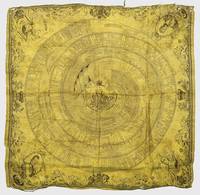
1812Best.-Nr. 166835London: Rymer & Son 1812. Mapping the Age of Revolutions This visually arresting and minutely detailed chronology presents two concentric spirals radiating from a central portrait of George III offering a spectacular timeline of a half-century of conflict embellished with portraits of the king Pitt Fox Nelson and Wellington. The inner delineates the "various administrations formed during his reign" while the outer charts major events including the conclusion of the Seven Years War the American Revolution the Napoleonic Wars campaigns in South Asia and the opening salvoes of the War of 1812. The densely printed text also includes relevant statistical information particularly as relates to the major campaigns: numbers of troops under arms sailors at sea prisoners taken cost of supplies but also the funded national debt annual expenditure and ticking steadily throughout the price of a peck loaf. In each corner is a portrait of a hero of the period: "In an age abounding with so many Warriors & Senators whose equals the page of History can scarcely produce it is difficult to select the most suitable characters to adorn this design or those who have been most active in the great Events of our own times but none seem to have diffused the rays of glory with greater splendour round the nation than Nelson and Wellington. Fame will transmit to distant posterity the vigorous eloquence of Fox and Pitt & exhibit them as patterns worthy their imitation. The portraits are esteemed striking likenesses". Produced by the Edinburgh-born engraver and reform-leaning Whig Malcolm Rymer 1775-1835 the timing of the publication produced close on the removal of all restrictions on the powers of the Prince Regent and the catastrophist litany of disorder in 1812 - "Alarming Riots in Nottinghamshire Lancashire and Yorkshire" the assassination of Spencer Percival "The Old Administration continues with a few trivial changes" - suggests critical intent. Copper engraving printed on vivid yellow silk "handkerchief" 840 x 860 mm. Elaborate decorative frame comprised of a narrow chequered band enclosing a wide scrolled foliate border set with the Royal Arms centrally top and bottom and the Imperial State Crown with crossed rose and thistle with banderolle reading"dieu et mon droit" placed at the sides. Housed in grey archival box. Somewhat worn overall thinned and slightly faded and with some minor marginal loss top and bottom and a few splits but overall complete and remains striking good or better. Examples traced to the Victoria and Albert 1985/2028 Metropolitan Museum of Art 62/271 Art Institute of Chicago 2005.68 "cotton plan weave" and The Society of the Cincinnati M. 218.002 "ochre cotton plate-printed in dark red pigment". See Rebecca Nesvet "Science and Art a Farce in Two Acts" Scholarly Editing 38 2017. unknown
1761Best.-Nr. 003612anonymous. George III 1738-1820. A Perspective View of Westminster Abbey from the High Altar to the West end shewing the manner of his Majesty's Crowning. Sept. 22 1761. Engraved copperplate 240 × 210 mm plate area on laid paper. Single-sheet engraved plate. Folded vertically into five panels with three or four short closed tears at fold intersections and margins; light surface wear and mild toning consistent with age. The engraved title at head fully legible. Overall good. A detailed ceremonial interior view of Westminster Abbey depicting the coronation of King George III on 22 September 1761. The scene is shown from the High Altar looking westwards with the monarch enthroned beneath a canopy and surrounded by bishops peers officers of state and members of the royal household. Galleries are crowded with spectators and the plate is lettered throughout to correspond with an explanatory key indicating its original issue within a formal printed account of the coronation. Plates of this type were produced for inclusion in official or semi-official coronation publications and were frequently removed from their parent volumes in the later eighteenth and nineteenth centuries for separate sale or display. . Good. Soft cover. 1st Edition. 1st Printing. 1761. anonymous paperback
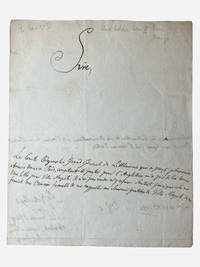
1785Best.-Nr. 003743original letter. WILLIAM V PRINCE OF ORANGE 1748-1806 Stadtholder of the United Provinces. Autograph letter signed in French to GEORGE III King of Great Britain recommending Count Michal Kazimierz Oginski 1730-1800 Grand Hetman of Lithuania. 18 December 1785. Single bifolium written on the first and second pages with integral address panel endorsed "Prince d'Orange to the King" and contemporary docketing. Signed in the formal court style "De Votre Majesté le très humble et très obéissant serviteur G. Pr. d'Orange." Old folds light browning small repair at one fold; otherwise sound. Very good. English translation of the letter: "Sire Count Oginski Grand General of Lithuania who has spent several years in this country and who intends to depart for England in the month of June has had the honour of presenting himself to Your Majesty and most humbly to beg that Your Majesty will be pleased to grant him the continuation of your goodwill and assistance in the plans which he may have the honour to submit to you. I cannot refrain from expressing the profound respect with which I am Of Your Majesty The very humble and very obedient servant W. Prince of Orange. 18 December 1785." A formal letter of introduction from William V to George III on behalf of Count Michal Kazimierz Oginski Grand Hetman of Lithuania commending him to the King's continued favour and assistance as he prepared to travel to England. Oginski was one of the senior military and political figures of the Polish-Lithuanian Commonwealth. A former leader of the Bar Confederation and a persistent opponent of Russian dominance he had been defeated by Russian forces in the early 1770s forced into exile and thereafter remained a politically sensitive figure in eastern European affairs. . Very Good. Soft cover. 1st Edition. 1st Printing. 1785. original letter paperback