4372 resultados
1972ref. 2080202103901775Kagoshima Police Headquarters 1972. Soft Cover. Fine. Book: 2 books Kagoshima Police Headquarters paperback
2011ref. BN399929PPV Medien GmbH 2011. 2011. Fender Telecaster. Mythos & Technik Fender Telecaster. Mythos & Technik Paul Balmer und Police Vorwort von Andy Summers The PPV Medien GmbH unknown
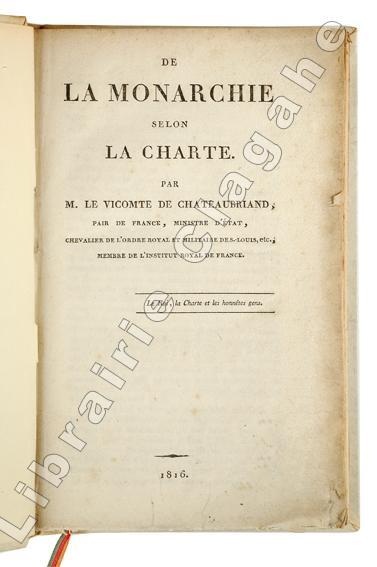
ref. 19830S.l, s.n., 1816 ; grand in 8, bradel cartonnage simili velin ivoire, pièce de titre rouge, tête arasée, tranches non rognées (reliure du XIXe), 176 pp.
ref. 237060Paris, Lemonnier, 1829 3 vol. in-8, demi-maroquin rouge à coins,dos à nerfs orné, tranches marbrées (reliure de l'époque).
ref. 237502Paris, Levavasseur, 1838d 6 vol. in-8, demi-veau framboise, dos lisse orné en long (reliure romantique). Dos un peu passé. Quelques rousseurs.
1777ref. 40335Paris P.G. Simon 1777 in-4 dérelié
ref. 10025Manuscrit in-folio de 4 pp., signé et entièrement de la main de Jean-Baptiste Teste.
ref. DADAX0399112375New unknown
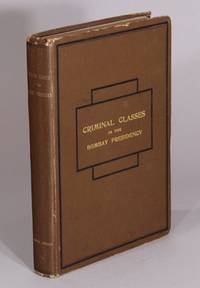
1908ref. 71119Bombay i.e. Mumbai: printed at the Government Central Press 1908. First edition 8vo pp. xii 340 2; frontispiece 11 plates plus 7 more plates at the back showing 11 illustrations; original brown cloth stamped in black and gilt; lightly rubbed else very good sound and clean. Early ownership signature of S. P. Hieb Sholapur. From the Preface: "These Notes kindly revised while the proofs were going through the press by Mr. R. B. Stewart M. A. I. C. S. Inspector-General of Police Bombay Presidency are an attempt to bring together and up to date in a practical form such information as is available respecting the methods and distinctive characteristics of the Criminal Classes belonging to the Bombay Presidency and of certain foreign Criminal Tribes visiting it for the purposes of crime . To ensure accuracy and fullness of interesting and useful detail Gazetteers Police Records Major Gunthorpe's Notes on Criminal Tribes experienced Police Officers and reliable 'informers' have been consulted and the information thus obtained sifted and subjected to verification." The illustrations show a number of the purported perpetrators their weapons and other criminalia. printed at the Government Central Press unknown
1908ref. 71119Bombay i.e. Mumbai: printed at the Government Central Press 1908. First edition 8vo pp. xii 340 2; frontispiece 11 plates plus 7 more plates at the back showing 11 illustrations; original brown cloth stamped in black and gilt; lightly rubbed else very good sound and clean. Early ownership signature of S. P. Hieb Sholapur. From the Preface: "These Notes kindly revised while the proofs were going through the press by Mr. R. B. Stewart M. A. I. C. S. Inspector-General of Police Bombay Presidency are an attempt to bring together and up to date in a practical form such information as is available respecting the methods and distinctive characteristics of the Criminal Classes belonging to the Bombay Presidency and of certain foreign Criminal Tribes visiting it for the purposes of crime . To ensure accuracy and fullness of interesting and useful detail Gazetteers Police Records Major Gunthorpe's Notes on Criminal Tribes experienced Police Officers and reliable 'informers' have been consulted and the information thus obtained sifted and subjected to verification." The illustrations show a number of the purported perpetrators their weapons and other criminalia. printed at the Government Central Press unknown books
1785ref. 2936Parmae, ex Regio Typographeco, s.d. (1785) ; in-4 ; plein veau havane moucheté, dos à nerfs, caissons décorés, pièce de titre rouge, triple filet doré d’encadrement des plats, toutes tranches dorées, roulette décorative dorée d’intérieur (reliure de l’époque) ; (2) ff. de titre et dédicace, XCIV pp., 100 pp., (1) f. d’achevé d’imprimer, portrait gravé d’Anacréon à la page de titre et vignette gravée par Cagnoni en tête de la dédicace.
ref. 77908A Lyon de Michel Goy, 1662, 1 volume in-8 de 230x175 mm environ, (1) f., 1 titre, 156 pages, (4) ff. (table), 54 pages, (1) f., reliure plein maroquin brun, dos à 5 nerfs, portant titres dorés orné de caissons à riches motifs dorés, double encadrement des plats avec fleurons à chaque angle de cadre intérieur, coupes dorées, contregardes seules marbrées, toutes tranches dorées. Quelques rousseurs, petites mouillures dans la marge inférieure, coins légèrement émoussés, petits trous de ver sur une coiffe, restauration visible sur la coiffe supérieure. Reliure dite à la Du Seuil.
1800ref. 21569Lorient 1800 1 feuillet avec en-tête préimprimé en noir : Liberté Egalité- République Française et orné d'une vignette en noir représentant une encre de marine avec une couronne de lauriers, manuscrit à l'encre brune sur papier vergé bleu ligné et filigrané (lettre écriteau recto seul), format 18,3 centimètres de large par 24,2 centimètres de haut, Lettre écrite à LORIENT, le 8 MESSIDOR AN 8 (27 juin 1800) de la République Française une et indivisible, signature manuscrite de BOÛRON, Sous Commissaire De Marine, Chargé de l'Inscription maritime et de la Police des Prisonniers de Guerre de Lorient,
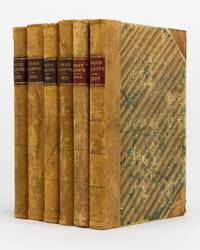
1902ref. 147073Sydney: Printed by William Applegate Gullick Government Printer 1902. First Edition. Hardcover. Very Good. Sydney Printed by William Applegate Gullick Government Printer 1902 to 1907. Folio six volumes 54 index last blank 514; 56 index last blank 498; 56 index 514; 56 index 465; 54 index last blank 442; and 54 index last blank 450 pages with the very occasional illustration of victims or perpetrators of crime reproduced from photographs. Contemporary uniform half calf with contrasting morocco title-labels and marbled papered boards all edges speckled; minor signs of age and handling; in very good condition. Published and distributed weekly to every police station in New South Wales the gazette was produced to alert the constabulary to all manner of criminal activities in great detail warrants arrests and judgements as well as listing missing persons deserting spouses and straying livestock. Rare on the open market; the extensive indexes are an invaluable genealogical resource but the casual browser will not come away disappointed. 6 items. Printed by William Applegate Gullick, Government Printer hardcover
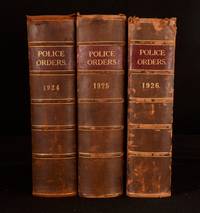
1924ref. SET26-B-2London : Metropolitan Police 1924-1926. Leather. Good. 11" by 7.5". None. Three scarce volumes of daily police orders for the Metropolitan Police. Three large works giving the daily orders issued to the Metropolitan Police for the full years of 1924 1925 and 1926. Scarce in any condition. Each volume gives in great detail the movements and operations affecting the Metropolitan police as well as details of the minutiae surrounding the operation of the force. A unique snapshot of legal history. n half calf bindings. Externally a moderately rubbed with wear to the extremities. Heavier wear to the head and tail of the spines particularly to the 1924 and 1926 volumes which have loss and lifting to the head of the spine. Front joint starting to 1926 volume. Internally generally firmly bound aside from 1924 volume which has one page detached but present. Wear to foredge of 1924 volume. Institutional ink stamps of Lambeth Division Metropolitan Police Library to endpapers of all volumes. Pages bright and generally clean with occasional handling mark or crease. Good Metropolitan Police hardcover
2005Roy. 8vo., First Edition, with title-vignette and very numerous illustrations in the text; pictorial boards, backstrip lettered in black, a fine copy. Surely the definitive account of Fairbairn's pre-war service with the Shanghai Municipal Police, in which arduous context he developed his 'defendu' system of self-defence and compiled the immensely influential self-defence manuals now forever linked to his name. Indeed, it was in the pages of 'Scientific Self-Defence' (1931) that the immortal Fairbairn-Sykes Knife was born. The 'Commando Knife', as it was later known, was standard issue for British and some Allied Special Forces throughout WWII, and became one of the iconic hand weapons of the conflict. EXCEEDINGLY SCARCE.
1993ref. 004566New York: William Morrow & Co. 1993. First Edition First Printing. . Hardcover. Near Fine/Very Good. This mystery from McBain's celebrated police procedural series featuring the detectives of the 87th Precinct marks the return of the Deaf Man for the first time since "Eight Black Horses" in 1985. Bottom of the spine is lightly bumped and text shows a very slight spine lean o/w this copy is clean tight and unmarked. The dustjacket shows only quite minor surface and edgewear no tears creases or chipping not price-clipped. William Morrow & Co. hardcover
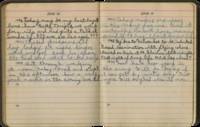
1944ref. List3749US Australia and New Guinea 1944. Diary measuring 4 ¼ x 5 ½ inches containing 735 entries. With three letters two of which are facsimiles. Diary boards with debossed text reading "ARMY DAYS" and lock; worn especially at corners excellent. Contents Fine. Letters Fine. Overall Near Fine. A diary belonging to Dale F. Damitz 1920-1944 Company A of the 738th Military Police Battalion covering the time between his last day before leaving for service and about a month before his death in October of 1944. The 738th MPB stationed in the South West Pacific Area during the Second World War is best known during that time for its role in the Battle of Brisbane a two-day riot between US servicemen and Australian servicemen and civilians in which an Australian Gunner was killed and hundreds on both sides were injured. Australia was a critical station for housing troops on duty in the Pacific Theater. The arrival of US military personnel in Australia-80000 in Brisbane alone-overtaxed the capacities of its cities increased crime and strained relations between US troops and Australians. Americans had access to better rations including luxuries such as cigarettes and ice cream; received higher pay than their Australian counterparts; and were often criticized for consorting with Australian women. Though it does not figure in this diary race likely also contributed to animosity between the groups. Despite fairly strict Australian laws around the sale of alcohol drunkenness was rampant. Military police from both countries were tasked with keeping the peace in the major cities. Damitz arrived in Brisbane with the 738th in August 1942 where "Lt. Craddock" informed his company that "where we're going we'll have a chance to catch 200 lb bombs in our pockets" August 30 and "Cpt. Forbes" that he would "get some honor and glory if it costs him the whole company" August 31. Damitz's diary is fairly sparse at this time including during the Battle of Brisbane though he mentions an "air raid" that made "the ground shake" December 1. In Australia-"this land of forgotten men" February 15 1943 consisting of "Just heat and rain day after day. And insects" February 5 1943-Damitz's duties mainly consisted of being what he called "prisoner chaser" patrolling for and guarding "the drunks" who "make you so sick and disgusted you never want a drink again" March 29 1943. Damitz's duties took him across central and southeastern Australia from Adelaide River outside Darwin to Birdum and Alice Springs to Adelaide via Terowie-these along the Stuart Highway a critical military transport route-to Melbourne and then to Brisbane via Sydney. The central Australian route through the Northern Territory and South Australia is "just waste land" February 23 1943 and "flat desert country . Saw a lot of camels and a few abo camps" March 5. Damitz's then went from Brisbane to Adelaide River outside Darwin to Melbourne and back to Brisbane. In Melbourne and Brisbane he is on "prisoner chaser" duty: "Was prisoner chaser today. Got through at five. Went out on town patrol at six thirty. All troops were restricted as there was a big drive on to pick up all AWOL's. got one fellow over the hill." April 21 1943 And: "Was working with the Civilian Police tonight after sly-grog sellers. Caught one. Sure is a lot of excitement and dangerous" June 13 1943. Bootlegging was a persistent issue in Australia exacerbated by the presence of American GIs who were unused to Australia's strict liquor laws. Damitz's company left Brisbane for Milne Bay in New Guinea in November of 1943. The camp is "worse than a pig pen" November 11 and the "bastard of a Col. of the 801st" takes away his tent's floorboards for his own use leaving Damitz in the mud December 17. In a somewhat more upbeat letter to friends back home Damitz reports water "clear as crystal and cold as ice" with "plenty of banana trees and pineapples" and "natives here . called fuzzy-wuzzies. We give them a cigarette to climb the coconut trees and knock down coconuts for us" November 17. They arrived in Oro Bay in March of 1944 where Damitz "Just lays around" March 15 deals with the mud and casts his ballot-"the first time in my life I have voted. Voted straight Republican" July 23-on the controversial absentee ballot. By far Damitz's most persistent topic for the entirety of the diary is his overwhelming boredom the constant feeling of preparing for "something big" October 24 1943 that never materializes and the totalizing apathy that this produces. Damitz had been a reluctant enlistment in the first place-for instance mentioning an award as "another pipe dream of the old man's" June 5 1943-and had not expected to be sent overseas so quickly "it was said no untrained men would leave the states. Some joke!"; June 30 1942. He "Sure is sick of this shit!!!" March 15 1944 and writes throughout 1943: "February 4: Doesn't take long for a guy to get so you don't give a dam for anything. Almost get so you don't care what happens next. February 12: Saw a good movie here in camp last night. Rest of the day was just like any other day here. Often wonder if I'll ever have the happiness I once had April 14: This all seems like a bad dream. Sure wish it was over with. April 30: The months slowly go by. You feel like a condemned man who is waiting for the chair. August 19: Today makes fourteen months in the army. Seems more like years tho. Hate it more every day. November 13: Is raining again today the mud is about a foot deep right inside of the tents. Don't have any kitchen yet. Don't care. December 21: Just laid around all day. Don't have any life or pep anymore. Don't have any ambition to do a dam thing." After nearly two and a half years of "all this B.S." July 30 1943 Damitz's company was sent to the Philippines where he was killed in action a few days into the Battle of Leyte. The diary provides a humanizing look-in Damitz's distinctively hard-boiled writing voice-at US-Australian relations and law enforcement and at everyday life outside of combat for a US battalion infamous in Australian history.
1944ref. List3749US Australia and New Guinea 1944. Diary measuring 4 ¼ x 5 ½ inches containing 735 entries. With three letters two of which are facsimiles. Diary boards with debossed text reading "ARMY DAYS" and lock; worn especially at corners excellent. Contents Fine. Letters Fine. Overall Near Fine. A diary belonging to Dale F. Damitz 1920-1944 Company A of the 738th Military Police Battalion covering the time between his last day before leaving for service and about a month before his death in October of 1944. The 738th MPB stationed in the South West Pacific Area during the Second World War is best known during that time for its role in the Battle of Brisbane a two-day riot between US servicemen and Australian servicemen and civilians in which an Australian Gunner was killed and hundreds on both sides were injured. Australia was a critical station for housing troops on duty in the Pacific Theater. The arrival of US military personnel in Australia-80000 in Brisbane alone-overtaxed the capacities of its cities increased crime and strained relations between US troops and Australians. Americans had access to better rations including luxuries such as cigarettes and ice cream; received higher pay than their Australian counterparts; and were often criticized for consorting with Australian women. Though it does not figure in this diary race likely also contributed to animosity between the groups. Despite fairly strict Australian laws around the sale of alcohol drunkenness was rampant. Military police from both countries were tasked with keeping the peace in the major cities. Damitz arrived in Brisbane with the 738th in August 1942 where "Lt. Craddock" informed his company that "where we're going we'll have a chance to catch 200 lb bombs in our pockets" August 30 and "Cpt. Forbes" that he would "get some honor and glory if it costs him the whole company" August 31. Damitz's diary is fairly sparse at this time including during the Battle of Brisbane though he mentions an "air raid" that made "the ground shake" December 1. In Australia-"this land of forgotten men" February 15 1943 consisting of "Just heat and rain day after day. And insects" February 5 1943-Damitz's duties mainly consisted of being what he called "prisoner chaser" patrolling for and guarding "the drunks" who "make you so sick and disgusted you never want a drink again" March 29 1943. Damitz's duties took him across central and southeastern Australia from Adelaide River outside Darwin to Birdum and Alice Springs to Adelaide via Terowie-these along the Stuart Highway a critical military transport route-to Melbourne and then to Brisbane via Sydney. The central Australian route through the Northern Territory and South Australia is "just waste land" February 23 1943 and "flat desert country . Saw a lot of camels and a few abo camps" March 5. Damitz's then went from Brisbane to Adelaide River outside Darwin to Melbourne and back to Brisbane. In Melbourne and Brisbane he is on "prisoner chaser" duty: "Was prisoner chaser today. Got through at five. Went out on town patrol at six thirty. All troops were restricted as there was a big drive on to pick up all AWOL's. got one fellow over the hill." April 21 1943 And: "Was working with the Civilian Police tonight after sly-grog sellers. Caught one. Sure is a lot of excitement and dangerous" June 13 1943. Bootlegging was a persistent issue in Australia exacerbated by the presence of American GIs who were unused to Australia's strict liquor laws. Damitz's company left Brisbane for Milne Bay in New Guinea in November of 1943. The camp is "worse than a pig pen" November 11 and the "bastard of a Col. of the 801st" takes away his tent's floorboards for his own use leaving Damitz in the mud December 17. In a somewhat more upbeat letter to friends back home Damitz reports water "clear as crystal and cold as ice" with "plenty of banana trees and pineapples" and "natives here . called fuzzy-wuzzies. We give them a cigarette to climb the coconut trees and knock down coconuts for us" November 17. They arrived in Oro Bay in March of 1944 where Damitz "Just lays around" March 15 deals with the mud and casts his ballot-"the first time in my life I have voted. Voted straight Republican" July 23-on the controversial absentee ballot. By far Damitz's most persistent topic for the entirety of the diary is his overwhelming boredom the constant feeling of preparing for "something big" October 24 1943 that never materializes and the totalizing apathy that this produces. Damitz had been a reluctant enlistment in the first place-for instance mentioning an award as "another pipe dream of the old man's" June 5 1943-and had not expected to be sent overseas so quickly "it was said no untrained men would leave the states. Some joke!"; June 30 1942. He "Sure is sick of this shit!!!" March 15 1944 and writes throughout 1943: "February 4: Doesn't take long for a guy to get so you don't give a dam for anything. Almost get so you don't care what happens next. February 12: Saw a good movie here in camp last night. Rest of the day was just like any other day here. Often wonder if I'll ever have the happiness I once had April 14: This all seems like a bad dream. Sure wish it was over with. April 30: The months slowly go by. You feel like a condemned man who is waiting for the chair. August 19: Today makes fourteen months in the army. Seems more like years tho. Hate it more every day. November 13: Is raining again today the mud is about a foot deep right inside of the tents. Don't have any kitchen yet. Don't care. December 21: Just laid around all day. Don't have any life or pep anymore. Don't have any ambition to do a dam thing." After nearly two and a half years of "all this B.S." July 30 1943 Damitz's company was sent to the Philippines where he was killed in action a few days into the Battle of Leyte. The diary provides a humanizing look-in Damitz's distinctively hard-boiled writing voice-at US-Australian relations and law enforcement and at everyday life outside of combat for a US battalion infamous in Australian history. books
1971ref. 2091502135708157San'ichishobo 1971. Soft Cover. Fine. The book is in fine condition. San'ichishobo paperback
1938[4], 5-254, [2], 8 [ads], pages. This portion of Carr's life story begins after his experience as a submariner in WWI. He serves as an officer of the Mercantile Marine and experiences incredible adventures and hardships before deciding to move his young family from England to New Brunswick. Times are tough in his new land. He describes the local poverty and exposes the awful social problems of rural New Brunswick, as well as his dramatic adventures at work, with a local trapper and as a member of the C.P.R. police. In short, Carr was a man's man and this book is full of manly adventures. Later in life, Carr [1895-1959] became very concerned about what he viewed as plans for world government and wrote Pawns in the Game and Red Fog Over America, books which sold by the hundreds of thousand. The present work is vital in understanding the background and motivations of this fascinating man. Above-average wear to publisher's black cloth. Binding intact. Gift greetings upon front free endpaper. Spine leaning. Dust jacket not included. Not pretty but a worthy reading copy. Book
2010ref. ANAIS-0757587100Kendall Hunt Publishing 2010-12-06. 2. spiral_bound. Good. 27.4x22.9x2.5. Buy with confidence. Excellent Customer Service & Return policy. Kendall Hunt Publishing unknown
2003ref. 2083002115803181Ehime Prefecture Police Headquarters 2003. Soft Cover. Fine. Number of books: 3 Ehime Prefecture Police Headquarters paperback
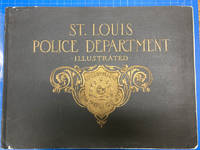
1902ref. 48489St. Louis: Press of Woodward & Tiernan Printing Co.1902. 1902. First edition. Oblong 8vo. Original stiff wrappers with embossed design and titles in gold gilt on the front cover n. p. 256 pp. introductory profusely illustrated mostly from photographs portraits advertisements. In addition to the many photographs of policemen/patrolmen there are excellent views of city hall the court house Anheuser-Busch Plant District Police Stations the Railroad Station etc. Six Guns 2179 says: "Tells about the robbery of the Frisco train at Glendale Missouri and the final capture of Marion Hudgepeth the leader of the gang. It also tells about the capture of Ben Kilpatrick and Laura Bullion members of the Butch Cassidy gang." A copy of this book has eluded us for more than 65 years and this is only the third copy we have ever seen. Rear cover has a closed tear to the top edge chips to top edge and to lower edges else the interior is clean bright and tight. Overall a very good item. A choice item and difficult to find. Press of Woodward & Tiernan Printing Co.],1902. unknown
1697ref. 44812Paris, Guillaume Saugrain, 1697. In 4 de (20) 1121 (18) pp., table. [Reliées à la suite :] Table chronologique des édits, déclarations arrêts et règlements contenus dans le premier recueil de la Maréchaussée de France. 43 pp. Suite de la Maréchaussée de France... (Paris, Veuve Saugrain, 1717). 240-11 pp., table. Titre de départ.2 ouvrages reliés en 1 fort vol. in-4, veau marbré, dos orné à nerfs, pièce de titre en maroquin rouge, tranches rouges (reliure de l'époque).