John M CrooksBiblio.com

482 risultati
rif. 1803073063.Gpaperback. Good. Access codes and supplements are not guaranteed with used items. May be an ex-library book. paperback
rif. 1803073071.Ghardcover. Good. Access codes and supplements are not guaranteed with used items. May be an ex-library book. hardcover
2012rif. DADAX0205867189Routledge 2012-10-11. 6. paperback. New. 0.70x6.00x8.90. Buy with confidence. Excellent Customer Service & Return policy. Routledge paperback
rif. 30708103-nnew. unknown
1991rif. 444938Jacksonville: University of North Florida Press 1991. Hardcover. Fine/Fine. First edition. Tall octavo. 193pp. Fine in fine dustwrapper. University of North Florida Press hardcover
1991rif. vot888Jacksonville: University of North Florida Press 1991. First Edition. Octavo russet cloth hardcover x 193 pp. Very Good with former-owner signature a well-known author Ray Arsenault; in a Fine dust jacket. From dust jacket: This first modern study of the history of Jacksonville in the Progressive Era recounts a tale of two cities. in the first third of the twentieth century a prospering white Jacksonville dominated the urban landscape of Florida and influences state politics. At the same time an oppressed black Jacksonville half of the city’s population lived in poverty. Between the Great Fire of 1901 and the beginning of World War I Jacksonville was transformed from a tourist outpost on the Florida frontier to a substantial city of the New South. With thorough command of the historical literature of the period Crooks addresses such issues as the increasing roles of local state and federal governments in the building the city; the part played by the private sector especially the business community middle-class women and blacks; and the threat to traditional religious values posed by a new popular culture. As the tale unfolds Crooks writes that Jacksonville emerged as “a metropolis with downtown skyscrapers suburban development and a thriving commerce which largely benefited its white population.” In the end white Jacksonville residents preside over the action. They welcome economic development accept -- within limits -- new cultural forms and suppress blacks a trend that continued into the 1960s. Scholars of Florida and southern history will read this story as a case study of the impact of urbanization on medium-sized cities between 1900 and 1920. University of North Florida Press, (1991). First Edition. hardcover books
1991rif. 444938Jacksonville: University of North Florida Press 1991. Hardcover. Fine/Fine. First edition. Tall octavo. 193pp. Fine in fine dustwrapper. University of North Florida Press hardcover books
rif. 200808859Paris, Dargaud, 1989 ; in-4, 63 pp., cartonnage de l'éditeur. Eo.
2011Fine English Paperback. Pbo. Fine+. Roy. 8vo. (24 x 17 cm). In Turkish. Color ills. 162 p. History and biography of a Cypriot bandit. Under Ottoman rule, in 1571 was introduced the "Millet" system in Cyprus: members of different religions were considered a single "Millet" 'nation' and each Millet had its own religious and educational institutions as well as civil law; the result could be considered self-government (Çevikel 1997). When Cyprus became under the British rule in 1878, the Millet system was maintained with some modifications. It was in these circumstances that the events underlying the epic of the Hasanbullis took place (Gürkan NA; Ismailoglu NA): Turkish Cypriot brothers nicknamed Bulli hid in the mountains in 1887-1888 and 1894-1896 as they believed they were unjustly accused and sentenced. During that time they committed several crimes. Despite this, both Turkish and Greek Cypriots regarded the Hasanbulli brothers positively as people fighting against the regime. Ten to fifteen years later, two epics in Turkish and Greek, plus various publications and works of art based on the event were written (see e.g. Kareklas 1938; Machlouzarides 1973; Gelen 1973; Ismailoglu; Islamoglu 1994; Serdar 1986; Yorgancioglu 1980: 100-102; Sayil 1988: 18; Fedai 1993: 1-7; Gökçeoglu 1993; Gürkan NA; Lyssarides 1995: 11; Bozkurt 1996: 59-64; 1998; Cahit 1997; Sadikoglu 1999: 34; 2000: 34). In these works the events were treated differently: Greek Cypriots depict the Hasanbullis as bandits while the Turkish appear to be brave heroes who rose against the British rule. The current article aims to analyse and discuss differences between these two approaches. THE CASE OF HASANBULLIS In May 1887, at a small village in the impoverished region of Paphos, where the Turks and Greeks live in mixed communities, a Turkish youngster Hasan Ahmet Bulli is unjustly accused of theft. False witnesses as well as his own quickness (which lead him to be nicknamed Bulli, 'bird' in Greek) play a role in the accusation. Once Hasan Ahmet Bulli is convicted, he arms himself and takes to the mountains. He wanders about in the mountains for 18 months, committing murders and fighting with the police. He is caught when he is sheltering at a house during a spell of malaria. He is sentenced to death but his punishment is then converted to life imprisonment. Six years later, in 1894, Ahmet Hasan Bulli's brothers Kaymakam and Hüseyin Ahmet Bulli take to the mountains when accused of committing a murder after one Greek Cypriot is killed in a Turkish- Greek fight over a woman. With others joining them, they form a powerful gang and continue their activities at the mountains until 1896. In the meantime, the elder brother Hasan escapes from prison to join his brothers, but he is shot dead. In 1896, one of the brothers, Hüseyin is killed at a confrontation with the police; Mehmet and other members of the gang are captured and executed by hanging. The Hasanbullis case considerably preoccupied the British administration in Cyprus and it eventually became a matter of prestige. It is obvious that both the Turkish and the Greek in Cyprus saw Hasanbullis as people who rose against the British administration: despite the fact that the British Colonial Regime offered rewards for their capture and enacted special legislation for it, and despite the security troops pursuing them and the use of hired informers, the Hasanbullis managed to live at the mountains for a long time. Unquestionably this was possible only thanks to people who protected, hid, supported, fed, and informed them of any danger. Source: Ethnic perspective in epics: The case of Hasan Bulliler., Ismail Bozkurt.
rif. 205paris 1982 in 8 broché 177 pages
1991rif. 1100571991 Editions Plon - 1991 - In-8, broché, couverture illustrée - 331 p.
1994rif. 11778Sergio bonelli editore 1994 114 pages collection tex #401. in8. 1994. broché. 114 pages.
rif. 14315Denoël, 1963 - Fort grand volume broché in octavo, couverture illustrée rempliée ( Barricades ), 366 pages, le texte est truffé d'illustrations en noir, index in fine, bon exemplaire, lequel cependant est tout de même fané en ses plats et sa pagination.
rif. 21581Paris, Hachette, 1962. 32 x 31, sans pagination (ca 150 pp.), très nombreuses illustrations en N/B, cartonnage d'édition imprimé, bon état.
1911rif. 21551911 Imprimerie E. Charre, Bourg-St-Andéol, 1911. In-8, demi-toile, couverture conservée. 15 pages, une illustration hors-texte
rif. 500345432Bibliothèque rose Sans date.
1982rif. 10669Puf 1982 261 pages in8. 1982. broché. 261 pages. Cet ouvrage de Michel Guérin propose une lecture politique des grands romans de Stendhal. L'auteur examine comment la dimension politique chez Stendhal se manifeste de manière inattendue non pas dans des idées politiques explicites mais dans des domaines comme le bonheur l'amour la rue les bureaux et la mort à travers l'étude de l'artiste au travail
1981rif. 13051981 Publitotal, Strasbourg 1981/8, in-4 cartonné 317 pp., sous jaquette illustrée, très abondante iconographie noir et couleur, bibliographie. neuf.
1988rif. 3124921Strasbourg: Publitotal 1988. 317 Seiten. Mit zahlreichen Illustrationen. 4° (25-35 cm). Orig.-Pappband mit illustriertem Orig.-Schutzumschlag. [Hardcover / fest gebunden].
rif. 0843949112New. paperback. New. Satisfaction Guaranteed or your money back. paperback
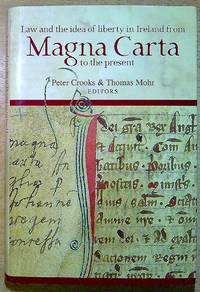
2023rif. 300466Ireland: Four Courts Press Ltd 2023. Book. Near Fine. Hardcover. 1st Edition. hardback octavo a tightly bound copy with clean and unmarked contents and in a very well preserved pictorial dust jacket. A pleasing copy xiv 228pp. Four Courts Press Ltd Hardcover
1931rif. ABE-148372713540232 PAGES-27 CM X 37 CM-EN COUVERTURE "LA TRANSMISSION DES POUVOIRS PRESIDENTIELS", DOUMER-EN COUVERTURE INTERIEURE "LE LAMENTABLE EPILOGUE D'UNE EXCURSION MARITIME", SAINT-SAINT-PHILIBERT, NAZAIRE, NOIRMOUTIER-LE SINISTRE DU "SAINT-PHILIBERT", 1P, 4 PHOTOS-DEUX RECEPTIONS A L'ACADEMIE FRANCAISE, 1P, 4 PHOTOS, WEYGAND, PIERRE BENOIT-ASSISE ET LE SOUVENIR DU POVERELLO, 5P PAR EDOUARD SCHNEIDER, 10 PHOTOS-LE "VIOLON D'INGRES" D'UN MENAGE D'ACTEURS, 1P, 2 PHOTOS, SORIA, ROSENBERG-A L'EXPEDITION COLONIALE LE PAVILLON DES INDES NEERLANDAISES, 4P, 8 PHOTOS-LA DISPARITION DES VIEUX CIMETIERES DE STAMBOUL, 2P, 5 PHOTOS-UNE COMEDIE ET UNE REVUE A LA MADELEINE, 1P, "FAISONS UN REVE"DE SACHA GUITRY, 2 PHOTOS, ".ET UNE REVUE" DE SACHA GUITRY ET ALBERT WILLEMETZ, PHOTO-"LES BRIGANDS" A L'OPERA-COMIQUE, 1P, 3 PHOTOS-CINEMA: "AUTOUR D'UNE ENQUETE", PHOTO COLETTE DARFEUIL-LES VINGT-QUATRE HEURES AUTOMOBILES DU MANS, 2 PHOTOS
1971rif. _201600318Paris, Société d'Éditions Parisiennes Associées, 1971 ; in-4, 100 pp., broché. Sommaire: Le bidon en Astrologie: le Premier des astres: Mme Soleil, industrielle de la voyance, par Adrien BRÉHAT; le Bidon dans le Spectacle: dégonflons les baudruches, par Jean HEYRAS; le Bidon du Cœur: Ah! Frappe-toi le cœur, c'est là qu'est la Menie…, par J.-C. PERROY; le Bidon dans l'Érotisme: les Imposteurs du postérieur, par Jean LORRY; le Bidon dans la Politique: les Ji-gymnastiques de J.-J. S.-S., par Xavier MARGERIDE; le Bidon dans la Science: restons sérieux Docteur Tournesol, par Jacques BERGIER; le Bidon dans la Littérature: les vrais Mémoires de l'anti-Malraux, par Jean BOURDIER; le Bidon dans la Presse et la Publicité: comment on vous bourre le crâne, par Frédéric SOREL; le Bidon sur le ring: Cerdan Junior: un numéro bien au poing, par Emmanuel FRANÇOIS; le Bidon dans le Sport: les coulisses des faux exploits, par Albert CLARINVAL; le Bidon dans les Courses: les rigolos du tiercé à gogos, par SAINT-AUBIN.
1970rif. _201600321Paris, Société d'Éditions Parisiennes Associées, 1970 ; in-4, 92 pp., broché. Sommaire: L'Assassinat politique à travers l'Histoire, par Jean-François CHIAPPE; un Crime des barbouzes: le meurtre de l'ingénieur Petitjean, par P.-H. RENSON; Guépéou contre trotskystes: la disparition de Rudolf Klément, par Léo MALET; la Fin mystérieuse du général Delgado, par Rinaldo ROCHA; Conjuration à Alger pour supprimer Darlan, par Roland BERTRY; un Tueur du «Smersh» liquide Bandera, par Roland GAUCHER; «Main Rouge» et indépendance: l'exécution de Lemaigre-Dubreuil, par Jean R. GROISON ; l'Espion Philby et la mort de Sikorski; Tshombé devait être enlevé, par Henri RENAUD.
1971rif. _201600316Paris, Société d'Éditions Parisiennes Associées, 1971 ; in-4, 100 pp., broché. Sommaire: l'Affaire du C. N. L.; le Scandale de La Villette, par André FIGUÉRAS; le Krach de la Banque Martinon, par Robert CARIO; l'Or du «banquier» Travers, par Camille GALIC; Topaze sur la Côte d'Azur, par M.-L. WAQUIEZ; la Grande combine du notaire de Pantin, par Roland GAUCHER; la Garantie Foncière et le Patrimoine Foncier, par Philippe BERNERT; les Frères Willot; le Maréchal Soulte de la Canebière, par Michel SAISSAC; Scandale politico-financier sue la Croisette; l'Affaire Boulmier à Asnières; la Belle Immobilière de Nantes; la Culbute de GEEP-Industries, par Claude LORNE; l'Escroc était l'ami de Chaban-Delmas, par René SAIVE; Dechartre et l'Ile de Ré, par Michel BOUSSON; Y a-t-il un gang du téléphone?, par Henri JANNÈS.