5 711 résultats
2003réf. 031688Beverley Hills California: Blue Pearl Press 2003. INSCRIBED / SIGNED by the AUTHOR on the front inside cover. SIGNED copies are SCARCE. Fine condition with only a hint of very mild shelfwear to the cover. Flat uncreased spine. NO chips tears creases or fading. NOT price clipped $16.00. Sharp corners. NOT a library discard. NOT a remainder. Pages are fresh crisp clean and unmarked. NO underlining. NO highlighting. NO margin notes. Camelot fiction -- a unique take on the King Arthur tale. 4.33 Goodreads rating. Bound in the original full color pictorial wraps From the rear cover: "Born of Betrayal is a totally unique view of the story of King Arthur. It centers on the influence of a charismatic Merlin and upon the parents of King Arthur. It is their love story.". INSCRIBED / SIGNED by the AUTHOR. 1st ed No additional printings listed. Softcover. Fine condition. Illus. by Anido Vince cover art by. 8vo. 327pp. Great Packaging Fast Shipping. Blue Pearl Press Paperback
1870réf. 58640Potosi MO. November 23 1870. Dramatic Crime in Rural Missouri with Native American Suspects An unrecorded possibly unique reward broadside printed in the immediate aftermath of the brutal crime which became known as the "Lapine Murders." The broadside advertises a substantial reward from Washington County Missouri Sheriff John T. Clarke for the apprehension of two men Charles Jolly "very dark complexion.about a half breed Indian" and John Armstrong "shows Indian blood". According to contemporary reports Armstrong and Jolly both men in their thirties were working as miners just north of Potosi Missouri. On November 19 1870 they supposedly went in to town with Jolly's younger brother Leon to sell their minerals where they purchased liquor and became aggressively drunk. The group went to the Lapine family home on the outskirts of town where they left young Leon outside before entering the house. According to one slightly later account: "The most extensive most horrible and outrageous crime ever committed in Washington County was the murder and burning of the Lapine family. This family consisted of David Lapine and Louisa his wife and their infant son about eighteen months of age and Mary Christopher and her infant daughter a baby and they lived in a log cabin about one mile northeast of Potosi. The murderers were John Armstrong and Charles Jolly Jr.On the evening of November 19 1870 these men being under the influence of liquor took with them a lad named Leon Jolly and went to the house occupied by the Lapine family and there according to the evidence of young Leon Jolly Charles Jolly Jr. shot David Lapine through a crack in the wall of the house and then John Armstrong rushed into the house with an ax in hand and with it severed the head of David Lapine from his body then turned and severed the heads of the two women from their bodies and then struck each of the infants on the head with the edge of the ax. The terrible deed was done! A family of five persons was slain and the heads of three were severed from their bodies! Was ever the demon of destruction more hellish Not being satisfied with their work the fiends then set fire to the house thinking perhaps that it might be made to appear that the family burned to death. The house was consumed by the fire as was mostly the bodies of the victims of the murderers. After committing the terrible crime the murderers with the boy went on to town where they got more whisky and then returned to their homes" - History of Franklin Jefferson Washington Crawford & Gasconade Counties Missouri. Other descriptions of exactly what happened inside the home vary considerably but all agree that the father David Lapine was shot with a firearm before his wife and children were killed with an axe and decapitated and the house burned. The assumed perpetrators fled to Jefferson County but Leon was found on November 23 and quickly confessed to what he had seen. The two men were located and arrested the following day where lethal force was required to protect them from an angry mob intent on a lynching. After being transferred to St. Louis for their own protection the pair received a perfunctory trial and were promptly hanged before an eager crowd before the end of January. Since the men were identified as suspects on November 23rd and arrested on the 24th the printing of this broadside can only date from the afternoon of the 23rd or morning of the 24th. It is worth noting that the two men pleaded "Not Guilty" at their trial although according to contemporary reports the jury deliberated for fewer than ten minutes before reaching the opposite verdict and the case has never been investigated further. An intriguing and extremely rare artifact from a sensational crime in 19th-century rural Missouri. We locate no other copies of the present broadside. Old vertical and horizontal folds. Previously framed text portion tanned. Slight edge wear modern pen annotations in lower margin beneath prior matting. Very good overall. History of Franklin Jefferson Washington Crawford & Gasconade Counties Missouri Chicago: Goodspeed Publishing Company 1888 pp.502-3. unknown
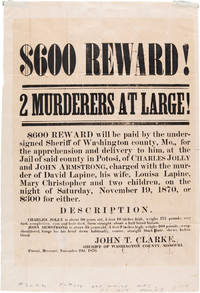
1870réf. 58640Potosi MO. November 23 1870. Dramatic Crime in Rural Missouri with Native American Suspects An unrecorded possibly unique reward broadside printed in the immediate aftermath of the brutal crime which became known as the "Lapine Murders." The broadside advertises a substantial reward from Washington County Missouri Sheriff John T. Clarke for the apprehension of two men Charles Jolly "very dark complexion.about a half breed Indian" and John Armstrong "shows Indian blood". According to contemporary reports Armstrong and Jolly both men in their thirties were working as miners just north of Potosi Missouri. On November 19 1870 they supposedly went in to town with Jolly's younger brother Leon to sell their minerals where they purchased liquor and became aggressively drunk. The group went to the Lapine family home on the outskirts of town where they left young Leon outside before entering the house. According to one slightly later account: "The most extensive most horrible and outrageous crime ever committed in Washington County was the murder and burning of the Lapine family. This family consisted of David Lapine and Louisa his wife and their infant son about eighteen months of age and Mary Christopher and her infant daughter a baby and they lived in a log cabin about one mile northeast of Potosi. The murderers were John Armstrong and Charles Jolly Jr.On the evening of November 19 1870 these men being under the influence of liquor took with them a lad named Leon Jolly and went to the house occupied by the Lapine family and there according to the evidence of young Leon Jolly Charles Jolly Jr. shot David Lapine through a crack in the wall of the house and then John Armstrong rushed into the house with an ax in hand and with it severed the head of David Lapine from his body then turned and severed the heads of the two women from their bodies and then struck each of the infants on the head with the edge of the ax. The terrible deed was done! A family of five persons was slain and the heads of three were severed from their bodies! Was ever the demon of destruction more hellish Not being satisfied with their work the fiends then set fire to the house thinking perhaps that it might be made to appear that the family burned to death. The house was consumed by the fire as was mostly the bodies of the victims of the murderers. After committing the terrible crime the murderers with the boy went on to town where they got more whisky and then returned to their homes" - History of Franklin Jefferson Washington Crawford & Gasconade Counties Missouri. Other descriptions of exactly what happened inside the home vary considerably but all agree that the father David Lapine was shot with a firearm before his wife and children were killed with an axe and decapitated and the house burned. The assumed perpetrators fled to Jefferson County but Leon was found on November 23 and quickly confessed to what he had seen. The two men were located and arrested the following day where lethal force was required to protect them from an angry mob intent on a lynching. After being transferred to St. Louis for their own protection the pair received a perfunctory trial and were promptly hanged before an eager crowd before the end of January. Since the men were identified as suspects on November 23rd and arrested on the 24th the printing of this broadside can only date from the afternoon of the 23rd or morning of the 24th. It is worth noting that the two men pleaded "Not Guilty" at their trial although according to contemporary reports the jury deliberated for fewer than ten minutes before reaching the opposite verdict and the case has never been investigated further. An intriguing and extremely rare artifact from a sensational crime in 19th-century rural Missouri. We locate no other copies of the present broadside. Old vertical and horizontal folds. Previously framed text portion tanned. Slight edge wear modern pen annotations in lower margin beneath prior matting. Very good overall. History of Franklin Jefferson Washington Crawford & Gasconade Counties Missouri Chicago: Goodspeed Publishing Company 1888 pp.502-3. unknown books
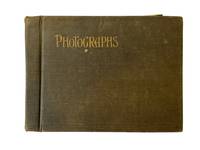
1920réf. 216411920. Japan OccupationWWII Primary-source photo album of United States military governance during the occupation of Japan with particular emphasis on the enforcement of legal authority and the administration of war crimes proceedings under Allied control. Centered on the career of General Charles Sabin Ferrin in his capacity as Provost Marshal of Tokyo the album captures the institutional frameworks through which U.S. forces maintained order supervised political transition and participated in the International Military Tribunal for the Far East IMTFE. The collection includes images of high-ranking military and political figures official proceedings connected to the war crimes trials and formal and informal interactions with Japanese leadership situating Ferrin's role within broader systems of occupation-era administration legal oversight and diplomatic engagement. The album contains 85 black-and-white silver gelatin photographs varying in size from 2.5" x 2.5" to 6" x 4.25" mounted in a clothbound album measuring approximately 7" x 5". The images begin in the United States depicting early domestic life before shifting focus to Ferrin's stationing in China from 1919 into the 1920s and later to his critical role in postwar Japan where he engaged with Japanese political and military officials at the highest levels. The China-era photographs include striking scenes of the U.S. Army's presence in Tientsin Tianjin as indicated by labeled photographs of "U.S. Army Buildings Tientsin" designed by architect Albert Benz. Other images capture American cavalrymen of the 15th Infantry Regiment on horseback lined up in disciplined formation labeled "1921 Tientsin China 15th Infantry U.S.A." The album also contains personal family moments such as a uniformed soldier cradling a small child on horseback annotated "1918 Russell" and an image of two children dressed formally on a walkway inscribed "Aug 26 1919 leaving for China." Additionally candid moments in Tientsin show a young child riding in a rickshaw pulled by a Chinese laborer and another with a Chinese woman identified as an "Ama" caring for the family's child at a beach in Chinwangtao Qinhuangdao in July 1921. By the late 1940s the album shifts focus to Ferrin's tenure as Provost Marshal of Tokyo a role that placed him at the center of postwar military governance and legal oversight. Several photographs depict U.S. military officials dining and meeting with Japanese political figures. One particularly notable photograph shows Ferrin standing beside a dignitary identified as "Prince Takamatsu Hirohito's younger brother." Other images depict high-ranking officers including Admiral James O. Richardson testifying at the International Military Tribunal for the Far East IMTFE with a caption stating: "Admiral James O. Richardson Commander-in-Chief United States Fleet testifies on the witness stand at the International Military Tribunal for the Far East during the Pearl Harbor phase of the trials of the 27 accused Japanese war criminals." A separate image shows troops of the 720 MP Battalion executing a right-dress formation in front of the War Ministry Building in Tokyo on October 13 1947. The presence of these high-ranking officials alongside candid social and formal meetings with Japanese elites underscores Ferrin's prominent role in enforcing law and order during the American occupation and his involvement in overseeing war crimes proceedings. The album is in very good condition overall. A rare and historically significant visual chronicle of General Charles Sabin Ferrin's career across pivotal moments in 20th-century history with firsthand images of U.S. military presence in China the occupation of Japan and high-level engagements with political and military leadership. unknown
1920réf. 216411920. Japan OccupationWWII Primary-source photo album of United States military governance during the occupation of Japan with particular emphasis on the enforcement of legal authority and the administration of war crimes proceedings under Allied control. Centered on the career of General Charles Sabin Ferrin in his capacity as Provost Marshal of Tokyo the album captures the institutional frameworks through which U.S. forces maintained order supervised political transition and participated in the International Military Tribunal for the Far East IMTFE. The collection includes images of high-ranking military and political figures official proceedings connected to the war crimes trials and formal and informal interactions with Japanese leadership situating Ferrin's role within broader systems of occupation-era administration legal oversight and diplomatic engagement. The album contains 85 black-and-white silver gelatin photographs varying in size from 2.5" x 2.5" to 6" x 4.25" mounted in a clothbound album measuring approximately 7" x 5". The images begin in the United States depicting early domestic life before shifting focus to Ferrin's stationing in China from 1919 into the 1920s and later to his critical role in postwar Japan where he engaged with Japanese political and military officials at the highest levels. The China-era photographs include striking scenes of the U.S. Army's presence in Tientsin Tianjin as indicated by labeled photographs of "U.S. Army Buildings Tientsin" designed by architect Albert Benz. Other images capture American cavalrymen of the 15th Infantry Regiment on horseback lined up in disciplined formation labeled "1921 Tientsin China 15th Infantry U.S.A." The album also contains personal family moments such as a uniformed soldier cradling a small child on horseback annotated "1918 Russell" and an image of two children dressed formally on a walkway inscribed "Aug 26 1919 leaving for China." Additionally candid moments in Tientsin show a young child riding in a rickshaw pulled by a Chinese laborer and another with a Chinese woman identified as an "Ama" caring for the family's child at a beach in Chinwangtao Qinhuangdao in July 1921. By the late 1940s the album shifts focus to Ferrin's tenure as Provost Marshal of Tokyo a role that placed him at the center of postwar military governance and legal oversight. Several photographs depict U.S. military officials dining and meeting with Japanese political figures. One particularly notable photograph shows Ferrin standing beside a dignitary identified as "Prince Takamatsu Hirohito's younger brother." Other images depict high-ranking officers including Admiral James O. Richardson testifying at the International Military Tribunal for the Far East IMTFE with a caption stating: "Admiral James O. Richardson Commander-in-Chief United States Fleet testifies on the witness stand at the International Military Tribunal for the Far East during the Pearl Harbor phase of the trials of the 27 accused Japanese war criminals." A separate image shows troops of the 720 MP Battalion executing a right-dress formation in front of the War Ministry Building in Tokyo on October 13 1947. The presence of these high-ranking officials alongside candid social and formal meetings with Japanese elites underscores Ferrin's prominent role in enforcing law and order during the American occupation and his involvement in overseeing war crimes proceedings. The album is in very good condition overall. A rare and historically significant visual chronicle of General Charles Sabin Ferrin's career across pivotal moments in 20th-century history with firsthand images of U.S. military presence in China the occupation of Japan and high-level engagements with political and military leadership. unknown books
1949réf. 80332Garden City:: The Crime Club 1949-1954. Fine. The jackets are preserved in jacket sleeves and enclosed in modern brad-bound stiff wrappers. Additional postage applicable. Titles: The Cat and Capricorn. Board Stiff. Not in the Script. Murder Twice Removed. Grave Consequences. Deadly Beloved. The Three Widows. Tread Lightly Angel. Divining Rod for Murder. The Widow of Bath. Scared to Death. Night Train to Paris. Tragic Target. From This Death Forward. The Mamo Murders. Murder Repeat Murder. The Judas Goat. The Clock that Wouldn't Stop. Grow Young and Die. Heavy Heavy Hangs. Elk and the Evidence. Mask for Murder. The Saint vs. Scotland Yard. M'Lord I am Not Guilty. Glass on the Stairs. A Rag and a Bone. The Other Side of the Wall. The Moon Gate. Inspector Maigret and the Strangled Stripper. Seeing Red. Miscast for Murder. The Devil Threw Dice. The Body in the Basket. Shroud of Darkness. Fatal in my Fashion. The Black Italian. The Crime Club, unknown
1876In-4°; pp.(4), 255, (1), con quattro illustrazioni, di cui una applicata a p. 65. Legatura coeva in mezza pelle con angoli. Edizione originale dell’opera di Cesare Lombroso (1835-1909) considerata fondamentale per la nascita dell’antropologia criminale. Lombroso fu un convinto seguace del positivismo francese, che applicò ai suoi studi di medicina sociale; riallacciandosi a tesi già percorse relative alla criminalità innata e biologicamente condizionata, Lombroso si spinge nell’Uomo delinquente a sostenere che i comportamenti criminosi possono essere determinati da predisposizioni di natura fisiologica, che si manifestano in particolari conformazioni anatomiche del cranio. Pesa sugli studi lombrosiani un forte assoluto determinismo. PMM 364. Govi 317.
1932Boards with light rubbing to extremities. Spine lettering faded. First and last few pages browned. Back hinge started; Clarence Darrow was one of history's most eminent attorneys, arguing such notable cases as the Leopold-Loeb murder case, and the Scopes 'monkey' trial. Learn what shaped his beliefs and his feelings about these and other celebrated cases. This is a presentation copy to Thomas Massie, signed by numerous friends, including Clarence Darrow: "To my friend Lt. Thomas Massie - My client and friend with respect and deep affection from Clarence Darrow, Honolulu, April 4th - 1932". Thomas Massie - My client and friend with respect and deep affection from Clarence Darrow, Honolulu, April 4th - 1932". (Signed during the Massie trial). In nicely made 1/4 leather custom box ; B&W Photographs; 8vo; 465 pages
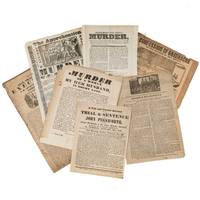
1810réf. 849341810. The Only Known Copies Broadsides. Crime. Unrecorded English Crime and Execution Broadsides. England 1810-1879. 25 broadsides ranging in size from 19-1/2" x 9-3/4" 49.5 x 24.5 cm to 8-3/4" x 6-1/2" 22.2 x 16.7 cm 14 mounted to larger backing sheets or boards. Moderate toning light creasing or edgewear small holes in places without loss to legibility. Overall 25 rare items in good condition. $25000. Hastily written cheaply printed and sold in their thousands on street corners or at executions throughout the nineteenth century English crime and execution broadsides are important examples of the development of modern print culture and provide interesting insights for the social historian of today. The broadsides in this collection represent the only known copies with no others recorded on OCLC Library Hub or in institutional collections such as those at Harvard or the British Library. They provide grisly accounts of murder necrophilia rape domestic abuse infanticide and labor unrest. The executions they document were solemn and uneventful or carried out by celebrity executioners or in one case never happened at all. Some include elaborate woodcuts or verses. Others are simple columns of hastily struck type. All provide a unique picture of criminal justice in England from the days of the Bloody Code to the reforms of the Victorian era. Detailed physical and content descriptions of each item are available on request. The group includes: - The Apprehension and Examination of T. Ainslie and J. Martin 2 Well Known Thieves. London: D. & H. Carpue. Printers 1834. - Dreadful Murder of a Son And Suicide of the Father. London: Printed by T. Birt 1837. - Calendar of the Prisoners At Chelmsford On Monday March 11 1816. London: George Pigott Printer 1816. - A Narrative of the Trial Together with the Last Dying Words Speech And Confession of Joshua Beaumont. Leicester: From W. Storry's sic Copy York; Reprinted by Pares 1810. - Life Trial Confession And Execution of F.B. Courvoisier. London: Paul & Co. Printers 1840. - Trials and Execution of John and Robert Greers Two Brothers. London: Catnach Printer 1817. - The Trial Confession and Execution of W. Hardiment Who was Executed on Monday The First Day of. unknown
1810réf. 849341810. The Only Known Copies Broadsides. Crime. Unrecorded English Crime and Execution Broadsides. England 1810-1879. 25 broadsides ranging in size from 19-1/2" x 9-3/4" 49.5 x 24.5 cm to 8-3/4" x 6-1/2" 22.2 x 16.7 cm 14 mounted to larger backing sheets or boards. Moderate toning light creasing or edgewear small holes in places without loss to legibility. Overall 25 rare items in good condition. $25000. Hastily written cheaply printed and sold in their thousands on street corners or at executions throughout the nineteenth century English crime and execution broadsides are important examples of the development of modern print culture and provide interesting insights for the social historian of today. The broadsides in this collection represent the only known copies with no others recorded on OCLC Library Hub or in institutional collections such as those at Harvard or the British Library. They provide grisly accounts of murder necrophilia rape domestic abuse infanticide and labor unrest. The executions they document were solemn and uneventful or carried out by celebrity executioners or in one case never happened at all. Some include elaborate woodcuts or verses. Others are simple columns of hastily struck type. All provide a unique picture of criminal justice in England from the days of the Bloody Code to the reforms of the Victorian era. Detailed physical and content descriptions of each item are available on request. The group includes: - The Apprehension and Examination of T. Ainslie and J. Martin 2 Well Known Thieves. London: D. & H. Carpue. Printers 1834. - Dreadful Murder of a Son And Suicide of the Father. London: Printed by T. Birt 1837. - Calendar of the Prisoners At Chelmsford On Monday March 11 1816. London: George Pigott Printer 1816. - A Narrative of the Trial Together with the Last Dying Words Speech And Confession of Joshua Beaumont. Leicester: From W. Storry's sic Copy York; Reprinted by Pares 1810. - Life Trial Confession And Execution of F.B. Courvoisier. London: Paul & Co. Printers 1840. - Trials and Execution of John and Robert Greers Two Brothers. London: Catnach Printer 1817. - The Trial Confession and Execution of W. Hardiment Who was Executed on Monday The First Day of. unknown books
1935réf. VBA-158Éditions Haloua, Paris, 1935. Broché à couverture souple. 19 x 12 x 1 cm. 140 pages. 125 grammes.