1 520 résultats
1984réf. 159934Cambridge MA: WGBH 1984. Vintage one-color poster for a Premiere WGBH Jazz Concert of The Mingus Dynasty at the Berklee Performance Center Saturday September 15 circa 1984 with the supporting act of the Jay Brandford Septet. The Mingus Dynasty jazz ensemble formed in 1979 following the death of legendary jazz musician and composer Charles Mingus taking their name from Mingus' classic 1959 album. The ensemble expanded to a big band format in 1988 the Mingus Big Band. The are currently three Mingus repertory groups The Mingus Dynasty the Mingus Big Band and the Mingus Orchestra all of which currently tour extensively worldwide. The Mingus Dynasty ensemble found on the poster offered here includes George Adams Craig Handy Jack Walrath John Hicks Ray Drummond and Ronnie Burrage. Among the ensembles' alumni are Jimmy Owens Randy Brecker Jon Faddis Jimmy Knepper and John Handy among many many others. 10.5 x 16 inches on pink card stock. Near Fine. WGBH unknown books
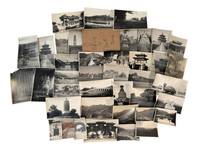
1910réf. 235921910. Peking and North China travel photo archive circa 1912 to 1918 documenting the former imperial capital during the turbulent opening years of the Republic of China when centuries of Qing imperial rule had only recently ended and Beijing remained the political and cultural heart of northern China. The photographs record a landscape where imperial monuments Buddhist temples ancient roads and rural villages continued to define daily life despite the collapse of the dynasty in 1912. Produced during the era that followed the Xinhai Revolution and preceded the consolidation of the warlord period the archive preserves a city and surrounding countryside poised between imperial tradition and an uncertain republican future. Photo archive of 40 original silver gelatin photographs ranging from approximately 2 × 3 inches to 4 × 6 inches Peking Beijing and North China circa 1912 to 1918. The photographs depict the Temple of Heaven the Summer Palace Pei Hai Beihai Park the Forbidden City and its surrounding walls the White Dagoba at Miaoying Temple monumental ceremonial gateways pagodas temple courtyards the Great Wall north of Peking the Western Hills stone bridges lakes canals and mountain landscapes. Other photographs show Buddhist monks walking through temple precincts camel caravans crossing rocky valleys mule carts on country roads grazing livestock village architecture and rural agricultural scenes beyond the capital. Contemporary manuscript captions identify numerous locations including "The Great Wall of China" "Temple of Heaven Peking" "Pei Hai Grounds Peking" "Bridge over stream between Jade Fountain & Summer Palace" "The 3rd Green Golf at Paomachang Peking" "Western Hills near Peking" "Camel Drive at the Great Wall Nankow Pass north of Peking" and "Temple in the Western Hills near Peking Golden Roof." One inscription notes that several views "were taken by the younger Miss Dunne last summer" preserving a small but meaningful record of the archive's contemporary provenance. This photo archive belong to one of the most consequential transitions in modern Chinese history. The Qing dynasty collapsed in 1912 after more than two and a half centuries of rule ending the imperial system that had governed China since 221 BCE. Although the Republic of China replaced the monarchy Beijing remained filled with imperial architecture ceremonial spaces and religious institutions whose daily rhythms changed only gradually. The Forbidden City was still occupied by the abdicated emperor Puyi until 1924 Buddhist monasteries continued to function throughout the Western Hills and camel caravans remained an essential means of transporting goods across northern China's mountain passes. Foreign travelers could still move through monuments that only a generation earlier had been closely associated with imperial authority while political power increasingly shifted among competing republican governments and regional military leaders during the emerging Warlord Era. Rather than emphasizing political upheaval directly the archive records the remarkable continuity of Beijing's monumental landscape and traditional patterns of travel religion and commerce immediately after the fall of the last Chinese dynasty. Light surface wear occasional corner creasing and scattered silvering consistent with age; manuscript identifications on many versos. Overall in very good condition. A concentrated visual record of Peking and North China at the moment imperial China gave way to the Republic preserving both the enduring ceremonial landscape of the Qing capital and the traditional life that continued beneath profound political change. unknown books
1985réf. 2737671985. hardcover. very good/very good-. 104 color plates. Thin square 4to brown boards d.w. lightly soiled and slightly chipped. N.p. 1985. A very good copy in a very good- dust wrapper. Most of the text is in Chinese with some English translation and the plates are described in Chinese and English. The book was published in China. unknown books
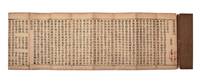
réf. 8663Trans. by Xuanzang 玄奘 in 650 CE. 70 pages six columns per page 30 columns per sheet 17 characters per column. 14 sheets average sheet length: 570 mm. five pages per sheet. Accordion format 305 x 7980 mm. print surface from top border to bottom border: 245–250 mm. Single woodcut borders at top & bottom of text. Orig. sutra binding of semi-stiff paper wrappers. Woodblocks carved by Ge Fang & Ma Qing & others in Sixi present day Huzhou printed between 1110s/40s–1276. This fascicle in its original sutra binding was printed in the 12th or 13th century in northern Zhejiang China as part of an extremely rare edition of the Buddhist canon variously known as the Yuanjue Canon Zifu Canon or Sixi Canon. Examples very rarely appear on the market. This edition of the Buddhist canon was for a long time largely unknown in China until the famous Chinese book collector and scholar Yang Shoujing 1839-1915 brought a set back from Japan in the late 19th century. Now in a Chinese library this is the only near-complete set as far as we know the rest being single sutras. Yuanjue Zifu or Sixi Canon: The three names refer to some or all of the imprints of the Chinese Tripitaka made from a set of blocks that were carved in a place called Sixi present-day Huzhou in what was then Songting township Guian county Hu prefecture part of the Circuit of the eastern and western Zhe of the Southern Song. Sixi one of the names retrospectively used for this edition was the location of Yuanjue Meditation Hall founded in 1119-25 where the printing blocks were housed and perhaps carved. Sometime after 1239 the hall’s name may have changed to Fabao Zifu lit. “Dharma jewel supplying happiness” Meditation Temple whence Zifu Canon. Bibliographic scholarship has dated certain imprints of this canon to either the period of Yuanjue Meditation Hall or that of Fabao Zifu Meditation Temple calling imprints dating from the earlier period Yuanjue Canon or “first Sixi canon” qian Sixi jing and imprints from the later period Zifu Canon or “second Sixi canon” hou Sixi jing. On the basis of a comparison of two catalogues of the canon — one claiming to be of the Yuanjue Canon and one of the Zifu Canon — it was believed that a substantial amount of re-carving had taken place between the Yuanjue and Zifu canons. However the catalogue purportedly of the Zifu Canon has been shown in fact to have been based not on an inventory of a set of the Zifu Canon but on another unrelated catalogue. Thus there is no reason to assume that a substantial amount of re-carving of the blocks took place after the temple changed its name and ipso facto there is no reason to posit the existence of two Sixi canons. Printings ascribed to the Yuanjue and Zifu canons belong to the same edition of the Chinese Tripitaka printed at various times during a period that stretched over a century. Blocks were repaired and replaced during this period but not to the extent that would justify calling them two editions. The Timing of Carving and Printing: The sources are ambiguous as to when carving of the blocks began. Li Fuhua and He Mei state that the carving began in 1126 whereas Wang Chonglong says it began before 1110 and thus not at the Yuanjue Hall which had not yet been founded and agrees with others that it likely had finished in 1132. It has also been proposed however that carving only began in 1132. Finally 1140 has been proposed as another completion date. Therefore we can say with confidence that the initial set of blocks was carved sometime between the 1110s and 1140s. Once the blocks were carved they were used for printing for a long time. Some printings can be dated because they contain colophons. Liu Yuantang has documented three instances of blocks being mended buban: in 1238 1248 and 1250. The blocks were burned by the invading Mongols in 1276 which is thus the terminus ante quem for prints from the Yuanjue Canon. Our Copy and the Yuanjue / Zifu Canon: Benshi jing is marked with the ordinal character shen 甚 in five editions of the Chinese Tripitaka. Of these five only the Yuanjue Canon also known as the Zifu or Sixi Canon is a possible candidate. More precisely our copy appears to be from a late printing of the Zifu Canon dating from sometime in the latter portion of the period 1110s/1140s-1276. The vast majority of extant sutras from this edition of the canon are late printings. They have the following characteristics: 1. Sheets folded into five pages with six columns per page 30 per sheet and 17 characters per column. 2. Glosses appended to the end of the volume. 3. Single woodcut borders at top and bottom of text. For earlier printings of this edition one source specifies that the borders go around on all four sides but for the later printings the same source simply says “single-lined margin frame” danxian biankuang 單線邊框. This would appear to suggest borders also at the beginning and the end of each sheet. 4. No empty column before the beginning of the text on the first page. 5. Small-script numerals marking the number of the sheet are printed at the beginning of every sheet as opposed to in the crease between pages for example except for the first sheet. 6. Printed area of roughly 570 mm. long and 250 mm. wide. The sutra has a total of seven fascicles juan of which we have fascicle six. The upper cover and the first line of the first page both have the character shen in manuscript on the cover which is here used as an ordinal drawn from Qianzi wen åƒå—æ–‡ The Thousand Character Essay to arrange the sutras of the Chinese Tripitaka. Layout and Appearance of Our Copy: Unsurprisingly for a very large printing project that took many years not all the sutras of the Yuanjue Canon have the same appearance. Yet the dimensions of our copy agree with other known copies: five pages per woodblock six columns per page 17 characters per column. Other non-official Song editions of the Buddhist canon Chongning and Pilu have six pages per block but the same number of columns per page and characters per column. The measurements of our copy accord with copies of other sutras from the same edition of the canon held by the Gansu Provincial Library in Lanzhou the National Palace Museum in Taipei and the Gotoh Museum outside of Tokyo. The layout of our copy accords with that of a different sutra from the same canon that has been reprinted in facsimile in unknown books
1977réf. 8539Stuttgart : Württemberg. Landesmuseum, 1977. 4 Bände. Bd 1: Katalog. Bd 2: Abbildungen. Bd 3: Aufsätze. Bd 4: Karten und Stammtafeln. 24 cm. - [XXXV], 784; ungez. [641a] Abb. auf Taf.; 374; ungez. S. [XVI] Faltkt. Gr. 8°. 4., verb. Aufl. Ill. OBroschur.
1994réf. 15143Wien : Tosa; [Augsburg] : Weltbild, c 1994. 431 S. : Ill. Gr. 8°. Sonderausg. Ill. OPpbd.
1994réf. 42555Wien: Tosa - [Augsburg] : Weltbild, c 1994. 269 S. Ill. Gr. 8°. Sonderausg. Ill. OPpbd.
1996réf. 313253Wien : Ueberreuter, 1996. 238 Seiten Mit zahlreichen Schwarz-Weiß- Abbildungen. ; 27 cm Originalpappband mit Original-Schutzumschlag.
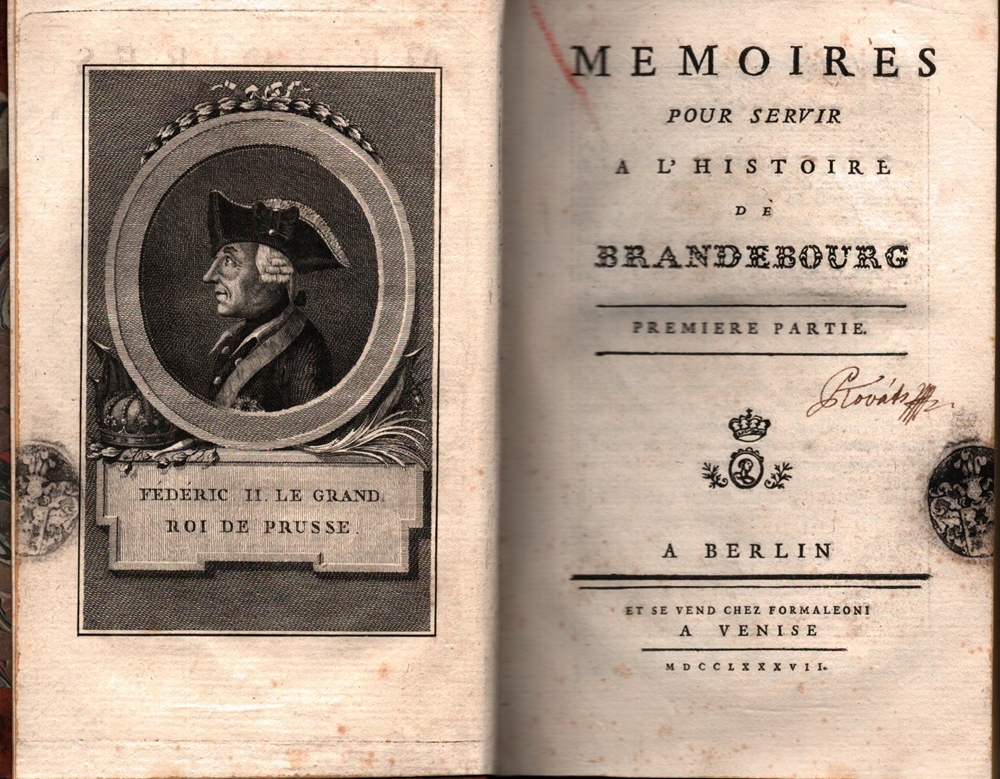
1787réf. 99569À Berlin et se vend chez formaleoni à Venise, 1787. Gestoch. Portrait-Tafel, XII, 232 S. (= Oeuvres complettes de Federic (!) Roi de Prusse, Tome 1). 18,5 cm. HLdr d. Zeit mit floraler Rückenverg. u. 2 goldgepr. RSchildern.
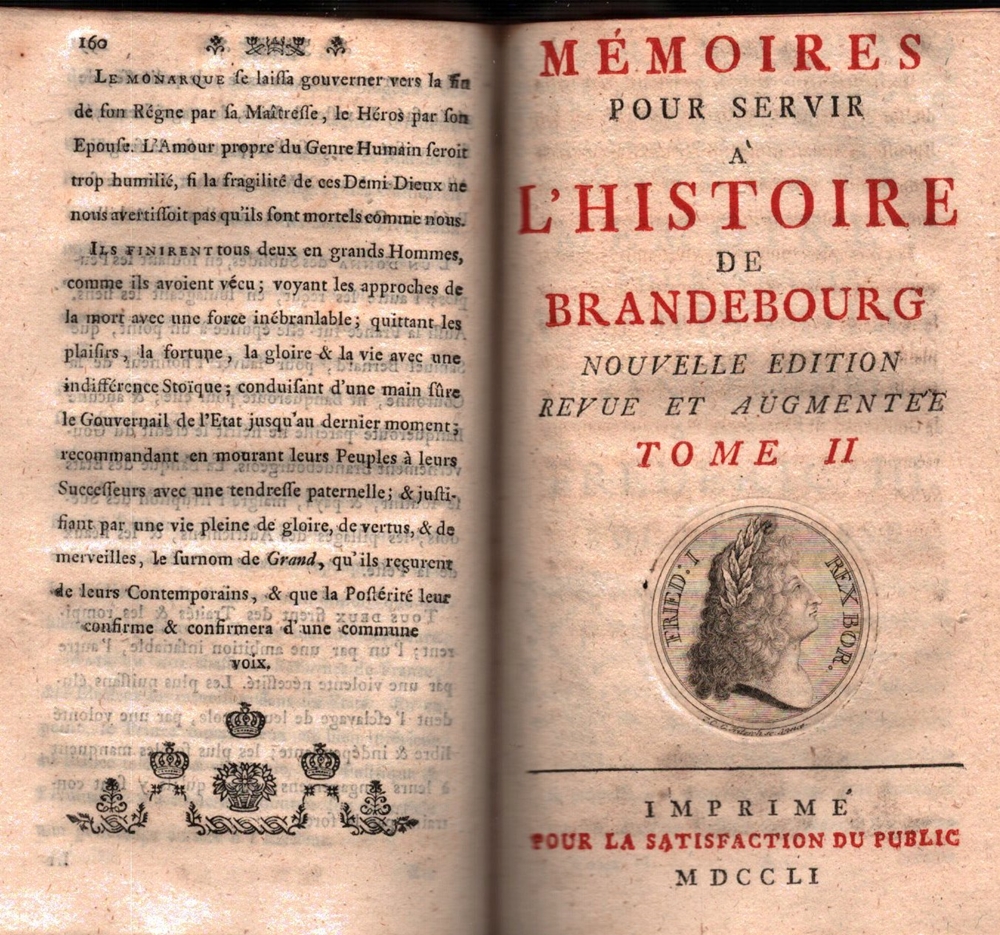
1751réf. 96180[Ohne Ort u. Verlag], Imprimé pour la Satisfaction du Public (fingiert), 1751. Titel in Rot-Schwarz-Druck mit gestoch. Portrait-Darstellung von J.C.C. Fritzsche, 160 S.; Titel in Rot-Schwarz-Druck mit gestoch. Portrait-Darstellung von J.C.C. Fritzsche, 186 S. 17 cm. HLdr d. Zeit.
1959réf. 2407100222xbvkKyoto/Japan, Jimbunkagaku Kenkyusho Kyoto University, 1957-1959. Overall ~2.100 pages. - 4 Publisher's gilt titled orange-colour cloth-bindings in 3 publ. slipcases (Vol. 3 and Index-Vol. in 1 slipcase); 4to.(ca. 26 x 19 x 17 cm; ca. 5 kg.).
1964réf. 2407100220xbvkKyoto, Jimbunkagaku Kenkyusho Kyoto University, 1964. 889 (1) pages. - Publisher's gilt titled orange-colour cloth-binding in the publ. slipcase; 4to.(ca. 26 x 19 x 5 cm; ca. 2 kg.).
1965réf. 2407100221xbvkKyoto, Jimbunkagaku Kenkyusho Kyoto University, 1965. 20 p., pages 883-1.825 (1) pages. - Publisher's gilt titled orange-colour cloth-binding in the publ. slipcase; 4to.(ca. 26 x 19 x 5 cm; ca. 2 kg.).
1960réf. 2407100218xbvkKyoto, Jimbunkagaku Kenkyusho Kyoto University, 1960. 887 (2) pages. - Publisher's gilt titled orange-colour cloth-binding in the publ. slipcase; 4to.(ca. 26 x 19 x 5 cm; ca. 2 kg.).
1965réf. 2407100219xbvkKyoto, Jimbunkagaku Kenkyusho Kyoto University, 1964/1965. 20, 1.825 (2) pages. - Publisher's gilt titled orange-colour cloth-bindings in the publ. slipcases; 4to.(ca. 26 x 19 x 10 cm; ca. 3,5 kg.).
1954réf. 2407100213xbvkKyoto, Jimbunkagaku Kenkyusho Kyoto University, 1954. 383 (1) pages. - Publisher's gilt titled orange-colour cloth-binding in the publ. slipcase; 4to.(ca. 26 x 19 x 2 cm).
1960réf. 2407100214xbvkKyoto, Jimbunkagaku Kenkyusho Kyoto University, 1954/1960. 120 (1) / 178 (1) pages. - Publisher's gilt titled orange-colour cloth-bindings in the publ. slipcases; 4to.(ca. 26 x 19 x 4 cm; ca. 2 kg.).
1958réf. 2407100217xbvkKyoto, Jimbunkagaku Kenkyusho Kyoto University, 1958. 48, 180 (1) pages. - Publisher's gilt titled orange-colour cloth-binding in the publ. slipcase; 4to.(ca. 26 x 19 x 2,5 cm).
1915réf. 2004270367xbvkBerlin, Scherl, 1915. Portraitfrontispiz, 96 Seiten; durchgehend bebildert. - Fester bedruckter Originaleinband; 4to.(ca. 31 x 23,5 cm).
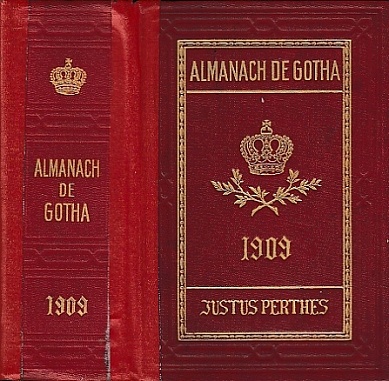
1909réf. 95078Gotha, Verlag Justus Perthes 1909. Mit Frontispiz von Victoria, Königin von Schweden und weiteren Bildnissen., XXIV, 1236 Seiten., Kl.-8°. goldgeprägte rote OLeinwand.,
1995réf. 60660Köln: Böhlau (Münsterische historische Forschungen, Band 7), 1995. Quellenkritische Studien VI, 478 S. (23 cm) Broschierte Ausgabe
2000réf. 907509Stuttgart: Thorbecke, 2000. X, 485 S. mit graph. Darst., gebundene Ausgabe mit illustr. Umschl.
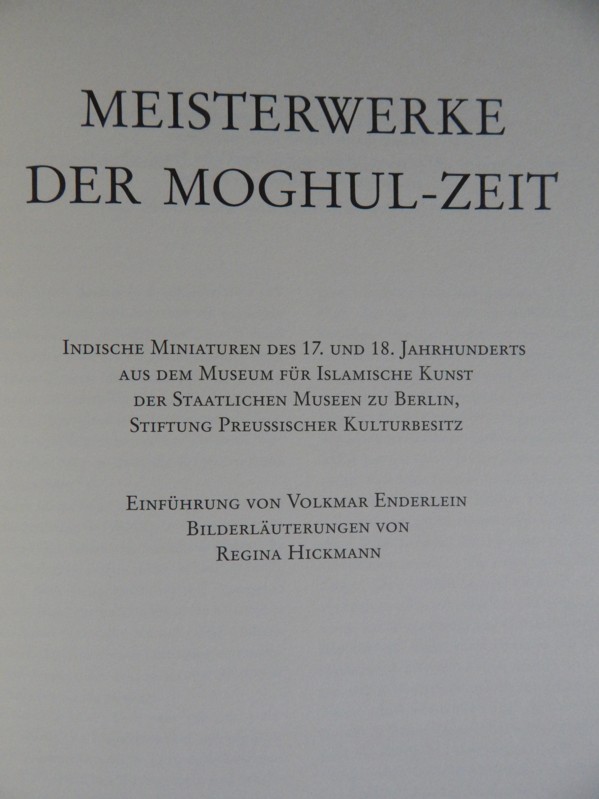
1993réf. 004kelStuttgart u.a., Coron, 1993. Schmuck-Kassette, bibliophil gestaltet, gr. DinA 4, mit glitzerndem hellen Stoff überzogen, eingelegt eingeklebtes farbiges Deckelschild mit indischem Titel-Text; darin: 10 büttenbezogene Karton- Klapp-Mappen mit je einem farbigen Miniatur-Faksimile (ca. DinA 4) mit 23,5 Karat Echtgold nach den Prinzipien der mittelalterlichen Handvergoldung belegt, links dazu Bildbeschreibung und handschriftlich eingetragene Nummer der Kassette (dieses Exemplar trägt die Nummer 31); 1 Broschur mit 27 Seiten Einführungstext und Bilderläuterungen; 1 vierseitige farbig bebilderte Beschreibung des Exponats (Werbung); 2 Bestellurkunde mit Angabe des ursprüngliche DM-Preises von 1.680,--DM; 1 kleine Mappe, ca. DinA 5, mit 10 losen Blättern mit Kurztexten zu den einzelnen Miniaturen der Coron-Exklusiv-Edition zu weiteren Kassette liegt vom Verlag bei (geringe Gebrauchsspuren); sowie alter Lieferschein, minimale Gebrauchsspuren, (sehr) gut erhalten / (sehr) guter Zustand [7 Warenabbildungen]
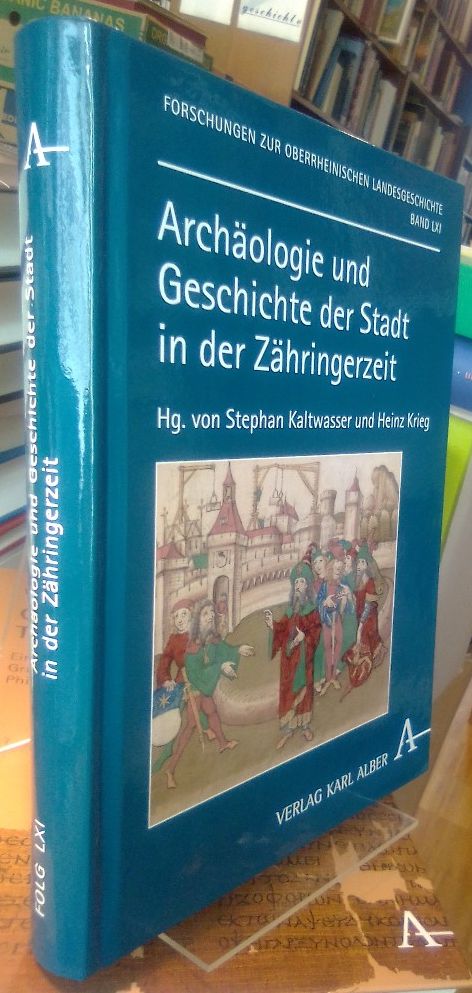
réf. 95667Freiburg i. Br., Alber 2019. 271 Seiten. Hardcover/Pappeinband
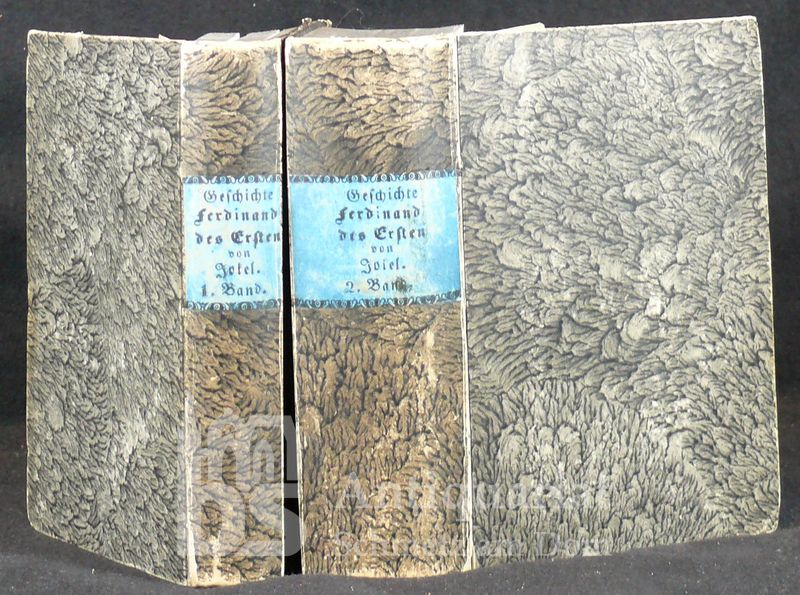
1842réf. 48701ABWien, Mechitaristen-Congregations-Buchhandlung 1842-43. 2 Bände. Kl.-8°. XX, (21)-340, 141, (1) S.; (2) S., 10 Bl., (3)-279, 256, 398 S., 2 Bl. (Verlagsanzeigen, davon ein Faltblatt). Marmorierte Pappbände der Zeit mit Rückenschild. Kanten berieben, Deckel-Ecken etwas bestoßen.