Praschl-Bichler, GabrieleAntiquariat.de
1 152 résultats
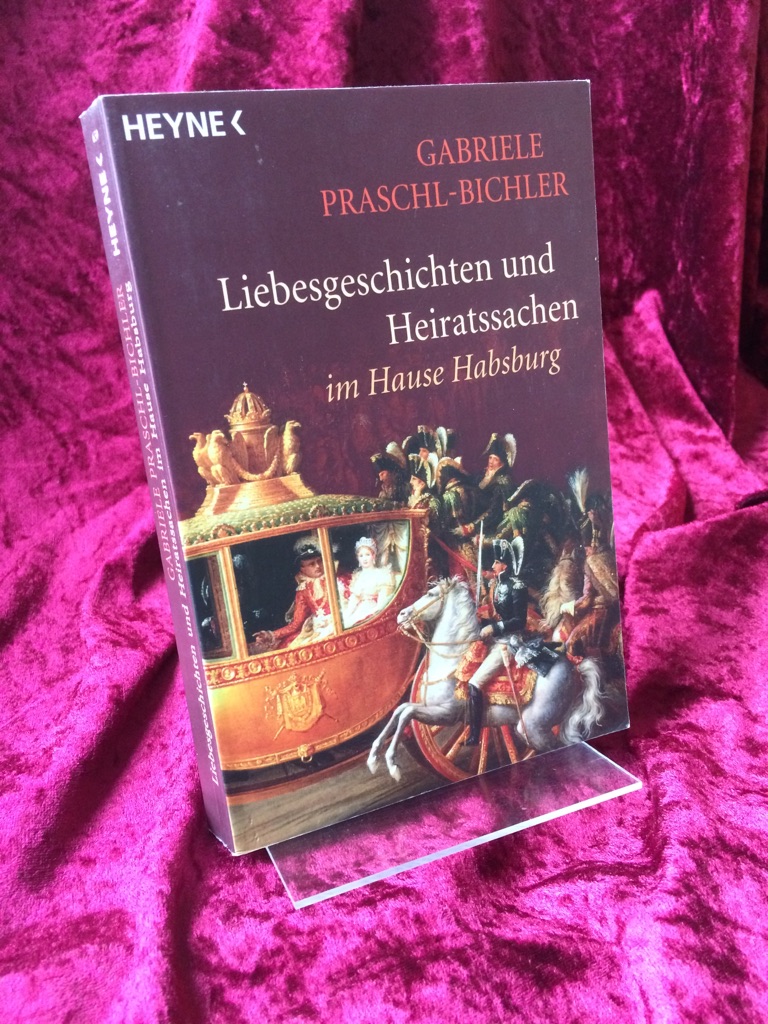
2003réf. 111143München: Heyne, 2003. 287 S. mit zahlreichen Abbildungen; 8°, OKart. (Taschenbuch);
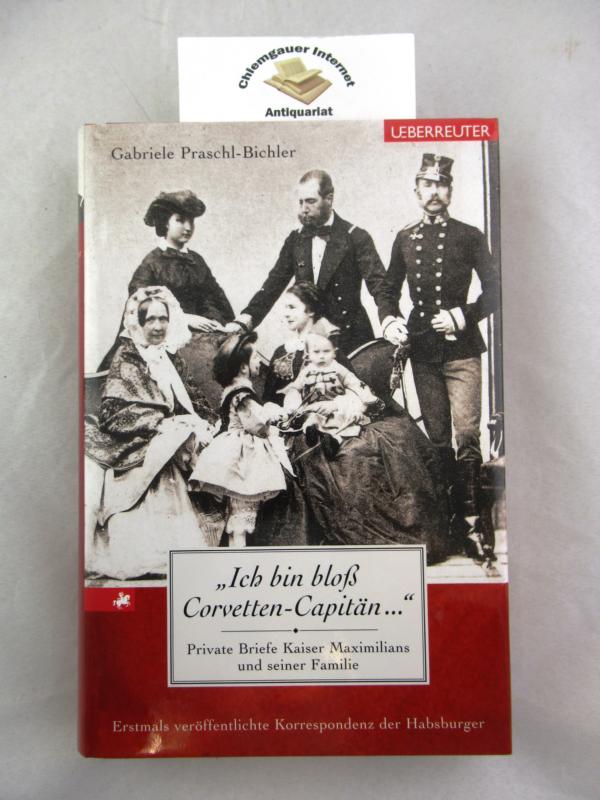
2006réf. 265275Wien : Ueberreuter, 2006. 239 Seiten Mit zahlreichen dokumentarischen Abbildungen. 23 cm Originalbroschur.
réf. 82357Paris, Librairie Plon, 1911. 14 x 23, 514 pp., 1 héliogravure, reliure dos/coins rexine rouge, couverture conservée, très bon état.
réf. 48483Editions du Centaure, s.d. (ca 1945). 13 x 20, 24 pp., broché, bon état.
réf. 48468Bruxelles, Musée Royale de l'Armée, 1982. 22 x 20, 147 pp., nombreuses illustrations en couleurs et en N/B, broché, très bon état.
réf. 41372Bruxelles, Luc Pire, 2001. 15 x 21, 95 pp., broché, bon état.
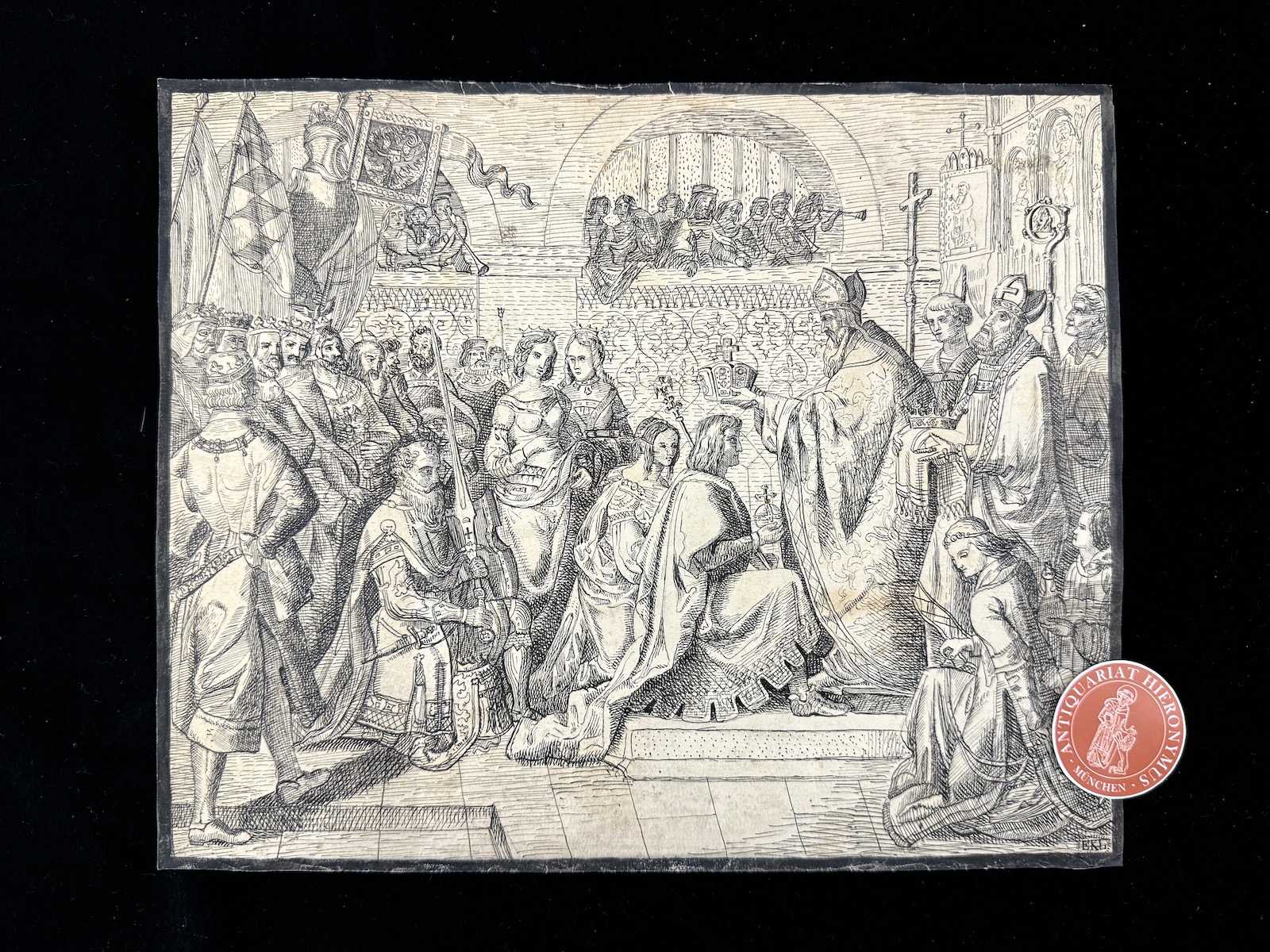
1890réf. 13026München, um 1890. Tuschezeichnung. Blattgröße: 22,8 x 28 cm. [2 Warenabbildungen]
réf. 41371Belgique, Noël Vaessen/ Sean Publishing, 2007. 15 x 21, 279 pp., quelques illustrations en couleurs, broché, bon état.
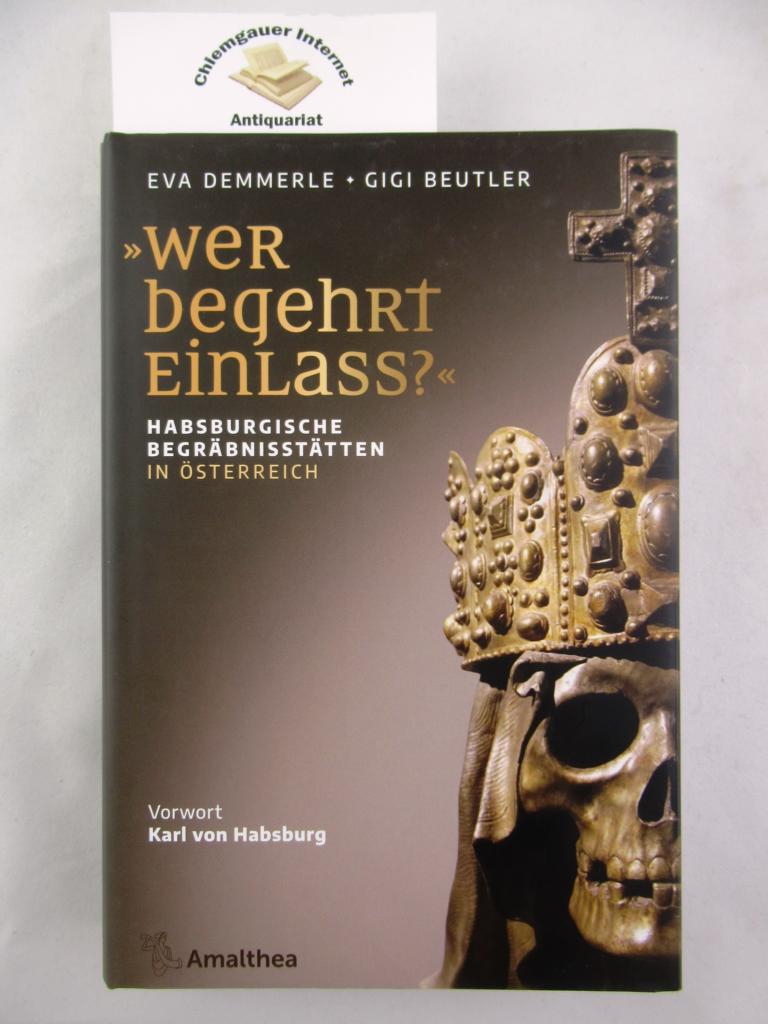
réf. 253406Wien : Amalthea Verlag, 2019. 272 Seiten. Mit zahlreichen dokumentarischen Abbildungen. 22 cm Originalpappband mit Original-Schutzumschlag.
in-4, 334 pp., nombreuses illustrations in-t., broché. Bon etat. [BAT-9] Contributions de A. Molitor, L. Moulin, G.H. Dumont.
New English Paperback. Pbo. Oblong 4to. (27 x 28 cm). In English and Turkish. 219 p., ills. The Ottoman Empire, which, for centuries, had successfully ruled nations and communities of diverse ethnic origins and religious denominations under the same administrative system, was entering an irrevocable process of disintegration at the turn of the 20th century. Struggling to take precautionary steps against the pressures of the "New Nation States" that originated from the Balkans, which were openly supported by Russia, England, Austria and Greece, Sultan Abdulhamid II announced -out of despair and the fait accomplihe faced- the proclamation of the Second Constitution on 24 July 1908 to protect his throne, for he justifiably believed this to be the only solution to prevent, or at least delay the complete disintegration of the Empire. Sultan Abdulhamid II, who by then was nearing the 32nd year of his reign, was convinced that this was the sole measure to be taken to keep under control the power "Young Turk" movement, which increasingly evolved into a stronger force under the auspices of the "Committee of Union and Progress", had over the large masses. It was, on the other hand, impossible for the restoration of the 1876 Constitution and the implementation of a Constitutional regime based on a newly established parliament by way of elections, to provide viable solutions to the grander problems of the Empire. The upheaval instigated by the Islamic faction waging war against the Committee of Union and Progress and the counter- revolution attempt, which has come to be known as the "31 March Incident", ended when the Third Army stationed in Salonica arrived in Istanbul and seized control of the govemment. The deposition of Sultan Abdulhamid II on 27 April 1909 and the subsequent enthronement of the 65-year-old Sultan Mehmed Resad V meant, evidently, that the government of the Empire was now in the hands of the leaders of the Committee of Union and Progress. In the ensuing years, the rigours of the Balkan War and World War I compelled the Committee members, who adopted "Liberty - Justice - Fraternity and Equality" ideals as their slogan, to relinquish their pluralistic and democratic stance and pursue a nationalistic discourse, which, in turn, accelerated the run towards the inevitable end. The purpose of the catalogue and the exhibition we designed in commemoration of "The 400th Anniversary of the Restoration ofthe Constitution" is to draw attention to a tumultuous period that had significant repercussions on the Republic years. It is rather intriguing how, from books and posters to memorabilia, and even quotidian objects, masses of diverse religions and races expressed their yearning for and expectations from a more democratic regime. I would like to extend my sincere thanks to Sinan Kuneralp, Prof. Edhem Eldem, Dr. Sacit Kutlu, David Barchard, Paul Bessemer and Sukru Ilicak, who all contributed to the exhibition catalogue with their valuable articles; to Mehmet Akgul, Atom Damali, Oktar Kubat, Ugur Yegin, Ugur Goktasli, Orlando Kalumeno, Roni Margulies and Ekrem Gocay, who made it possible for the works in their private archives and collections to be published in the catalogue and displayed in the exhibition; to Sadberk Hamin Museum Director Hulya Bilgi and her team; and to project coordinator Bahattin Oztuncay, with whom we collaborated on the selection of items included in the exhibition and the catalogue.
New English Paperback. Pbo. Oblong 4to. (27 x 28 cm). In English and Turkish. 219 p., ills. The Ottoman Empire, which, for centuries, had successfully ruled nations and communities of diverse ethnic origins and religious denominations under the same administrative system, was entering an irrevocable process of disintegration at the turn of the 20th century. Struggling to take precautionary steps against the pressures of the "New Nation States" that originated from the Balkans, which were openly supported by Russia, England, Austria and Greece, Sultan Abdulhamid II announced -out of despair and the fait accomplihe faced- the proclamation of the Second Constitution on 24 July 1908 to protect his throne, for he justifiably believed this to be the only solution to prevent, or at least delay the complete disintegration of the Empire. Sultan Abdulhamid II, who by then was nearing the 32nd year of his reign, was convinced that this was the sole measure to be taken to keep under control the power "Young Turk" movement, which increasingly evolved into a stronger force under the auspices of the "Committee of Union and Progress", had over the large masses. It was, on the other hand, impossible for the restoration of the 1876 Constitution and the implementation of a Constitutional regime based on a newly established parliament by way of elections, to provide viable solutions to the grander problems of the Empire. The upheaval instigated by the Islamic faction waging war against the Committee of Union and Progress and the counter- revolution attempt, which has come to be known as the "31 March Incident", ended when the Third Army stationed in Salonica arrived in Istanbul and seized control of the govemment. The deposition of Sultan Abdulhamid II on 27 April 1909 and the subsequent enthronement of the 65-year-old Sultan Mehmed Resad V meant, evidently, that the government of the Empire was now in the hands of the leaders of the Committee of Union and Progress. In the ensuing years, the rigours of the Balkan War and World War I compelled the Committee members, who adopted "Liberty - Justice - Fraternity and Equality" ideals as their slogan, to relinquish their pluralistic and democratic stance and pursue a nationalistic discourse, which, in turn, accelerated the run towards the inevitable end. The purpose of the catalogue and the exhibition we designed in commemoration of "The 400th Anniversary of the Restoration ofthe Constitution" is to draw attention to a tumultuous period that had significant repercussions on the Republic years. It is rather intriguing how, from books and posters to memorabilia, and even quotidian objects, masses of diverse religions and races expressed their yearning for and expectations from a more democratic regime. I would like to extend my sincere thanks to Sinan Kuneralp, Prof. Edhem Eldem, Dr. Sacit Kutlu, David Barchard, Paul Bessemer and Sukru Ilicak, who all contributed to the exhibition catalogue with their valuable articles; to Mehmet Akgul, Atom Damali, Oktar Kubat, Ugur Yegin, Ugur Goktasli, Orlando Kalumeno, Roni Margulies and Ekrem Gocay, who made it possible for the works in their private archives and collections to be published in the catalogue and displayed in the exhibition; to Sadberk Hamin Museum Director Hulya Bilgi and her team; and to project coordinator Bahattin Oztuncay, with whom we collaborated on the selection of items included in the exhibition and the catalogue.
fort volume grand in-8, 104 + 100 + 104 pages, illustrations dans le texte, reliure plein simili bordeaux, decor doré aux Armes de la Belgique. Bel exemplaire. [TX-23]
1984réf. B64001Kapellen, De Nederlandsche boekhandel 1984 180pp., 22cm., mooie staat
180pp., 22cm., mooie staat
Mm 240x280 Catalogo della Mostra tenuta a Torino, MAO Museo d'Arte Oriente nel 2012-2013. Brossura originale con bandelle, 239 pagine profusamente illustrate a colori nel testo. Libro in condizioni di nuovo - brand new in original shrink-wrap. SPEDIZIONE IN 24 ORE DALLA CONFERMA DELL'ORDINE.
1915réf. 2004270367xbvkBerlin, Scherl, 1915. Portraitfrontispiz, 96 Seiten; durchgehend bebildert. - Fester bedruckter Originaleinband; 4to.(ca. 31 x 23,5 cm).
Mm 210x280 Volume nella sua brossura originale, xiii + 744 pagine con un ricco corredo di illustrazioni in nero e a colori nel testo. Opera in ottime condizioni. Testo in tedesco. Spedizione in 24 ore dalla conferma dell'ordine.
1994réf. 1222911Harrassowitz Verlag; Wiesbaden, 1994. XIX; 264 S. und Illustr. auf 10 Tafelseiten / VII; 191 S.; 30 cm; kart. / 2 Bde.
Very Good Turkish, Ottoman (1500-1928) Paperback. Chipped on margins. Some owner notes. Otherwise a good copy. Roy. 8vo. (24 x 18 cm). In Ottoman script. 32 p. This rare book includes the royal travel of Sultan Abdülmecid in 1262 AH [1846 AD] to Roumelia. From Edirne, Abdülmecid proceeded to Eski Zagra (Stara Zagora), Kizanlik (Kazanluk), Gabrova (Gabrovo), Tirnova (Turnovo), Rusçuk (Ruse), Silistre (Silistra), and Varna. The route of the 1846 tour followed closely, except in reverse order, Mahmud II's tour of 1837. According to witness accounts, along the way, the sultan was greeted everywhere with poetic recitations and songs of praise and prayer, both in Ottoman and Bulgarian. The pride of place among welcoming parties invariably fell on students, of all creeds, most clad in white uniforms, some in solemn church-going attire, with flowers and green branches in their hands. At every stop, ceremonial cannon salvos were fired during the day and elaborate firework illuminations were performed at night. In the town of Kizanlik, known then as now for the most fragrant roses and the best rose oil, the sultan's visit coincided, possibly by design, with the rose harvesting season. So the locals sprinkled rose water and poured rose oil before the sultan's cavalcade. According to Hristo Stambolski, in the three days of the sultan's stay in town, no rose harvesting was done so that the whole area would be exquisitely scented in his honor. For his part, the sultan had doctors vaccinate all children against smallpox in public before sending each one off with a small gift of money. Even people with rare diseases were, on occasion, summoned to the sultan's presence so his doctors could cure them. The sublime visit caused the locals, who were unaccustomed to direct contact with the center of power, quite a stir. The most detailed account, albeit from a hostile source, relates the sultan's visit to Rusçuk, which, at four days, may have also been the longest. According to Nayden Gerov, the greeting ceremonies proceeded on a communal basis, with the Jews being placed closest to the town walls, next to them the Armenians, then the Bulgarians, and finally, the Muslims, situated the farthest from town, yet being the first to see and welcome the sultan. As the sultan approached, each group of youngsters would in turn sing for him, everyone else bowing profusely. Based on Gerov's description, it seems that Abdülmecid was dressed in a slightly more luxurious fashion than during state ceremonies in Istanbul. ((Source: Sultan Abdülmecid's Tour of Rumelia and the Trope of Love by Stephanov). The sultan began to travel by the way of the gate of Yedikule in Istanbul in May 6, 1846. He followed the way of Ayastefanos, Silivri, Çorlu, Burgaz, Edirne, Zagra-i Atik, Kizanli, Trnova, Rusçuk, Silistre, Rusçuk, Shumnu, and Varna and came back to Istanbul by way of the sea on June 14, 1846. During this travel, the Sultan listened to people's problems and ordered the authorities to be solved with those problems. He received successful military and administrative authorities in settlements on the way of travel and rewarded them. He also received the governors of Serbia, Eflak and Bogdan, and the representatives of foreign states. With this travel, the Sultan aimed to strengthen the connection to the center of people and administrators in provinces. Özege 17910. First Edition.
New Turkish Paperback. Roy. 8vo. (23 x 16 cm). Edition in Turkish. 304 p. [Abbasids] Abbâsîler. The Abbasids rose to power by bringing the Umayyad reign to an end with a revolution that has been described as a definitive turning point in the history of Islam. The Abbasids' accession to power, who reigned for over 500 years, bringing with them many changes in political, social, cultural and religious construct. This study, which aims to provide a historical account of the Abbasid period for those who are curious about the history of Islam, is designed to cover the political history of the Abbasid period, as well as topics related to culture&civilization. While analyzing the outlines of the Abbasid history, this book exhibits an approach that presents the period in a chronological stream and centers around the major events and facts that constitute the basic Dynamics of the era, rather than a caliph-centered narrative style.
Very Good Turkish, Ottoman (1500-1928) Original autograph letter. 2 p. No letterhead on paper. In Ottoman script. Sent to Hayri Bey Efendi. Dated February, 25, 1945. A fine script. Sent from abroad to Turkey before one year of his return. Damat Mehmet Serif was a Turkish statesman, Ottoman Minister of Interior, author, translator and the groom of Sultan Abdulaziz. He graduated Mulkiye School and worked in various government services. In 1901, he married Emine Sultan who was the daughter of Sultan Abdülaziz. Therefore he was groom (Damat) of Ottoman Court in the last period of the Ottoman Empire. He was translator of 'Voyages of Ibn-i Battuta' into Turkish from Arabic language and 'The Prince' by Machiavelli. from French. (Source: Türk meshurlari -1946-, Ibrahim Alaettin Gövsa). He's known with his a negative attitude towards the Turkish War of Independence. After that, he became one of the people disrupting the national unity in the Speech by Mustafa Kemal Atatürk. When the War of Independence was successful, he was fled and banished. He returned from exile to Turkey in 1946.
Very Good Turkish Original typescript letter with autograph signature. 1 p. 'Turkish Ministry' letterhead. In Turkish. Dated April, 28, 1950, Ankara. A letter of thanks. Erim wrote this letter when Türkgeldi was in India as ambassador. Mentions also Kasim Gülek, (1905-1996) who was Republican Party General Secretary and politician. Signed by Nihat Erim. Ismail Nihat Erim was a Turkish politician and jurist. He served as the 30th Prime Minister of Turkey for almost 14 months after the 1971 Turkish coup d'état. He was assassinated in Istanbul in 1980. Âli Türkgeldi was the first Turkish ambassador in New Delhi, India. He's from 'Türkgeldi' family.
Fair French Modern full brown leather, gilt lettering of title on front board. Heavily water stained, and some chippings on extremities of some pages. A fair copy. 4to. (27 x 20 cm). In French. 63 p. The very rare autographed copy of this lecture given in Lebanon on January 20, 1937, at the Youth Center, by Ostrorog after his serving in China as Assistant High Commissioner, a French diplomat from a noble Polish family, who had served as Assistant High Commissioner in China and Syria in the 1930s. Signed and inscribed by Ostrorog as "Par Mahid, Avec autre au mille amitié, Damas, 1938". On the eve of the Second Sino-Japanese War (1937-1945) between the Chinese and the Empire of Japan which is often regarded as the beginning of World War II in Asia, French ex-Assistant High Commissioner in China Ostrorog gave a lecture about Chinese power and policy. Some titles from book: "La Chine.; Le monde au temps de Confucius.; Humanisme Confuceen.; Opposition de l'humanisme Chinois a la morale idealiste de l'occident.; Facteur grammatical.; Universalite des caracteres.; Facteur geographique.; Facteur moral.; La republique des philosophes.; Reaction de Huang Ti au 3me siecle avant notre ere.; Evolution historique dans le cadre de l'unite.; Isolement.; Arrivee des Europeens au XVIme siecle les marchands et les missionnaires.; La querelle des rites condamnation des Jesuites.; Eclat du couchant Kien Lung.; Lettre de Kien Lung a Georges III.; Guerre de l'Opium.; Qeuvre des missions en Chine.; Tseu-hi et Abdul-Hamid.; Le Japon.; Propagande de Moscou.; Succes du mouvement nationaliste.; Intervention Japonaise en Mandchourie.; L'Unite Chinoise menacee.; La Grande pitie.; L'avenir de la Chine.". From the last chapter: "In our contract, the Chinese until now have taken only the faults and vices of Western civilizations. There is, however, something else to choose from and perhaps the time is near when the Chinese will understand it. Whether they are few in number, fifty, forty, ten, or five only, that will suffice. And on that day, with the power of assimilation which has always characterized it, China will integrate, in a way, all the foreign contributions of a moral or cultural order, to rebuild its unity, to resume the continuity of his story, and rediscover his genius." Only two copies in OCLC: 42804470. Signed and inscribed by Stanislas Ostrorog.