GUOFANG, Jiang (Paintings by) - SHAOBAI, Li (Photos by)Livre Rare Book
1.588 Ergebnisse
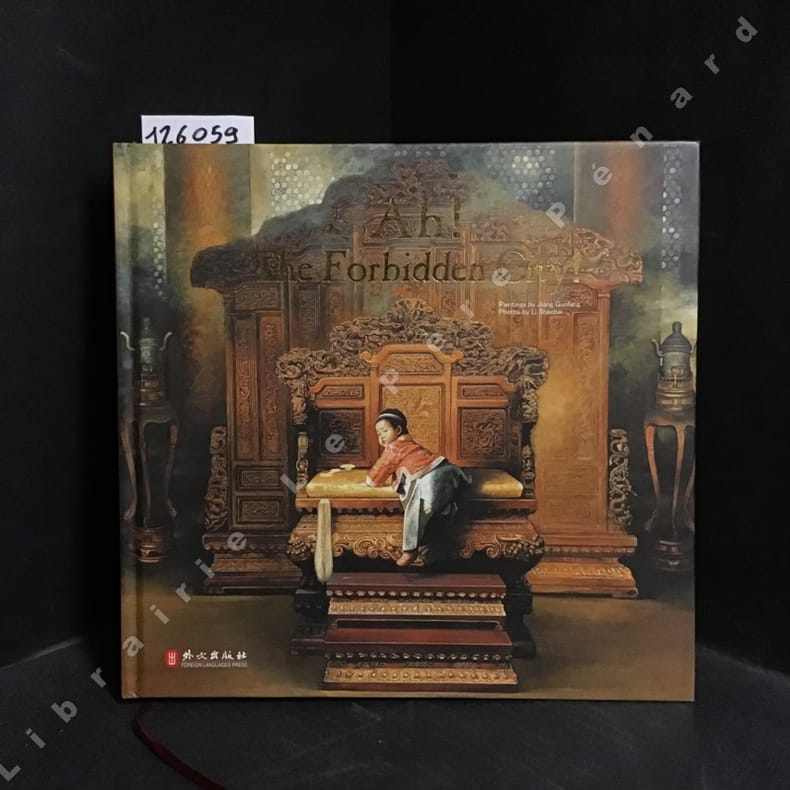
2011Best.-Nr. 1260592011 Foreign Languages Press - 2011 - In-4 à l'italienne, relié, cartonnage illustré, signet, sans son étui - 370 pages - Nombreuses illustrations en couleurs, in et hors texte, dans l'ouvrage - Texte en anglais
1990Former owner's bookplate to inner cover (crossed with one line). Scholar's name to ffep (E. Badian). Top corners slightly bumped. ; The biblical portrayal of Achaemenid rulers / Peter R. Ackroyd --Persian decor in Cyropaedia: some observations / Chr. Tuplin --Cyrus in Italy: from Dante to Machiavelli : some explorations of the reception of Xenophon's Cyropaedia / Heleen Sancisi-Weerdenburg --Annius of Viterbo on Persian history: the success story of a fifteenth century forgery / Geert Harmanny --Brissonius: de Regio Persarum principatu libri tres (1590) / David Lewis --Two views on Persian history in eighteenth century England / Maria Brosius --Die Orientalen auf Thorvaldsens Alexanderfries / P. Calmeyer / Alexander and Babylon / Amélie Kuhrt --Models of the Orient in the art history of the Orient-Alizing period / Ann C. Gunter --Zur Geschichte der Begriffe 'Arier' und 'arisch' in der deutschen Sprachwissenschaft und Althistorie des 19 und der ersten Hälfte des 20. Jahrhunderts / Josef Wiesenhöfer --Groningen 1987: libres réflexions / Pierre Briant. ; Achaemenid History Vol. 5; Vol. 5; 170 pages
2004New New English Original bdg. Dust wrapper. 4to. (29 x 21 cm). In English. 222 p., color and b/w ills. Abdülmecid Efendi: Ottoman prince and painter. Abdülmecid Efendi - heir to the Ottoman throne, the last caliph, painter and musician - was an intellectual who in the debates and searchings of the period from the disintegration of the Ottoman Empire to the establishment of the new Turkish Republic was committed to modernisation and his belief in the compatibility of Islamic traditions and westernization. Abdülmecid Efendi, Ottoman Prince and Painter explores the art and life of this important figure 50 years after his death. Günsel Renda, emre Araci, Eylem Yagbasan and M. Sinan Genim reappraise his paintings, music, ideas and aspirations.
2017New Turkish Paperback. Roy. 8vo. (24 x 17 cm). In Turkish. 480 p. Abbasiler dönemi ve Murabitlar Devleti. The Almoravid dynasty was an imperial Berber Muslim dynasty centered in Morocco. It established an empire in the 11th century that stretched over the western Maghreb and Al-Andalus. Founded by Abdallah ibn Yasin, the Almoravid capital was Marrakesh, a city the ruling house founded in 1062. The dynasty originated among the Lamtuna and the Gudala, nomadic Berber tribes of the Sahara, traversing the territory between the Draa, the Niger, and the Senegal rivers.
1980Best.-Nr. 2092902141203001old books in shanghai 1980. Soft Cover. Fine. Volume: 1 old books in shanghai paperback
1999303pp.met stamboom en plan, 22cm., mooie staat
1999Best.-Nr. N64191Amsterdam, Bert Bakker 1999 303pp. met stamboom en plan, 22cm., mooie staat, N64191
2018Best.-Nr. 2081502111907741Shanghai Ancient Book Publishing House 2018. Soft Cover. Fine. Number of pages: 1908 pages Size: 16 open Soft Cover Shanghai Ancient Book Publishing House paperback
1980Very Good English Paperback. Demy 8vo. (22 x 15 cm). In English. 29 p., errata. A summary of Ayatollah Taleqani's biography. Ayatollah'ss portrait on cover. A summary of Ayatollah Taleqani's biography. Shamsi: 1359 = Gregorian: 1980.
1887Best.-Nr. 2091202133212828Not Available 1887. Soft Cover. Fine. Number of books: 5 books in total Not Available paperback
2015New English Paperback. Roy. 8vo. (24 x 17 cm). In English with a preface by Persian. [x], 206 p. A reference guide to the history of Iran. Selected texts. Vol. 1: (To A.D. 1500). 9th Edition. 500 copies were printed. Shamsi: 1394 = Gregorian: 2015. Contents: Dynasties in Iran.; Pre-Islamic history of Iran.; The development of Islam and its spread in Iran.; Islamic Iran: A.D. 972-1501.; Muslim and Persian science.; Selections from primary historical sources on Iran.; Research materials on Iran.; Transliteration systems, abbreviations and...; Bibliography.; Index.
1968431 + xv Pages. Index of Sumerian and Logograms. Index of Akkadian. General index. Bibliography of Written Sources. Text in English. "Investigates the political history of Babylonia during an obscure segment of her existence as a nation: from the rise of the Second Dynasty of Isin (c. 1158 B.C.) to the death of Shalmaneser V (722 B.C.)." - from Introduction. Library markings, primarily to contents. Brown buckram with blue lettering upon backstrip. Average wear. Binding intact. A sound copy. Book
Best.-Nr. 12331In 8 broché, causeries de l’école Antique et de l’Académie In 8 broché. Faux-titre, titre, 152 pages, 1 page de table des matières, figures dans le texte. Nîmes imprimerie Chastanier frères et Alméras 1936. Couverture poussiéreuse, intérieur en très bon état
Best.-Nr. awd-1155S. n. (Arcueil) 1984. In-8 en feuilles, couverture illustrée en couleurs, emboitage en toile bleue (imprimé en rouge) de l’éditeur (32 pp.).
1990Best.-Nr. 2081402109701350Katana mizushobo 1990. Soft Cover. Fine. The book is in fine condition. Katana mizushobo paperback
1990Best.-Nr. 2110502151110780Katana mizushobo 1990. Soft Cover. Fine. Number of books: 1 Katana mizushobo paperback
1965Very Good English Original cloth bdg. Large roy. 8vo. (25 x 18 cm). In English. [v], [5], 172 p. A descriptive catalogue of the Fyzee Collection of Ismaili manuscripts.Most of the Western Isma'ili literature is in Arabic. A number of these works are extant in manuscript form and are preserved by some of the followers of ad-Da'watu'l-Qadîma, mainly by the Dâ'ûdî Bohras of India. It is said that large numbers of manuscripts are also preserved in the Yemen. Besides these two major sources, manuscripts are found in some other places also. The Ismaili Society has collected manuscripts and preserved them in their library. Non-Ismaailis are taking an interest in this literature, so we find some valuable manuscripts in some public libraries and private collections. This collection of Ismaili manuscripts, belnging to Asaf A. A. Fyzee and presented tothe Bombay University Library, contains some valuable works. The first Ismâ'îlî author is Abû Hâtîm ar-Râzî (see no. ii). He was a contemporary of the famous Razes. His twoimportant works. Kitâbu'l-Islâh (see no. 11) and A'Lâmu'n-nubûwa (see no. 10) are found in this collection . Then Ismâ'îlî literature in the Fatimid period developed fully in the time of Hamîdu'd-dîn al-Kirmânî (see no. viii)ç. Most of his works are also included in this collection. A large number of manuscripts of a very celebrated author of the Fatimid period is at Mu'ayyad fi'd-dîn asb-Shirâzî (see no. X). Some of his works have found their way to this collection...". (From Goriawala's preface).
1981Scholar's bookplate to inner cover (G. P. Goold). Foxing to top of textblock. DJ is price-clipped. DJ spine sunned. ; Extensive commentary and historical introduction to Books 35-37 of Livy. Covers the years 195 to 189 B. C. , and much of the narrative concerns the prelude to and course of the war with the Seleucid King Antiochus III. Book xxxiv contains a detailed account of Cato's campaign in Spain, for which it is argued Livy consulted the works of Cato himself. ; 462 pages
Best.-Nr. 111676The Commercial Press. Peking. 1957. The Commercial Press. Peking. 1957. First edition. Large folio. Bound in coloured patterned brocade silk boards with fine silk cord. Housed in a folding clam shell box of cream water silk with ribbon and ivory closures. Silver sparkly endpapers. 15 mounted colour reproductions very gorgeous. text in Chinese and English. A very clean and fresh copy in original labelled cardboard box torn at corners. hardcover
1968Very Good English Paperback. Pbo. Roy. 8vo. (24 x 17 cm). In English. 313-316 pp. A brief note on the chronology of the Tun-Hang Collections. Separatum Acta Orient.
2017Best.-Nr. 2083002115701526National Library Publishing Company 2017. Soft Cover. Fine. Number of pages: 1 3 6 322p Size: 21cm Number of books: 1 National Library Publishing Company paperback
2013New New Persian Original bdg. Dust wrapper. Roy. 8vo. (24 x 17 cm). In Persian. 252 p., ills. [Xerxes unsuccessful Achaemenid conqueror].= Khashâyârshâ jahân'gushâ-yi nâkâm-i Hakhâmanishî. A study on Xerxes, King of Persia; Achaemenid dynasty.
1930Very Good Turkish Original b/w photograph. (11 x 9 cm). His well-known pose. [Photograph of Resit Rahmeti Arat]. He is one of the Kazan Turks. He is a great language scholar and practitioner, founder of the comparative researches on Turkish linguistics in Turkey. Rare.
1914Very Good French Original b/w press photograph of Mehmed Salih Hüsnü Pasha who was Turkish / Ottoman lieutenant and son-in-law of Damad Mehmed Serif Pasha. He lived in Egypt and he's known with his contacts with the Kurdish committee in Alexandria and also personally closing to Arif Pasha. 15,5 x 11,5 cm. Text in French on verso. Stamps of photographer and 'Miroir' Newspaper Archives.
1932Very Good French Original b/w photograph of Mehmed Münir Ertegün Bey taken in 1932 in Paris. London News and Pieppe Dupuy & Cie.'s stamped on verso. [Photograph of Mehmed Münir [Ertegün] Bey]. Photograph by Pieppe Dupuy & Cie. Münir Bey was a Turkish legal counsel in international law to the "Sublime Porte" (imperial government) of the late Ottoman Empire and a diplomat of the Republic of Turkey during its early years. Ertegun married Emine Hayrünnisa Rüstem in 1917 and the couple had three children, two of whom were Nesuhi and Ahmet Ertegun, the brothers who founded Atlantic Records and became iconic figures in the American music industry. Born in Constantinople to a civil servant father, Mehmet Cemil Bey, and a mother Ayse Hamide Hanim, who was a daughter of Sufi shaykh Ibrahim Edhem Efendi, he studied law at Istanbul University and graduated in 1908. He was a legal counsel for the Ottoman Ministry of Foreign Affairs, when he saw the birth of his first son, Nesuhi, on 26 November 1917, in Constantinople (now Istanbul), during the First World War. Taking part in an Ottoman delegation with a mission to search reconciliation with the Nationalists in Ankara, by the end of 1920, changed his destiny. While the two Ottoman Ministers heading the delegation returned to Istanbul after not achieving an understanding with the revolutionaries led by Mustafa Kemal Pasha he chose to join the National Struggle and remained in Ankara, leaving behind his young wife and three-year-old son, Nesuhi. He became an aide to Mustafa Kemal during the Turkish War of Independence and the chief legal counsel of the Turkish delegation to the resulting Treaty of Lausanne in 1923. After the Western powers recognized the newly founded Republic of Turkey in 1923, he was sent to Geneva to the League of Nations as an observer for the Turkish Republic. During this assignment, he frequently went to Paris for the Ottoman public debt negotiations. Following this posting to the League of Nations, he was appointed ambassador to Switzerland (1925-1930), France (1930-1932), the United Kingdom (1932-1934) and the United States (1934-1944). As the Republic's ambassador to Washington, Ertegun opened his embassy's parlors to African American jazz musicians, who gathered there to play freely in a socio-historical context which was deeply divided by racial segregation at the time. Ambassador Ertegun became the Dean of the Diplomatic Corps in May 1944. He held this last post until he died in Washington, D.C., of a heart attack in November of the same year. In April 1946, a year after World War II had ended, his body was carried back to Istanbul by the USS Missouri and buried in the garden of Sufi tekke, Özbekler Tekkesi in Sultantepe, Üsküdar near his shaykh grandfather Ibrahim Edhem Efendi, who was once the head of the Tekke. (His two sons Nesuhi and Ahmet Ertegun also rest there.). When Ertegun died, there was not yet a mosque in Washington, D.C., at which his funeral could be held. The Islamic Center of Washington was built as a result.


