EISENHOWER, Dwight DBiblio.com
744 résultats
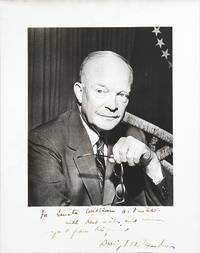
1953réf. 1581571953. A notable portrait presented to a prominent early supporter Inscribed by the president "For Senator William A. Purtell with best wishes and warm regard from his friend Dwight D. Eisenhower"; an appealing image of a pensive Eisenhower by renowned Capitol Hill photographer George Tames taken in the White House as Eisenhower announced the truce ending the Korean War. Purtell 1897-1978 served as Republican Senator for Connecticut in 1952 and from 1953 to 1959. He was one of the earliest Connecticut Republicans to support Eisenhower's run for the presidency. In turn Purtell's success in the November 1952 Connecticut senatorial election rode on the back of the strong public support for Eisenhower in the simultaneous presidential election; Purtell allied himself closely to Eisenhower's campaign platform. "A strong supporter of President D. Eisenhower's policies Senator Purtell was also a staunch American who liked to say: 'we have the finest country the finest system of society and the finest government in the world'" New York Times obituary 1 June 1978. The photographer George Tames 1919-1994 worked for the New York Times on Capitol Hill and in Washington from 1945 to 1985 taking many shots which became iconic. He took the photograph after Eisenhower's joint radio and television address to the nation announcing the signing of the Korean Armistice 26 July 1953. Interestingly this image would have been familiar to millions of Americans through its use on the 6 cent stamp issued in 1970. Official photograph taken by George Tames 358 x 280 mm copyright notice to verso stating reproduction by the Signal Corps of the US Army. Dark oak frame with conservation acrylic glazing 427 x 351 mm. Slight cockling inscription a little faded but still clearly legible very good. unknown
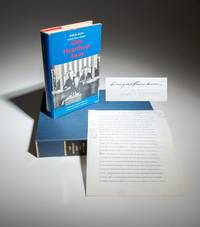
1968réf. 13766Indianapolis: The Bobbs-Merrill Company Inc 1968. First Edition First Printing. Cloth. Fine/fine. Typed preface by former President Dwight D. Eisenhower for One Heartbeat Away: Presidential Disability and Succession by Senator Birch Bayh. Preface is signed by Eisenhower with handwritten notes by the editor. Includes copy of the book. Octavo ix 3 372pp. Red cloth title stamped on spine. Stated "first printing" on copyright page. This copy is unread. In the publisher's fine dust jacket. Book and documents housed in custom blue cloth clamshell case title in gilt on spine in fine condition. Includes a three-page typed preface by former President Eisenhower stapled at top left corner numerous editorial notes in pencil signed by Eisenhower in black pen on the last page. Provenance: RR Auction of Amherst NH purchased in 2022. ".because this possible peril existed Vice President Nixon and I in consultation with the Attorney General prior to my 1956 operation reduced to memorandum form our understanding as to what would be the Vice President's role in the event of a Presidential disability." - former President Dwight D. Eisenhower. The Twenty-fifth Amendment to the United States Constitution clarifies the presidential line of succession and eliminates ambiguity about the role of the Vice President. As President Eisenhower noted in his preface his signed agreement with Vice President Nixon did not have the legal authority to make Nixon the president if Eisenhower had become incapacitated during his surgeries. The death of President Kennedy brought new focus on the presidential line of succession with legislation for the Twenty-fifth Amendment proposed by Senator Bayh in 1965 and ratified by the states in 1967. The Bobbs-Merrill Company, Inc unknown
1968réf. 13766Indianapolis: The Bobbs-Merrill Company Inc 1968. First Edition First Printing. Cloth. Fine/fine. Typed preface by former President Dwight D. Eisenhower for One Heartbeat Away: Presidential Disability and Succession by Senator Birch Bayh. Preface is signed by Eisenhower with handwritten notes by the editor. Includes copy of the book. Octavo ix 3 372pp. Red cloth title stamped on spine. Stated "first printing" on copyright page. This copy is unread. In the publisher's fine dust jacket. Book and documents housed in custom blue cloth clamshell case title in gilt on spine in fine condition. Includes a three-page typed preface by former President Eisenhower stapled at top left corner numerous editorial notes in pencil signed by Eisenhower in black pen on the last page. Provenance: RR Auction of Amherst NH purchased in 2022. ".because this possible peril existed Vice President Nixon and I in consultation with the Attorney General prior to my 1956 operation reduced to memorandum form our understanding as to what would be the Vice President's role in the event of a Presidential disability." - former President Dwight D. Eisenhower. The Twenty-fifth Amendment to the United States Constitution clarifies the presidential line of succession and eliminates ambiguity about the role of the Vice President. As President Eisenhower noted in his preface his signed agreement with Vice President Nixon did not have the legal authority to make Nixon the president if Eisenhower had become incapacitated during his surgeries. The death of President Kennedy brought new focus on the presidential line of succession with legislation for the Twenty-fifth Amendment proposed by Senator Bayh in 1965 and ratified by the states in 1967. The Bobbs-Merrill Company, Inc unknown books
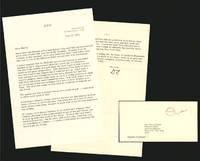
1965réf. 639641965. Signed. EISENHOWER Dwight D. Typed letter signed. Gettysburg: No publisher July 13 1965. Two sheets of letterhead measuring 7 by 10-1/2 inches. $2200.Delightfully conversational typed letter from Dwight D. Eisenhower to his friend Harry Anholt the long-time manager of DenverÕs Brown Palace Hotel regarding golf back maladies and the weather boldly initialed by Eisenhower.The letter typed on EisenhowerÕs personal stationery and addressed to ÒMr. Anholt Biltmore Hotel 43rd and Madison New York New York 10017Ó reads: ÒJuly 13 1965. Dear Harry: Some days ago through Arline and Mamie I learned that you experienced some back trouble that sent you to the hospital. Because I am uncertain at this moment as to your location I think I had better send this note to you at the Biltmore Hotel and ask that it be forwarded. I rather suspect that the difficulty you are now having is somewhat similar to the one I experienced about two years ago in California. One day in the middle of a golf game my back began to hurt and got worse as the game progressed. That afternoon I lay down to take a rest and found to my chagrin that I could not get up. I had quite a time and there was brought in for my use a special bed that had electric gadgets which could raise me up to a sitting position or raise both back and knees when I wanted to read. It at least helped me to get in and out of bed and no longer did I have to have Moaney in to help. The pain was really severe when he would try and help me get out of bed. The upshot was that I missed almost four weeks of golf-eight days of which were spent in bed! According to Mamie Arline said the doctors are just making up their minds whether or not to operate; indicating that your case is much more severe than mine because at least none of my doctors suggested any cutting. Of course it is always irksome to lie in bed but I imagine what bothers you most is the impossibility to get on the golf course and keep up with your work in the office. At least that was what I found bothered me. On the other side of the coin I am lazy and something of a loafer-a tendency that helps be whenever the doctors pin me in bed. After a long dry spell our section had one good rain here but we were so dry that in spite of the fact that the rain came just last week end we need some more right now. I read that New York likewise had a good rain but I doubt that it was enough to alleviate the terrible water shortage that seems to be plaguing New York City. Next Monday Mamie and I are taking off by train to northern Wisconsin where we expect to stay about a week or ten days. Both of us send our very best wishes for your quick and complete recovery and of course are sic affectionate regard to you both As ever signed D.E.Ó ÒMoaneyÓ mentioned in the letter is Sergeant John A. Moaney Jr. who was EisenhowerÕs personal aide from 1942 to 1969 and who served as a pallbearer at his funeral. With original envelope bearing Eisenhower Presidential franking stamp. Staple holes small stain on envelope. Fine condition. unknown
1965réf. 639641965. Signed. EISENHOWER Dwight D. Typed letter signed. Gettysburg: No publisher July 13 1965. Two sheets of letterhead measuring 7 by 10-1/2 inches. $2200.Delightfully conversational typed letter from Dwight D. Eisenhower to his friend Harry Anholt the long-time manager of DenverÕs Brown Palace Hotel regarding golf back maladies and the weather boldly initialed by Eisenhower.The letter typed on EisenhowerÕs personal stationery and addressed to ÒMr. Anholt Biltmore Hotel 43rd and Madison New York New York 10017Ó reads: ÒJuly 13 1965. Dear Harry: Some days ago through Arline and Mamie I learned that you experienced some back trouble that sent you to the hospital. Because I am uncertain at this moment as to your location I think I had better send this note to you at the Biltmore Hotel and ask that it be forwarded. I rather suspect that the difficulty you are now having is somewhat similar to the one I experienced about two years ago in California. One day in the middle of a golf game my back began to hurt and got worse as the game progressed. That afternoon I lay down to take a rest and found to my chagrin that I could not get up. I had quite a time and there was brought in for my use a special bed that had electric gadgets which could raise me up to a sitting position or raise both back and knees when I wanted to read. It at least helped me to get in and out of bed and no longer did I have to have Moaney in to help. The pain was really severe when he would try and help me get out of bed. The upshot was that I missed almost four weeks of golf-eight days of which were spent in bed! According to Mamie Arline said the doctors are just making up their minds whether or not to operate; indicating that your case is much more severe than mine because at least none of my doctors suggested any cutting. Of course it is always irksome to lie in bed but I imagine what bothers you most is the impossibility to get on the golf course and keep up with your work in the office. At least that was what I found bothered me. On the other side of the coin I am lazy and something of a loafer-a tendency that helps be whenever the doctors pin me in bed. After a long dry spell our section had one good rain here but we were so dry that in spite of the fact that the rain came just last week end we need some more right now. I read that New York likewise had a good rain but I doubt that it was enough to alleviate the terrible water shortage that seems to be plaguing New York City. Next Monday Mamie and I are taking off by train to northern Wisconsin where we expect to stay about a week or ten days. Both of us send our very best wishes for your quick and complete recovery and of course are sic affectionate regard to you both As ever signed D.E.Ó ÒMoaneyÓ mentioned in the letter is Sergeant John A. Moaney Jr. who was EisenhowerÕs personal aide from 1942 to 1969 and who served as a pallbearer at his funeral. With original envelope bearing Eisenhower Presidential franking stamp. Staple holes small stain on envelope. Fine condition. unknown books
réf. 250444/4/52. Ike signed this as president and sent it to a Navy veteran On April 4 1949 twelve nations from Western Europe and North America signed the North Atlantic Treaty in Washington D.C. A key feature of this treaty is Article 5 in which the signatory members agreed that ""an armed attack against one or more of them in Europe or North America shall be considered an attack against them all.” Initially however the alliance was not very well prepared to carry out the mission of defending its territory. In addition to grave shortages of troops and equipment there was no command structure to direct the overall defense of Western Europe just committees - known as ""Regional Planning Groups"" - that were charged with drawing up plans for the defense of their regions. The 12 original members were the United States Canada Britain Belgium Denmark France Iceland Italy Luxembourg the Netherlands Norway and Portugal. All this changed after the outbreak of the Korean War in June 1950 which raised fears that Europe could face a similar threat over divided Germany. The nations of the alliance agreed to increase their defence efforts and began working on the creation of an integrated military command structure with an overall commander for NATO forces in Europe. Selecting the first Supreme Allied Commander Europe SACEUR was easy since everyone's first choice was the popular and respected U.S. Army Gen. Dwight D. Eisenhower who had led allied forces in Europe during World War II. On December 19 1950 the North Atlantic Council announced the appointment of General Eisenhower as the first Supreme Allied Commander. In 1952 Greece and Turkey joined in the alliance's first expansion. Document signed by Dwight D. Eisenhower first Supreme Allied Commander of Nato stamped April 4 1952 signed as President in February 1957 the first day cover honoring NATO along with the first NATO stamp honoring NATO. Comes with two letters relating to the cover sent to its owner L. Dean Powell a Navy veteran. We have found no other signed examples of this cover having reached the market. <img class=""alignnone wp-image-25018 size-post-window"" src=""https://cdn.raabcollection.com/wp-content/uploads/20231204144051/Folder-site-11-1600x1327.jpg"" alt="""" width=""1600"" height=""1327"" /> unknown
réf. 250444/4/52. Ike signed this as president and sent it to a Navy veteran On April 4 1949 twelve nations from Western Europe and North America signed the North Atlantic Treaty in Washington D.C. A key feature of this treaty is Article 5 in which the signatory members agreed that ""an armed attack against one or more of them in Europe or North America shall be considered an attack against them all.” Initially however the alliance was not very well prepared to carry out the mission of defending its territory. In addition to grave shortages of troops and equipment there was no command structure to direct the overall defense of Western Europe just committees - known as ""Regional Planning Groups"" - that were charged with drawing up plans for the defense of their regions. The 12 original members were the United States Canada Britain Belgium Denmark France Iceland Italy Luxembourg the Netherlands Norway and Portugal. All this changed after the outbreak of the Korean War in June 1950 which raised fears that Europe could face a similar threat over divided Germany. The nations of the alliance agreed to increase their defence efforts and began working on the creation of an integrated military command structure with an overall commander for NATO forces in Europe. Selecting the first Supreme Allied Commander Europe SACEUR was easy since everyone's first choice was the popular and respected U.S. Army Gen. Dwight D. Eisenhower who had led allied forces in Europe during World War II. On December 19 1950 the North Atlantic Council announced the appointment of General Eisenhower as the first Supreme Allied Commander. In 1952 Greece and Turkey joined in the alliance's first expansion. Document signed by Dwight D. Eisenhower first Supreme Allied Commander of Nato stamped April 4 1952 signed as President in February 1957 the first day cover honoring NATO along with the first NATO stamp honoring NATO. Comes with two letters relating to the cover sent to its owner L. Dean Powell a Navy veteran. We have found no other signed examples of this cover having reached the market. <img class=""alignnone wp-image-25018 size-post-window"" src=""https://cdn.raabcollection.com/wp-content/uploads/20231204144051/Folder-site-11-1600x1327.jpg"" alt="""" width=""1600"" height=""1327"" /> unknown books
1948réf. 246019New York: Doubleday & Company 1948. Carbon copy typescript 23 chapters. 2 vols. 4to. In black morocco-grained cloth binders. Some rust and small tears from paper clips at margins else near fine. Carbon copy typescript 23 chapters. 2 vols. 4to. Carbon copy typescript of Eisenhower's memoir of the WWII European campaign Crusade in Europe. With a note from Bill Robinson Vice-President of the Herald Tribune giving this typescript to Doug Black President of Doubleday the book's publisher. It was by Robinson's insistence that Eisenhower wrote these memoirs. The typescript differs little from the first published edition with the following edits being the most significant: Chapters 16 and 17 in the typescript "Pursuit" and "Battle of Supply" are arranged with slight modification in the published edition as "Pursuit and the Battle of Supply" chapter 16 and "Autumn Fighting of Germany's Frontier" chapter 17. Chapters 22 and 23 "Europe after V-E Day" and "Russia" are also re-arranged in the published edition as "Victory's Aftermath" chapter 22 "Operation Study" chapter 23 and "Russia" chapter 24. The final paragraph of the typescript does not appear in the published edition and is replaced by an eight paragraph discussion of the merits of democracy in facing the growing threat of Communism. After a gentlemen's agreement on Dec 30 1947 Eisenhower began work on the first draft of Crusade in Europe completing it March 29 1948. This draft was finished July 4 of that year and a final typescript now at Columbia University was produced before the book was published in the fall of 1948. With a copy of the published book. Provenance: Bill Robinson; Doug Black Doubleday & Company unknown
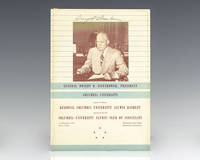
1949réf. 121022Cincinatti: Columbia University Alumni Club of Cincinatti 1949. Rare Columbia University Alumni Banquet program signed by the 34th President of the United States Dwight D. Eisenhower. Large octavo the program was printed for the Regional Columbia University Alumni Banquet held at the Netherland Plaza Hotel on November 22 1949. Signed by Eisenhower on the front panel of the program. Eisenhower served as president of Columbia University after World War II a position he held from 1948 to 1953. In very good condition. Rare. Dwight Eisenhower was an Army general who served as the 34th President of the United States from 1953 until 1961. He was a five-star general in the United States Army during World War II and served as Supreme Commander of the Allied Expeditionary Forces in Europe. He was responsible for planning and supervising the invasion of North Africa in Operation Torch in 1942–43 and the successful invasion of France and Germany in 1944–45 from the Western Front. In 1951 he became the first Supreme Commander of NATO. Columbia University Alumni Club of Cincinatti unknown
réf. 110337Photograph of Dwight D. and Mamie Eisenhower boldly signed by each "Dwight D. Eisenhower" and signed "Mamie Doud Eisenhower." Double matted and framed. The entire piece measures 14.5 inches by 12.5 inches. In near fine condition. Dwight Eisenhower was an Army general who served as the 34th President of the United States from 1953 until 1961. He was a five-star general in the United States Army during World War II and served as Supreme Commander of the Allied Expeditionary Forces in Europe. He was responsible for planning and supervising the invasion of North Africa in Operation Torch in 1942–43 and the successful invasion of France and Germany in 1944–45 from the Western Front. In 1951 he became the first Supreme Commander of NATO. unknown
réf. 95836Photograph of the Eisenhower family signed by Dwight D. and Mamie Eisenhower their son and daughter-in-law and only grandchild. Inscribed by Dwight D. Eisenhower "For Ken & Joyce Browne with best wishes Dwight D. Eisenhower" and signed "Mamie Doud Eisenhower." Additionally inscribed by the Eisenhowers' eldest son John and his wife Barbara "To the Brownes from Barbara and John Eisenhower" and signed by their son David Eisenhower. In fine condition. Double matted and framed. The entire piece measures 16 inches by 14.25 inches. Rare and desirable signed by members of three generations of the Eisenhower family. Dwight Eisenhower was an Army general who served as the 34th President of the United States from 1953 until 1961. He was a five-star general in the United States Army during World War II and served as Supreme Commander of the Allied Expeditionary Forces in Europe. He was responsible for planning and supervising the invasion of North Africa in Operation Torch in 1942–43 and the successful invasion of France and Germany in 1944–45 from the Western Front. In 1951 he became the first Supreme Commander of NATO. unknown
1963réf. 18169Garden City: Doubleday and Company 1963. Limited Edition. Cloth. Near fine/good. Signed limited edition of The White House Years: Mandate for Change and Waging Peace by President Dwight D. Eisenhower. Octavo xvii 650pp; xxiii 741pp. Beige cloth title printed in gilt on green spine. Illustrated endpapers. Both volumes in the publisher's issued slipcases with shelf wear to labels solid bindings. In the publisher's mylar dust jackets large chip on spine of Waging Peace closed tear to jacket of "Mandate for Change." From a signed limited edition of 1500 with "Waging Peace" numbered 958 and "Mandate for Change" numbered 1432 both signed by President Eisenhower on the limitation page. Doubleday and Company unknown
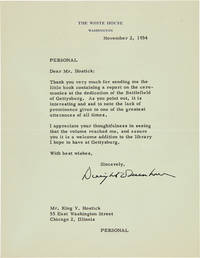
1954réf. 42238Washington D.C. November 2 1954. Eisenhower at Home at Gettysburg It is not clear to us which book the Illinois manuscript dealer and Lincoln scholar Hostick gave Eisenhower but President Eisenhower felt moved to write: ".As you point out it is interesting and sad to note the lack of prominence given to one of the greatest utterances of all time.it is a welcome addition to the library I hope to have at Gettysburg." The Eisenhowers had a small working farm just outside of Gettysburg where the President retired in 1961 and where he died in 1969. He was an active supporter and Trustee of Gettysburg College. Fine. In cloth box gilt leather label. hardcover
1948réf. 246019New York: Doubleday & Company 1948. Carbon copy typescript 23 chapters. 2 vols. 4to. In black morocco-grained cloth binders. Some rust and small tears from paper clips at margins else near fine. Carbon copy typescript 23 chapters. 2 vols. 4to. Carbon copy typescript of Eisenhower's memoir of the WWII European campaign Crusade in Europe. With a note from Bill Robinson Vice-President of the Herald Tribune giving this typescript to Doug Black President of Doubleday the book's publisher. It was by Robinson's insistence that Eisenhower wrote these memoirs. The typescript differs little from the first published edition with the following edits being the most significant: Chapters 16 and 17 in the typescript "Pursuit" and "Battle of Supply" are arranged with slight modification in the published edition as "Pursuit and the Battle of Supply" chapter 16 and "Autumn Fighting of Germany's Frontier" chapter 17. Chapters 22 and 23 "Europe after V-E Day" and "Russia" are also re-arranged in the published edition as "Victory's Aftermath" chapter 22 "Operation Study" chapter 23 and "Russia" chapter 24. The final paragraph of the typescript does not appear in the published edition and is replaced by an eight paragraph discussion of the merits of democracy in facing the growing threat of Communism. After a gentlemen's agreement on Dec 30 1947 Eisenhower began work on the first draft of Crusade in Europe completing it March 29 1948. This draft was finished July 4 of that year and a final typescript now at Columbia University was produced before the book was published in the fall of 1948. With a copy of the published book. Provenance: Bill Robinson; Doug Black Doubleday & Company unknown books
1963réf. 18169Garden City: Doubleday and Company 1963. Limited Edition. Cloth. Near fine/good. Signed limited edition of The White House Years: Mandate for Change and Waging Peace by President Dwight D. Eisenhower. Octavo xvii 650pp; xxiii 741pp. Beige cloth title printed in gilt on green spine. Illustrated endpapers. Both volumes in the publisher's issued slipcases with shelf wear to labels solid bindings. In the publisher's mylar dust jackets large chip on spine of Waging Peace closed tear to jacket of "Mandate for Change." From a signed limited edition of 1500 with "Waging Peace" numbered 958 and "Mandate for Change" numbered 1432 both signed by President Eisenhower on the limitation page. Doubleday and Company unknown books
1954réf. 42238Washington D.C. November 2 1954. Eisenhower at Home at Gettysburg It is not clear to us which book the Illinois manuscript dealer and Lincoln scholar Hostick gave Eisenhower but President Eisenhower felt moved to write: ".As you point out it is interesting and sad to note the lack of prominence given to one of the greatest utterances of all time.it is a welcome addition to the library I hope to have at Gettysburg." The Eisenhowers had a small working farm just outside of Gettysburg where the President retired in 1961 and where he died in 1969. He was an active supporter and Trustee of Gettysburg College. Fine. In cloth box gilt leather label. hardcover books
réf. 92470Rare original photograph of Dwight D. Eisenhower Herbert Hoover and Iowan Governor William Beardsley seated in an automobile which was part of the August 1954 Iowa State Fair Parade. Boldly signed by Dwight D. Eisenhower and Herbert Hoover and inscribed by Beardsley "For the Ken Brownes Wm. S. Beardsley"Accompanied by a typed letter signed by Herbert Hoover dated April 25 1960 and addressed to Kenneth Browne "Dear Mr. Browne: I do appreciate your sending me that Indian version of the 23rd Psalm. It was most gracious of you. Yours faithfully "Herbert Hoover." Both the photograph and letter are in near fine condition. Rare and desirable signed by Eisenhower and Hoover. American engineer businessman and politician Herbert Hoover served as the 31st President of the United States from 1929 to 1933 during the Great Depression. A Republican he introduced themes of efficiency in the business community and provided government support for standardization efficiency and international trade. Dwight D. Eisenhower became the first Republican-elected President since Herbert Hoover in 1928 with the primary goals of containing the expansion of the Soviet Union and reducing federal deficits. unknown
1953réf. 277478Williamsburg Virginia: The College of William and Mary 1953. Hardcover. Fine. First edition. A neat bookplate on the front pastedown fine in gray cloth gilt in a lightly rubbed fine original marbled papercovered slipcase the whole housed in a newer quarter leather custom slipcase. Included is the speech of President Dwight D. Eisenhower. Eisenhower has Signed his address at page 58 and additionally affixed to the rear endpaper is an original photograph of Eisenhower at the ceremony. Ike had been U.S. President for only four months when the ceremony took place. Very nicely printed at the William Byrd Press. The College of William and Mary hardcover
1953réf. 277478Williamsburg Virginia: The College of William and Mary 1953. Hardcover. Fine. First edition. A neat bookplate on the front pastedown fine in gray cloth gilt in a lightly rubbed fine original marbled papercovered slipcase the whole housed in a newer quarter leather custom slipcase. Included is the speech of President Dwight D. Eisenhower. Eisenhower has Signed his address at page 58 and additionally affixed to the rear endpaper is an original photograph of Eisenhower at the ceremony. Ike had been U.S. President for only four months when the ceremony took place. Very nicely printed at the William Byrd Press. The College of William and Mary hardcover books
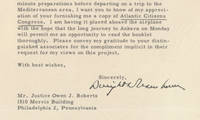
réf. 308161/3/52. Justice Owen J. Roberts resigned from the Supreme Court to advocate for a Federal Union of democracies and to unite one group favoring world government and the other favoring Union of the Democracies From 1951-52 Eisenhower was the Allied Supreme Commander in Europe which title included the post of head of NATO. In 1952 Turkey joined NATO and Ike traveled to Ankara Turkey to seal with his presence the membership of Turkey in Europe. Justice Owen J. Roberts resigned from the Supreme Court in 1945 and was afterwards instrumental in forming the Atlantic Union which would advocate for a Federal Union of Democracies but with a gradual approach to final world union by way of regional unions. Two million people signed a petition that the U.S. and Great Britain unify others wanted to start with the U.S. and Canada. Roberts said that although he approved of NATO he thought it was a fine tradition but could not prevent war and that permanent peace required a federation of likeminded peoples. Nor could the UN be relied upon with the power the Soviets had in that body. In 1952 a new group was formed whose members agreed with Roberts’ views the Atlantic Citizens Congress whose members were drawn partly from the Atlantic Union Committee and partly from outside. Typed letter signed on his letterhead Supreme Headquarters Allied Powers Europe 1 March 1952 to Justice Owen J. Roberts saying he is departing for Turkey and that he is grateful for receiving information on the new Atlantic Citizens organization. “Dear Mr. Justice: Although my schedule is extremely rushed by last minute preparations before departing on a trip to the Mediterranean area I want you to know of my appreciation of your furnishing me a copy of Atlantic Citizens Congress. I am having it placed aboard the airplane with the hope that the long journey to Ankara on Monday will permit me an opportunity to read the booklet thoroughly. Please convey my gratitude to your distinguished associates for the compliment implicit in their request for my views on this project.” Eight months later Eisenhower is elected President of the United States. <img class=""alignnone size-post-window wp-image-25018"" src=""https://cdn.raabcollection.com/wp-content/uploads/20231204144051/Folder-site-11-1600x1327.jpg"" alt="""" width=""1600"" height=""1327"" /> unknown
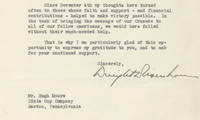
1401réf. 3045914/01/1953. “Since November 4th my thoughts have turned often to those whose faith and support - and financial contributions - helped to make victory possible. In the task of bringing the message of our Crusade to all of our follow Americans we would have failed without their much-needed help.” The 1952 United States presidential election was held on Tuesday November 4 1952. Republican Dwight D. Eisenhower won a landslide victory over Illinois Democratic Governor Adlai Stevenson becoming the first Republican president in 20 years. This was the first election since 1928 without an incumbent president on the ballot. Eisenhower was re-elected in 1956 in a rematch with Stevenson. The 1952 presidential election campaign was conducted against the backdrop of a “red scare” in which many Americans feared that foreign communist agents were attempting to infiltrate the government. Two years earlier Sen. Joseph R. McCarthy who held that the Roosevelt and Truman administrations amounted to “20 years of treason” claimed that he had a list of State Department employees who were loyal only to the Soviet Union. Though McCarthy offered no evidence to support his charges and revealed only a single name he won a large personal following. The Red Scare the stalemated Korean War and a renewal of inflation handicapped Stevenson who fought a vigorous campaign. Eisenhower campaigned tirelessly impressing millions with his warmth and sincerity. His wide friendly grin wartime heroics and middle-class pastimes—he was an avid golfer endeared him to the public and garnered him vast support. On the eve of the election there was a general opinion that the presidential race was close. The final tally however was anything but. Eisenhower won by more than six million votes capturing 39 states and 442 electoral votes to Stevenson’s 9 states and 89 electoral votes. The election was considered a great personal triumph for Eisenhower. In the wake of the election Eisenhower thanked his major contributors for their financial support which had enabled him to bring his message to the American people. Typed letter signed on his letterhead New York January 14 1953 to Hugh Moore president of the Dixie Cup Company and a supporter of his. “Dear Mr. Moore: To the thanks you have undoubtedly already received for your generous contribution during the campaign I wish to add my own. “Since November 4th my thoughts have turned often to those whose faith and support - and financial contributions - helped to make victory possible. In the task of bringing the message of our Crusade to all of our fellow Americans we would have failed without their much-needed help. That is why I am particularly glad of this opportunity to express my gratitude to you and to ask for your continued support.” It is interesting that Eisenhower saw his election as a crusade and his views as carrying a message. <img class=""alignnone size-post-window wp-image-25018"" src=""https://cdn.raabcollection.com/wp-content/uploads/20231204144051/Folder-site-11-1600x1327.jpg"" alt="""" width=""1600"" height=""1327"" /> unknown
réf. 308161/3/52. Justice Owen J. Roberts resigned from the Supreme Court to advocate for a Federal Union of democracies and to unite one group favoring world government and the other favoring Union of the Democracies From 1951-52 Eisenhower was the Allied Supreme Commander in Europe which title included the post of head of NATO. In 1952 Turkey joined NATO and Ike traveled to Ankara Turkey to seal with his presence the membership of Turkey in Europe. Justice Owen J. Roberts resigned from the Supreme Court in 1945 and was afterwards instrumental in forming the Atlantic Union which would advocate for a Federal Union of Democracies but with a gradual approach to final world union by way of regional unions. Two million people signed a petition that the U.S. and Great Britain unify others wanted to start with the U.S. and Canada. Roberts said that although he approved of NATO he thought it was a fine tradition but could not prevent war and that permanent peace required a federation of likeminded peoples. Nor could the UN be relied upon with the power the Soviets had in that body. In 1952 a new group was formed whose members agreed with Roberts’ views the Atlantic Citizens Congress whose members were drawn partly from the Atlantic Union Committee and partly from outside. Typed letter signed on his letterhead Supreme Headquarters Allied Powers Europe 1 March 1952 to Justice Owen J. Roberts saying he is departing for Turkey and that he is grateful for receiving information on the new Atlantic Citizens organization. “Dear Mr. Justice: Although my schedule is extremely rushed by last minute preparations before departing on a trip to the Mediterranean area I want you to know of my appreciation of your furnishing me a copy of Atlantic Citizens Congress. I am having it placed aboard the airplane with the hope that the long journey to Ankara on Monday will permit me an opportunity to read the booklet thoroughly. Please convey my gratitude to your distinguished associates for the compliment implicit in their request for my views on this project.” Eight months later Eisenhower is elected President of the United States. <img class=""alignnone size-post-window wp-image-25018"" src=""https://cdn.raabcollection.com/wp-content/uploads/20231204144051/Folder-site-11-1600x1327.jpg"" alt="""" width=""1600"" height=""1327"" /> unknown books
1401réf. 3045914/01/1953. “Since November 4th my thoughts have turned often to those whose faith and support - and financial contributions - helped to make victory possible. In the task of bringing the message of our Crusade to all of our follow Americans we would have failed without their much-needed help.” The 1952 United States presidential election was held on Tuesday November 4 1952. Republican Dwight D. Eisenhower won a landslide victory over Illinois Democratic Governor Adlai Stevenson becoming the first Republican president in 20 years. This was the first election since 1928 without an incumbent president on the ballot. Eisenhower was re-elected in 1956 in a rematch with Stevenson. The 1952 presidential election campaign was conducted against the backdrop of a “red scare” in which many Americans feared that foreign communist agents were attempting to infiltrate the government. Two years earlier Sen. Joseph R. McCarthy who held that the Roosevelt and Truman administrations amounted to “20 years of treason” claimed that he had a list of State Department employees who were loyal only to the Soviet Union. Though McCarthy offered no evidence to support his charges and revealed only a single name he won a large personal following. The Red Scare the stalemated Korean War and a renewal of inflation handicapped Stevenson who fought a vigorous campaign. Eisenhower campaigned tirelessly impressing millions with his warmth and sincerity. His wide friendly grin wartime heroics and middle-class pastimes—he was an avid golfer endeared him to the public and garnered him vast support. On the eve of the election there was a general opinion that the presidential race was close. The final tally however was anything but. Eisenhower won by more than six million votes capturing 39 states and 442 electoral votes to Stevenson’s 9 states and 89 electoral votes. The election was considered a great personal triumph for Eisenhower. In the wake of the election Eisenhower thanked his major contributors for their financial support which had enabled him to bring his message to the American people. Typed letter signed on his letterhead New York January 14 1953 to Hugh Moore president of the Dixie Cup Company and a supporter of his. “Dear Mr. Moore: To the thanks you have undoubtedly already received for your generous contribution during the campaign I wish to add my own. “Since November 4th my thoughts have turned often to those whose faith and support - and financial contributions - helped to make victory possible. In the task of bringing the message of our Crusade to all of our fellow Americans we would have failed without their much-needed help. That is why I am particularly glad of this opportunity to express my gratitude to you and to ask for your continued support.” It is interesting that Eisenhower saw his election as a crusade and his views as carrying a message. <img class=""alignnone size-post-window wp-image-25018"" src=""https://cdn.raabcollection.com/wp-content/uploads/20231204144051/Folder-site-11-1600x1327.jpg"" alt="""" width=""1600"" height=""1327"" /> unknown books
1948réf. 00399059Doubleday Dodd & Company Inc. 1948. Hardcover. Near Fine. A very nice copy of Edition First Printing after a Limited Edition . SIGNED by Eisenhower . Inscribed : " For Bob Oliphant with best wishes from an old family friend ! Dwight Eisenhower " . The book is clean no marks other than the inscription . The binding is tight . The cloth on the boards is fresh . The graphics on the spine are bright . The dust jacket shows light wear and is now protected with a mylar vover . Doubleday , Dodd & Company , Inc. hardcover
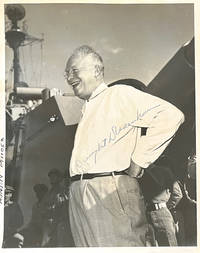
1952réf. 64017Yokosuka Japan Guam & Honolulu T.H.: USS Helena United States Navy Nov. 24 1952 - Dec. 11 1952. 4to. 24 pp unpaginated. mylar sleeves w/ paper inserts and all holding photographs attached w/ plastic hinge at gutter margin with 25 original silver gelatin photos inserted sized from 4 x 5 in. up to 8 x 9 in. 3 signed by Dwight Eisenhower many w/ photographer’s markings at blank gutter margin some annotations in pen & pencil MS on versos 47 loose 4 x 5 in. photos inserted into rear compartment one folded pencil MS leaf on Royal Hawaiian letterhead “What a treasure! My class thinks these are simply great!! Thank you so much for letting us see them. G. Madden.” Padded brown full calf gilt decorated borders front cover silk pastedowns minor scuffing edgewear still a VG exemplar. This previously unknown album captures the brief moments of leisure onboard the USS Helena CA-75 of President-Elect Dwight D. Eisenhower following his historic mission to the Korean War battlefront in between shipboard foreign policy meetings with his proposed cabinet in December 1952. On October 24 1952 when General Dwight D. Eisenhower was leading in the polls as Republican candidate for President while serving as the Supreme Commander of NATO Ike announced he would “forego the diversions of politics and concentrate on the job of ending the Korean War. . . I shall go to Korea.” Nearing the end of 1952 the brutal War was entering its’ third winter U.S. casualties were over 25000 battlefield dead and the United States had been at War for eight of the past 11 years and he set himself the task of ending the War. Despite President Truman terming the trip as a gimmick Eisenhower secretly left the U.S. Nov. 29 1952 accompanied by Chief of Staff Omar Bradley and spent Dec. 2 1952 - Dec. 6 1952 viewing conditions on the ground wearing a fur-lined hat thermos boots and eating and interviewing enlisted soldiers and officers with his son John Eisenhower Omar Bradley and Admiral Radford. He quickly realized that the massive offensive being pushed by President Rhee would only result in another status quo and obliquely threatened China with possible Nuclear War as well as convincing Rhee that they would have to accept a division of Korea and find a solution for ceasefire. The album opens with signed photo of Eisenhower standing on the deck of the USS Helena followed by others including another signed image depicting him with his future cabinet including Charles Erwin Wilson future Secretary of Defense John Foster Dulles future Secretary of State Attorney General Herbert Brownell Secretary of the Treasury George M. Humphrey and Secretary of the Interior Douglas James McKay former Oregon governor along with Admiral Arthur Radford and Captain James E. Cohn commander of the Helena. One of Ike’s favorite pastimes was trapshooting and four of the large 8 x 9 in. photos and over 20 depict him in this sequence of holding and shooting the shotgun as well as competing with others in the entourage. A few of the sequence Naval photographs depict him walking and talking with photojournalists interacting with USS Helena sailors and others. The USS Helena had been relieved of her normal duties Nov. 24 1952 for special mission carrying President-Elect Eisenhower along with other dignitaries and after leaving Yokosuka Harbor Japan she sailed to Guam by Dec. 3 where she picked up the party delivered onboard Ike’s preferred Navy Helicopter the Sikorsky H-5 Dragonfly HO3S-1 UP 39 Last Chance Taxi IV depicted in several photos here. The President-Elect Eisenhower’s delegation disembarked Dec. 11 1952 in Honolulu T.H.The shipboard Navy photographers were John W. Wahlborg and Clarence Wayne Newland 1924-2009 who used two of these images for the 1953 USS Helena cruise book see p. 76 which have also included here many different photographs of the USS Helena at Yokosuka Japan with two of the images indicating their visit coincided with the flight operations of the Essex-Class carrier USS Oriskany CVA-34 depicted in photos with her full complement of Corsairs and folded wings on deck as well as an unidentified Carrier. Many of the photos also depict the UP 39 Sikorsky helicopter flying across the harbor and onto the deck of the USS Helena with giant US Flag painted on the deck. Following their cruise to Honolulu the USS Helena subsequently traveled to Long Beach CA for celebrations and then was a featured guest at the Portland Oregon Rose Festival festivities in May-June 1953. The trip was especially significant in that Eisenhower was able to convince both President Rhee and Secretary of State Dulles that compromise was necessary and after over 7000 additional casualties approximately the same amount as suffered by U.S. Armed Forces in post-9/11 war operations including Iraq and Afghanistan over 25 years the armistice was signed under the Eisenhower administration July 27 1953. See: USS Helena CA-75 1953 Cruise Book Kobe Japan Issinsha Printing Co.; USS Oriskany CVA-34 Action Report 2 December 1952 through 27 December 1952 January 9 1953 US Navy Fleet Operations San Francisco CA; President-Elect Eisenhower’s Trip to Korea Dwight D. Eisenhower Memorial National Park Service 2025. USS Helena, United States Navy, unknown