Cassou, Jean - Piaubert, Jean (ill.)Livre Rare Book

1.770 Ergebnisse
1950Best.-Nr. 17581950 Paris, La Hune - Editions de Minuit, 1950. 48 x 33 cm, grand in-folio, 72 ff. n. ch. comportant 33 lithographies en noir hors texte, en feuilles sous couverture blanche imprimée, chemise de demi-toile noire titrée en blanc et étui de l'éditeur.
Best.-Nr. 40531New York Editions de la Maison Française, s.d. [1941] 1 vol. broché brochure in-4 de (2) + 49 feuillets dactylographiés au recto sous couverture brune muette. Rare version dactylographiée dont il est difficile de déterminer si elle précède ou suit l'édition imprimée en 1941 par les Editions de la Maison Française à New York. On sait que ce texte célèbre, où Jacques Maritain analyse les causes de la défaite française de 1940, commença de circuler dans les milieux francophiles américains sous cette forme dactylographiée. Et c'est également ainsi qu'elle fut reproduite en France et en Suisse, l'édition réalisée en novembre 1942 par les Editions de Minuit n'ayant été pour ainsi dire pas diffusée. Notre exemplaire porte le cachet d'une collection privée à Genève. La B.N.F. possède un autre specimen de dactylographie, mais de 48 feuillets.
Best.-Nr. 40531New York Editions de la Maison Française, s.d. [1941] 1 vol. broché brochure in-4 de (2) + 49 feuillets dactylographiés au recto sous couverture brune muette. Rare version dactylographiée dont il est difficile de déterminer si elle précède ou suit l'édition imprimée en 1941 par les Editions de la Maison Française à New York. On sait que ce texte célèbre, où Jacques Maritain analyse les causes de la défaite française de 1940, commença de circuler dans les milieux francophiles américains sous cette forme dactylographiée. Et c'est également ainsi qu'elle fut reproduite en France et en Suisse, l'édition réalisée en novembre 1942 par les Editions de Minuit n'ayant été pour ainsi dire pas diffusée. Notre exemplaire porte le cachet d'une collection privée à Genève. La B.N.F. possède un autre specimen de dactylographie, mais de 48 feuillets.
Best.-Nr. 21683Paris, Éditions de Minuit, 1944. In-8, 59 pp., broché, couverture originale imprimée (petites taches et rousseurs).
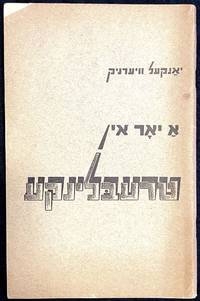
1944Best.-Nr. 43339Nyu-York: Farlag 1944. 1st American Edition. Paper Wrappers 8vo 61 pages. Includes illustrations. 22 cm. In Yiddish. Title translates as "A Year in Treblinka." Translation of Rok w Treblince. Jankiel Yankel Yaakov or Jacob Wiernik 1889-1972 was a "Polish-Jewish Holocaust survivor who was an influential figure in the Treblinka extermination camp resistance. He had been forced to work as a Sonderkommando slave worker there where an estimated 700000-900000 people mostly Jews were murdered. After his escape during the uprising of 2 August 1943 Wiernik reached Warsaw and joined the resistance. He also wrote a clandestine account of the camp's operation A Year in Treblinka which was copied and translated for printing in London and the US in English and Yiddish. Following World War II Wiernik testified at Ludwig Fischer's trial in 1947. He left Poland emigrating first to Sweden and then to the new state of Israel. In 1961 he testified at Adolf Eichmann's trial in Jerusalem. He returned to Poland in 1964 to attend the opening of the Treblinka Memorial. Wiernik died in Israel in 1972 at the age of 83. On his arrival at Treblinka aboard the Holocaust train from Warsaw Wiernik was selected to work as a Sonderkommando; otherwise he would have been immediately gassed and killed that day. Wiernik's first job with the Sonderkommando required him to drag corpses from the gas chambers to mass graves. He was traumatized by his experiences and later wrote in his book: 'It often happened that an arm or a leg fell off when we tied straps around them in order to drag the bodies away.' He remembered the horrors of the enormous pyres where '10000 to 12000 corpses were cremated at one time.' He was also encouraged by occasional scenes of brave resistance. In chapter 8 he describes seeing a naked woman escape the clutches of the guards and leap over a three-metre high barbed wire fence unscathed. When accosted by a Ukrainian guard Trawniki on the other side she wrestled his machine gun out of his grasp killed the guard and shot another guard before being killed herself. When the SS recognized that Wiernik was a professional carpenter they put him to work constructing various camp structures including additional gas chambers. Given his skills Wiernik was not subjected to the same treatment as others and no longer had to handle dead bodies. He attributed his survival to being able to build structures needed in the camp. Given the shortage of skilled construction workers accustomed to the killing process Wiernik moved between the two divisions of the camp frequently. As a result he became an important contact between the camp zones when the revolt was being planned. Wiernik escaped Treblinka during the revolt of the prisoners on 'a sizzling hot day' of August 2 1943. A shot fired into the air signaled that the revolt was on. Wiernik wrote that he 'grabbed some guns' and after spotting an opportunity to make a break for the woods an axe. A camp guard in pursuit shot Wiernik with a pistol but the bullet did not penetrate his skin. Wiernik said he turned around and killed his pursuer with the axe. Wiernik continued to Warsaw hiding in a freight train. Wiernik assumed the name of Jan Smarzynski. He made contact with members of the Jewish underground working in the 'Aryan' part of Warsaw. They realized he was a valuable eyewitness of the extermination process in Treblinka. He was persuaded in late 1943 to write A Year in Treblinka in spite of his initial reluctance Wiernik had little education and was not a skilled writer. He took part in the 1944 Warsaw Uprising fighting in the Armia Ludowa. After the end of World War II Wiernik initially remained in Poland in 1947 he testified in the trial of Ludwig Fischer. He emigrated to Sweden and afterwards to the newly founded state of Israel. There in the 1950s Wiernik built a model of the Treblinka camp. It is displayed in the Ghetto Fighters' House museum in Israel. In 1961 Wiernik testified in the Eichmann trial in Israel. Jankiel Wiernik published Rok w Treblince A Year in Treblinka in 1944 as a clandestine booklet. It was printed through the efforts of the Jewish National Committee Zydowski Komitet Narodowy ZKN Bund underground organizations of the remnants of Polish Jews and the Polish Council to Aid Jews Zegota by means of an underground printer organized by Ferdynand Arczynski. The circulation was estimated by Wladyslaw Bartoszewski as 2000 copies. It was sent through Polish underground channels to London and translated into English and Yiddish. It was also printed in the US by American representatives of the General Jewish Workers Union of Poland ie. this copy. The book recounts his experiences in the Treblinka extermination camp between 1942 and 1943" Wikipedia. SUBJECTS: Holocaust Jewish 1939-1945 -- Poland. Jews -- Poland -- Biography. OCLC: 12246244. Some toning touch or corner wear to covers otherwise Very Good Condition. Nice copy of this very important contemporary account of Treblinka. B HOLO2-50-20A-XXLE-IMMBBE@-'gg. Nyu-York: Farlag unknown
Best.-Nr. 1331Aquarelle originale sur papier quadrillé, contrecollée sur carton, signée et datée 1939 en bas à droite (34,6/27 cm).
Best.-Nr. 1330Aquarelle originale sur papier quadrillé, contrecollée sur carton, signée et datée 1939 en bas à droite (environ 30/20 cm).
Best.-Nr. 1333Fusain sur papier d’art, signé en bas à droite. Mention Paris 1986 au dos (35/27 cm).
Best.-Nr. Clas70 Numéros 1,2 et 3 datés de Octobre et Novembre 1940 - Lâchés par la R.A.F. surtout en Afrique du Nord . Rarissime . 1 seul numéro en Bibliothèque Nationale . Format 27 x 21 cm . Imprimés recto-verso. Document Original - Ce n'est pas un fac-similé
Best.-Nr. Clas70 Numéros 1,2 et 3 datés de Octobre et Novembre 1940 - Lâchés par la R.A.F. surtout en Afrique du Nord . Rarissime . 1 seul numéro en Bibliothèque Nationale . Format 27 x 21 cm . Imprimés recto-verso. Document Original - Ce n'est pas un fac-similé
Best.-Nr. IXY-943Série complète. 5 volumes cartonnage éditeur + 1 volume broché (tome II).
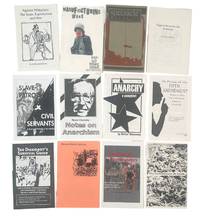
2000Best.-Nr. 237862000. Anarchist and activist pamphlet group from 1998 to 2017 documenting the circulation of political theory alongside practical writing on policing surveillance infiltration digital security militarism and legal self defense. The twelve publications connect the 1990s anarchist zine culture represented by Theo Witsell's Spectacle with the security concerns surrounding Occupy Wall Street and its aftermath. A New World in Our Hearts accounts for much of the group distributing reprints of Malatesta Chomsky and Wolfi Landstreicher alongside The Dissident's Survival Guide and Kristian Williams's Profiles of Provocateurs. Riseup and CrimethInc. extend these concerns into digital communications and the history of policing. Group of 12 pamphlets and zines United States 1998 to 2017 with several undated. 1 Witsell Theo. Spectacle Magazine. No. 4. Arkansas: Arkansas Spectacle Co. 1998 with Spectacle 4 Supplement. 2 Duane James. In Praise of the Fifth Amendment: Right to Not Be a Witness Against Yourself. A Brave New World 2008. Practical advice against voluntary communication with police. 3 Riseup Collective. Digital Security for Activists. Riseup.net circa 2009. A manual covering passwords email interception online identities search histories and surveillance with sections including "Email is a Postcard" and "Google Searches for Busting Unions." 4 Manufacturing Wars. Third edition 2014; first edition 2011. A New World in Our Hearts. Antiwar pamphlet incorporating material by Noam Chomsky. 5 AntiRepression Committee of the Occupy Wall Street Activist Legal Working Group. The Dissident's Survival Guide: A Field Manual to Encounters with Law Enforcement Corporate Security and Other Hazards. A New World in Our Hearts circa 2012. Produced within Occupy Wall Street's legal organizing structure with discussions of COINTELPRO the Green Scare PATRIOT Act surveillance police encounters and activist rights. 6 Williams Kristian. Profiles of Provocateurs: Recent Case Studies; Warning Signs; Practical Advice. A New World in Our Hearts circa 2013. Case studies of informants and agents provocateurs with advice for recognizing infiltration. 7 Landstreicher Wolfi. Against Militarism: The State Exploitation and War. A New World in Our Hearts undated. 8 Chomsky Noam. Notes on Anarchism. A New World in Our Hearts undated. 9 Malatesta Errico. Anarchy: A Pamphlet. A New World in Our Hearts undated. 10 Mark Ber. Warsaw Ghetto Uprising. Institute for Experimental Freedom undated. Reprint of Mark's account of Jewish armed resistance in Warsaw. 11 CrimethInc. The Concealment of Death. CrimethInc. undated. One folded sheet forming four pages. 12 CrimethInc. Slave Patrols & Civil Servants: A History of Policing in Two Modes. CrimethInc. 2017. An account tracing policing through American slave patrols and British industrial labor control. The concentration of A New World in Our Hearts publications places the group within the inexpensive print networks that supplied anarchist political education during the Occupy period. The Dissident's Survival Guide provides the most direct connection produced by the AntiRepression Committee of the Occupy Wall Street Activist Legal Working Group while Riseup's manual records the development of digital security practices as organizing increasingly depended on email search engines and networked communication. The reprinting of Malatesta Chomsky Landstreicher and Ber Mark beside manuals on informants police questioning and electronic surveillance shows the range of texts circulating as movement education. Light handling and edge wear with occasional toning and minor soiling; stapled and folded constructions intact. Overall good to very good condition. A compact record of anarchist print distribution linking political theory and histories of resistance with policing infiltration surveillance and digital communication. unknown
2000Best.-Nr. 237862000. Anarchist and activist pamphlet group from 1998 to 2017 documenting the circulation of political theory alongside practical writing on policing surveillance infiltration digital security militarism and legal self defense. The twelve publications connect the 1990s anarchist zine culture represented by Theo Witsell's Spectacle with the security concerns surrounding Occupy Wall Street and its aftermath. A New World in Our Hearts accounts for much of the group distributing reprints of Malatesta Chomsky and Wolfi Landstreicher alongside The Dissident's Survival Guide and Kristian Williams's Profiles of Provocateurs. Riseup and CrimethInc. extend these concerns into digital communications and the history of policing. Group of 12 pamphlets and zines United States 1998 to 2017 with several undated. 1 Witsell Theo. Spectacle Magazine. No. 4. Arkansas: Arkansas Spectacle Co. 1998 with Spectacle 4 Supplement. 2 Duane James. In Praise of the Fifth Amendment: Right to Not Be a Witness Against Yourself. A Brave New World 2008. Practical advice against voluntary communication with police. 3 Riseup Collective. Digital Security for Activists. Riseup.net circa 2009. A manual covering passwords email interception online identities search histories and surveillance with sections including "Email is a Postcard" and "Google Searches for Busting Unions." 4 Manufacturing Wars. Third edition 2014; first edition 2011. A New World in Our Hearts. Antiwar pamphlet incorporating material by Noam Chomsky. 5 AntiRepression Committee of the Occupy Wall Street Activist Legal Working Group. The Dissident's Survival Guide: A Field Manual to Encounters with Law Enforcement Corporate Security and Other Hazards. A New World in Our Hearts circa 2012. Produced within Occupy Wall Street's legal organizing structure with discussions of COINTELPRO the Green Scare PATRIOT Act surveillance police encounters and activist rights. 6 Williams Kristian. Profiles of Provocateurs: Recent Case Studies; Warning Signs; Practical Advice. A New World in Our Hearts circa 2013. Case studies of informants and agents provocateurs with advice for recognizing infiltration. 7 Landstreicher Wolfi. Against Militarism: The State Exploitation and War. A New World in Our Hearts undated. 8 Chomsky Noam. Notes on Anarchism. A New World in Our Hearts undated. 9 Malatesta Errico. Anarchy: A Pamphlet. A New World in Our Hearts undated. 10 Mark Ber. Warsaw Ghetto Uprising. Institute for Experimental Freedom undated. Reprint of Mark's account of Jewish armed resistance in Warsaw. 11 CrimethInc. The Concealment of Death. CrimethInc. undated. One folded sheet forming four pages. 12 CrimethInc. Slave Patrols & Civil Servants: A History of Policing in Two Modes. CrimethInc. 2017. An account tracing policing through American slave patrols and British industrial labor control. The concentration of A New World in Our Hearts publications places the group within the inexpensive print networks that supplied anarchist political education during the Occupy period. The Dissident's Survival Guide provides the most direct connection produced by the AntiRepression Committee of the Occupy Wall Street Activist Legal Working Group while Riseup's manual records the development of digital security practices as organizing increasingly depended on email search engines and networked communication. The reprinting of Malatesta Chomsky Landstreicher and Ber Mark beside manuals on informants police questioning and electronic surveillance shows the range of texts circulating as movement education. Light handling and edge wear with occasional toning and minor soiling; stapled and folded constructions intact. Overall good to very good condition. A compact record of anarchist print distribution linking political theory and histories of resistance with policing infiltration surveillance and digital communication. unknown books
19528vo., First Edition, with frontispiece, 17 plates on 14, and 2 illustrations (one full-page) and full-page map in the text; handsomely bound in full dark green crushed morocco, sides with gilt frame border, gilt back, gilt top, hand-made endpapers, ribbon marker, a most attractive copy ideal as a gift or for presentation. One of the earliest separate publications on the activities of Special Operations Executive by the Head of French Section. 'I do not claim that the incidents described in these pages are completely factually accurate' (Preface). 'Quite so' responds Foot, although he is also the first to recognise the restrictions placed upon the author at the time. Enser, p.410; Foot, p.455.
2021Best.-Nr. BN395517ESPRIT DU TEMPS 2021. 2021. Softcover. Le programme du CNR Conseil National de la Résistance: "Vérités d'hier résistances d'aujourd'hui" un avant-propos de Stéphane Hessel. Le programme du CNR Conseil National de la Résistance: "Vérités d'hier résistances d'aujourd'hui" un avant-propos de Stéphane Hessel. Conseil National de la Résistance et Stéphane Hessel ESPRIT DU TEMPS paperback
19558vo., First Edition, with 23 plates on 16; handsomely bound in full navy crushed morocco, sides with gilt frame border, back with raised bands, second and fourth compartments lettered and ruled in gilt, all other compartments tooled in gilt, gilt top, hand-made endpapers, ribbon marker, a most attractive copy ideal as a gift or for presentation. The story of Jan Baalsrud, one of a team of Norwegian saboteurs attacking a German aircraft base in Arctic Norway. Intercepted by the enemy, Baalsrud was the sole survivor of the party, left alone on an arctic island with the Germans alerted to his presence. Howarth's account of Baalsrud's multi-faceted escape is the basis of Arne Skouen's feature film 'Nine Lives' (1957). THE ORIGINAL EDITION IS VERY SCARCE. Enser, p.299; Law 0892.
1997Best.-Nr. x-0419200002Spon Pr 1997. Hardcover. New. 1st edition. 274 pages. 9.75x6.75x1.00 inches. Spon Pr hardcover
1943Best.-Nr. 012278Paris Le Téméraire 1943 In-4 Cartonnage souple de l'éditeur
1942Best.-Nr. 34042Neuchâtel La Baconnière, "Collection des Cahiers du Rhône" 1942 1 vol. broché in-8, broché, couverture à rabats, non coupé, 157 pp., fac-similé en frontispice, bibliographie. Edition originale. Un des 80 exemplaires numérotés sur vélin, seul grand papier avec 20 Hollande. En parfait état.
1942Best.-Nr. 34042Neuchâtel La Baconnière, "Collection des Cahiers du Rhône" 1942 1 vol. broché in-8, broché, couverture à rabats, non coupé, 157 pp., fac-similé en frontispice, bibliographie. Edition originale. Un des 80 exemplaires numérotés sur vélin, seul grand papier avec 20 Hollande. En parfait état.
1927Best.-Nr. 002933Au 19 de la rue Servandoni à Paris, sixième (chez l'auteur), 1927
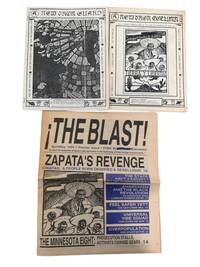
1984Best.-Nr. 238831984. Mexican agrarian revolution and Indigenous resistance periodical archive 1984 to 1994 tracing the place of Emiliano Zapata and Indigenous political struggles within American anarchist publishing from the Reagan era through the 1994 Zapatista uprising in Chiapas. Two issues of Southern California's A New Iron Column place Mexican revolutionary history and contemporary Indigenous activism within an international anti-authoritarian program including an issue whose cover memorializes Zapata beneath the slogan "TIERRA Y LIBERTAD" and identifies him as "Heroic Mexican Revolutionary." A decade later the premiere issue of Minneapolis anarchist newspaper The Blast! responds directly to the January 1994 uprising of the Ejército Zapatista de Liberación Nacional leading its front page with "ZAPATA'S REVENGE" and "CHIAPAS: A PEOPLE BORN DIGNIFIED & REBELLIOUS." The sequence documents how Zapata's political image the language of land and liberty and struggles over Indigenous autonomy circulated through American anarchist print networks before and immediately after the EZLN brought Chiapas into international radical politics. Contemporary accounts identify the Creative Anarchists Networks behind A New Iron Column as active in Native support work while institutional holdings characterize the periodical as containing material on Indigenous struggles. A New Iron Column and The Blast! Southern California and Minneapolis 1984 to 1994. Three issues illustrated throughout in black and white with The Blast! printed in black and blue. 1 Creative Anarchists. A New Iron Guard later A New Iron Column. No. II. Southern California 1984. Published as "A Black Banner publication of the Creative Anarchists of America." The cover depicts the execution of Catalan educator and freethinker Francisco Ferrer after the Barcelona uprising of July 1909 while the contents range across "Chile's Painful Realities" "The Mohawk Indians" Emma Goldman prison politics antiwar writing children's rights and a letter from the Sigma Anarchist Group of Warsaw. The editors describe their project as addressing "the meaning of Anarchy and the logic for advocating it" alongside historical commentary poetry political comics and international correspondence. 2 Creative Anarchists Networks. A New Iron Column. No. IV. Anaheim California 1985. Cover devoted to Emiliano Zapata 1879 to 1919 with the revolutionary leader and armed campesinos above a volcanic landscape and the large inscription "TIERRA Y LIBERTAD." The issue identifies itself as "A BLACK BANNER PUBLICATION OF THE CREATIVE ANARCHISTS NETWORKS" and surrounds the Zapata image with "WAR CRIMES: EL SALVADOR" "IRA POW CAMPAIGN" "A TRIBAL ACCORD" "TERRORIST CIA MANUAL" "MARION LOCKDOWN" and "ANARCHY AND COMMUNISM." Its contents include "Zapata of Mexico" "Punk and Anarchy in the U.K." "Revolution" "Irish Republican P.O.W. Campaign" "War Crimes In El Salvador" "Terrorist C.I.A. Manual" "Anarchy and Communism" and "A Struggle." A contemporary Fifth Estate notice records that the publication changed its name from New Iron Guard to Iron Column after editors were alerted to the name's association with the Romanian fascist Iron Guard explicitly linking the replacement name to the anarchist Iron Column of the Spanish Revolution. 3 Agitator Index Collective. The Blast! Premiere Issue. Minneapolis Minnesota April/May 1994. Front page dominated by "ZAPATA'S REVENGE" and "CHIAPAS: A PEOPLE BORN DIGNIFIED & REBELLIOUS" alongside articles on the Minnesota Eight anarchism and Black revolution the federal crime bill Twin Cities hip hop and population politics. Inside the paper identifies itself as a nonprofit political newspaper produced by the Agitator Index Collective and carries Kieran Knutson's "The State of Minnesota Vs. The Anti Racist Movement." The Agitator Index Collective belonged to the Love and Rage Revolutionary Anarchist Federation and The Blast! was founded by former members of the Profane Existence Collective. Its first issue appeared in 1994 with coverage of the Zapatista uprising while subsequent issues continued reporting on the EZLN and Chiapas. A New Iron Column invokes Zapata during the 1980s alongside contemporary Native struggles Central American war political prisoners and international anarchist movements treating the Mexican Revolution as part of a continuing politics of land state power and anti-authoritarian resistance. The 1994 Blast! appeared only months after the EZLN emerged publicly on January 1 in Chiapas where its rebellion centered Indigenous communities and demands concerning land political participation autonomy and the consequences of Mexican state policy. Its headline "ZAPATA'S REVENGE" explicitly joins the contemporary rebellion to the memory of Zapata while "A PEOPLE BORN DIGNIFIED & REBELLIOUS" frames Chiapas through the political agency of its population rather than as a distant revolutionary spectacle. The Blast! continued covering the EZLN after this premiere issue confirming that Chiapas formed part of the newspaper's sustained international reporting rather than a single topical headline. Some toning and handling wear with folds and minor edge wear visible; A New Iron Column issues staple bound The Blast! folded as issued. Overall very good condition. A three issue record of Zapata's political afterlife in United States anarchist publishing moving from 1980s representations of Mexican agrarian revolution and Indigenous resistance to an immediate anarchist response to the Indigenous led Zapatista uprising in Chiapas in 1994. unknown
1984Best.-Nr. 238831984. Mexican agrarian revolution and Indigenous resistance periodical archive 1984 to 1994 tracing the place of Emiliano Zapata and Indigenous political struggles within American anarchist publishing from the Reagan era through the 1994 Zapatista uprising in Chiapas. Two issues of Southern California's A New Iron Column place Mexican revolutionary history and contemporary Indigenous activism within an international anti-authoritarian program including an issue whose cover memorializes Zapata beneath the slogan "TIERRA Y LIBERTAD" and identifies him as "Heroic Mexican Revolutionary." A decade later the premiere issue of Minneapolis anarchist newspaper The Blast! responds directly to the January 1994 uprising of the Ejército Zapatista de Liberación Nacional leading its front page with "ZAPATA'S REVENGE" and "CHIAPAS: A PEOPLE BORN DIGNIFIED & REBELLIOUS." The sequence documents how Zapata's political image the language of land and liberty and struggles over Indigenous autonomy circulated through American anarchist print networks before and immediately after the EZLN brought Chiapas into international radical politics. Contemporary accounts identify the Creative Anarchists Networks behind A New Iron Column as active in Native support work while institutional holdings characterize the periodical as containing material on Indigenous struggles. A New Iron Column and The Blast! Southern California and Minneapolis 1984 to 1994. Three issues illustrated throughout in black and white with The Blast! printed in black and blue. 1 Creative Anarchists. A New Iron Guard later A New Iron Column. No. II. Southern California 1984. Published as "A Black Banner publication of the Creative Anarchists of America." The cover depicts the execution of Catalan educator and freethinker Francisco Ferrer after the Barcelona uprising of July 1909 while the contents range across "Chile's Painful Realities" "The Mohawk Indians" Emma Goldman prison politics antiwar writing children's rights and a letter from the Sigma Anarchist Group of Warsaw. The editors describe their project as addressing "the meaning of Anarchy and the logic for advocating it" alongside historical commentary poetry political comics and international correspondence. 2 Creative Anarchists Networks. A New Iron Column. No. IV. Anaheim California 1985. Cover devoted to Emiliano Zapata 1879 to 1919 with the revolutionary leader and armed campesinos above a volcanic landscape and the large inscription "TIERRA Y LIBERTAD." The issue identifies itself as "A BLACK BANNER PUBLICATION OF THE CREATIVE ANARCHISTS NETWORKS" and surrounds the Zapata image with "WAR CRIMES: EL SALVADOR" "IRA POW CAMPAIGN" "A TRIBAL ACCORD" "TERRORIST CIA MANUAL" "MARION LOCKDOWN" and "ANARCHY AND COMMUNISM." Its contents include "Zapata of Mexico" "Punk and Anarchy in the U.K." "Revolution" "Irish Republican P.O.W. Campaign" "War Crimes In El Salvador" "Terrorist C.I.A. Manual" "Anarchy and Communism" and "A Struggle." A contemporary Fifth Estate notice records that the publication changed its name from New Iron Guard to Iron Column after editors were alerted to the name's association with the Romanian fascist Iron Guard explicitly linking the replacement name to the anarchist Iron Column of the Spanish Revolution. 3 Agitator Index Collective. The Blast! Premiere Issue. Minneapolis Minnesota April/May 1994. Front page dominated by "ZAPATA'S REVENGE" and "CHIAPAS: A PEOPLE BORN DIGNIFIED & REBELLIOUS" alongside articles on the Minnesota Eight anarchism and Black revolution the federal crime bill Twin Cities hip hop and population politics. Inside the paper identifies itself as a nonprofit political newspaper produced by the Agitator Index Collective and carries Kieran Knutson's "The State of Minnesota Vs. The Anti Racist Movement." The Agitator Index Collective belonged to the Love and Rage Revolutionary Anarchist Federation and The Blast! was founded by former members of the Profane Existence Collective. Its first issue appeared in 1994 with coverage of the Zapatista uprising while subsequent issues continued reporting on the EZLN and Chiapas. A New Iron Column invokes Zapata during the 1980s alongside contemporary Native struggles Central American war political prisoners and international anarchist movements treating the Mexican Revolution as part of a continuing politics of land state power and anti-authoritarian resistance. The 1994 Blast! appeared only months after the EZLN emerged publicly on January 1 in Chiapas where its rebellion centered Indigenous communities and demands concerning land political participation autonomy and the consequences of Mexican state policy. Its headline "ZAPATA'S REVENGE" explicitly joins the contemporary rebellion to the memory of Zapata while "A PEOPLE BORN DIGNIFIED & REBELLIOUS" frames Chiapas through the political agency of its population rather than as a distant revolutionary spectacle. The Blast! continued covering the EZLN after this premiere issue confirming that Chiapas formed part of the newspaper's sustained international reporting rather than a single topical headline. Some toning and handling wear with folds and minor edge wear visible; A New Iron Column issues staple bound The Blast! folded as issued. Overall very good condition. A three issue record of Zapata's political afterlife in United States anarchist publishing moving from 1980s representations of Mexican agrarian revolution and Indigenous resistance to an immediate anarchist response to the Indigenous led Zapatista uprising in Chiapas in 1994. unknown books
19588vo., First Edition; handsomely bound in full burgundy crushed morocco, sides with gilt frame border, back with raised bands, second and fourth compartments ruled and lettered in gilt, all other compartments tooled in gilt, gilt top, hand-made endpapers, red ribbon marker, a most attractive copy ideal as a gift or for presentation. Complementing 'Specially Employed' (1952), this is an elegant copy of the second and final account by the wartime head of SOE's French Section. As in the case of its counterpart, content was subject to the rigorous restrictions of the period. VERY SCARCE. Enser, p.410 (recording the first edition).
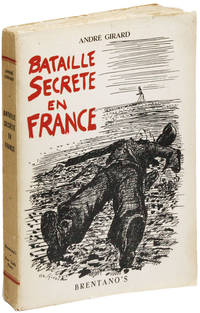
1944Best.-Nr. 26125New York: Brentano's 1944. First Edition. Octavo 20cm.; original cream pictorial wrappers printed in red and black depicting a signed illustration by Girard of a fallen soldier; 292pp.; illus. by the author throughout including many full-paged. Spine a bit darkened top textblock edge stained with very shallow bleeding onto leaves. A Very Good and tight copy. Text entirely in French. Extensively illustrated contemporary account of the German occupation in France and the French Resistance. Girard a French painter and poster artist was the founding member of the Resistance organization known as the CARTE network which he ran from Antibes a free zone in France. In 1942 CARTE drew the attention of the British Special Operations Executive which provided the organization with arms radio operators and funds. After traveling to Britain under SOE orders in 1943 Girard was forbidden from returning to France during which time his wife was arrested and incarcerated in the Ravensbruck concentration camp until the end of the war. As a result Girard broke with the SOE and left in self-imposed exile for the United States where he voiced his opposition to the British and the Gaullists. TOGETHER WITH: Original pencil and ink maquette drawing of a fallen soldier 20x13.5cm. nearly identical to the cover illustration. Additional pencil sketch on verso with variation of the fallen soldier and cover text. Slight rust-staining from previously removed paper clip else Very Good. TOGETHER WITH: Original pencil and ink illustration 28x21.5cm. signed. Depicts a scrum of bedraggled men and women overseen by four large and sinister German guards either at a train station or a concentration camp though it is unclear. This illustration does not appear in the published work though variations of the guards do make appearances throughout. Tears at hole punches not affecting text some minor staining along top edge else Very Good. Brentano's unknown