2.281 Ergebnisse
1943Best.-Nr. 012278Paris Le Téméraire 1943 In-4 Cartonnage souple de l'éditeur
1942Best.-Nr. 34042Neuchâtel La Baconnière, "Collection des Cahiers du Rhône" 1942 1 vol. broché in-8, broché, couverture à rabats, non coupé, 157 pp., fac-similé en frontispice, bibliographie. Edition originale. Un des 80 exemplaires numérotés sur vélin, seul grand papier avec 20 Hollande. En parfait état.
1927Best.-Nr. 002933Au 19 de la rue Servandoni à Paris, sixième (chez l'auteur), 1927
Best.-Nr. DADAX082614912XNew unknown
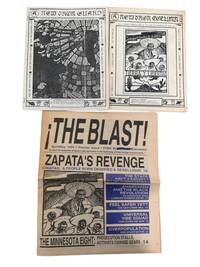
1984Best.-Nr. 238831984. Mexican agrarian revolution and Indigenous resistance periodical archive 1984 to 1994 tracing the place of Emiliano Zapata and Indigenous political struggles within American anarchist publishing from the Reagan era through the 1994 Zapatista uprising in Chiapas. Two issues of Southern California's A New Iron Column place Mexican revolutionary history and contemporary Indigenous activism within an international anti-authoritarian program including an issue whose cover memorializes Zapata beneath the slogan "TIERRA Y LIBERTAD" and identifies him as "Heroic Mexican Revolutionary." A decade later the premiere issue of Minneapolis anarchist newspaper The Blast! responds directly to the January 1994 uprising of the Ejército Zapatista de Liberación Nacional leading its front page with "ZAPATA'S REVENGE" and "CHIAPAS: A PEOPLE BORN DIGNIFIED & REBELLIOUS." The sequence documents how Zapata's political image the language of land and liberty and struggles over Indigenous autonomy circulated through American anarchist print networks before and immediately after the EZLN brought Chiapas into international radical politics. Contemporary accounts identify the Creative Anarchists Networks behind A New Iron Column as active in Native support work while institutional holdings characterize the periodical as containing material on Indigenous struggles. A New Iron Column and The Blast! Southern California and Minneapolis 1984 to 1994. Three issues illustrated throughout in black and white with The Blast! printed in black and blue. 1 Creative Anarchists. A New Iron Guard later A New Iron Column. No. II. Southern California 1984. Published as "A Black Banner publication of the Creative Anarchists of America." The cover depicts the execution of Catalan educator and freethinker Francisco Ferrer after the Barcelona uprising of July 1909 while the contents range across "Chile's Painful Realities" "The Mohawk Indians" Emma Goldman prison politics antiwar writing children's rights and a letter from the Sigma Anarchist Group of Warsaw. The editors describe their project as addressing "the meaning of Anarchy and the logic for advocating it" alongside historical commentary poetry political comics and international correspondence. 2 Creative Anarchists Networks. A New Iron Column. No. IV. Anaheim California 1985. Cover devoted to Emiliano Zapata 1879 to 1919 with the revolutionary leader and armed campesinos above a volcanic landscape and the large inscription "TIERRA Y LIBERTAD." The issue identifies itself as "A BLACK BANNER PUBLICATION OF THE CREATIVE ANARCHISTS NETWORKS" and surrounds the Zapata image with "WAR CRIMES: EL SALVADOR" "IRA POW CAMPAIGN" "A TRIBAL ACCORD" "TERRORIST CIA MANUAL" "MARION LOCKDOWN" and "ANARCHY AND COMMUNISM." Its contents include "Zapata of Mexico" "Punk and Anarchy in the U.K." "Revolution" "Irish Republican P.O.W. Campaign" "War Crimes In El Salvador" "Terrorist C.I.A. Manual" "Anarchy and Communism" and "A Struggle." A contemporary Fifth Estate notice records that the publication changed its name from New Iron Guard to Iron Column after editors were alerted to the name's association with the Romanian fascist Iron Guard explicitly linking the replacement name to the anarchist Iron Column of the Spanish Revolution. 3 Agitator Index Collective. The Blast! Premiere Issue. Minneapolis Minnesota April/May 1994. Front page dominated by "ZAPATA'S REVENGE" and "CHIAPAS: A PEOPLE BORN DIGNIFIED & REBELLIOUS" alongside articles on the Minnesota Eight anarchism and Black revolution the federal crime bill Twin Cities hip hop and population politics. Inside the paper identifies itself as a nonprofit political newspaper produced by the Agitator Index Collective and carries Kieran Knutson's "The State of Minnesota Vs. The Anti Racist Movement." The Agitator Index Collective belonged to the Love and Rage Revolutionary Anarchist Federation and The Blast! was founded by former members of the Profane Existence Collective. Its first issue appeared in 1994 with coverage of the Zapatista uprising while subsequent issues continued reporting on the EZLN and Chiapas. A New Iron Column invokes Zapata during the 1980s alongside contemporary Native struggles Central American war political prisoners and international anarchist movements treating the Mexican Revolution as part of a continuing politics of land state power and anti-authoritarian resistance. The 1994 Blast! appeared only months after the EZLN emerged publicly on January 1 in Chiapas where its rebellion centered Indigenous communities and demands concerning land political participation autonomy and the consequences of Mexican state policy. Its headline "ZAPATA'S REVENGE" explicitly joins the contemporary rebellion to the memory of Zapata while "A PEOPLE BORN DIGNIFIED & REBELLIOUS" frames Chiapas through the political agency of its population rather than as a distant revolutionary spectacle. The Blast! continued covering the EZLN after this premiere issue confirming that Chiapas formed part of the newspaper's sustained international reporting rather than a single topical headline. Some toning and handling wear with folds and minor edge wear visible; A New Iron Column issues staple bound The Blast! folded as issued. Overall very good condition. A three issue record of Zapata's political afterlife in United States anarchist publishing moving from 1980s representations of Mexican agrarian revolution and Indigenous resistance to an immediate anarchist response to the Indigenous led Zapatista uprising in Chiapas in 1994. unknown
1984Best.-Nr. 238831984. Mexican agrarian revolution and Indigenous resistance periodical archive 1984 to 1994 tracing the place of Emiliano Zapata and Indigenous political struggles within American anarchist publishing from the Reagan era through the 1994 Zapatista uprising in Chiapas. Two issues of Southern California's A New Iron Column place Mexican revolutionary history and contemporary Indigenous activism within an international anti-authoritarian program including an issue whose cover memorializes Zapata beneath the slogan "TIERRA Y LIBERTAD" and identifies him as "Heroic Mexican Revolutionary." A decade later the premiere issue of Minneapolis anarchist newspaper The Blast! responds directly to the January 1994 uprising of the Ejército Zapatista de Liberación Nacional leading its front page with "ZAPATA'S REVENGE" and "CHIAPAS: A PEOPLE BORN DIGNIFIED & REBELLIOUS." The sequence documents how Zapata's political image the language of land and liberty and struggles over Indigenous autonomy circulated through American anarchist print networks before and immediately after the EZLN brought Chiapas into international radical politics. Contemporary accounts identify the Creative Anarchists Networks behind A New Iron Column as active in Native support work while institutional holdings characterize the periodical as containing material on Indigenous struggles. A New Iron Column and The Blast! Southern California and Minneapolis 1984 to 1994. Three issues illustrated throughout in black and white with The Blast! printed in black and blue. 1 Creative Anarchists. A New Iron Guard later A New Iron Column. No. II. Southern California 1984. Published as "A Black Banner publication of the Creative Anarchists of America." The cover depicts the execution of Catalan educator and freethinker Francisco Ferrer after the Barcelona uprising of July 1909 while the contents range across "Chile's Painful Realities" "The Mohawk Indians" Emma Goldman prison politics antiwar writing children's rights and a letter from the Sigma Anarchist Group of Warsaw. The editors describe their project as addressing "the meaning of Anarchy and the logic for advocating it" alongside historical commentary poetry political comics and international correspondence. 2 Creative Anarchists Networks. A New Iron Column. No. IV. Anaheim California 1985. Cover devoted to Emiliano Zapata 1879 to 1919 with the revolutionary leader and armed campesinos above a volcanic landscape and the large inscription "TIERRA Y LIBERTAD." The issue identifies itself as "A BLACK BANNER PUBLICATION OF THE CREATIVE ANARCHISTS NETWORKS" and surrounds the Zapata image with "WAR CRIMES: EL SALVADOR" "IRA POW CAMPAIGN" "A TRIBAL ACCORD" "TERRORIST CIA MANUAL" "MARION LOCKDOWN" and "ANARCHY AND COMMUNISM." Its contents include "Zapata of Mexico" "Punk and Anarchy in the U.K." "Revolution" "Irish Republican P.O.W. Campaign" "War Crimes In El Salvador" "Terrorist C.I.A. Manual" "Anarchy and Communism" and "A Struggle." A contemporary Fifth Estate notice records that the publication changed its name from New Iron Guard to Iron Column after editors were alerted to the name's association with the Romanian fascist Iron Guard explicitly linking the replacement name to the anarchist Iron Column of the Spanish Revolution. 3 Agitator Index Collective. The Blast! Premiere Issue. Minneapolis Minnesota April/May 1994. Front page dominated by "ZAPATA'S REVENGE" and "CHIAPAS: A PEOPLE BORN DIGNIFIED & REBELLIOUS" alongside articles on the Minnesota Eight anarchism and Black revolution the federal crime bill Twin Cities hip hop and population politics. Inside the paper identifies itself as a nonprofit political newspaper produced by the Agitator Index Collective and carries Kieran Knutson's "The State of Minnesota Vs. The Anti Racist Movement." The Agitator Index Collective belonged to the Love and Rage Revolutionary Anarchist Federation and The Blast! was founded by former members of the Profane Existence Collective. Its first issue appeared in 1994 with coverage of the Zapatista uprising while subsequent issues continued reporting on the EZLN and Chiapas. A New Iron Column invokes Zapata during the 1980s alongside contemporary Native struggles Central American war political prisoners and international anarchist movements treating the Mexican Revolution as part of a continuing politics of land state power and anti-authoritarian resistance. The 1994 Blast! appeared only months after the EZLN emerged publicly on January 1 in Chiapas where its rebellion centered Indigenous communities and demands concerning land political participation autonomy and the consequences of Mexican state policy. Its headline "ZAPATA'S REVENGE" explicitly joins the contemporary rebellion to the memory of Zapata while "A PEOPLE BORN DIGNIFIED & REBELLIOUS" frames Chiapas through the political agency of its population rather than as a distant revolutionary spectacle. The Blast! continued covering the EZLN after this premiere issue confirming that Chiapas formed part of the newspaper's sustained international reporting rather than a single topical headline. Some toning and handling wear with folds and minor edge wear visible; A New Iron Column issues staple bound The Blast! folded as issued. Overall very good condition. A three issue record of Zapata's political afterlife in United States anarchist publishing moving from 1980s representations of Mexican agrarian revolution and Indigenous resistance to an immediate anarchist response to the Indigenous led Zapatista uprising in Chiapas in 1994. unknown books
19588vo., First Edition; handsomely bound in full burgundy crushed morocco, sides with gilt frame border, back with raised bands, second and fourth compartments ruled and lettered in gilt, all other compartments tooled in gilt, gilt top, hand-made endpapers, red ribbon marker, a most attractive copy ideal as a gift or for presentation. Complementing 'Specially Employed' (1952), this is an elegant copy of the second and final account by the wartime head of SOE's French Section. As in the case of its counterpart, content was subject to the rigorous restrictions of the period. VERY SCARCE. Enser, p.410 (recording the first edition).
Best.-Nr. DADAX0671497987New unknown
Best.-Nr. DADAX1931646864New unknown
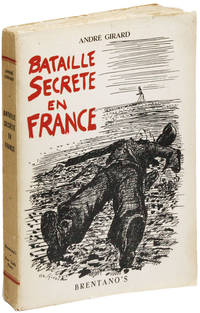
1944Best.-Nr. 26125New York: Brentano's 1944. First Edition. Octavo 20cm.; original cream pictorial wrappers printed in red and black depicting a signed illustration by Girard of a fallen soldier; 292pp.; illus. by the author throughout including many full-paged. Spine a bit darkened top textblock edge stained with very shallow bleeding onto leaves. A Very Good and tight copy. Text entirely in French. Extensively illustrated contemporary account of the German occupation in France and the French Resistance. Girard a French painter and poster artist was the founding member of the Resistance organization known as the CARTE network which he ran from Antibes a free zone in France. In 1942 CARTE drew the attention of the British Special Operations Executive which provided the organization with arms radio operators and funds. After traveling to Britain under SOE orders in 1943 Girard was forbidden from returning to France during which time his wife was arrested and incarcerated in the Ravensbruck concentration camp until the end of the war. As a result Girard broke with the SOE and left in self-imposed exile for the United States where he voiced his opposition to the British and the Gaullists. TOGETHER WITH: Original pencil and ink maquette drawing of a fallen soldier 20x13.5cm. nearly identical to the cover illustration. Additional pencil sketch on verso with variation of the fallen soldier and cover text. Slight rust-staining from previously removed paper clip else Very Good. TOGETHER WITH: Original pencil and ink illustration 28x21.5cm. signed. Depicts a scrum of bedraggled men and women overseen by four large and sinister German guards either at a train station or a concentration camp though it is unclear. This illustration does not appear in the published work though variations of the guards do make appearances throughout. Tears at hole punches not affecting text some minor staining along top edge else Very Good. Brentano's unknown
1944Best.-Nr. 26125New York: Brentano's 1944. First Edition. Octavo 20cm.; original cream pictorial wrappers printed in red and black depicting a signed illustration by Girard of a fallen soldier; 292pp.; illus. by the author throughout including many full-paged. Spine a bit darkened top textblock edge stained with very shallow bleeding onto leaves. A Very Good and tight copy. Text entirely in French. Extensively illustrated contemporary account of the German occupation in France and the French Resistance. Girard a French painter and poster artist was the founding member of the Resistance organization known as the CARTE network which he ran from Antibes a free zone in France. In 1942 CARTE drew the attention of the British Special Operations Executive which provided the organization with arms radio operators and funds. After traveling to Britain under SOE orders in 1943 Girard was forbidden from returning to France during which time his wife was arrested and incarcerated in the Ravensbruck concentration camp until the end of the war. As a result Girard broke with the SOE and left in self-imposed exile for the United States where he voiced his opposition to the British and the Gaullists. TOGETHER WITH: Original pencil and ink maquette drawing of a fallen soldier 20x13.5cm. nearly identical to the cover illustration. Additional pencil sketch on verso with variation of the fallen soldier and cover text. Slight rust-staining from previously removed paper clip else Very Good. TOGETHER WITH: Original pencil and ink illustration 28x21.5cm. signed. Depicts a scrum of bedraggled men and women overseen by four large and sinister German guards either at a train station or a concentration camp though it is unclear. This illustration does not appear in the published work though variations of the guards do make appearances throughout. Tears at hole punches not affecting text some minor staining along top edge else Very Good. Brentano's unknown books
1982208 pages. Index. Black and white photographic plates. "Guerrilla fighter, undercover agent, diplomat, Director of Chatham House, chief editor of of Penguin Books, MP for Oxford, industrialist and author, Mr. Woodhouse ventured much.... he spent the war years with the Greek Resistance and describes the hazards of working with rival guerilla groups as well as the rigours of partisan warfare in the mountains... A witty, stylish and above all thought-provoking account of a colorful and distinguished career." - dust jacket. Light wear to clean and unmarked book. Prior owner's blindstamp upon front free endpaper. Binding tight. Dust jacket now preserved in glossy new archival-grade Brodart. A nice bright copy. Book
Best.-Nr. 29035Paris n° 1 et 2 juin et juillet 1944 ; Paris Éditions de la Jeune Parque nouvelle série n° 1 à 6 décembre 1944 - avril 1945. 2 plaquettes 105 x 135 mm de 16 et 16 p. ; puis 5 vol. 135 x 185 mm de 82 87 83 85 et 139 p. Brochés. . Collection complète de cette importante revue fondée dans la clandestinité par Paul Éluard. Les deux premiers numéros clandestins sont particulièrement rares. . Imprimés sur le modèle des revues et tracts largués par la Royal Air Force sur la France occupée de même format que la plaquette Poésie et Vérité 1942 et que la Revue du monde libre les deux premiers numéros clandestins de seize pages chacun rassemblent poèmes et textes la plupart sous pseudonymes de Gabriel Audisio Chems-El-Kraha Jean Bruller Vercors Paul Éluard Jean du Haut André Frénaud Benjamin Phélisse Georges Hugnet Malo Lebleu Michel Leiris Hugo Vic Jean Lescure Jean Delamaille Louis Parrot Margeride Jean Paulhan Juste Pierre Seghers Louis Maste Lucien Scheler Jean-Paul Mazurier Jean Tardieu Daniel Trévoux et Édith Thomas Anne. Éluard fera reparaître la revue au grand jour après la Libération dans une nouvelle maquette sous les auspices des Éditions de la Jeune Parque et la double maxime « Une Revue qui est de son temps comme on est d'un parti. Une Revue qui est française comme on est universel ». Paris, n° 1 et 2, juin et juillet 1944 ; Paris, Éditions de la Jeune Parque, nouvelle série, n° 1 à 6, décembre 1944 - avr unknown
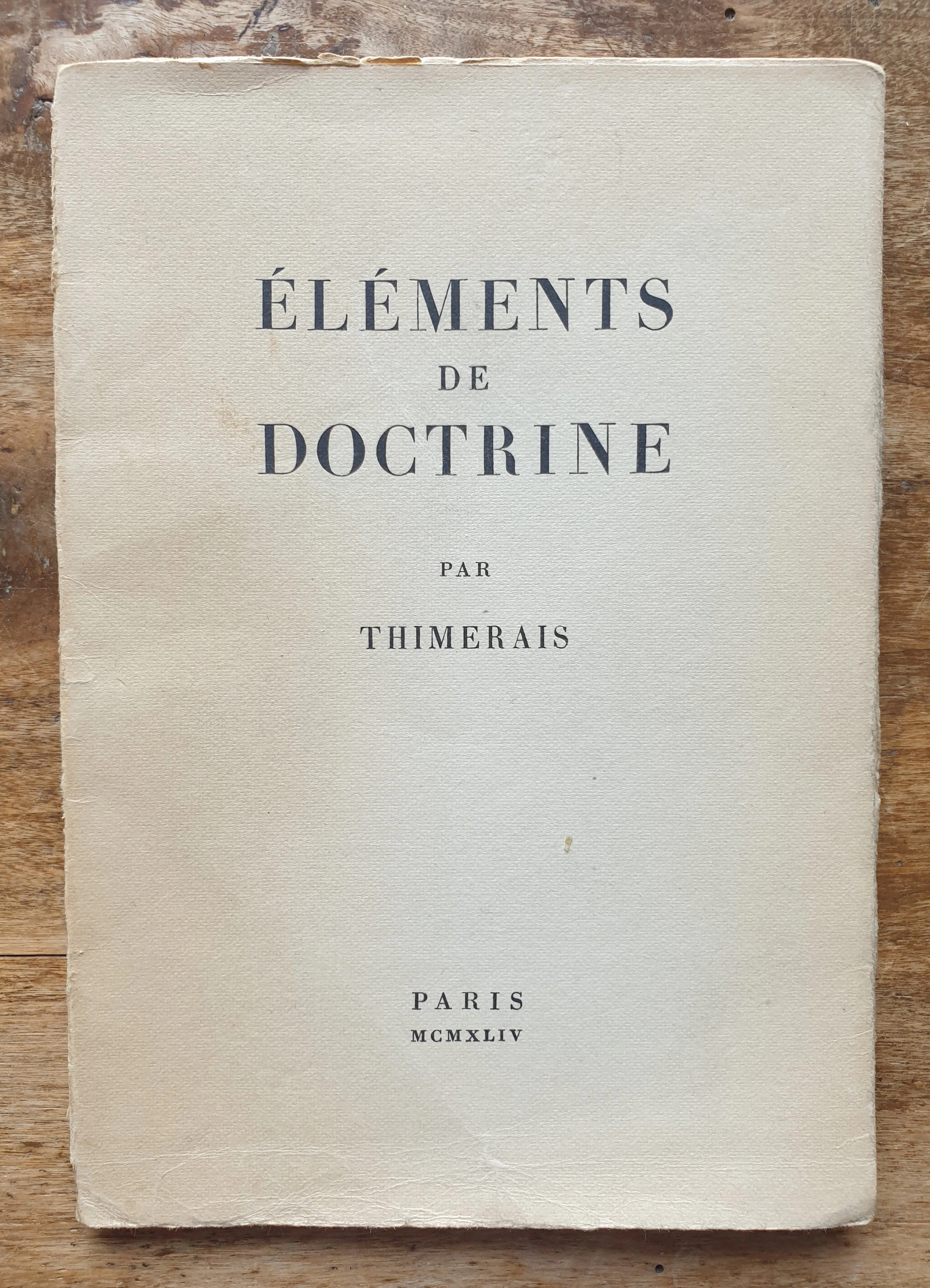
1944Best.-Nr. 29035Paris, n° 1 et 2, juin et juillet 1944 ; Paris, Éditions de la Jeune Parque, nouvelle série, n° 1 à 6, décembre 1944 - avril 1945. 2 plaquettes (105 x 135 mm) de 16 et 16 p. ; puis 5 vol. (135 x 185 mm) de 82, 87, 83, 85 et 139 p. Brochés. Collection complète de cette importante revue fondée dans la clandestinité par Paul Éluard. Les deux premiers numéros, clandestins, sont particulièrement rares.
Best.-Nr. 12574Paris, Les Editions de Minuit, 1944 petit in 12 carré broché de 46 pages plus achevé d'imprimer
Best.-Nr. 18053Paris, s.n., 1945. In-4, 62 pp., broché, couverture originale imprimée (légère insolation, décharges).
1944Best.-Nr. 74505Buenos Aires Editions des Lettres Françaises 1944 1 vol. relié in-4, reliure à la bradel de papier recyclé grège, dos orné d'une bande de même papier déchiré bordé de noir, plats également ornés de larges bandes de papier recyclé grège, déchiré et bordé de noir ou rouge, titre inscrit en reprographie sur le premier plat et nom de l'auteur inscrit sur le second, non rogné, couvertures et dos conservés, rhodoïd à rabats (Honnelaître, 1996), non paginé. Edition originale tirée seulement à 392 exemplaires, celui-ci un des 60 exemplaires d'essai sur papier grossier dit "chandelle", non justifié. Cette reliure de grand format qui met parfaitement en valeur la singularité du papier du présent exemplaire a figuré à l'exposition "Claude Honnelaître" de la Bibliothèque Historique de la Ville de Paris en 1996 (n° 124 du catalogue).
1934Best.-Nr. 1022441934 Tirage argentique d'époque portant au dos le l'encadrement la mention "Portrait de mon père Georges Makowski par Eli Lotar (1934 ( ?)" de la main de son fils Claude Makowski.Encadrement des années 1970.Parfait état.
2007Hardcover Like New. Ships directly from publishers. Pls. allow a minimum of 25 business days delivery time being a new book from publisher.
Best.-Nr. 18068Paris, les éditions du Compas, 1946. In-folio, non paginé, 20 pl., broché, couverture originale imprimée (insolation, légères décharges).
1942Best.-Nr. 124591Buenos Aires Editions des Lettres Françaises 1942 1 vol. broché in-4, broché, non paginé. Edition originale, si l'on excepte le tiré à part publié en mai 1942 par les "Cahiers du Sud" à l'insu de l'auteur. Exemplaire du premier tirage daté du 25 août 1942. Un des rares exemplaires hors commerce sur un étonnant papier de type Auvergne qui n'est pas annoncé en page de justification, mais simplement marqué "H.C.", avec ce bel envoi autographe signé au poète et critique américain Allen Tate (1899-1979), "qui sait de quels refus est fait l'accueil d'une heure, d'une oeuvre, ou d'un échange humain, bien cordialement. St-J. Perse, Washington, 1944". Petites déchirures et manques en bordure de la couverture, le papier utilisé étant cassant et d'une grande fragilité. L'exemplaire est conservé sous un étui qui reproduit en fac similé la couverture.