1956réf. 23151ABAmsterdam, De Beuk, 1956. 8°, 35 (+1)S., gelber OBrosch.m. mont. TSchild, ger. gebräunt; schönes Expl.
19878vo. Ix, 157 pages. First English edition. SUBJECT (S) : Germany - politics and government - 1918-1933; Nationalsozialistische Deutsche Arbeiter-Partei - history. CONTENTS: Introduction: Hitler and the Nazi party in Munich, 1919-1923/4; Berlin in the autumn of 1930; national Socialism and the Weimar Republic; The process of the Nazi assumption of power; The final stages of Hitler's rise to chancellorship. ISBN: 0854965092. Has dust jacket. Very good condition. (Holo2-12-22)
1983Clothbound. 8vo. XII, 244 pages. 23 cm. First edition. Written by Protestant Theologian Robert McAfee Brown, member of the U. S. Holocaust Memorial Council, this literary and philosophical study attends to the written works of Elie Wiesel. Subjects: Holocaust, Jewish (1939-1945) , in literature. Judaism and literature -- France. Holocaust (Jewish theology) Wiesel, Elie, 1928- -- Criticism and interpretation. Wiesel, Elie, 1928- - Religion. With lightly soiled dustjacket. Clean and fresh. Near fine condition. (HOLO2-88-36)
1962IN HEBREW. SIGNED BY AUTHOR. CONTAINS B&W TABLES AND MAPS. 220x150 mm. XVII+422 pages. Gilt hardcover. Cover corners slightly worn. Spine slightly bumped. Pages slightly yellowing. Else in good condition.
2010réf. 31297W W NORTON & CO 2010. 375 Seiten Gebundene Ausgabe, Hardcover/Pappeinband, book in good condition, Neupreis in Euro: 26,50
1992réf. 192921-1Cambridge, University Press 1992. 191 S. Original-Leinenband
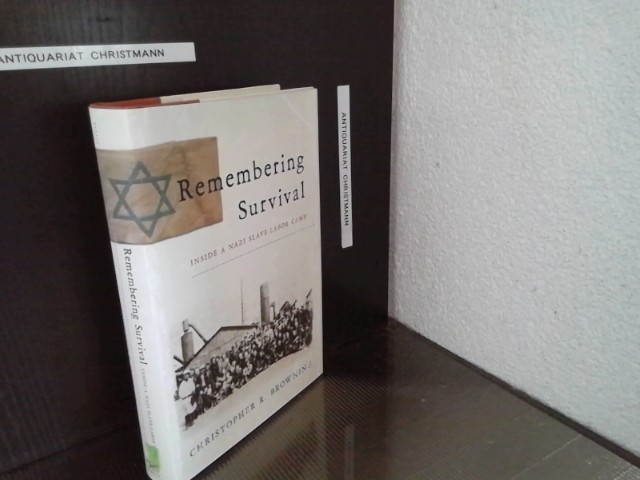
2000BRAND NEW. Virgin copy, not yet traded. 8vo. Pp. xii, 186. With halftone full-page map; notes, index. Wrappers. ~ First edition. Browning, one of the leaders in the study of the Holocaust, focuses here on the victims and the perpetrators, using oral testimony and documentary evidence. He sheds light on issues such as Nazi Jewish policy, the step from population expulsion to total extermination, the exploitation of Jewish labour, and the behaviour of local perpetrators. Browning is the author of the landmark publication "Ordinary Man: Reserve Police Battalion 101 and the Final Solution in Poland."
2010Softcover. 8vo. Xxii, 375 pages. Ill. Draws on the testimony of survivors of the Holocaust-era Starachowice slave-labor camps to examine the Jewish prisoners' fight for survival through a succession of brutal Nazi camp regimes. SUBJECT (S) : World War, 1939-1945 -- Concentration camps -- Poland -- Starachowice. Forced labor -- Poland -- Starachowice -- History -- 20th century. Holocaust, Jewish (1939-1945) -- Poland -- Starachowice. Jews -- Poland -- Starachowice -- History -- 20th century. Nazis -- Poland -- Starachowice -- History -- 20th century. Holocaust survivors -- Poland -- Starachowice -- Biography. Named Corp: Starachowice -- Arbeitslager Time: Geschichte Geschichte 1939-1945 Geographic: Wierzbnik (Starachowice, Poland) -- History -- 20th century. Starachowice (Poland) -- Juden. Includes bibliographical references (pages 301-362) and index. ISBN: 9780393070194. Very good, almost new condition (HOLO2-89-67).
200423.5x16 cm. xii+615 pages. Gilt hardcover with dust jacket. Dust jacket slightly bruised. Else in good condition
2004réf. 57710[Frankfurt (Main)] : Societäts-Verl. 2004. 221 S. : Ill. ; 22 cm kart., Softcover/Paperback, Exemplar in sehr gutem Erhaltungszustand
1997réf. 29682Paris Tallandier 1997 In-8 180 pp
19728vo., First Edition, with plates and endpaper maps; navy cloth, backstrip lettered in silver, a very good, bright, clean copy. Enser, p.468.
1998Paperback. Oblong. 83 pages. Ill. 19 x 28 cm. Second, Revised Edition. Commissioned by the Swedish government for the Living History Forum, the book is a pictorial and anecdotal history of the holocaust. ISBN: 9163063840. SUBJECT (S) : Holocaust, Jewish (1939-1945) . "Levande historia. " Light bumping to corners. Otherwise a nice, clean copy in very good condition. (HOLO2-63-13).
1987réf. 46796Berlin, Kinderbuchverlag (1987). (2. Aufl. dieser Ausg.; Text nach Jungbrunnen, Wien 1963). Klein-8°. M. einig. ganzs. Textillustr. sowie farb. illustr. Innendeckel v. Günther Lück sowie 6 schw/w. Fotos. als Anhang. 217 S. Illustr. OKart. (= Alex Taschenbücher Bd. 98).
1991réf. 009397Frankfurt und New York, Campus, 1991. 531 S. Orig.-Pappband mit Schutzumschlag. Ein schönes, gut erhaltenes Exemplar mit nur leichten Gebrauchsspuren.
1998réf. 009191Gerlingen, Bleicher, 1998. 216 S. Orig.-Broschur. Ein schönes, gut erhaltenes Exemplar mit nur leichten Gebrauchsspuren.
2006réf. 009108Köln, DuMont, 2006. 480 S. Großformatiger Orig.-Pappband mit Schutzumschlag. Der Umschlag am Vorderdeckel mit kleinem Einriß, sonst schönes, gut erhaltenes Exemplar mit nur leichten Gebrauchsspuren.
1918réf. 1161047Berlin, Oesterheld, 1918. Gr.-8vo. 33, 448 S. m. 8 S. Anz., 1 Bl. Neuer Lwdbd (Papier gebräunt, unbeschnitten).
1920réf. 1161048Berlin, Verlag Neues Vaterland, (1920). Gr.-8vo. 111 S. OPp. (braunfl., Vordergelenk gelockert, S. gebräunt).
1918225x150 mm. XXXIV+449 pages. Hardcover. Cover age stained. Cover corners slightly bumped. Spine age stained. Spine edges worn. Pen and pencil inscriptions on few pages - no damage to text. Pages yellowing. Else in good condition.
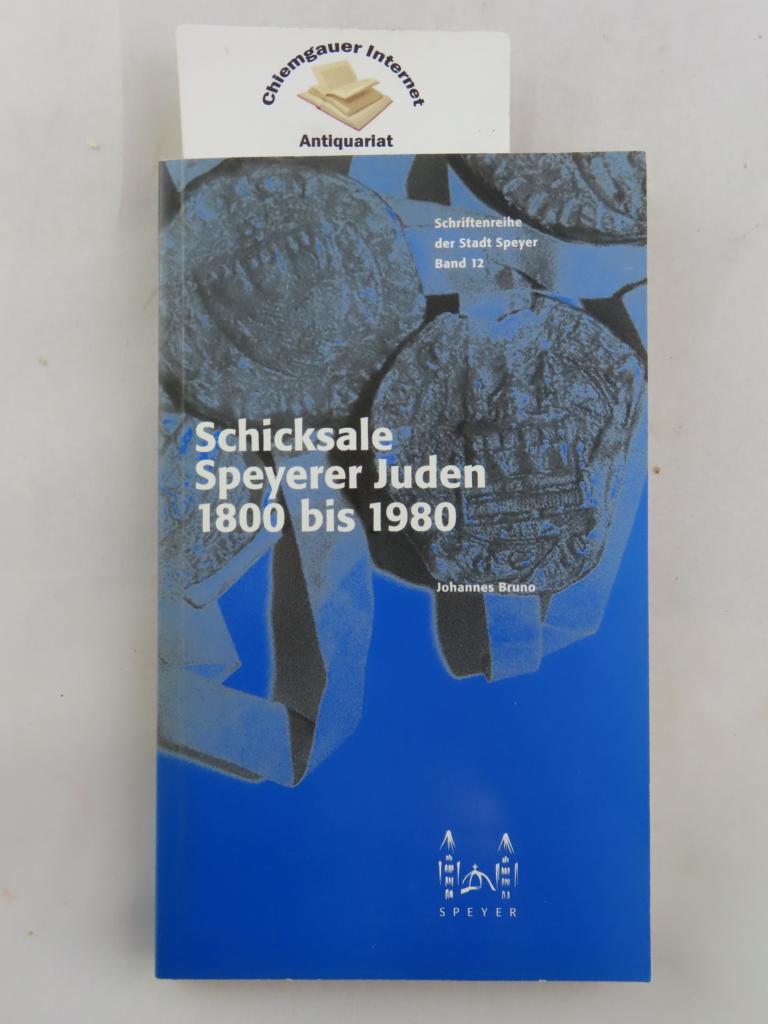
2000réf. 301538Speyer : Stadtverwaltung, 2000. 304 Seiten. Mit zahlreichen dokumentarischen Abbildungen. Originalbroschur. 20 cm
1983réf. V36768Bremen (Selbstverlag des Staatsarchivs der Freien Hansestadt Bremen) 1983. 8°, Originalbroschur ( Paperback ) 341 S, 1
19611st Edition. Original Green Paper Wrappers. 8vo.383 pages ; 23 cm. In Ukrainian; Text in Ukrainian with parallel title page in English. Canadian Author AS Byrk writes about Ukrainian Jewish Relations throughout history. SUBJECT (S) : Jews -- Ukraine. Jews. Stamp on Title Page. Overall in about very good condition. (HOLO2-130-27)
1954(FT) Publishers cloth. 8vo. 144 pages. 24 cm. First edition. In Yiddish. inscribed in Yiddish on first page by the author. On verso of title page: For the sanctification of God's name. Between his 1939 book of Yiddish poetry, Yung Grin Mai (Young Green May) and his caustic novella, A Cat in the Ghetto, lay the Holocaust: Skaryýsko-Kamienna, where Rachmil Bryks was born in 1912; Lodz, to which he was deported; Auschwitz, which he survived, and, ultimately, New York where he died in 1974, though later interred in Jerusalem. A Cat in the Ghetto, recently republished by Persea Books, first appeared in 1952 under the more unnerving title Oyf Kidesh Hashem, meaning, In Sanctification of the Name, but expressing, also, the pious euphemism for martyrdom. Like fellow survivor Yehiel De-Nur, who, writing under his camp name and number Ka-tzetnik 135633, called the gas chambers the inner sanctum of the Temple of Auschwitz, Bryks displays and proclaims like a 20th-century prophet. In his novellas, the tattooing needle of Auschwitz trails a thread tied, at one end, to the Book of Lamentations, which sanctified the destruction of a Jewish way of life in mourning the loss of a symbolic Temple, thereafter endlessly transformed. Bryks took the litany of Lamentations as inspiration for the secular litany of his ghetto experience between 1939 and 1944. (Compared with the ghetto years, Auschwitz occupies a brief place in his collected works, which also include a novel, The Paper Crown, and stories from the beginning of the war. ) But whereas younger writers like these sacrificed everything to render literature true to experience, Bryks, writing in a very native Yiddish, clung fast to his roots in the Book of Prophets, Sholom Aleichem, the midrash, the folktale and the megillot. Bryks, who in photographs resembles a Polish vaudevillian, considered himself a survivor of neither the Holocaust nor the Shoah, but rather as one passed over by the Khurbn, which came only for the Yidn. In his essay My Credo, he wrote, I want to emphasize that our Khurbn period includes also the spiritual khurbn in the Soviet Union during the Stalin era the destruction of the Jewish word, the slaughter of Yiddish writers, actors, artists, teachers and others engaged in the field of Yiddish culture. According to his daughters, the mamaloshn was the only tongue tolerated in their home on New York Citys Upper West Side, where, in contrast to the tortured linguistic contortions of German-language poet Paul Celan in Paris, Bryks wrote steadily at the kitchen table by day and met Isaac Bashevis Singer, Itzik Manger and Avrum Reisen for tea at the Garden Cafeteria. (From A Yiddish Cat Still Laughing After Hot, Black Fire by Daniel Elkind; published March 11, 2009, issue of March 20, 2009; Jewish Daily Forward) . Subjects: Short stories, Yiddish. Light wear to covers, very good condition. (HOLO2-97-18-JU) XX