RUSSELL OF LIVERPOOL LordBiblio.com
5 266 résultats
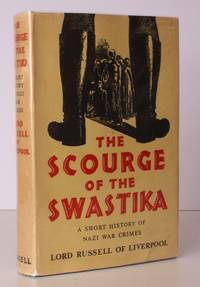
1956réf. 43653Cassell 1956. 8vo. Thirteenth Impression with 28 plates on 16 and an illustration in the text; black cloth backstrip lettered in red a near fine copy in unclipped dustwrapper the latter with short closed tear at tail of upper joint and with one small loss at upper edge of rear panel. A PRESENTATION COPY FROM THE AUTHOR WITH HIS SIGNED HOLOGRAPH INSCRIPTION ON FRONT FREE ENDPAPER. SIGNED COPIES ARE EXCEEDINGLY SCARCE. Enser pp. 115 467 recording the first edition of 1954. Cassell, hardcover
19448 plates in stiff paper portfolio Unbound Ex-library, Very good condition
1944réf. 164516Genf, [Komitee zur Hilfeleistung für die kriegsbetroffene jüdische Bevölkerung], 1944. 87 Bll., Original broschiert, 4°. Typoskript, hektographiert auf 80 einseitig bedruckten Blättern. Aus dem Französischen, zusammengestellt von A[dolf Henryk] Silberschein. Sehr selten. Softcover Bibliotheksexemplar. Umschlag etwas berieben und angestaubt. Leimspur von ehemaligem Signaturschild auf Deckel, Fehlstelle in der Ecke unten rechts, Titelseite Ecke oben rechts ausgeschnitten.
1936Original Cloth. 4to. (Various paginations) . 27 cm. In German, with lyrics in Hebrew and Yiddish. Nazi-era imprint. Two volumes in one. Both volumes of the Judische Volks-Lieder contain original elaborately designed title pages, both bound together with new wraps, in English, titled 45 Jeiwsh Folk Songs, Berlin-Boston, Hatikwah. Some individual scores contain original title pages as well. 45 songs, chiefly for voice and piano (though some for cello and violin accompaniment as well) . At the time of publication, Janot S. Roskin was actively involved as a composer for the Jüdischen Kulturbünde. He founded the Hatikvah music company in 1921, and refounded the company in the United States in 1941, after his emigration. Band 1 contains: Der Fuhrmann: Volkslied - Abram, Abram: Gebetlied - A Heem, A Heem: Refrain eines litauischen Volksliedes - Licht-Bentschen: Gebetlied - Der Schikkur: humoristisches Volkslied - A Brivele der Mamen: Familienlied / Text von B. W. Ehrenkranz - Hamawdil: Gebetlied / Text und Melodie v. A. Goldfaden - Roszinkes mit Mandlen: Wiegenl. - Jankele gejt in Schul: Goluslied - Der Alef-Bees: Chederlied / Text und Melodie v. M. Warschawski - Kinder mir hoben Ssimches-Torje / Text und Melodie v. M. Warschawski - Dem Milners-Treren: Goluslied - Dos Tojrele: a. D. Operette Di jiddische Neschome / v. Feinmann - Dos Pekele: Goluslied / Melodie von S. Russota - Ein schönes Lied hab ich gesungen / Melodie von Janot S. Roskin - Klip-klap, effen mir! : Liebeslied. I. / Melodie von Janot S. Roskin - Sehnsucht nach Jeruscholajim: Goluslied - Di Zimbel: Goluslied / Text und Melodie von Eljakim Zunser - Der Seeger Die Uhr - Der Parom Die Fähre - Dos heelige Rikud'l: Chassidisches Tanzlied - L'chajim Rebbe: Chassidisches Lied - Unser Rebbenju: Chassidisches Lied - Jismach Mojsche: Chassidisches Lied - Omar Adojschem Lejankojw: Chassidisches Lied. Band 2 contains: Nationale Volkslieder. Htikwah "Die Hoffnung" ; Dort wo die Zeder "Bimkom Haeres" ; Al tal s'a matar ; Ja chay lili ha, amali ; do Lid fun Jeruscholajim - Humoristischer Volkslieder. Dire-Gelt ; Balebuste Leben ; A Geneeweh ; Der Rebbe hot gehessen Freelich sajn ; Wus wet sajn m'kejech Burikes - Schlof, schlof, schlof ; Schlof sche majn Feegele ; Dos Kind ligt in Wigele ; Schlof, majn Kind ; Kumt der liber Sumer - Mädchen- und Liebeslieder. Di Bajke ; Do solst nit geen mit kajn andere Meedelech ; Kezele jajns! Klip-klap, effen mir! - Hochzeits- und Familienlieder. A Muters-Freed ; Chazkele, chazkele ; Ich bin sech mir a Kale ; Ale Mentschen Tanzendik ; Lejg ich mayn Kepele ; Frajtog ojf der Nacht. Subjects: Songs with piano. Songs with instrumental ensemble. Folk songs, Yiddish - Germany. Jews - Germany Music. OCLC lists 13 copies. Spine rebacked with old tape stains at spine. First few leaves aged; otherwise fresh and clean. Good condition. (GER-44-10)
1946Original Wrappers. 8vo. 91 [1] pages. 19 cm. First Edition. Early reports on medical crimes at concentration camps, including Buchenwald, Dachau, and Aushwitz, from Czech Medical Doctors and one Journalist. Reports include descriptions of unhygienic conditions in the concentration camp facilities, surgical practices, vaccinations, and treatment of the sick, elderly, and those with contagious disease. Subjects: Concentration Camps -- Germany. Medicine -- Germany. Prisons -- Germany. World War, 1939-1945 -- Atrocities. World War, 1939-1945 -- Medical care. Concentration camps -- Germany. Some edge wear and light age toning. Previous owners name on title page. Some damp staining, otherwise good condition. (HOLO-114-2a)
1940Original stiff paper wrappers. 8vo, 48 pages. Interesting "ambiguous" defense of Nazi Germany from just prior to US entry into WWII. The author discusses the history of Germany, the Nazi party, and other groups with similar ideas, with a special examination of Nazi philosophy, all from an explicitly Christian perspective, with many references to Jesus Christ. While not supportive of Nazism, the book is also not very critical either. "We cannot condone the crimes of the Nazi regime. Yet, we can have forgivness in our hearts for those who have committed them even as we have for the Inquisitors of the Medieval Church who in their zeal for God's kingdom subjected literally millions to torture and death in the name of a religion born of love and mercy. " (page 47-48) OCLC: 34904249, OCLC lists 4 copies worldwide (NYPL, Stanford, UIllinois, Harvard) . Corners slightly bumped, else Very Good Condition. Scarce. (HOLO2-145-8)
1936réf. 000366Prag, Die neue Weltbühne, 1936. Leinenband von ca. 1960. Ein gut erhaltenes Exemplar mit nur leichten Gebrauchsspuren. Ohne die ursprünglichen Umschläge der Hefte gebunden und ohne die Nummern 3-5, 8-10, 12, 16, 21, 22 und 25-37. Der Jahrgang enthält Aufsätze und Nachrufe zum Tode Kurt Tucholskys und zur Nobelpreisverleihung an Carl von Ossietzky sowie zahlreiche Beiträge von Ernst Bloch, Carl Einstein, Kurt Hiller, E. E. Kisch, Heinrich und Thomas Mann, Ernst Toller, Kurt Tucholsky u. a. Erste Ausgabe.
1926réf. 008876Berlin, Jüdischer Verlag 1926-1930, 1926. Zusammen 5.330 Seiten. Orig.-Halblederbände. Bände I, II und VIII liegen in 2. Auflage von 1930 vor, sonst handelt es sich um die Erstauflagen. Die Einbände leicht berieben und die Rückengelenke der Bände I und X aufgeplatzt, außerdem die Rücken der Bände V und X oben jeweils mit einer Fehlstelle im Leder. Die Seiten gelegentlich stockfleckig. Trotz dieser Gebrauchsspuren handelt es sich jedoch um ein insgesamt noch ordentliches, vollständiges Exemplar der besseren Ausstattung des noch immer geschätztenn Standardwerks in Halbledereinbänden.
réf. 21168° (19 x 13 cm). 211 Seiten, 9 Tafeln mit ganzseitigen Illustrationen, 16 Fototafeln. Farbig illustrierter Original-Pappband. Textillustrationen und Einbandentwurf von Karl Sommer. Die 16 Fotogafien aus verschiedenen Konzentrationslagern kontrastieren drastisch das Sterben der Lagerhäftlinge mit einem NS-Propagandfoto für ausländische Journalisten vom "vorbildlich" geführten Lager Dachau. Sehr gutes, sauberes Exemplar mit leichten Alterungsspuren.
1946réf. STAN0085aLinz u. Wien, Ibis 1946. 4°. 57 nn. Bll., zahlr. Illustrationen, ill. OKart., die zweifarbige Umschlaggestaltung u. die Illustrationen stammen vom Verfasser. Einband und Kern papierbedingt gebräunt, Titelbl. mit Exlibris-Stempel. Erste Ausgabe der ersten Buchveröffentlichung Wiesenthals, zugleich eines der ersten gedruckten Berichte eines KZ-Überlebenden. Als Häftling im Konzentrationslager Mauthausen arbeitete Wiesenthal auf dem Todesblock - unbemerkt von den Nazi-Schergen - an Skizzen und Zeichnungen, die einem Ziel dienen sollten: die Weltöffentlichkeit nach dem Ende der Naziherrschaft und der Befreiung der Konzentrationslager darüber zu informieren, was sich hinter deren Mauern und dem Stacheldraht zugetragen hat. Wiesenthal brauchte für seine Arbeiten nicht viel mehr als einen Bleistiftstummel und etwas Papier. Bildfragmente aus Nazi-Magazinen, wie sie in Papierkörben zu finden waren, baute er nach dem Krieg als optische Zitate in seine Collagen ein, und auch die Texte zu den Bildern entstanden erst im Zuge der Vorbereitungen zur Veröffentlichung des vorliegenden Buches. Infolge der kleinen Auflage war das Werk bald vergriffen und geriet in Vergessenheit, außerdem waren in der Zeit des beginnenden Kalten Krieges Bücher über Nazi-Greuel nicht weiter gefragt...
19983 vols., roy. 8vo., First Edition, with frontispieces and maps; boards (olive/blue cloth/blue respectively), gilt backs, upper hinge of second volume cracked (but binding wholly sound), else a near fine set in unclipped dustwrapper. The Klemperer diaries are widely recognised as one of the most important personal records of the Nazi era. The third volume chronicles the rise of communist East Germany and the re-emergence of many former Nazis in capitalist West Germany. Klemperer died in 1960. The set comprises Vol I: I Shall Bear Witness 1933-1941 (1998); Vol. II: To the Bitter End 1942-1945 (1999); Vol. III: The Lesser Evil: 1945-1959 (2003). COMPLETE SETS ARE VERY SCARCE, ESPECIALLY IN THIS CONDITION.
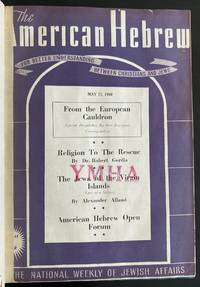
1940réf. 40003New York N. Y. : American Hebrew 1940. Hardcover. 1st edition. 4to. Period Cloth 4to Approximately 20 pages each issue approximately 520 pages total. Issues were published weekly. Holocaust-era American weekly Jewish magazine. “From the time of its founding The American Hebrew covered many topics of intense Jewish interest internationally” wikipedia. This set of magazines contain articles showing reform Jewish perspectives on WWII and the Holocaust including material about Jewish refugees “Behind the War” “Relationship Between Religion and Democracy “War Propaganda in England and Germany” as well as more mundane topics such as an essay we noted titled “Resort Guide: Another List of Ideal Vacation Spots Selected for American Hebrew Readers.” SUBJECTS: Jewish newspapers. -- United States. OCLC: 1479954. Many copies have a YMHA stamp on cover of magazine. Cloth cover has staining and dampstains pages are not affected. Spine says “American Hebrew 147 May-Nov. 1940”. Magazines in Very Good Condition. B HOLO2-140-11-X-'mmecc. New York, N. Y. : American Hebrew hardcover
1991xxviii, [2], 514 pages. Several black and white reproductions of archival photos. "Documents more than 21,000 towns in Central and Eastern Europe where Jews lived before the Holocaust. An exceptionally clear and easy to use reference work which will save enormous research time and frustration for students of this subject. For all interested in European place names and this period of history, it instantly becomes an invaluable and indispensable standard reference work." - dust jacket. Former library copy with minimal markings and light wear. Dust jacket now preserved in archival-grade Brodart. A quality copy. Book
1983[12], 277 pages. List of abbreviations. Glossary of Jewish and Zionist organisations. Footnotes. Index. "Searches through the Zionist record - and finds evidence that it sought the patronage and benevolence of avowed anti-Semites and, ultimately, the collaboration of the Fascists and Nazis. In a carefully researched and closely reasoned work, Brenner shows how from the beginning Zionism's leaders were prepared to go to almost any length to achieve the goal of a separate Jewish homeland." - back cover. Unmarked with average wear. Binding intact. A sound copy of this controversial work. Book
1961139, 5 [ads] pages. Black and white photos. Critically annotated on many pages by prior owner who applied a masking tape label to the front cover upon which to state his disagreement with the content. Annotation on page 101 suggests prior owner served in the air force of an allied country during WWII. Notes on title page document the development of this person's revisionist view of WWII from 1945 through 1995. Heavy wear. Binding open at page 81. One page of photos loose but present. In short, a poor but intriguing copy. Book
1981159 pages. Black and white illustrations. "Author is a holocaust survivor who, when this book was written, lived in Montreal. He escaped from Vilna and after the second world war spent several years in West Germany where he directed the War Crimes Section of the Legal Department of the Central Committee of Liberated Jews in Munich. For three years after the war he devoted all his energies to the prosecution of Nazi accomplices throughout Europe. His departure from Germany in 1949 marked the end of almost 10 years during which he had been an inmate of Nazi ghettos, a fugitive hiding out in the Polish countryside, an intelligence officer in a Russian-commanded partisan brigade, an unwilling member of the Soviet Secret Police, a refugee in West Germany, and finally a hunter of Nazi war criminals." - paraphrased from pages 20-21. Years after its publication, this book is being used to argue that the author lied about his wartime conduct to gain entry to Canada. Clean and unmarked with light wear. Sound copy. Book
200080 pages. "In this booklet, Ernst Zundel replies to an article in the Atlantic Monthly, February 2000 issue. Paragraph pairs are numbered and separated by a line. Mr. Zundel's answers are bolded." - page 1. The article deals with the libel suit brought by historian David Irving against American historian Deborah Lipstadt after she referred to him as "one of the most dangerous spokespersons for Holocaust denial." Pencil underlining and marginalia up to page 31. Average wear. A sound copy. Book
1850VG; 8vo; 1st edition. Later Wrappers, 4to, 471 pages.This volume only, complete for Juden-Jüdische Literatur (essentially the section of the encyclopedia dealing with Jews) Excellent mid-19th Century German overview of Jewish hsitory, with an empahsis on the Medieval & Modern periods. Contibuters Jewish and Christian scholars. Sections Include Juden (Geschichte) ; Judenchristen; Judenemancipation; Judenschlacht; Judenteutsch (i. E. Judeo-German) ; etc The entire Encyclopedia was a collasal work, 167 volumes publihsed between 1818-1889--and the editors only made it A-Phyx ! Heavy mid-19th Century rag paper has held up very well; Very Good Condition (KH-3-26)
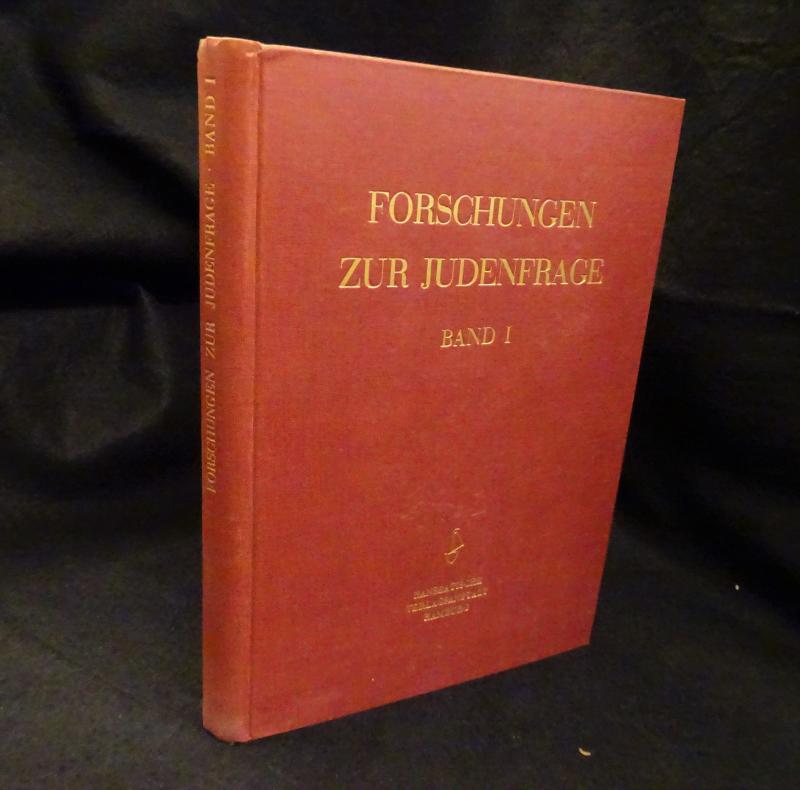
1937réf. JUDA1826Hamburg, Hanseatische Verlagsanstalt 1937. Gr.-8°. 205 S.; 232 S., OLnbde. mit goldener Deckel- u. Rückenprägung, minimal bestoßen u. berieben, Schnitt leicht fleckig, innen sauber u. einwandfrei. [2 Warenabbildungen]
1939Original Wraps. 8vo. 30, [2] pages. 21 cm. In Hebrew and Yiddish (Taitsh) , not the more common Hebrew-English edition. 'Haggadah Shel Pesah, in Hebrew and Yiddish; Stories of the Exodus from Egypt'. Illustrated throughout. An English and Hebrew Haggadah was issued in the same year by Cailingold, arranged by H. Meiliz; the English Haggadah was often reissued throughout the 1930's. Our copy is similar to the English-Hebrew copy, with the same illustrations. Very scarce. Subjects: Haggada shel Pesah. Haggadot - Texts. Yiddish, Hebrew Haggadah London 1939.Passover - Liturgy. Seder - Liturgy Texts. None of this edition on OCLC. Wraps loose, pages lightly soiled, brittle, with wine stains. Fair condition. (HAG-13-41)
19401st edition. 4to. Later Cloth, 4to, Approximately 20 pages each, approximately 520 pages total. Issues were published weekly. Holocaust-era American weekly Jewish magazine. From the time of its founding, The American Hebrew covered many topics of intense Jewish interest internationally (wikipedia 2018). This set of magazines contain articles about WWII, such as the topic of Jewish refugees, Behind the War, Relationship Between Religion and Democracy, War Propaganda in England and Germany, as well as things essays as a Resort Guide: Another List of Ideal Vacation Spots Selected for American Hebrew Readers. SUBJECT(S): Jewish newspapers. -- United States. OCLC: 1479954. Many copies have a YMHA stamp on cover of magazine. Cloth cover has staining and dampstains, pages are not affected. Spine says American Hebrew 147 May-Nov. 1940. Magazines in Very Good Condition. (HOLO2-140-11-J)
2007Original Cloth. 4to. 1, 590 pages. 28 cm. First Hungarian edition. Edited by Randolph Braham. Housed in illustrated box. Three volume set: 1. Ko¨t. Abau´j-Torna va´rmeyge-Ma´rmaros va´rmegyge - 2. Ko¨t. Maros-Torda va´rmeyge-Zemple´n va´rmegye - 3. Ko¨t. Fu¨ggele´k. The illustrated three-volume Geographical Encyclopedia of the Holocaust in Hungary is a magisterial resource, thorough and exhaustive, chronicling the wartime fate of the Jewish communities in that country where virulent antisemitism is anything but dead, even today. With scores of detailed maps and hundreds of photographs, this reference work is organized alphabetically by county, each prefaced with a map and a contextual history describing its Jewish population up to and into 1944. Entries track the demographic, cultural, and religious changes in even the smallest communities where Jews lived before their marginalization, dispossession, ghettoization, and, finally, deportation to labor and death camps. The encyclope¬dia endows scholars and lay researchers with both panoramic and microscopic views of the virtually last-minute destruction of most of the Jews of Hungary, until then the last sizable surviving Jewish community in occupied Europe. - USHMM. Subjects: Holocaust, Jewish (1939-1945) - Hungary - Encyclopedias. Jews - Persecutions - Hungary - Encyclopedias. Antisemitism - Hungary - Encyclopedias. Judenvernichtung. Antisemitism. Jews - Persecutions. Holocaust, Jewish (1939-1945) . OCLC lists 17 copies. Brand new in publishers plastic. Very good + condition. (BRAHAM-1-45) xx
19491st edition. Original Cloth, 8vo, 480 + 380 pages. In Yiddish. The chronicle of Bialystok: basic material for the history of the Jews in Bialystok until the period after the First World War. Very Good Condition(YIZ-10-1)
19491st edition. Original Cloth, 8vo, 480 + 380 pages. In Yiddish. The chronicle of Bialystok: basic material for the history of the Jews in Bialystok until the period after the First World War. OCLC: 10792576. Very Good Condition(YIZ-10-1)
1945[1945] 1st Edition. Original Illustrated Paper Wrappers with red illustration of a sinking ship from the infamous May 3rd 1945 bombing of the Thielbek, Cap Arcona, and Deutschland. 8vo. 35 pages ; 21 cm. In Dutch. Title translates to, Neuengamme: The Disaster in the Bend of Lubeck. The Neuengamme concentration camp, was a German concentration camp, established in 1938 by the SS near the village of Neuengamme in the Bergedorf district of Hamburg, Germany. It was operated by the Nazis from 1938 to 1945. Over that period an estimated 106, 000 prisoners were held at Neuegamme and at its subcamps (Wikipedia, 2016) British forces arrived on May 4, 1945. In early May 1945, the SS loaded some 9, 000-10, 000 prisonersmost of them evacuated from Neuengamme and its subcampsonto three ships anchored in the Baltic Sea off the coast of Neustadt in Schleswig-Holstein. Some 7, 000 lost their lives when the British attacked two of the ships in the course of a raid on the harbor on May 3. The Thielbek, carrying about 2, 000 prisoners, sank quickly. The Cap Arcona, carrying more than 4, 500 prisoners, burned and capsized during the attack. Only about 600 prisoners from both ships survived. (US Holocaust Museum) . This is a Dutch account of the tragedy by survivor H. Rolsma. Rolsmas byline on the cover also reads, Prisoner No. 77431 OCLC lists 6 copies worldwide, none outside of the Netherlands. Some edgewear. Good+ condition. Important story. (holo2-130-62)