Smolar, HershMareMagnum

2002Softbound. 8vo. 182, [4] pages. 22 cm. First Belorussian edition. Title translates as: The Minsk ghetto; Soviet-Jewish partisans against the Nazis. In Belorussian, With four pages of black and white photographic plates. Hersh Smolar (19051993) , was a Polish and Soviet Yiddish writer and editor. Born to a poor family in the town of Zambrów, Poland, Hersh Smolar (also rendered Smolyar) attended primary school until the age of 11, when he began working, and soon became involved in revolutionary activities. He was a leader of the local branch of the Jewish Socialist Youth Association from 1918 to 1920. During the 1920 PolishSoviet War, Smolar belonged to a revolutionary committee that had formed in Zambrów when the Red Army had occupied the town. Smolar fled to Soviet Russia in 1921, initially living in Kiev. He moved to Moscow two years later, after being admitted to the Yiddish department at the Communist University for the Peoples of the West (known in Yiddish as Mayrevke) , one of the universities run by the Comintern. Forced to interrupt his studies the next year, Smolar was dispatched to Kharkiv (then the Ukrainian capital) , where he was given the task of reinforcing the local Yiddish-speaking Communist cadre. He helped to edit the newspaper Yunge gvardye (Young Guard) , which targeted Yiddish-speaking youth. He returned to Moscow in 1926 and continued his studies at the Communist University, coediting its Yiddish journal Mayrevnik (Student of the Mayrevke) . Smolar served as a Comintern agent in Poland from 1928 to 1939; twice arrested, he spent six years in prison. After World War II began, he fled to Bialystok (then in Soviet-occupied territory) , where he gained prominence among refugee Polish Yiddish writers and as editor of the Communist newspaper Byalistoker shtern (Bialystok Star) . Smolar did not manage to evacuate when Germany attacked the Soviet Union in 1941. A leading member of the resistance in the Minsk ghetto, he became commissar of a partisan group operating in Belorussian forests. His wartime memoirs, Fun Minsker geto (From the Minsk Ghetto) , were published by Emes in Moscow in 1946. Smolar and his wife, Walentyna Najdus, subsequently returned to Poland, where he held key positions in the Jewish community as chair of the Jewish Cultural Alliance and editor of the Yiddish newspaper Folks-shtime. He published a collection of partisan stories, Yidn on gele lates (Jews without Yellow Patches; 1948) , and the play A posheter zelner (An Ordinary Soldier; 1952) . His Folks-shtime editorial Undzer veytik un undzer treyst (Our Pain and Our Comfort; 4 April 1956) , which was reprinted all over the world, became the first semiofficial source of information on the liquidation of Soviet Yiddish cultural institutions and their leading personalities between 1948 and 1952. Indeed, this editorial triggered a radical decline in the number of Yiddish-language organizations that supported the Soviet Union. As a result of the 1968 anti-Jewish campaign and the involvement of his sons (Aleksander [1940 ] and Eugeniusz) in dissident student circles, Smolar acknowledged that his life in Poland had become untenable. He left for Israel in 1971. (YIVO Encyclopedia) Subjects: Jews - Persecutions - Belarus - Minsk. Holocaust, Jewish (1939-1945) - Belarus - Minsk - Personal narratives. World War, 1939-1945 - Jewish resistance - Belarus - Minsk. Smolar, Hersh, (1905-1993) . Light shelf wear to covers, with lightly bumped lower back corner on cover. Very clean. Very good + condition. (HOLO2-92-2)
198921.5x14cm. 172 pages. Softcover. In good condition.
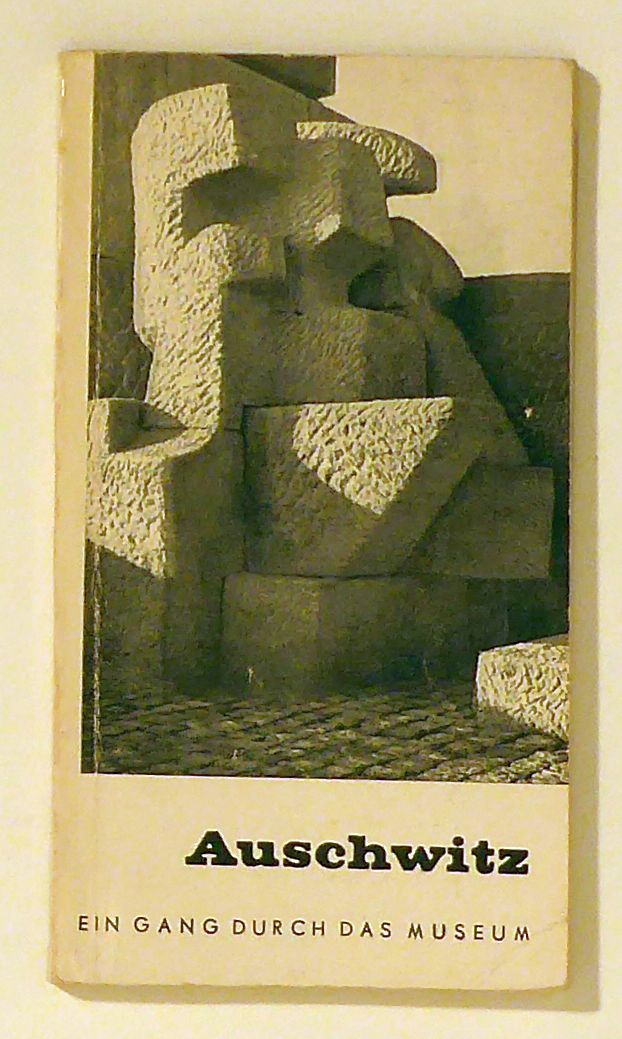
1970rif. 108005ABAuschwitz, Museum, 1970. Schmal-8°. 122 S. mit Abb. Original-Karton.
1970rif. 82874Oswiecim [Auschwitz], Panstwowe Muzeum W Oswiecimu, 1970. 122, [2] S., mit zahlreichen Abbildungen nach Fotografien sowie 3 Plänen, davon einer mehrfach gefaltet. Original-Broschur, vierte verbesserte Auflage. Softcover Umschlag berieben, mehrere Namenszüge mit Datum auf dem fliegenden Vorsatz.
19662nd Revised Edition. Paperback, 12mo, 104 pages, illustrations, 19 cm. In English. Subject (s) : Auschwitz (Concentration camp) . Includes bibliographical references. Very good condition. (HOLO2-98-12)
1961(FT) Original Paper Wrappers. 8vo. 93, [1] pages. Illus. 20 cm. In Russian. Second Edition. Title translates to English as, Auschwitz, 1940-1945. A brief history of the Auschwitz concentration camp. SUBJECT(S) : Holocaust, Jewish (1939-1945) . Auschwitz (Concentration camp) . Translation from Polish, Oswiecim, 1940-1945 by Elena Dzedzinskaya. Wrappers slightly worn but still nice. Institutional stamp on title page. No copies listed on OCLC. Very Good Condition. (HOLO2-93-27)
1990rif. 13295ABWarschau, Panstwowe Muzeum, 1990. 4°. 289 (3) S.u. 27 S. Beilage (engl. Übersetzung). Mit vielen tls. farb. Photogr. Lwd. u. OU. Minimale Gebrauchssp. Nice copy.
2006rif. G84632Amsterdam, Uitgeverij M 2006 430pp.geïllustreerd + kaart, 22cm., goede staat, G84632
2006430pp.geïllustreerd + kaart, 22cm., goede staat, G84632
1969rif. 1161188Assen, Van Gorcum, 1969. Gr.-8vo. 4 Bl., 26, 315 S. OLwd
1993rif. R97781Averbode/ Den Bosch, Altiora/ KBS 1993 102pp., 21cm., gebroch., in de reeks "Geloofsgetuigen", goede staat, R97781
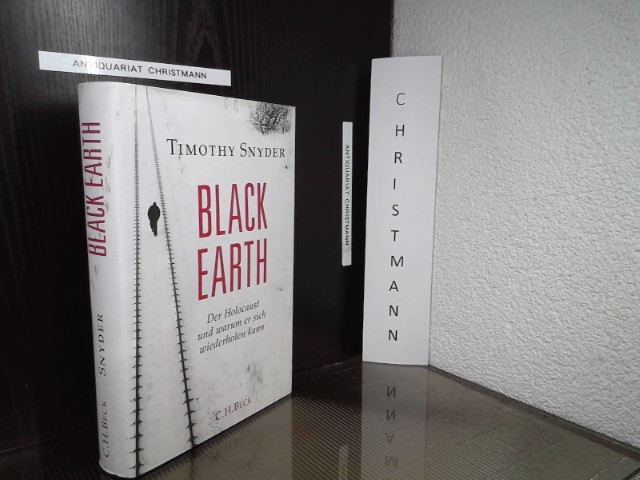
2015rif. 46541München : C.H. Beck 2015. 487 Seiten : Illustrationen, Karten ; 24 cm, mit Schutzumschlag Festeinband, gebundene Ausgabe, Hardcover/Pappeinband, Buch als Mängelexemplar gekennzeichnet, sonst guter Zustand, Neupreis in Euro: 29,95
1993102pp., 21cm., gebroch., in de reeks "Geloofsgetuigen", goede staat, R97781
1980rif. 1008624Vlg. Sport i Turystyka; (Warschau), 1980. 218 S.; Abbildungen. Broschiert.
1940Brass clasps. 34 pages. 28 cm. Holocaust-era imprint. An examination, undertaken at the request of the Jewish Welfare Board, into the vocational struggles of the Jewish community in Rochester, NY. , primarily for incoming Jewish refugees. Contents includes: Basic Problems Faced in Economic Adjustment Process; What Are Vocational Services? ; Attitudes of Youth; What Is Now Being Done; Recommendations. OCLC lists no copies. Cover is worn with some bumping at edges. Some internal pages are slightly darkened, but all text is clear. Very good condition. Rare (HOLO2-41-21) . Xx
1984Wrappers; 8vo. 415 pages. In German. Volume 2 of a German serial publication. Twenty articles, with notes and short author biographies. Exiles -- History -- 20th century -- Periodicals. Refugees -- Germany -- History -- 20th century -- Periodicals. Exiles -- Biography -- Periodicals. Refugees -- Germany -- Biography -- Periodicals. Ex-library copy with minimal markings. Small stain on top edge of book; otherwise, very good condition. (H-33-3)
1993rif. 54278FfM: S.Fischer 1993. 390 S., Lit.verz. Reg. Ln.mS.
1988rif. 009174Schifferstadt, Stadtsparkasse, 1988. 232 S. Orig.-Pappband. Ein schönes, gut erhaltenes Exemplar mit nur leichten Gebrauchsspuren.
1979174 pages. The unforgettable story of courageous men and women who had only a rusty riverboat to carry them in their desperate fight from Hitler's gas chambers. The product of years of intensive research. Translated into English from Romanian. Unmarked. Average wear to book. Above average wear to dust jacket which is now in an archival-grade Brodart dust jacket cover. Solid copy. Book
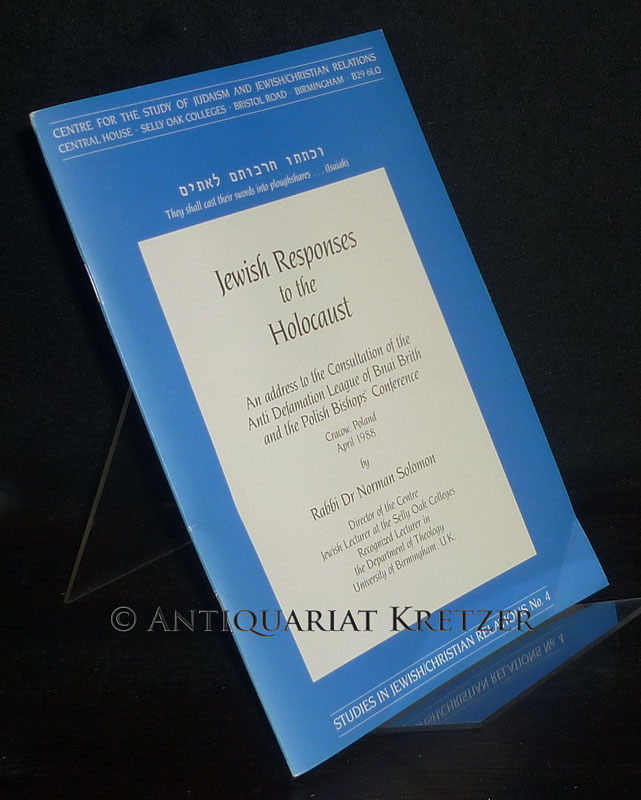
1988rif. 99792Birmingham: Centre for the Study of Judaism and Jewish/Christian Relations 1988. 25 Seiten. 8° (17,5-22,5 cm). Orig.-Broschur. [Softcover / Paperback].
1985SIGNED BY ARTIST. 270x220 mm. 78 pages. Softcover. Cover yellowing. Spine edges slightly worn. Else in good condition.
1912Original Wraps. 8vo. 91 pages. 20 cm. First edition. In German. 'The Future of the Jews. ' A controversial work on the economic position of diaspora Jewry. Werner Sombart (18631941) , German political economist and sociologist. Born in Ermsleben, Sombart acquired a reputation through his work Der Moderne Kapitalismus (2 vols. , 1902, 1916) in which he traced the development of capitalism from the late Middle Ages. In 1917 he was appointed professor of political economy at the University of Berlin. He wrote two works on capitalism and the Jews: Die Juden und das Wirtschaftsleben (1911; The Jews and Modern Capitalism, 1913, 1951) , and Die Zukunft der Juden (1912) which aroused considerable controversy. In Sombart's view, the Jews were the principal cause of the disruption of the medieval economic system and its replacement by capitalism. The Jews, he held, were foreigners and came up against the hostility of the guilds which controlled the commerce of the medieval cities. Consequently they sought to break away from the restrictive economic framework of city life and, by doing so, became the pioneers of international trade. In this way they helped to lay the foundation of the capitalist system. Sombart maintained that the Jewish intellect, 'concrete, stubborn, and systematic, ' was ideally suited to fostering a capitalist economy: 'When Israel appears upon the face of Europe, the place where it appears comes to life; and when it departs, everything which had previously flourished withers away. ' Such statements made for the ambivalent reception of Sombart's work among Jews at the time. Thus, while liberal Jews strongly criticized Sombart as an antisemite, others, particularly in the Zionist camp, praised him as a nonpartisan researcher and held up his theses as evidence of Jewish perseverance and as acknowledgement of the special contribution of the Jews. - EJ 2008. Subjects: Civilization - Jewish influences. Jews - Germany - Social conditions. Civilization - Jewish influences. Ethnic relations. Jews - Social conditions. Germany - Ethnic relations. Wraps bumped, slightly torn along backstrip, light soiling to outer edges, otherwise clean and fresh. Very good condition. (GER-43-41)
1946rif. 1239786Verlag J. H. W. Dietz Nf.; Berlin, 1946. 212 Seiten; 20,5 cm; fadengeh. Broschur.
19391st edition. Large Broadsheet. 6 pages.63x60cm. Large tri-fold broadsheet, six pages of texttotal, single sided, printed on blue paper. In German and English. The Verein für Deutsche Kulturbeziehungen im Ausland,abbreviated VDA, is a German cultural organisation. During the Nazi era it wasengaged in spying across the whole world, using German minorities living inother countries. The American Service Press Sheet issue nr 1, entitled Propaganda against Bluff. Possibly the only issue of this propaganda sheet printed in Berlin. The English and German columns are written by German-Americans who returned to Nazi Germany; overall, the broadsheet attempts to confer a pluralistic legitimacy upon Nazi Germany, by emphasizing that Germans have a special culture and tradition, and thus argues for an American pacifist and potential pro-nazi political line. The English section was written by an unknown author, who states in his editorial Let us be friends!- that he lived in the United States for 12 years, and that American democracy, though the best for its people, is rife with contradictions, as opposed to Nazi Germany, that of a strong state with supposedly no corruption; the author also mentions his thanks for being friends with so many different northern European peoples while living in America, and generally utilizes the discourse of a liberal, anti-discrimination perspective from the new deal era and grafts it onto the German-American experience, allowing the author to produce various subtle lies such as the immense importance of German-Americans to American culture, the overwhelming amount of German-American farmers, etc. The author of the English section only once points out that his enemy is the jew, and only once proclaims himself a national socialist; overall, a very strange and alarming work of propaganda produced in Berlin, custom-tailored for a pro-nazi and gullible liberal pacifist audience alike. Possibly a work of the Intelligence agency of the SS; undoubtedly distributed on the East coast by pro-nazi Germans. Subjects: NASDAP. Anti-semitism. Propaganda. Not listed on OCLC. Edges extremely fragile, upper corner loss on all pages, affecting text. Fair condition. (LB-5-16A)