5 616 résultats
1948réf. 12670Les Sept Couleurs, Paris 1948. 270 p. Broche. Traces d'utilisation. Couverture detachee et endommagee.
19798vo., First Edition thus, with plates; black cloth, backstrip lettered in orange, a near fine copy in unclipped dustwrapper, the latter sunned at backstrip. Published two years after the German edition. Enser, p.237.
19788vo., First Edition, with very numerous plates; black cloth, gilt back, a near fine copy in unclipped dustwrapper Following his war service with MI6 and MI9, Neave was appointed to the British War Crimes Executive and served the Allied indictments on twenty-one leading Nazis, among them Doenitz, Goering, Hess, Keitel, Ribbentrop and Streicher. An extraordinary and valuable account of personal experiences. SCARCE IN THIS CONDITION.
20068vo., First Edition, with 28 plates on 16; original black cloth, backstrip lettered in silver, red endpapers, a near fine copy in unclipped dustwrapper. Vividly-written account of the first war crimes trial, including much transcript material.
199916x24 cm. xv+343 pages. Hardcover in dust jacket. In good condition.
1945réf. JUDA1652Klagenfurt, Selbstverlag, 1945. Gr.-8°, 200,(6) S., illustr. OKart., mit 10 ganzseit. Abb. nach Originalzeichn. von N. Schwalba und Rolly Gerö, Entwurf des Buchumschlages vom Verfasser, Kopfschnitt angestaubt, Ecken leicht aufgebogen, Kanten berieben. Mit einem Vorwort von Franz Theodor Czokor.und zwei Gedichten von Jura Soyfer.
réf. 2106Gr. 8° (24 x 17 cm). 200 Seiten, 2 Blatt. Farbig illustrierte Originalbroschur nach einem Entwurf des Verfassers. Sehr gut erhaltenes, sauberes Exemplar. Vortitelblatt und Frontispiz leicht wellig und mit schwacher alter Feuchtigkeitsspur.
1953réf. BEL137New York, Rosenberg, 1953. 59 S., Gr.-8°, OKart. - Sehr guter Zustand. broschiert/ Taschenbuch/ paperback
réf. 42502Bruxelles, Labor, 1994. 15 x 21, 137 pp., broché, très bon état.
19441st edition. Original printed paper wrappers, 16mo, 47 pages. Stapled tan wrappers with brown and dark blue lettering on the covers. In Polish. Title translates as, "The Camp at Majdanek. " An extremely early Polish-language publication of Soviet novelist and journalist Boris Gorbatovs report on the Majdanek Concentration Camp, and the atrocities committed there and in the area of Lublin, which were first published in Russian in the Soviet newspaper "Pravda" on August 11th and 12th of 1944, shortly after the liberation of the camp by Soviet forces in July. These writings constitute some of the earliest writing on the Holocaust in Eastern Europe. The writing describes the camp and the ongoings there in vivid detail, including interviews with local residents of Lublin. Following Gorbatov's report are two shorter pieces on the the camp, one by by Polish-Soviet Commission on Majdanek, and the other a statement by Hilmar Moser a German lieutenant general. Includes 8 photos of the camp, including images of the crematorium, human remains and victims shoes, as well as reproductions of Moser's written statement. OCLC lists only 2 copies worldwide, (FAU, Polish Union Catalog) . Tiny nick to one corner, otherwise Very Good Condition, an excellent copy. Rare and important (Holo2-139-18)
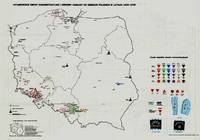
1979réf. 41929Warszawa Warsaw: Pan´stw. Wydawn. Naukowe 1979. 1st Edition. Original black printed portfolio 8vo. Portfolio of seven large folding maps on on 4 sheets of heavy paper 3 are double sided 1 is singled sided. Primarily black and white with some color. Text in Polish. Title translates to “Nazi camps in Poland 1939 - 1945. An Encyclopaedic Reference Book: Maps." Collection of 7 maps each 84 cm x 60 cm 33 x 24 inches produced by Jan Laskowski at the Main Commission for the Investigation of Nazi Crimes in Poland. The maps comprise Volume II of the work; Volume I is a heavily illustrated 676-page book of the same title which we offer separately. The Seven maps all present are: - Map 1 Single Sided: Hitlerowskie obozy na ziemiach polskich w latach 1939 - 1945. “Nazi camps in Poland in the years 1939 - 1945”. Showing: concentration and extermination camps sub-camps of concentration camps extermination centers POW camps more important sub-camps working divisions commandos and temporary POW camps penal labor camps major labor camps prisons transit camps & ghettos. - Map 2A: Getta na ziemiach polskich w okresie okupacji hitlerowskiej w latach 1939 - 1945 “Ghettos in Poland during the Nazi occupation in 1939 - 1945”. - Map 2B: Hitlerowskie obozy przejsciowe na ziemiach polskich w latach 1939 - 1945 “Nazi transit camps in Poland in 1939-1945”. - Map 3A: Hitlerowskie wiezienia i areszty na ziemiach polskich w latach 1939 - 1945 “Nazi prisons and arrests in Poland in 1939 - 1945”. - Map 3B: Hitlerowskie obozy pracy na ziemiach polskich w latach 1939 - 1945 “Nazi labor camps in Poland in the years 1939 - 1945”. - Map 4A: Hitlerowskie obozy jenieckie na ziemiach polskich w latach 1939 - 1945 “Nazi POW camps in Poland in 1939 - 1945”. - Map 4B: Hitlerowskie obozy koncentracyjne i osrodki zaglady na ziemiach polskich w latach 1939 - 1945 “Nazi concentration camps and extermination centers in Poland in 1939 - 1945”. Maps 2A & 2B have been described as a “Terrifying pair of maps showing the locations of German POW and internment camps in Poland during World War II highlighting the widespread locations of these establishments. In some parts of the map the information becomes so dense that three inset maps are shown. This map was designed by Jan Laskowski and printed in 1979 as part of a work on the Nazi extermination machine produced by PWN Warsaw a state-owned research-focused publishing house in Poland. The map on the front is particularly interesting for its depiction of symbols used to classify internees in German camps. The uppermost of these depictions shows the combinations that can be made for different types of prisoners of different levels of importance. The armbands that would have been worn by these prisoners is shown as well as the prison uniforms. Other details are also shown. The map lists hundreds of sites run by Nazi operators throughout the country. These include concentration camps death camps transitional camps and ghettos. The map is divided according to Poland's voivodeships with a key in the lower left. Names of cities too long to spell are also provided in the lower left. This map was produced during a point in Poland's history during which it was actively revisiting the period during the Second World War. Leading social scientists devoted their time to trying to gather all the living as well as the recorded history of the events of the Holocaust and related atrocities before this information vanished. Leading these efforts particularly during the 1960s and 1970s was the Glówna Komisja Scigania Zbrodni przeciwko Narodowi Polskiemu known as the Chief Commission for the Prosecution of Crimes against the Polish Nation. They were active in publishing maps both for domestic educational purposes and for international remembrance and diplomatic efforts regarding the Holocaust. Jan Laskowski was a leading cartographer who produced a number of maps in this field. These maps were produced as part of a series of maps that purported to combine to form an atlas of all of Hitler's crimes in Poland. Many of the large wall maps produced during this period could only show a fraction of the crimes or only the atrocities committed in one region. Thus a series of maps was needed to show all the points necessary which this present work contributes to. Polish Reinterpretations of the Holocaust: Studying the effects of German occupation in Poland is a delicate subject. While it is certain that Poland suffered at least as badly as any other European nation during the Second World War reinterpretations of the Holocaust in the country have also been used to satisfy nationalistic tendencies. It has become evident to Western observers in the last several years that there is a strong nationalist movement in Poland that seeks to place blame for the Holocaust solely on the shoulders of non-Polish actors a movement originally fostered under Soviet rule. This movement has gone so far as to limit freedom of speech criminalizing with a three-year sentence the suggestion that Poland or its citizens in any form participated in the murders committed by Nazis. As such the term ‘Polish concentration camps’ has been deemed unacceptable with the government-approved term being ‘concentration camps on Polish territory.’ All lines of evidence show that this map 2A & 2B was produced using the most accurate and impartial historical sources. The language on the map is simple naming only ‘Hitler's Atrocities’ and there is no evidence of a clear anti-German bias. However it is impossible to separate this map one of the most important productions of the remembrance movement during this period from the social situation in which it was produced. Maps like these can easily be converted into propaganda instruments and today's Polish leaders most of whom grew up during Soviet occupation will have formed their understanding of the Holocaust through maps like these. Soviet Censorship: While the content of the map appears to have been produced free from bias the map still had to go through Soviet censorship. Mentioning prisoner of war camps in which primarily Soviet troops were interned would have been a prerequisite condition upon which the publication of the map rested. Further the lack of mention of any Soviet killings or camps requires no explanation….The map unlike many later maps makes no differentiation between the populations who suffered at the various camps. This represents the Soviet agenda that all nations suffered fought and won equally which sought to limit divisions in this post-identity state” Ruderman 2022. SUBJECTS: World War 1939-1945 -- Prisoners and prisons German. -- Concentration camps -- Poland. Guerre mondiale 1939-1945 -- Prisonniers et prisons des Allemands. -- Camps d'internement -- Pologne. Obozy koncentracyjne -- Polska -- 1900-1945. OCLC: 830885973. Light shelf wear to portfolio as expected. All maps in pristine condition with normal folds as issued. Very Good Condition. Complete and dramatic BR5 holo2-147-19-'cc. Warszawa (Warsaw): Pan´stw. Wydawn. Naukowe unknown
19421942. First Edition. Paper Wrappers, 8vo, 61 pages. Includes eight photographic illustrations, including three full-page photomontages by Polish avant-garde artist Teresa Zarnower, and original pictorial wrappers with two additional photomontages by Zarnower. Text in Polish. Published by the heavily Jewish Polish Labor Group in New York. The Destruction of Warsaw. Light wear to covers, with light crease through part of front cover and unobtrusive 4 digit number in pen at top near spine. Touch of wear to top of spine, Otherwise Very Good Condition, far better than generally seen of this rare and important Holocaust related avant-gard photography title. (HOLO2-117-61)
1946Red cloth with gold lettering, 8vo, 238 pages. In Dutch. SUBJECT (S) : Huisartsen. OCLC lists 7 copies worlwide (Netherlands) . Slight wear on cloth on bottom edges of covers, otherwise very good condition. (HOLO2-13-14)
1954Hard cover, 246 pages, illustrated, 8vo, 20 cm. SUBJECT (S) : Jews -- Denmark. World War, 1939-1945 - Jews. Note(s) : Translation of: Oktober 43: oplevelser og tilstande under jodeforfolgelsen I Danmark. Ex-library with usual markings. Wear to edges of cover. Wear to binding. Slight yellowing of pages. Otherwise, good condition. (Holo2-16-8)
1970Softcover, 246 pages, illustrated, 12mo. SUBJECT (S) : Jews -- Denmark. World War, 1939-1945 -- Jews. Note(s) : Translation of: Oktober 43: oplevelser og tilstande under jodeforfolgelsen I Danmark. OCLC lists 3 copies worldwide (Dana Col, Keene State, Wilmington) . Wear to cover and binding. Hinge repair. Wear to corners of cover. Otherwise, good condition. (Holo2-16-20)
1993Original Wraps. 8vo. 23 pages. 21 cm. First edition. Published by Royal Danish Ministry of Foreign Affairs and the Museum of Danish Resistance 1940-1945; text, Therkel Stræde; editor, H. Rovsing Olsen. With 45 illustrations, some in color. Brochure, containing a condensed survey of Jewish history in Denmark, the nazi occcupation, Resistance in Denmark, and the rescue of Danish Jews. Subjects: World War, 1939-1945 - Jews - Rescue - Denmark. Jews - Persecutions - Denmark. Joden. Hulpverlening. Verzetsbewegingen. Ethnic relations. Jews - Persecutions. German Occupation of Denmark (1940-1945) Jews rescue (1939-1945 : World War) World War (1939-1945) History. 1940 - 1945 Denmark - History - German occupation, 1940-1945. Light shelf wear, otherwise very clean and fresh. Very good condition. (HOLO2-117-34) xxxxx
199015x21 cm. 1024 pages. Paperback. Back cover slightly chafed. Spine is faded. Spine is chafing in edges. Stamps on first white page. Binding slightly visible between several pages. Outer edge of pages slightly dusty. Else in good condition. PLEASE NOTE: This item is overweight. We may ask for extra shipping costs.
1946Original Paper Wrappers. 8vo. 73 pages. port. 23 cm. In Polish. Title translates to English as, "Through the Eyes of 12 Girls." Series: Centralna Zydowska Komisja Historyczna w Polsce. Wydawnictwa, Nr. 20. SUBJECT(S): Hescheles, Janina. World War, 1939-1945 -- Atrocities. World War, 1939-1945 -- Jews. Jews -- Poland -- Kraków. Front cover damaged with superficial tears. Very Good Condition inside. (HOLO2-83-53)
1946Original Paper Wrappers. 8vo. 73 pages. port. 23 cm. In Polish. Title translates to English as, "Through the Eyes of 12 Girls." Series: Centralna Zydowska Komisja Historyczna w Polsce. Wydawnictwa, Nr. 20. SUBJECT(S): Hescheles, Janina. World War, 1939-1945 -- Atrocities. World War, 1939-1945 -- Jews. Jews -- Poland -- Kraków. Front scratched. Very Good Condition inside. (HOLO2-83-54)
2003réf. 43611BBBialystok, Bialoruskie Tow. Historyczne, 2003. Original Flexible Boards. Very good Condition with only minimal Signs of Usage at the Cover. No Markings in the Text! No Underlinings! No Owner's Note! Text in Polish Language!
19794to; 26 pages; Bundist Newsletter from Denmark. Trilingual, in Polish, Danish, & Yiddish! Low-budget xerox production makes me think they weren't producing too many copies.Very good condition. (YID-11-15)
19741st Edition. Original Green Boards. 8vo. [59] pages ; 20 cm. In French. Title translates into English as, Recent Works Of Remo Brindisi: Exhibition From June 6th To July 6th 1974. Remo Brindisi (1918 1996) was an Italian painter (He) formed the Gruppo di Linea together with Gianni Dova and Ibrahim Kodra and was later associated with the realist movement, while maintaining, however, complete autonomy with respect to the major artistic trends of the age. His focus on issues of social commitment and protest culminated in the period 196061 with a series of large paintings devoted to the history of Fascism, in which figurative painting of an expressionist character was combined with an approach modeled on the examples of Art Informel (Wikipedia, 2017) . SUBJECT(S) : Exhibition catalogs. OCLC lists 3 copies worldwide (Michigan, Bibliotheque D'art Et Darcheologie, Biblio Hertziana Institut Fur Kunstgesch) , no copies in France. Very good condition. (ITART-1-41)
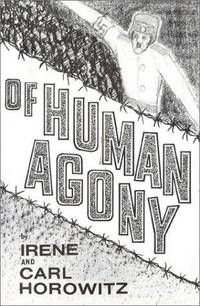
1992réf. 026551New York: Shengold Publishers Inc 1992. INSCRIBED / SIGNED by both AUTHORS directly on the front free endpaper. The first signatures are dated 3/13/92. Signed and dated 1/17/15 a second time by Irene in a very shaky hand. This is the 1992 Shengold first edition NOT the 1998 Schreiber reprint. Near Fine condition in a bright and shiny Near Fine dust jacket crease to front inner flap. NO chips or tears. NOT price clipped $18.95. The jacket is protected by a removable Brodart clear-plastic sleeve. NOT a remainder. Previous owner's name and brief gift note. Pages are otherwise crisp clean and unmarked. Photo illustrated. Holocaust memoirs of this Jewish couple - Carl lived as a Christian for 3 years before being discovered and sent away to concentration camp but escaped deportation to Auschwitz. Irene survived confinement in a ghetto by changing hiding places several times. They married in Poland at the end of the war and emigrated to America in 1948. Bound in the original blue cloth stamped in bright gold on the spine. Complete with dust jacket. From the publisher: "This is the candid graphic and moving story of two Holocaust survivors. Their youth and their wits helped them to survive and put their ordeal to a constructive end.". INSCRIBED / SIGNED by both AUTHORS. First Edition. Hardcover. Near Fine condition/Near Fine dust jacket. Illus. by NOT a library discard. 8vo. 202pp. Great Packaging Fast Shipping. Shengold Publishers, Inc Hardcover
1989Original Illustrated Wraps. 8vo. 174 pages. 21 cm. First edition. In German. Open Wounds, Burning Questions: Jews in Germany from 1938 to the Present. A collection of essays on different facets of twentieth century German-Jewish history since Kristallnacht. Subjects: Jews - Germany - History - 1933-1945. Jews - Germany (West) - History. Jews - Germany - Regensburg - History. Germany - Ethnic relations. Regensburg (Germany) - Ethnic relations. Light shelf wear to wraps and outer edges, otherwise fresh. Very good condition. (HOLO2-108-40) Xxxx
19361st edition. Original illustrated wrappers, 4to (large) , 34 pages. Loaded with illustrations. Event program. Striking cover illustration and one text illustration by Mitchell Loeb. Includes illustrations in text (halftones) and a section of ads. The World Labor Athletic Carnival was organized to directly oppose U. S. Athletes' participation in the 1936 Berlin Olympic Games, which were viewd as providing both legitimacy and a prime propaganda opportunity to Hitler's Nazi government. Put together in 1936 by a coalition of New York left-wing political organizations and labor unions including the heavily Jewish International Ladies' Garment Workers Union (ILGWU) , the Socialist and Communist Parties, the Jewish Labor Committee, and others, the Carnival took place over two days, coinciding with the two final days of the Berlin Games, and involved an array of high-profile American, Canadian, and a few international competitors including high-jumper Walter Marty, sprinters Eulace Peacock and Perrin Walker, and pole vaulter George Varoff. In the end, the Carnival proved something of a disappointment from both an attendance and an athletic perspective. Aside from Varoff's world-record setting performance in the pole vault, "... The New York Herald Tribune described the athletic performances as 'mediocre' and noted that the spectators were unenthusiastic'" (for a detailed account of the event, see Edward S. Shapiro, "The World Labor Athletic Carnival of 1936: an American Anti-Nazi Protest, " in American Jewish History v.74, no.3 (Mar 1985) , pp.255-273) . No copies anywhere in OCLC. Exceedlingly rare, we have never seen a copy offered for sale. Slightly stained and creased, but Very Good. A few event results have been supplied by the original owner in pencil. (holo2-149-1)